The Watering Mistakes California Gardeners Make In June That Ruin Plants By August
June is one of those months where California gardens look pretty good on the surface but are quietly keeping score.
The dry season is locked in, temperatures are climbing fast, and every watering decision you make right now is either working for you or quietly working against you.
The frustrating part is that you often do not find out which one until late July or August, when plants start looking stressed, tired, and more than a little crispy.
And here is the thing most gardeners do not realize: the problem is rarely just watering too much or too little.
It is usually about watering in ways that do not actually match your soil, your roots, your containers, or the specific heat patterns in your yard. Get June right and the rest of summer gets a whole lot easier.
1. Watering Without Checking The Soil
Sticking to a watering schedule without ever touching the soil is one of the most common habits California gardeners fall into during June. It feels efficient, but the soil tells a very different story than the calendar does.
Soil in coastal California can stay moist longer than soil in inland areas, where heat pulls moisture out fast.
When you water on a fixed schedule without checking, you risk either adding water to soil that is already wet or skipping water when the soil has dried out much faster than expected. Both situations put stress on plant roots.
Roots that sit in soggy soil can start to struggle, while roots in bone-dry soil begin to shrink back from the soil and lose their ability to absorb water efficiently.
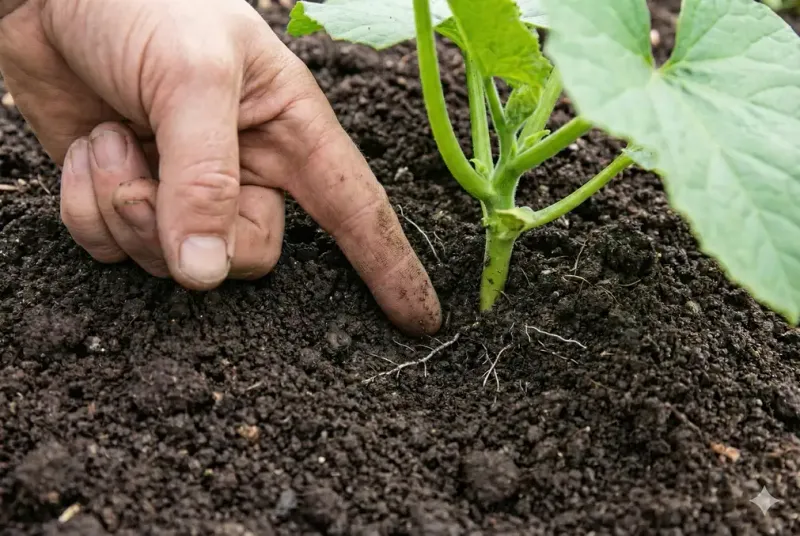
The fix is simple and takes about ten seconds. Push a finger or a wooden dowel two to three inches into the soil near your plants.
If the soil feels damp, hold off watering. If it feels dry at that depth, it is time to water.
Doing this quick check a few times a week in June helps you water based on what your plants actually need rather than what the timer says.
2. Giving Plants Tiny Sips Instead Of Deep Water
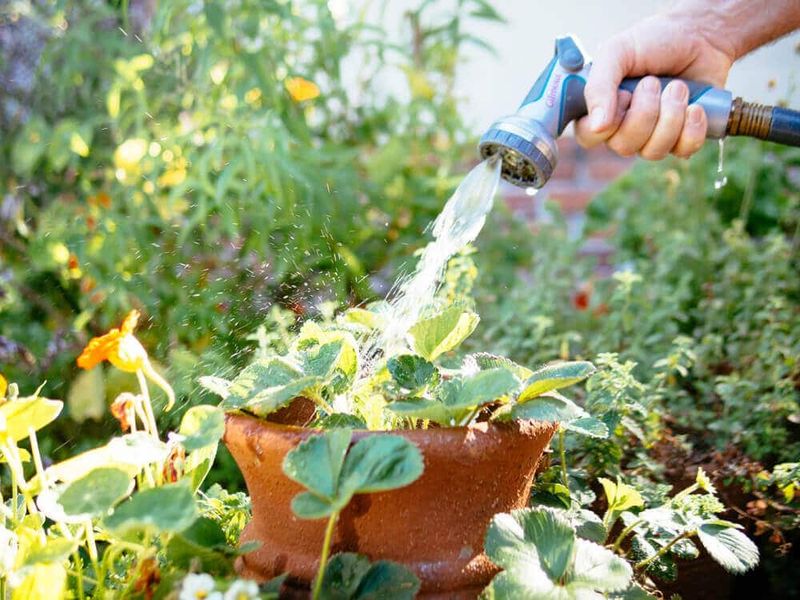
Shallow watering is one of those habits that looks like responsible gardening on the surface but quietly weakens plants over time. Running the hose for a few minutes or letting a sprinkler run briefly may wet only the top inch or two of soil.
That moisture evaporates quickly in June heat, and the roots below never get the drink they need.
When plants receive only shallow water over several weeks, their roots tend to stay near the surface looking for moisture.
Surface roots are far more vulnerable to heat and drought than deeper roots, which can tap into cooler, more stable moisture reserves lower in the soil profile.
By August, plants watered this way often show signs of heat stress even though they were watered regularly throughout June.
Watering deeply and less frequently encourages roots to grow downward into the soil, where conditions are more stable.
Your California Garden Changes Every Week. Your Plan Should Too.
Gardening in California changes quickly throughout the season. Every Friday you’ll receive a simple weekly plan showing exactly what to plant, prune, fertilize, harvest, and protect so you never miss the right timing.
For most ornamental plants and shrubs in California, watering slowly and long enough for moisture to reach several inches below the surface makes a real difference.
A soil probe or even a long screwdriver pushed into the ground can help you check how deep the water is actually reaching after each session.
3. Letting Pots Dry Out In June Heat
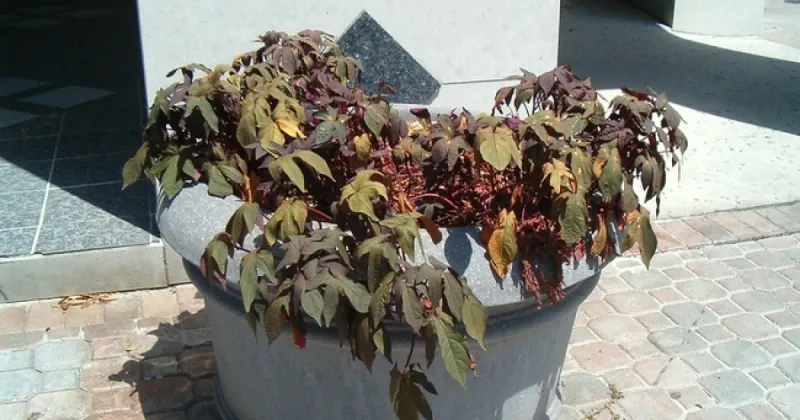
Container plants in California face a completely different challenge than plants growing in the ground.
Pots heat up quickly in the sun, and the limited soil volume inside means moisture disappears much faster than most gardeners expect, especially in June when temperatures start climbing across most of the state.
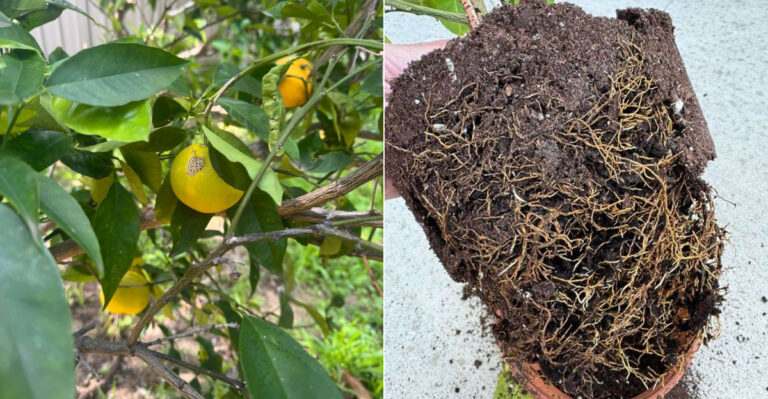
When potting mix dries out completely, it can actually pull away from the sides of the container.
Water poured in at that point often runs straight down the gap between the soil and the pot wall, drains out the bottom, and leaves the root ball nearly as dry as it was before.
Gardeners often assume the plant was watered well, but the roots barely received any moisture at all.
Checking containers daily during warm June weather is a reasonable habit to build. Smaller pots dry out faster than larger ones, and pots in full sun or on concrete surfaces dry out even faster.
If you notice the soil pulling away from the edges, slow, repeated watering or briefly setting the pot in a shallow tray of water can help rehydrate the root ball evenly.
Grouping containers together can also help reduce moisture loss by creating a slightly more humid microclimate around the plants.
4. Adding Water Before Fixing Drainage
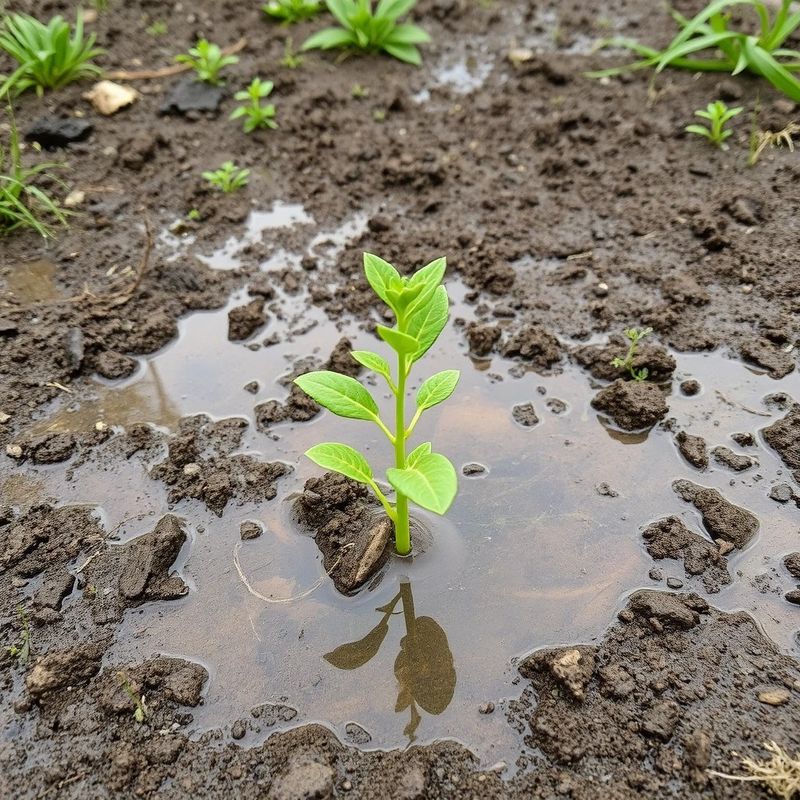
Pouring more water onto a landscape bed that does not drain well is a bit like filling a bathtub that never empties. The water has nowhere to go, and plant roots end up sitting in saturated soil far longer than is healthy.
Many California yards have clay-heavy soils that hold water tightly, and June watering without addressing drainage can set plants up for serious root stress by midsummer.
Signs of poor drainage include water pooling on the surface after irrigation, soil that stays soggy for a day or more, and plants that look wilted even though the soil is wet.
Wilting in wet soil can be confusing, but it happens because roots struggling in waterlogged conditions cannot move water and nutrients effectively to the rest of the plant.
Before increasing watering frequency in June, take a close look at how water moves through your soil. A simple drainage test involves digging a hole about a foot deep, filling it with water, and watching how fast it drains.
If water is still sitting in the hole after several hours, the soil likely needs amendment or the watering approach needs adjustment.
Adding organic matter over time and improving bed grading can make a meaningful difference in how well your plants handle summer irrigation.
5. Watering Trees And Shrubs Like Lawns
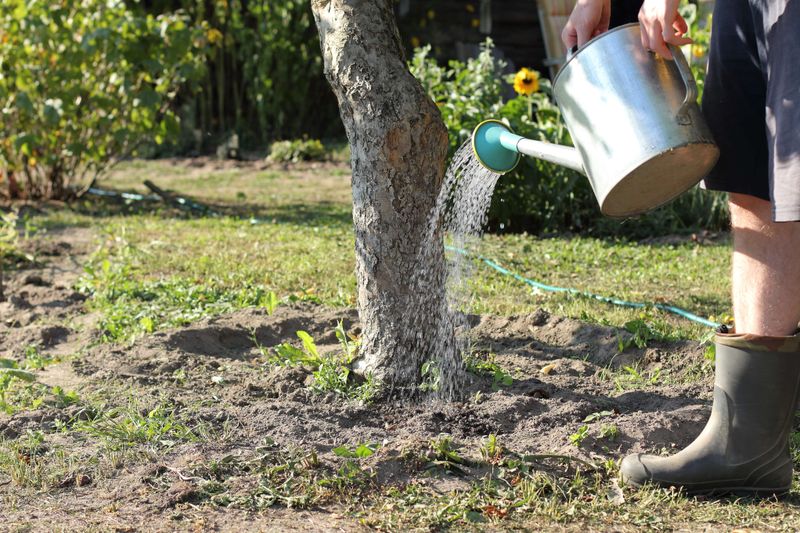
Lawns and trees share the same yard but have very different watering needs, and treating them the same way in June can quietly stress trees and large shrubs over the course of the summer.
Lawn sprinklers typically run frequently and wet only the upper few inches of soil, which works for turf grass but does very little for trees whose roots extend much deeper and wider than most people realize.
Established trees in California often do better with less frequent but deeper watering, applied well out from the trunk toward the drip line where feeder roots are most active.
Frequent shallow lawn irrigation near tree trunks can also keep the bark area consistently moist, which may encourage certain fungal problems at the root crown over time.
Shrubs fall somewhere in between, depending on the species, age, and soil type. Many ornamental shrubs in California benefit from deep, infrequent irrigation during June rather than the quick, daily sprinkler cycles that keep a lawn green.
Separating irrigation zones for trees, shrubs, and lawn areas when possible allows each plant type to receive water in a way that actually matches its root depth and drought tolerance.
Even simple adjustments to run times and frequency can reduce stress on woody plants by late summer.
6. Using One Schedule For Every Plant
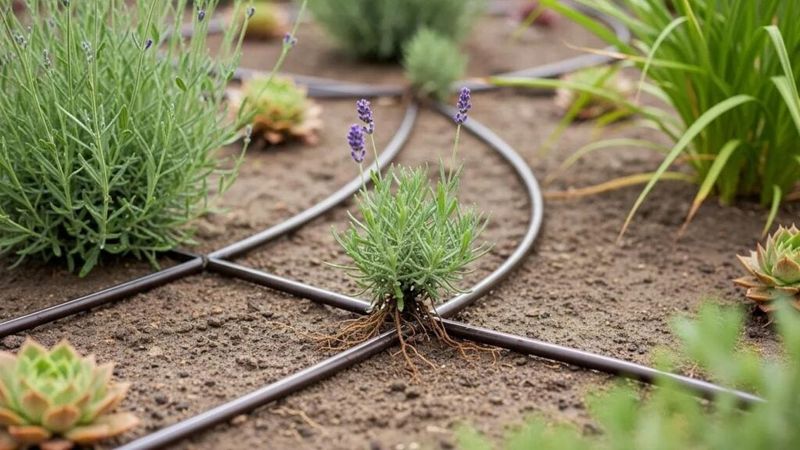
Running the same irrigation schedule for every plant in the yard is a shortcut that tends to catch up with California gardeners by midsummer.
A succulent growing in a sunny, sandy bed and a rose growing in a clay-heavy border have completely different water needs, even if they are only a few feet apart in the same garden.
In June, California temperatures can vary widely between coastal mornings and inland afternoons, and different microclimates in the same yard can affect how quickly soil dries out.
A plant on the west side of the house that gets afternoon sun may need water more often than a plant tucked into morning shade on the east side.
Using one schedule for everything ignores all of that variation.
Grouping plants with similar water needs together is one of the most practical things a California gardener can do before the dry season peaks. This approach, sometimes called hydrozoning, allows different irrigation zones to run on different schedules.
Even if a full redesign is not realistic, adjusting run times by zone in June based on plant type, sun exposure, and soil moisture can help each area of the garden get what it actually needs rather than what everything else is getting.
7. Forgetting New Plants Dry Out Faster
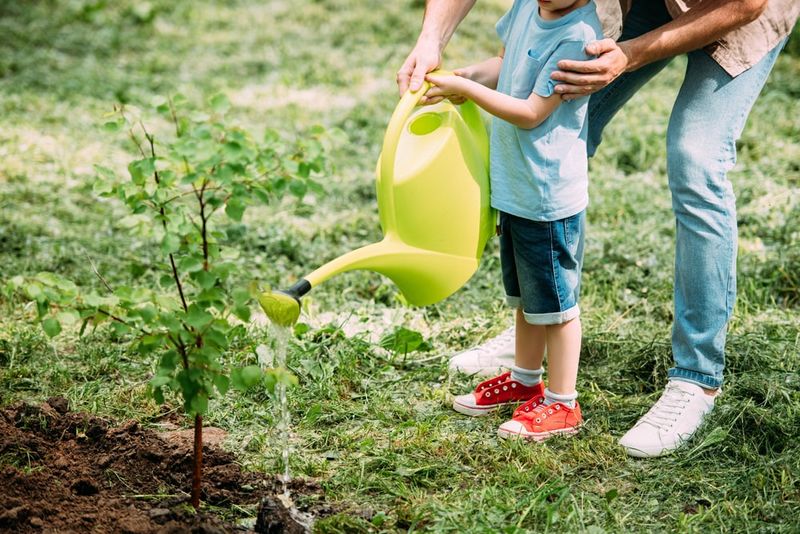
Newly planted shrubs, perennials, and trees have not yet built the root system they need to pull moisture from a wide area of soil.
Their roots are essentially still contained within the original root ball, which means they depend heavily on the moisture in a small zone of soil right around the planting hole.
In June heat, that small zone can dry out within a day or two, sometimes faster in containers or raised beds.
Many California gardeners make the mistake of watering new plants on the same schedule as established ones. Established plants have had seasons or years to spread their roots deep and wide, giving them access to more moisture reserves.
A new plant put in the ground in spring and heading into its first June in the landscape is in a much more vulnerable position.
Checking the root ball area of newly planted specimens every day or two in June is a reasonable practice. Watering slowly and directly over the root ball, rather than relying solely on a general sprinkler zone, gives new plants the targeted moisture they need.
Applying a two-to-three-inch layer of mulch around new plantings also helps slow down moisture loss from the soil surface, which can make a real difference when June temperatures rise quickly across California.
8. Overwatering California Native Plants In Summer
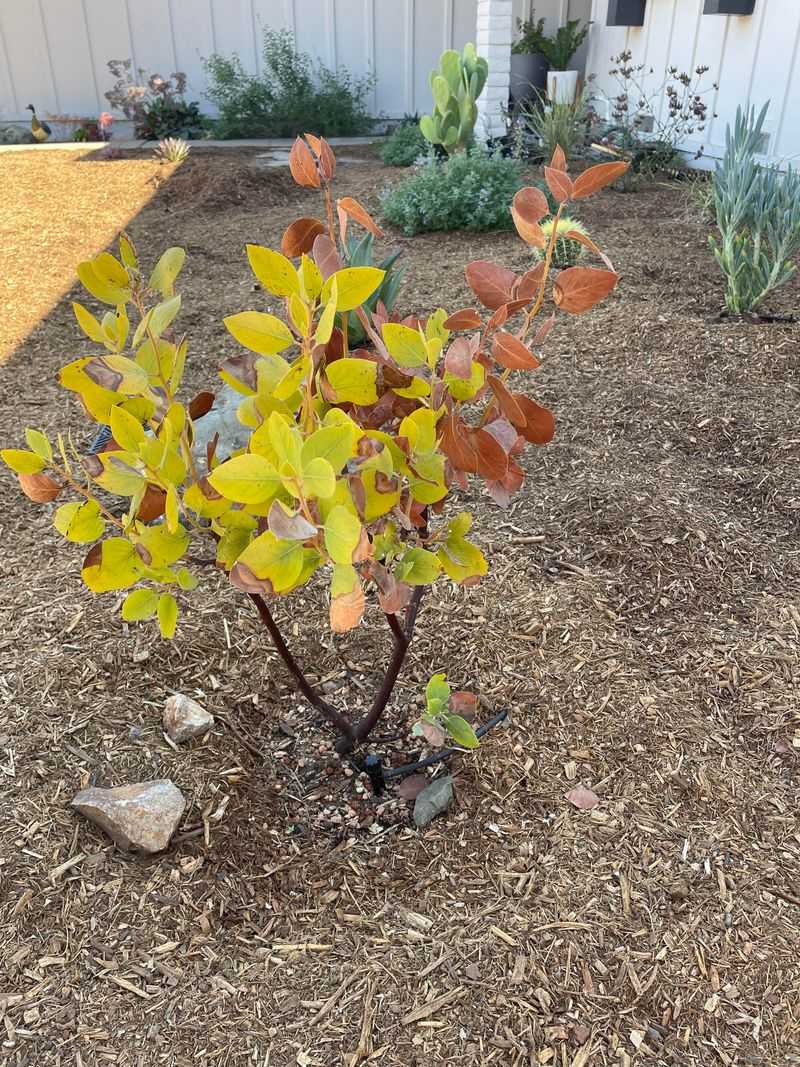
California native plants have adapted over thousands of years to the state’s natural rain cycle, which means wet winters and long, dry summers.
Many of them actually expect dry conditions from late spring through fall, and adding too much water during that period can stress them in ways that show up clearly by August.
Overwatered California natives may develop yellowing leaves, soft or mushy stems near the base, or simply begin to look tired and droopy even though they are receiving regular water.
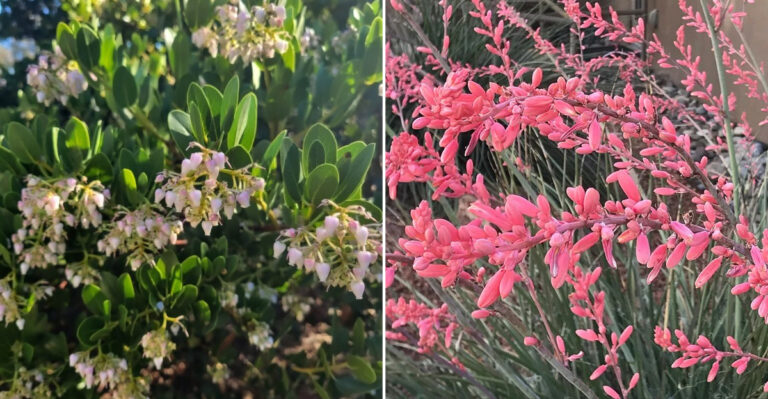
Root rot from excess summer moisture is a real concern for plants like manzanita, toyon, ceanothus, and many sages.
These plants have evolved to slow down or go semi-dormant during the dry season, and frequent summer irrigation can disrupt that natural rhythm.
A common guideline for established California native plants is to reduce or stop supplemental watering once the dry season sets in, with occasional deep watering during extended heat waves as a reasonable exception.
Newly planted natives generally need more support during their first summer, but the goal is to taper that supplemental water over time.
Checking with local resources specific to your California region can help you find guidance suited to your specific climate zone and plant palette.
9. Letting Sprinklers Miss Important Spots
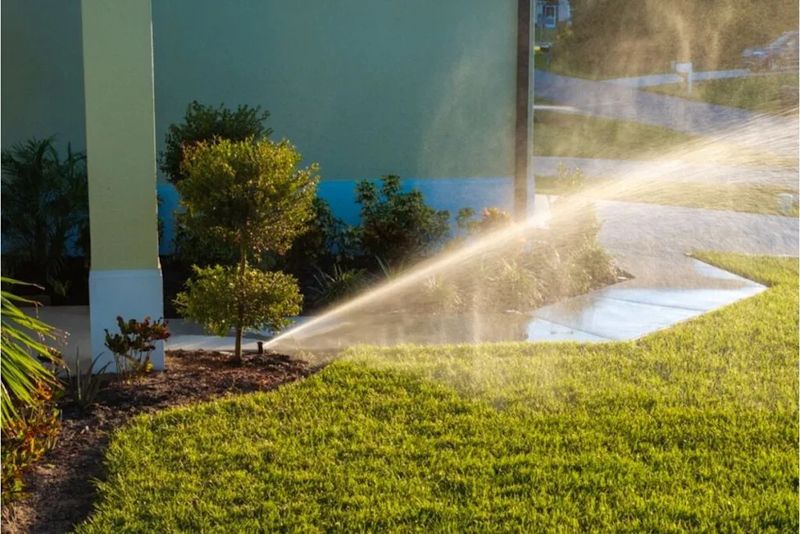
Sprinkler systems that worked fine in spring can develop coverage gaps that become obvious in the heat of summer, but the damage often starts quietly in June when gardeners assume everything is being watered evenly.
A clogged nozzle, a tilted head, or a head that has sunk below the soil surface can leave entire sections of a planting bed consistently dry week after week.
Plants on the dry edges of a sprinkler pattern may look fine for a while because they are drawing on stored moisture from spring rains or earlier irrigation. But by July and August, those reserves run out and the stress becomes visible fast.
Browning leaf tips, early leaf drop, and wilting during the cooler parts of the day are all signs that a plant has been running short on water for longer than it looks.
Walking through the yard while the sprinklers are running is one of the most useful things a California gardener can do in early June. Watch where the water actually lands, not just where the heads are pointing.
Adjusting spray patterns, cleaning clogged nozzles, and repositioning sunken heads before the hottest months arrive can prevent a lot of late-summer plant stress. Drip irrigation in dense planting beds can also help fill in coverage gaps that sprinklers tend to miss.
10. Adding Water When Salts Are Building Up
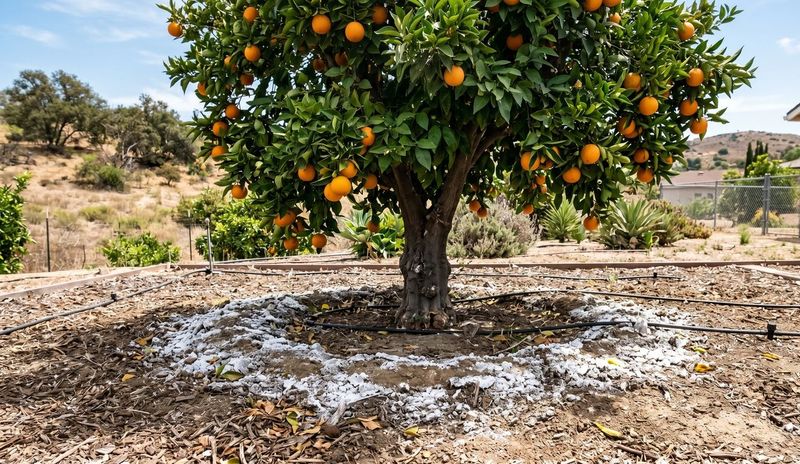
Salt buildup in garden soil is a problem that tends to fly under the radar until plants start showing tip burn, crispy brown leaf edges, or slow, stunted growth.
In California, where water sources in many regions carry measurable levels of dissolved minerals, regular irrigation can gradually leave salts behind in the soil.
Over time, those salts can make it harder for roots to absorb water even when the soil appears moist.
June is when this issue can quietly accelerate. As water evaporates from the soil surface in warm weather, the minerals it carried stay behind and concentrate near the root zone.
Fertilizer applied earlier in spring also contributes to salt levels if it has not fully moved through the soil. Plants growing in containers are especially vulnerable because salts have nowhere to flush to and can build up quickly in a small volume of potting mix.
Occasional deep watering that moves water well past the root zone can help flush accumulated salts downward and away from roots.
For containers, watering until water runs freely from the drainage holes and then allowing the excess to drain completely helps manage salt levels over time.
Watching for white crusty deposits on the soil surface or around pot edges is a useful early signal that salts may be affecting your plants before visible leaf damage appears.