Edible Texas Shrubs Homeowners Are Planting Instead Of Boxwood
Boxwood has held its place as the default foundation shrub in Texas landscapes for decades.
However, it’s increasingly susceptible to pest and disease pressure in Texas conditions, and produces absolutely nothing that any person or animal can eat or use. A quiet shift is happening in Texas yards.
Homeowners who want structure and year round presence are discovering native and edible shrubs that produce fruit worth harvesting and support local wildlife.
The selection is wider than most people expect. Several of the best options hold their own against boxwood on looks alone while asking considerably less from the gardener in return.
1. Rosemary Hedges That Smell Amazing
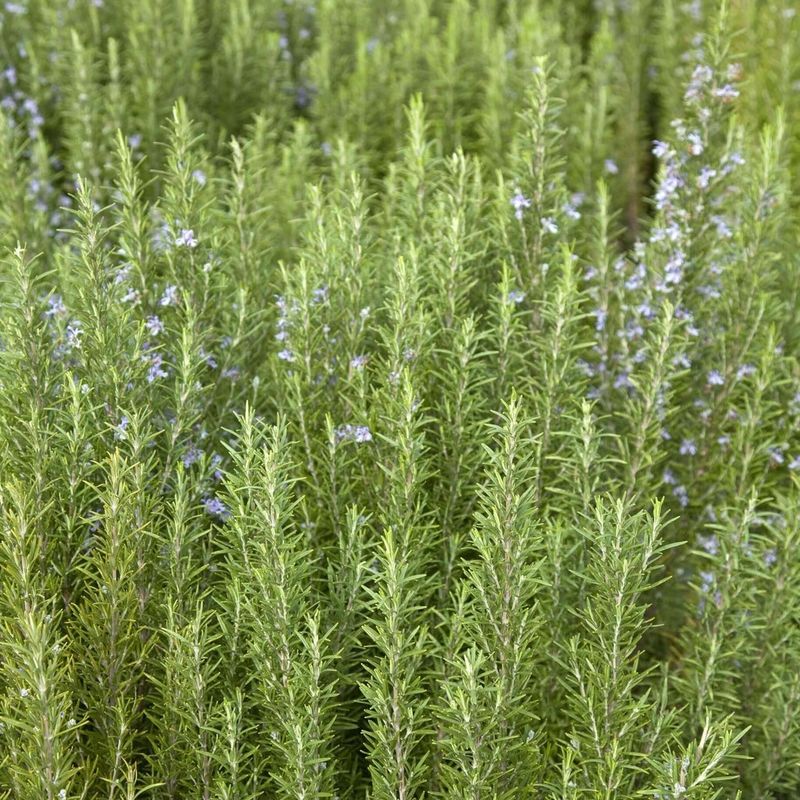
Brush your hand along a rosemary hedge and your whole walkway smells like a fancy kitchen.
That scent alone wins over a lot of gardeners. Add the fact that it laughs at heat, and you have a real boxwood rival.
Rosemary comes from dry, rocky hillsides near the Mediterranean Sea. Central and West Texas feel a lot like home to it. It loves full sun, sandy or rocky soil, and very little water once its roots settle in.
Upright types like Tuscan Blue or Arp work best for hedges. Arp is known for handling colder winters, so it suits North Texas well. Plant them about two to three feet apart, and they will knit together into a solid green wall.
Trimming is easy and rewarding. Every snip gives you fresh sprigs for roasted potatoes, grilled chicken, or homemade bread. You can shape it into a formal box or let it grow loose and natural.
Watch out for too much water, though. Soggy soil is the main thing that makes rosemary fail. Heavy clay should be mixed with gravel or compost, or you can plant on a slight mound for better drainage.
Bees adore the small blue flowers that show up in late winter and spring. That early bloom gives pollinators food when little else is open. Deer usually leave it alone because of its strong smell.
Fun fact: rosemary was once tucked into wedding bouquets as a sign of loyalty and memory.
Today, it can stand for something else in your yard, a hedge that works as hard as you do. Give it sun, skip the extra watering, and enjoy the harvest.
2. Yaupon Holly With A Tasty Secret
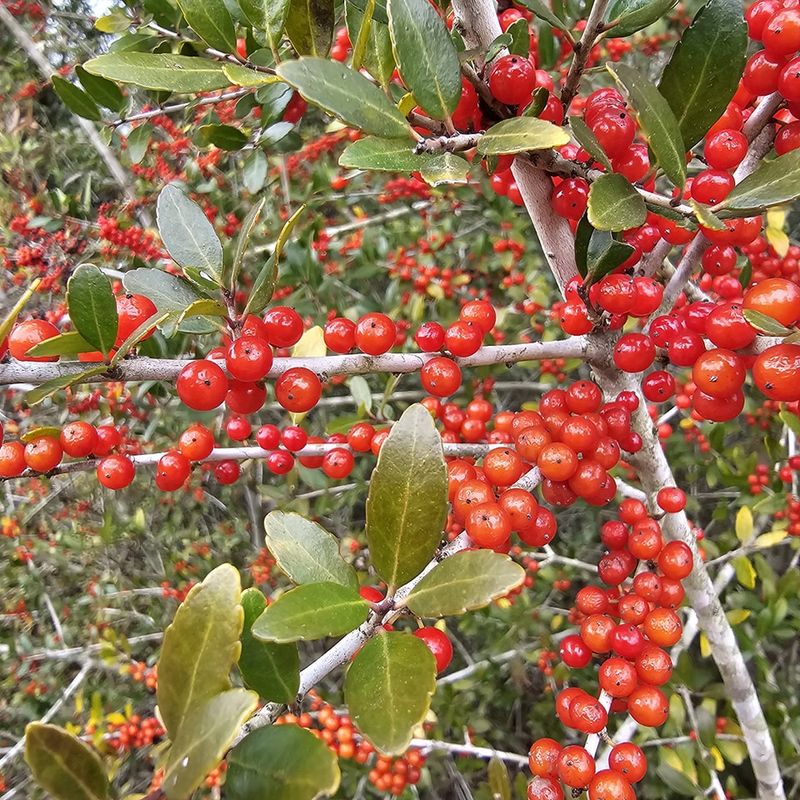
Here is something most people never learn. Yaupon holly is the only plant native to North America that contains caffeine. Its leaves can be dried and brewed into a smooth, earthy tea.
Native people across the South drank yaupon tea for centuries. Early settlers enjoyed it too. Today, small companies are bringing it back as a local answer to imported tea and coffee.
As a shrub, yaupon may be the best boxwood swap on this list. Its small, glossy leaves look very similar, and it takes shearing like a champ. Dwarf types stay round and low, while taller forms can become privacy screens.
Yaupon grows wild from East Texas down to the coast and into the Hill Country. It handles clay, sand, drought, and even short floods. Sun or part shade both work fine.
Your Texas Garden Changes Every Week. Your Plan Should Too.
Gardening in Texas changes quickly throughout the season. Every Friday you’ll receive a simple weekly plan showing exactly what to plant, prune, fertilize, harvest, and protect so you never miss the right timing.
To make tea, pick young, fresh leaves in spring. Rinse them, then toast them in a dry pan or oven until they turn light brown. Steep a spoonful in hot water for a few minutes, and taste the result.
One warning matters a lot. The bright red berries on female plants are pretty, but they are not safe for people to eat. Birds, however, gobble them up in winter, so leave those for your feathered visitors.
If you want berries, buy a female plant and make sure a male grows nearby. If you only want leaves for tea and a clean look, a male or dwarf type works great.
Either way, yaupon gives you a classic hedge with a homegrown drink hidden inside.
3. Blueberries For Sweet Summer Snacking
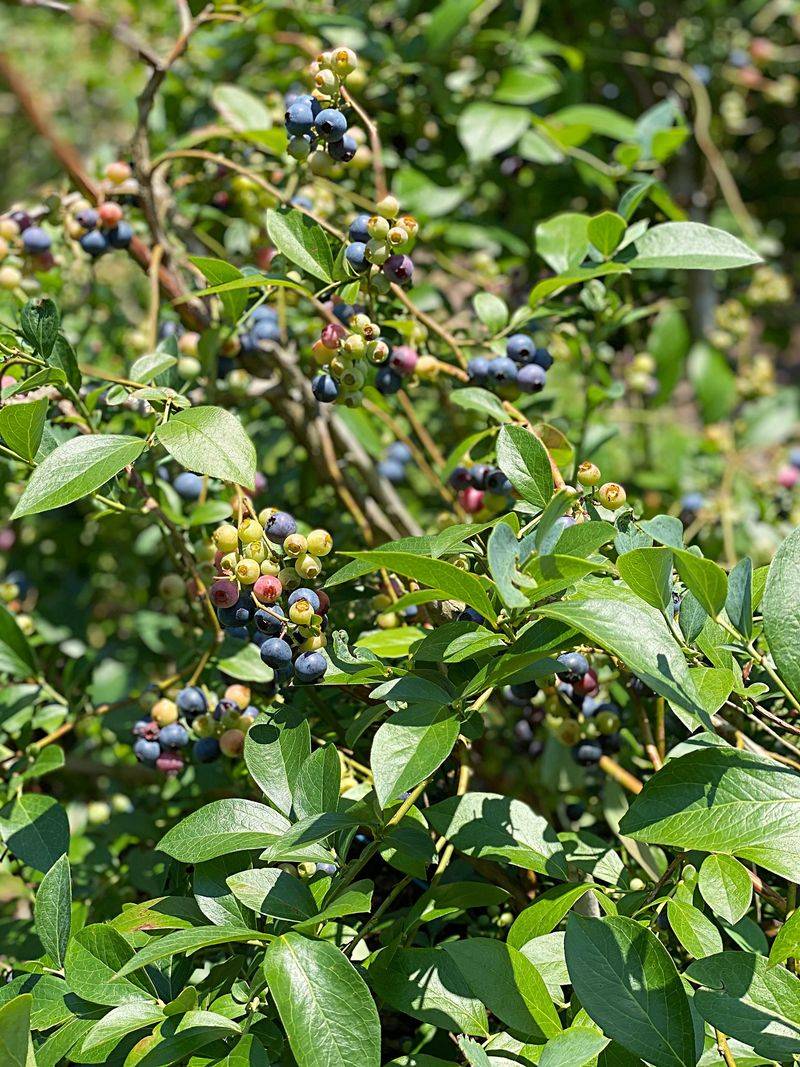
Kids who refuse vegetables will often sprint to a blueberry bush. There is something magic about picking a warm berry and popping it straight into your mouth. That joy is why so many families now line their yards with blueberries.
The trick is choosing the right kind. Rabbiteye blueberries are native to the Southeast and handle Texas heat far better than northern types. Good picks include Climax, Tifblue, Premier, and Powderblue.
Blueberries have one picky need. They want acidic soil, with a pH around 4.5 to 5.5. East Texas often has this naturally, but much of the state has alkaline soil.
If that is you, grow them in raised beds or large containers filled with peat moss and pine bark.
Plant at least two different rabbiteye varieties. They need a partner to cross-pollinate and make a big crop. Space them four to six feet apart for a lovely, loose hedge.
Beyond the fruit, these shrubs are pretty all year. White, bell-shaped flowers show up in spring. Summer brings clusters of berries, and fall turns the leaves shades of red and orange.
Water deeply and keep a thick layer of pine straw mulch around the roots. Their roots are shallow and dry out fast in August. Drip irrigation makes life much easier.
Birds will want a share, so toss a light net over the bushes when berries start turning blue. A mature plant can give you several pounds each summer. That means pancakes, muffins, and smoothies straight from your own front yard.
4. Pineapple Guava, The Quirky Crowd Pleaser
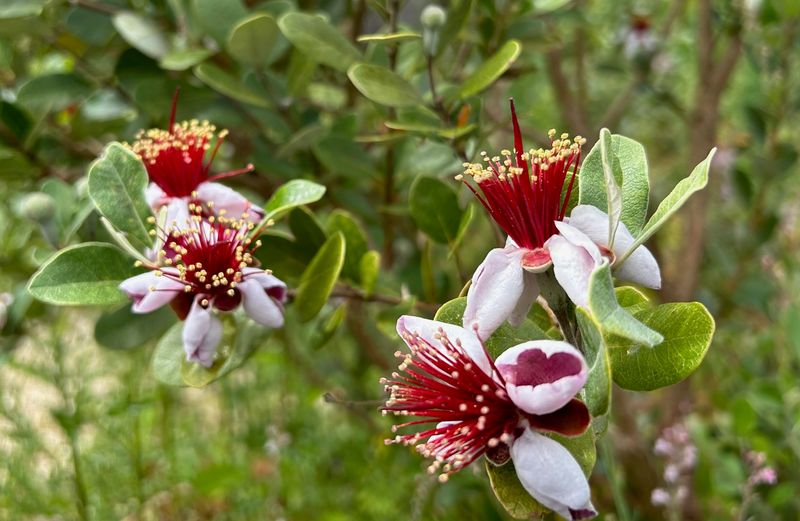
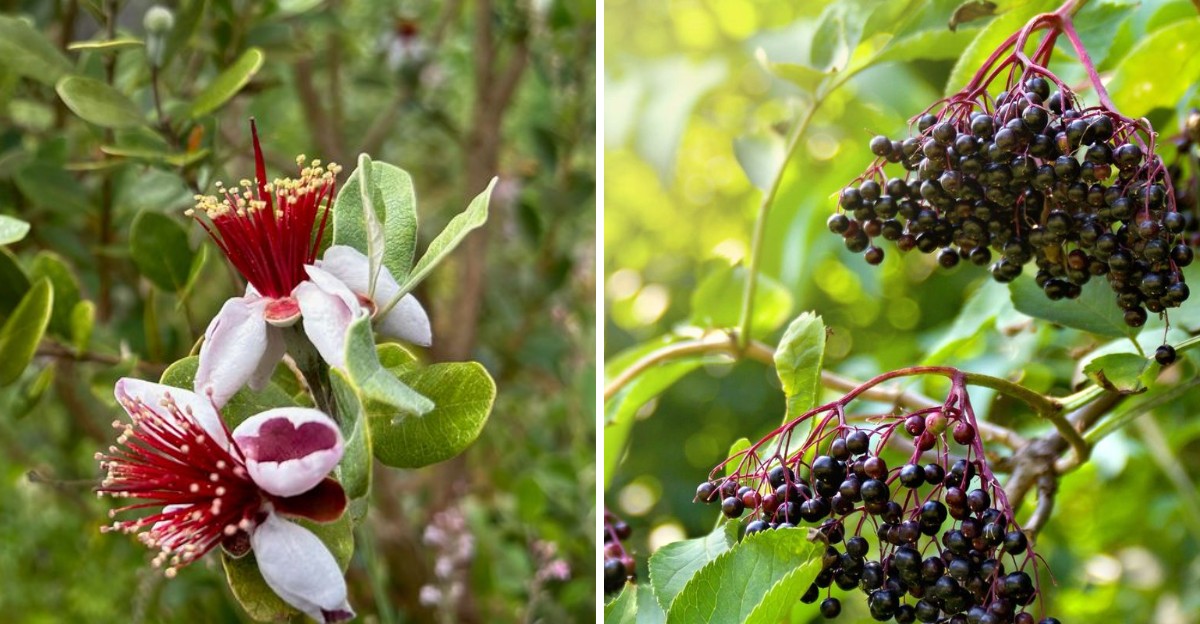
Ever eaten a flower petal that tastes like cotton candy? Pineapple guava, also called feijoa, lets you do just that. Its thick pink petals are sweet enough to nibble right off the bush.
This South American shrub is a bit of an oddball, in the best way. Its leaves are gray-green on top and silvery underneath. When the wind blows, the whole plant seems to shimmer.
In late spring, it bursts into wild little flowers with bright red spikes that look like tiny fireworks. By fall, green egg-shaped fruits drop to the ground. Scoop out the soft inside, and you will taste a mix of pineapple, mint, and guava.
Pineapple guava grows well in South, Central, and coastal Texas. It handles temperatures down to about 15 degrees, and it shrugs off heat. Salt spray near the Gulf does not bother it much either.
As a hedge, it can reach ten feet if you let it. Many folks prune it to about five or six feet for a thick, evergreen screen. It takes trimming well, although heavy shearing can cut off flower buds.
Here is a helpful tip. Some types need a second plant for good fruit, so look for self-fertile ones like Coolidge or Nazemetz. Planting two different kinds almost always boosts the harvest.
Pests rarely bother it, and deer tend to walk right past. Once settled, it needs only occasional deep watering.
For a hedge that sparks conversations and surprises your taste buds, this quirky plant is hard to beat.
5. Agarita, A Tough Native With Tangy Berries
Old-timers in the Hill Country remember spreading sheets under agarita bushes and whacking the branches with sticks.
Tiny red berries would rain down onto the cloth. It was the only safe way to harvest them from such a prickly plant.
Agarita is a true Texas native. It grows wild on rocky hillsides from the Edwards Plateau into West Texas. That means it is built for scorching sun, thin soil, and long stretches without rain.
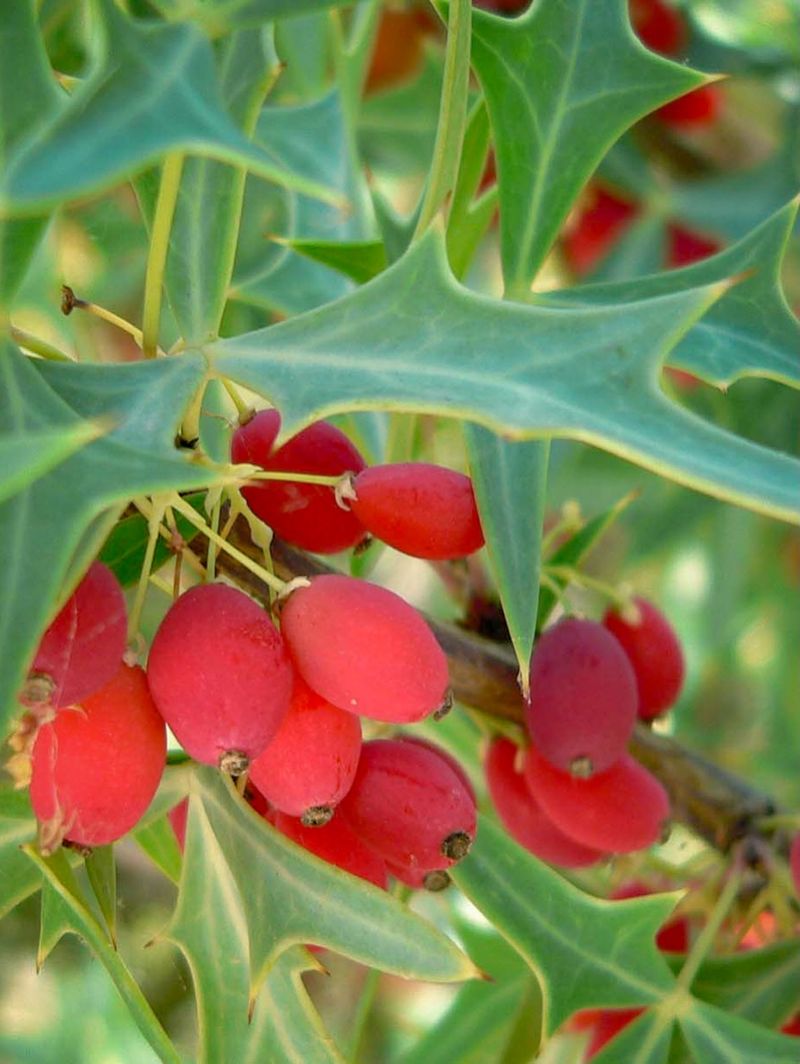
Its stiff leaves look like small, spiky holly leaves in a pretty blue-gray color. Those points make it a natural security hedge.
Nobody wants to push through agarita, so it works great under windows or along property lines.
In late winter, it covers itself in sweet-smelling yellow flowers. Bees come early and often. By late spring, those blooms turn into bright red berries.
The berries taste tart, a bit like a cranberry mixed with a currant. They make a wonderful jelly, and some folks turn them into syrup or wine. Birds and small animals love them too.
Care could not be simpler. Plant it in full sun or light shade with good drainage. Water it through the first summer, then mostly leave it alone.
Agarita grows slowly, which surprises some gardeners. Be patient, and it will reward you with a tidy mound three to six feet tall. Wear thick gloves when you prune or pick.
For a shrub that honors Texas history and feeds your pantry, agarita earns a proud spot in the yard.
6. Pomegranate Shrubs That Glow Like Jewels
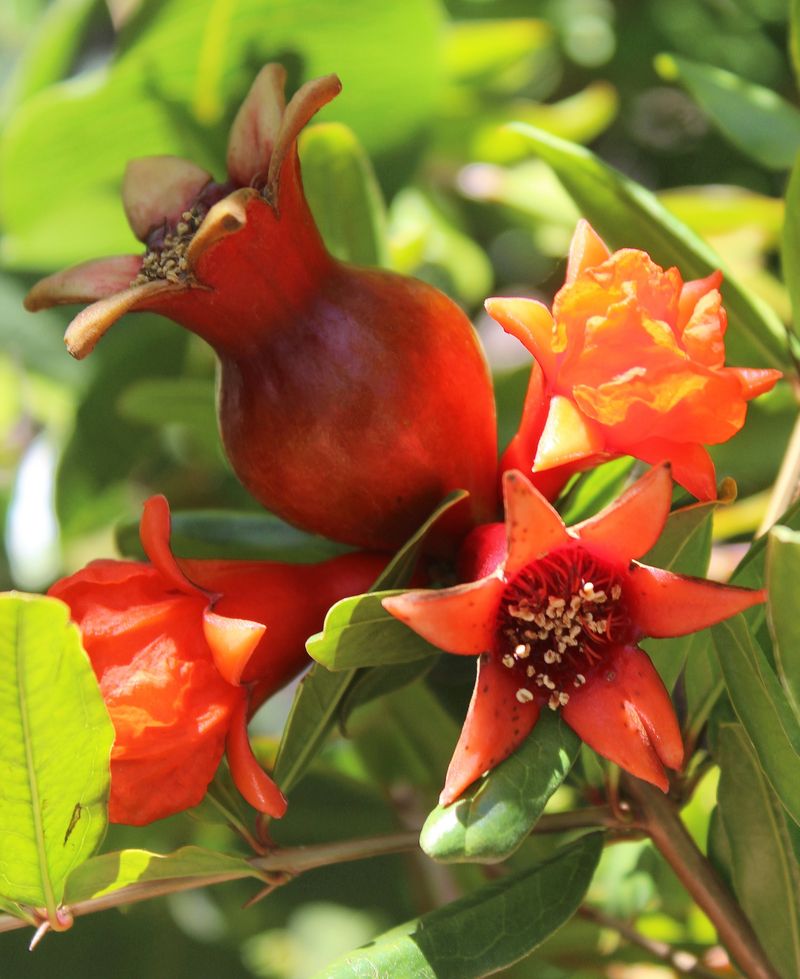
Few plants put on a show quite like a pomegranate. In spring, it glows with ruffled orange-red flowers. By fall, heavy red fruits hang from the branches like holiday ornaments.
Pomegranates have been grown for thousands of years in dry places like Iran and the Mediterranean.
That long history in hot, dusty lands makes them a smart fit for Texas. They handle alkaline soil, drought, and brutal summers with ease.
Many people think of them as trees, but they naturally grow as big, bushy shrubs. You can keep several trunks and trim them into a thick screen around eight feet tall.
Dwarf types stay much smaller and even work in pots on a patio.
Choose varieties known for cold hardiness if you live north of Austin. Texas A&M has tested many kinds, and types like Salavatski, Al-Sirin-Nar, and Wonderful often do well. In South Texas, almost any variety thrives.
Fruit usually ripens from September into November. Pick it when the skin turns deep red and makes a slight metal sound when tapped. Waiting too long can cause the fruit to crack open on the branch.
Getting the seeds out is easy once you know the trick. Cut the fruit into quarters and break it apart in a bowl of water. The seeds sink, and the white pith floats to the top.
Water deeply but not too often, especially while fruit is forming. Uneven watering is a common cause of split fruit. With a little care, you get a stunning shrub and a treasure chest of juicy seeds every autumn.
7. Elderberry For Wild, Easy Abundance
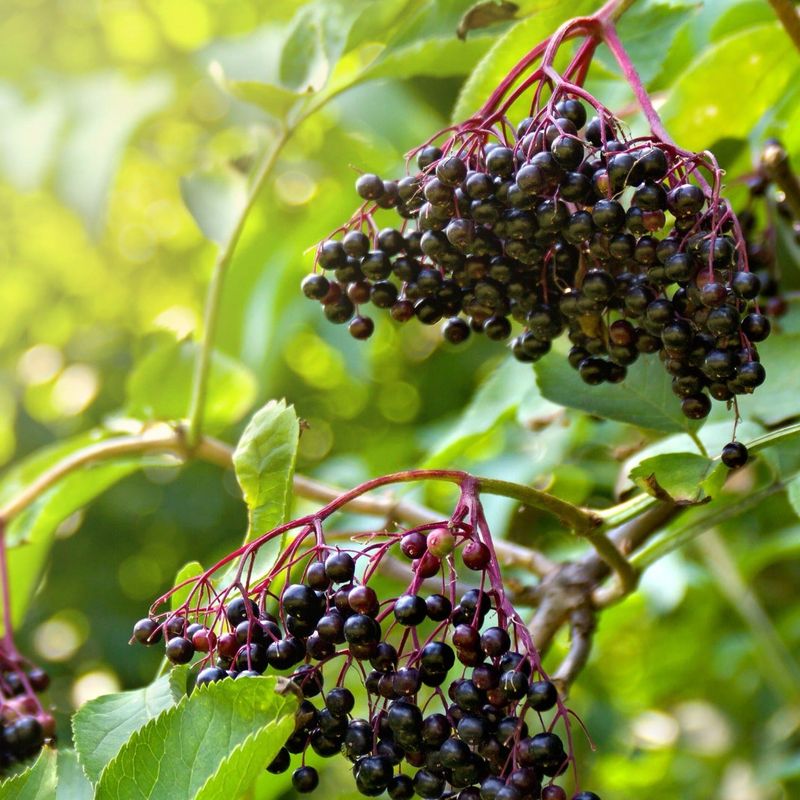
Some shrubs want to be neat and polite. Elderberry is not one of them. It grows fast, spreads wide, and fills a damp corner with lacy white flowers almost overnight.
American elderberry grows wild along creeks and ditches across much of Texas. It loves moist ground, so it is perfect for rain gardens or low spots where boxwood would rot. It can handle sun or part shade.
In late spring, flat clusters of creamy flowers cover the plant. You can dip them in batter and fry them into crispy fritters. Many people also steep them to make a floral syrup or cordial.
By summer, the flowers become heavy bunches of dark purple berries. These are famous for homemade syrup, jam, and pie. Lots of folks keep elderberry syrup around during cold and flu season.
Safety comes first with this plant. Raw berries, stems, and leaves can upset your stomach. Always cook the berries before eating, and pull them off the stems carefully.
Elderberry works best as a loose, natural screen rather than a formal hedge. It can reach ten feet or more in a single season. Cutting some older canes to the ground each winter keeps it full and easier to manage.
Wildlife goes crazy for it. Butterflies visit the blooms, and birds swoop in for the fruit. If you want berries for yourself, harvest clusters as soon as they turn fully dark.
For a low-effort shrub that gives flowers, fruit, and a buzzing backyard, elderberry brings generous rewards.