The Bumpy Red Fruit Hanging From New Jersey Dogwoods Tastes Surprisingly Tropical
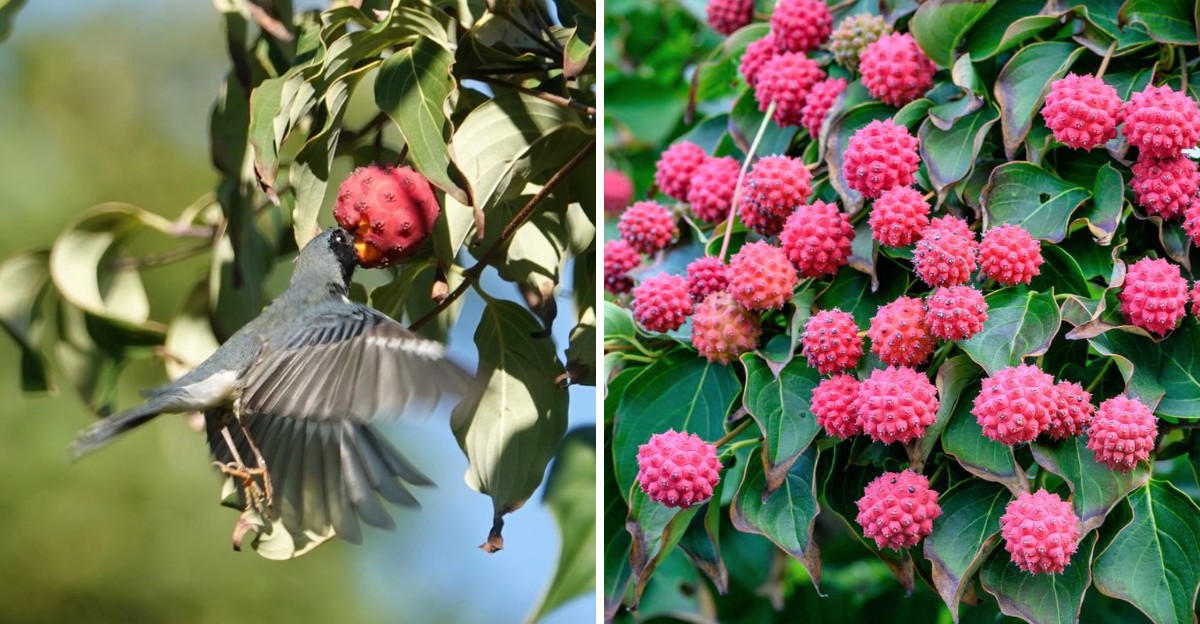
You have strolled past a tropical dessert hanging in plain sight. Ornamental trees dangle it from branches across New Jersey. Landscapers plant them for showy white bracts you probably mistook for petals.
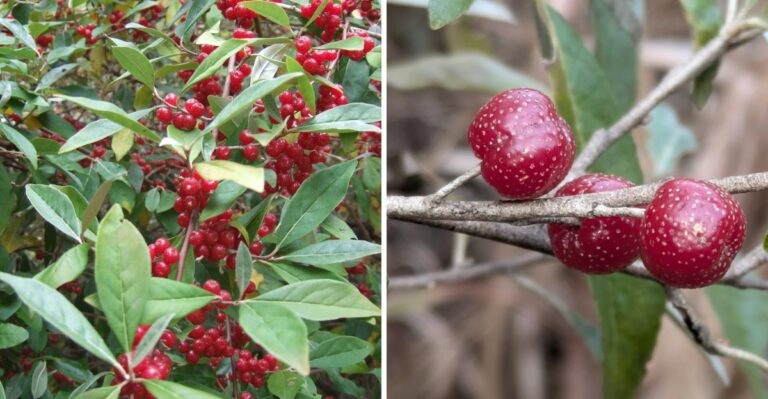
Those bumpy red spheres arriving in September deliver the real prize. Squeeze a ripe globe and orange pulp slides onto your tongue.
Flavor greets you like mango, soft banana, and creamy persimmon custard. Parks, school lots, and sidewalks throughout New Jersey host these trees.
Squirrels figured out the secret long ago and feast before you notice. Meanwhile, you walk over fallen fruit in your sneakers without a clue. Native to Japan, Korea, and China, this tree arrived as pure decoration.
Nobody told you that ornament doubles as a snack. That changes today, and you finally hold the upper hand. Your head start over the squirrels begins right below.
Kousa Dogwood Fruit With A Mango And Banana Flavor
Bite into a ripe kousa dogwood fruit, and you might check the tree for a hidden palm label. The soft pulp tastes like mango, banana, and a little bit of vanilla pudding.
Some people also notice hints of persimmon, apricot, or cantaloupe. Every tree is a little different, so flavors can shift from yard to yard.
Some tasters compare the flavor to a mix between a papaya and a ripe peach. Many kids who try one ask for another right away.
That flavor surprises people who expect something sour from a regular backyard tree. Kousa dogwood actually grows wild in the mountains of Japan, Korea, and China.
Gardeners brought it to America over a century ago for its pretty white spring blooms. Nobody planted it for snacks, but the fruit turned out to be a sweet bonus.
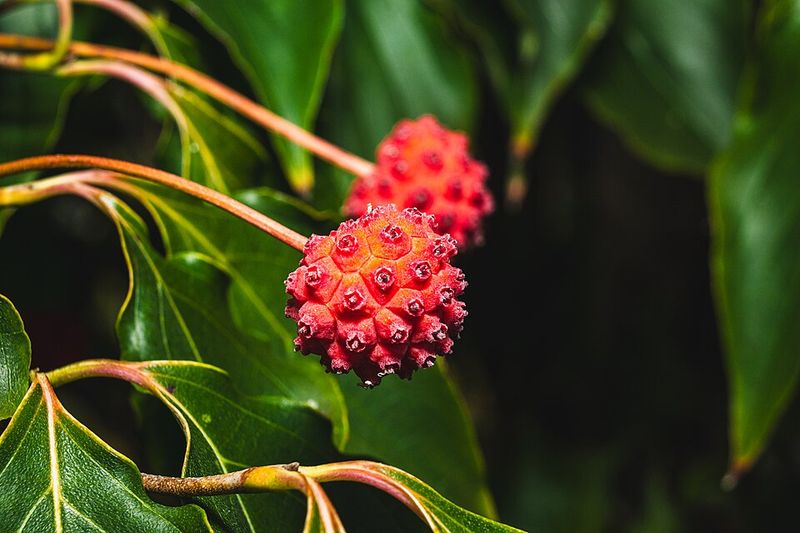
Each fruit is about the size of a large cherry or a small gumball. The bumpy skin forms because many tiny fruits fuse together into one round ball.
Inside, the flesh is golden orange and has a texture like thick applesauce. You will also find a few hard seeds that are about the size of a small pea.
In Japan, people sometimes call the tree yamaboushi and even use it to make homemade fruit wine. Here is a fun twist from local history.
So the next time you spot those red bumpy balls, give one a gentle squeeze. You may discover your new favorite free snack growing just down the street.
September Ripeness On The Branch
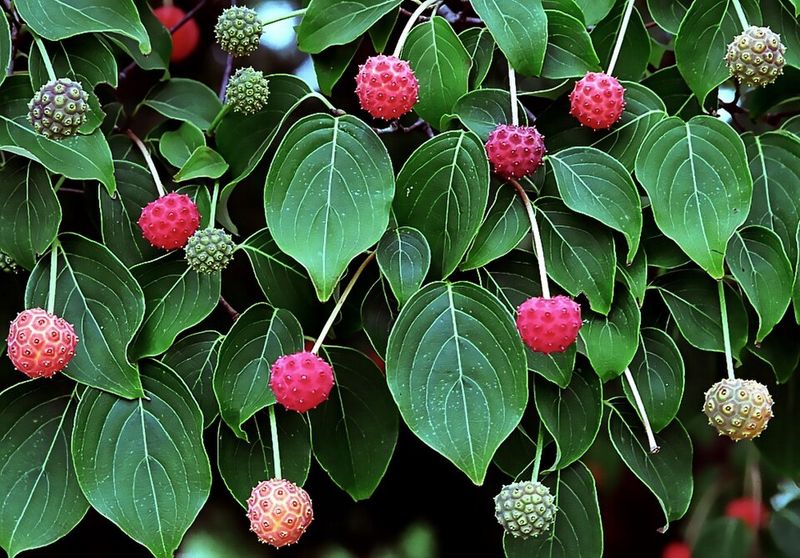
Late summer in New Jersey brings back-to-school shopping, cooler nights, and a quiet show on kousa dogwood branches. The fruit hangs on long stems like tiny red ornaments.
Most trees start ripening in late August, and the peak season lands right in September. Some trees keep offering fruit into early October if the weather stays mild.
Color is your first clue, but it can fool you. Unripe fruit starts green, then turns yellow, pink, and finally a deep strawberry red.
Your New Jersey Garden Changes Every Week. Your Plan Should Too.
Gardening in New Jersey changes quickly throughout the season. Every Friday you’ll receive a simple weekly plan showing exactly what to plant, prune, fertilize, harvest, and protect so you never miss the right timing.
Touch matters even more than color. A ripe fruit feels soft, a bit like a grape that has been sitting in the sun.
Squeeze very lightly, though, or you might end up with sticky orange pulp on your hands. Ripe fruit can also look slightly wrinkled near the stem.
Give the fruit a gentle tug with your fingers. Ripe ones pop off easily, while unripe ones cling tight to the stem.
Fallen fruit on the ground is another sign that harvest time has arrived. Pick up only the fresh ones, since older fruit gets mushy and attracts yellow jackets.
A single tree does not ripen all at once. Plan to visit the same tree every few days for two or three weeks.
Morning is a great time to pick because the fruit is cool and firm. Bring a small basket instead of a plastic bag so the soft fruit does not get squashed.
Birds and squirrels know the calendar as well as you do. Beat them to the best branches, and you will enjoy a sweet September treat.
The Bitter Skin And Seed Mistake
My neighbor tried his first kousa fruit by popping the whole thing in his mouth like a grape. His face scrunched up so fast you would think he bit a lemon.
The problem was not the fruit, but how he ate it. The bumpy skin is tough, gritty, and a little bitter compared to the sweet pulp inside.
Technically, the skin is edible, though most people choose to discard it. Many find the texture unpleasant, a bit like chewing on sandpaper dipped in fruit juice.
Seeds are the second surprise hiding in each fruit. You will usually find one to four hard, tan seeds tucked in the soft flesh.
Chomping down on one can feel like biting a tiny pebble. Your teeth will thank you for slowing down and eating with a little care.
Spit the seeds out rather than swallowing them. Swallowing a few by accident is not a big deal, but they are not meant to be eaten.
Another common mistake is picking fruit that looks red but still feels firm. Underripe fruit tastes starchy and dry, like a banana that is still green.
Many first-timers give up after one bad bite and decide the fruit is gross. That is a shame, since the real flavor was hiding under the skin the whole time.
My neighbor gave it another shot the next week, this time eating only the pulp. Now he checks that tree every September like it owes him money.
A Simple Squeeze And Scoop Method
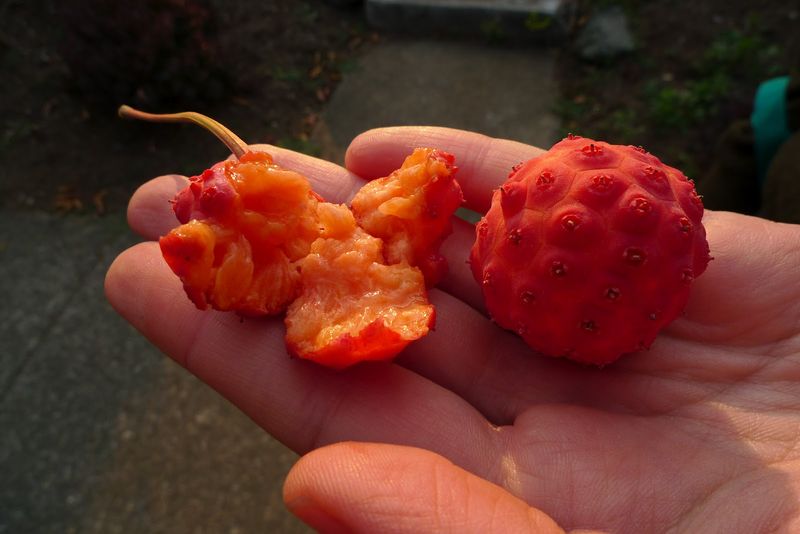
Eating kousa fruit is a lot like enjoying a juice box made by nature. Once you learn the simple trick, it takes about five seconds per fruit.
Start by rinsing your fruit in cool water to wash off dust and any curious ants. Pat them dry gently with a paper towel so they do not split.
Next, gently pinch off the stem and look for the small hole it leaves behind. Hold the fruit near your lips and squeeze softly from the bottom.
The orange pulp will ooze right out, and you can slurp it up like a tiny pudding cup. Spit out the seeds and toss the empty skin into your yard or compost.
Prefer a neater approach for guests? Slice the fruit in half with a small knife and scoop out the flesh with a spoon.
For bigger batches, press the fruit through a mesh kitchen strainer or food mill. The skins and seeds stay behind, while smooth pulp collects in the bowl below.
One cup of whole fruit yields a surprisingly small amount of pulp, so pick extra. Luckily, one healthy tree can produce hundreds of fruits.
Fresh fruit lasts only two or three days in the fridge before it turns mushy. Freeze extra pulp in an ice cube tray for easy treats later.
Keep a damp cloth or wet wipes nearby, because this job gets sticky fast. Your fingers might smell like tropical candy for the rest of the afternoon.
Jam, Smoothies, And Other Sweet Rewards
My grandma used to say the best recipes start with free ingredients from the neighborhood. Kousa pulp fits that idea, and it works in more dishes than you might expect.
Smoothies are the easiest place to begin. Blend a half cup of pulp with yogurt, a frozen banana, and a splash of orange juice.
The result tastes like something from a beach snack stand. Many kids love it, especially if you do not tell them it came from a tree.
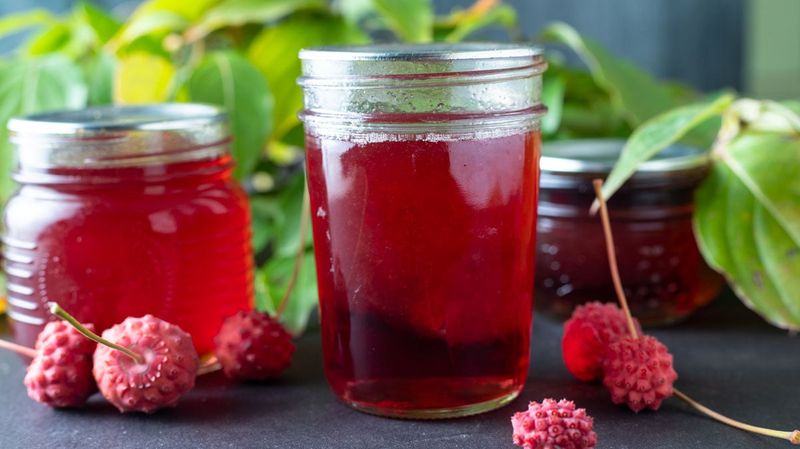
Jam is another classic choice for a big September harvest. Cook the pulp with sugar and lemon juice until it thickens into a golden spread.
Many cooks add store-bought pectin to help the jam set properly. Spread it on warm toast or swirl it into your morning oatmeal.
Frozen pulp makes wonderful ice pops on a hot afternoon. Mix it with a little honey and water, pour it into molds, and freeze overnight.
Bakers also stir the pulp into muffin batter or quick bread. It adds moisture and a soft fruity flavor, much like mashed banana does.
Fruit leather is a fun weekend project for patient cooks. Spread sweetened pulp thin on a baking sheet and dry it slowly in a low oven.
A scoop of fresh pulp over vanilla ice cream might be the simplest treat of all. It tastes fancy, yet it takes less than a minute to make.
However you use it, label your jars and freezer bags with the date and tree location. Next year, you will know exactly which trees gave the sweetest fruit.
Native Dogwood Look-Alikes To Avoid
Picking the wrong red fruit can turn a fun snack hunt into a stomachache. The native flowering dogwood, which grows wild in local forests, makes berries you should skip.
Flowering dogwood berries are small, smooth, shiny, and shaped like little footballs. They grow in tight clusters instead of hanging alone on long stems.
Kousa fruit, by contrast, is round, bumpy, and about an inch wide. Each one dangles by itself at the end of a long, slender stalk.
Native dogwood berries taste very bitter and can upset your stomach. Birds love them, but people should leave them for the robins and cardinals.
Leaves and bark offer more clues if you still feel unsure. Kousa bark peels in patches of tan, gray, and brown, like a camouflage jacket.
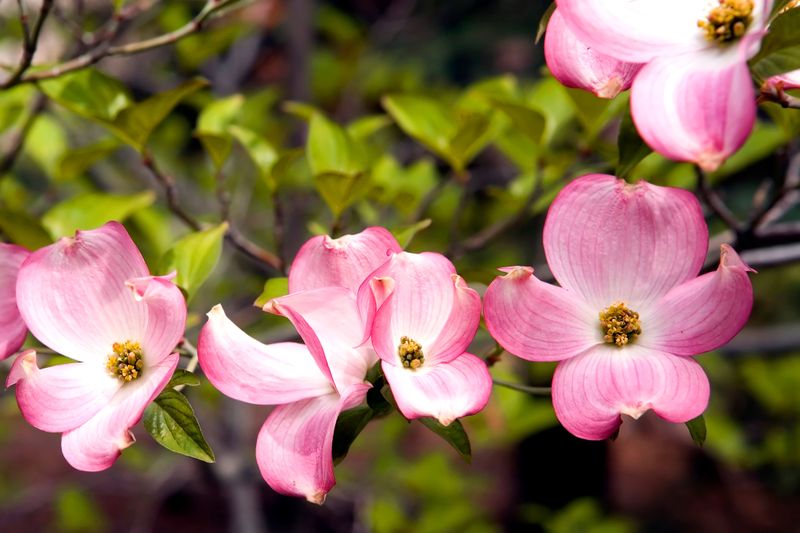
Flowering dogwood bark looks blocky, almost like alligator skin. Spring blooms help too, since kousa bracts open weeks later and come to a sharp point.
Here in New Jersey, many people have no idea it is edible. Rutgers University scientist Elwin Orton crossed both species to create hybrids that resist dogwood anthracnose and dogwood borers.
Most of those hybrids are sterile and produce no fruit, so do not expect a harvest from them. A fruitless tree could be one of these hybrids, though young or stressed trees also skip fruiting.
A photo app or a field guide from the library can help narrow down your guess. Double-checking takes little time and saves you from a bitter surprise.
Stick to one simple rule whenever you forage. Only eat fruit you can identify with real confidence, and ask an adult or expert when in doubt.