Stop Pulling These Arizona Yard Plants – They’re Not Weeds And Your Garden Needs Them
That scraggly green sprout popping up in your gravel might be the hardest-working plant in your yard. Across Phoenix and Tucson, homeowners yank out native volunteers every week without knowing they feed pollinators, shelter birds, and sip almost no water.
Many of these plants showed up on their own because they already love our heat, caliche, and monsoon rhythm. Before you grab the gloves again, here are nine yard plants worth keeping.
1. Arizona Poppy
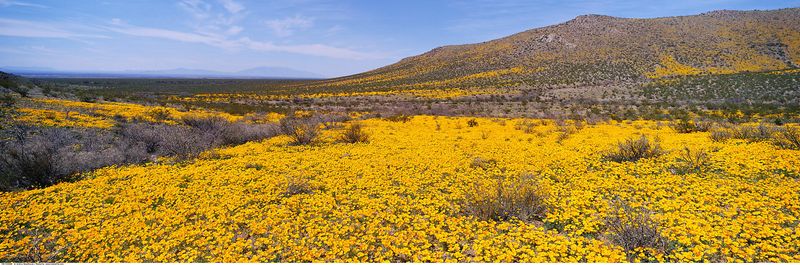
One good monsoon storm, and suddenly a carpet of orange flowers spills across the gravel near your driveway. Plenty of folks see those sprawling stems and assume a weed invasion.
Look closer, because that’s Arizona poppy, also called summer poppy, and it arrived right on schedule.
Despite the name, it isn’t a true poppy at all. It belongs to the caltrop family, and its silky orange blooms open wide in the morning sun during July and August.
Bees and butterflies treat those flowers like a summer buffet at a time when many garden plants are just trying to survive.
Here’s the best part for busy homeowners. Arizona poppy thrives in sandy, gravelly, or rocky soil that would frustrate most flowers, and it needs zero extra watering beyond what the monsoon delivers.
It’s an annual, but it drops plenty of seed, so it returns year after year with no replanting.
If a patch pops up somewhere inconvenient, simply let it finish blooming and set seed before tidying up in fall. Leave a few plants along the edges of your yard.
You’ll get a free splash of color and a steady stream of pollinators without lifting a hose.
2. Desert Marigold
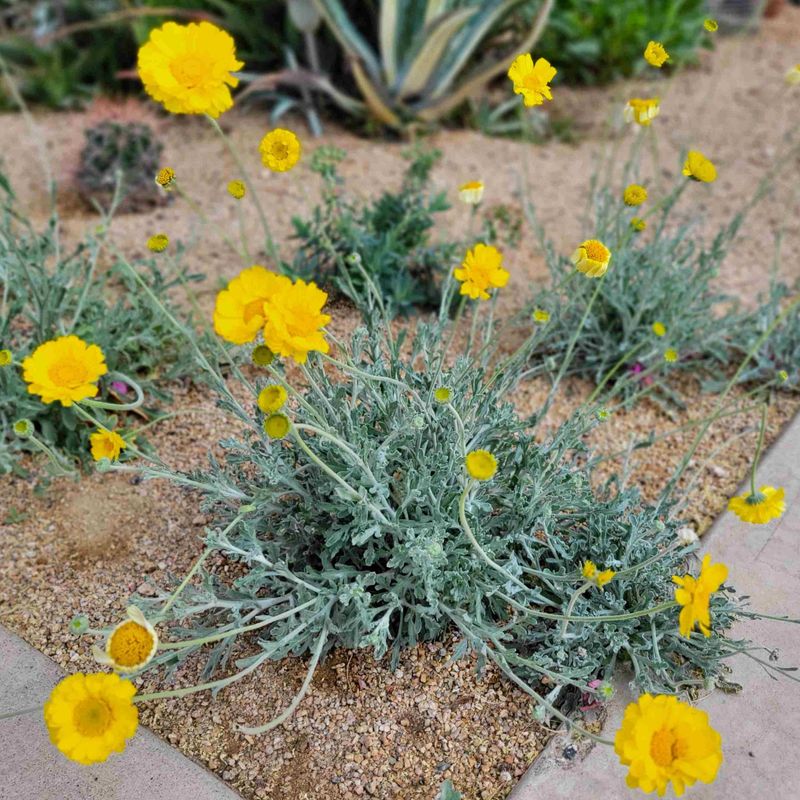
Ever notice a silvery little mound near the curb that just keeps blooming yellow no matter how brutal the week gets? Meet desert marigold, a scrappy survivor that volunteers along roadsides, washes, and gravel yards all over the low desert.
Its woolly gray leaves aren’t just pretty. That fuzzy coating reflects sunlight and slows water loss, which is why the plant can flower on and off from spring into fall with very little help.
Once established, a deep drink every few weeks in summer is usually plenty.
Wildlife loves it too. Bees and butterflies work the cheerful blossoms, and when the seed heads dry out, doves, sparrows, and finches come by to snack.
Leaving the spent flowers in place turns your yard into a small bird feeder you never have to refill.
There’s a bonus for anyone worried about scorpions. Desert marigold stays open and airy instead of forming dense, damp thickets, so it may be less inviting to pests looking for cool hiding spots near your house.
Just avoid overwatering, since soggy soil shortens its life. Let it reseed freely, and you’ll have a patch of gold that refreshes itself.
3. Globe Mallow
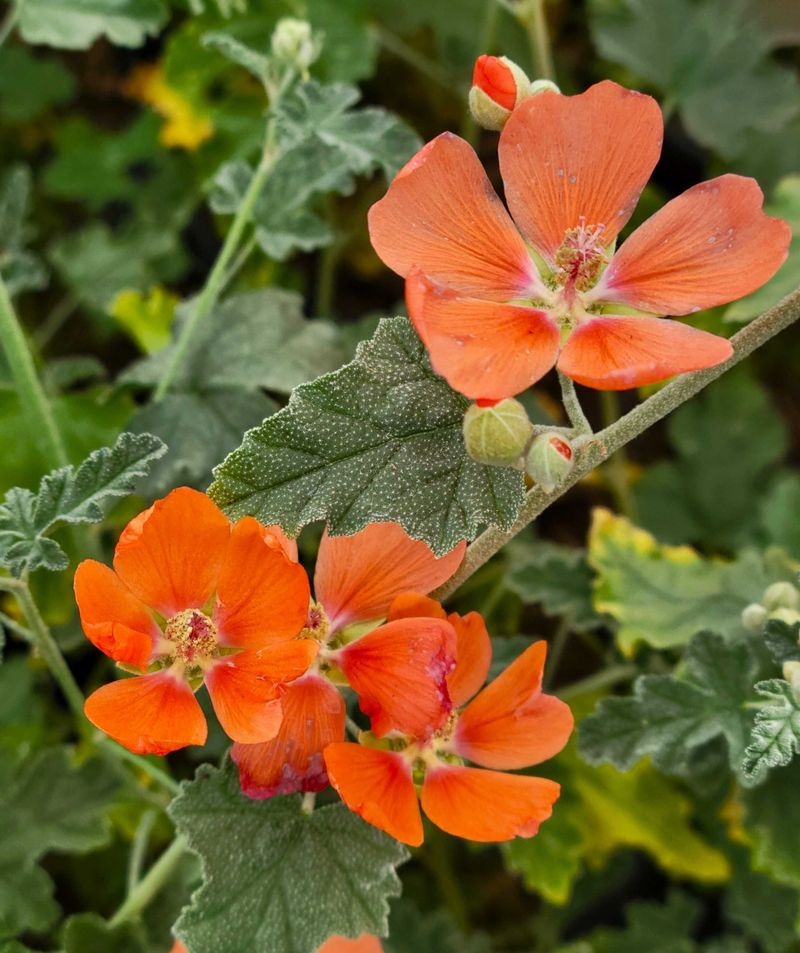
Some gardeners call it the plant that refuses to quit. Globe mallow shows up in cracks, along block walls, and in empty corners, then covers itself in papery apricot-orange cups that glow in the spring sun.
Your Arizona Garden Changes Every Week. Your Plan Should Too.
Gardening in Arizona changes quickly throughout the season. Every Friday you’ll receive a simple weekly plan showing exactly what to plant, prune, fertilize, harvest, and protect so you never miss the right timing.
Because it volunteers so easily, it often gets mistaken for an unwanted weed. That would be a real loss.
This tough perennial blooms heavily from late winter into spring and can repeat with a little water, feeding native bees at a time when they’re especially active. Some specialist bees rely on mallows almost entirely.
Rocky, sandy, alkaline ground? No problem.
Globe mallow shrugs off caliche and reflected heat that would scorch softer plants, and it only needs occasional deep watering once its roots settle in. Flowers also come in pink, red, lavender, and white forms if you want variety.
A quick heads-up for sensitive skin: the leaves have tiny hairs that can itch, which earned it the nickname sore-eye poppy. Wear gloves when you handle it.
After the spring show fades, cut it back by about a third in early summer to keep it tidy. Fall and early spring are great times to transplant seedlings to a better spot instead of tossing them.
4. Desert Milkweed
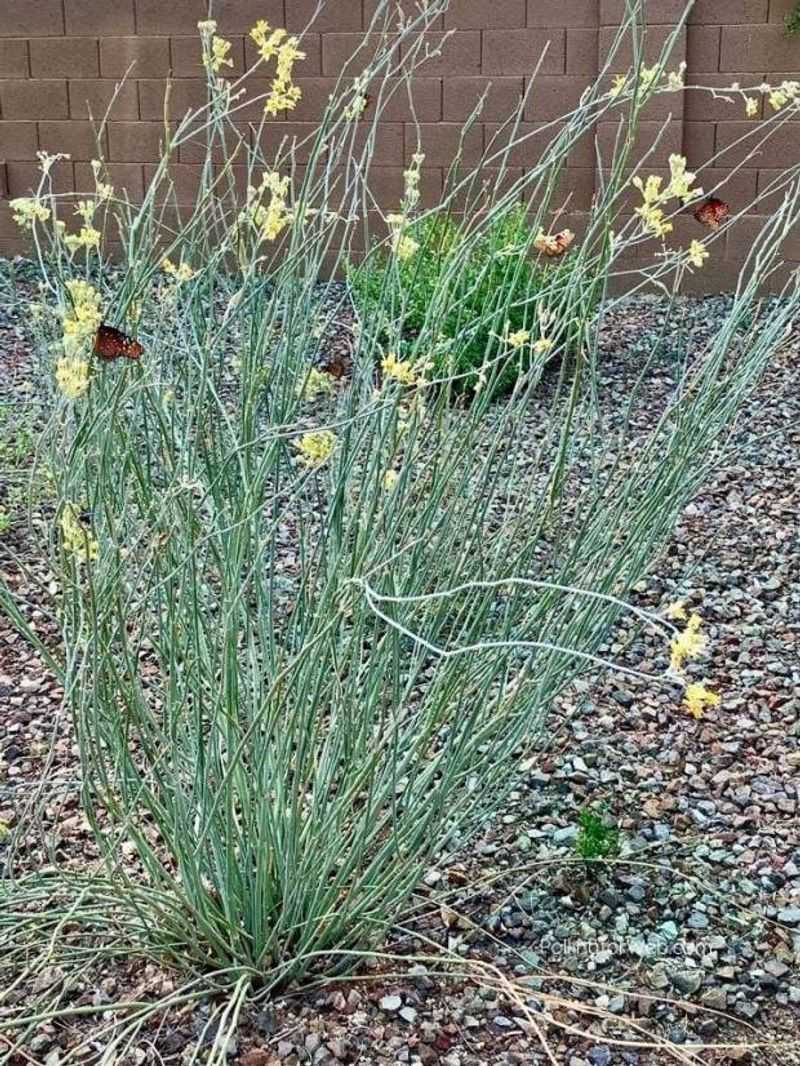
A cluster of bare, pencil-thin stems poking out of the dirt doesn’t look like much. Many people pull it, thinking it’s a dried-up reed.
That clump could be desert milkweed, and to butterflies it’s pure gold.
Queen and monarch butterflies lay their eggs only on milkweed, and their striped caterpillars feed on it before forming a chrysalis. Without these plants, those butterflies simply can’t complete their life cycle in your neighborhood.
Keeping a few stems is one of the easiest ways to support them.
Fun fact: desert milkweed has almost no leaves. Its gray-green stems handle photosynthesis instead, which helps the plant save water during our long, blazing summers.
It actually prefers full sun and reflected heat, so a spot near a wall or driveway suits it well.
Care is refreshingly simple. Water deeply now and then during the hottest months, then mostly leave it alone.
Pale yellow flower clusters appear through the warm season and attract a surprising variety of bees and wasps.
If you spot munched stems and chubby caterpillars, resist the urge to spray. That’s a sign the plant is doing its job.
The stems bounce back quickly.
5. Brittlebush
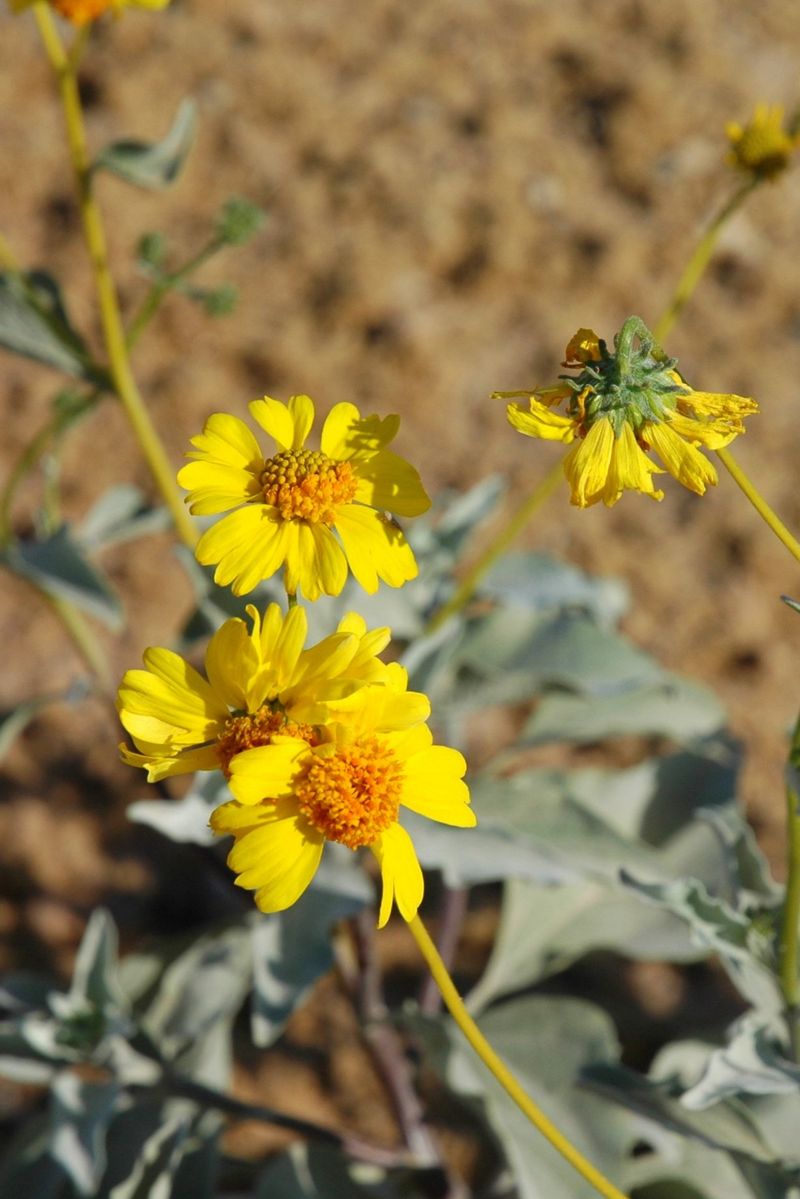
Drive through the foothills in March and you’ll see entire slopes blazing yellow. That’s brittlebush, and there’s a good chance a seedling or two has already sprouted in your yard, waiting for a chance to shine.
The silver-white leaves are its secret weapon against heat. They reflect sunlight and help the shrub stay cooler, and in extreme drought it may drop leaves to rest, then leaf out again after rain.
Don’t panic if it looks rough in June. It’s resting, not failing.
Brittlebush earns its spot in a functional yard. Bees, butterflies, and other pollinators crowd the daisy-like flowers, while finches and sparrows pick at the seeds later.
Its roots also help hold loose soil on slopes, which matters when monsoon downpours start washing gravel away.
Historically, people used the fragrant resin from its stems as glue and even as incense. That’s where the plant’s Spanish name, incienso, comes from.
Because it grows open rather than dense, brittlebush may offer fewer shady hideouts for scorpions than thick hedges do. Trim spent flower stalks after spring bloom, give it an occasional summer soak, and let volunteers stay where they land.
6. Desert Verbena
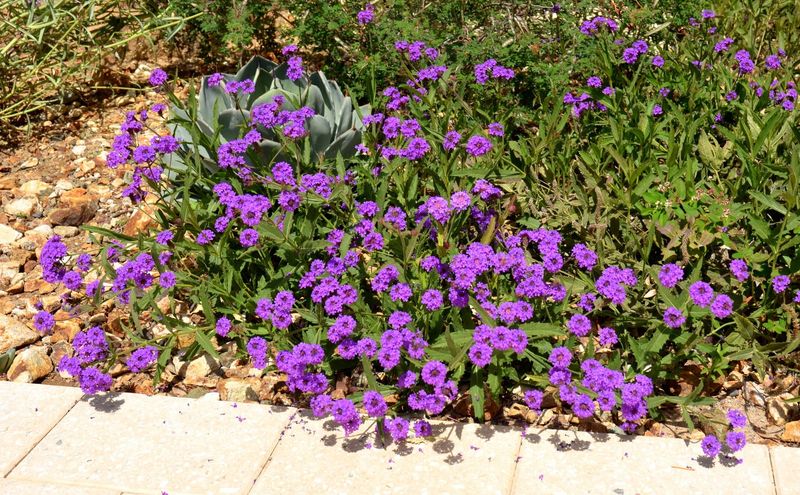
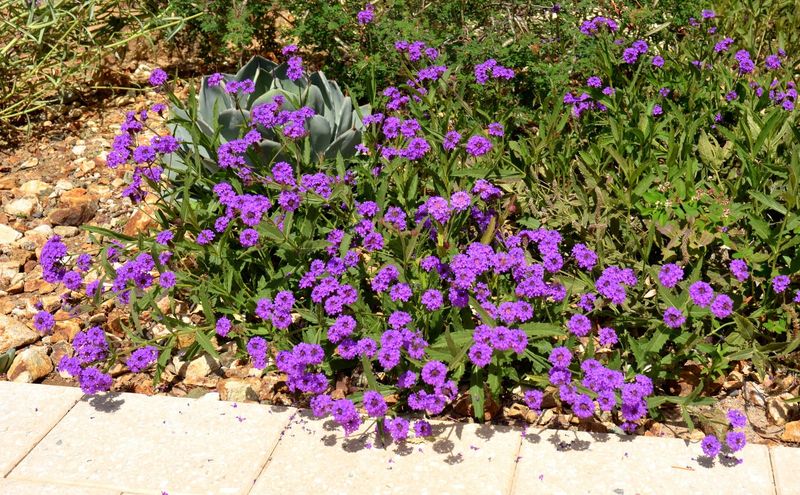
Picture a low mat of lilac-purple flowers drifting across your gravel, with butterflies bouncing from cluster to cluster. Sounds planned, right?
Often it’s desert verbena, a native that seeds itself in and quietly upgrades the whole yard.
Also called Goodding verbena, this fast grower can bloom from early spring clear into fall if you give it a splash of water during the hottest stretch. Swallowtails, painted ladies, and skippers seem especially drawn to its sweetly scented blossoms, and hummingbird moths visit at dusk.
Honestly, it’s one of the most forgiving plants out there. It handles poor soil, full sun, and neglect, then pops up somewhere new next season.
Think of it as a groundcover that plants itself for free.
Some gardeners also like that fragrant flowering plants such as verbena may help make patios a bit less appealing to mosquitoes. It won’t replace other precautions, but it’s a pleasant bonus near a seating area.
Desert verbena usually lives a few years rather than decades. That’s fine, because its seedlings take over.
Snip it back lightly after a big bloom flush to encourage fresh flowers, and let a few blooms go to seed.
7. Creosote Bush
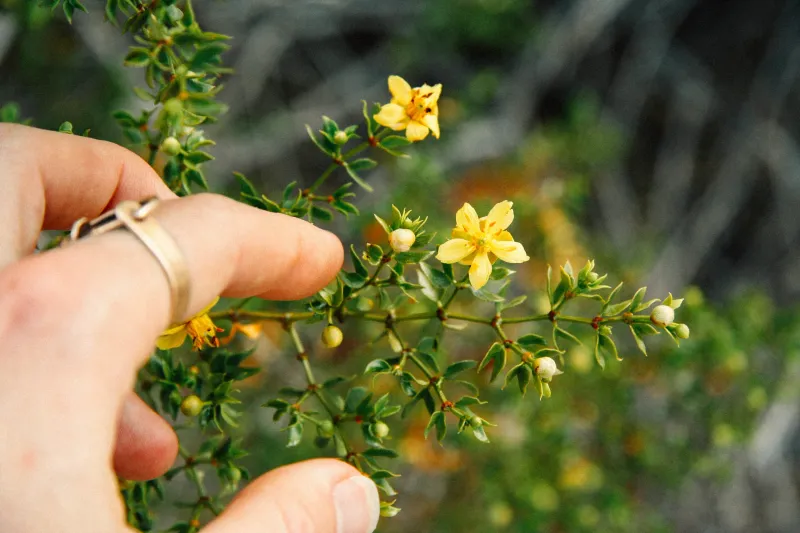
Close your eyes after a summer storm and breathe in. That earthy, rain-soaked scent Arizonans love so much?
It comes largely from creosote bush, the scrubby shrub many new homeowners bulldoze without a second thought.
Creosote might be the ultimate plant-and-forget native. It survives on rainfall alone in much of the low desert, and once established it needs little or no irrigation.
That makes it perfect for the outer edges of a property where hoses don’t reach.
Here’s a jaw-dropper: some creosote rings in the Mojave Desert are estimated to be thousands of years old, spreading outward as clones of the original plant. Few living things anywhere can match that staying power.
Wildlife benefits too. Its small yellow flowers feed dozens of native bee species, some of which visit creosote almost exclusively.
Lizards and small birds use the shrub’s shade as a cool retreat, and its waxy leaves hold up in brutal heat.
Want it neater? Remove a few of the oldest stems from the base in cooler months instead of shearing it into a ball.
Keep it a few feet from walls for airflow, and it’ll reward you with fragrance for decades.
8. Palo Verde Seedlings
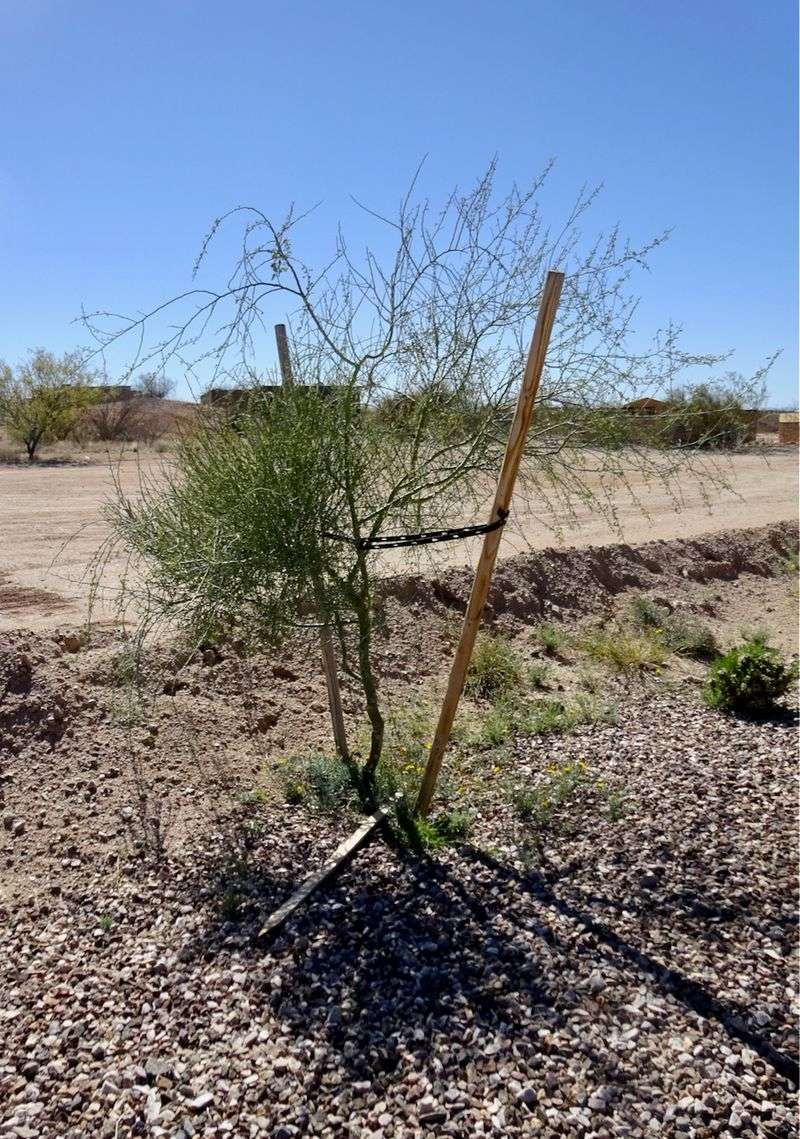
Found a skinny green-barked sapling growing where no one planted it? Before you yank it, know that you may be holding Arizona’s future state tree.
Palo verde seeds get dropped by birds and washed in by storms, and some of the best trees in town started exactly that way.
Palo verde, meaning green stick in Spanish, has bark that photosynthesizes, so the tree keeps making energy even after it sheds its tiny leaves in drought. That clever trick lets it thrive on very little water once established.
Give a volunteer a few years and it becomes a backyard bird sanctuary. Verdins, finches, and hummingbirds nest and roost in its branches, while insects living on the bark provide food.
Its filtered shade also acts like a nurse, protecting young cacti and wildflowers from the harshest afternoon sun.
Every spring, the canopy explodes into yellow blossoms buzzing with bees. The open, airy structure also doesn’t form the dense, damp cover that may attract scorpions.
If the seedling is badly placed, dig it up while small in fall or early spring and move it. Water deeply its first couple of summers, then taper off.
9. Velvet Mesquite
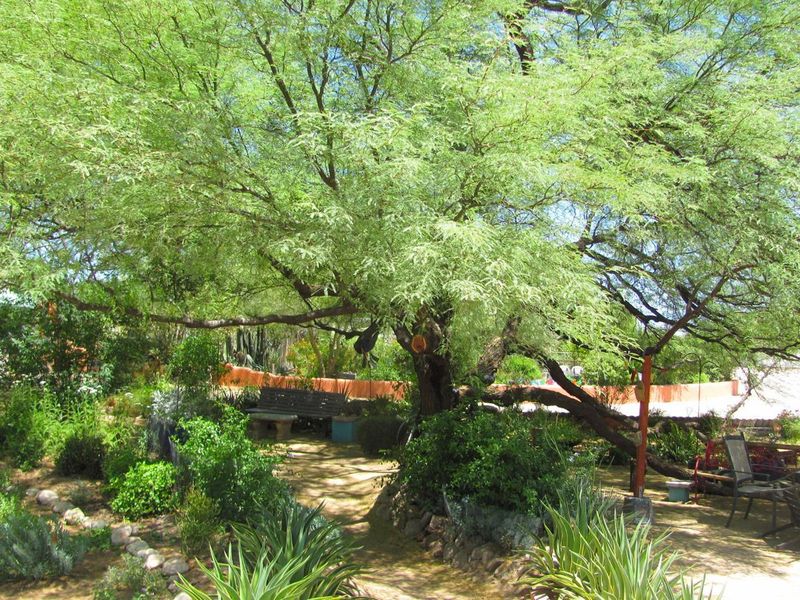
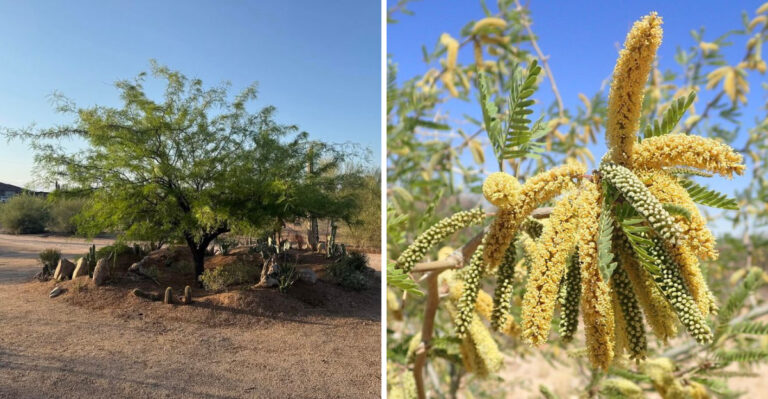
When it’s 112 degrees in July, you’ll thank the scruffy little mesquite you almost pulled last spring. Velvet mesquite sprouts easily from seeds that birds and critters scatter, and those volunteers can grow into some of the most valuable shade trees in the desert.
A mature mesquite can cool a patio dramatically. Its roots can dig impressively deep to reach moisture, which helps the tree handle long dry spells that would stress thirsty imports like ash or mulberry.
Birds absolutely adore it. Doves and Gambel’s quail feast on the sweet pods, while nesting birds tuck into the branches.
Spring catkins buzz with bees, and insects on the bark become meals for hungry songbirds. You’re basically planting a wildlife hotel.
People have long ground mesquite pods into a sweet, nutty flour, and you can still do it today. Pick clean, dry pods straight from the tree before summer rains arrive.
A little planning helps. Keep young trees at least 15 feet from foundations and pools, and water deeply and infrequently to encourage strong roots.
Light structural pruning in late winter keeps branches sturdy before monsoon winds arrive. Treat that volunteer well, and future you gets free air conditioning.