8 California Trees That Deserve A Closer Look Before Winter Winds
Forecast for the coming months: gusty winds, soaked soil, and a few surprises in the backyard.
Most of those surprises stand very still all summer. They offer shade. They hold bird feeders.
Then winter shows up with a different agenda.
Some trees shrug off a storm like it was a light breeze. Others hide a weak spot for years and wait for the worst possible night to reveal it. The tricky part? From the lawn, both can look exactly the same.
So, how well do you really know the trees in your yard?
A few popular California favorites carry quirks that most homeowners rarely notice. Some grow in shapes that look sturdy but are not. Some carry more weight than they can handle. A couple are famous among arborists for all the wrong reasons.
None of this means panic. It means a closer look, a few smart questions, and maybe a phone call before the first big gust.
Curious which trees made the list? Step outside and look way up.
1. Coast Live Oak
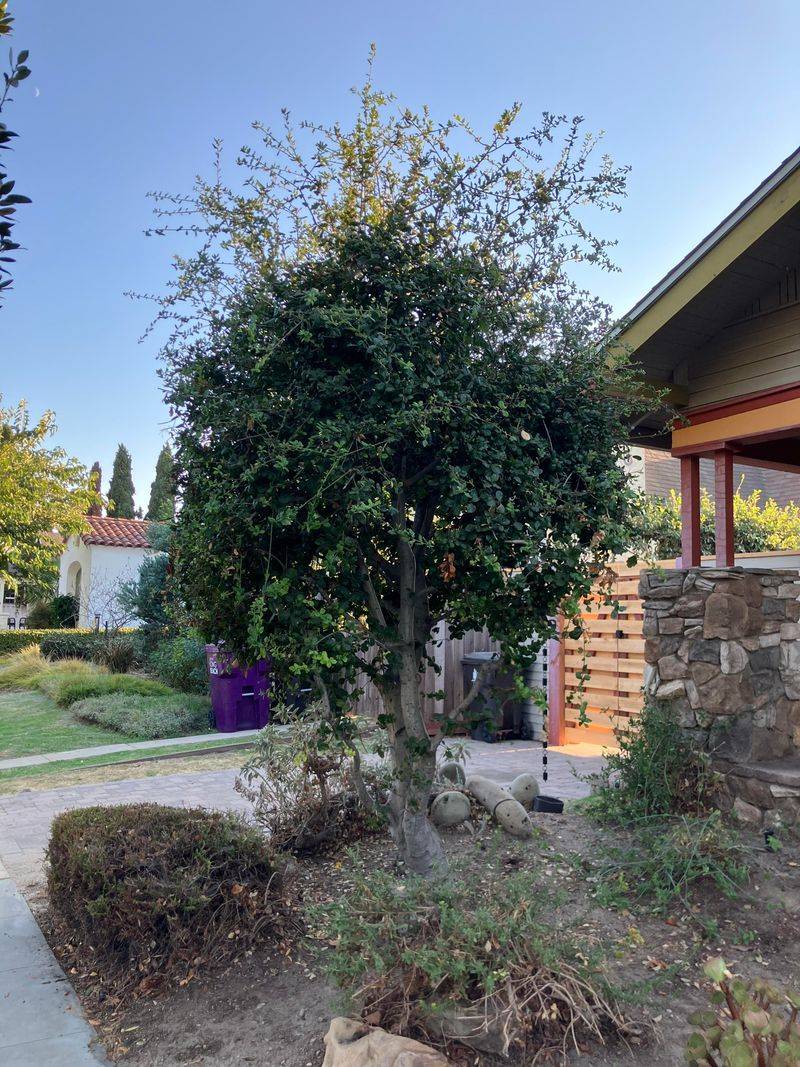
Coast live oaks are California royalty. They offer deep shade, feed wildlife, and can live for centuries. Many of them, though, grow two or more main trunks that race each other toward the sky.
Arborists call those co-dominant stems. From a distance, they look sturdy. The spot where they meet tells a different story.
Two stems of the same size and speed leave no true leader. As they thicken, bark can get pinched between them. That trapped layer, called included bark, keeps the stems from a solid wood connection. The joint ends up far weaker than it looks.
Wind makes it worse. Each trunk sways on its own schedule. In a strong gust, the two can pull in opposite directions, like a wishbone at Thanksgiving.
Grab your binoculars or just stand back for a good view, because this check takes only a minute. A narrow, tight V is a bigger concern than a wide, open U. Look for cracks, oozing sap, or a dark seam that runs down from the union.
Young oaks are easier to guide. A careful trim can help one stem take the lead. Older oaks may need cables or braces, and that job belongs to a certified arborist.
Also go easy on summer water near the trunk. Coast live oaks prefer dry summers, and soggy soil can invite root rot.
Treat your oak like the royalty it is. Just skip the wishbone contest.
2. Blue Gum Eucalyptus
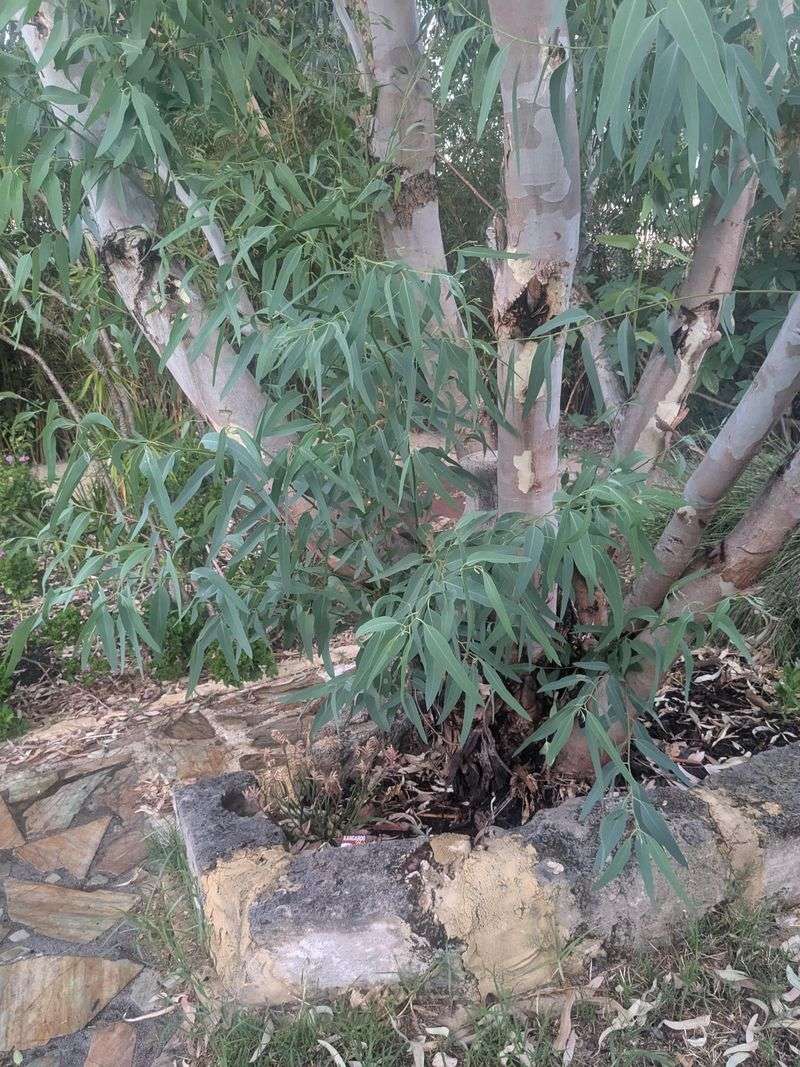
Plenty of California neighborhoods live in the shadow of a giant. Blue gum eucalyptus grows fast, smells amazing, and sheds bark like a snake in spring cleanup mode. It also has a reputation arborists take seriously.
Blue gums can drop large limbs, sometimes with very little warning. Their heavy branches often stretch far from the trunk. Wind, rain weight, and old, weak wood all add stress. A single limb can weigh plenty, and gravity does the rest.
Dried-out limbs deserve special attention on these giants. Look for gray, leafless branches that stand out against the blue-green foliage. Peeling bark is normal for eucalyptus, but bleached, bare wood on a whole limb is not.
Your California Garden Changes Every Week. Your Plan Should Too.
Gardening in California changes quickly throughout the season. Every Friday you’ll receive a simple weekly plan showing exactly what to plant, prune, fertilize, harvest, and protect so you never miss the right timing.
Brittle branches rarely bend in the wind. They crack and fall instead.
Now for a quick safety stroll, and yes, your car will thank you. Walk under the canopy and note what sits below the biggest limbs. A roof, a driveway, a patio, or a play area raises the stakes.
Stressed eucalyptus can also attract borers, which can weaken trees further.
Small twigs can come off with a pole saw from the ground. Large, high, or overhanging limbs call for a certified arborist. Power lines nearby add another reason to leave the job to pros.
A blue gum can be a gorgeous neighbor. Still, nobody wants a surprise delivery of firewood through the skylight.
3. Monterey Pine
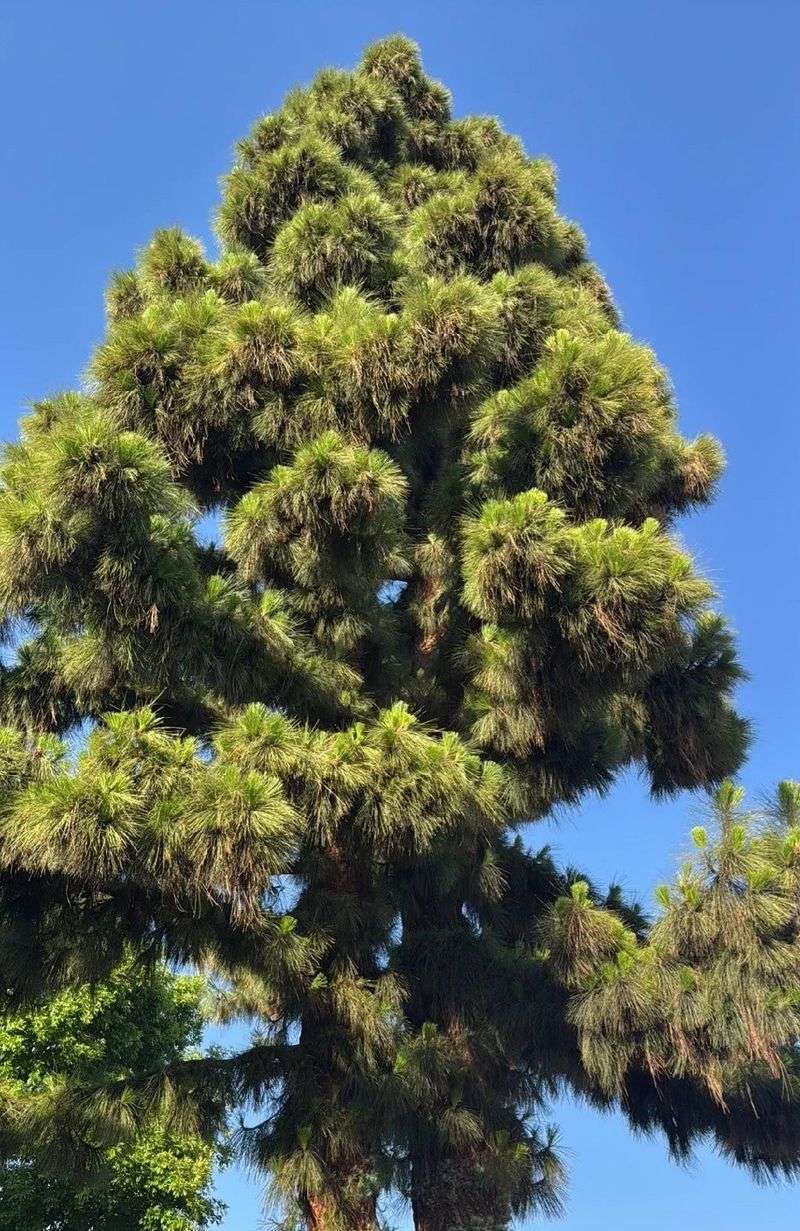
Tall, fast, and handsome sounds like a dating profile. It also describes the Monterey pine. The catch sits underground, since its roots tend to stay fairly shallow in many yards. That combo can spell trouble when winter soaks the ground.
Every tree sits on a root plate, a wide mat of roots that anchors it like the base of a lamp. Saturated soil loosens that grip. A tall pine with a heavy crown can then tip over in one piece instead of a clean break.
A lean by itself is not always a problem. A pine that grew slanted toward the sun for decades usually adapted to that angle. A new lean, or one that seems to grow worse, is a different story.
Time to play ground detective, so start at the base and work your way around. Soil that cracks, mounds, or lifts on the side opposite the lean is a serious red flag. Exposed or broken roots and fresh trenches for pipes nearby point to trouble too.
Monterey pines also face pitch canker and bark beetles. Branch tips that turn brown, oozing resin, or tiny holes in the bark can signal a stressed tree.
One handy trick tracks slow changes. Snap a photo from the same spot every few months and compare.
A lean that changed recently calls for a certified arborist right away. Until then, keep the hammock somewhere else. Nobody wants a nap that ends with a timber event.
4. Callery Pear
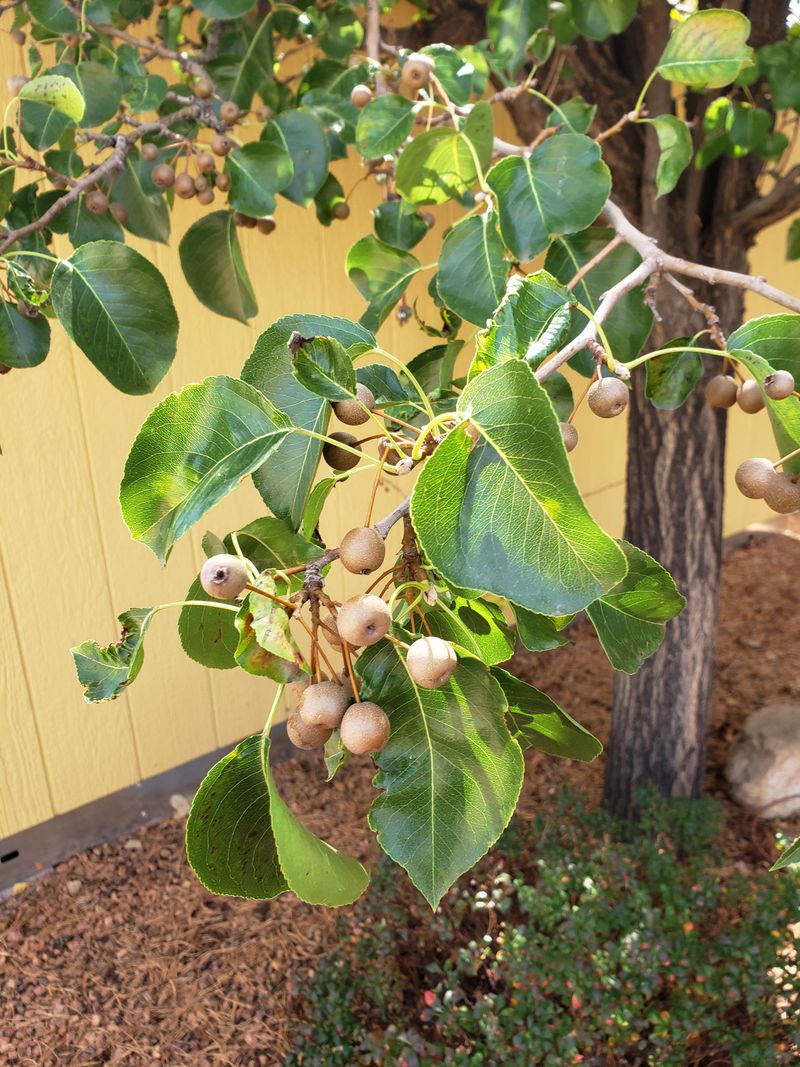
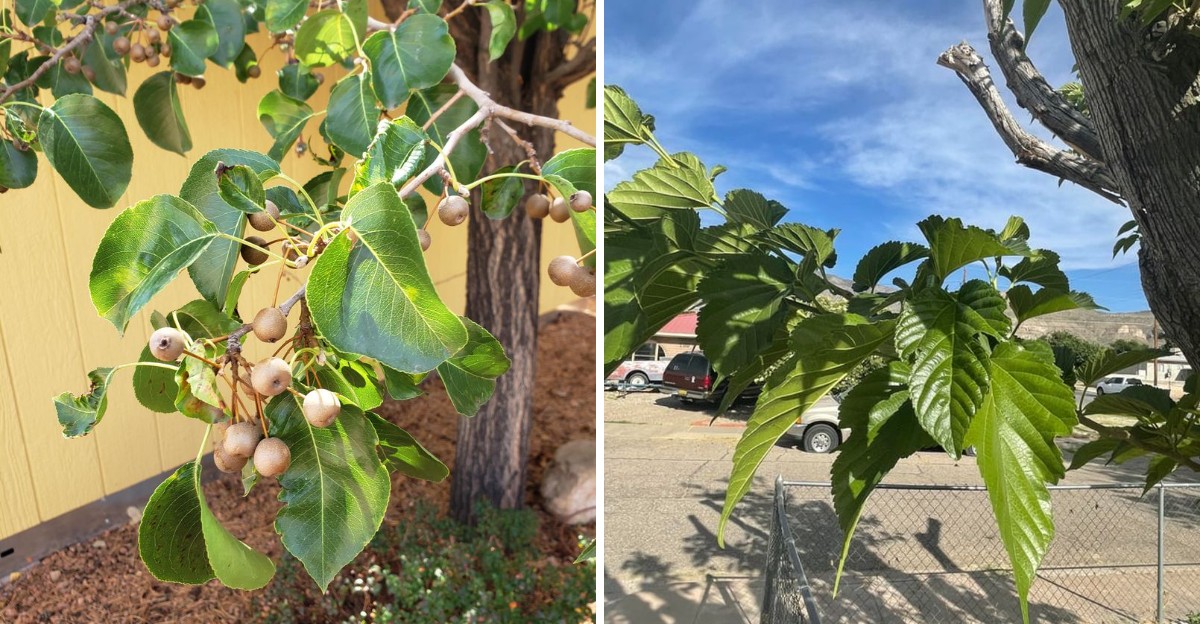
Countless California yards made room for this spring superstar. Callery pear, often sold as Bradford pear, earns plenty of praise. Spring brings clouds of white blossoms. Fall brings red and purple leaves. Storm season, sadly, can bring a split trunk.
The problem sits in the tree’s shape. Many main branches sprout from nearly the same spot on the trunk. They form tight, narrow V-shaped joints with bark squeezed inside.
A strong branch union usually has a wide, U-shaped angle and a raised ridge of bark on top. Underneath, trunk wood and branch wood overlap and lock together. Callery pears often skip that step.
As the tree matures, those limbs grow heavy. Often around the 15 to 20 year mark, a gusty storm can pull them apart like a peeled banana.
Now grab a coffee and take a slow lap around your pear, because the clues are fairly easy to read. Look for several big limbs that start at one point. Check for cracks, bulges, or sap stains right at the joints. Notice limbs that stretch far out with lots of weight at the tips.
An early trim on young pears can space out main branches and build a stronger frame. On older trees, an arborist may shorten heavy limbs to ease the strain. Some homeowners eventually swap the pear for a sturdier tree altogether.
The blossoms are lovely. A surprise split in January is much less charming.
5. Indian Laurel Fig
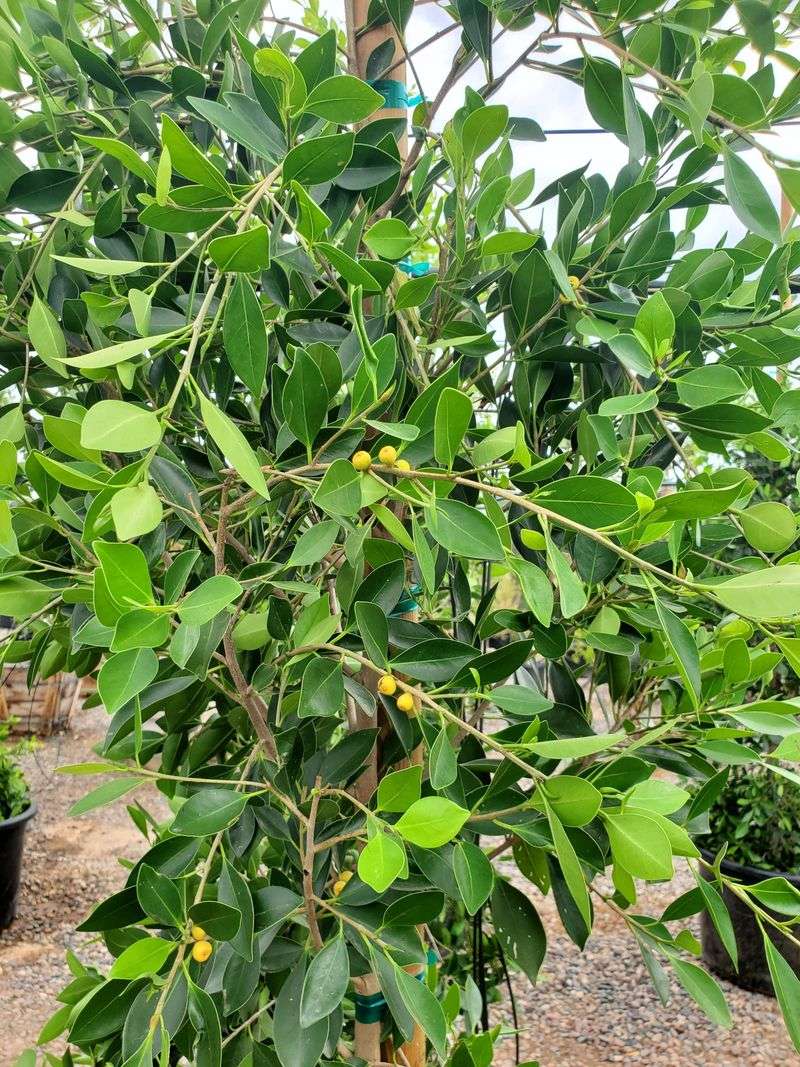
Many California streets wear a thick, glossy green coat. Often, that coat belongs to Indian laurel fig, the classic ficus. Left alone for years, it can turn into a giant green umbrella. That look is lovely until a storm grabs hold of it.
An open umbrella on a blustery day tugs hard at your arm. A dense ficus crown works the same way. More leaf surface means more force on the trunk, the branch unions, and the roots all at once. Heavy rain on the leaves adds even more load.
Inside that crown, things can get messy. Crossing branches rub together. Water sprouts tangle into knots. From the sidewalk, the tree looks lush. Up close, it can look like a bad hair day that lasted a decade.
Ficus roots also love to roam. They often lift sidewalks and crack patios near the surface. Root damage from nearby construction can weaken the anchor underneath all that weight.
This is where a good thin-out works wonders, so put the chainsaw fantasies on hold. The goal is selective removal of crowded, crossing, or weak branches. Wind then slips through the crown instead of a full-force shove.
Too much at once causes new problems. Heavy cuts trigger fast, weak regrowth and stress the tree. A trained arborist can decide how much to take.
Done right, a thin-out lowers wind load and keeps the shade you love. Your ficus gets a salon visit, not a shave.
6. Chinese Elm
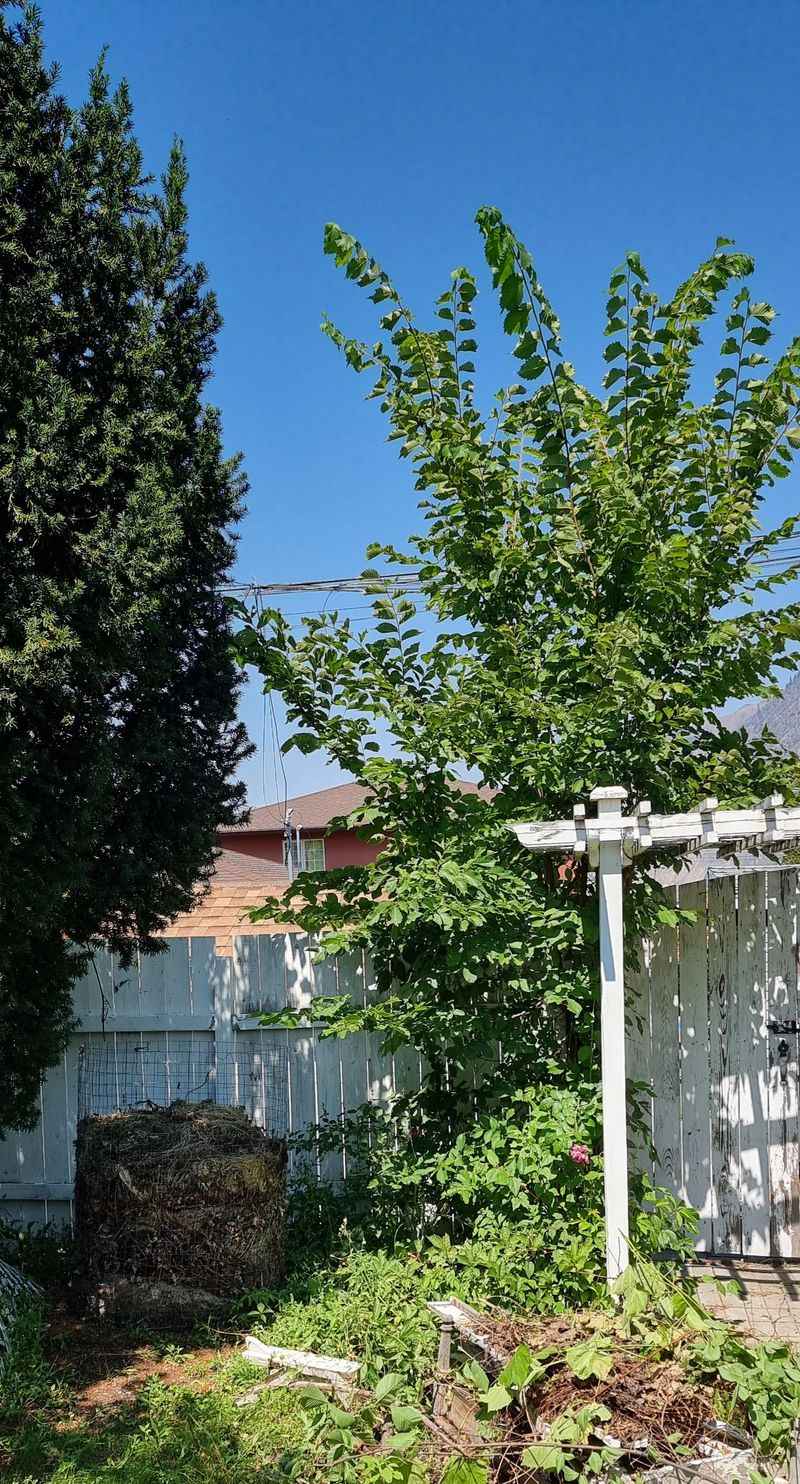
Graceful, weeping branches and pretty mottled bark win this tree plenty of fans. Chinese elm stays popular for good reason. Many evergreen types stay leafy through California winters. That extra foliage looks great in January. It also catches wind and holds rain.
The real concern sits at the ends of the branches. Chinese elms often grow long, arching limbs that stretch far out sideways. Weight piles up at the tips, and the branch acts like a lever. A strong gust can bend it past its limit at the weakest joint.
Heavy limbs that droop over roofs, fences, or driveways deserve a close look.
Now take a step back and squint at the shape, because this tree tells you a lot from a distance. Limbs that sag lower each year carry too much end weight. Cracks near the trunk, or bark that bulges at a joint, point to strain. Narrow, tight unions raise the risk.
The fix usually involves end-weight reduction. An arborist shortens long limbs back to a healthy side branch. That trim lightens the lever without harm to the tree’s natural look.
A light thin-out inside the crown helps too. Wind then moves through with less of a shove. A little work every few years beats one big hack job later.
Your elm keeps its elegant, weeping style. It just loses the heavy baggage, which, honestly, is great advice for all of us before the holidays.
7. Fruitless Mulberry
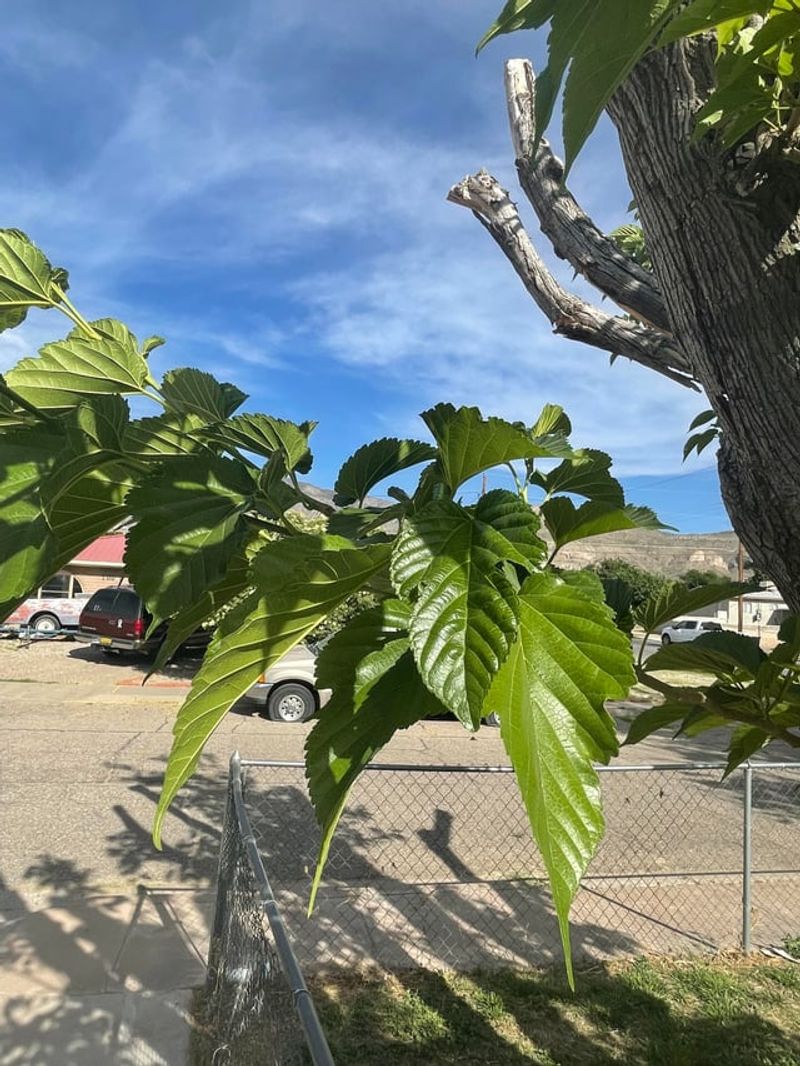
Hot California valleys once had a favorite shade tree, and it was the fruitless mulberry. Many owners keep it in check with a hard annual cut. That cut leaves stubby knuckles at the end of each limb.
That style can work when it starts young and stays consistent. Problems show up when a big tree gets topped late or the routine stops for years.
A topped limb sends up clusters of fast new shoots. Those shoots grow from the outer layers of wood, so they attach only loosely. After a few seasons, they turn into heavy branches on a weak base. Wind can peel them right off.
Old storm damage adds another layer. Trees do not heal wounds the way skin does. They seal them off and try to wall in the damage, a process called compartmentalization. Decay fungi can still creep in behind large, ragged cuts.
Put on your inspector hat for this one, because the clues often hide in plain sight. Look for soft or hollow spots at old cut sites. Check for mushrooms on the trunk, dark ooze, or cracks under clusters of sprouts. Notice any branch that hangs broken from a past storm.
A certified arborist can decide which sprouts stay and which go. Sometimes a gradual restoration plan brings back a safer shape.
Your mulberry may have a few old scars. With a little care, it can still wear them like a tough old cowboy.
8. California Sycamore
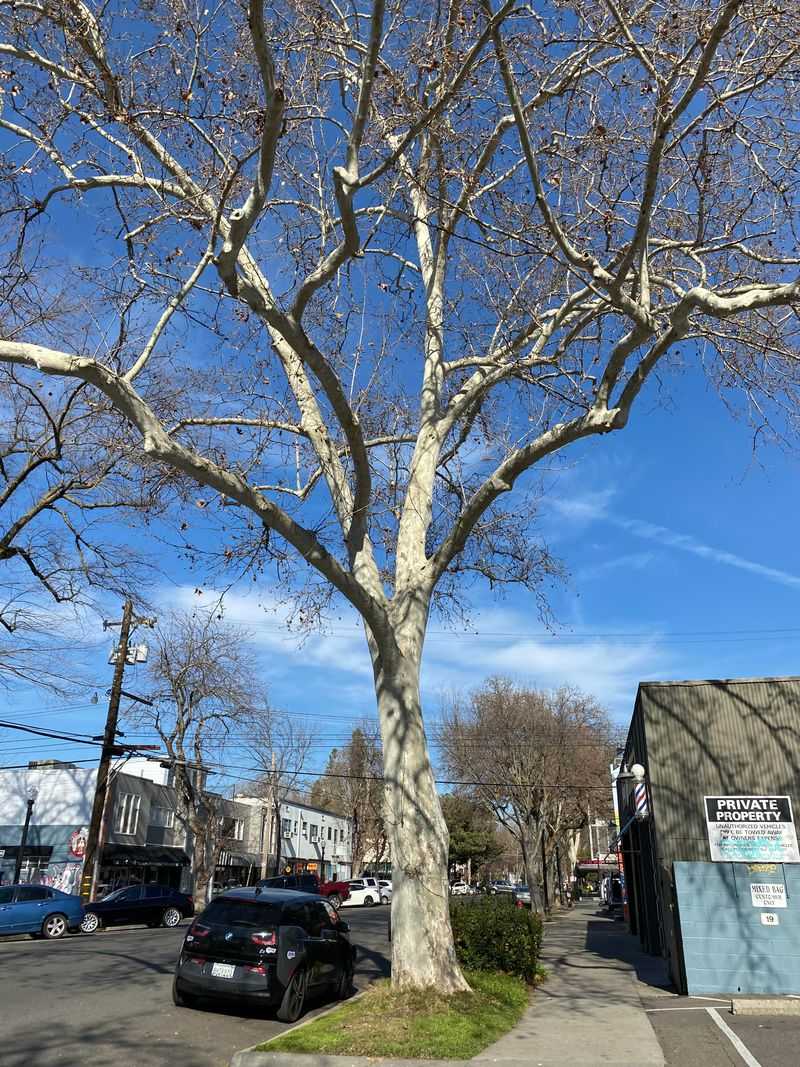
Ghostly white bark, huge leaves, and a wild, sculptural shape make this native a true showstopper. California sycamores are easy to love. They also tend to lean, split into multiple trunks, and stretch big limbs over roofs.
Many sycamores grow at a natural angle toward light. That alone is not a red flag. Pair a lean with a heavy limb over the house, though, and the stakes climb fast.
Anthracnose adds another wrinkle. This common fungal disease loves cool, wet springs. It withers young twigs and triggers clusters of weak shoots that can form broom-like knots. Over time, those tangles add weight and weak spots high in the crown.
A sycamore this big deserves more than a glance from the lawn. Some of the worst problems hide inside the trunk, high in the canopy, or under the soil.
Now for the smartest move on this whole list, and it barely requires you to leave the couch. Call a certified arborist. Trained pros can tap a trunk to listen for hollow spots, inspect unions up close, and check root zones.
Autumn makes the perfect window. Wait until a storm hits the forecast, and schedules fill up fast. Ask for proof of certification and insurance, get a written estimate, and skip anyone who pushes to top the tree.
A good arborist explains risks in plain words and offers options, not scare tactics. Your sycamore gets a checkup, and you get to sleep through the next windy night.