Why Baby Snapping Turtles Are Wandering Through New York Yards This Fall And What To Do
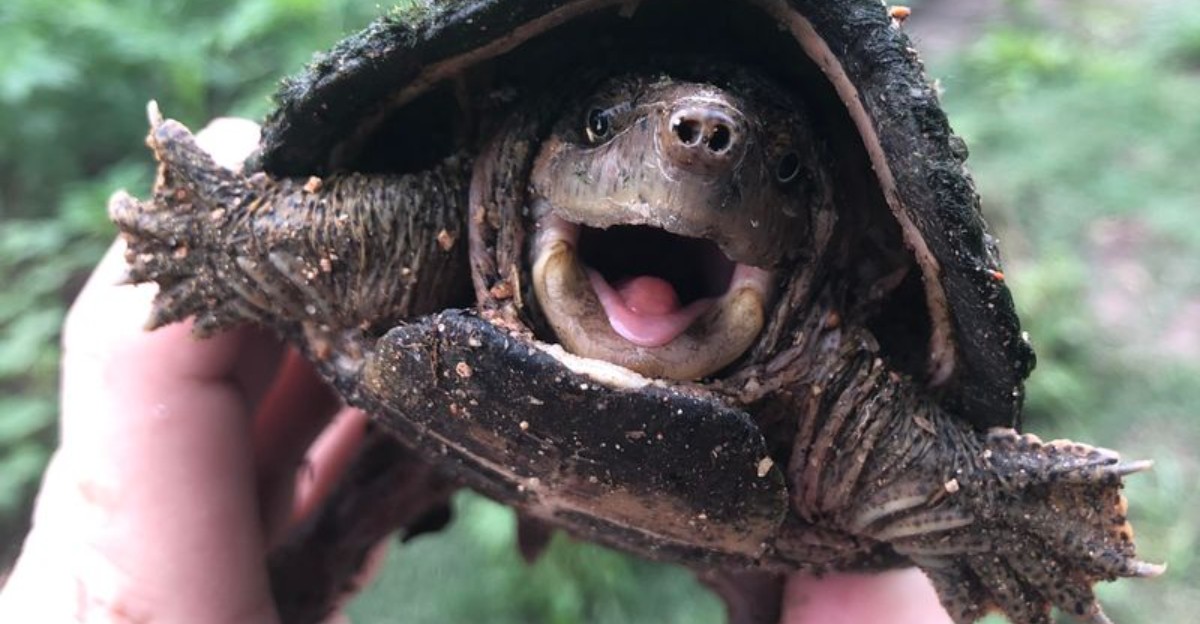
A pebble just moved across your lawn, and then it grew legs. Across New York, homeowners are spotting tiny snapping turtles trundling through grass, mulch, and driveways this fall.
Each hatchling is about the size of a quarter, with a bumpy shell and a surprisingly bossy attitude. It looks like a miniature dinosaur on a very important errand.
Knowing what to do matters, because these little travelers face big risks on their first trip. Roads, mowers, pools, and curious pets all stand between them and the water.
The tips below explain what’s happening and how to respond. A few smart moves can give your newest neighbors a real shot at growing up.
Late Summer Nests Are Hatching Right Now
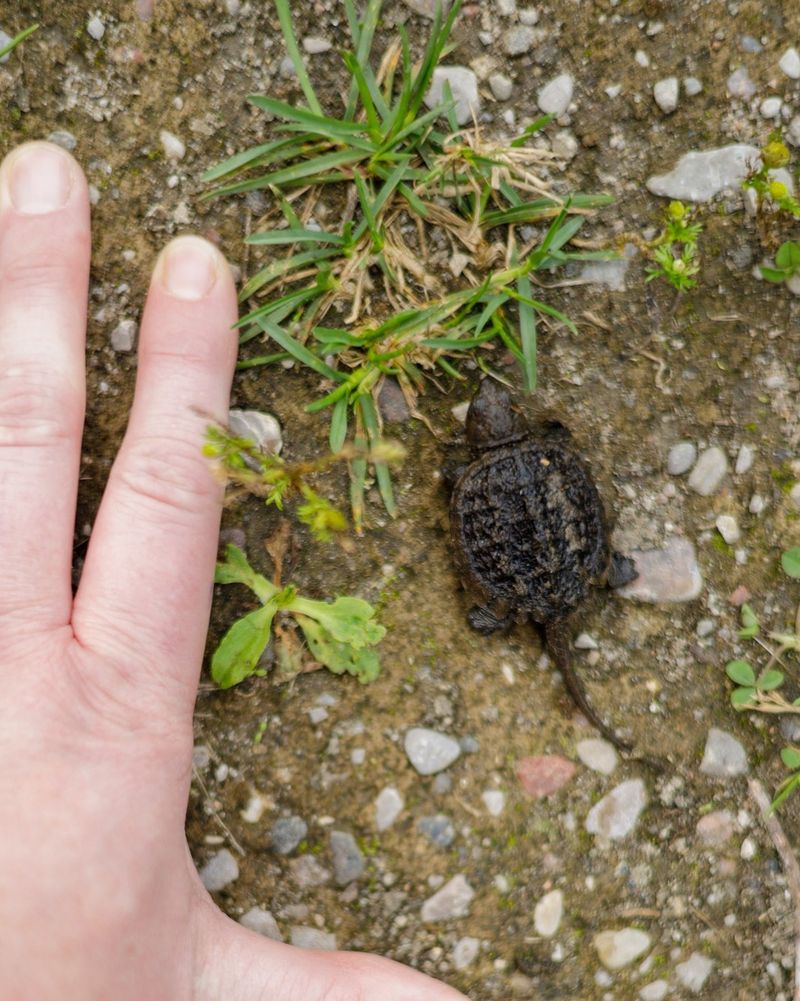
Picture a tiny turtle the size of a quarter marching across your lawn in September. Plenty of New York homeowners spot these little wanderers every fall and wonder where they came from.
The story starts back in late spring, when mother snappers leave the water to dig nests. Most eggs get laid in May and June, with June being the busiest month.
Those eggs sit buried for roughly 80 to 90 days before anything happens. Count forward from June, and you land right in late August or September.
Females like open, sunny spots with sandy or loose soil for their bowl-shaped nests. A garden bed, gravel edge, or sunny lawn can look like prime real estate to them.
Some mothers travel nearly a mile from the water to find the right patch of ground. So even if you live a short walk from a pond, your yard could host a nest.
Here is a fun fact to share at dinner. Nest temperature helps decide whether the babies turn out male or female.
Survival odds are tough, since raccoons, skunks, and foxes dig up many nests before hatching. Any baby you see has already beaten some serious odds just by reaching the surface.
Keep your eyes open on warm mornings and after rain, when hatchlings often pop out. A quick look before mowing or raking can save a tiny traveler a lot of trouble.
Their dark shells blend right into soil and mulch. Moving slowly through the yard helps you spot them before they get stepped on.
Hatchlings Are Heading For The Nearest Water
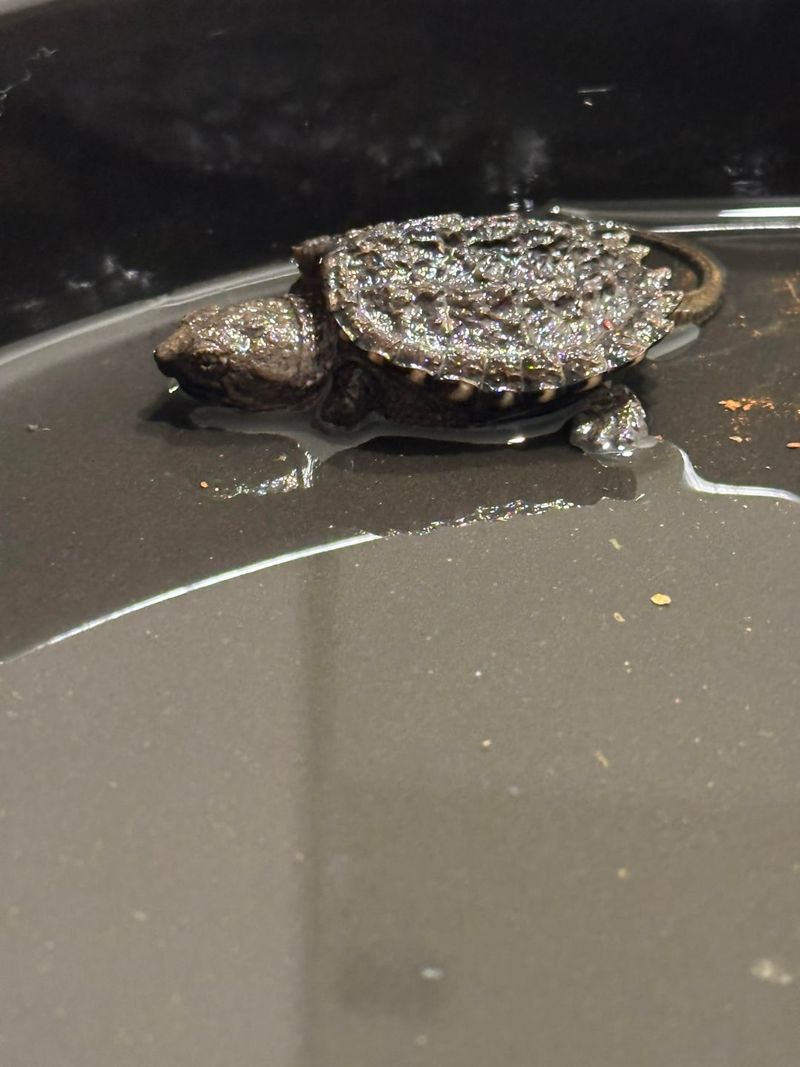
Imagine being brand new to the world with no map, no parent, and no ride. That is exactly how every baby snapper starts life, and it heads straight for water anyway.
Mother turtles leave right after covering their eggs and offer zero care. From the first minute, hatchlings handle everything on their own, including the trip home.
Scientists believe they use light and gravity as guides. Open, bright horizons often signal water, while downhill slopes usually lead toward ponds and streams.
Their target is a freshwater home like a lake, pond, river, stream, or marsh. Across New York, snappers especially love slow, shallow water with a soft, muddy bottom.
Mud gives them a place to hide, hunt, and rest. Plants along the edges also provide cover from herons, fish, and other hungry neighbors.
Your New York Garden Changes Every Week. Your Plan Should Too.
Gardening in New York changes quickly throughout the season. Every Friday you’ll receive a simple weekly plan showing exactly what to plant, prune, fertilize, harvest, and protect so you never miss the right timing.
Sadly, the walk itself is one of the riskiest parts of their lives. Soft shells, small bodies, and slow legs make them easy targets for birds and raccoons.
Human stuff adds more hazards, like curbs, storm drains, fences, and busy driveways. A curb only a few inches tall can feel like a cliff to a turtle this small.
You can help by trimming clutter from the path toward nearby water. Clearing garden netting and keeping pets indoors for a bit can make a real difference.
Try watching from a few feet away instead of crowding the little one. Seeing a hatchling find its way is a small wonder worth a few quiet minutes.
Snap a photo if you like, then give it room. Its journey might only be a few hundred feet, but every step counts.
Let It Keep Walking In The Direction It’s Going
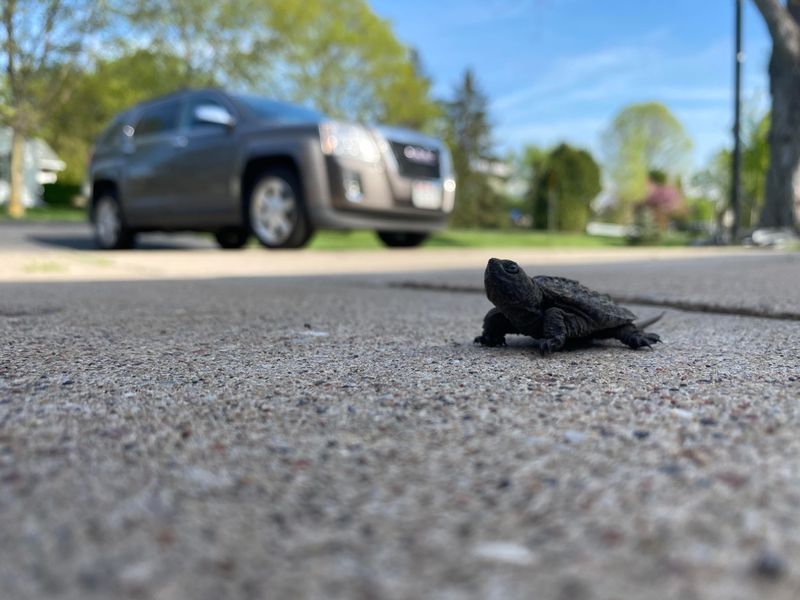
Leave it be might be the hardest advice for a kind-hearted person to follow. Still, the best help you can give a wandering hatchling is often just stepping aside.
Baby snappers are born knowing which way to go. Their built-in sense points them toward water, even when you cannot see a pond from your porch.
Turning one around or carrying it somewhere new can scramble that sense. Turtles form a mental map of their home area and the routes they travel.
Moving a turtle to a strange place leaves it confused and lowers its survival chances. That pond across town may look nicer to you, but it is not home to the turtle.
So what should you do instead? Watch from a respectful distance and let the little walker set its own pace.
Kids often want to scoop up the baby and give it a name. Turning the moment into a quiet nature lesson works better and keeps the turtle on track.
If a dog or cat is nearby, bring the pet inside for a while. Curious paws and noses can stress or injure a hatchling in seconds.
You can also pause yard chores in that area until the turtle moves along. Holding off on raking, edging, or sprinkling for an hour gives it a clear lane.
Snapping turtle ancestors shared the planet with dinosaurs, so this trek is truly ancient. Their kind has made these walks for millions of years without human help.
Your job is simply to be a good neighbor. A little patience lets nature finish what it started months ago in that sunny nest.
Carry It Only If A Road Or Mower Stands In The Way
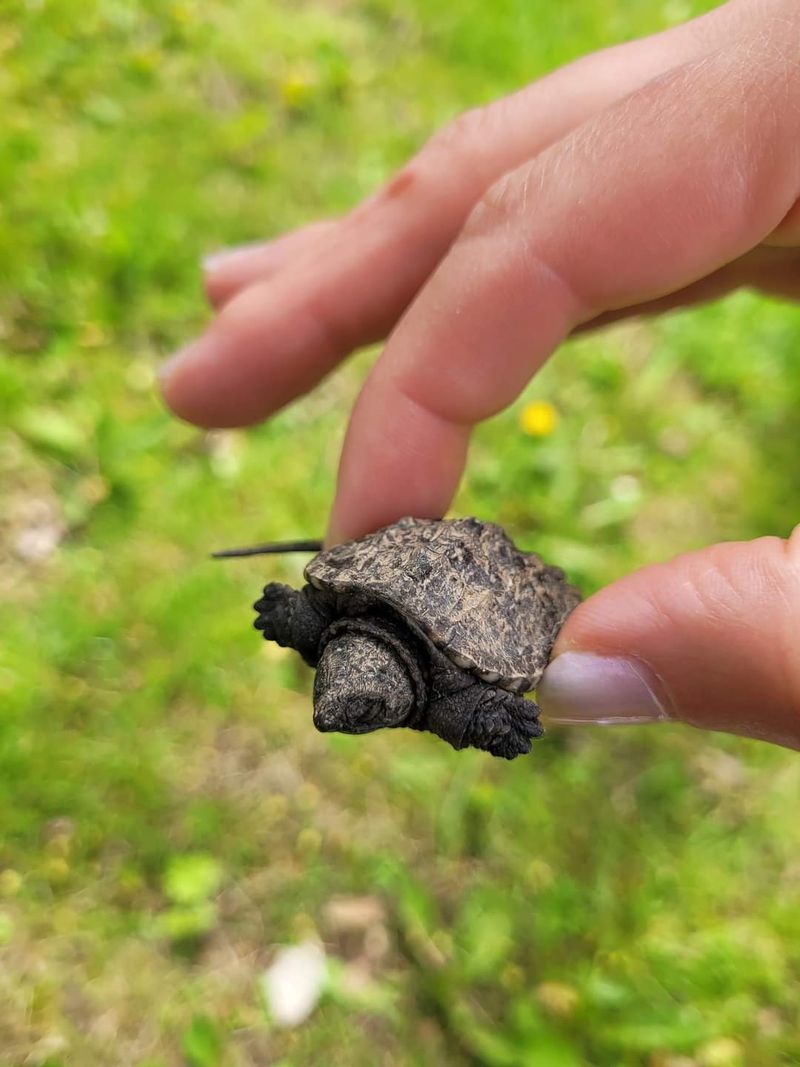
Sometimes nature needs a small assist. When a hatchling wanders toward traffic or a humming mower, it is time to step in.
Thousands of turtles, including tiny babies, are hit by vehicles on New York roads each year. Mowers and weed whackers also injure turtles hiding in tall grass during fall cleanup.
Luckily, hatchlings are small enough to lift with your hands. Cup it gently, keeping your palms low so an accidental slip does not become a fall.
Next comes the golden rule of turtle rescue. Carry it in the same direction it was already heading, even if that seems odd.
Set it down on the safe side of the road, a few feet from the edge. If a pond or marshy spot is close, place it near shallow water with plenty of plants.
Your own safety matters more than any rescue. Check for traffic, use hazard lights if you pull over, and skip the effort on busy highways.
Big adult snappers are a different story because of their long necks and strong bite. Grab the back of the shell with both hands, or slide the turtle onto a car mat.
Before mowing in fall, walk your lawn once to scan for small, dark shapes. Raising your mower blade a notch also helps protect hidden hatchlings and toads.
Afterward, resist the urge to carry the turtle home or to a far-off pond. A short, helpful lift is all it needs to keep going.
Quick action paired with a light touch makes you a true turtle hero. Plus, you get a great story to tell the neighbors.
Never Lift It By The Tail
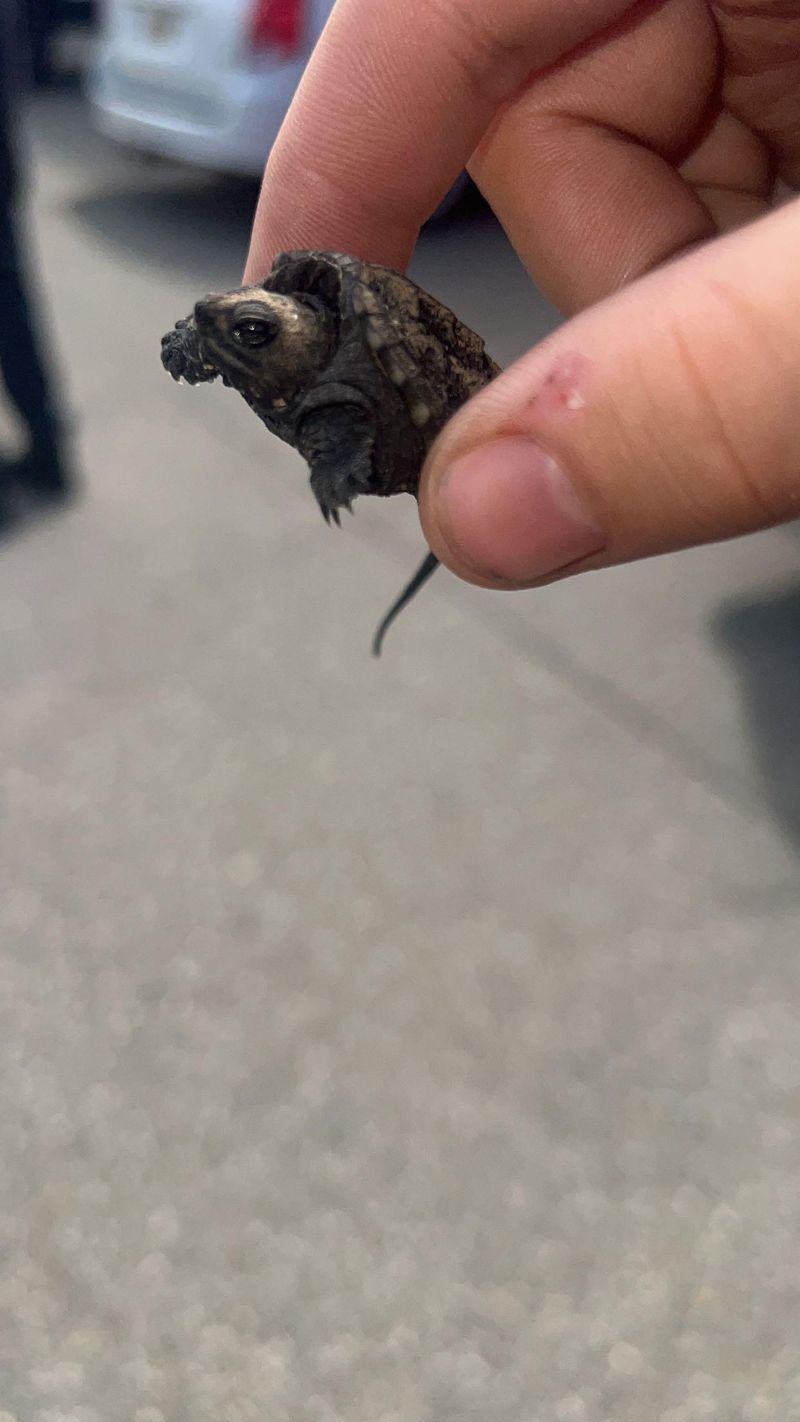
Grandpa may have carried turtles by the tail, but that old habit causes real harm. Here is why this rule matters so much for snappers of every size.
A turtle’s tail is not a handle. It connects directly to the spine, much like the lower part of your own backbone.
Dangling a turtle by its tail can pull bones out of place. The result can be intense pain or even paralysis, which leaves the animal unable to walk or swim.
For hatchlings, the fix is easy. Hold the shell with one hand on each side near the back, like holding a small cookie.
Another method works well for slightly bigger youngsters. Slip a forefinger under the belly between the back legs and rest your thumb on top.
Adults need more caution because they can stretch their necks surprisingly far. Grasp the rear of the shell with both hands and keep the head pointed away from you.
Not everyone feels comfortable grabbing a large snapper, and that is okay. A shovel, blanket, or car floor mat slid underneath lets you drag it gently to safety.
Keep the turtle low to the ground while you move. If it squirms free, a short drop is far less risky than a long one.
Watch out for that famous snap too. Even babies may nip, and adults bite fast enough to cause painful injuries.
Share this tip with friends and family, especially kids. One simple lesson can protect countless turtles across the state for years to come.
Keep It Out Of Pools And Birdbaths
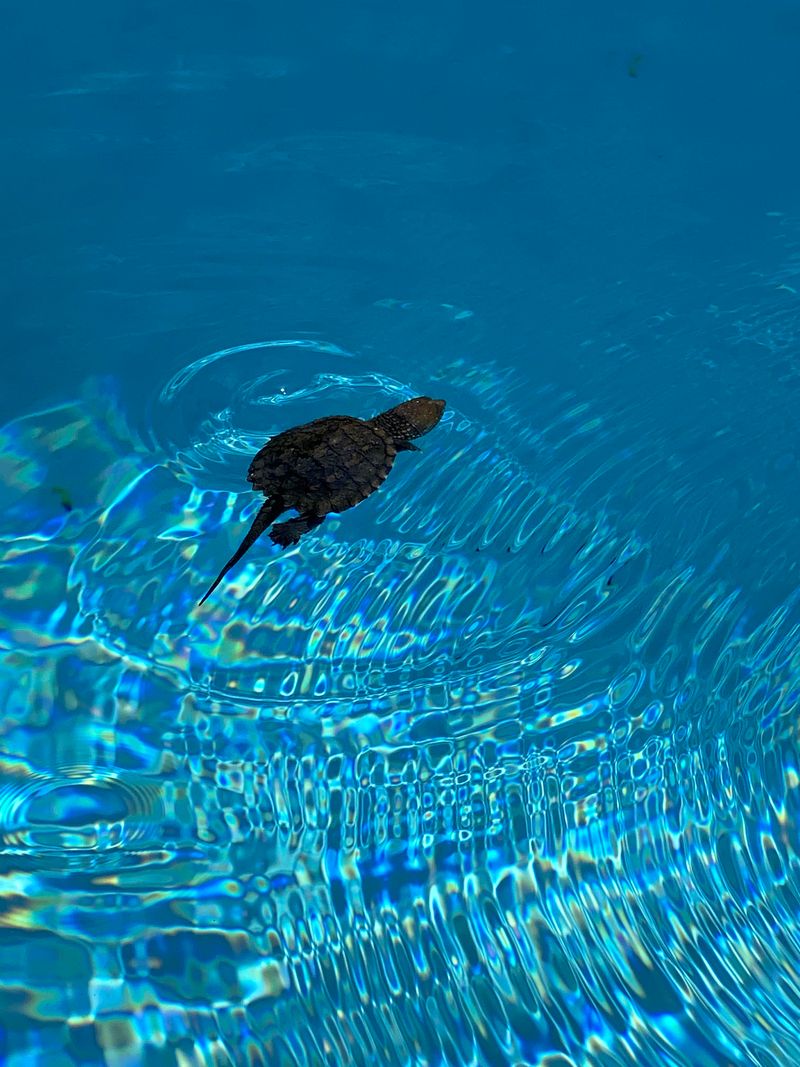
A backyard pool looks like paradise to a thirsty hatchling. Unfortunately, that sparkling blue water can turn into a trap within minutes.
Pool walls are smooth and steep, so tiny turtles struggle to climb out. Even strong swimmers wear out, and a tired hatchling can drown without a resting spot.
Chlorine creates another problem. The chemicals that keep pools clean can irritate a turtle’s eyes, skin, and delicate body.
Birdbaths may seem harmless, but they cause trouble too. A deep bowl with slick sides can hold a baby snapper that cannot find a way out.
Pool owners in New York should check skimmer baskets often during September. Skimmers are one of the most common spots where trapped turtles turn up.
If you find one paddling in circles, scoop it out with a net or cupped hands. Look it over for any cuts or trouble moving before you release it.
Next, bring it to the nearest natural shallow water with plants along the edge. A pond or marsh gives it food, hiding spots, and a proper winter home.
Prevention usually beats rescue. Fencing or barriers around your pool keep wandering hatchlings from tumbling in to begin with.
Place a small rock or stick in your birdbath as a simple escape ramp. Birds will enjoy the extra perch, and turtles or frogs get a way out.
Covering the pool once swim season ends also helps a lot. A snug cover keeps out turtles, leaves, and curious critters until next summer.
Taking One Home Breaks State Rules
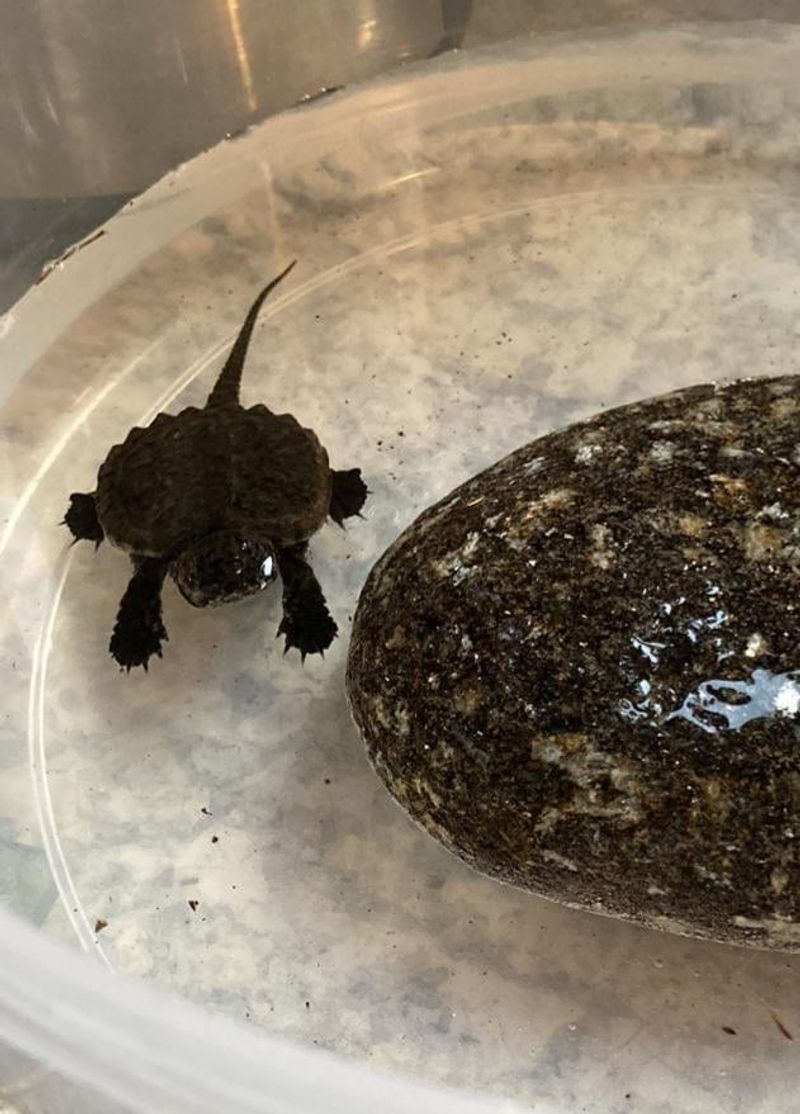
That cute hatchling might seem like the perfect pet, but keeping it can land you in trouble. State rules are strict about native reptiles, and snappers are no exception.
In New York, collecting or keeping most native turtles without a permit breaks the law. The DEC grants permits for science or education, not for pets on the kitchen counter.
Common snapping turtles do have a hunting season, but it comes with limits. Hunters need a license, and turtles must have shells at least 12 inches long.
That season usually runs from July 15 through September 30. A quarter-sized baby is nowhere near the legal size, so it stays off-limits.
New York adds another rule worth knowing. Selling or giving away any turtle with a shell under four inches is illegal statewide.
Letting a pet turtle go into the wild is also against state law. Released pets can spread disease and upset local wildlife in ponds and streams.
Beyond the rules, wild snappers make tough pets. They grow big, bite hard, and can live for decades, often outlasting a family’s interest.
A turtle found on your property is already in its natural home. Taking it away removes it from the spot where it has its best chance to thrive.
Want to enjoy turtles without the legal headache? Visit a nature center, join a local turtle watch, or start a backyard wildlife journal.
Photos make great keepsakes too. A picture of your hatchling beside a coin shows how tiny it was on its big day.
Wash Your Hands After Handling
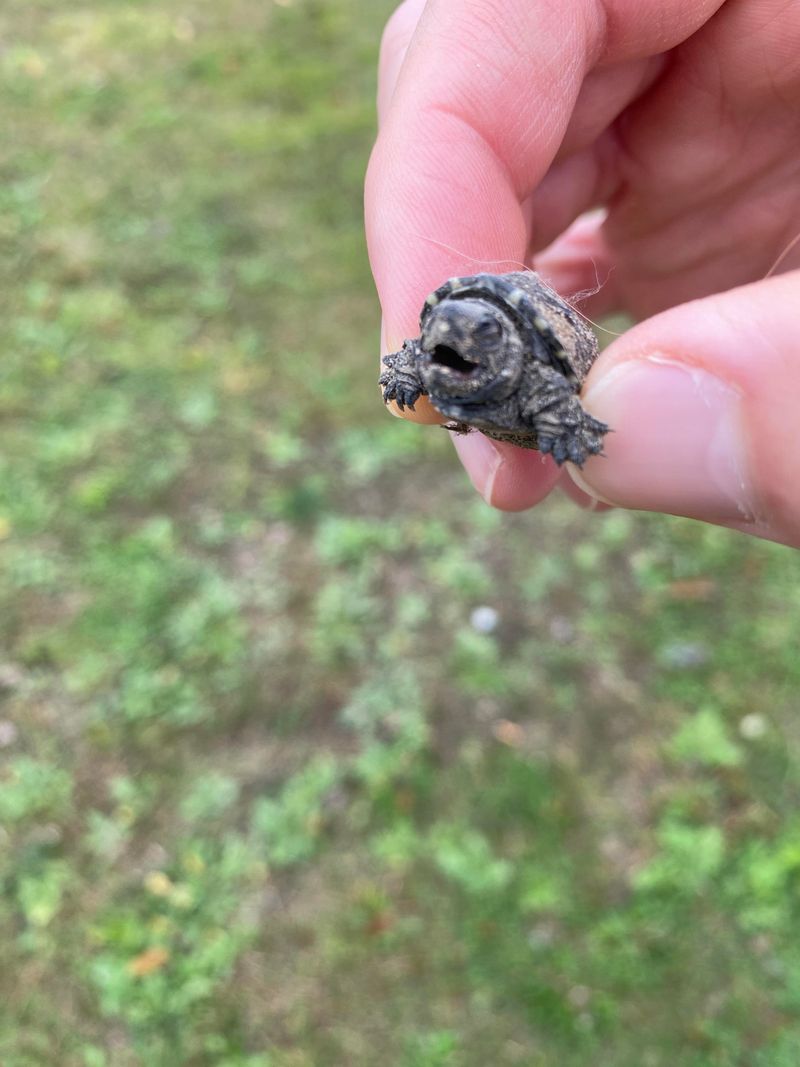
Here is the not-so-cute part of turtle encounters. Snappers, like many reptiles, can carry Salmonella bacteria, even when they look perfectly healthy.
The germs live in their droppings and can spread to their shells and surroundings. Touch a turtle, then touch your mouth or a snack, and those germs can hitch a ride.
Soap and running water are your best defense. Scrub for about 20 seconds, getting between fingers and under nails, right after any contact.
If you are outside with no sink nearby, use an alcohol-based hand sanitizer. Follow up with a proper wash as soon as you get indoors.
Salmonella illness can bring diarrhea, fever, and stomach cramps. Symptoms may show up anywhere from six hours to six days after exposure.
Some people face higher risks of getting seriously sick. Kids under five, adults over 65, pregnant people, and anyone with a weak immune system should skip handling.
Little ones love to touch everything they find. Let an adult do the lifting while children watch, point, and ask questions from nearby.
Keep gloves or a clean rag handy if you live near turtle hot spots. Wash any tools, mats, or towels you used to move a turtle outside, away from the kitchen.
If you feel sick a few days after a turtle rescue, call your doctor. Mention the turtle contact so they can figure out what is going on faster.
Clean hands turn a sweet moment into a worry-free memory. A quick scrub is a small price for helping wildlife safely.
Note The Nest Site For Next Year
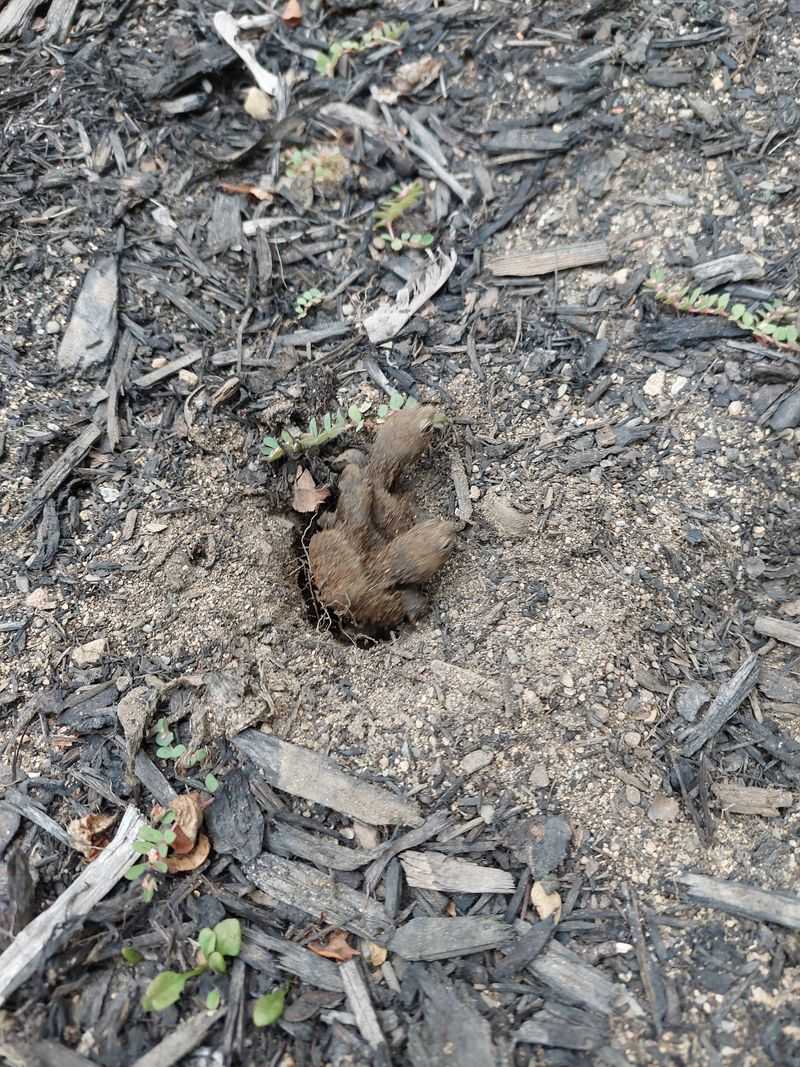
Mother snappers are creatures of habit. Many return to the same nesting area each year, so hatchlings hint at future visits.
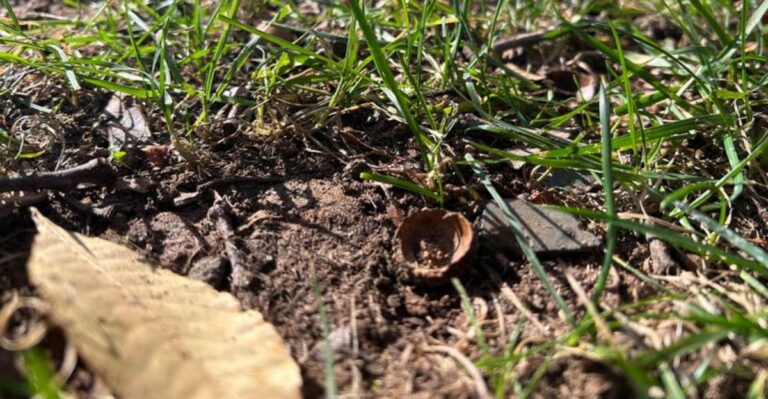
Look for a small hole in the soil or scattered bits of leathery eggshell. Those clues often mark the spot where babies climbed out this fall.
Nests usually sit in sunny, well-drained spots with loose, sandy soil. Check garden beds, gravel driveways, lawn edges, and the shoulders of quiet roads.
Mark the site with a stake, a painted rock, or a note on your phone. Next spring, from May through July, keep watch for a female digging there.
If you see her, give her plenty of space. Disturbing a nesting mother can make her quit and leave before she finishes.
Once she leaves, a nest protector can guard the eggs from raccoons, skunks, and foxes. Build one from wire mesh so sunlight and rain still reach the soil.
Leave openings large enough for hatchlings to squeeze through on their own. Anchor the cage firmly so clever predators cannot dig underneath it.
Skip pesticides and fertilizers near the nest area. Chemicals can seep into the soil and harm developing eggs.
If construction or a new patio might affect a nest, contact your regional DEC office first. Disturbing turtle nests without permission is against New York regulations.
Tracking nests year after year can be a rewarding family project. Your notes could help local researchers and build a lifelong love of wildlife.
Share your findings with neighbors who live near the same pond or marsh. A whole street working together can boost the number of hatchlings reaching water.