How Georgia Gardeners Can Tell Elderberries From Their Toxic Lookalike
If you have ever spotted a dark cluster of berries along a ditch and thought about picking it, slow down first.
Wild elderberries are common across Georgia, and they often grow in the same damp, sunny spots as a toxic lookalike.
From a few feet away, the two can look close enough that a quick glance won’t tell you which is which. That matters, because the wrong plant can cause serious illness even in small amounts.
Luckily, the differences are easy to see once you know which parts of the plant to check.
Experienced foragers check those parts every time, even on plants they have picked from for years.
It takes only a few seconds, and it is the one habit worth building before you fill a bucket this fall.
1. The Berry Clusters Give You The First Major Clue
Dark purple berries can make elderberry and pokeweed look surprisingly similar from several steps away. Move closer, and their fruit clusters quickly start telling two different stories.
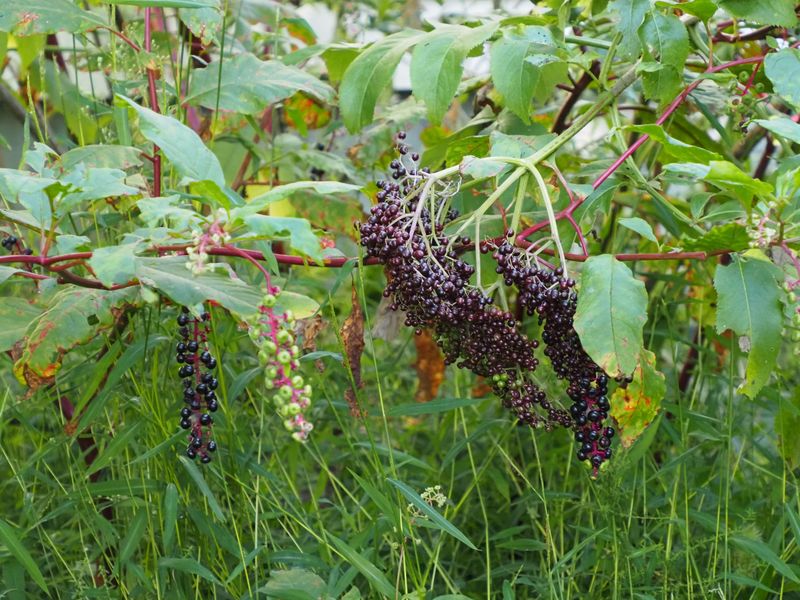
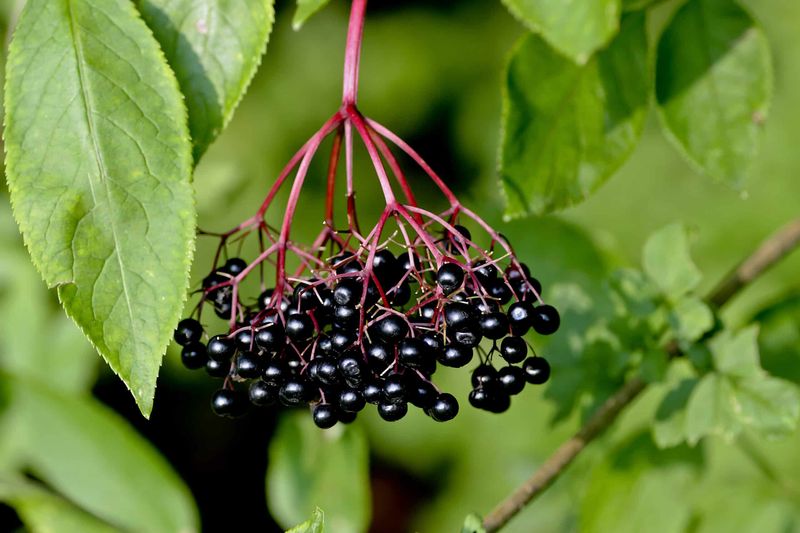
American elderberry produces many small berries in broad, branching clusters near the ends of its stems.
As the fruit ripens and gains weight, the entire cluster may begin to droop. The overall shape still remains wide and branched rather than forming one long strand of berries.
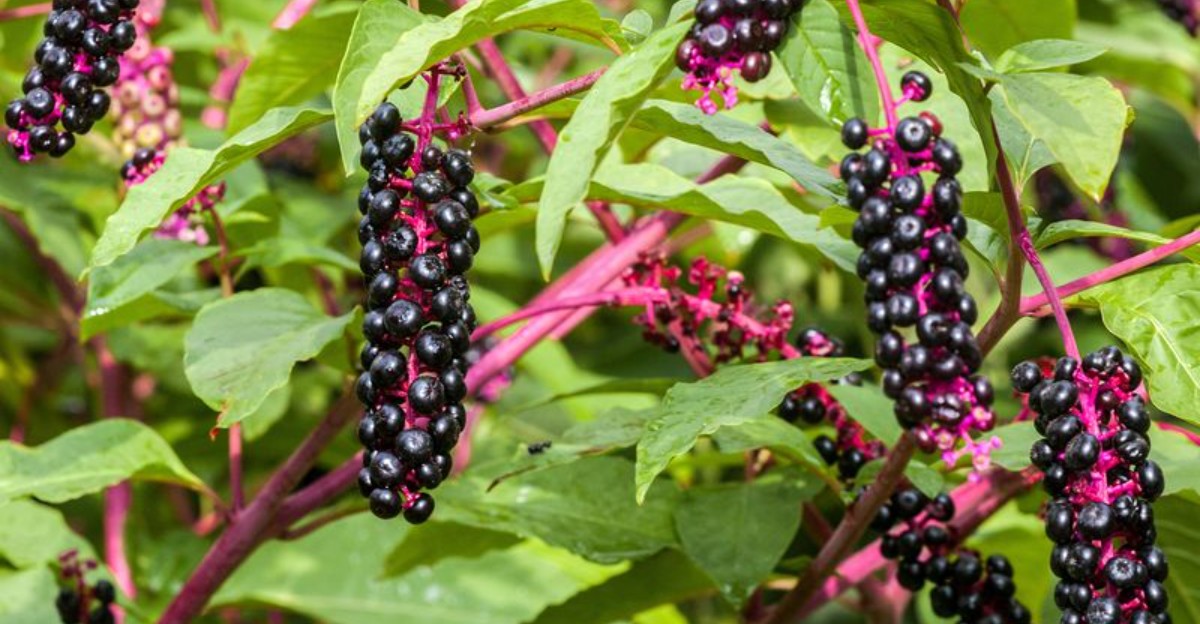
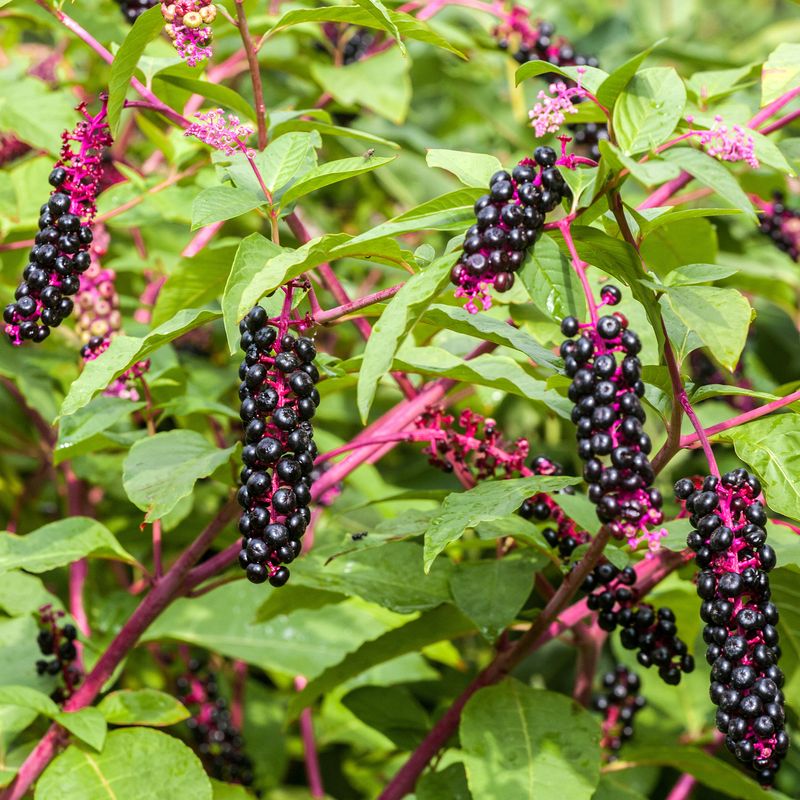
Pokeweed arranges its fruit along an elongated central stalk, creating a much narrower cluster.
Its berries begin green before gradually ripening to a glossy dark purple. In Georgia, both plants can carry dark fruit during overlapping parts of the growing season, making color alone unreliable.
Take a moment to look beyond the individual berries and follow the smaller stems holding them.
Elderberry fruit spreads outward on multiple branches, creating a broad cluster with many connection points. Pokeweed berries remain attached along a more obvious central stalk, giving the cluster a distinctly different structure.
This first check can narrow things down quickly, but it should never stand alone.
Before harvesting anything, keep examining the plant for other identifying features. The leaves, stems, and overall growth habit should support what the fruit cluster already suggests.
2. Stem Color And Texture Reveal Another Clear Difference
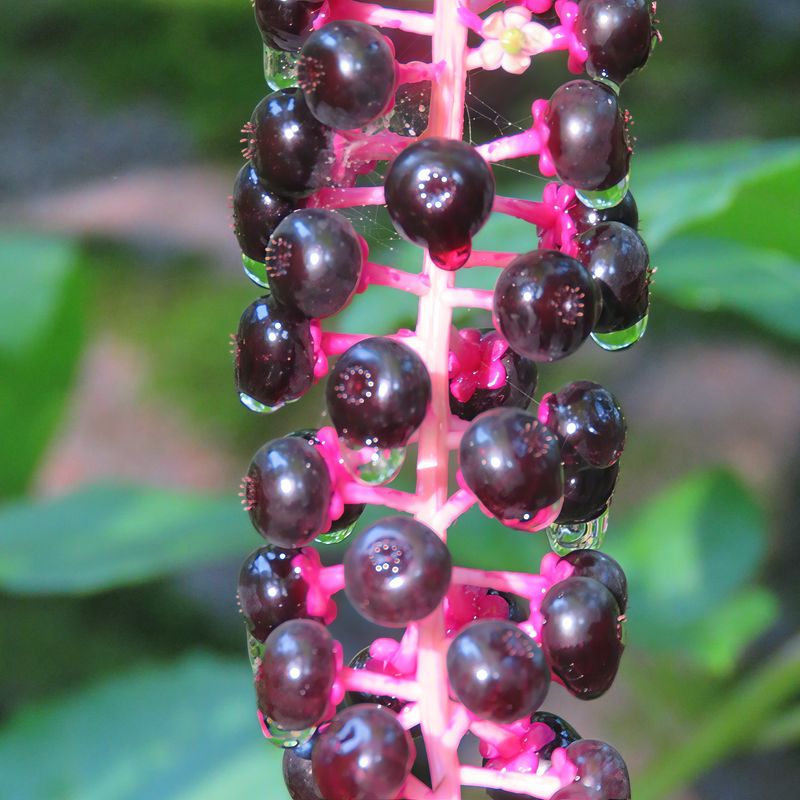
Once the berry clusters have caught your attention, move your eyes down toward the stems. This is where elderberry and pokeweed begin to look even less alike.
Mature pokeweed develops thick, smooth stems that often become reddish purple as the growing season progresses.
The color can become especially noticeable on large plants carrying ripe fruit. Those stems remain fleshy and herbaceous rather than developing the woody bark you would expect on an established shrub.
Elderberry follows a different pattern because its older stems persist and become woody over time.
Young growth may still look green and tender, so do not judge the plant by its newest shoots alone. Older branches usually provide a much clearer picture of its growth habit.
In Georgia, mature pokeweed can become tall and striking enough to resemble a shrub from a distance.
Walk closer and the smooth, succulent stems help reveal what you are actually looking at. Established elderberry canes develop a firmer, woody appearance, often with grayish or brown bark.
Your Georgia Garden Changes Every Week. Your Plan Should Too.
Gardening in Georgia changes quickly throughout the season. Every Friday you’ll receive a simple weekly plan showing exactly what to plant, prune, fertilize, harvest, and protect so you never miss the right timing.
Small raised lenticels may also be visible along older elderberry stems.
Stem color alone should never decide the identification, since plant appearance changes with age and season. Instead, use texture and growth type alongside the fruit clues you have already checked.
By this point, the differences should be building into a much clearer picture.
3. Leaf Arrangement Helps Separate These Two Plants
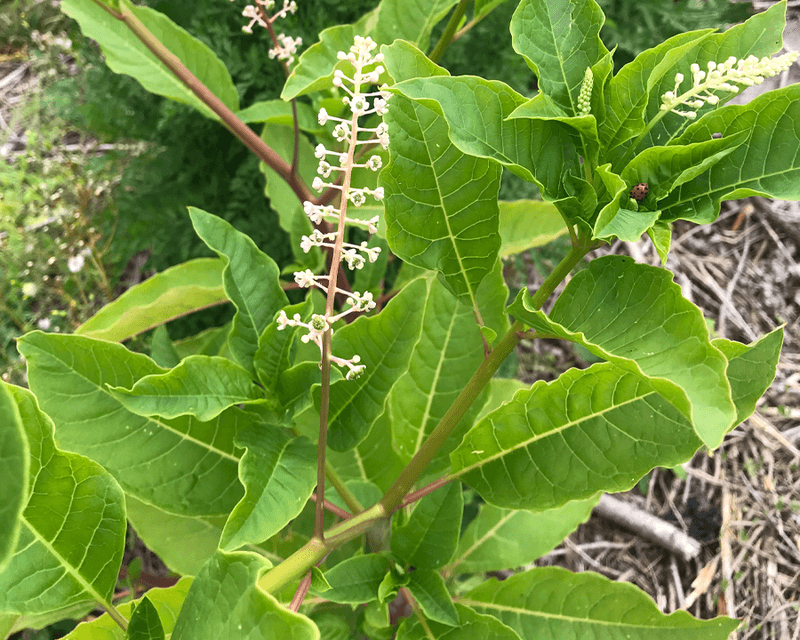
Fruit gets most of the attention, but the leaves offer another useful identification clue. Once you know what to look for, the difference is fairly easy to spot.
Elderberry has compound leaves made up of several individual leaflets arranged along one central stalk.
Most leaves carry five to eleven leaflets, and each one has noticeably toothed edges. The compound leaves grow opposite each other, creating matching pairs along the branch.
Pokeweed leaves are built very differently, with each leaf forming one complete blade rather than several smaller leaflets.
Their edges are smooth instead of sharply toothed. The leaves also alternate along the stem, so they appear at different points rather than sitting directly opposite one another.
This pattern can be especially helpful in Georgia when fruit is partly hidden or has already disappeared.
Start near the lower portion of a stem and follow the leaves upward with your eyes. Elderberry should keep showing that opposite arrangement, while pokeweed follows its alternating pattern.
Size alone is not a reliable shortcut because growing conditions can change how large leaves become.
Focus instead on structure and placement, since those characteristics provide much stronger clues. You can make the entire comparison visually without crushing, tasting, or removing anything from the plant.
Combined with the fruit and stem differences, the leaf pattern brings you another step closer to a confident identification.
4. Pokeweed Berries Develop Along Long Drooping Stalks
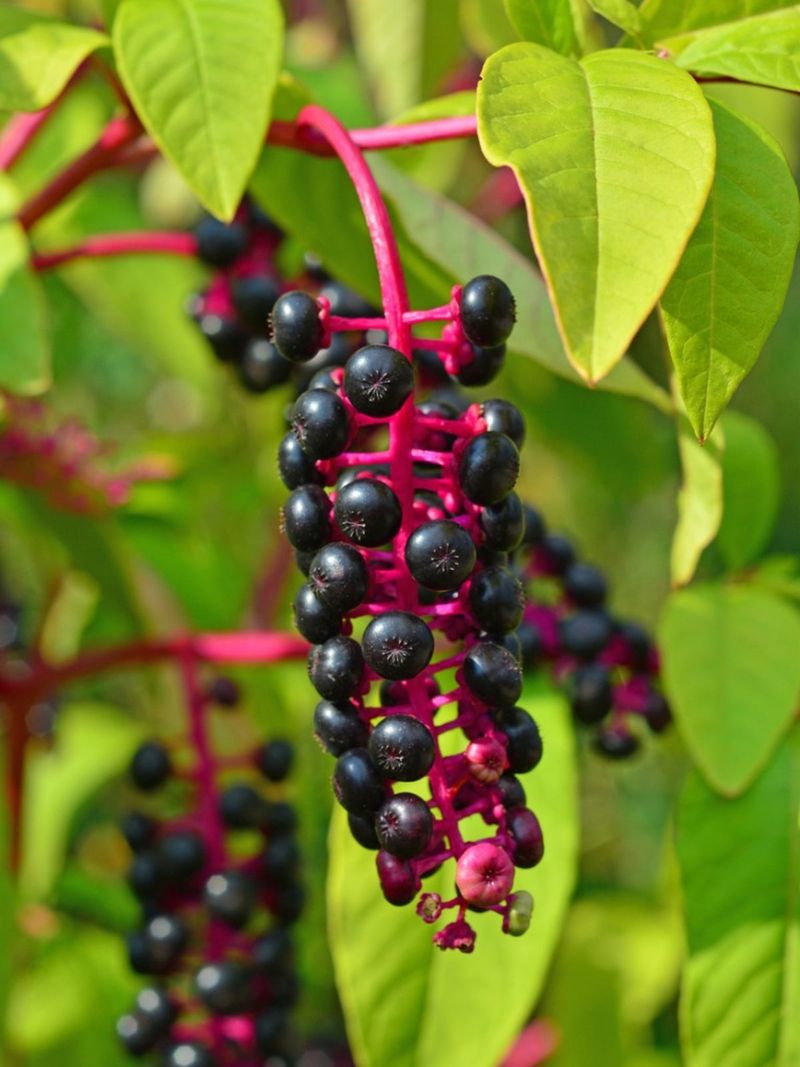
Pokeweed becomes much easier to recognize once its fruit has fully developed. The berries may grab your attention first, but their supporting stalk deserves an even closer look.
Each fruit sits along an elongated cluster called a raceme rather than spreading through a broad, heavily branched structure.
The berries begin green and gradually turn dark purple to nearly black as they mature. Their glossy surface can look appealing, which is exactly why appearance should never be treated as proof that wild fruit is edible.
As the cluster becomes heavier, it commonly bends downward and creates a noticeable drooping shape.
The rest of the plant provides additional clues without repeating the berry test. Pokeweed is an herbaceous perennial, so its aboveground growth does not develop into persistent woody canes like a shrub.
Georgia gardeners may encounter mature plants around woodland edges, fields, roadsides, and other disturbed areas.
Despite their rich color, pokeweed berries should not be sampled for identification. The plant contains toxic compounds, and ingestion can cause significant gastrointestinal symptoms.
Children may be particularly attracted to the shiny fruit, making correct identification especially important around frequently used yards.
If a plant matches this fruiting pattern, leave the berries where they are while you continue checking its other features. Identification should come from the complete plant rather than one attractive cluster.
That careful approach removes the need for risky guesses.
5. Elderberries Form Broad Clusters On Woody Branches
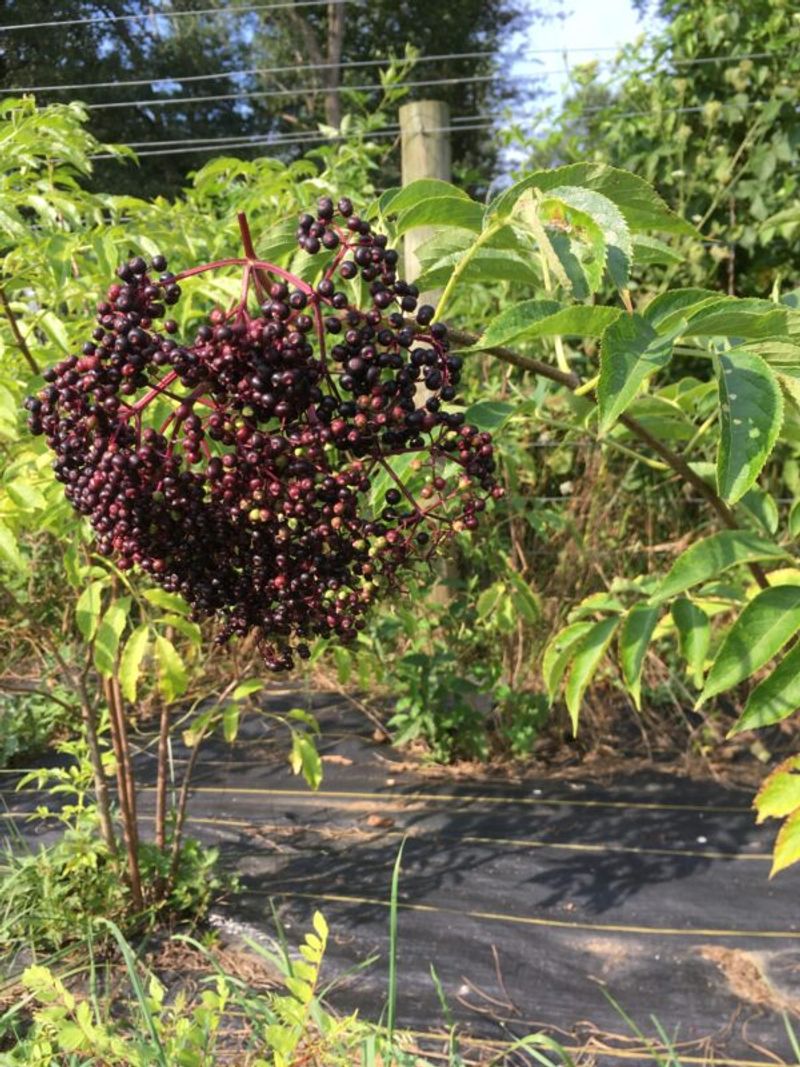
Elderberry starts looking far more distinctive when you step back and examine the whole plant. Its fruit belongs to a woody shrub with a branching structure that remains visible beyond berry season.
Ripe berries appear in broad clusters containing many small fruits supported by slender branching stems.
Those clusters can become heavy enough to bend downward as the berries mature. Even then, they retain their wide, branching structure instead of forming the long racemes associated with pokeweed.
The fruit typically changes from green to dark purple or nearly black as it reaches maturity.
Look beyond that color and notice what supports the cluster. Established elderberries have persistent woody canes, giving the plant a noticeably different framework from large herbaceous plants nearby.
American elderberry is native to Georgia and commonly grows in moist areas, woodland edges, streambanks, and other suitable sites.
Finding one in the right habitat still does not make identification automatic. Wild plants should be identified through several characteristics rather than location alone.
Fully ripe elderberries may be harvested for culinary use, but other parts of the plant require caution.
Before collecting fruit, confirm that the broad clusters belong to the same plant as the opposite compound leaves and woody stems you examined earlier. Following each branch back to its source helps prevent confusion when several plants are growing together.
That extra check is especially worthwhile in dense vegetation.
6. Several Features Should Match Before You Harvest Anything
Finding one familiar feature can feel reassuring, but wild plant identification should never depend on a single clue. The safest approach is to make sure several characteristics point toward the same plant.
Start by looking at the overall growth habit rather than immediately reaching for the fruit.
Notice whether you are standing beside a persistent woody shrub or a tall herbaceous plant. That broader view can reveal differences that are easy to miss when your attention stays fixed on dark berries.
Next, make sure the leaves belong to the same stems carrying the fruit you are examining.
Dense vegetation can create confusing overlaps when several species grow close together. A branch from one plant can easily cross in front of another and make an otherwise obvious identification much harder.
This is especially worth remembering in Georgia yards with natural borders, creek edges, or less frequently maintained corners.
Follow one branch carefully from its fruit back toward the main plant. Then check the leaves and older growth attached to that exact stem instead of relying on nearby foliage.
If something does not match, treat that inconsistency as a reason to stop.
Taking another minute is far better than forcing an identification because most features seem correct. Wild fruit should only enter your basket when the entire plant gives you a consistent set of clues.
Uncertainty is useful information too, and sometimes it means leaving the plant untouched.
7. When Identification Is Uncertain Leave The Berries Alone
Sometimes a plant simply does not give you enough information for a confident identification. Missing fruit, damaged leaves, or tangled growth can hide the features you would normally rely on.
That is a good reason to leave the berries untouched rather than trying to fill in the missing clues yourself.
Take several clear photos while the plant is still in front of you. Include the entire plant, then capture closer views of the fruit, leaves, stems, and the way each part attaches.
Wide photos can be surprisingly important because close-ups often remove the context needed for accurate identification.
Avoid tasting a berry as a final test. Flavor cannot safely confirm what you found, and pokeweed contains toxic compounds that can cause serious digestive symptoms after ingestion.
Georgia gardeners can contact a local Cooperative Extension office when an unfamiliar plant remains difficult to identify.
You can also compare your photos with reliable botanical resources before returning to the plant. Pay particular attention to characteristics that remain consistent, rather than choosing an identification because one image happens to look similar.
If reliable sources still leave you uncertain, there is nothing wrong with walking away.
Wild fruit is never worth forcing an answer when important characteristics do not line up. Leaving one questionable cluster behind costs nothing and gives you time to learn what you were actually looking at.
Confidence should come from the whole plant telling the same story.