The Ohio Tree That Feeds Squirrels And Gives Bats A Place To Hide
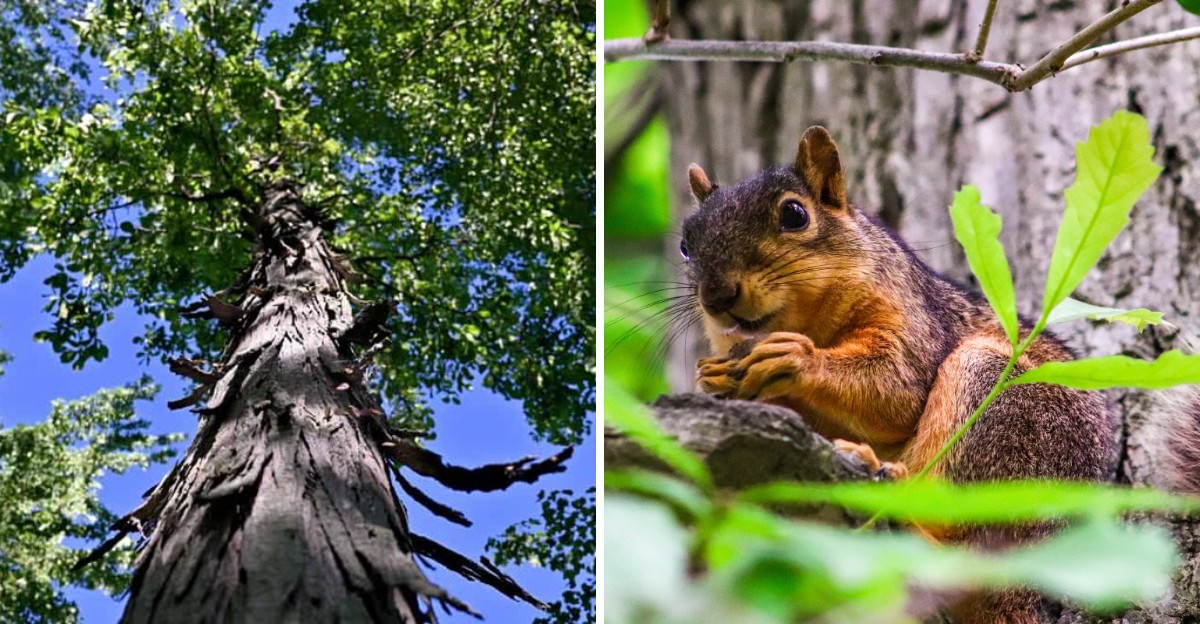
One Ohio tree is quietly running two operations at once, feeding squirrels through fall while giving bats somewhere to disappear during the day.
Squirrels track this tree’s output closely, timing their whole fall routine around what it drops each year. Bats have a completely different use for it, tucked into a specific feature most homeowners walk past without ever noticing it’s there.
Both animals depend on the exact same tree for reasons that have almost nothing to do with each other.
Cut this tree down without knowing what it’s actually providing, and you’re removing support for two species in one move, not just clearing a single tree from the yard.
Take a closer look at any older tree like this one on your property this fall. What it’s quietly doing for local wildlife might surprise you more than you’d expect.
1. Meet The Shagbark Hickory, A Wildlife-Rich Ohio Native
Walk through almost any Ohio woodland and you might pass a shagbark hickory without a second glance. Once you know it, though, you will spot it everywhere.
Scientists call it Carya ovata. It belongs to the walnut family, which explains its tasty nuts.
The tree grows across the whole state, from rolling uplands to moist valleys and well-drained forests.
Ohio experts rank it among the most important hardwoods for wildlife. That is a big title for a tree that looks a little messy.
Still, its value comes from what it gives away each year, not from its looks.
Here is a fun fact to share at dinner. Early settlers used hickory wood for tool handles and wagon wheels because it is so tough.
Many people still use it today to smoke meat for a sweet, rich flavor.
For wildlife, the tree offers three big gifts. Its nuts feed hungry animals, its bark shelters bats, and its leaves feed caterpillars that birds love to eat.
Few trees pack so much into one trunk.
If you want to find one, visit a local state park or nature preserve. Look for gray bark peeling in long strips.
Ask a park ranger, too, since many love pointing out their favorite hickories to curious visitors.
2. Its Nuts Provide A Fall Feast For Squirrels
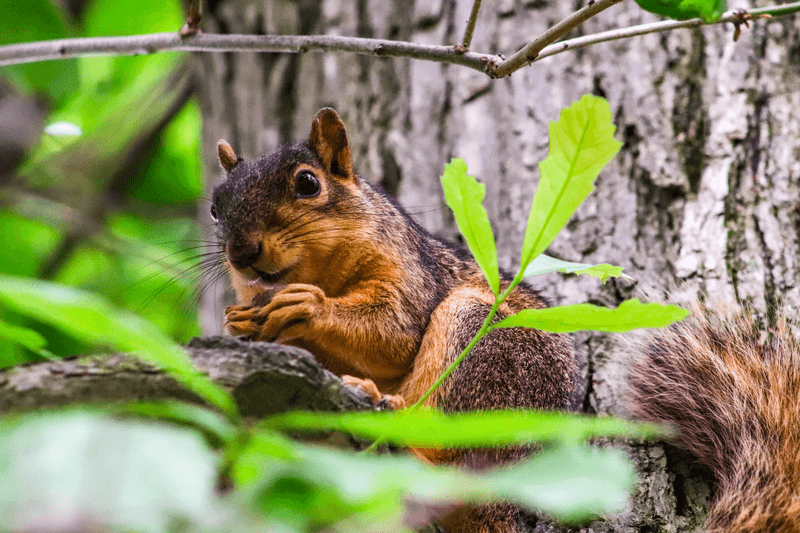
Squirrels in Ohio have a favorite snack, and they get pretty serious about it. By early August, they start raiding shagbark hickories before the nuts are even fully ripe.
Each nut sits inside a thick green husk. When ripe, the husk splits into four neat sections, like a tiny present opening itself.
Inside, a hard shell guards a sweet kernel packed with fat, protein, and calories.
For a squirrel getting ready for winter, that is pure gold. Every nut helps build up energy for cold months ahead.
Squirrels also bury extras, and the forgotten ones can sprout into brand new trees.
Squirrels are not the only diners, either. Chipmunks, deer, wild turkeys, blue jays, and woodpeckers all join the feast.
It turns the ground under a hickory into a busy autumn buffet.
Your Ohio Garden Changes Every Week. Your Plan Should Too.
Gardening in Ohio changes quickly throughout the season. Every Friday you’ll receive a simple weekly plan showing exactly what to plant, prune, fertilize, harvest, and protect so you never miss the right timing.
Did you know these trees have boom years? Every few seasons, they produce a huge crop called a mast.
Big mast years can lead to more mice and chipmunks, which then feed owls and foxes.
People can enjoy the nuts too. Many say they taste like a buttery pecan.
Just gather a few and leave plenty for the furry locals, since they count on this harvest far more than we do.
3. Loose Bark Creates Natural Bat Roosting Spaces
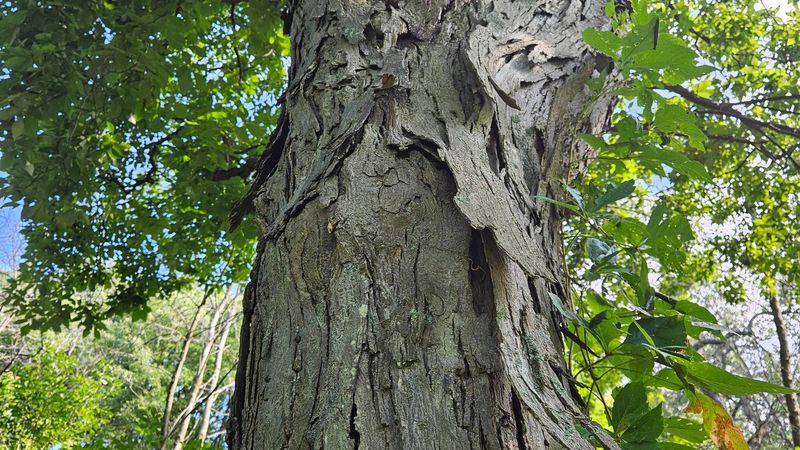
Imagine sleeping all day tucked behind a curtain of wood. For many Ohio bats, that is a normal summer afternoon.
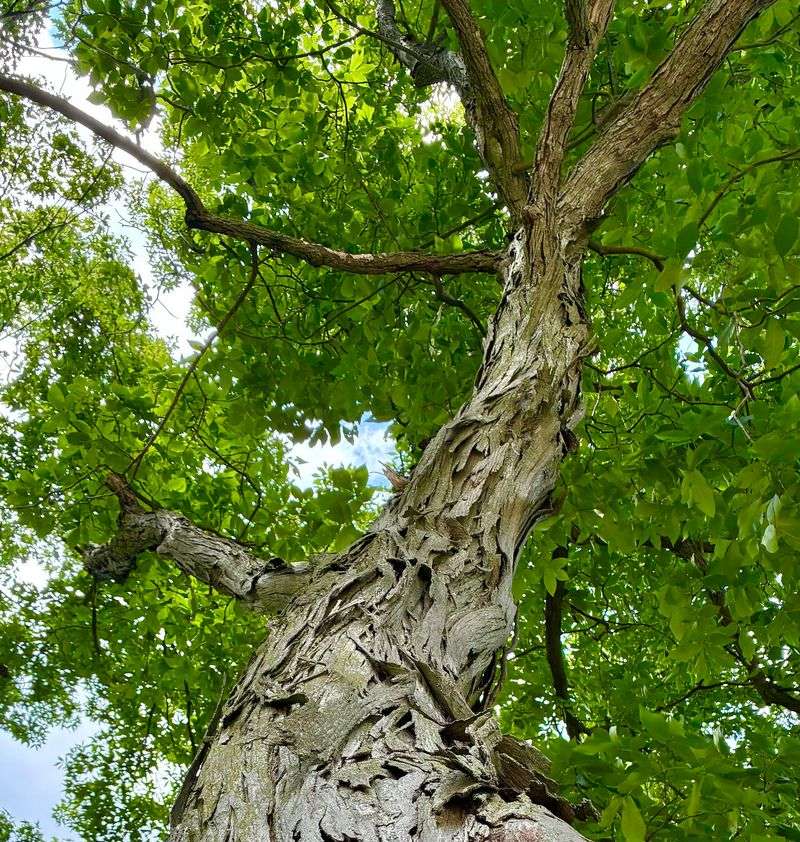
Shagbark hickory bark peels into long, thick strips that curl away from the trunk. The gaps behind those strips form snug little pockets.
Bats squeeze inside to rest safely while the sun is up.
These hideouts matter a lot for mother bats. Females often gather in groups to raise their pups in warm, sheltered spots.
Loose hickory bark gives them a cozy nursery that stays hidden from hungry predators.
Plenty of species use these roosts. The list includes big brown bats, little brown bats, and silver-haired bats.
Two rare visitors stand out, the Indiana bat and the northern long-eared bat, which are both federally protected.
Why should you care about bats? A single bat can gobble hundreds of insects in one night, including mosquitoes and crop pests.
That means fewer itchy bites during backyard cookouts.
Here is a helpful tip. If you have a shagbark hickory, try not to peel or trim its shaggy bark to make it look tidy.
Those rough strips are not a mess to clean up. They are tiny bedrooms for some of your best night-shift helpers.
4. Mature Trees Offer More Crevices For Wildlife
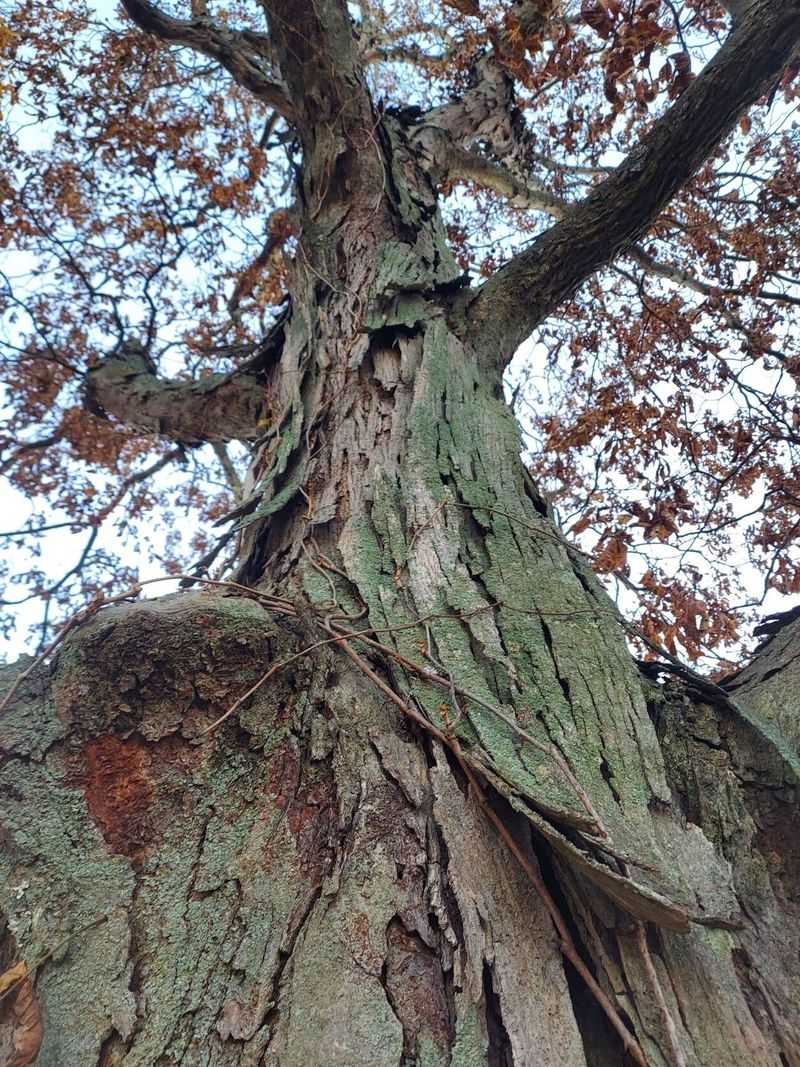
Think of a young hickory as a small apartment and an old one as a giant hotel. The older the tree gets, the more rooms it has for guests.
As the trunk widens, the bark peels in bigger, bolder plates. Each curling strip adds another crevice.
A wide, older trunk can hold dozens of hiding spots from the ground to the upper branches.
Bats are especially picky about this. Research shows they tend to choose larger trees for roosting.
A thick trunk holds heat better and offers more room for a group to settle in.
Other creatures move in too. Spiders, beetles, moths, and many tiny invertebrates hide in the gaps.
In turn, birds like nuthatches and brown creepers hop along the bark, picking out snacks.
Older trees also grow strong, heavy branches. Over time, some branches form hollows where owls, woodpeckers, and flying squirrels can nest.
These cavities take decades to form, so they are very precious.
What does this mean for landowners? If you have an old hickory on your property, treat it like a treasure.
Keep it healthy, avoid piling soil around its base, and call a certified arborist for any major pruning. Protecting one big tree can help a whole neighborhood of wildlife.
5. Deep Roots Help This Hickory Handle Summer Dryness
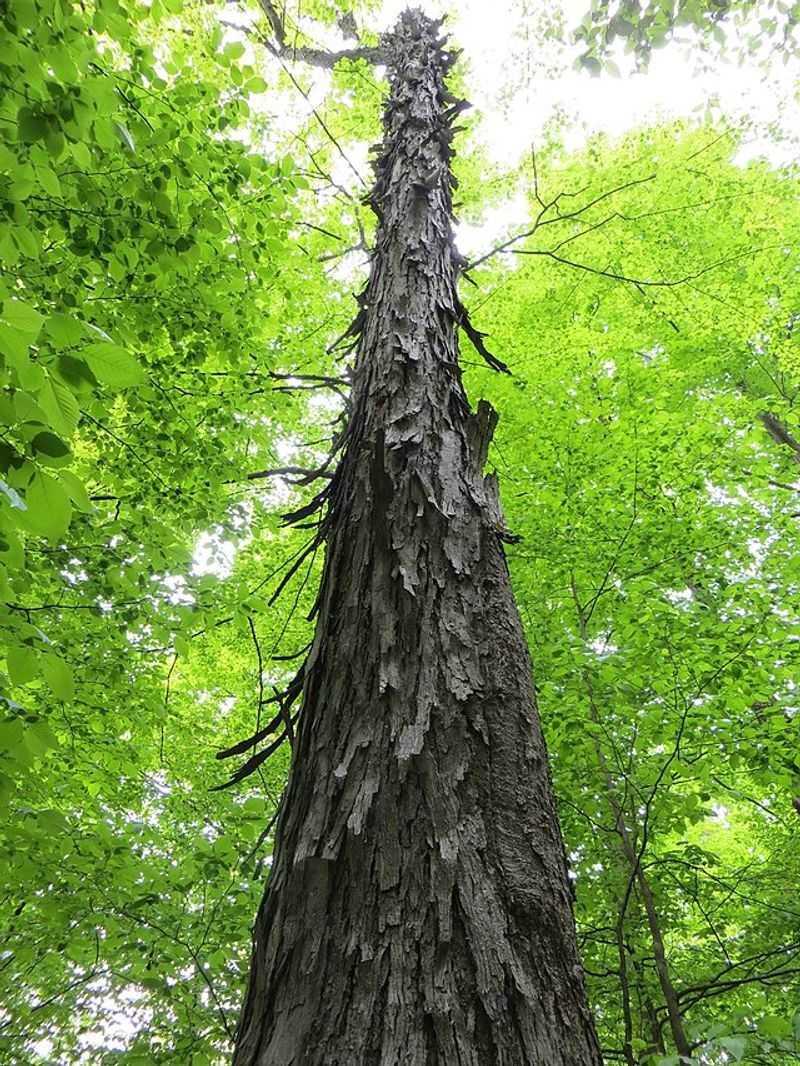
July in Ohio can get hot and sticky, with weeks that pass without much rain. Lawns turn brown, and some trees start to droop.
The shagbark hickory, however, tends to stay calm and green.
Its secret lies underground. This tree grows a long, deep taproot that reaches far below the surface.
While shallow roots dry out, the taproot sips water from deeper soil layers.
Once the tree is settled in, it handles dry spells quite well. That makes it a smart choice for folks who do not want to haul a hose around all summer.
It also stands strong in high winds, thanks to that anchor-like root.
Soil is not a huge worry, either. Deep, well-drained ground suits it best, but it can adapt to loam, clay, and sandy loam.
Many Ohio yards fit somewhere in that range.
There is one catch to keep in mind. That big taproot makes even small seedlings tough to move.
Digging one up often snaps the root and sets the tree back.
So here is the practical advice. Pick your planting spot carefully before you start.
Plant a small container tree or even a nut right where you want it to grow. Water it during its first few summers, then let those roots do the work.
6. Slow Growth Rewards Patient Ohio Gardeners
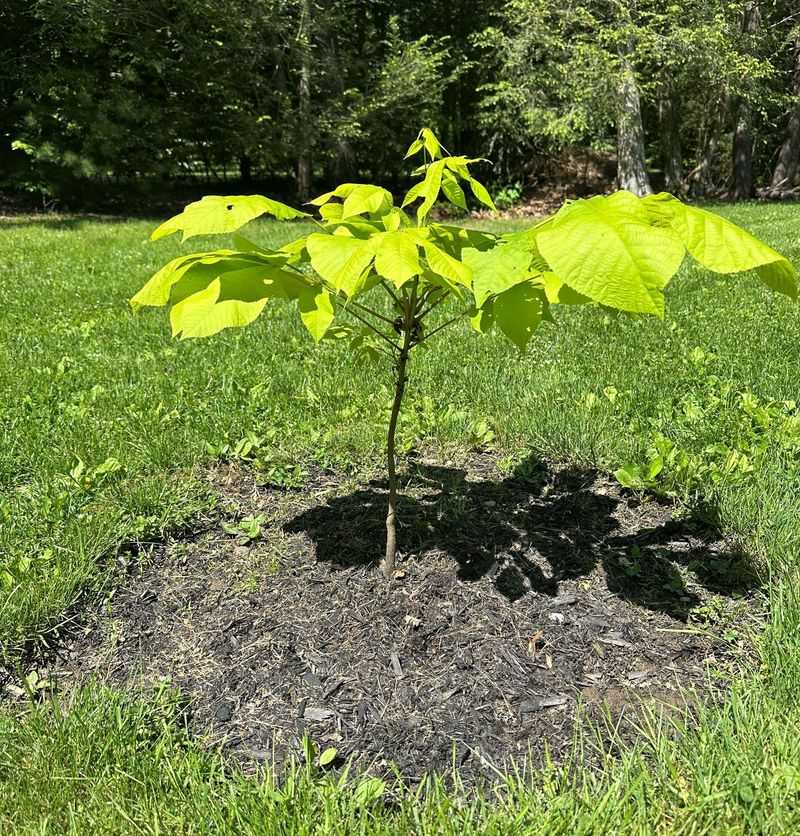
Some trees shoot up like teenagers in a growth spurt. The shagbark hickory takes its sweet time, and honestly, that is part of its charm.
Most years, it adds about 6 to 12 inches of height. Growth may speed up a little as the tree ages.
Seedlings can even wait quietly in the shade of a forest for years before taking off.
Here is where patience really pays. Nut production usually starts around age 40.
After that, a healthy tree may keep producing nuts until it is about 200 years old.
And the lifespan? These trees often reach 200 to 300 years, and a few may push toward 500.
A hickory planted today could still be feeding squirrels when your great-great-grandchildren are grown.
That makes planting one feel a bit like writing a letter to the future. You may not see its biggest harvests yourself.
Still, you will enjoy watching it grow stronger each spring, and wildlife will visit long before the first nuts fall.
Want a tip for impatient gardeners? Plant faster-growing native shrubs nearby, like serviceberry or elderberry, to give birds food in the meantime.
Then let the hickory quietly build its legacy. Slow and steady really does win this race.
7. Shaggy Bark Makes This Tree Easy To Recognize
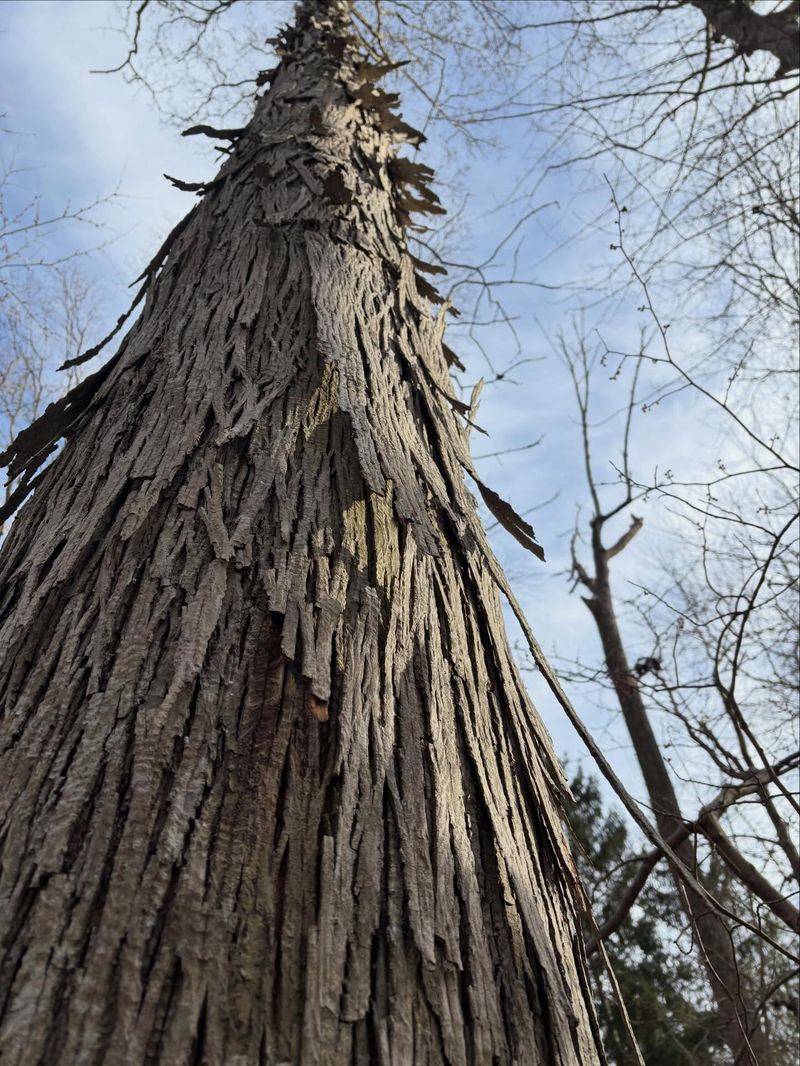
Ever seen a tree that looks like it is having a bad hair day? Congratulations, you have probably met a shagbark hickory.
On older trees, the gray bark splits into long, wide strips. The ends curve outward from the trunk, as if the tree is slowly peeling off an old jacket.
Some folks even call it scalybark hickory.
Young trees look a bit different, which can trick beginners. Their bark stays smooth and tight at first.
The shaggy look develops gradually as the trunk thickens with age.
Want to test your tree-spotting skills? Look for these clues together.
First, check for peeling vertical strips on the trunk. Next, look at the leaves, which usually have five leaflets on each stem, with the top three larger than the bottom pair.
Winter is a great time to practice. With the leaves gone, that rugged bark stands out against snow and gray skies.
Many people think it adds more visual interest than any flowering tree in the cold months.
Try this fun family activity on your next hike. Bring a phone or notebook and count how many shaggy trunks you can find.
Snap a photo of each one. By the end of the season, you will be the neighborhood hickory expert.
8. Large Yards Give Its Broad Crown Room To Spread
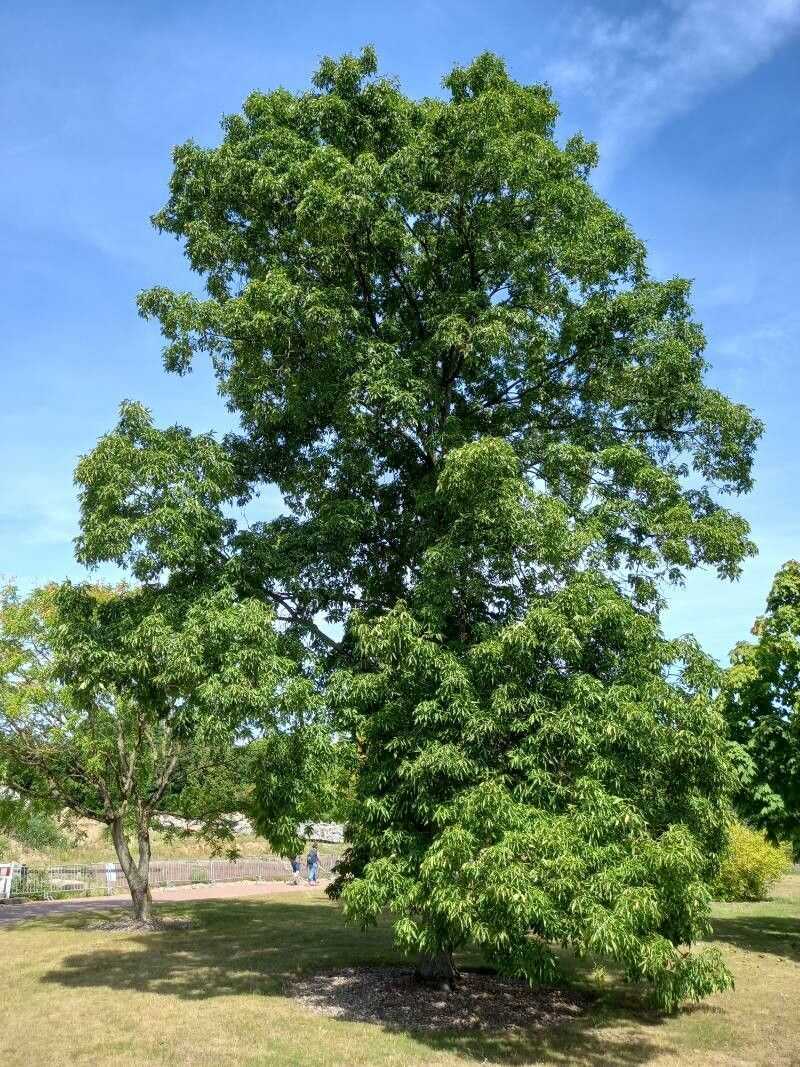
Picture a tree as tall as a six-story building. That is the kind of giant a shagbark hickory can become.
Mature trees commonly reach 60 to 100 feet high. Their crowns spread 40 to 70 feet wide, forming a rounded or oval shape.
That is a lot of leafy real estate.
Because of this size, placement matters. A small city lot or a spot next to the house is usually a poor fit.
Branches may crowd roofs, power lines, or neighboring trees as the years roll on.
Big yards, farms, parks, and natural areas are ideal homes. With open space, the crown can stretch out evenly and catch plenty of sun.
A fuller crown also means more leaves for caterpillars and more nuts for wildlife.
Here is a simple planning trick. Before planting, measure at least 35 feet from your house, driveway, and septic system in every direction.
Mark the spot with a stake and picture a wide umbrella of branches overhead.
Also think about what grows beneath it. Falling nuts and husks can land on patios or cars in autumn.
Placing the tree near a meadow or garden edge keeps the snack drop far from your parked vehicles and busy walkways.
9. Native Hickories Support More Than One Backyard Species
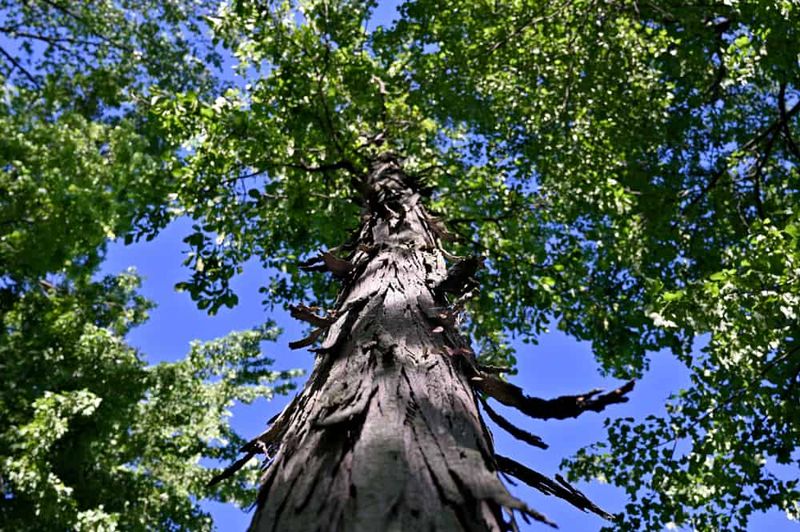
Squirrels and bats get the headlines, but the guest list goes much deeper. One shagbark hickory can support a whole backyard food web.
Start with the leaves. They feed the caterpillars of over 200 kinds of moths and butterflies.
Stars of the show include the pale green Luna Moth, the Banded Hairstreak butterfly, and a spiky giant called the Hickory Horned Devil.
Caterpillars might sound like pests, yet they are baby food for birds. Songbird parents need thousands of them to raise a single nest of chicks.
More caterpillars usually means more cheerful chirping in spring.
The nuts spread the love even further. Chipmunks, foxes, rabbits, deer, white-footed mice, and even black bears enjoy them.
Wild turkeys, wood ducks, and bobwhites also join in.
Spring brings another treat. Dangling flower clusters called catkins offer food to birds and pollinating insects.
Later on, sturdy branches create nesting spots for cavity-loving creatures.
So what can you do? Plant native trees like hickories instead of non-native ornamentals when possible.
Leave some fallen leaves under the tree so moth caterpillars have a place to rest over winter. Small choices like these turn an ordinary yard into a lively habitat that buzzes, flutters, and chatters all year.