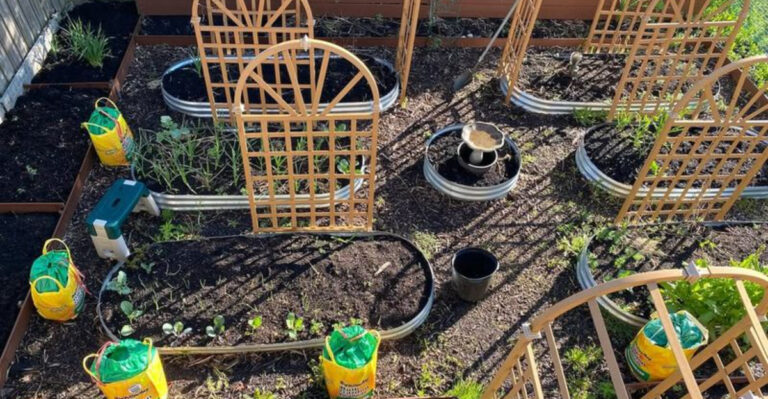
The Fast Ohio Vegetable You Can Plant Now And Harvest Before Winter
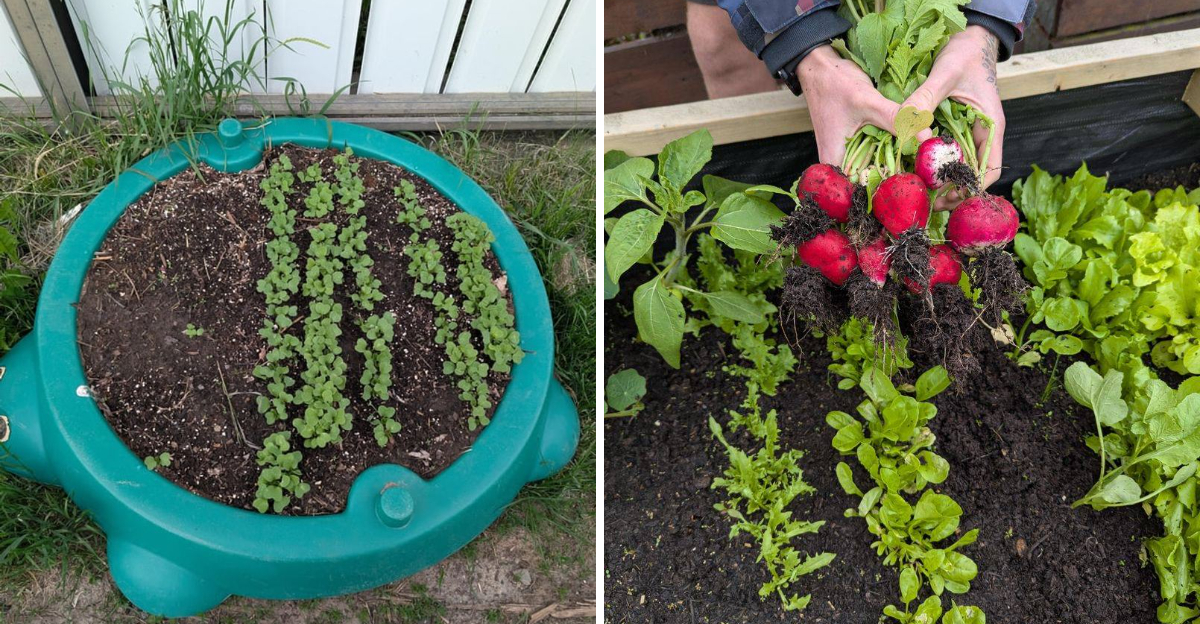
Your tomato cages are empty and the evenings have turned cold.
Season’s over, right? That’s what most Ohio gardeners assume in September, and it’s why half the beds in the state sit bare for eight months.
Here’s the thing nobody accounts for. There’s a vegetable that can go from seed packet to your kitchen in about three weeks.
Not three months. Three weeks.
That timeline changes what’s possible this late. While everything else in the garden needs a full summer, this crop needs less time than a decent vacation.
The reason has to do with what the plant is actually doing underground, and it explains both why it grows so fast and why it fails when people treat it like other vegetables.
Cool weather makes it better, not worse. That part surprises people too.
There’s a right way to do this and several ways to end up with tough woody roots that nobody wants to eat.
Curious what’s still worth planting?
1. Pick Radishes For The Quickest Payoff
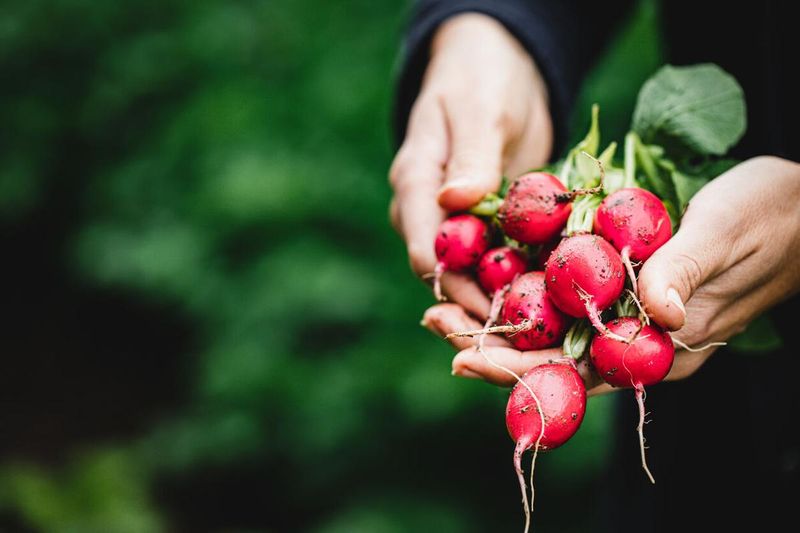
Plenty of Ohio gardeners feel the first cool breeze and assume things are wrapping up.
Radishes are the crop that still has enough runway before winter arrives.
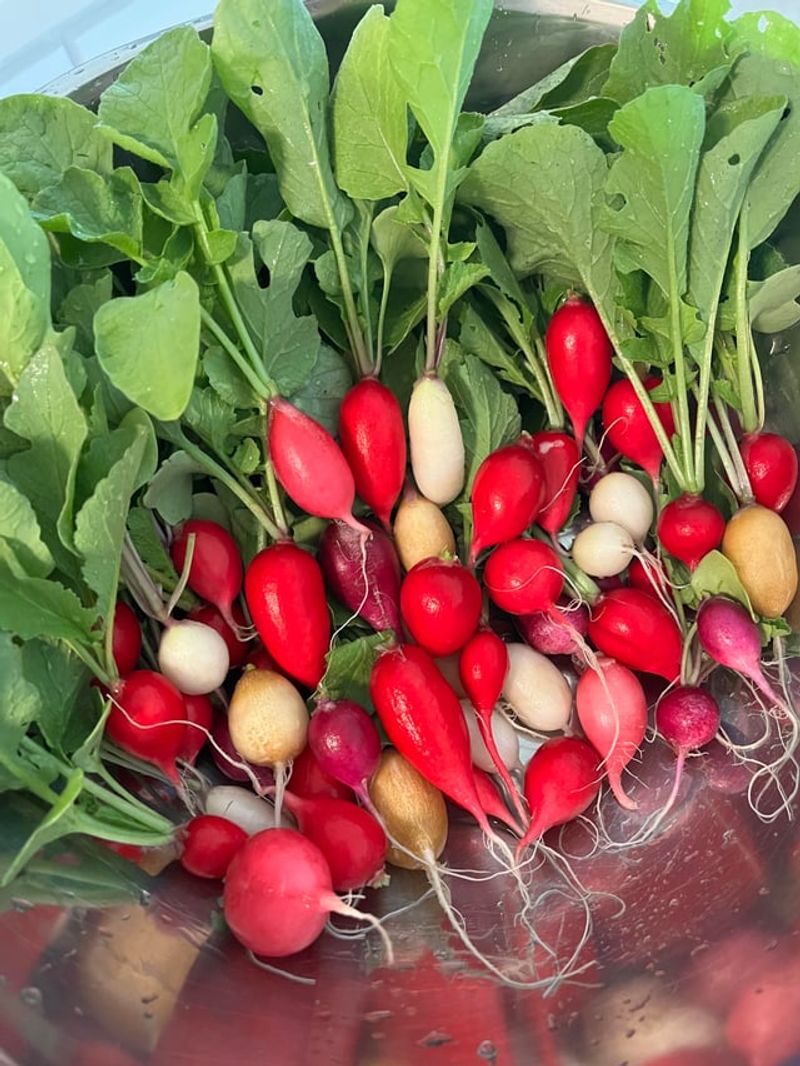
Many varieties reach harvest in roughly 22 to 30 days, which puts them among the fastest vegetables available for fall planting.
That short race matters enormously when summer crops are fading and frost is somewhere on the calendar.
Seeds go straight into the garden, since radishes dislike root disturbance and direct sowing produces more even sizing.
Cool soil around 50 to 75 degrees supports quick germination and steady growth, which is exactly what September delivers across most of Ohio.
Loose well-drained ground matters as much as timing. Hard clods and stones leave roots stubby, crooked, or split.
Keep moisture even, particularly through dry early fall stretches.
Swings between dusty soil and saturated beds produce radishes that taste hot and turn tough rather than crisp.
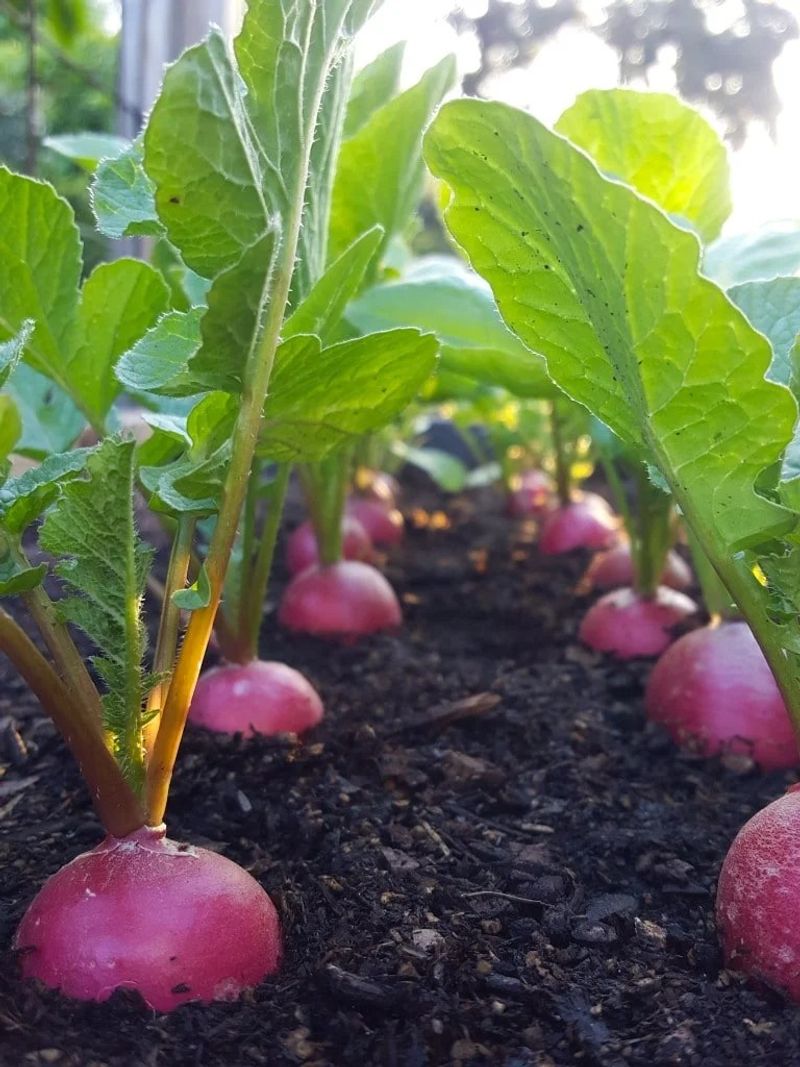
Most roots eat best at about an inch across, before they sit long enough to go pithy.
Count backward from your local average first frost date rather than following one statewide deadline, since northern Ohio and the Ohio River valley differ by weeks.
Sowing a short row weekly extends the harvest right to the edge of winter.
2. Why Radishes Grow So Fast
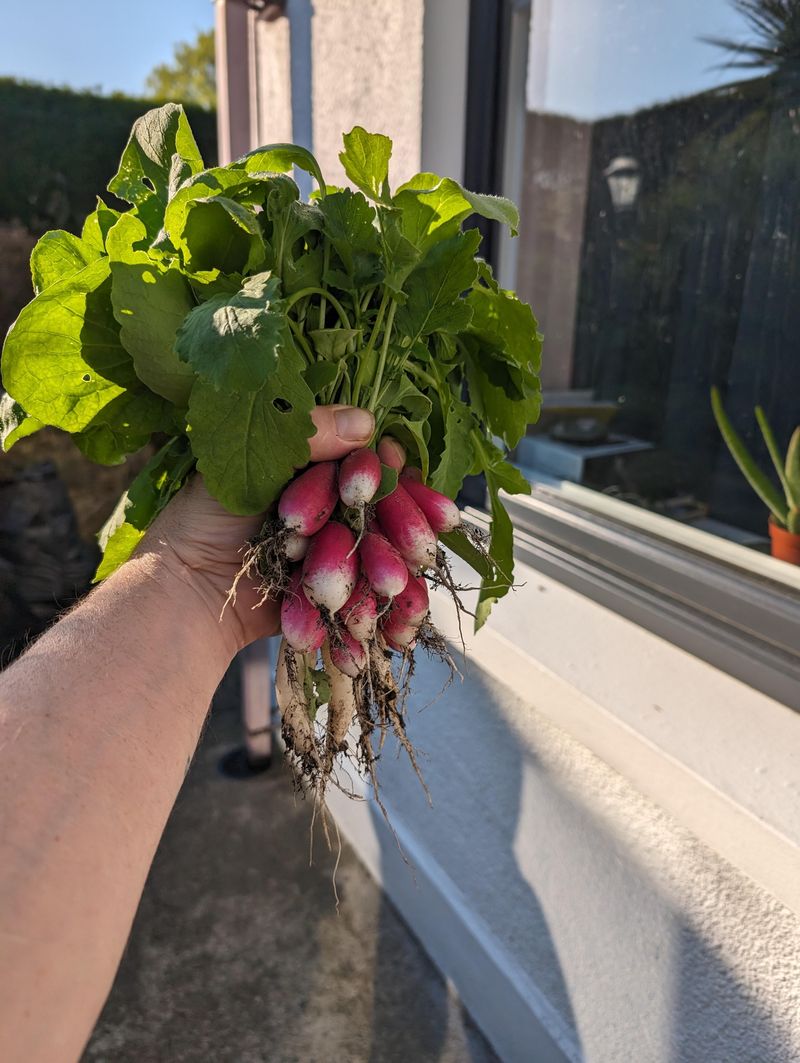
Speed like this has a biological explanation, and understanding it changes how you grow them.
Radishes are storage roots rather than fruits. The plant isn’t building flowers, waiting for pollination, and then filling seed the way a tomato does.
It simply enlarges its taproot and stores what its leaves produce.
That shortcut eliminates the slowest steps in most vegetable life cycles.
Germination is fast too, often three to seven days in warm soil, which means the clock starts almost immediately after planting.
Leaf area develops quickly relative to the plant’s overall size, so photosynthesis ramps up early and feeds root expansion.
Cool weather actually accelerates the useful part. Radishes are cool-season plants, and moderate temperatures favor root swelling over flowering.
Your Ohio Garden Changes Every Week. Your Plan Should Too.
Gardening in Ohio changes quickly throughout the season. Every Friday you’ll receive a simple weekly plan showing exactly what to plant, prune, fertilize, harvest, and protect so you never miss the right timing.
Hot weather flips that priority, which is why summer radishes turn woody and bolt.
Small size helps as well. A one-inch root requires far less accumulated energy than a butternut squash.
The tradeoff shows up on the other end. That same speed means radishes pass their peak quickly and go from perfect to pithy within about a week.
So the plant that rewards impatience also punishes it, which is a fair enough deal.
3. Get The Timing Right For Ohio
Frost dates do most of the work in this calculation.
Northern Ohio near Lake Erie typically sees first frost in early to mid October, while southern counties along the river often run two to three weeks later.
Elevation and local conditions shift those numbers further, so a county-level figure beats a statewide one.
Once you know your date, count backward by your variety’s days to maturity and add roughly a week of buffer.
That buffer matters because fall growth runs slower than the seed packet assumes. Shorter days and cooling soil both extend the timeline.
A 25-day radish sown in mid-September may take 30 to 35 days to size up properly.
Light frost is not the enemy here. Radishes tolerate frost reasonably well, and cool weather often improves flavor.
Hard freeze is the actual deadline, since frozen soil ends root growth and damages what’s in the ground.
Row cover extends the window by a couple of weeks, which is worth knowing if you started late.
Succession sowing spreads the risk. Planting a short row every seven to ten days means some plantings hit ideal conditions even if others get caught out.
Later plantings mature more slowly, so space the final sowings with that in mind.
4. Prepare The Bed Properly
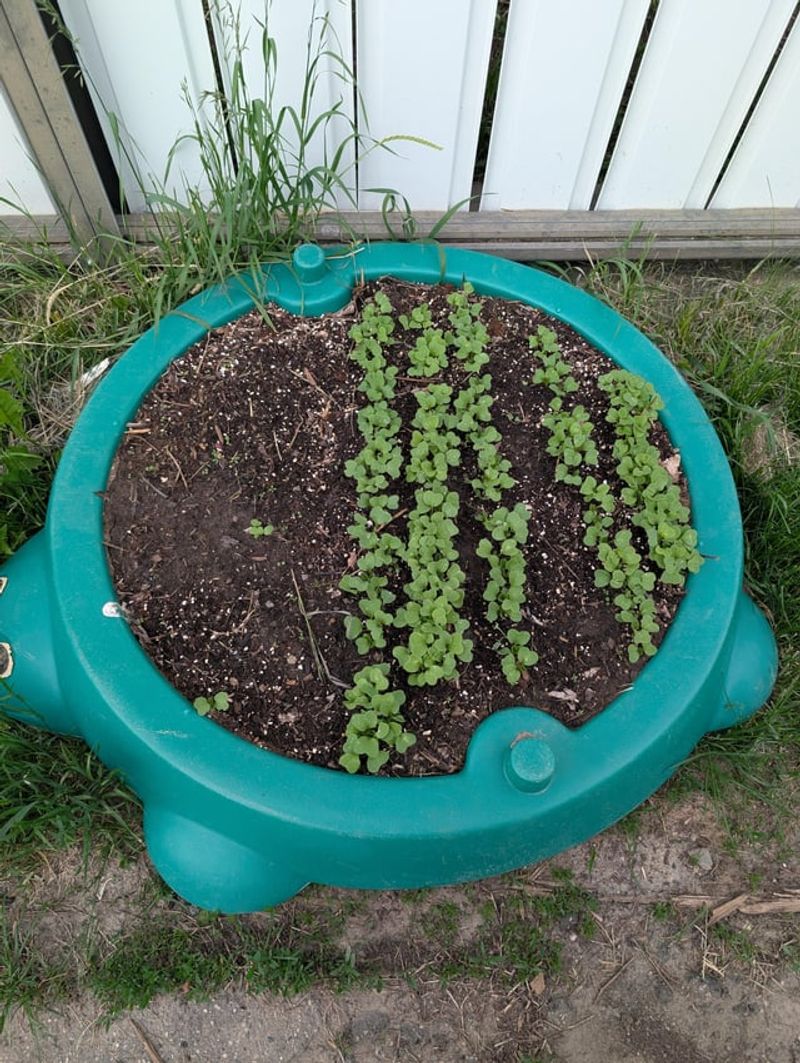
Soil preparation determines shape more than any other factor.
Radishes need loose ground to a depth of six to eight inches, since the root pushes downward and outward as it swells.
Compacted soil, rocks, and unbroken clods all force roots to fork, twist, or stall.
Work the top several inches with a fork until soil crumbles rather than holding together in chunks.
Ohio clay presents a real challenge here. Compost worked in generously improves both structure and drainage, and it pays off across multiple seasons.
Skip fresh manure, which causes forked roots and excessive top growth.
Fertility needs are modest. Radishes are light feeders, and heavy nitrogen produces impressive leaves with disappointing roots underneath.
If your bed grew a heavy feeder like tomatoes or corn this summer, residual nitrogen may still be high, which argues for skipping fertilizer entirely.
Rake the surface smooth and level so seeds sit at consistent depth.
Remove sticks, stones, and clumps from the top few inches specifically.
Raised beds suit radishes well in Ohio, since they warm faster and drain better than in-ground plots.
Ten minutes of preparation prevents the misshapen roots that make people give up on this crop entirely.
5. Sow Seeds The Right Way
Planting depth and spacing carry more weight than people expect.
Sow seeds about half an inch deep. Deeper planting slows emergence, while seeds too shallow dry out before germinating.
Space seeds an inch apart in rows, or scatter them across a wide band if you prefer a block planting.
Row spacing of six to twelve inches gives you working room without wasting bed space.
Cover lightly, firm the soil gently, and water immediately with a fine spray so seeds settle without washing away.
Keep the surface consistently moist through germination. A dry crust prevents emergence entirely, which is the most common reason a sowing fails.
Marking rows helps, since radish seedlings look similar to several weeds at first.
One useful trick: radishes germinate fast enough to mark rows of slower crops like carrots or parsnips, and you harvest them before the slower crop needs the space.
Seed is inexpensive, so sowing a bit heavily and thinning is reasonable.
Watch soil temperature if September turns warm. Soil above 80 degrees produces poor germination and pungent roots, so waiting a week for cooler conditions sometimes beats rushing.
Label each sowing with a date. Tracking which row went in when tells you exactly when to start checking.
6. Thin Without Hesitating
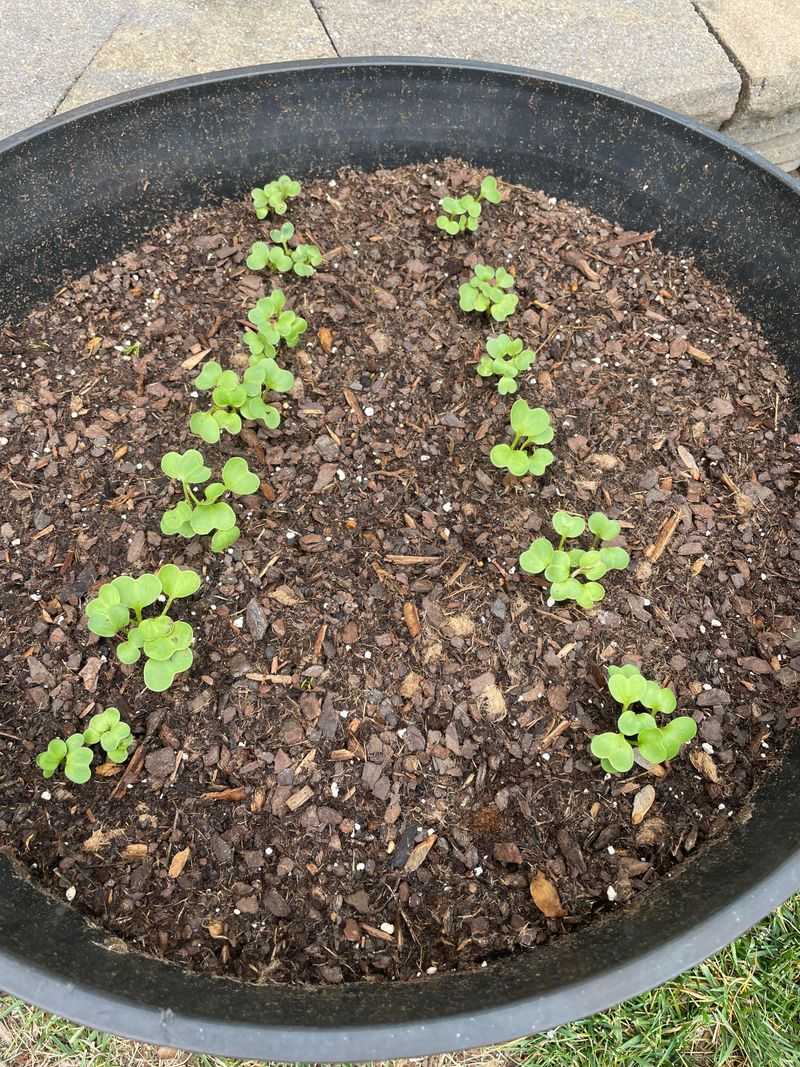
Thinning is where most radish crops succeed or fail.
Seedlings crowded together compete for space, and crowded radishes produce leaves instead of roots. The result is a row of greens with pencil-thin taproots underneath.
Thin once seedlings reach an inch or two tall, usually five to ten days after emergence.
Space remaining plants one to two inches apart for standard round varieties, wider for larger types like daikon.
Pull the excess rather than cutting it, or snip at soil level if pulling disturbs neighbors.
Timing matters here. Waiting until plants are three or four inches tall means the damage is already done, since root formation begins early.
The thinnings are edible, which softens the discomfort of removing perfectly healthy seedlings.
Radish greens work in salads when young, and they sauté well when larger.
Thin again if the first pass left plants too close. A second thinning a week later costs nothing.
Be honest about this step. Nearly everyone under-thins on the first try, and nearly everyone regrets it at harvest.
The plants you remove are the price of the plants you keep, and radishes are unusually unforgiving about crowding.
7. Water Consistently Or Pay For It
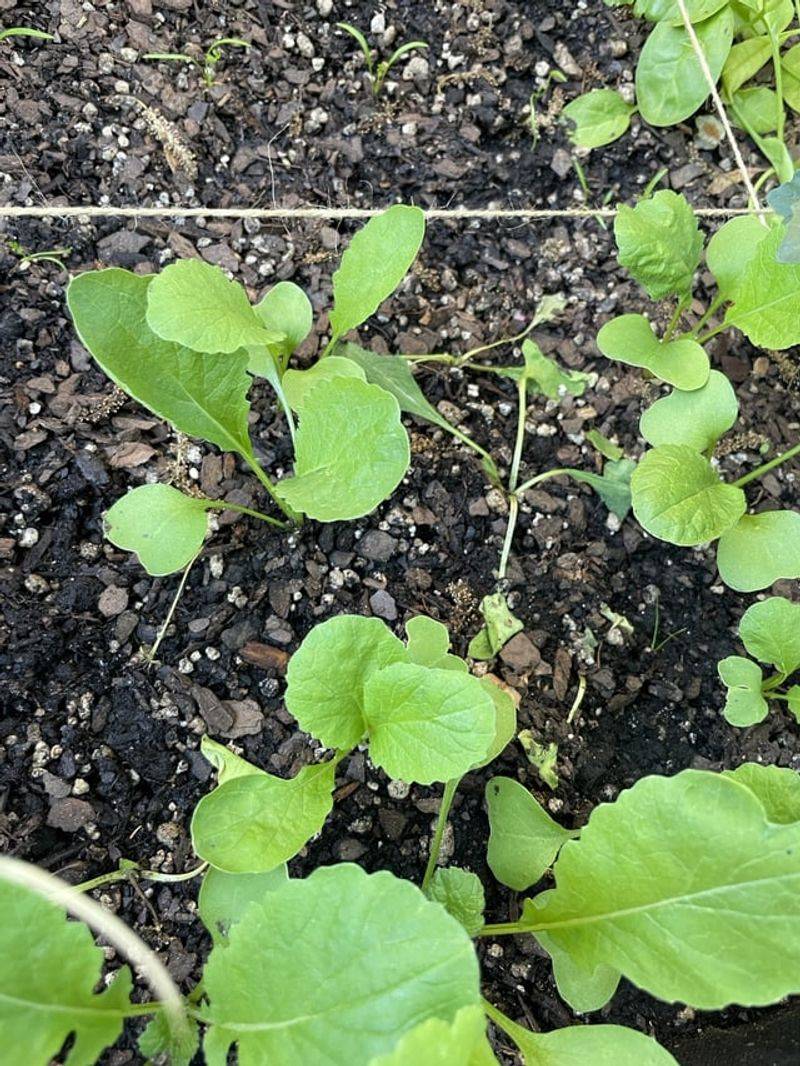
Moisture consistency affects flavor more than any other variable.
Radishes want soil that stays evenly moist without staying wet, which means checking rather than following a fixed schedule.
Uneven watering produces the specific problems people complain about most.
Dry stretches make roots hot and pungent, since stress concentrates the compounds responsible for that sharp flavor.
Cracking follows the other pattern. A dry plant that suddenly gets soaked swells faster than the skin can stretch, splitting the root.
Woody pithy texture develops when growth stalls and restarts repeatedly.
So the enemy is variation rather than any particular amount.
Check the top inch of soil daily during warm September weather. Water when it feels dry at that depth.
Fall rain often handles much of the job in Ohio, so watch what actually fell before reaching for a hose.
Water at soil level rather than overhead where possible, since wet foliage encourages disease in humid conditions.
Mulching lightly between rows holds moisture and moderates soil temperature, which helps during warm early fall spells.
Container radishes need closer attention, since pots dry considerably faster than beds.
Steady moisture produces the crisp mild roots that make growing your own worthwhile.
8. Watch For The Pests That Find Them
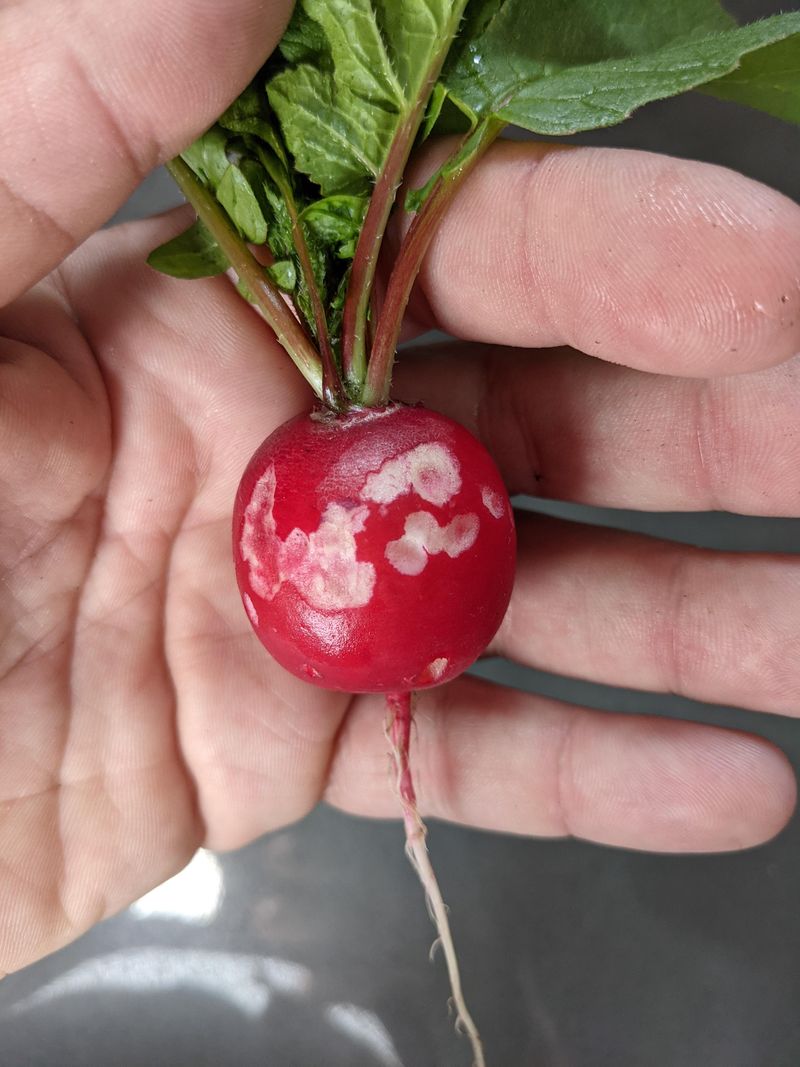
Fall reduces some pest pressure and not all of it.
Flea beetles are the most common problem on Ohio radishes, chewing tiny shot holes through leaves.
Seedlings suffer most, since heavy feeding on small plants slows growth measurably.
Row cover installed at sowing prevents access entirely, which is simpler than treating later.
Cabbage root maggots tunnel into roots, leaving brown channels that ruin the harvest. Row cover addresses those too, since it blocks the flies from laying eggs.
Slugs feed on foliage during wet stretches. Iron phosphate baits work reasonably well and are generally considered safer around pets than older products.
Aphids cluster on new growth occasionally, and a firm spray of water handles most populations.
Rabbits and groundhogs find radish tops appealing, so fencing matters in some yards.
Crop rotation reduces several of these problems. Radishes belong to the brassica family, so following cabbage, broccoli, or turnips in the same bed increases risk.
A three-year gap between brassica crops in any given bed is the general recommendation.
Scouting twice weekly catches most issues early. Flip a few leaves and check for chewing at the soil line.
Healthy fast-growing plants outrun minor damage better than stressed ones do.
9. Harvest Before They Turn
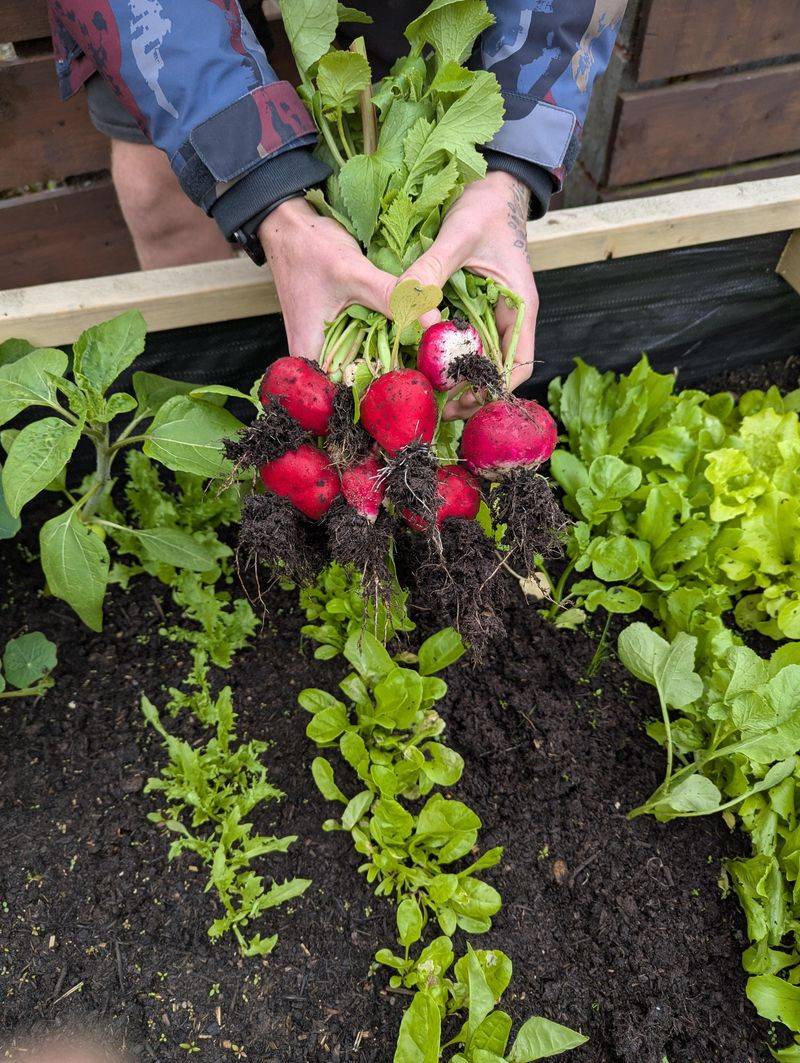
Harvest timing separates good radishes from disappointing ones.
Most round varieties eat best at about one inch across. Larger roots trend toward pithy texture and sharper flavor.
Days to maturity on the packet gives you a starting point, and the actual root is the better indicator.
Brush soil away from a shoulder to check size without pulling.
Pull the whole plant when it looks right, grasping the base of the leaves and lifting straight up.
Loosening soil beside the row with a fork helps in heavier ground.
Check every couple of days once they approach size, since the window between perfect and past runs short in radishes.
Cracked or split roots should come out immediately, since they deteriorate fast.
Trim the tops soon after harvest. Leaves keep pulling moisture from the root, and roots stored with tops attached go limp within a day or two.
Store roots in the refrigerator in a bag or container, where they hold reasonable quality for a week or two.
Cool weather buys you some grace. Radishes hold in the ground longer in cold soil than they would in August heat.
Light frost improves flavor, which makes late harvests genuinely better than early ones.