Is Desert Ruellia Right for Your Sunny Block Wall in Arizona?
A block wall in the low desert can turn a planting bed into a small oven. Baja ruellia, a purple-flowering shrub, is one plant some homeowners consider for that kind of spot.
It uses little water once it is settled in, and hummingbirds may stop by for the blooms. Before you buy one, it helps to know what it can do and where it might struggle.
Baja ruellia brings purple flowers to a sunny bed
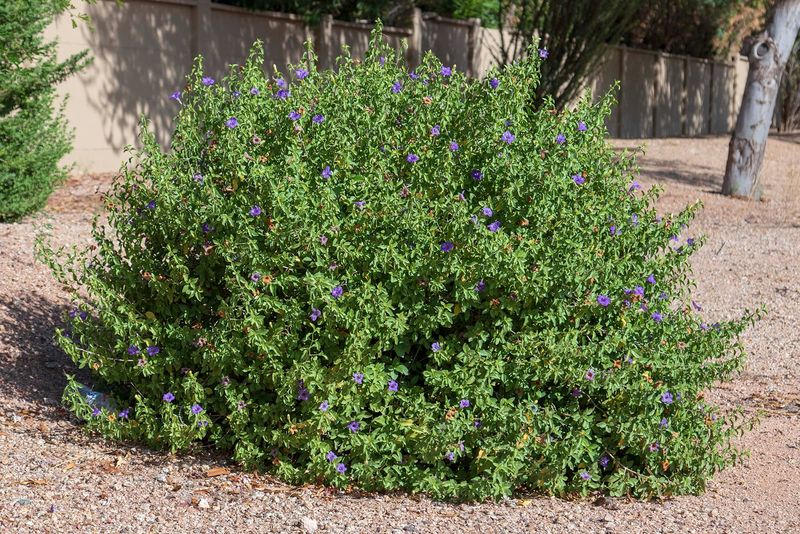
Picture a rounded, evergreen shrub about 4 feet tall and wide, dotted with deep purple, trumpet-shaped flowers. That is how the University of Arizona Campus Arboretum describes Baja ruellia, also sold as desert ruellia (Ruellia peninsularis).
Its tidy shape makes it a natural fit for a bed along a wall, where you want color without a sprawling plant.
Be careful with the word native. This shrub comes from Baja California and Sonora, Mexico, so it is better described as native to the Sonoran region than as an Arizona native.
Kew’s plant database lists a slightly different accepted name and gives Baja California as its home range.
Size, color, and shape are only part of the picture. They do not make the plant right for every yard, so the next sections look at heat, timing, water, and blooms.
A sunny wall is promising, not a guarantee
Full sun is the listing you will see most often. AMWUA’s plant page lists Baja ruellia for full sun, and one nursery information sheet also mentions tolerance of reflected heat.
That is enough reason to consider it for a bright wall.
It is not enough to promise success on every wall. Arizona extension guidance warns that some plants handle ordinary sun but struggle with the extra heat bounced off west-facing surfaces.
A nursery fact sheet is a helpful hint, not a test of how the plant does in your yard.
Spend a few afternoons watching your bed. Note how many hours of direct sun it gets, how hot the wall feels by late day, and whether the spot gets afternoon glare.
A light-colored wall facing east is a very different test from a dark wall facing west.
Late fall is a useful window, with frost and drainage in view
Late fall is generally a good time to plant in the desert. Arizona extension xeriscape guidance points to that season as ideal, except for frost-sensitive plants.
Cooler days let roots grow before summer heat arrives.
That advice covers desert planting in general, not Baja ruellia in particular. Sources also differ on cold tolerance, with one listing 28°F and another 25°F, so neither number should be treated as a safe limit.
If your bed sits in a frost pocket, consider planting a bit later in the window or planning for cold nights.
Test drainage before you plant. Fill the hole with water and see how long it takes to drain.
Caliche or hardpan under a wall bed can hold water around the roots, so break through it or choose a different spot.
Your Arizona Garden Changes Every Week. Your Plan Should Too.
Gardening in Arizona changes quickly throughout the season. Every Friday you’ll receive a simple weekly plan showing exactly what to plant, prune, fertilize, harvest, and protect so you never miss the right timing.
Low water use starts after establishment
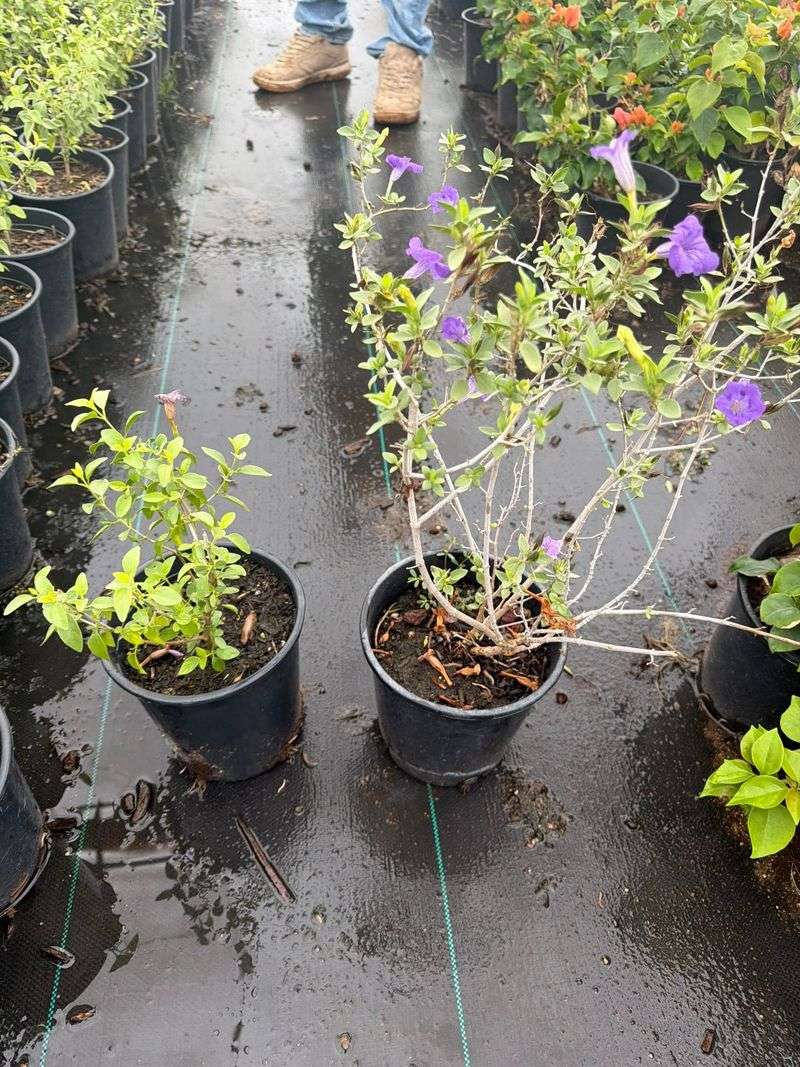
Low water use is something the plant earns over time. A new shrub still needs regular water while its roots spread into native soil.
Keep the root ball moist at first, then stretch the time between waterings as the weather and the plant allow.
Once established, the Tucson Active Management Area plant list places it in a low-water category, suggesting irrigation about every 2 to 4 weeks in the growing season. Treat that as regional guidance, not a strict schedule.
Your soil, the wall’s heat, and the season all change what the plant needs. Slight leaf droop in the afternoon may be normal in heat, but drooping in the morning can mean it needs a drink.
Expect variable blooms and a hummingbird draw
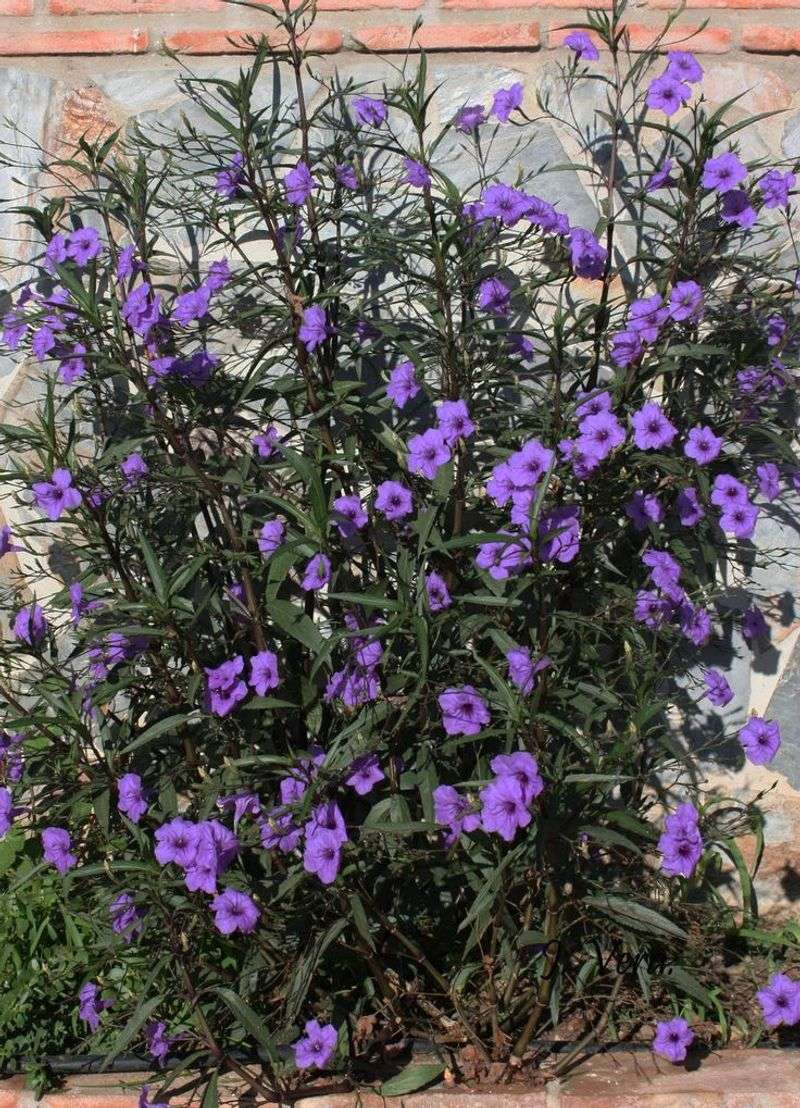
Bloom timing depends on which source you read. Some references describe flowers from spring into fall, while the University of Arizona Arboretum reports a peak from late spring to early summer, with scattered flowers at other times.
Plan for the peak, and count any extra bloom as a bonus.
The wildlife payoff is best documented for hummingbirds. AMWUA identifies them as visitors to the flowers, which makes sense for a tubular purple bloom.
Butterflies are a different story, because the sources for this plant do not report them. If butterflies matter to you, pair it with plants known to draw them, and do not count on it for that job.
Choose the plant for your wall, not the headline
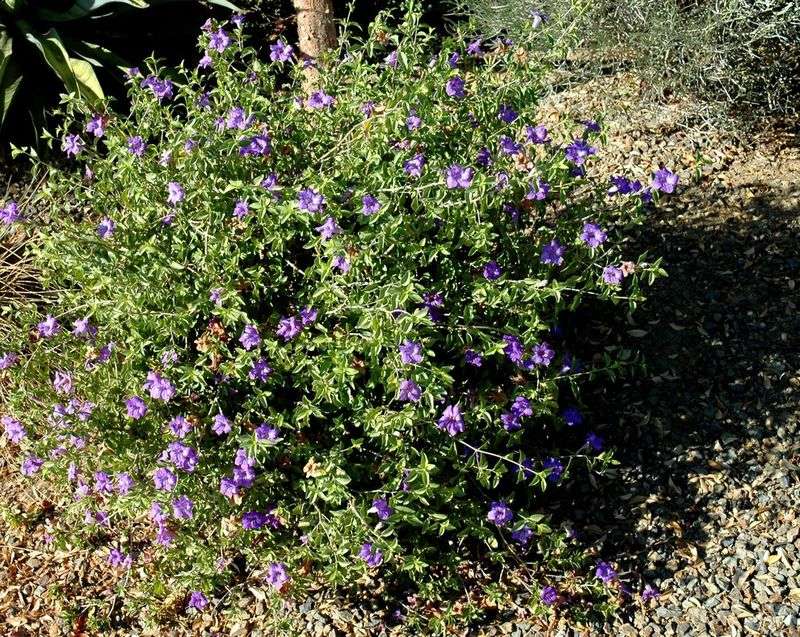
Baja ruellia makes sense when your bed has full sun and good drainage, frost is manageable, and you can water it through its first months. In that case it offers purple flowers and hummingbird visits on modest water once established.
Check Arizona extension plant selection advice and match the plant to your exact exposure.
Try one shrub in the toughest spot before lining a whole wall. A plant that earns its place in one season can fill the rest of the bed next year.