The Weird Fuzzy Cone With Bright Red Berries Popping Up Under Arizona Trees – Here’s What It Is
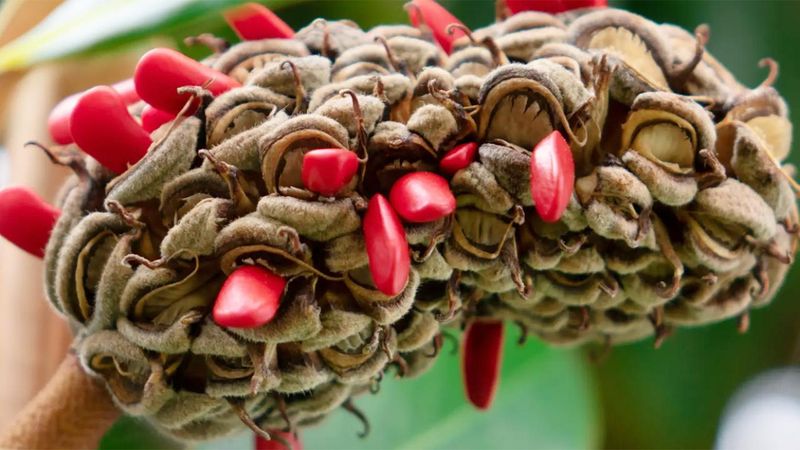
Finding a strange, hand-grenade-shaped object under a tree in your Arizona yard can stop you in your tracks. The rough, cone-like pod with vivid red structures poking out looks like nothing most desert gardeners have seen before.
Knowing what it probably is, and what it is not, helps you decide whether to leave it, remove it, or take a closer look before touching it.
The Strange Arizona Yard Object Most Likely Matches a Magnolia Pod
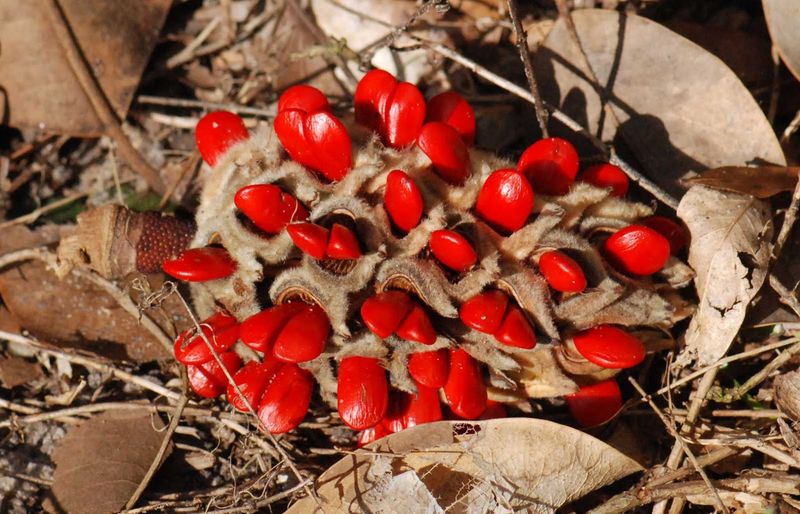
A woody, cone-like object with a rough or fuzzy surface that opens to reveal vivid red structures is a strong match for magnolia fruit, particularly from southern magnolia (Magnolia grandiflora) or a related ornamental species. University of Florida IFAS documentation on magnolia fruit describes these reproductive structures as cone-shaped, pubescent pods that split open to expose bright red-coated seeds, which sometimes dangle from the pod on slender threads before falling.
That description matches closely what many Arizona homeowners report finding beneath landscape trees.
The red material is not a berry in the botanical sense. Each vivid structure is a seed wrapped in a fleshy red covering, produced inside a pod made up of multiple compartments called follicles.
The whole structure matures in late summer or fall, after the tree has finished flowering.
That said, no written description can confirm an identification without a photograph, a look at the surrounding foliage, and a check of the object itself. The Arizona setting tells us where the pod was found, not necessarily what produced it or whether the tree overhead is responsible.
The University of Arizona Cooperative Extension tree guide for Maricopa County makes clear that magnolias are among the ornamental landscape trees available in central Arizona, but they are not native desert species, and their presence depends on what a homeowner or neighbor has planted.
Check the Pod and the Nearby Foliage Before Calling It Magnolia
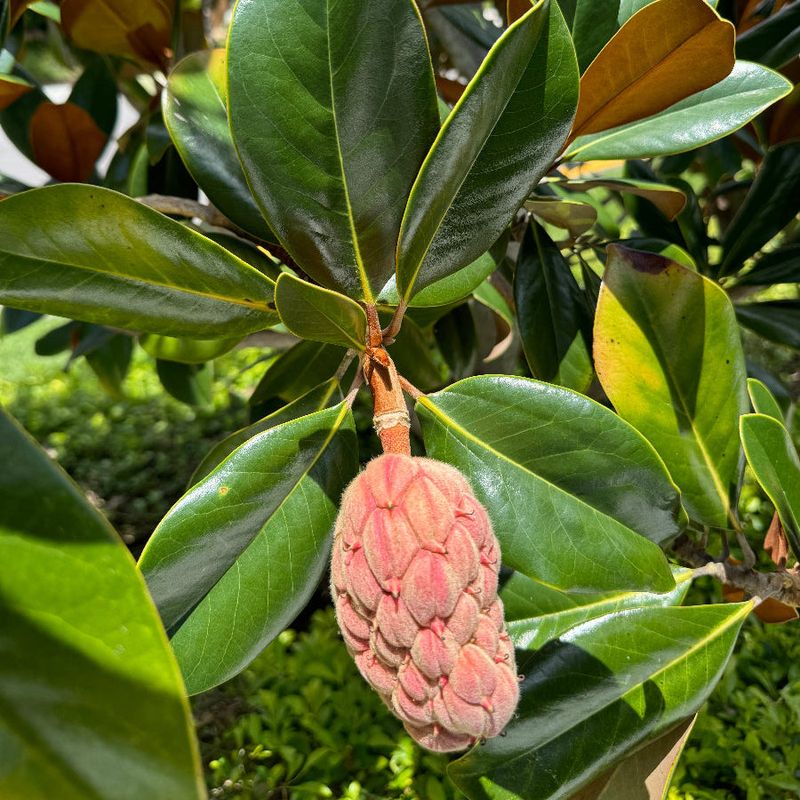
Before settling on any identification, work through a short physical checklist. Pick the pod up carefully with gloves and feel the surface: a magnolia pod is woody and firm, with a rough or slightly fuzzy texture that does not feel slimy or gelatinous.
The individual red structures should appear solid and seed-like rather than sticky or wet. If anything about the texture seems off, set it aside and read the fungal comparison section below before handling it further.
Next, scan the plants within a reasonable distance. Southern magnolia carries large, glossy, leathery leaves that are deep green on top and often rusty-brown beneath.
Deciduous magnolia species have broad, softer leaves. Magnolia fruit is described in botanical references as a cone-like aggregate, and the University of Florida IFAS resource on magnolia fruit confirms that the seed coverings are distinctively red and fleshy inside a woody pod structure.
If nearby foliage matches that profile in your Arizona yard, the connection becomes more plausible.
Proximity is a clue, not proof. The pod could have traveled from a neighboring property or been moved by an animal.
Check whether any branches above the object carry similar fruiting structures or show attachment scars where a pod may have dropped. Color alone is not enough; the combination of shape, surface texture, seed arrangement, and surrounding foliage in an Arizona landscape gives you a far more reliable picture than any single feature on its own.
Your Arizona Garden Changes Every Week. Your Plan Should Too.
Gardening in Arizona changes quickly throughout the season. Every Friday you’ll receive a simple weekly plan showing exactly what to plant, prune, fertilize, harvest, and protect so you never miss the right timing.
Those Red “Berries” Are Magnolia Seeds With Fleshy Coverings
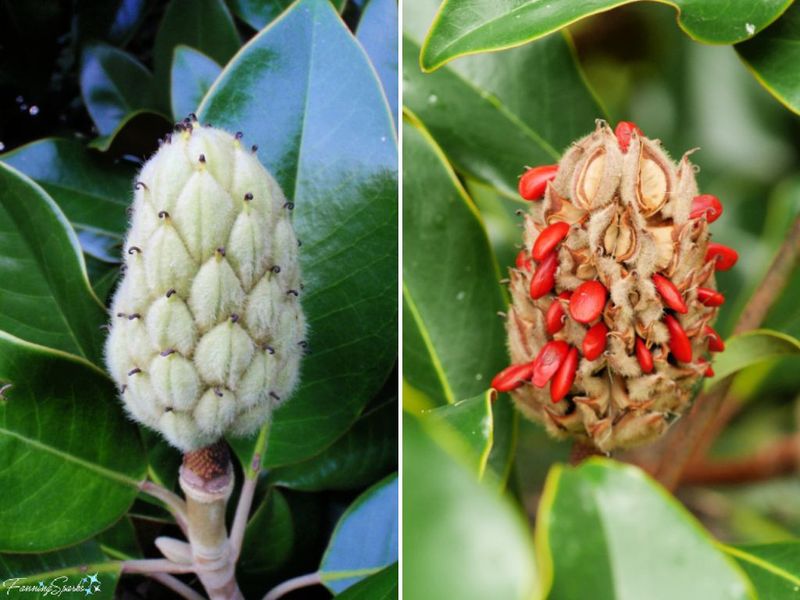
Many Arizona gardeners call the red structures berries because they look like them: small, round, vivid, and fleshy. Botanically, they are something different.
A magnolia produces what is called an aggregate fruit, a structure assembled from many individual compartments, each containing a seed wrapped in a bright red, fleshy outer layer called an aril or seed coat. The whole arrangement sits inside a woody cone until the pod matures and splits open.
When the pod opens fully, the red-coated seeds may remain inside or hang outward on thin, thread-like stalks before dropping. That dangling, jewel-like appearance is part of what makes the object so striking and unfamiliar to Arizona homeowners who have never seen magnolia fruit up close.
The Smithsonian Gardens botany resource describes how the magnolia flower and its subsequent fruit represent one of the oldest flowering-plant reproductive strategies on record, which explains the distinctive, almost primitive-looking structure.
A berry-like appearance does not establish edibility, and that point matters in an Arizona yard where the species may not be confirmed. Reliable foraging guidance consistently recommends against consuming any seed, fruit, or fungal structure that has not been positively identified.
Even if a magnolia’s seeds are not widely reported as dangerous, the object under your Arizona tree could belong to a different plant entirely, and the safe practice is to keep unidentified material away from children, pets, and the dinner table.
The Tree Above the Object May Not Have Produced It
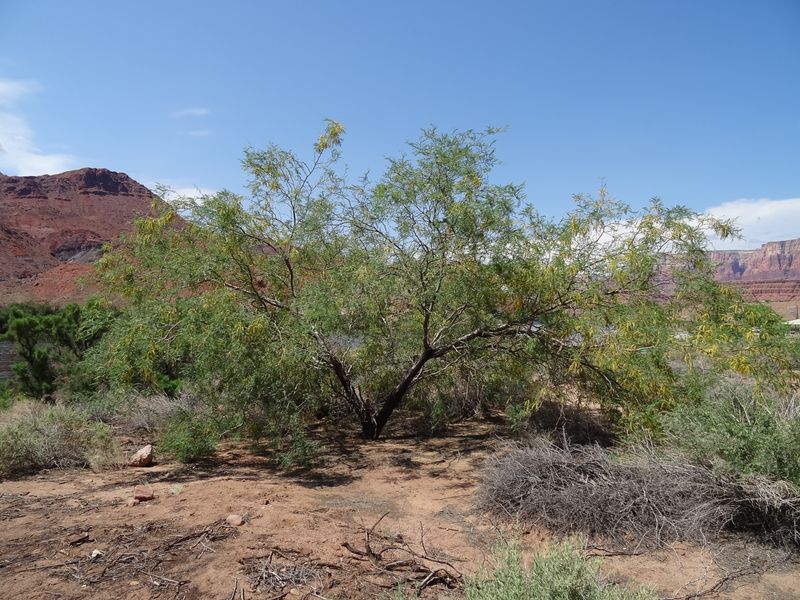
One of the most common assumptions Arizona homeowners make is that whatever falls beneath a tree came from that tree. For familiar species like mesquite or palo verde, that assumption usually holds.
When an unfamiliar object appears, the logic is shakier. Wind can carry lightweight plant material across multiple yards.
Birds and other wildlife regularly transport seeds and fruits. Landscape maintenance, foot traffic, and even irrigation runoff can shift debris in ways that disguise its origin.
A magnolia pod found beneath a mesquite or palo verde in an Arizona yard is almost certainly not a product of those trees. Arizona Cooperative Extension resources on mesquite and palo verde describe their own pods and common issues, none of which match a woody, red-seeded cone.
The pod is consistent with a magnolia growing somewhere nearby, but readers should look for actual magnolia foliage or fruiting branches before concluding that a specific tree is the source.
Arizona’s climate also varies dramatically by elevation, and that variation affects which ornamental trees are practical to grow. The low-desert zones around Phoenix and Tucson push heat and water stress to extremes that differ sharply from higher-elevation communities in the state.
Magnolias can be grown in Arizona under the right conditions, but they are not uniformly suited to every low-desert yard, and their presence in a given neighborhood depends on what individual homeowners have chosen to plant and irrigate. Finding the pod does not mean the tree above it is a magnolia or that a magnolia is even on your property.
Compare It With Staghorn Sumac and Stinkhorn Fungi
Not every fuzzy red cone is a magnolia pod, and two other organisms produce structures that can cause confusion from a short description. Knowing what sets them apart saves Arizona homeowners from misidentifying something that may need a very different response.
Staghorn sumac produces upright, cone-shaped clusters of small red fruits covered in fuzzy hairs, and the resemblance to a magnolia pod can be striking in photographs. The key differences are structural.
Staghorn sumac fruit clusters stay attached to a shrub or small tree and are associated with long, pinnately compound leaves and fuzzy young stems. Utah State University Extension’s profile of staghorn sumac describes this growth habit clearly: the plant’s fuzzy stems and compound foliage are distinctive companions to its red fruit clusters.
Staghorn sumac is primarily a comparison reference here; it is not a common low-desert Arizona landscape plant, so finding one in a Phoenix or Tucson yard would itself be unusual.
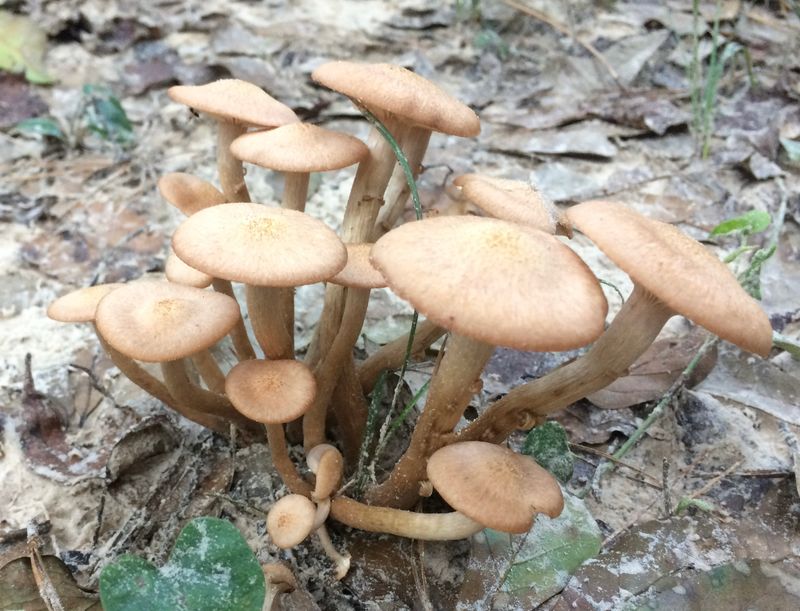
Stinkhorn fungi are a separate category entirely. Arizona Cooperative Extension notes that stinkhorns are fungal fruiting bodies covered with sticky, foul-smelling material and can emerge in lawns, flowerbeds, and areas near dead wood.
If the object in your Arizona yard has a slimy or sticky surface, smells strongly unpleasant, and lacks a woody interior, it is more consistent with a stinkhorn than a magnolia pod. Inspect attachment, texture, seed arrangement, surrounding foliage, and odor together; no single feature is enough on its own.
Handle a Confirmed Magnolia Pod Without Unnecessary Chemicals
Once you have reasonably confirmed that the object in your Arizona yard is an ordinary magnolia pod, the cleanup decision is straightforward. The pod is plant litter, the natural byproduct of a tree completing its reproductive cycle.
You can leave it in place and let it decompose, remove it for appearance or tidiness, or bag it for yard waste disposal when your local Arizona municipality allows organic material in green bins or curbside pickup.
Finding a magnolia pod does not signal tree disease, root rot, or a pest infestation. No fungicide or pesticide is warranted simply because normal magnolia fruit appears.
If you notice separate symptoms on the tree itself, such as unusual bark damage, weeping sap, canopy dieback, or an unusual number of insects, those observations deserve their own diagnosis and are not explained by the pod alone.
Wear gloves when handling any plant material you have not fully identified. That precaution applies especially in an Arizona yard where children or pets may come into contact with fallen material.
The Michigan DNR’s guidance on foraging for wild plant material consistently emphasizes confirming identification before any contact with seeds or fruit, a standard that applies here as well. Do not eat, taste, or prepare the red-coated seeds under any circumstances when the species or source remains uncertain.
Dispose of the material according to your Arizona city or county yard-waste rules, and treat the tree with chemicals only if a separate, documented problem calls for it.
Use the Tree, Texture, Attachment, and Odor to Decide What You Found
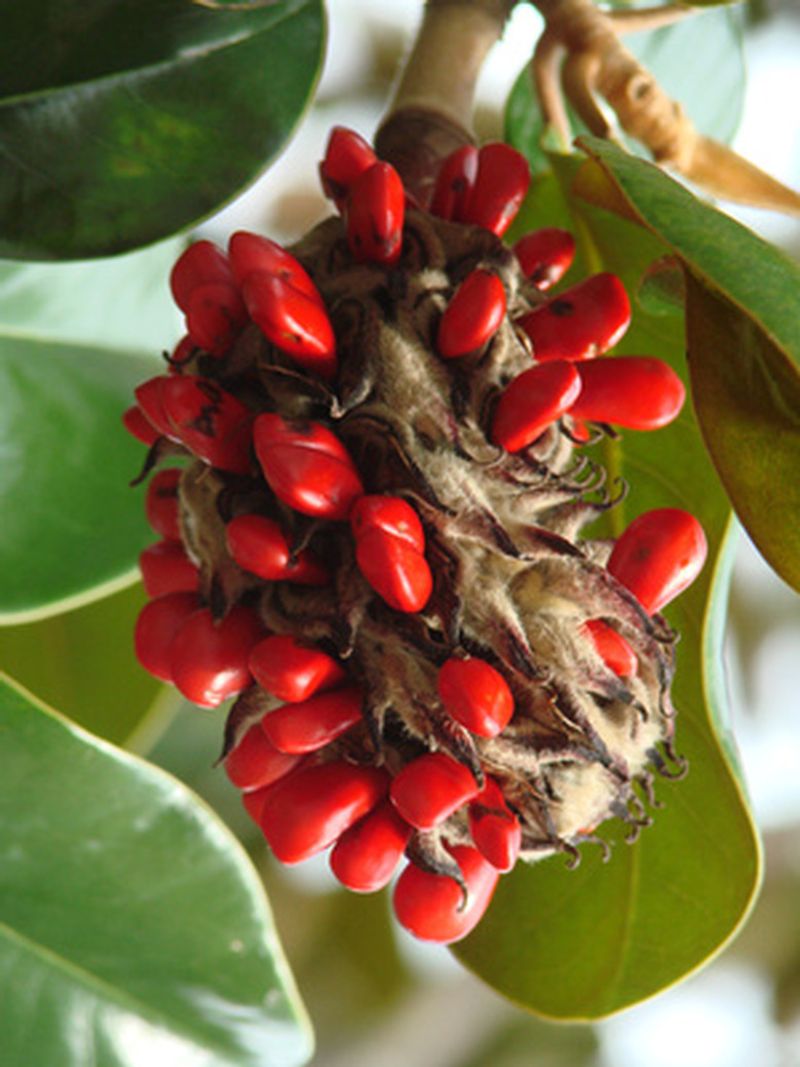
A woody, rough or fuzzy cone with red seed coverings is most likely a magnolia pod when the surrounding evidence fits: magnolia foliage nearby, a firm and non-slimy texture, solid individual seeds, and no foul smell. Reconsider the identification if the object is slimy or sticky, smells strongly unpleasant, forms a solid attached cluster on a living plant with compound leaves, or sits in a spot where no magnolia foliage is visible anywhere in the Arizona vicinity.
The practical rule for any Arizona yard find is to identify first, then decide whether to remove or treat. A magnolia pod needs neither a fungicide nor a pest spray.
A stinkhorn fungus needs removal but no chemical treatment. An attached sumac cluster means you are looking at a different plant entirely.
Getting the identification right protects your Arizona landscape from unnecessary intervention and keeps your yard decisions grounded in what the evidence actually shows, not just what the object looks like at first glance.