Why California Succulents Stretch And Lose Their Shape Over Time
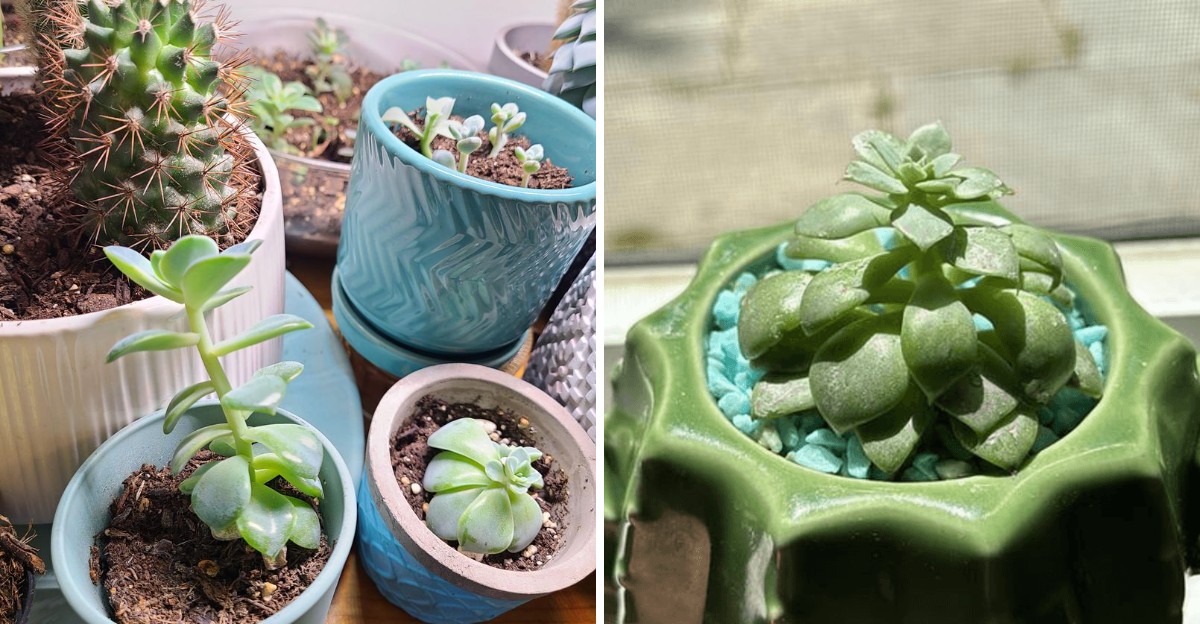
Your succulent may have quietly taken up yoga.
Every week, it stretches a little further. Taller. Thinner. Leaning to one side like it heard something interesting across the room.
Remember the tight little rosette you brought home? The one shaped like a perfect green flower?
Now there are gaps between the leaves. The color looks a bit washed out. The whole plant seems to reach for something just out of range.
So what exactly is it reaching for?
That shape change is not bad luck, and it is not a disease. It is a message, and a clear one once you know how to read it.
The good news is that the fix often sits a few feet away. Some of it costs nothing.
A little of it involves a pair of scissors and some patience. And one simple habit takes only a few seconds each week.
Curious how to bring back that neat, full look? Grab your plant and head toward the brightest window. Yoga class is officially over.
1. Low Light Causes Plants To Reach For More
A plant stuck in a dim corner quietly hunts for the sun. Succulents come from open, sunny places where bright light pours down for many hours a day.
Their bodies expect that kind of brightness, so they react fast when it goes missing.
Light is food for plants. Through photosynthesis, leaves turn sunlight, water, and air into the sugars that fuel growth.
Some succulents sit too far from a window, under a patio cover, or in the shade of a bigger shrub. Those plants cannot make enough energy in their current spot.
So the plant does something clever. It pours energy into upward and outward growth to push its leaves closer to a brighter source.
This is a survival response, not a disease or a pest problem.
Even sunny California sees this all the time. Many people keep succulents indoors, on north-facing porches, or under deep eaves.
Light in those spots runs much weaker than it looks to our eyes. A room can feel bright to you and still be far too dim for an echeveria.
Now try a simple shadow test, because your hand makes a great light meter. Hold it a foot above the plant at midday.
A faint, fuzzy shadow usually means the light is too low. A sharp, dark shadow means your plant gets the brightness it craves.
Your succulent is not being dramatic. It is basically a solar panel that ended up in the basement.
2. Etiolation Explains The Leggy New Growth
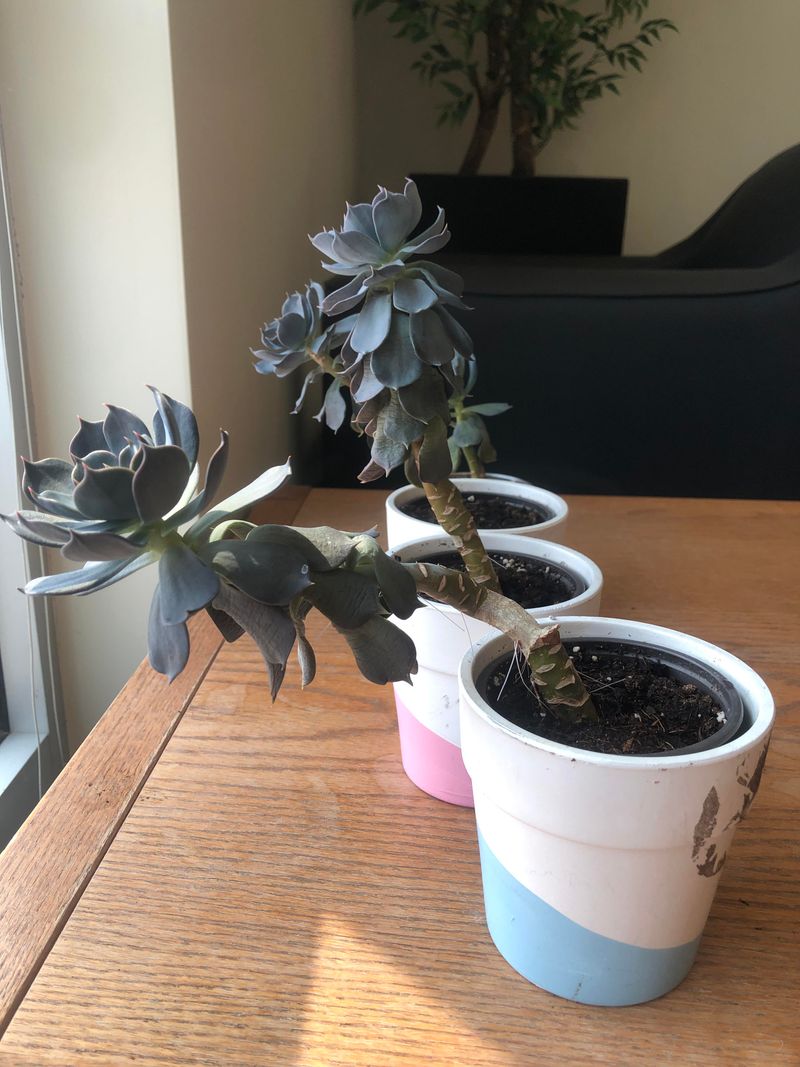
Plant scientists have a fancy word for this: etiolation. It describes the stretched, pale growth that happens when a plant lacks light.
Once you know the term, you will spot it everywhere, from grocery store succulents to plants on the neighbor’s steps.
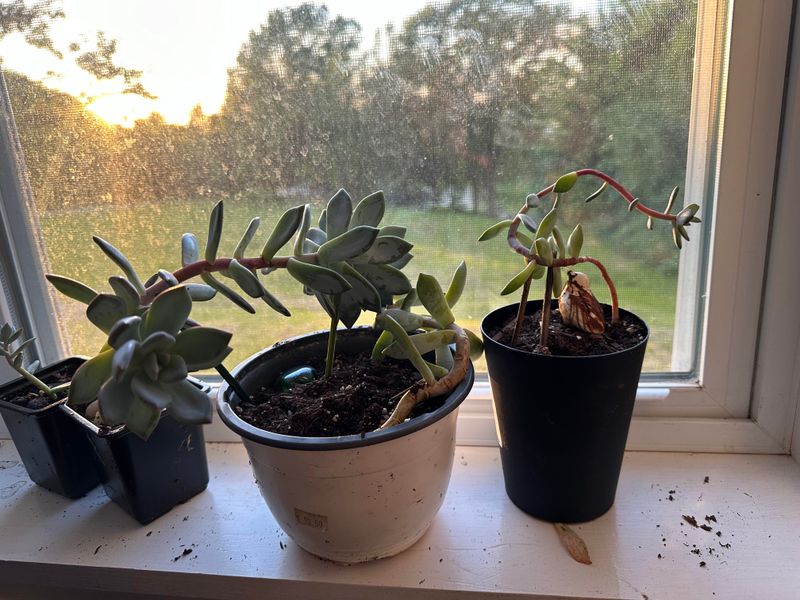
The signs are easy to recognize. The stem grows longer and thinner than normal.
New leaves often come in smaller, flatter, and lighter. Some turn a washed-out yellow-green instead of rich blue, pink, or deep green.
Your California Garden Changes Every Week. Your Plan Should Too.
Gardening in California changes quickly throughout the season. Every Friday you’ll receive a simple weekly plan showing exactly what to plant, prune, fertilize, harvest, and protect so you never miss the right timing.
Many succulents also start to tilt. The top bends toward the brightest spot in the room, like a sunflower that follows the sun.
Rosette types such as echeveria and graptopetalum may open up and lose their tight, cup-like shape.
The pale color has a reason too. Bright light helps many succulents build the red, purple, and orange pigments behind their beautiful stress colors.
In dim light, the plant skips those extra colors and focuses on height instead.
Now grab your phone, because this trick catches trouble early. Etiolation usually shows up slowly, so week-to-week changes can slip by unnoticed.
Compare an old photo to your plant today, and the difference can be shocking. A quick monthly picture catches the problem before the plant gets too tall and floppy.
Your phone gallery becomes a before-and-after diary for your succulent. Hopefully, the after photos start to look a lot more flattering soon.
3. Spacing Between Leaves Increases Under Stress
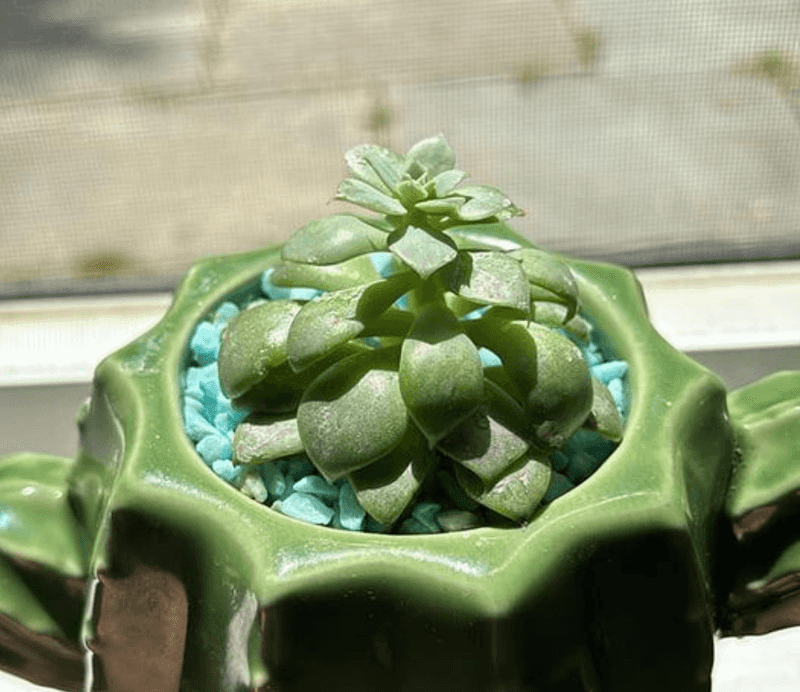
A stretched succulent looks a lot like a ladder with the rungs pulled farther apart. The steps are still there, but the gaps between them grow much wider.
That is exactly what happens to the leaves on an etiolated plant.
Every leaf grows from a spot on the stem called a node. The section of stem between two nodes is the internode.
In good light, internodes stay very short. Leaves stack tightly and form a full, rounded rosette.
Low light makes those internodes grow longer. The plant spends its energy on height rather than on a tight pack of leaves.
As a result, bare green or brown stem suddenly peeks out between each leaf.
This gap is often the clearest early warning sign. Before a plant turns pale or leans hard, the center of a rosette may rise like a little tower.
Leaves that once overlapped now have space between them.
Now take a bird’s-eye view, because this angle reveals a lot. Look straight down at your succulent from above.
A healthy rosette looks like a tight spiral with almost no stem visible. Stem that shows through, or a top that looks like a tiny cone lifting off older leaves, signals a request for more light.
An early catch means only a small section of stem stretches. That keeps the plant much tidier.
Your succulent should look like a rose, not a rocket ship. Nobody wants a houseplant that is planning a trip to the moon.
4. Brighter Light Restores Compact Growth
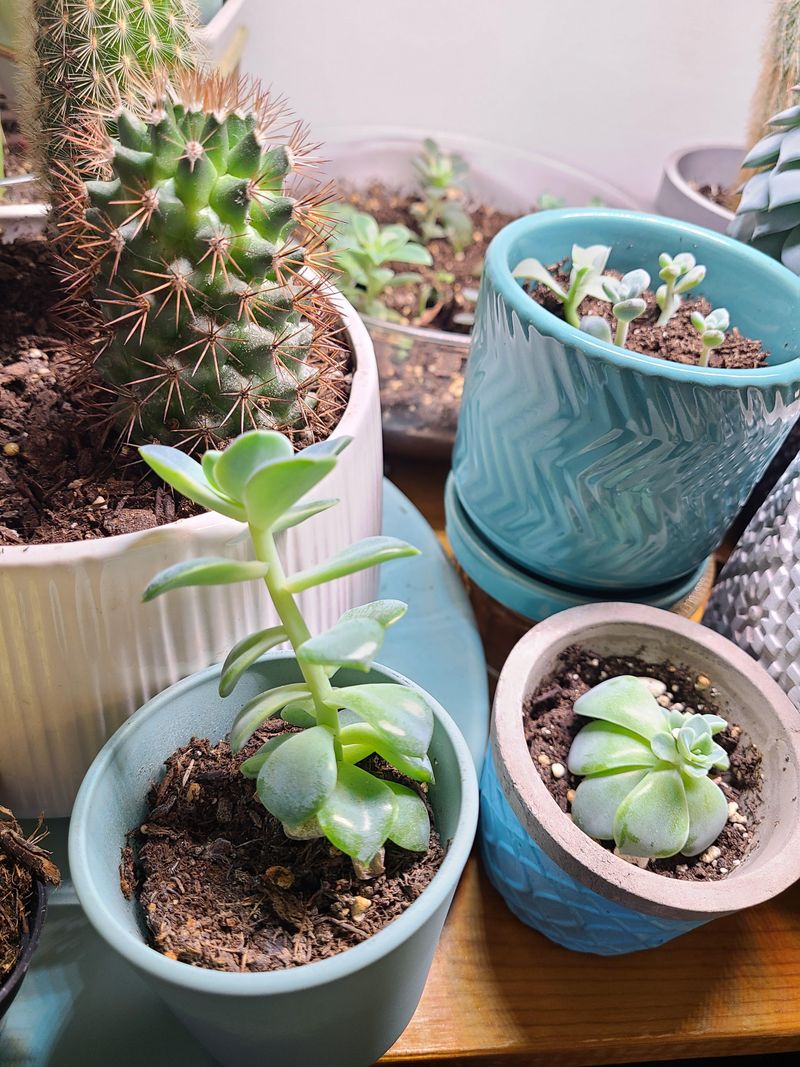
Good news time. Once a succulent gets the light it needs, new growth comes in tighter, fuller, and more colorful.
Plenty of gardeners feel surprised by how quickly fresh leaves start to look like a different plant.
Most succulents like several hours of bright light daily. Outdoors in California, gentle morning sun with some afternoon shade suits many types.
That combo works especially well inland, where summer heat can be intense. Indoors, a south or west-facing window usually offers the brightest option.
Now for the catch, because patience matters here. A plant used to dim light is not ready for strong sun right away.
A sudden jump can cause sunburn. Burned leaves develop tan, white, or brown crispy patches that stay put.
A gradual move over one to two weeks works best. Start with an hour or two of direct morning sun.
Add a little more time every few days, and watch the leaves closely for pale spots or scorch marks.
A grow light can fill in for a missing sunny window. Place it close to the plants, usually within several inches to about a foot.
Run it for around twelve to fourteen hours a day.
Within a few weeks, check the very top of the plant. Leaves that sit closer together, thicker, and brighter in color mean your changes are working beautifully.
Your succulent basically goes from couch potato to fitness model. Same plant, just a much better glow.
5. Existing Stretched Growth Wont Reverse Itself
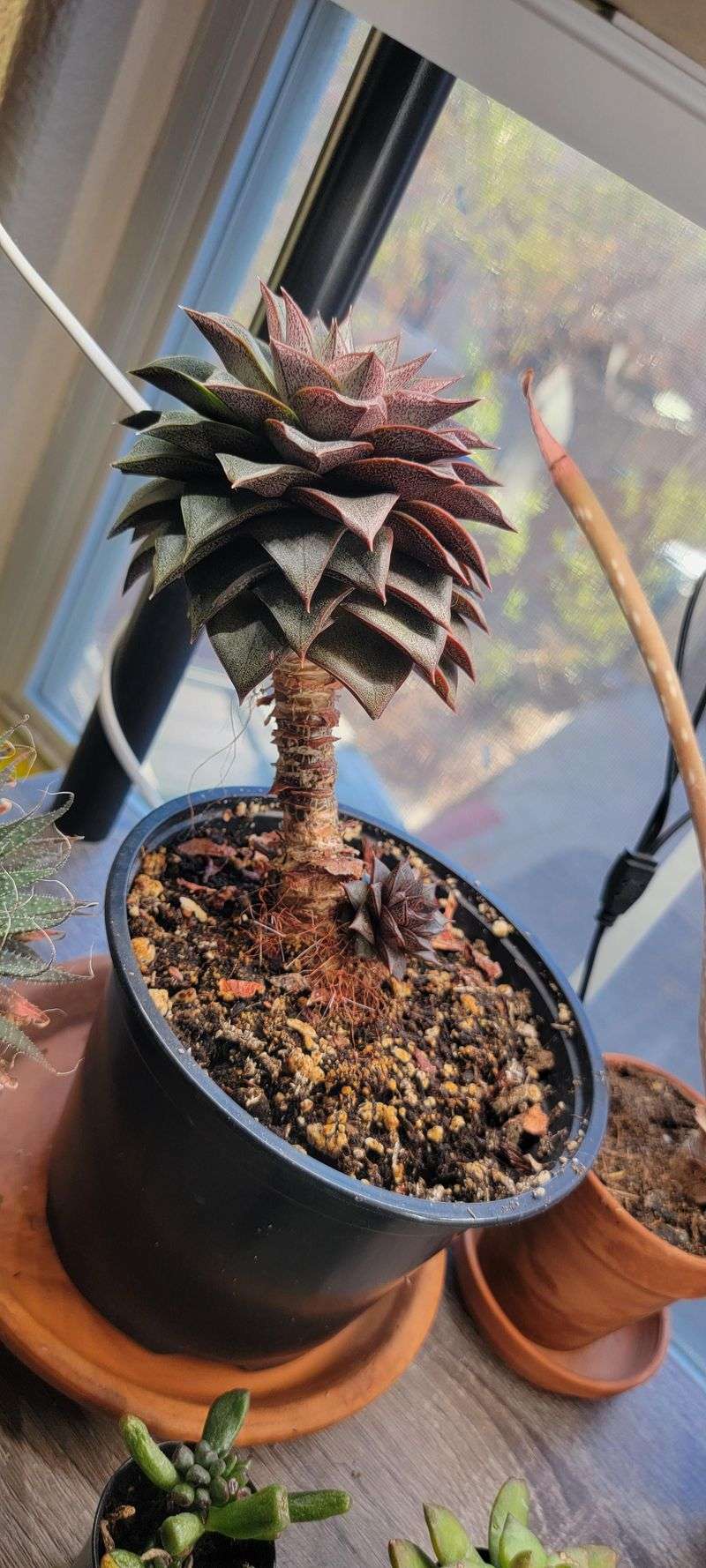
Plenty of care tips skip over one honest truth. Once a section of stem has stretched, it stays stretched.
No amount of sunshine, fertilizer, or wishful hopes will pull those leaves back together.
It works a bit like height from childhood. Growth that already happened is locked in place.
The stem cells in those long internodes have finished their work, so they cannot shrink back down.
What changes is everything that comes next. After the light improves, the plant builds new growth on top of the old stretched part.
That new section comes in compact, but the leggy stem beneath it stays put.
The result often looks a little funny. A tidy rosette may end up on top of a tall, skinny neck, like a lollipop.
Some people actually enjoy that look. Others prefer to fix it.
Older lower leaves on the stretched section may also dry up and fall off as the plant ages. That leaves even more bare stem.
Now for some reassurance, because this part worries plenty of plant owners. Lower leaf loss is normal and does not mean your plant is in trouble.
This knowledge saves a lot of frustration. Instead of months of hope for a tighter stem, you can decide right away.
Keep the plant as it is, or take a cutting from the top for a fresh start.
Your succulent may look like a giraffe for a while. Honestly, giraffes are pretty charming too.
6. Propagating The Top Can Start Fresh
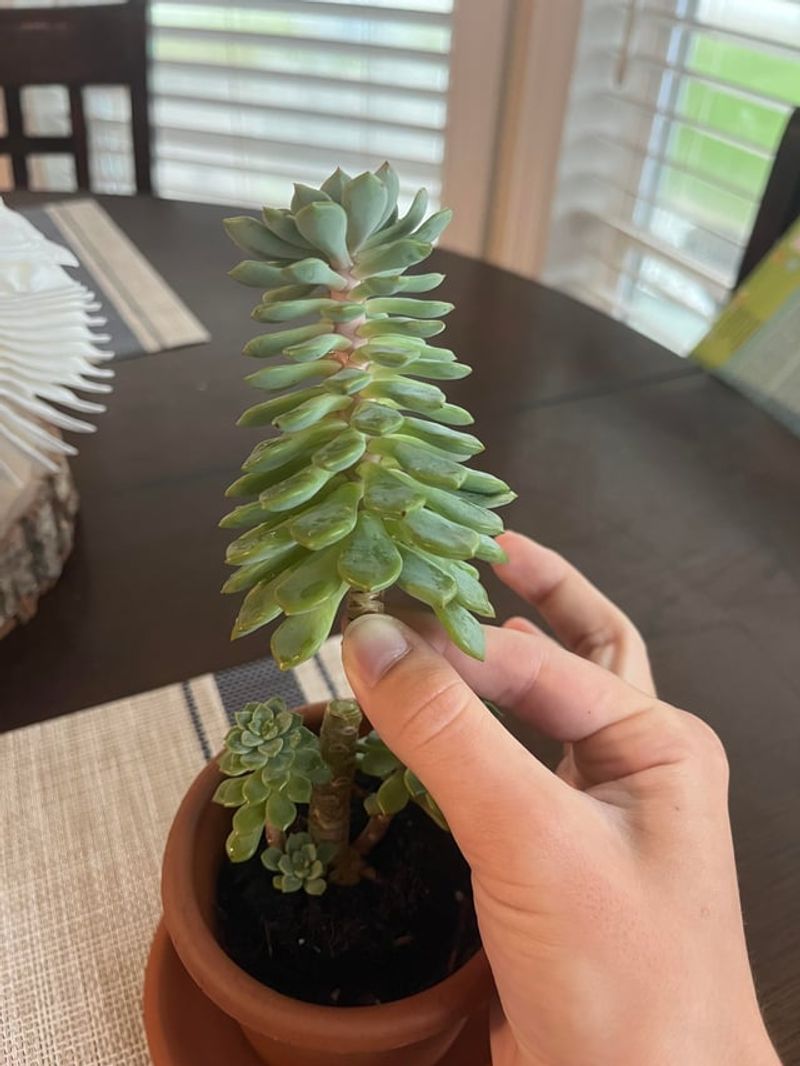
A pair of clean scissors might be your plant’s best friend. Many succulent fans fix a leggy plant with a simple top cut.
It sounds scary, but it is a common and gentle way to start over.
First, choose the compact rosette at the top. Cut the stem with a sharp, clean blade, and leave an inch or two of stem attached to the rosette.
Remove a few of the lowest leaves so a bit of bare stem is ready for the soil later.
Next comes patience. Set the cutting somewhere dry and shaded for several days.
The cut end needs time to form a dry callus. Without that pause, moisture can sneak into the fresh wound and cause rot.
Once callused, place the cutting on top of fast-draining cactus and succulent soil. Water lightly only after roots begin to form, usually within a few weeks.
Keep it in bright, indirect light at first, then ease it into more sun.
Now for a bonus that makes this project extra rewarding. The leftover stem in the old pot often sprouts little baby rosettes along its sides.
Those leaves you pulled off can also grow new plants once they rest on soil.
One stretched echeveria can turn into several new plants this way. What looked like a garden failure becomes a small succulent family.
Every new member grows up with better light from day one. Your windowsill just became a nursery, and luckily, nobody needs a babysitter.
7. Rotating Pots Prevents One Sided Reaching
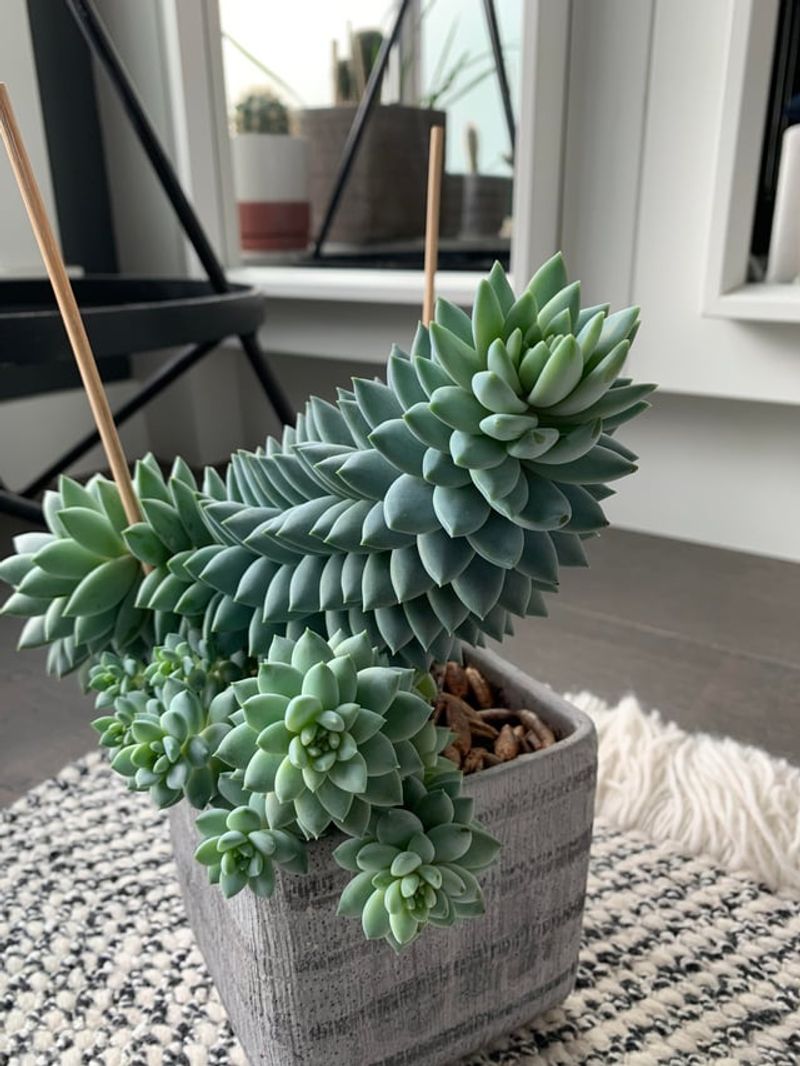
A windowsill plant can look like it is trying to escape outside. Light from only one direction makes succulents lean toward it.
One side can stretch more than the other, and a simple habit prevents it.
Give each pot a quarter turn about once a week. That way, every side of the plant takes a turn facing the brightest light.
Growth stays more even, and the plant is less likely to tip or develop a crooked stem.
Now pair this habit with a chore you already do, because it makes the turn automatic. Water day works well. So does trash night.
Some people put a small sticker or mark on the pot so they can see which way it faced last time.
A weekly turn works best alongside good light, not instead of it. A plant in a dim spot will simply spread the stretch around.
Pair the habit with a bright window, a sunny patio, or a grow light for the best results.
Outdoor plants benefit too, especially those near walls or fences that block sun from one side. An occasional move helps them grow balanced and full.
With steady light and a weekly spin, your succulents can keep that tight, sculpted look you fell in love with at the nursery.
Your plants get a little spin class every week. Luckily, there is no instructor yelling at anyone to pedal faster.
8. Some Succulents Handle Lower Light Better
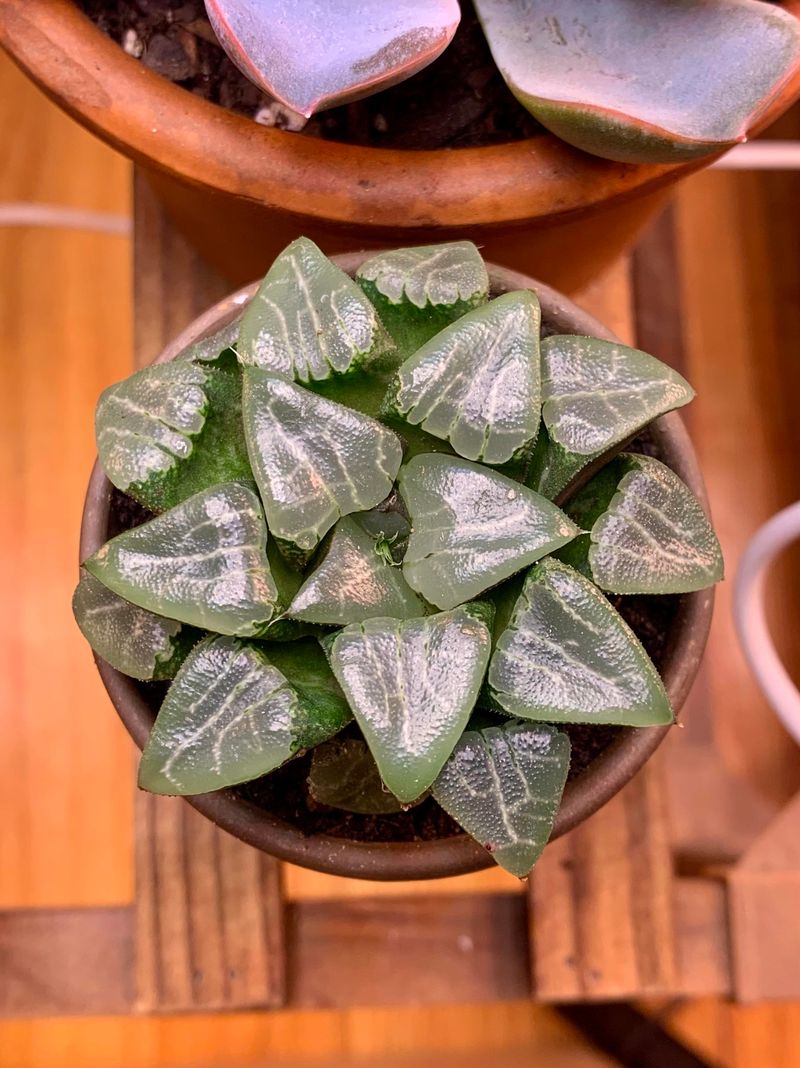
Not every succulent craves a front-row seat in the sun. A few types feel perfectly happy with a bit less brightness.
For dimmer rooms, the right pick can save a lot of stretch and stress.
Echeveria, graptopetalum, and most sedums rank among the sun lovers. They tend to stretch first in low light.
Their colorful rosettes look amazing on a sunny patio, but they often sulk on a shady shelf.
Haworthia makes a great alternative. Many types grow naturally in the shade of rocks and shrubs, so bright, indirect light suits them well.
Gasteria follows a similar pattern, with thick, tongue-shaped leaves that hold their shape nicely indoors.
Snake plant also handles lower light with ease. Its tall, sword-like leaves stay upright and tidy in spots that would leave an echeveria reaching.
Now for a smart store trick, because a little homework at the nursery pays off at home. Read the plant tag and ask staff about light needs before you buy.
Match each plant to the brightest spot you can actually offer.
Lower light does not mean no light, though. These tougher types still need a bright room and a spot near a window.
A dark hallway or windowless bathroom will eventually test even the most patient plant.
With the right match, your succulents keep their shape without a fight. It is a bit like a good roommate match: similar tastes in lighting make life much easier for everyone.