The Florida Fall Flower Hummingbirds Find When Summer Blooms Start Fading
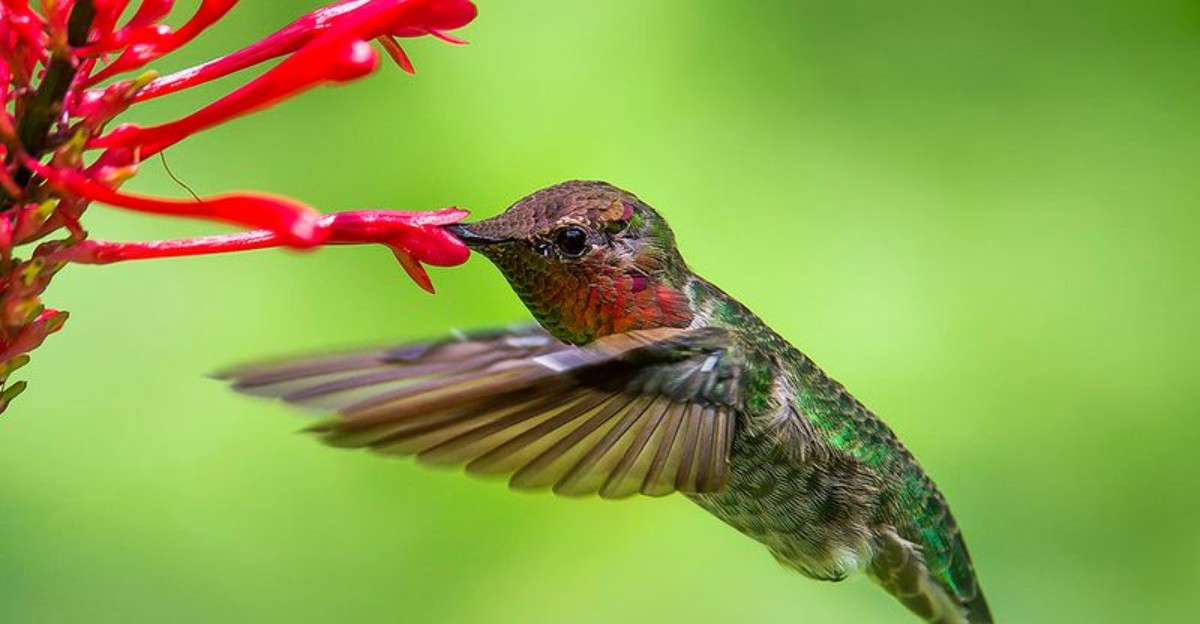
Summer’s flower lineup clocks out, but hummingbirds don’t miss a beat because Florida’s got an understudy ready to take the stage.
Most blooms fade fast once the season turns, and gardens that looked packed in July start thinning out fast.
One Florida garden favorite does the opposite, hitting its stride right as everything else calls it quits, right when hummingbirds need the fuel most before heading south.
Plant purely for summer color and you’ll miss this handoff completely, left with a yard that goes quiet exactly when it should be buzzing with visitors passing through.
Check what’s still flowering while everything else fades. The birds already found it.
The question is whether your yard gave them a reason to stick around.
1. Meet Firespike, Florida’s Fall Hummingbird Favorite
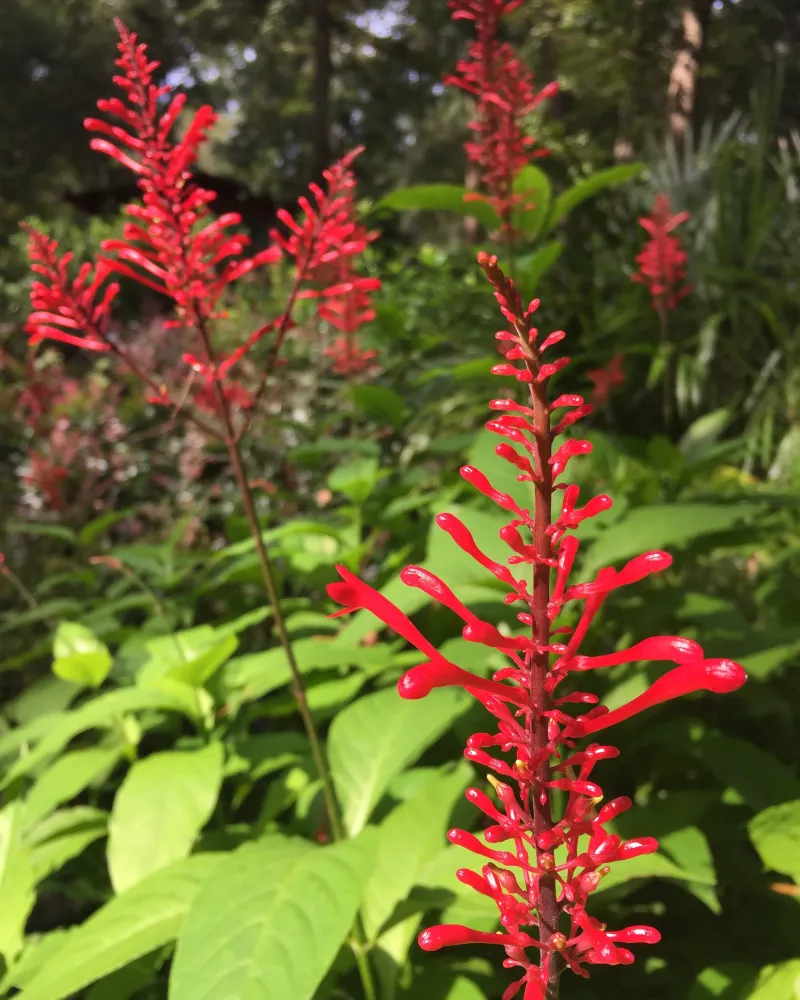
Some plants go by one name, but firespike collects nicknames like a popular kid at school. Gardeners also call it Cardinal Guard and Scarlet Flame, and one look at its blooms explains why.
Across the state, firespike acts a little differently depending on where you live. In frost-free South Florida, it stays green all year as an evergreen shrub.
In North and Central Florida, it behaves more like a perennial that may go quiet in winter and return from its roots.
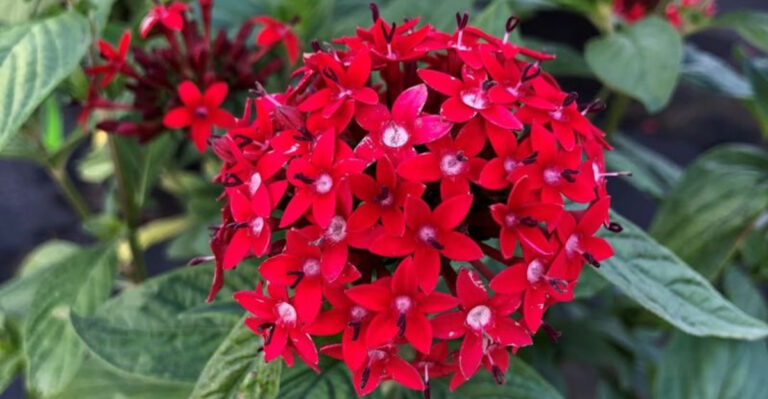
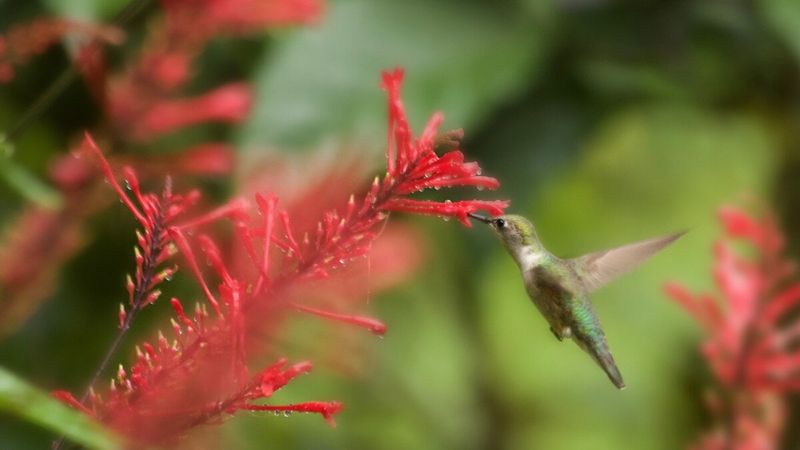
The real star is the flower show. Firespike covers itself in bright red, tube-shaped blooms that hummingbirds and butterflies can hardly resist.
Those flowers usually open from late summer through winter, or until frost arrives.
Gardeners in south get an extra treat. There, firespike can flower nearly year-round, giving visiting birds a snack stop in almost any month.
Farther north, the big show happens in fall and winter, right when many other plants are taking a break.
So why do people love it so much? It fills a gap in the garden calendar with color, and it feeds wildlife when food gets scarce.
It also asks for very little fuss once it settles in. For a busy family who wants a lively yard without hours of work, firespike is a friendly place to start.
2. Plant Firespike Where Summer Blooms Are Fading
Walk through almost any Florida yard in September. You will likely spot tired zinnias, crispy seed heads, and plants that look ready for a long nap.
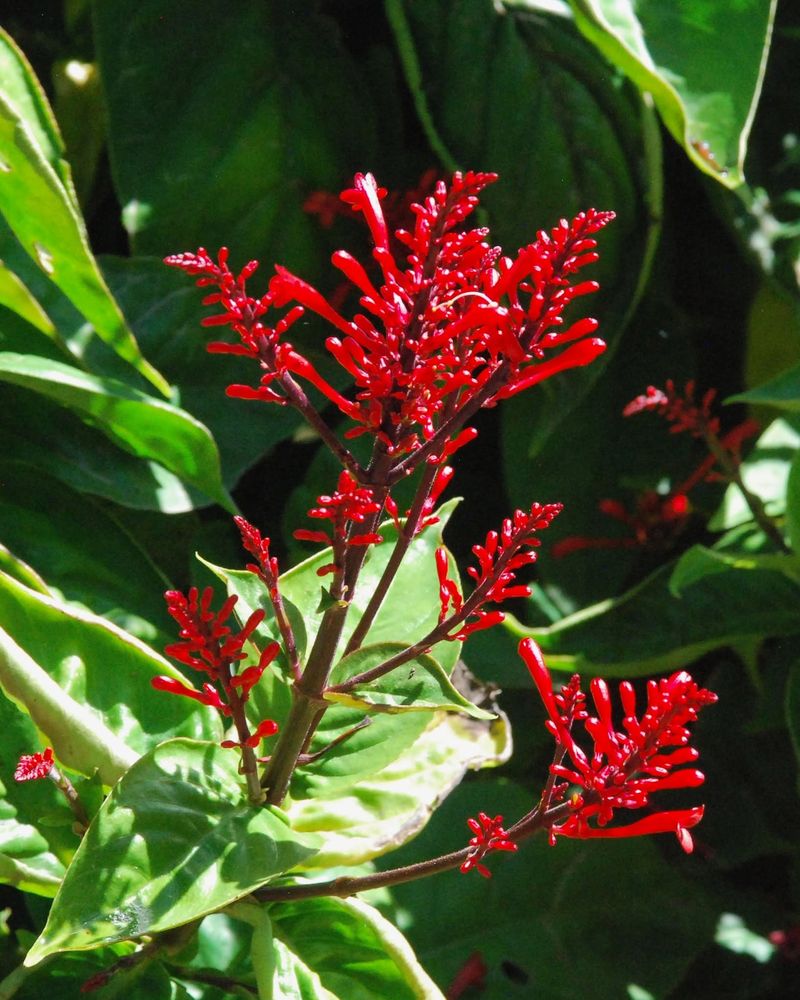
That empty feeling is your cue. Firespike produces thick clusters of brilliant red flowers right when many summer bloomers begin to fade.
Tucking it into those tired spots turns a sleepy corner into a bright one almost overnight.
Think of your garden like a restaurant for hummingbirds. If the kitchen closes in September, the customers fly somewhere else.
Firespike keeps the doors open from late summer through winter, so the nectar keeps flowing when birds need fuel most.
Here are a few smart places to try it:
Next to spring and summer flowers that finish early, so the color hands off smoothly. Along a fence or wall where you can see it from a window.
Near a porch or patio, so you can watch hummingbirds up close with your morning juice.
Your Florida Garden Changes Every Week. Your Plan Should Too.
Gardening in Florida changes quickly throughout the season. Every Friday you’ll receive a simple weekly plan showing exactly what to plant, prune, fertilize, harvest, and protect so you never miss the right timing.
Mixing firespike with plants that bloom at other times also helps your yard look full all year. Pollinators learn that your space is a dependable food stop.
Over time, you may notice more visitors returning season after season, which is a pretty fun reward for one smart planting choice.
3. Give Firespike Bright Shade For Better Flowers
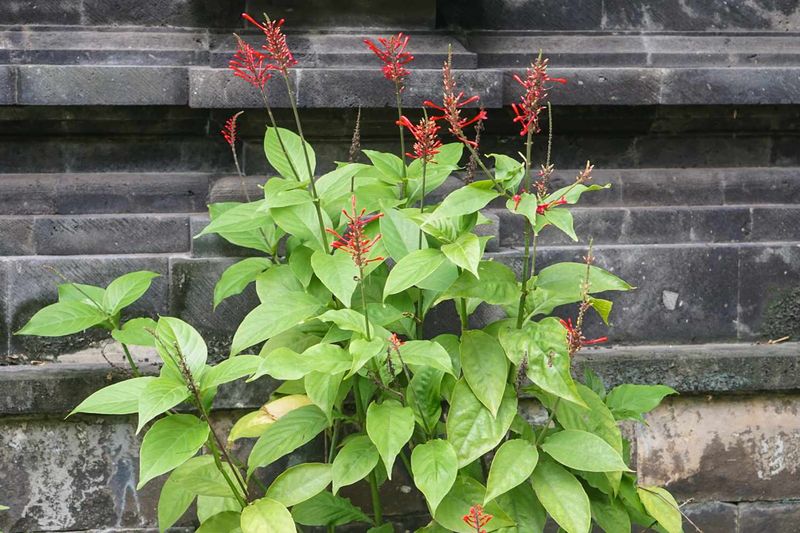
Here is a little plant secret: firespike is not picky about light. It can grow in full sun, partial shade, and plenty of spots in between.
Still, each choice changes how the plant looks. In full sun, firespike usually blooms heavily but stays shorter and more compact.
That can work nicely if you want a tidy shrub near a walkway or mailbox.
Many gardeners, though, prefer what people call bright shade. This means light filtered through tree branches, or a spot that gets morning sun and afternoon relief.
In bright shade, firespike grows taller and shows off bigger, glossier leaves.
Deep shade is the one spot to skip. Without enough light, the stems stretch out and get leggy, like a teenager who grew six inches over the summer.
Leggy plants tend to flop and give you fewer flower spikes.
Try this quick test before planting. Watch your chosen spot a few times during the day and note when sunlight reaches it.
Places under tall pines or oaks with patchy light are often ideal.
If your plant looks stretched and thin, move it a little closer to the light next season. A small shift can bring back fuller growth and a stronger bloom show for your hummingbird guests.
4. Keep The Soil Moist While Firespike Is Blooming
Picture running a race on an empty water bottle. That is how a flowering firespike feels in dry soil during its busy season.
Firespike grows best in fertile or moderately fertile soil that stays moist but drains well. Soggy ground can cause root trouble, while bone-dry dirt slows down flowering.
The goal is soil that feels like a wrung-out sponge.
Good news for Florida yards: this plant handles a wide mix of soils. It can grow in slightly acidic to slightly alkaline ground, and it adapts to both sandy and loamy textures.
Sandy soil drains fast, though, so it may need extra help holding water.
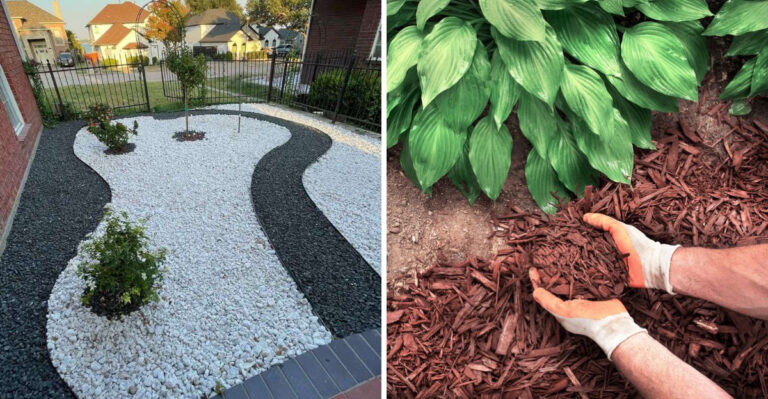
Organic matter is the easy fix. Mix compost into the planting hole, and spread a few inches of mulch around the base.
Both help the soil hold moisture and feed the roots slowly over time.
Once firespike gets established, it can handle short dry spells fairly well. Even so, regular watering pays off, especially while it is actively pushing out flowers.
A simple routine helps. Poke a finger an inch or two into the soil every few days.
If it feels dry, give the plant a deep, slow drink. Consistent moisture often means more blooms and happier hummingbirds.
5. Let Firespike’s Red Tubular Flowers Draw Hummingbirds
Did you know hummingbirds see red especially well? Firespike seems built around that fact, almost like it studied up on its favorite visitors.
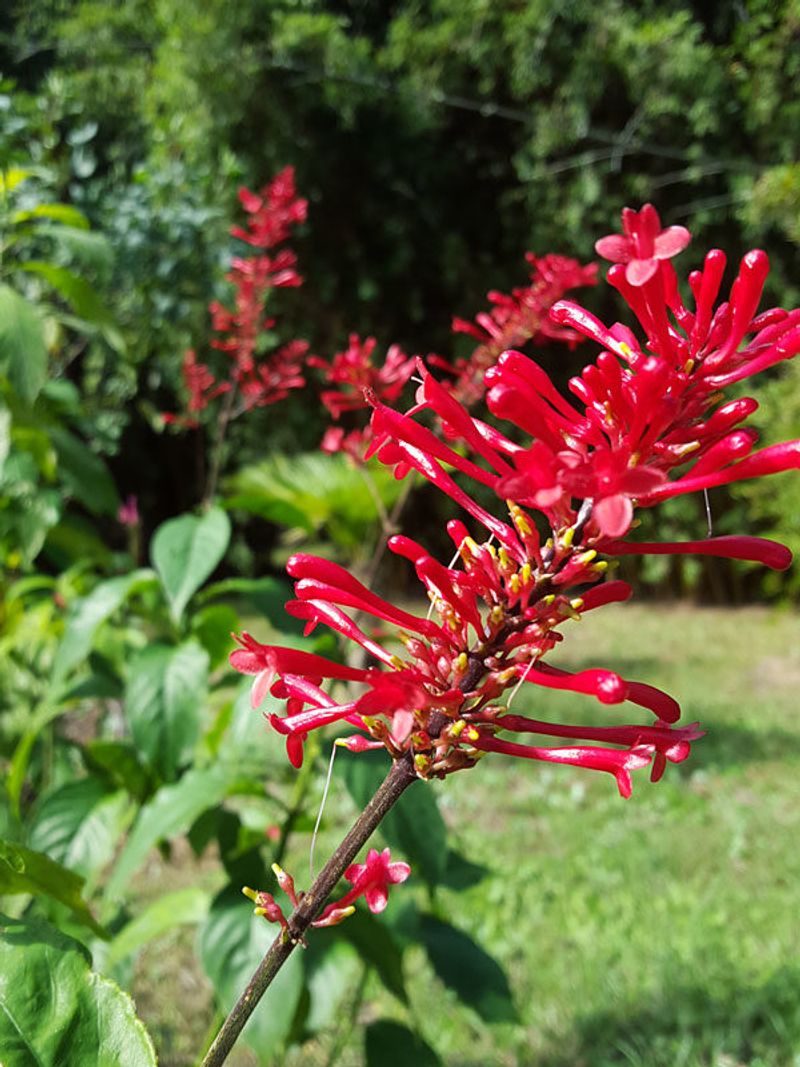
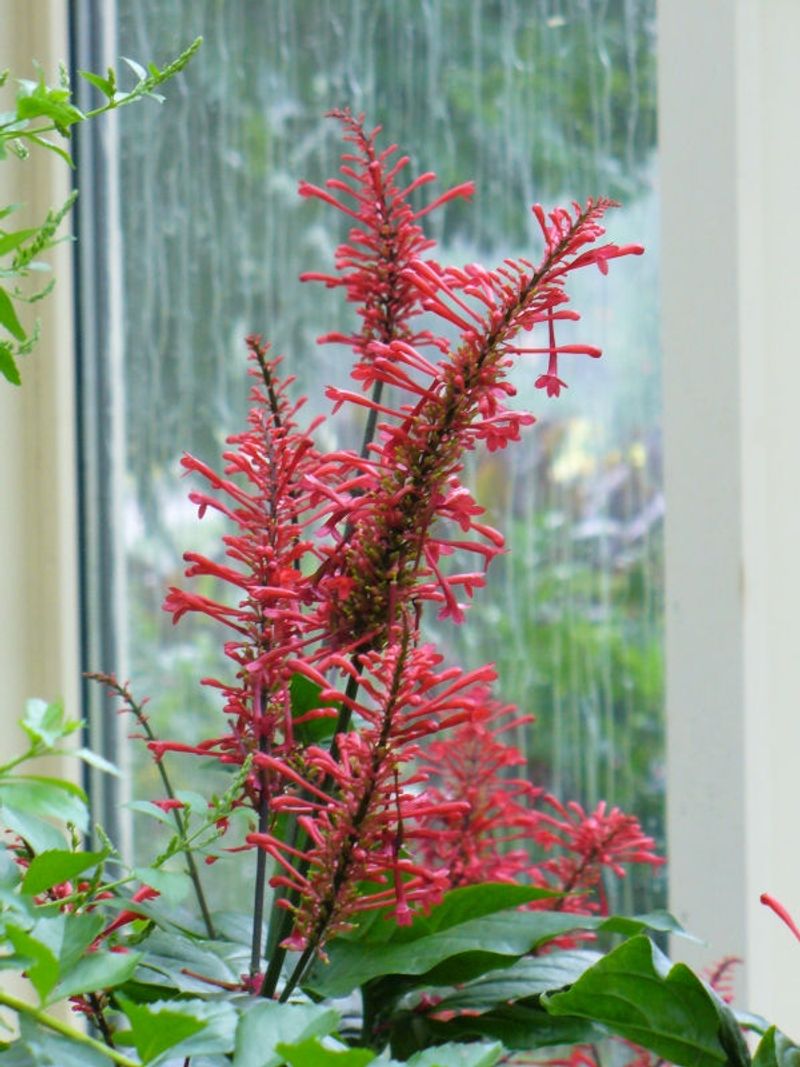
The flowers appear on long spikes, sometimes about a foot tall, right at the tips of the stems. Each single flower is around one inch long and bright red.
In bud, it looks like a tiny club, then it opens and flares into five small petals.
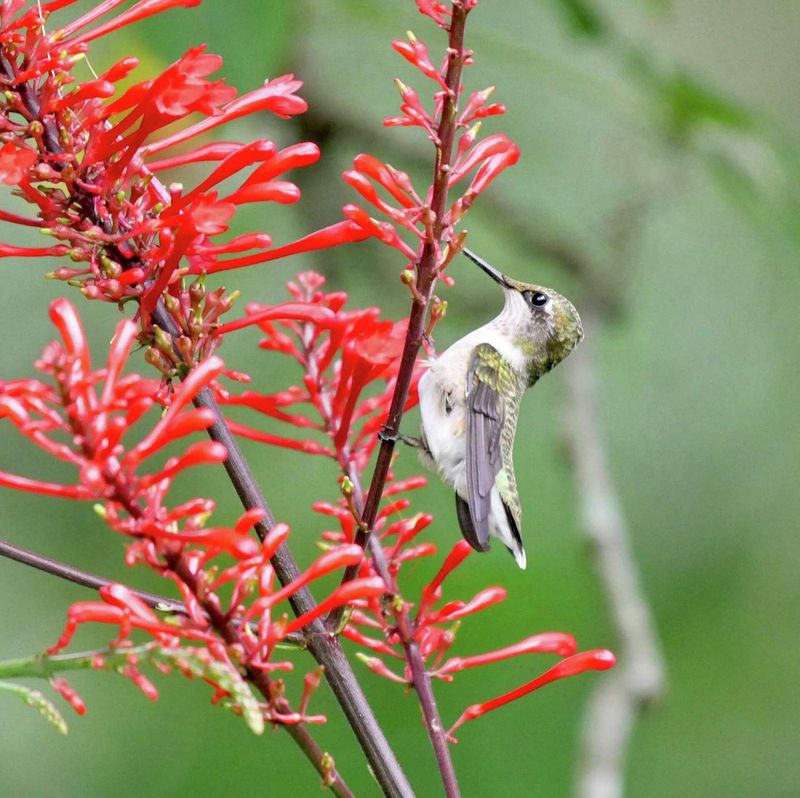
That tube shape matters a lot. A hummingbird’s long beak and tongue fit neatly inside, reaching the sweet nectar hidden at the base.
Many insects struggle to get that deep, so the birds get a private snack bar.
The leaves help too. Firespike has glossy, dark green foliage that makes the red flowers pop like holiday lights.
From across the yard, a hungry bird can spot that color in seconds.
Want the best viewing? Plant firespike where you can sit nearby quietly.
Hummingbirds may perch on a branch, hover, and zip between spikes several times an hour.
You can also skip bug sprays around these plants. Hummingbirds eat small insects for protein, and chemicals on the blooms can harm them.
A little patience and a comfy chair are all you need for a front-row show.
6. Give This Florida Shrub Room To Spread
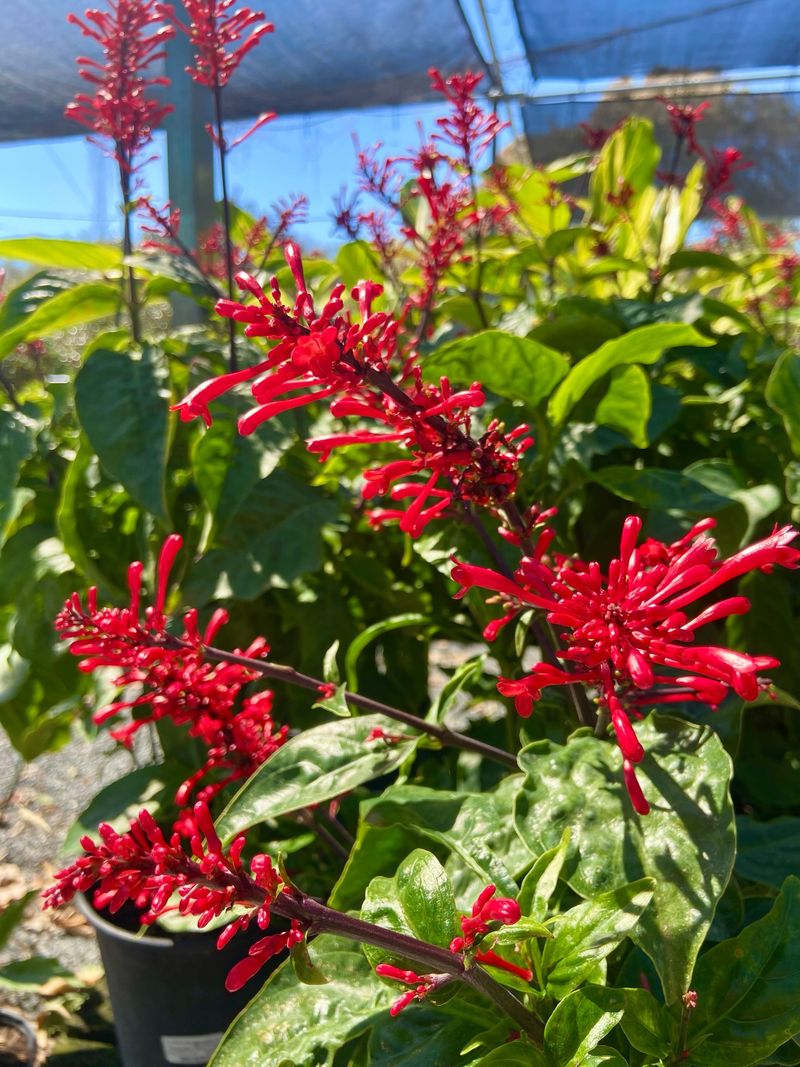
Small pots at the garden center can be sneaky. That cute little firespike you bring home may soon stand taller than you.
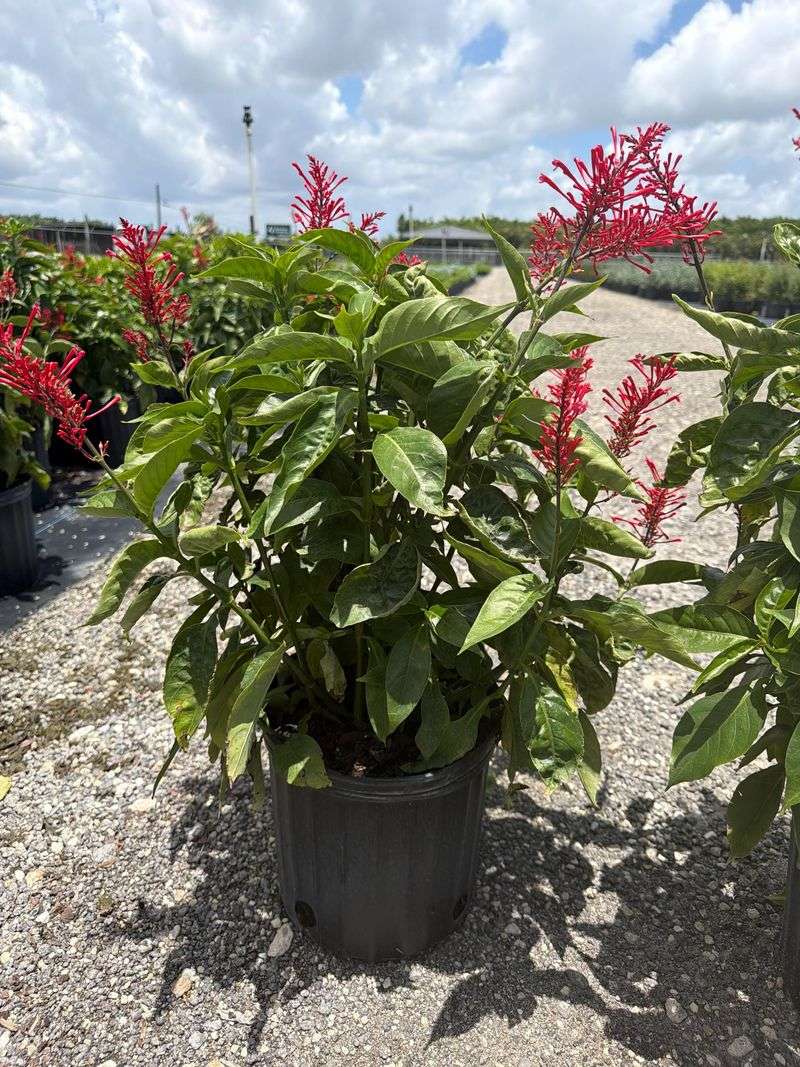
Most firespike plants grow between four and six feet tall. In happy spots, some reach up to ten feet.
They grow at a moderate pace and stand upright, usually taller than they are wide.
Over time, firespike forms clumps. It spreads by short root suckers, sending up new stems around the original plant.
It can also start new plants from roots, stems, or seeds, so your patch may slowly grow wider each year.
For a mass planting, space each plant about 24 to 36 inches apart. That gap gives every shrub enough room to fill out without crowding its neighbors.
Good airflow between plants also keeps leaves healthier.
Plan ahead with these tips:
Keep it back from windows you do not want blocked. Place it behind shorter flowers so it works as a colorful backdrop.
Leave space along paths so you are not brushing past stems every day.
If a clump gets too big, dig up a few suckers in spring. Share them with neighbors or plant them elsewhere.
Suddenly, your hummingbird garden becomes a hummingbird neighborhood.
7. Protect Firespike From Cold Northern Nights
North Florida winters can surprise people. One week feels like beach weather, and the next brings a frosty morning that frosts the car windshield.
Firespike is hardy in USDA Zones 8 through 11, but it does not love the cold. A hard freeze can make the top growth brown and fall back.
The upside is that in these zones, the plant usually sprouts again from its roots in spring.
A few easy steps help it handle chilly nights:
Spread a thick layer of mulch over the root area before winter. Pick a protected planting spot, such as near a south-facing wall or under tree cover.
Toss a frost cloth or old sheet over the plant when a freeze is forecast, then remove it once the sun warms things up.
Gardeners north of Zone 8 have options too. Many grow firespike as an annual and enjoy it for one season.
Others plant it in containers and roll it indoors or into a garage when temperatures drop.
Fun fact: that winter setback does not have to ruin the show. Roots stay safe underground, storing energy for fresh growth.
By summer, the plant is often back to full size and ready for fall hummingbirds again.
8. Cut Firespike Back After Its Flowering Season
Grab your pruners, but hold off until the party ends. Once the flowering season wraps up, firespike is ready for a trim.
Pruning after flowering helps the plant stay compact and bushy. A light cut encourages new side stems, and more stems usually mean more flower spikes next season.
It is a bit like giving your plant a fresh haircut before a big event.
Height is another reason to prune. If your firespike starts blocking a window or leaning over a path, you can trim it back several times during the growing season.
Snip just above a leaf joint so new growth sprouts in a neat way.
Winter brings a different kind of cleanup. After a hard freeze, stems may turn brown and droopy.
Many gardeners cut the whole plant down to the ground at this point. It looks drastic, but it clears the way for fresh spring shoots.
Quick pruning tips:
Use clean, sharp tools for smooth cuts. Wear gloves to keep your hands comfy.
Toss healthy trimmings into the compost pile.
Bonus idea: save a few healthy stem pieces. Firespike roots easily from cuttings, so a pruning day can double as a free plant day for your garden.
9. Plant Firespike In Spring For A Longer Hummingbird Show
Timing is everything, whether you are catching a bus or planting a hummingbird garden. The sooner firespike gets in the ground, the longer its roots have to settle in.
In Florida, you can plant firespike almost any time of year. Still, the smartest window is after the danger of cold weather has passed.
Spring planting gives the roots a full warm season to grow deep and strong before fall.
Why does that matter? A strong root system supports a bigger, healthier plant.
Bigger plants push out more red flower spikes, which means a longer and busier hummingbird season in your yard.
Here is a simple planting plan:
Dig a hole about twice as wide as the pot. Mix in compost to boost the soil.
Set the plant at the same depth it grew in the container, then water it deeply and add mulch.
Want more plants without spending more money? Firespike grows easily from stem cuttings.
Snip a healthy stem, remove the lower leaves, and place it in moist soil in a shady spot. Roots often form within a few weeks.
Plant it this spring, and by the time summer flowers fade, your yard could be glowing red. The hummingbirds will surely notice.