8 Plants California Fire Officials Say To Trim Back Under Eaves
A dry, brown palm frond resting right against a roofline rarely gets a second look from anyone sweeping a porch nearby.
Months can pass before that frond ever registers as a fire risk rather than just yard clutter waiting to be cleared eventually.
CAL FIRE says the first five feet around a home, often called Zone 0, is where flying embers most often find something to burn.
Eight plant and debris problems below are worth checking under eaves, windows, and rooflines before the next fire season arrives and puts all of it to the test.
1. Juniper

Rubbing a juniper branch between two fingers and taking a sniff reveals that sharp, piney scent coming from oils and resins inside the plant. Those same oils help it burn with surprising energy once ignited by a stray ember.
Fire safety experts, including CAL FIRE, often point to juniper as a plant to keep away from homes specifically. Its dense, low growing form tends to hold faded needles deep inside the structure, hidden from view.
Windows make this problem noticeably worse when juniper grows nearby. Glass can crack or break when it gets hot enough, and a burning shrub right below can supply exactly that heat.
Once a window breaks, embers and flames have an open door into the home, where curtains and furniture wait inside undisturbed.
Many older California homes have junipers planted along the front as foundation shrubs. They were popular because they’re tough and need little water, back when nobody was thinking much about embers reaching a house this way.
If juniper sits under windows or eaves right now, the simplest move is removing it from that first 5 foot zone entirely. Replanting farther out, keeping it well watered, and pruning out faded inner growth all help if it stays in the yard elsewhere.
Inside Zone 0, choosing hardscape or checking with a local fire district about what’s allowed makes more sense. Swapping juniper for a clean gravel bed might not sound exciting, but it could be one of the smartest yard projects available this fall.
2. Italian Cypress
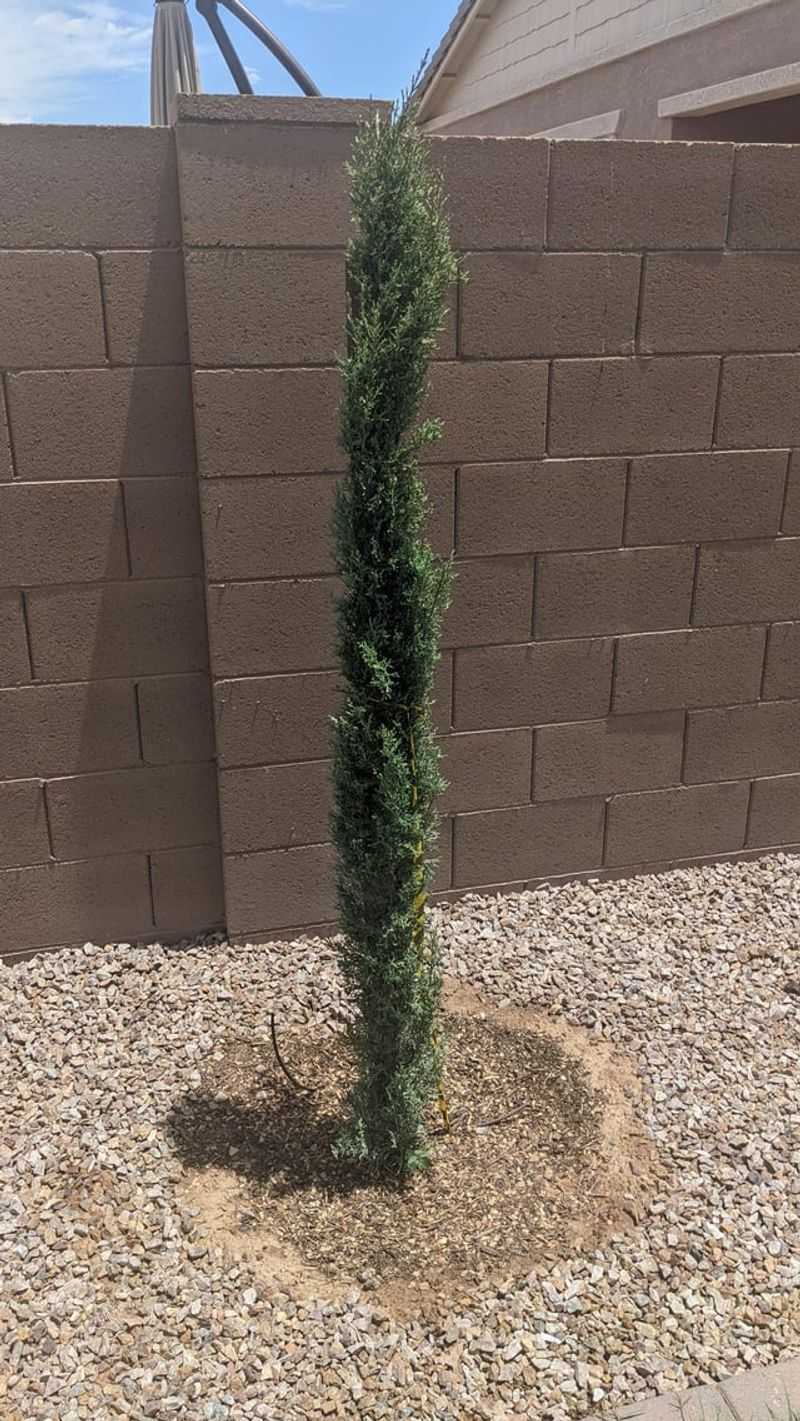
Tall, narrow, and densely packed with foliage, Italian cypress gives a California home that classic Mediterranean look many homeowners specifically plant it for. That same tight, columnar shape creates a serious problem once fire enters the picture.
The dense branches hold faded material deep inside the canopy, hidden from casual view during routine yard maintenance. Airflow through the center stays limited, which lets that trapped material dry out fully over a single hot summer.
A row of these trees planted close together near a home multiplies the risk considerably. Flames can travel from tree to tree along that dense foliage, especially when several stand in a line near a driveway or fence.
Embers landing anywhere in that dry interior material can ignite fast, and the tall, narrow shape sends flames upward quickly once a fire actually starts inside one.
Placement close to a structure makes everything worse than it would be otherwise. A cypress pressed against a wall or positioned right under an eave puts that fuel source directly against the exact spot embers are most likely to land during a wildfire.
Your California Garden Changes Every Week. Your Plan Should Too.
Gardening in California changes quickly throughout the season. Every Friday you’ll receive a simple weekly plan showing exactly what to plant, prune, fertilize, harvest, and protect so you never miss the right timing.
Clearing faded material from inside the canopy regularly reduces the risk somewhat for trees kept farther from the house. Near a structure specifically, though, removing the tree from that first 5 foot zone solves the problem far more completely.
Spacing remaining cypress well apart from each other and away from any wall closes off the path fire could otherwise take between trees and toward a roofline.
3. Mexican Fan Palm
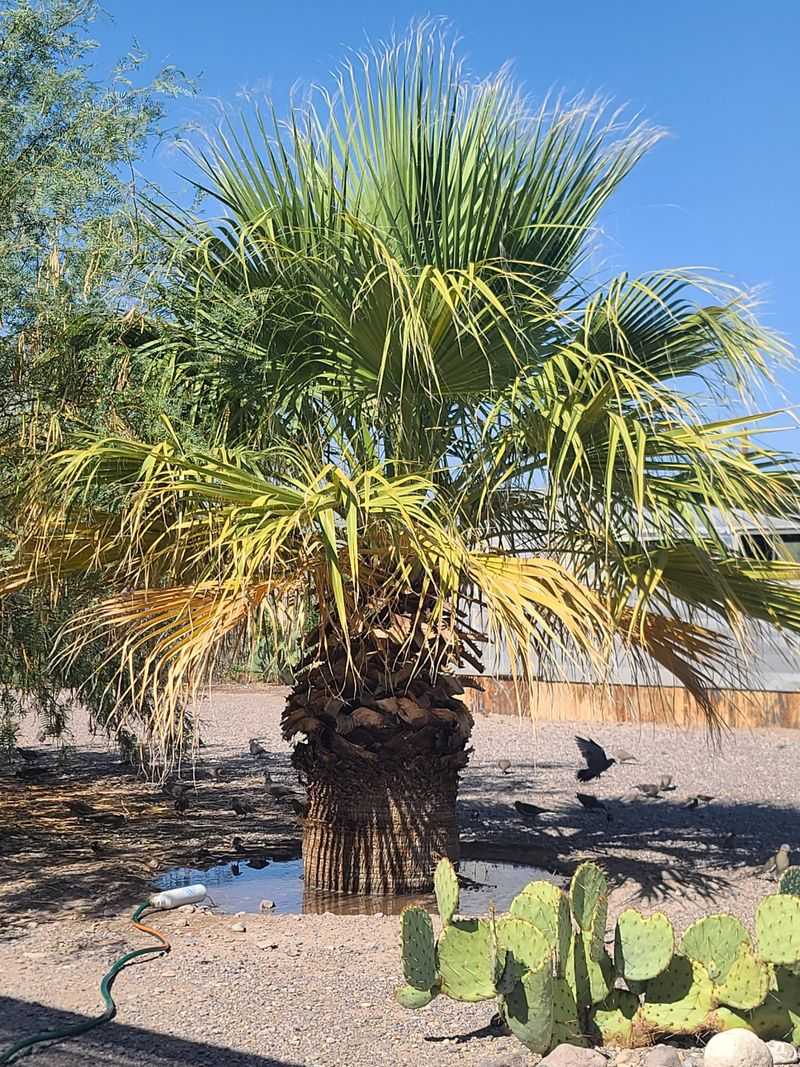
Firefighters sometimes call untrimmed palm trees candles because of how quickly the dry fronds can flare up once an ember reaches them. That brown skirt hanging below the green top on a Mexican fan palm is basically a bundle of dry kindling waiting for a spark.
This particular palm grows tall fast, often reaching heights well above a typical roofline within just a few years of being planted.
As fronds age, they droop and stay attached, forming a thick layer that dries out in the sun over time rather than falling away cleanly. When an ember lands in that layer, it can ignite fast and burn hot almost immediately.
The danger grows considerably when a palm stands close to the house itself. Burning fronds can break loose and fall onto the roof, into gutters, or against walls nearby during a wildfire event.
Palms planted right beside eaves can press that dry material directly against the structure, which breaks the Zone 0 rule of no contact entirely.
The good news is that this fix is easy to spot and handle with regular attention. Removing dry fronds routinely, and not letting a skirt build up on any palm near a home, solves most of the risk directly.
Raking up fallen fronds under the eaves and hauling them away, rather than stacking them nearby, closes the gap further. Tall palms can be dangerous to climb, so hiring a trained tree worker for anything out of reach is worth the cost involved.
4. Rosemary
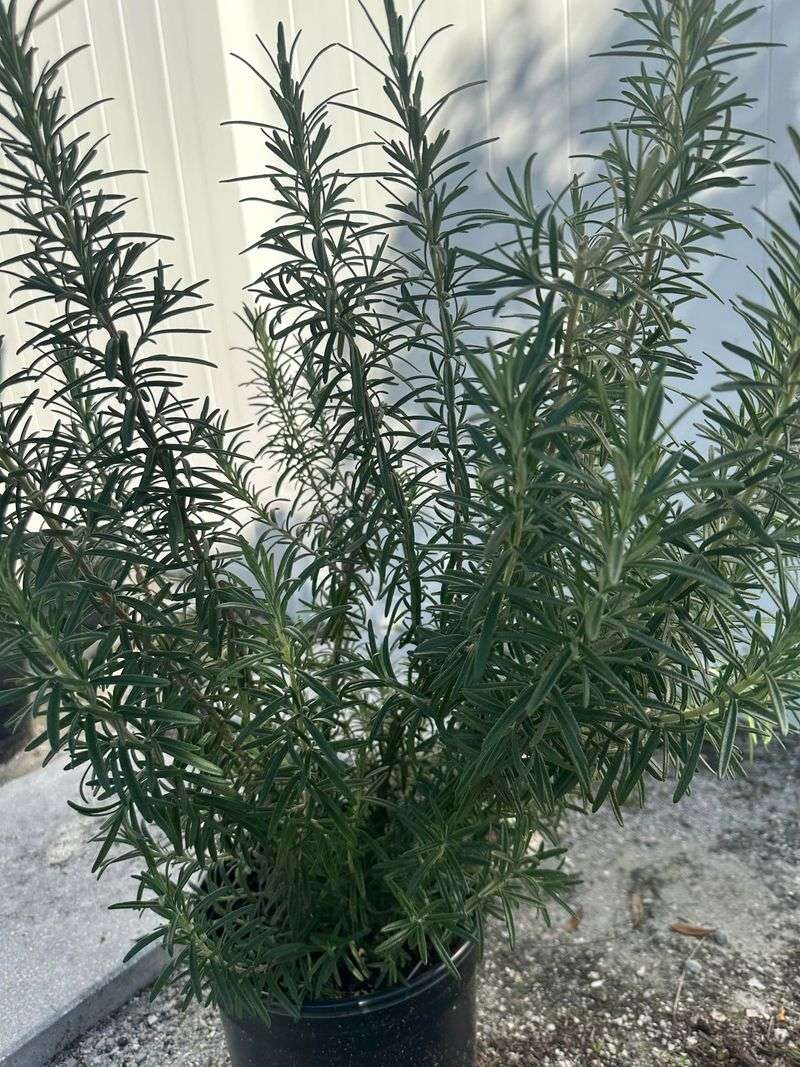
Rosemary has a reputation as a tough, drought tolerant hedge that asks for almost nothing, and it genuinely earns that reputation in most California gardens. The same aromatic oils that make it wonderful for cooking also make it burn readily once ignited.
Older rosemary hedges turn woody at the base and collect faded stems tangled up inside the plant over several seasons of growth. That combination, oily foliage plus retained dry wood, is exactly the pairing fire officials watch for when assessing risk near a home.
A dense, unpruned row of rosemary running along a wall creates a continuous strip of fuel in the worst possible spot near a structure.
Planted directly under a window or against a foundation, rosemary sits right in Zone 0 where nothing combustible should remain untouched.
Nobody needs to remove every rosemary plant from a California yard entirely. Scale and placement do the real work here, since a few plants in containers, kept trimmed and green, live in a completely different risk category than a hedge hugging the siding.
Keeping rosemary well outside that first 5 foot zone solves most of the concern directly and simply. Pruning out woody, faded growth regularly reduces the fuel load in whatever rosemary remains closer to the house.
Moving established hedges farther from windows and walls, and replacing that space with gravel or another nonburning surface, closes the gap most homeowners never think to check.
5. Pampas Grass
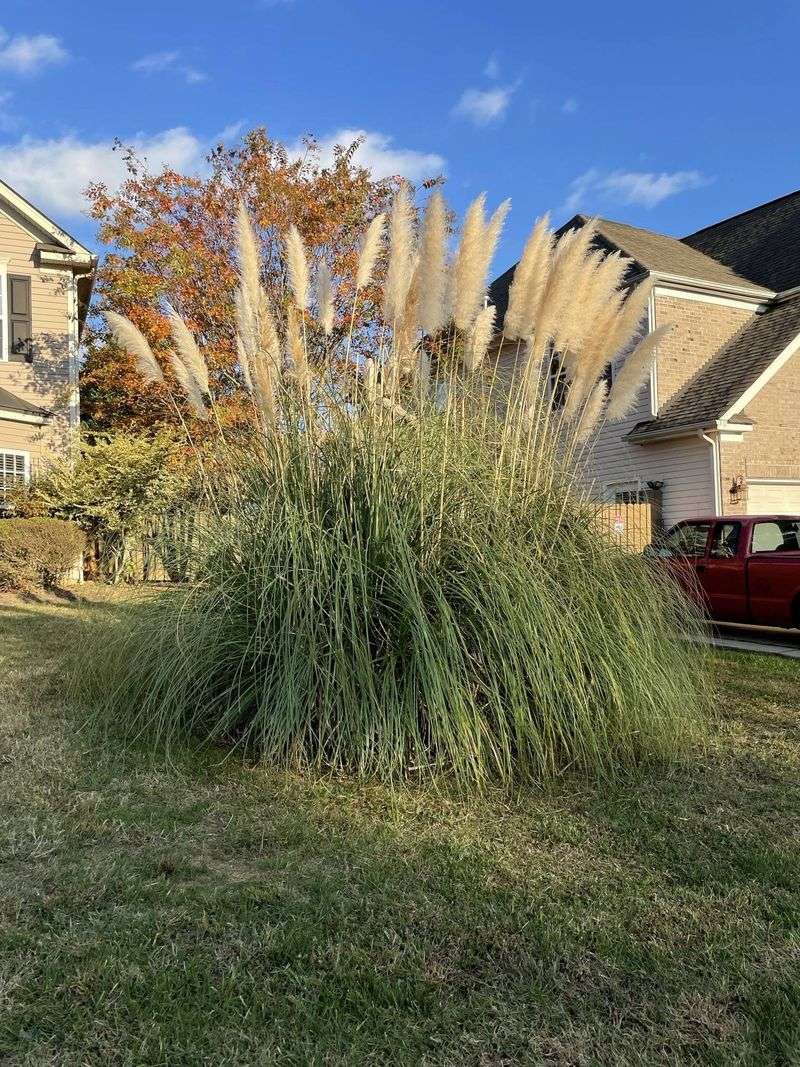
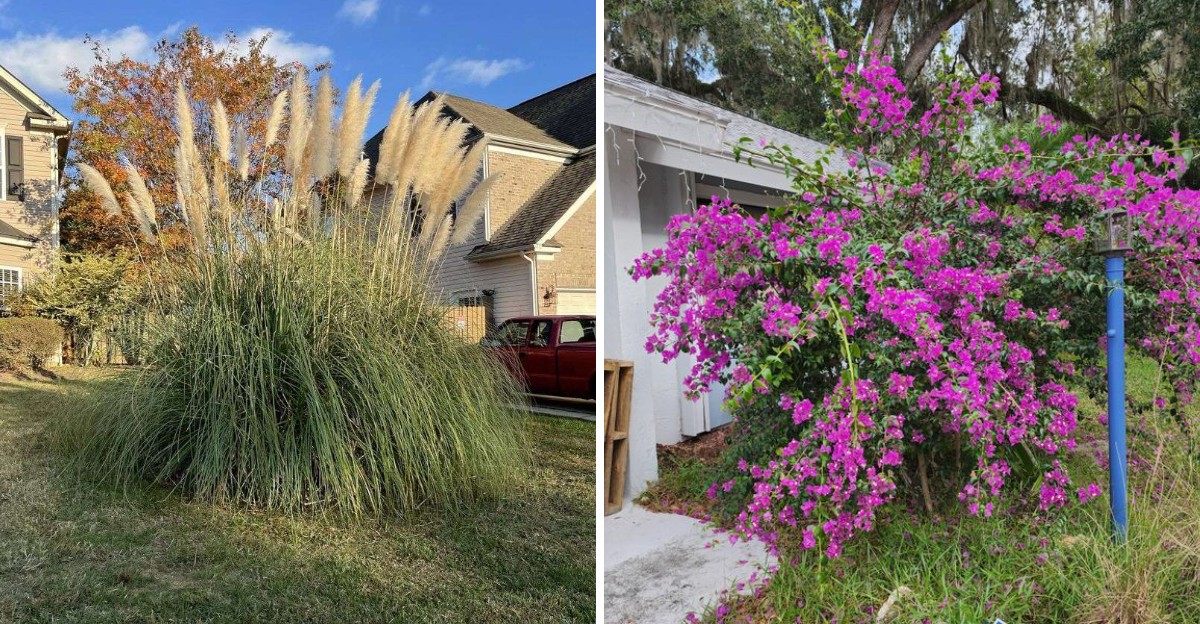
Feathery pampas grass clumps swaying in the breeze look genuinely striking in a lot of California yards, often chosen specifically for that dramatic, plume topped silhouette.
By late summer, though, many clumps turn tan and crispy, and at that point they’re fine fuel, the kind that lights almost instantly.
Fire officials talk about fine fuels because thin, dry material catches embers easily and burns fast. The blades and seed heads on a mature pampas grass clump are thin, packed tightly, and full of air pockets throughout the entire mound.
A crumpled piece of paper burns far faster than a thick book for exactly this reason, and dried pampas grass follows that same logic closely.
Many homeowners plant this grass right along the foundation or under a window for a soft, dramatic edge near the house. The problem is that faded leaves from the previous year often stay trapped inside each clump rather than falling away cleanly.
When grass by the foundation ignites, flames can reach siding, vents near the ground, and wooden trim quickly. Heat rising along the wall can travel toward the eaves above from there.
Even short flames right against a house represent a real threat worth taking seriously. Keeping pampas grass out of that first 5 feet around a home solves most of the risk directly.
Moving it farther out into the yard and cutting it back hard each year before fire season helps if the look is worth keeping. Close to the house, rock, pavers, or decorative containers made of nonburning materials work considerably better.
6. English Ivy
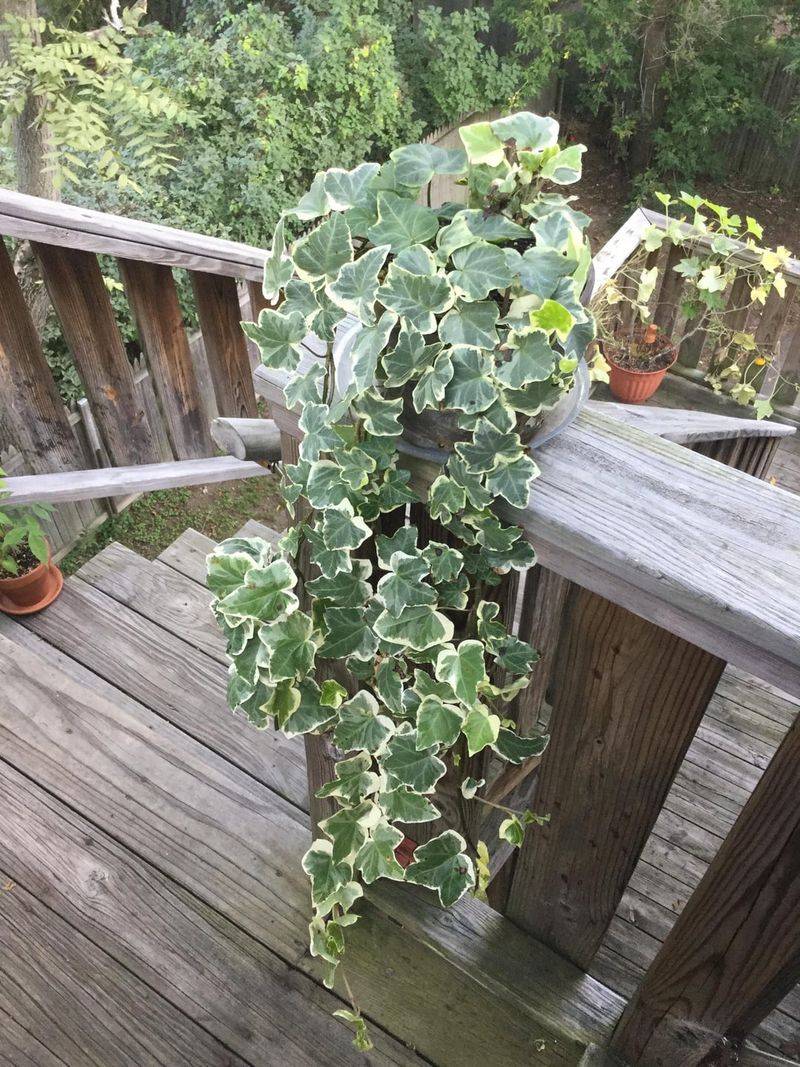
Ivy covered walls look genuinely charming, like something out of a storybook cottage tucked into a quiet neighborhood. Yet English ivy climbing a house is basically a ladder built from leaves and stems, and in a fire, that ladder leads flames straight to the roof.
Fire experts call this a ladder fuel problem specifically. Flames climb anything that connects the ground to higher places on a structure.
A vine growing up a wall links ground level embers to windows, vents, and the eaves at the top directly.
English ivy also hides trouble behind its attractive green surface. Behind that outer layer, it builds up faded leaves and dry woody stems close to the wall over several seasons of growth.
Birds and wind tuck extra debris into the tangle too, which means even more fuel sits right against the siding than appears from the outside.
Once flames reach the eaves, they can find gaps and attic vents waiting there. Heat that gets trapped under an overhang can ignite exposed wood nearby quickly.
That’s how a small plant fire near the ground can turn into a genuine roof fire fairly fast. Removing a well established stand of ivy takes some patience and care.
Cutting the stems near the base, letting the upper growth dry out, then carefully pulling it off the wall works best in most cases.
After removal, checking walls for damage or loose trim closes out the job properly, and replanting on a freestanding trellis well away from the house keeps the greenery without the risk.
7. Bougainvillea
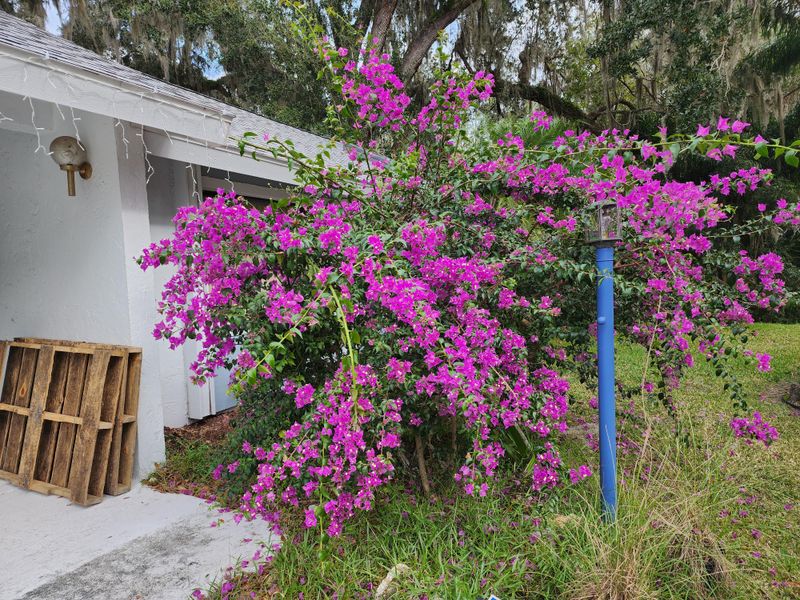
Bright pink, purple, and orange bougainvillea blooms climb walls and trellises across California with a kind of showy enthusiasm few other plants match. That same climbing habit that makes it so popular also makes it a genuine ladder fuel risk once it reaches a roofline.
Thick, woody stems build up at the base of a mature bougainvillea over years, and dry leaves and faded bracts get trapped in the tangle behind the visible flowers.
Thorns hidden throughout the growth make bougainvillea genuinely unpleasant to remove once it’s well established, which discourages a lot of homeowners from tackling the job even when they know it’s a problem.
When this vine climbs directly up a wall toward eaves or windows, it creates the same ladder effect as ivy, carrying ground level embers upward toward the structure.
Wind can also shake loose dry material from a mature bougainvillea, scattering it into gutters or against the base of the very wall the vine is climbing.
Training bougainvillea onto a freestanding trellis several feet away from the house keeps the visual impact without the direct contact risk. Regular pruning, at least twice a year, removes the buildup of dry material inside the plant before it accumulates into real fuel.
Wearing thick gloves during any removal or heavy pruning work protects against the thorns throughout the plant. Checking gutters near a mature bougainvillea more often than usual catches the debris it sheds before it becomes a problem.
8. Coast Live Oak
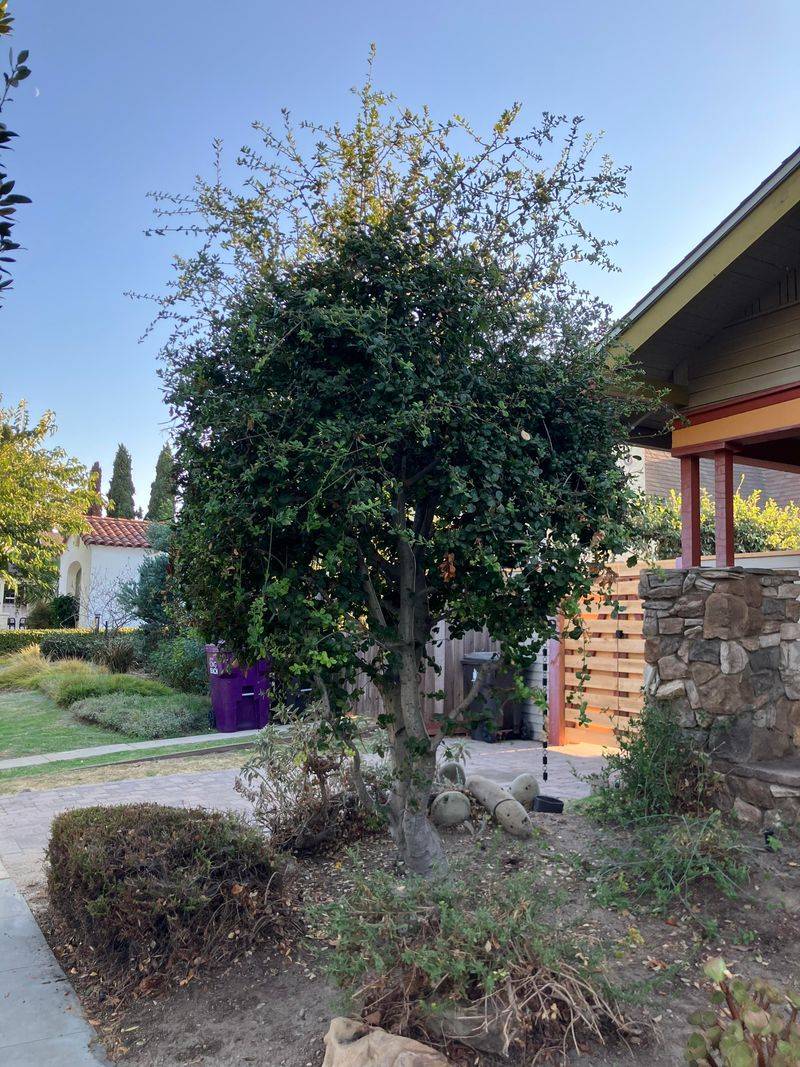
Shade from a mature coast live oak feels genuinely wonderful on a hot California afternoon, and the trouble only starts when those branches stretch out directly over a roof. In a wildfire, that overhanging canopy can become a torch held right above the shingles.
CAL FIRE guidance tells homeowners to remove branches that hang over the roof entirely, regardless of the tree species involved. It also calls for keeping branches at least 10 feet away from a chimney specifically.
Sparks and embers can escape a chimney, and wildfire embers can drop from burning limbs above, so both directions genuinely matter with a large oak nearby.
Overhanging oak branches cause problems in a few distinct ways. They drop leaves and acorns onto the roof, which pile up in valleys and corners over time, and dry leaves collecting there add fuel right at the roofline.
They also let flames jump from the tree canopy to the roof without ever touching the ground first, which is one of the more dangerous paths a wildfire can take toward a home.
Standing in the yard and looking up reveals most of the problem right away. Any limb hanging over the roof should get cut back to where it no longer extends above the structure at all.
Large limbs on a mature oak are a job for a certified arborist, since improper cuts can damage the tree’s long term health. A professional can trim for fire safety without compromising a tree that may have stood on the property for decades already.