When To Pick California Pomegranates And Persimmons Before Rain Splits Them
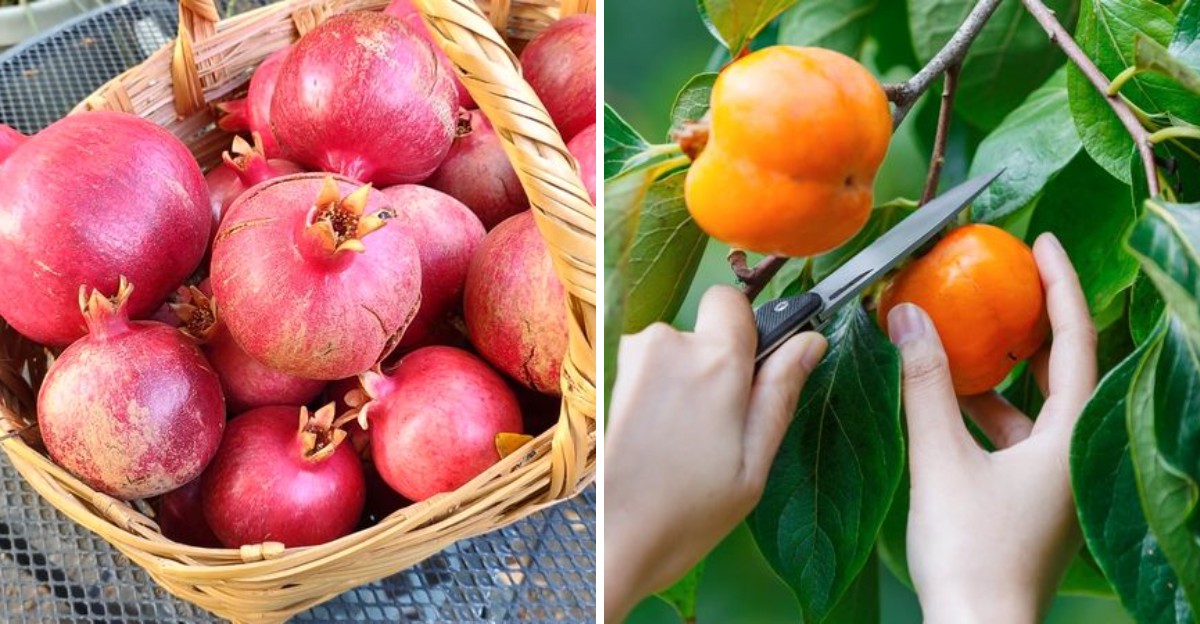
A pomegranate tree heavy with deep red fruit can look perfect on a warm October afternoon, with every piece hanging tight and smooth.
Two days later, after the first big storm of fall, half of those same fruits might be split wide open and covered in ants.
Persimmon trees face a similar risk, though the rules for picking them change depending on which type is growing in the yard.
A sudden soaking after months of dry weather is one of the biggest threats to a fall harvest in California.
Here’s how to tell which fruit is ready, which can come in early, and how to beat the rain before it does the damage.
Pomegranates Signal Readiness With Sound And Color
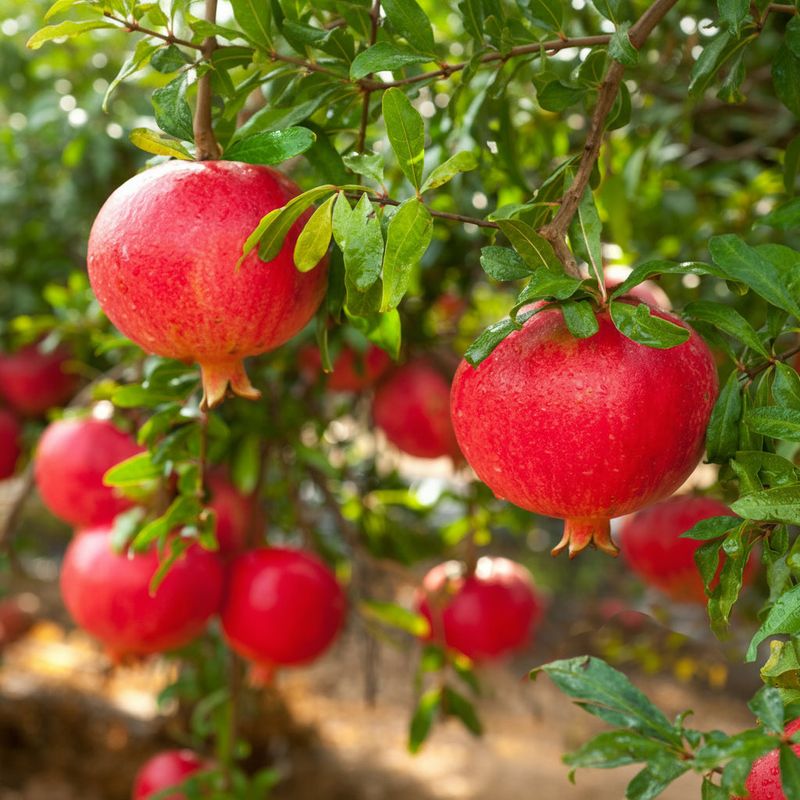
A Wonderful pomegranate hanging like a red lantern in late September often looks ready long before it actually is. UC ANR guidance points gardeners toward two clues that work best together: color and sound.
Color comes first. Most California pomegranates, especially the popular Wonderful variety, turn a deep red at maturity, and the skin loses its shiny look and becomes slightly leathery.
Some varieties stay pink or even yellowish when ripe, though. Knowing what a particular tree is supposed to look like at harvest prevents a lot of confusion.
Shape changes help as well. Ripe fruit often looks a little flattened or squared at the sides instead of perfectly round, as the swelling seeds push outward against the rind.
Sound adds the final piece of the puzzle, and it gets its own section below. A pomegranate that looks red but sounds dull usually needs a bit more time on the branch.
Pomegranates don’t keep ripening after they’re picked. Unlike bananas or Hachiya persimmons, they won’t get any sweeter on the counter, which makes checking these signs on the tree especially important.
Harvest in most of California falls between September and November, depending on the variety and the region. Inland valleys with hot summers often ripen fruit earlier than cool coastal gardens.
Walking the tree every few days once color deepens keeps surprises to a minimum. A small notebook of dates makes next year’s timing much easier to predict.
A Metallic Ring Means The Fruit Is Ripe
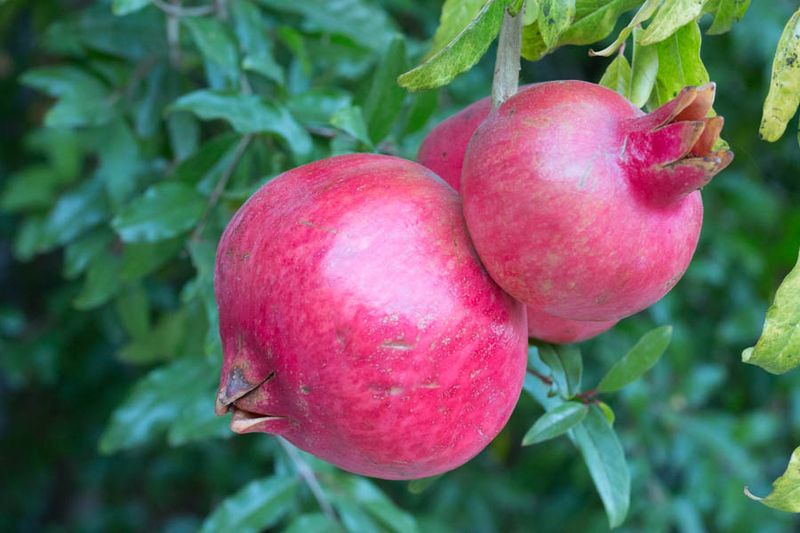
A ripe pomegranate can sound a lot like a tiny bell, and UC ANR lists that playful tap test as a real sign of readiness. It’s one of the few fruit checks that relies on the ears as much as the eyes.
The method is simple. Hold the fruit steady on the branch or cup it in one hand, then flick or tap the skin firmly with a fingertip.
A ripe pomegranate gives off a clear, almost metallic ring. An unripe one makes a dull thud, closer to the sound of tapping a damp sponge or a block of wood.
The difference can be hard to hear at first, but most people learn it quickly. As the arils fill with juice and the rind firms up, the fruit becomes tight and full inside, which helps the tap carry instead of fading out.
Your California Garden Changes Every Week. Your Plan Should Too.
Gardening in California changes quickly throughout the season. Every Friday you’ll receive a simple weekly plan showing exactly what to plant, prune, fertilize, harvest, and protect so you never miss the right timing.
A side-by-side comparison speeds up the learning curve. Tapping a fruit that’s clearly still green, then one that’s deep red and slightly squared, trains the ear better than any written description.
The tap test works best alongside color, not as a replacement for it. Fruit that rings and shows full color makes a strong pick, while one that rings but looks pale may simply be a lighter-skinned variety, so checking the tree tag helps.
Kids tend to love this part of the harvest. Handing them the tapping duty and letting them call out “ring” or “thud” turns a chore into a game.
Astringent Persimmons Need Full Softening First
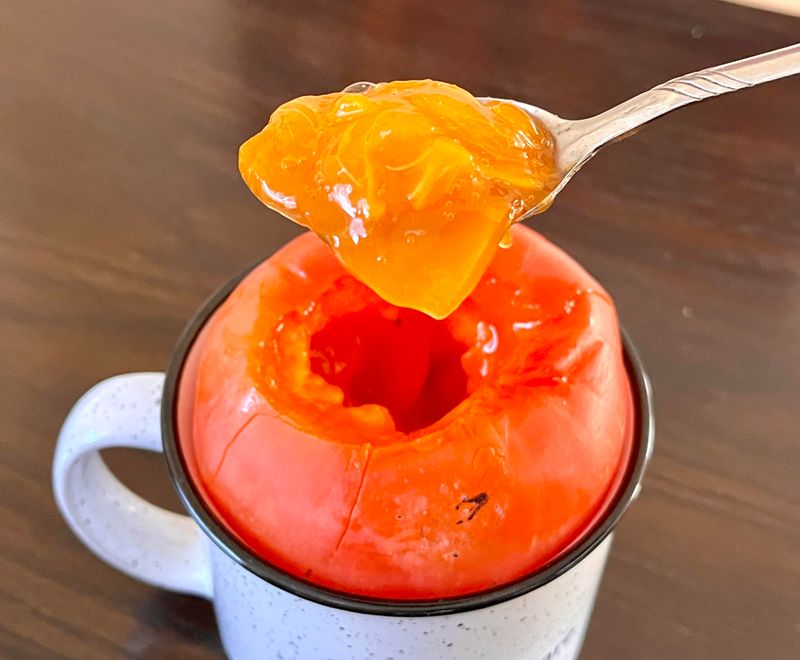
One bite of an unripe Hachiya persimmon is hard to forget. The mouth puckers, the tongue feels coated in chalk, and the fruit seems to pull every drop of moisture away.
That sensation comes from tannins, and it’s exactly why astringent persimmons need special handling. Hachiya is the best-known astringent type in California, with an acorn or heart shape and a pointed tip, while Saijo and Tamopan follow the same basic rules.
Harvest timing and eating timing are two separate things with these fruits. UC ANR guidance notes that astringent persimmons can be picked once they’re fully colored deep orange but still firm, then left to soften off the tree.
The fruit only becomes pleasant once it turns completely soft, almost like a water balloon filled with jelly. At that stage the tannins have changed and the harshness fades, while a Hachiya that’s just a little soft still isn’t ready.
Softening at room temperature can take anywhere from several days to a few weeks. Placing the fruit in a paper bag with an apple or banana, which release ethylene gas, can speed things up.
Laying persimmons in a single layer, stem side down, helps prevent bruises, since soft fruit damages easily.
For rainy forecasts, that flexibility is great news. Firm, fully colored Hachiyas can come off the tree early without any loss in quality, and they’ll finish ripening on the counter while the storm passes outside.
Fuyu Types Come Off Firm And Ready
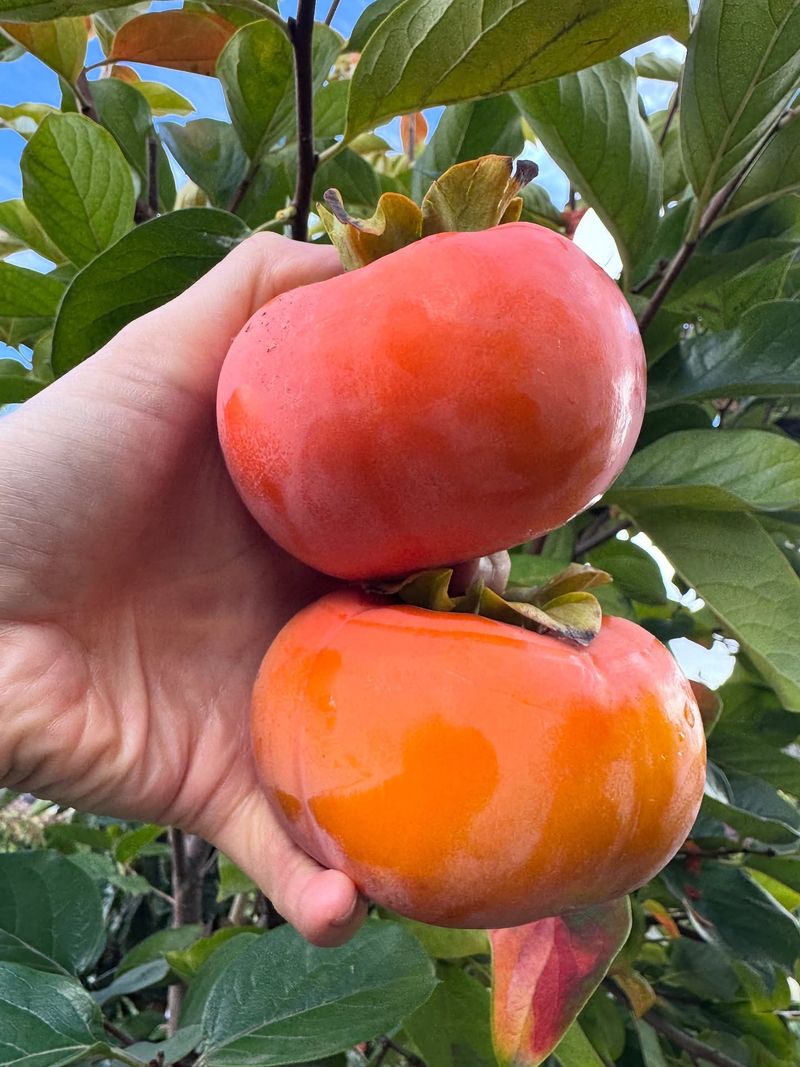
Fuyu persimmons are the easygoing cousins of the family. One can come off the tree, get a quick rinse, and be eaten crunchy like an apple that same afternoon, with no waiting at all.
Fuyu belongs to the non-astringent group, which means its tannins fade while the fruit is still firm on the branch. Its shape is flat and squat, a bit like a small orange tomato, and Jiro and Izu are other non-astringent types often sold at California nurseries.
UC ANR guidance points to color as the main sign of readiness. Harvest makes sense once the skin turns fully orange, sometimes with a reddish blush, and any green or yellow tint near the stem has disappeared.
Pale yellow Fuyus are usually picked too early. They tend to taste bland and starchy rather than sweet, so a little more time on the tree pays off when the forecast allows it.
Pruning shears work better than bare hands at harvest. Cutting the stem just above the green cap, called the calyx, keeps the fruit intact, while pulling by hand can tear the skin or remove the cap and shorten storage life.
Even firm persimmons bruise more easily than they look, so gentle handling helps. Fuyus can be enjoyed crisp or allowed to soften slightly for a sweeter, juicier bite, and neither choice brings back the harsh taste of an unripe Hachiya.
In Japan, persimmons are often dried into a treat called hoshigaki, though that tradition usually relies on astringent types.
Rain After Dry Weather Triggers Splitting
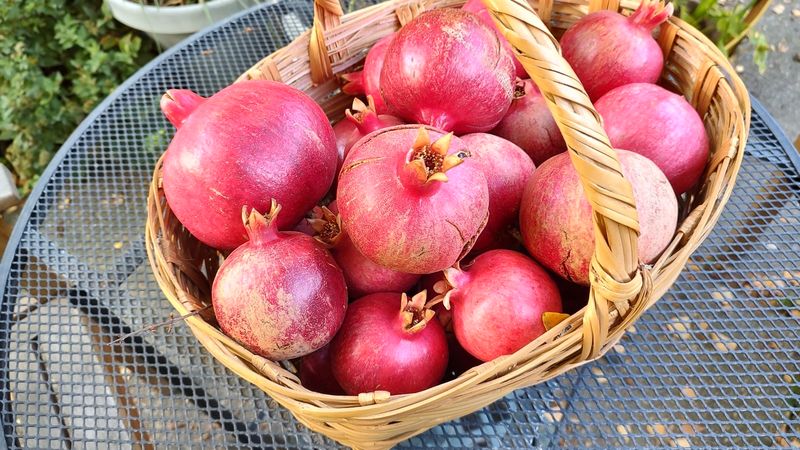
A long dry stretch followed by a sudden soaking rain is the classic recipe for cracked fruit. Gardeners across California see it every fall, when pomegranates that looked perfect one day are split open two days after a storm.
The cause is simple physics inside the fruit. During dry weeks, the skin of a maturing pomegranate grows tough and stops stretching much.
Once rain arrives, the roots pull in a rush of water and the juicy arils swell quickly. The rind can’t keep up with that sudden growth, so it cracks open.
UC ANR names fall rains and uneven watering as common triggers for pomegranate splitting. Split fruit attracts ants, wasps, and fungus, and even a small crack opens the door to mold and souring.
Persimmons can crack as well, though it tends to be less of a problem than with pomegranates. The same dry-then-wet swing often gets the blame, though persimmon cracking also varies by variety and tree health, so it’s more of a general pattern than a rule.
Steady irrigation through late summer helps lower the risk. Deep, regular watering keeps fruit from going thirsty and then gulping water all at once, and a layer of mulch helps the soil hold moisture more evenly.
Still, no watering plan can fully protect fruit from a big storm. That’s why harvest timing matters so much, and why a basket and a free afternoon are often the best defense a gardener has.
Harvesting Slightly Early Beats Losing The Crop
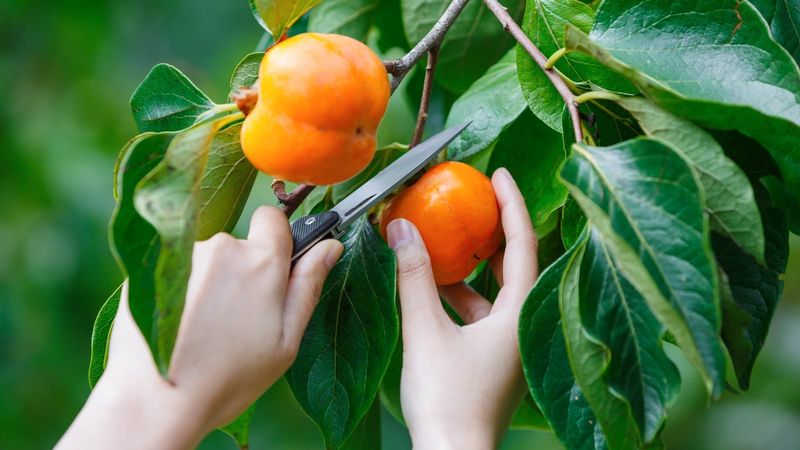
Grabbing laundry off the line when dark clouds roll in follows the same logic as an early fruit harvest. The clothes might be a touch damp, but that beats a soaked pile, and fruit works much the same way.
A pomegranate picked a week early is usually still very good to eat. It may taste a little more tart, but the arils stay juicy and the fruit stores well.
A split pomegranate, on the other hand, may last only a day or two before ants and mold move in.
Since pomegranates don’t ripen further off the tree, the best targets are fruits that already show strong color and give at least a partial metallic ring. Clearly pale, dull-sounding fruit is usually worth leaving on the branch and accepting a small risk.
Persimmons allow more flexibility. Firm, fully colored Hachiyas will soften indoors, so picking ahead of a storm costs almost nothing, and mostly orange Fuyus can come in too, though very pale ones may stay bland.
A simple plan helps when rain is two or three days out. Pick every pomegranate that passes both the color and sound tests first, then harvest colored persimmons of either type, and check the trees again once the storm moves through.
Pomegranates keep well in a cool spot or the refrigerator, often for several weeks or a couple of months. Persimmons do best spread out so they don’t press against each other.
A little planning turns a stressful forecast into a calm harvest day.
Watch The Forecast, Not Just The Calendar
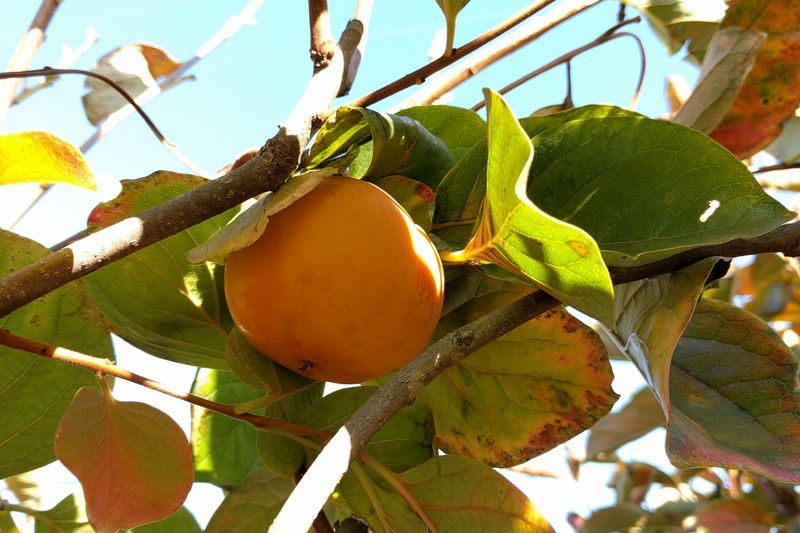
Calendars are handy, but clouds don’t read them. A guide might say pomegranates ripen in October, yet one early storm in late September can change the plan.
Experienced gardeners keep one eye on the tree and the other on the weather app. Checking the extended forecast as soon as fruit begins to color, with a 7 to 10 day outlook, leaves plenty of time to plan a harvest.
Rain that shows up after weeks of dry, sunny days deserves the most attention. The first real soaking storm of fall is often the one that does the most damage, so that’s usually the signal to get the shears ready.
The National Weather Service website offers free forecasts for specific areas, and local news apps work too. Light sprinkles rarely cause the same trouble as a steady, heavy rain.
Rainfall totals in the forecast help separate a passing shower from a real threat. A storm that promises a half inch or more is a reasonable point to act, though that’s a rough rule of thumb rather than an official cutoff.
Weather also shapes ripening itself. A hot summer can push fruit ahead of schedule, while a cool, foggy season in coastal towns can slow it down, which is another reason fixed dates often miss the mark.
A simple garden log makes each year easier. Notes on when fruit colored, when it started to ring, when rain arrived, and how many pieces split reveal patterns within two or three seasons.