The Early October Rose Task Texas Gardeners Often Skip
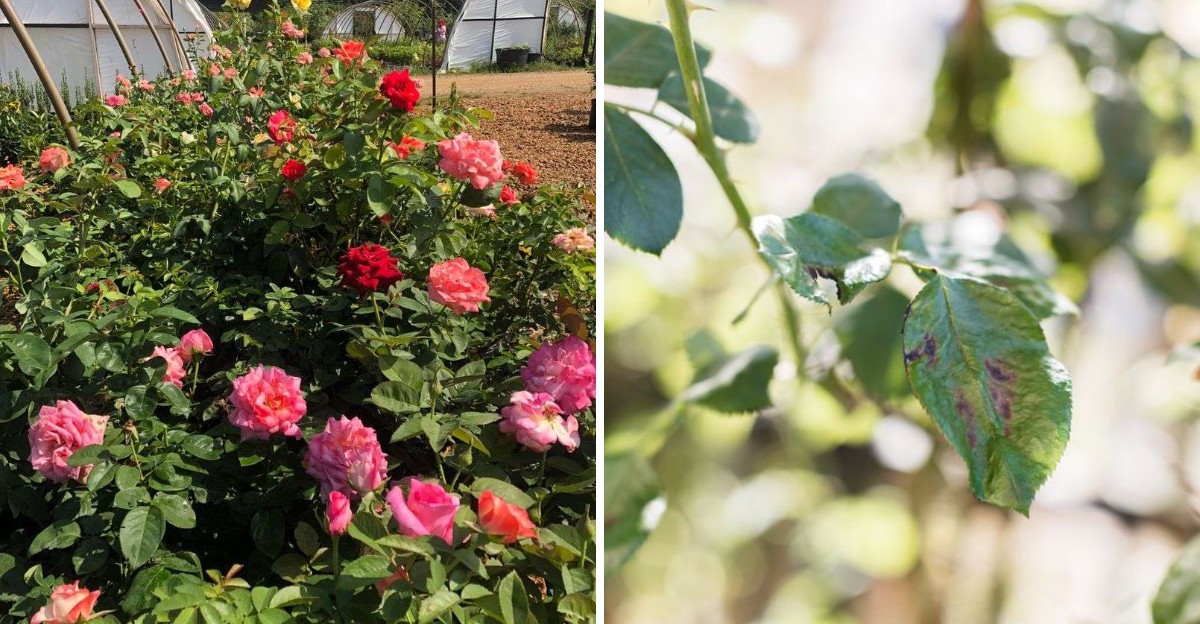
Ask any longtime Texas rose grower about their favorite season, and the answer might surprise you. Spring gets all the attention, but fall is when roses really shine.
As the summer heat finally eases, rose bushes across the state push out a fresh wave of blooms.
The colors look richer, the petals last longer, and the fragrance feels stronger in the cooler air. It’s a reward for making it through another brutal summer.
But early October is also when a hidden problem can quietly take hold. Many gardeners are so busy enjoying the flowers that they overlook one simple job.
Skipping it can give common rose diseases a chance to spread now and come back even stronger next spring.
The fix takes only a few minutes, and it doesn’t require any special tools or sprays. It just needs to happen before the problem gets ahead of you.
Clean Up Fallen And Spotted Leaves
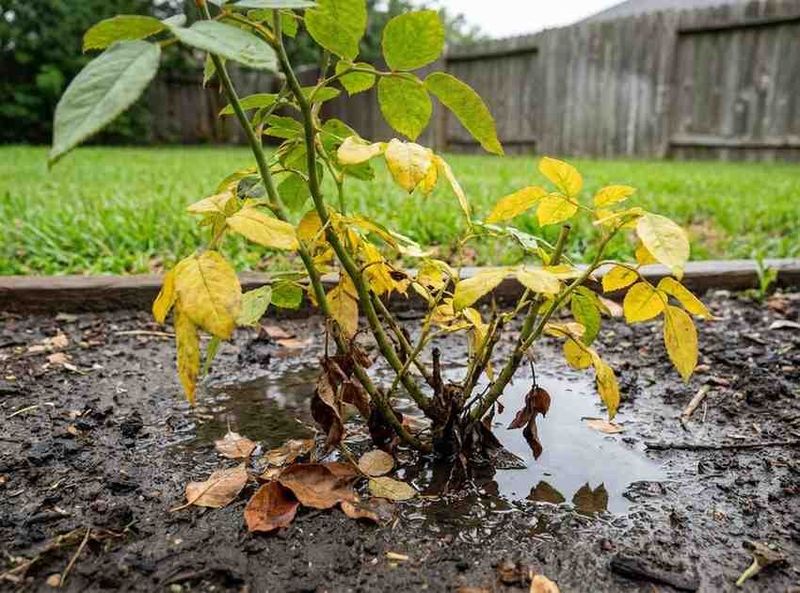
Ask any longtime Texas rose grower for one fall tip, and many will say the same thing. Pick up the leaves. It sounds almost too simple to matter, yet it is one of the best things you can do for your roses.
Fallen rose leaves are not harmless clutter. Many of them carry black spot, a fungus that loves to spread from leaf to leaf.
When those old leaves sit on the ground, they act like a storage box full of spores waiting for their chance.
Rain and water splash those spores right back up onto healthy leaves. One messy flower bed can quickly turn into a big outbreak. Removing the source is like closing the door before trouble walks in.
Start by looking at the ground under each rose bush. Rake up every leaf you see, even ones that look clean. Then check the plant itself for leaves with dark spots or yellow patches, and pull those off too.
You do not need to spend hours on the job. Ten to fifteen minutes per bed is usually enough. Try doing a quick sweep once a week through October and November.
Many gardeners skip this step because the roses look happy in the cool weather. New buds are opening, and everything seems fine. But the fungus works quietly, and by the time you notice it, much of the damage is done.
Think of leaf cleanup as cheap insurance for your fall blooms. No sprays, no special tools, and no big cost. Just a rake, a bag, and a little time can keep your roses looking strong and full of flowers until the first frost arrives.
Why Black Spot Flares Up In Fall
Here is a fun fact that surprises many people. Black spot spores need leaves to stay wet for about seven hours before they can start an infection. Fall in Texas gives them exactly that chance, again and again.
During summer, the hot sun dries leaves fast. Even after a storm, the water is gone in no time. That brutal heat actually slows the fungus down, which is one small blessing of a Texas July.
Your Texas Garden Changes Every Week. Your Plan Should Too.
Gardening in Texas changes quickly throughout the season. Every Friday you’ll receive a simple weekly plan showing exactly what to plant, prune, fertilize, harvest, and protect so you never miss the right timing.
Things change once October rolls in. Nights get cooler, and heavy dew settles on the leaves. Fall rain showers become more common, and the sun comes up later and feels weaker. All of that means leaves stay damp much longer each morning.
Black spot loves this cozy, wet setup. Spores land, soak in, and begin to grow. Within a week or two, the first dark marks can show up on the lower leaves.
Timing makes the problem even worse. In Texas, fall is the second big bloom season for roses. Many gardeners say the fall flowers are actually the prettiest of the year, with deeper colors and longer-lasting petals.
A black spot outbreak right now can wipe out that show. Roses that lose lots of leaves have less energy to make flowers. Some plants simply stop blooming and sit there looking bare and tired.
Knowing why the fungus shows up helps you stay one step ahead. When you see foggy mornings and fall rain in the forecast, treat it as your signal. That is the moment to check your plants and keep the beds clean.
How To Recognize Black Spot
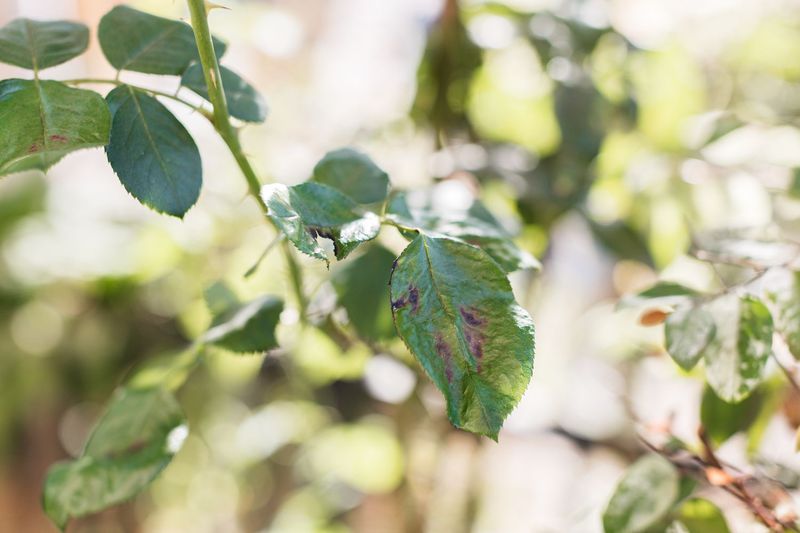
Not every spot on a rose leaf means trouble. Sometimes it is just a little sunburn or a bug bite. Black spot, though, has a look all its own once you know what to watch for.
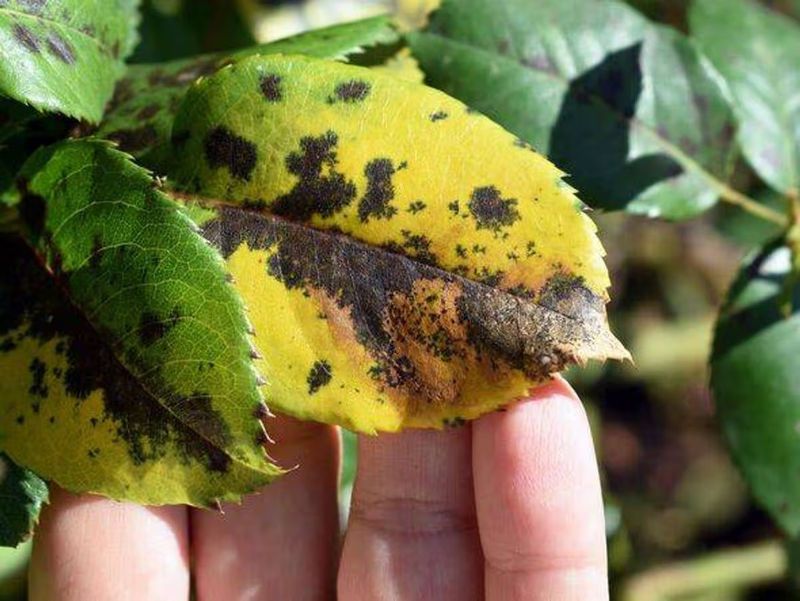
Check the tops of the leaves first. You are looking for round black spots, usually about the size of a pencil eraser or smaller. The edges of each spot look fuzzy or feathered instead of smooth, almost like ink soaking into a paper towel.
Yellow color is the next big clue. The leaf tissue around the spots often turns bright yellow. Soon the whole leaf may go yellow and drop to the ground with the lightest touch.
Pay attention to where the problem starts. Black spot almost always begins on the lowest leaves near the soil.
Water splashing up from the ground carries spores there first, and then the disease climbs upward over time.
A badly infected rose can look strange. The top may still have green leaves and blooms, while the bottom half is bare sticks. Gardeners sometimes call that look “leggy” or “naked knees.”
Canes can show signs too. Look for small purple or dark blotches on young green stems. The fungus can hide there through winter and come back in spring.
Make a habit of a quick weekly walk through your garden. Flip a few lower leaves and look closely.
Catching black spot early means you only have to remove a handful of leaves instead of fighting a full outbreak later on.
How To Do The Cleanup Right
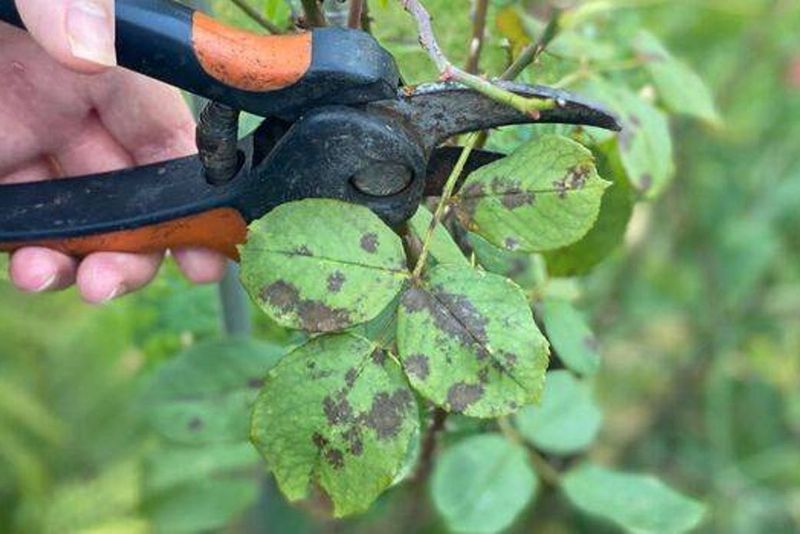
Grab your gloves, a small rake, and a sturdy trash bag. That is honestly all the gear you need. A good cleanup is easy when you follow a simple order.
Work from the top down. First, pull off any leaves on the bush that show black spots or yellow patches. Gently pinch or snip them so you do not tear the stems.
Next, move to the ground. Rake out every fallen leaf from under the plant and around the base. Get into the corners and along edging, since leaves love to hide there.
Now comes the part many people get wrong. Do not toss those leaves into your compost pile.
Home compost often does not get hot enough to wipe out the fungus, so the spores can survive. Later, when you spread that compost, you would be spreading black spot right back into your garden.
Bag the leaves and put them in the trash instead. Some cities also allow yard waste pickup, but check if they use hot commercial composting first. When in doubt, just throw them out.
Clean your tools when you finish. A quick wipe with rubbing alcohol on your pruners keeps spores from traveling to the next plant. Wash your gloves too if they got wet and muddy.
Do not strip a plant completely bare, though. Roses need some leaves to make food. If most leaves are spotted, remove the worst ones now and the rest over the next week or two as new growth fills in.
Change How You Water
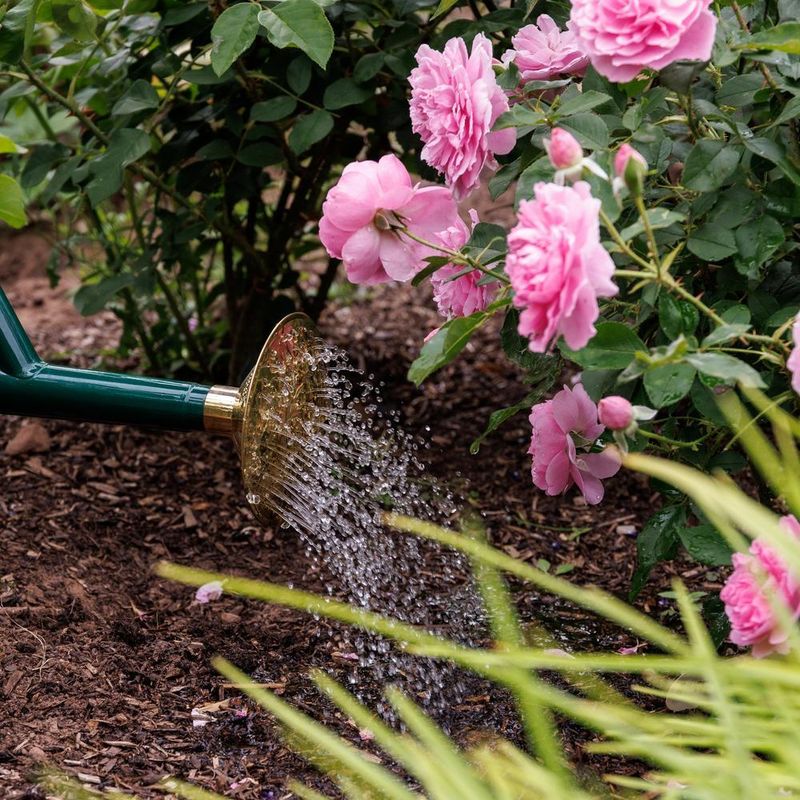
Sprinklers feel convenient, but your roses might be quietly complaining. Spraying water over the top soaks every leaf. For a fungus that needs wet leaves, that is like rolling out a welcome mat.
Aim the water at the roots instead. Roses drink through their roots, not their leaves. A soaker hose, drip line, or simple watering can held low will get the job done.
Drip systems are a favorite among Texas gardeners. They save water, which matters during dry spells and watering limits. They also keep the leaves dry and the soil evenly moist.
Timing counts just as much as method. Water early in the morning, ideally before nine o’clock. If a few drops splash onto the leaves, the morning sun and breeze will dry them quickly.
Evening watering is the trickiest habit to break. Leaves that get wet at night can stay damp until morning. That gives black spot plenty of time to settle in.
Airflow is your other secret helper. Roses packed with crowded stems trap moisture inside like a tiny greenhouse. Snip out thin, crossing, or tangled canes so air can move through the middle of the bush.
Light pruning in early fall is fine in Texas. Many growers trim roses back by about one third in late August or early September. Keep October cuts small and focused on opening the plant up.
Space matters for new plants too. Give each rose room to breathe when planting. A little extra space now means drier leaves and fewer problems for years ahead.
Refresh The Mulch And Choose Resistant Roses
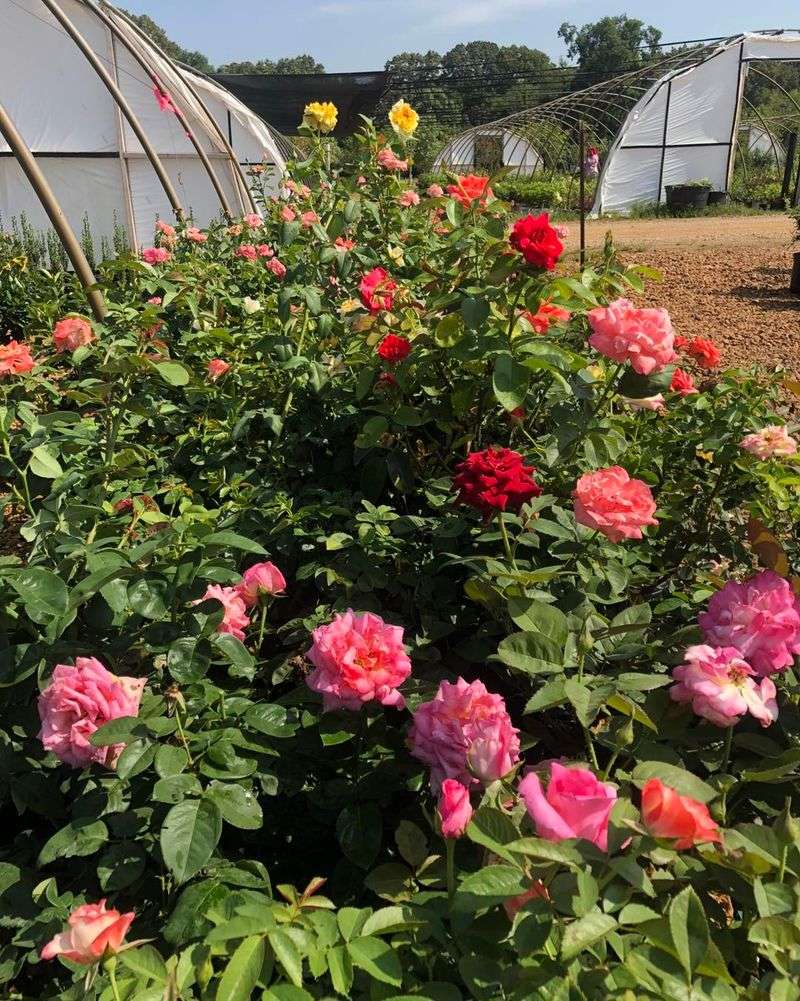
Once the beds are clean, give your roses a fresh blanket. A new layer of mulch is the finishing touch that ties the whole cleanup together. It works like a shield between the soil and the leaves.
Rain hitting bare dirt splashes tiny bits of soil upward. Those drops can carry leftover spores right onto the lower leaves. Mulch catches the rain and stops that splash.
Spread about two to three inches around each bush. Shredded hardwood, pine bark, or native mulch all work well in Texas. Keep it a few inches away from the main canes so the base can breathe.
Mulch brings bonus perks too. It holds moisture in the soil, keeps roots cooler, and blocks weeds. As it breaks down, it even feeds the soil.
Looking ahead, consider the roses you plant next. Some varieties simply shrug off black spot better than others. Texas A&M AgriLife tested roses across the state and named the toughest ones Earth-Kind roses.
Did you know? Earth-Kind roses were picked because they thrived with little or no spraying, minimal fertilizer, and less water. That makes them great for busy gardeners and the environment.
Belinda’s Dream is a beloved choice, with large pink blooms and a sweet fragrance. Knock Out roses are another popular pick, known for nonstop color and strong disease resistance.
Old garden roses like Mutabilis and Marie Daly also earn high marks. Mixing smart cleanup with tough varieties is a winning plan. Your fall garden will stay greener, bloom longer, and need far less fuss.