The Desert Sage Growing Wild In Arizona Releases Oils That Clean The Air Around It
Walk past a purple sage on a warm day and you may catch a sharp, herbal scent. That smell has led some people to say the plant cleans the air around it.
The truth is more interesting, and it matters if you are picking plants for a fall yard project. Here is what the research covers, what it leaves out, and where this gray-leaved shrub might fit in your Arizona landscape.
Which plant does “desert sage” mean?
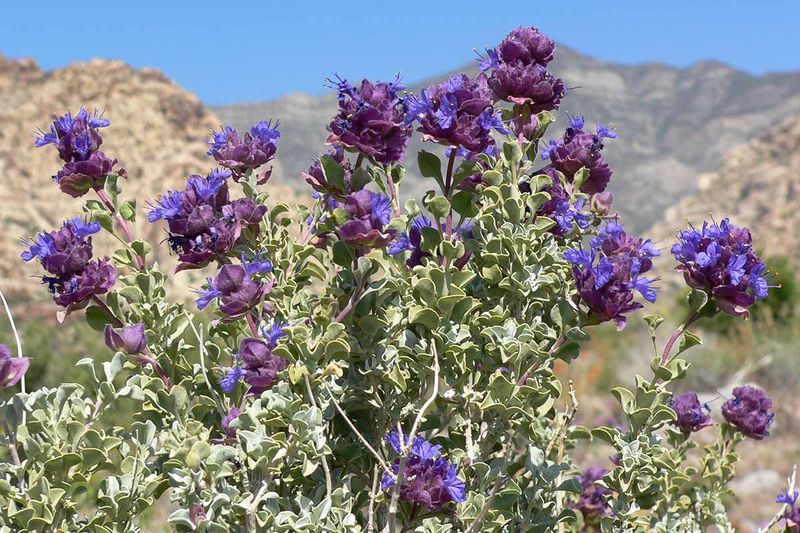
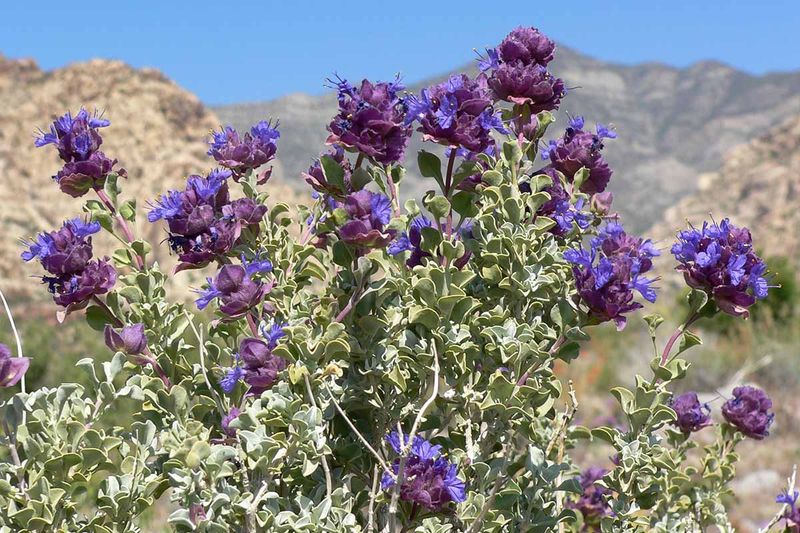
Few common names cause as much confusion as “sage.” The plant in this story is Salvia dorrii, also called purple sage, a compact shrub with aromatic gray leaves and clusters of blue-purple flowers. The University of Arizona’s Yavapai County plant profile describes it as roughly 2 to 3 feet tall and wide, growing in dry, sandy, rocky, or limestone soils.
Purple sage is not sagebrush. Sagebrush belongs to a different genus, Artemisia, and it is a different plant with its own chemistry and growing needs.
Research about one should not be borrowed for the other, and neither should planting advice.
The USDA Natural Resources Conservation Service describes S. dorrii as native across parts of the western United States, including Arizona, in dry open slopes and foothills. You can read the details in the NRCS plant guide.
Before you trust a claim or buy a plant, check the scientific name on the tag. Salvia dorrii is the one to look for.
What the Oregon oil study actually measured
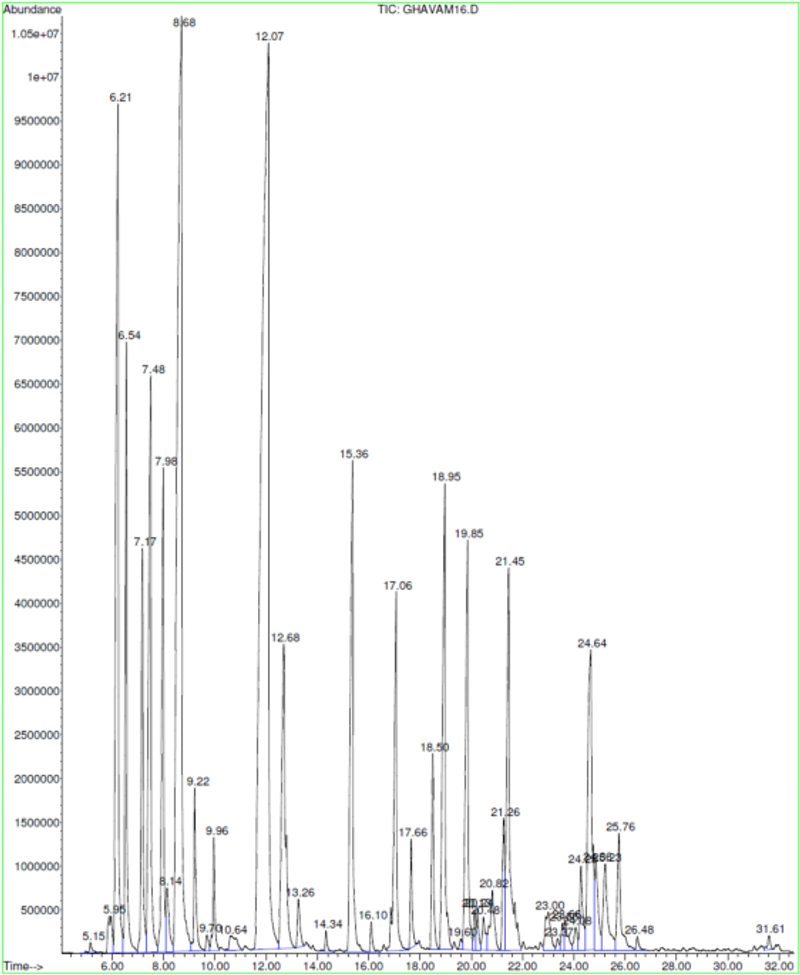
A 2025 study by Swor and colleagues looked at the aromatic oil of Salvia dorrii var. incana. Researchers collected four plants in southeastern Oregon and used hydrodistillation, which uses steam to pull concentrated oil out of plant material in lab equipment.
The published paper then lists the aromatic compounds found in that oil.
That is a chemistry inventory of extracted oil. Extracted oil is far more concentrated than what a living shrub gives off into open air, so the two are not the same thing.
The team did not measure emissions from living Arizona plants. They did not sample outdoor air, count microbes, or look at human health.
The authors call the work preliminary and say other varieties and locations need study.
So the results describe one variety from one region. They do not describe every purple sage, and they do not describe the plant in an Arizona yard.
Plant volatiles and leaf microbes interact
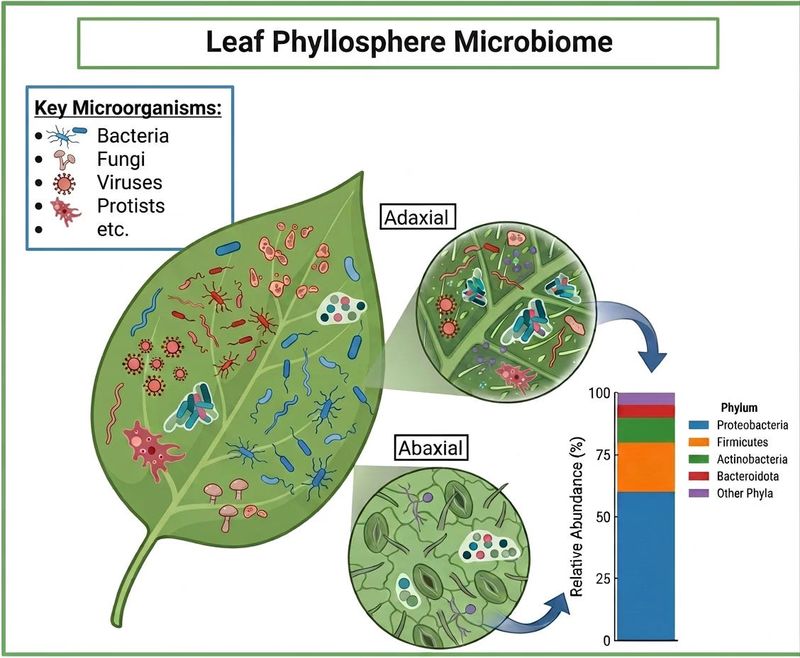
Plants give off many airborne chemicals, called volatile compounds. Leaf surfaces also host busy communities of bacteria and fungi.
Scientists have studied how these two things affect each other, and a ScienceDirect paper on phyllosphere microbes and plant emissions describes the link as a two-way street.
Some plant compounds can influence which microbes settle on a leaf. In the other direction, microbes can change what a plant releases, and some may even consume plant-emitted compounds.
The picture shifts with the plant, the microbes, and the conditions.
Reviews of the leaf microbiome, such as the Annual Review of Plant Biology article on the phyllosphere microbiome, show how rich and complicated this world is.
Your Arizona Garden Changes Every Week. Your Plan Should Too.
Gardening in Arizona changes quickly throughout the season. Every Friday you’ll receive a simple weekly plan showing exactly what to plant, prune, fertilize, harvest, and protect so you never miss the right timing.
Keep in mind that this is general plant science. It is not a test of purple sage, and it does not tell us what Salvia dorrii does around a house.
Why the evidence does not show cleaner outdoor air
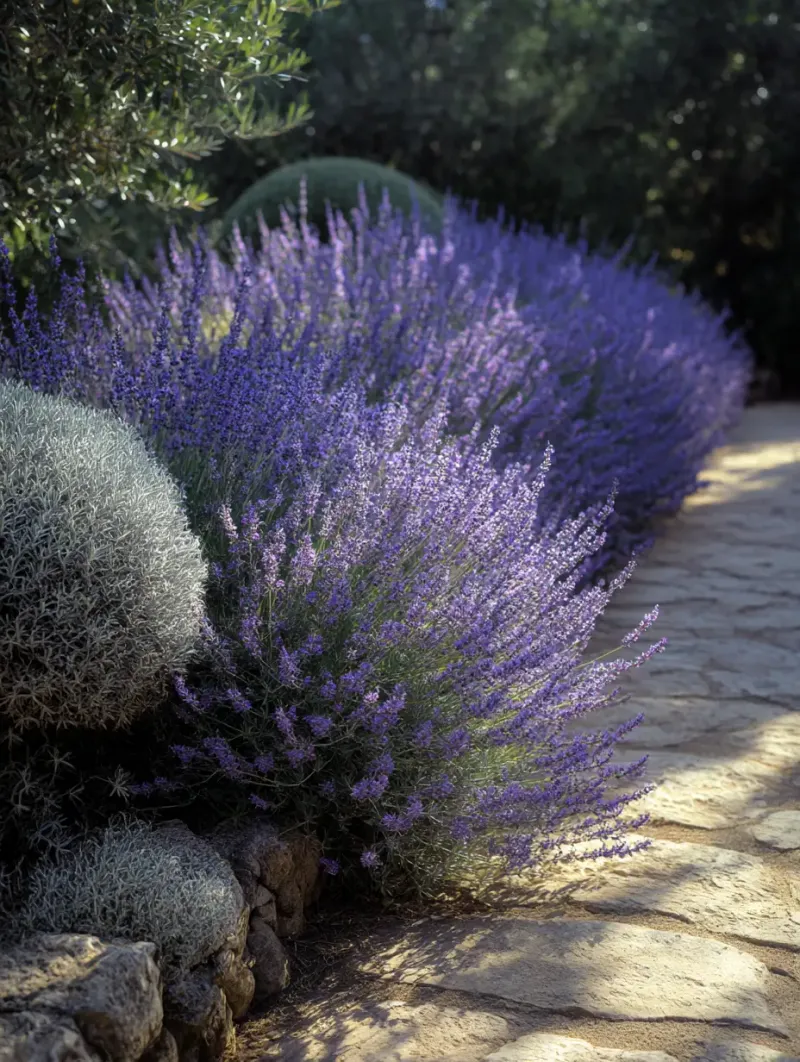
Here is the plain answer: nothing cited here shows that a living purple sage cleans the air outside your home. The Oregon oil study never tested open air, and the broader microbe research never tested this species.
Consider what a claim like that would need. Someone would have to measure what a living plant releases outdoors, then check whether airborne microbes near it drop compared with a spot without it.
Neither the oil analysis nor the leaf-microbe research does that.
Interactions on a leaf surface are one thing. Wind in an open yard dilutes plant scents quickly, and there is no evidence that purple sage removes harmful microbes, sterilizes nearby air, or protects anyone’s health.
You can still enjoy the scent. Just treat it as a pleasant trait, not a home health feature.
Check whether its habitat fits your Arizona site
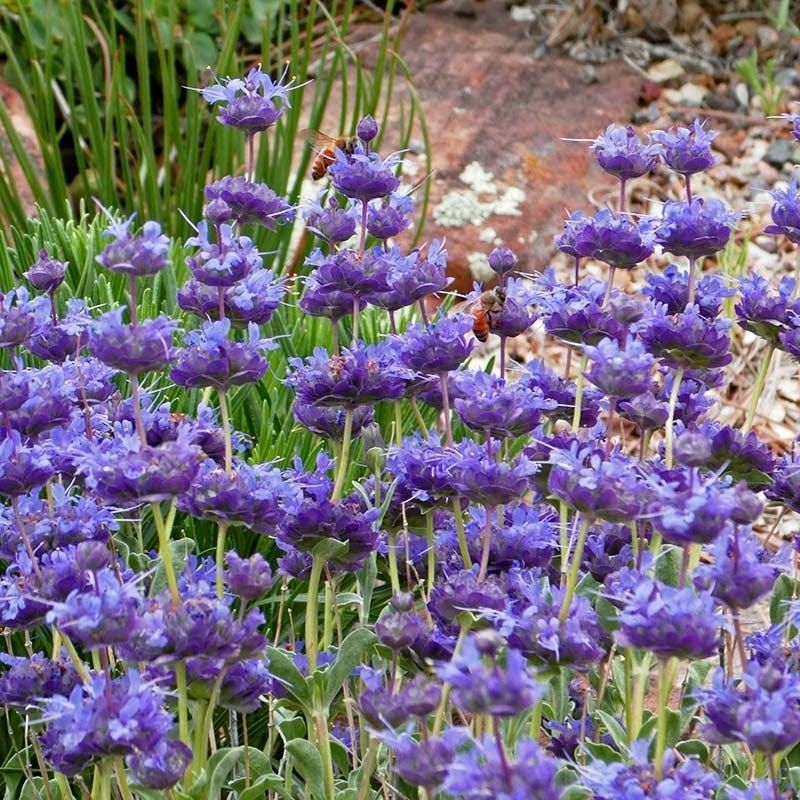
The Yavapai County profile places purple sage in habitats at roughly 2,500 to 5,000 feet in elevation. That points to foothills and higher desert, not necessarily the hottest parts of Phoenix or Tucson.
The plant profile is regional guidance, not a promise for every yard.
The NRCS guide gives broader ranges for the whole species across the West, covering elevation and rainfall. Those species-wide numbers are wide because the plant grows in many places, and they should not be read as a guarantee for your address.
Low-desert gardeners should be extra careful. Ask a local nursery or your county extension office whether purple sage suits your elevation, your microclimate, and the reflected heat from walls and pavement around your planting spot.
A quick test: look at your site. Does it have fast-draining, sandy or rocky soil and open sun?
If water lingers or the spot bakes against a west wall, consider a different desert-adapted shrub.
Plan a fall planting around local guidance
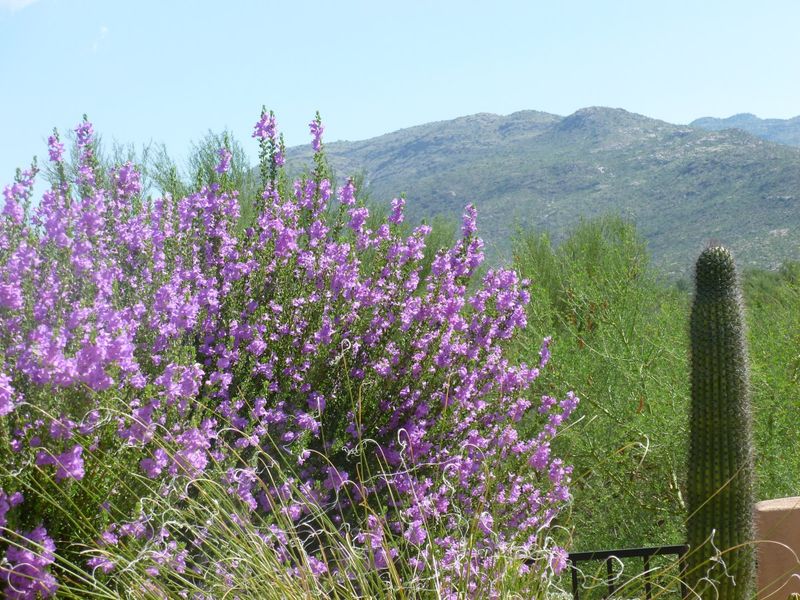
If your site checks out, fall is a sensible time to plant.
The Pima County October gardening guide recommends planting trees and shrubs early in October for low-desert yards and lists salvia species among perennials to plant.That advice is written for Pima County, so it is not a statewide calendar.
The same guide advises watering newly planted native and desert-adapted plants on a schedule that gradually becomes less frequent as they settle in.
For the hole itself, Arizona Extension’s container tree and shrub guide stresses drainage, suitable native or desert-adapted stock, and no organic amendments mixed into the backfill.
Since purple sage comes from dry, well-drained habitats, choose a spot that matches, and confirm with a local nursery that it suits your elevation.
Purple sage is a site-dependent landscape shrub with silvery leaves and a lovely scent, not a proven air purifier.