8 California Wildflowers That Handle Clay Soil Without Extra Amendments
Heavy clay has a reputation as the enemy of wildflower meadows. It turns sticky in winter, cracks in summer, and clings to shovels like wet cookie dough.
Most advice says to fix it first with compost, sand, or gypsum before planting anything delicate.
A small group of California natives, however, grows well in clay just as it is. Many evolved in grasslands, meadows, and seasonal wetlands where dense soil is completely normal.
Choosing from that short list saves time, money, and plenty of frustration.
UC ANR and the California Native Plant Society both point to these flowers as reliable clay performers. Together, they can bring color and pollinators to tough ground without a single bag of amendments.
1. Clarkia Thrives In Heavy Spring Soil
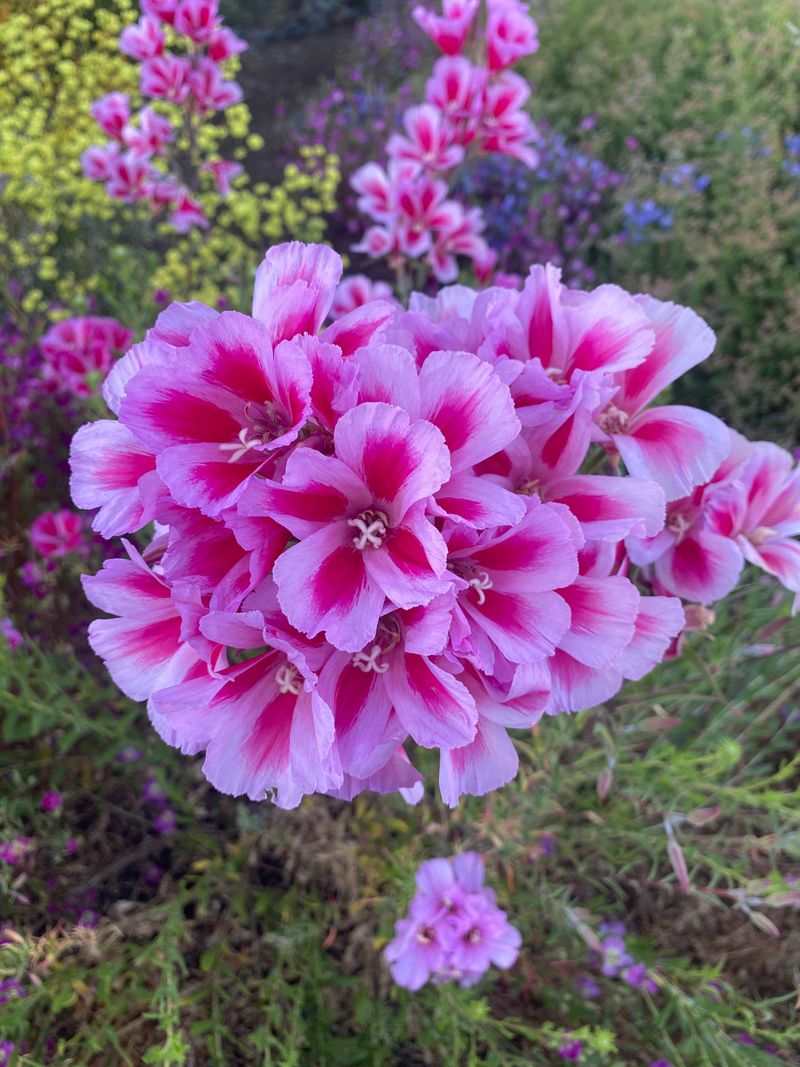
Late spring afternoons often find most early wildflowers fading and the hills turning gold. Right then, clarkia steps up with satiny pink, purple, and lavender cups.
Its nickname, farewell to spring, comes from that perfect timing. Several species, such as Clarkia amoena and Clarkia unguiculata, grow naturally in California grasslands and woodland edges where the ground is often heavy.
UC ANR and the California Native Plant Society both list clarkias among annuals that cope with clay. The reason is simple: clay holds winter rain longer, and clarkia uses that stored moisture to keep growing after the rains stop.
Planting is easy. Seed scattered on bare, loosened clay in fall, right before the first rains, needs only a light press into the surface with feet or a board.
Deep burial isn’t necessary. Rain handles the rest of the work from there.
A sunny spot with at least six hours of light brings the best bloom. Fertilizer is best skipped, since rich soil often leads to floppy stems and fewer flowers.
Watering can stop once plants start blooming, because they’re built for drying ground. Letting a few plants go to seed in summer keeps the show going year after year.
Clarkia reseeds itself, so next year’s display starts without any extra effort. Over a few seasons, a small patch can become a bright drift that greets the start of summer every year.
2. Chinese Houses Suits Shaded Clay Beds
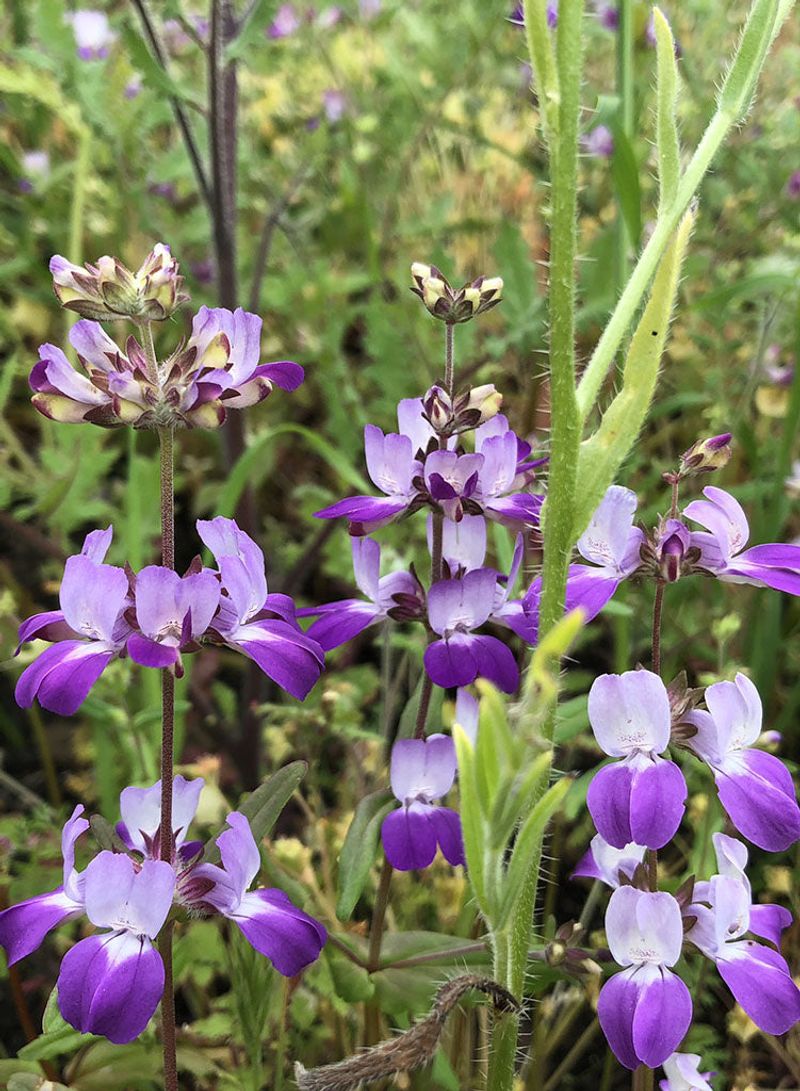
Dim, sticky ground under an oak can seem impossible to plant. Chinese houses offers a lovely answer, with flowers stacked in neat rings up the stem like tiny pagodas. That stacked look explains the name.
Known to botanists as Collinsia heterophylla, this annual grows wild on shady slopes and woodland floors across much of California. Many of those spots have heavy soil.
UC ANR garden guides describe it as tolerant of clay and happy in part shade. That combination is rare among spring wildflowers, which usually crave sun.
Each blossom shows two colors, usually a white or pale lilac top and a deep purple bottom. Bees love them, and kids often enjoy finding the little faces hidden in each flower.
Fall sowing on raked clay works best. Morning sun with afternoon shade, or filtered light under trees, suits it nicely, much like its wild home.
Your California Garden Changes Every Week. Your Plan Should Too.
Gardening in California changes quickly throughout the season. Every Friday you’ll receive a simple weekly plan showing exactly what to plant, prune, fertilize, harvest, and protect so you never miss the right timing.
Seeds belong near the surface, since contact with moist soil matters more than deep cover. Winter rain handles most watering, with a little extra help only if spring turns unusually dry.
Full, hot afternoon sun can make plants fade early, especially in inland valleys. Shade is part of the recipe, not just a bonus.
Once established, Chinese houses reseeds gently. Small seedlings often pop up the next winter in the same cool corner, ready to bloom again.
A little patience turns one patch into a reliable spring tradition.
3. Meadowfoam Tolerates Soil That Holds Water
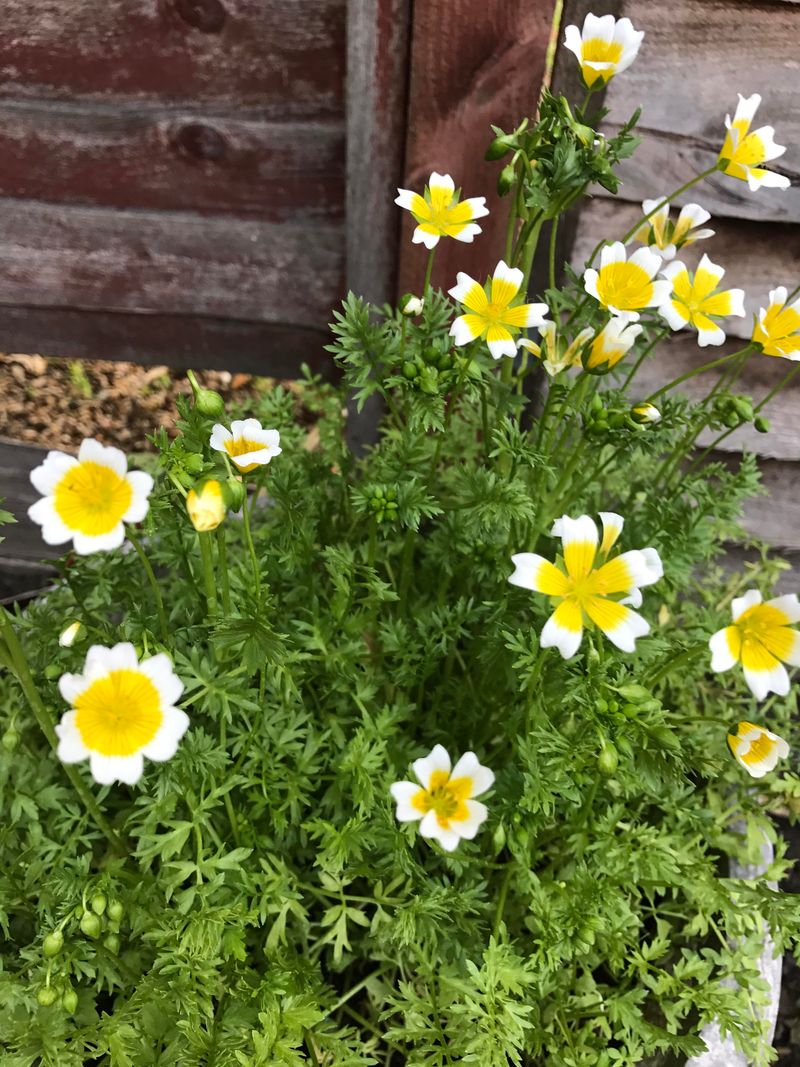
Soggy winter clay frustrates plenty of gardeners, but meadowfoam actually enjoys it. In the wild, Limnanthes douglasii grows around vernal pools, seasonal wetlands, and damp meadows where water sits on tight clay for weeks.
That history matters in a home yard. UC ANR and CNPS describe meadowfoam as an annual adapted to wet, poorly drained soils during its growing season.
Many natives rot when their roots stay wet, but meadowfoam treats that moisture as normal. It fills a spot few other flowers can handle.
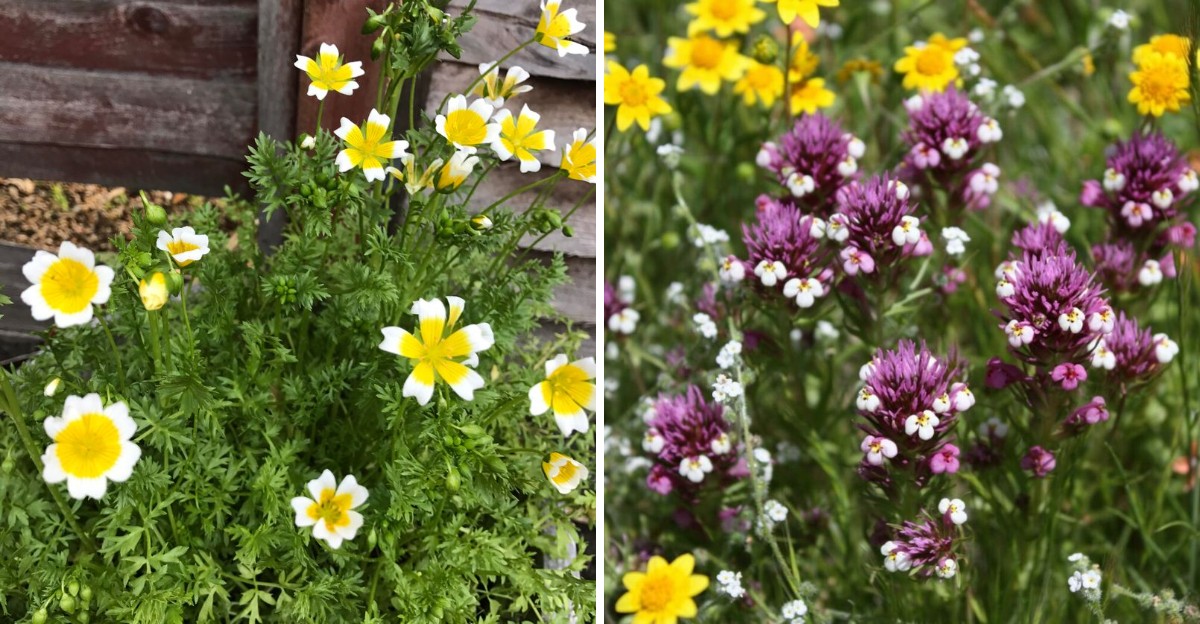
The blooms are cheerful little cups, often bright yellow in the center with white tips. A blooming patch can look like a splash of poached eggs across the ground, which explains the nickname poached egg plant.
The low spot where puddles linger after storms makes a perfect home. Seed scattered there in fall and pressed into the clay surface is all it takes.
Winter rain can flood the area naturally, since that’s exactly what the plant expects. Blooms appear in early to mid spring.
Afterward, plants dry up and set seed as the soil hardens. That summer disappearance is simply part of the life cycle, not a cause for worry.
Oil from meadowfoam seeds even shows up in some skin and hair products. A backyard puddle patch shares a family tree with items on a store shelf, a fun detail to share with visiting friends.
4. Tidy Tips Handles Dense Ground Well
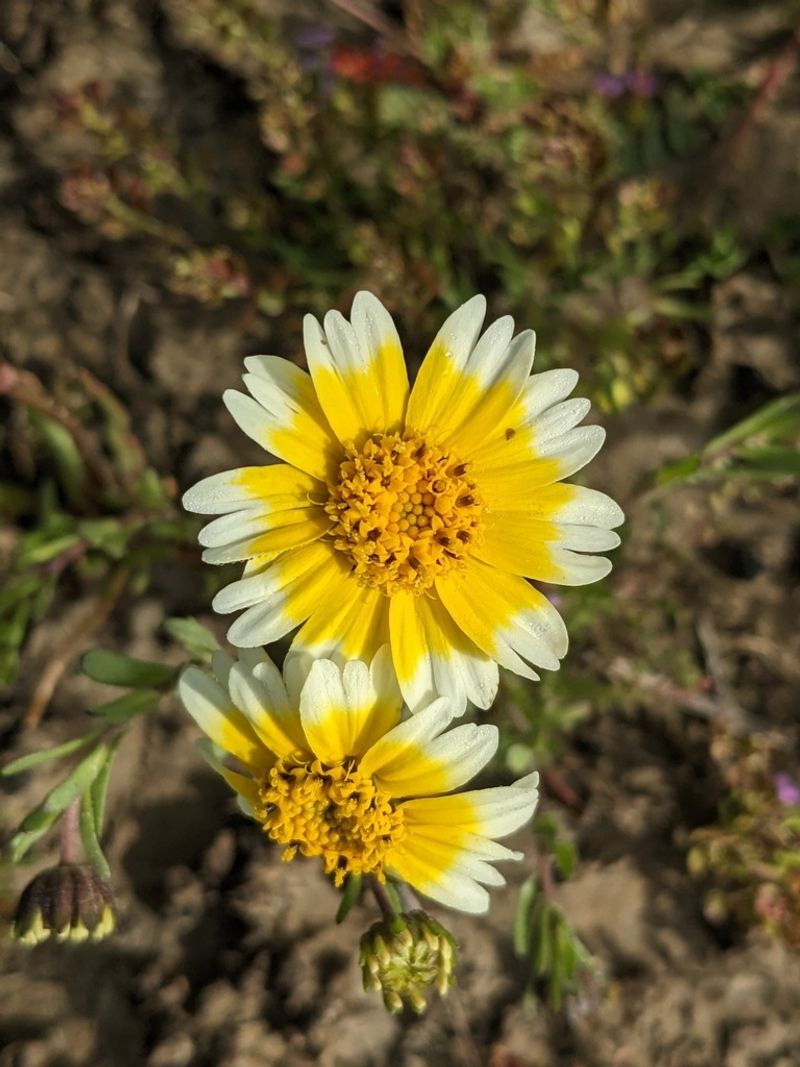
A yellow daisy with white edges carefully painted on every petal sums up tidy tips perfectly. The effect is crisp and clean, which explains the name, and it’s one of the happiest sights in a California spring.
Layia platyglossa grows naturally in open grasslands and valley floors, many of which sit on heavy adobe and clay soils. UC ANR resources note that tidy tips adapts to a wide range of soils, including clay.
That makes it a strong pick for ground that cracks in summer and turns gummy in winter. It’s also impressively tough for its size.
Plants stay fairly short, usually under a foot tall, so they hold up well against wind and spring rain. Butterflies and native bees visit often, turning a sunny patch into a busy little pollinator stop.
Full sun brings the best results, since shade leads to leggy stems and fewer flowers. Seed broadcast in fall onto bare clay, then lightly raked, settles nicely into cracks and small clods.
Early weeding matters, especially grasses, because young seedlings dislike crowding. After that, they mostly take care of themselves through spring.
Tidy tips pairs nicely with California poppies and lupines in a sunny bed. Poppies generally prefer better drainage, though, so placement matters.
On true heavy clay, tidy tips will likely outperform its neighbors. It’s happy to carry the show wherever the soil is densest.
5. Owls Clover Adapts To Clay Easily
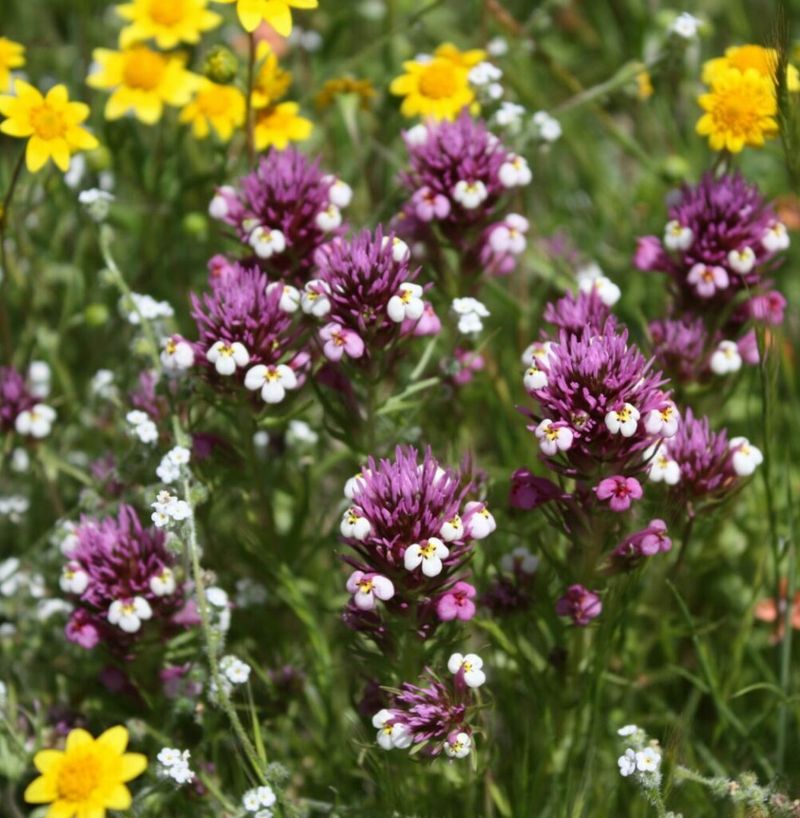
This wildflower hides a sneaky secret. Purple owl’s clover, Castilleja exserta, is partly parasitic, meaning its roots tap into nearby plants, often grasses, to borrow some water and nutrients.
It still makes its own food, but it likes having a neighbor. In the wild, owl’s clover covers grasslands and foothills across California, including many areas with heavy clay.
CNPS and UC ANR describe it as growing in a range of open soils, clay among them. Its fuzzy magenta spikes can paint whole hillsides pink in a good spring.
That root trick changes how it behaves in gardens. It rarely does well alone in a bare bed, so native bunchgrasses or other annuals make important partners for its roots.
Seed mixed with grasses or wildflowers like tidy tips and clarkia works best. The blend can be scattered in fall over sunny, open clay ground.
Simplicity helps here, as with most annual wildflowers. No fertilizer or extra soil mix is needed.
Owl’s clover can be harder to establish than the other annuals on this list. Germination may be patchy the first year, and results vary from yard to yard.
Missing host plants usually cause more trouble than clay itself.
Patience pays off over time. Once a colony takes hold, it reseeds and spreads, and the name makes sense after spotting the tiny owl faces tucked into the blooms.
6. California Aster Rounds Out A Clay Bed
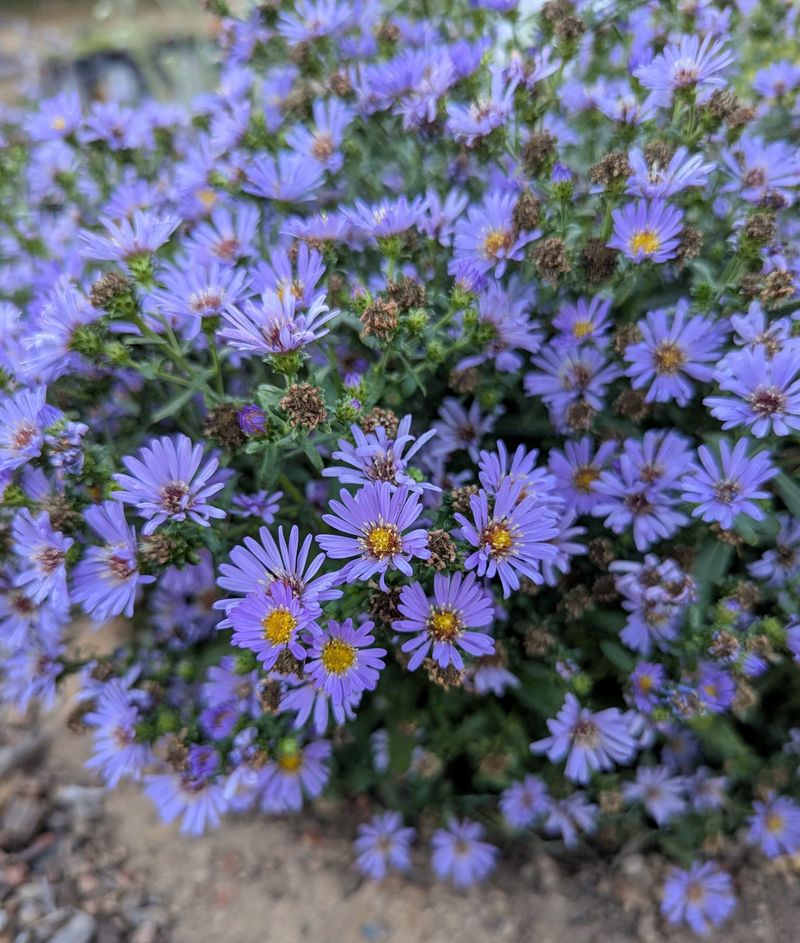
Annuals are wonderful, but they leave a gap once summer arrives. California aster fills it, blooming from late summer into fall just as most spring wildflowers go to seed.
Symphyotrichum chilense grows along coastal prairies, meadows, and stream edges, including spots with heavy clay. UC ANR and CNPS both list it as reliably clay tolerant.
It spreads by underground stems called rhizomes, slowly forming a loose patch of soft lavender daisies with sunny yellow centers. Pollinators adore it, especially in fall.
Food for bees and butterflies gets scarce late in the year, so a stand of asters becomes a kind of autumn diner. Skippers, native bees, and even a few late monarchs may drop by.
Small nursery plants set out in fall or winter establish faster than seed. Each one goes into a hole in the existing clay and gets backfilled with the same native soil.
Compost is best skipped here, since loose material can create a soggy pocket around roots. Full sun suits it near the coast, while a bit of afternoon shade helps inland.
A deep watering every few weeks in summer keeps it looking its best. It can still handle drier conditions when summer water runs short.
California aster may spread more than expected in wetter spots. Plenty of room, or a yearly pull of a few runners, keeps it neat and well behaved.
7. Douglas Iris Prefers Part Shade Clay
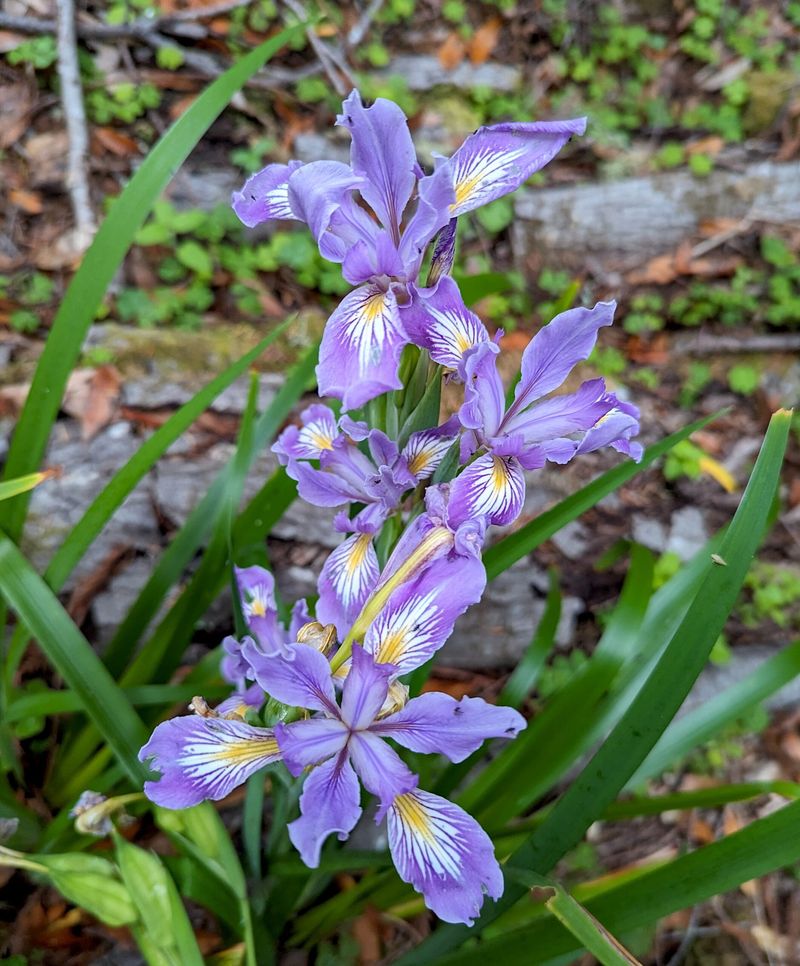
Gardeners along the Northern California coast have grown Douglas iris for generations, often in plain garden dirt that nobody ever improved. Its ruffled blooms come in purple, blue, cream, and even pale yellow.
Long, strappy leaves stay green much of the year. Iris douglasiana grows wild on coastal bluffs, grassy slopes, and woodland edges, frequently in heavy soil.
UC ANR lists it as clay tolerant, and CNPS growers recommend it for part shade. That combination makes it a natural fit under oaks or along the north side of a fence.
Shade matters most inland, where hot afternoon sun can scorch the leaves. Near the coast, it handles more sun, and morning light with afternoon relief makes a good general rule.
Divisions or nursery starts planted in fall get help from winter rain as roots settle. They belong at the same depth they grew in the pot, with existing clay as backfill.
A deep watering during the first winter helps if rain runs light. Once established, summer water should stay modest to protect the roots.
Clay holds moisture, and frequent summer watering in warm weather can encourage root rot. Occasional deep soaks are plenty in most California areas.
Douglas iris crosses easily with other Pacific Coast irises, which explains the many named hybrids at nurseries. Hybrid clay tolerance can vary, so the true species offers the surest results.
8. Blue-Eyed Grass Brings Spring Color To Clay
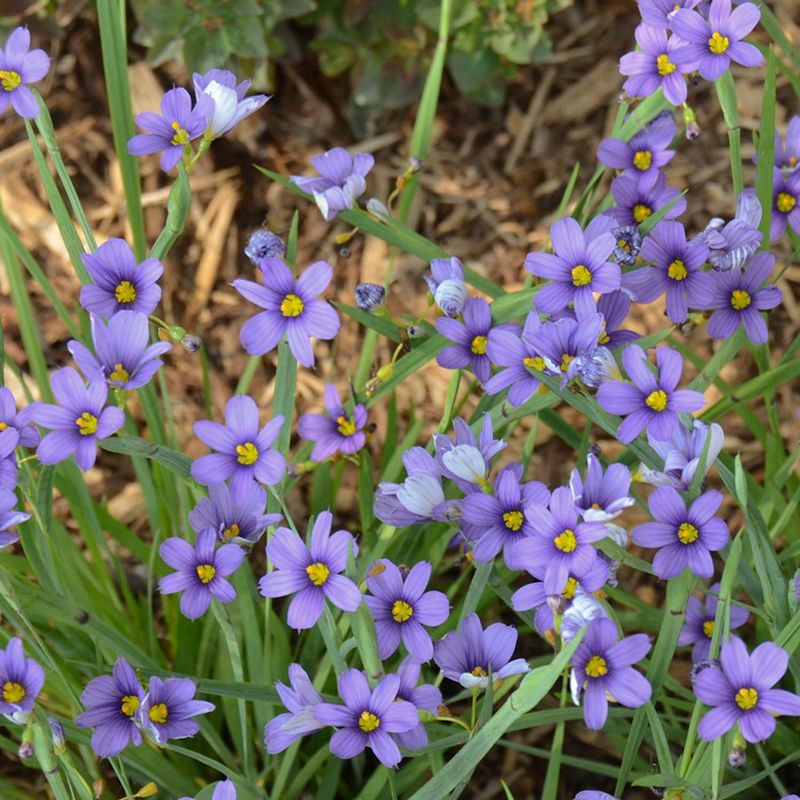
Tiny violet-blue stars scattered across a spring meadow often belong to a plant that isn’t a grass at all. Blue-eyed grass is actually a member of the iris family, with narrow, grassy leaves that explain the name.
This perennial grows wild in grasslands, meadows, and coastal bluffs across much of California. Many of those places sit on heavy soil that stays damp through winter.
CNPS and UC ANR resources describe it as adaptable to a wide range of soils, including clay. Winter moisture suits it well, and spring brings a cheerful flush of flowers with bright yellow centers.
Plants usually stay between 6 and 18 inches tall. That compact size works nicely along paths, at the front of beds, or tucked between taller wildflowers.
The blooms open in sunshine and close on cloudy days and in the evening. A sunny morning walk shows them at their best.
Nursery plants or seed sown in fall settle in easily. Planting holes can be backfilled with existing clay, and no compost or fertilizer is needed.
Without summer water, plants often go dormant and turn tan by midsummer. That rest is natural, and fresh growth returns with the fall rains.
Blue-eyed grass reseeds gently and forms larger clumps over time. Older clumps can be divided in fall to spread the color, turning a few plants into a carpet of spring stars.