Leave Georgia Camellias Untrimmed This Fall Or Risk Losing Upcoming Blooms
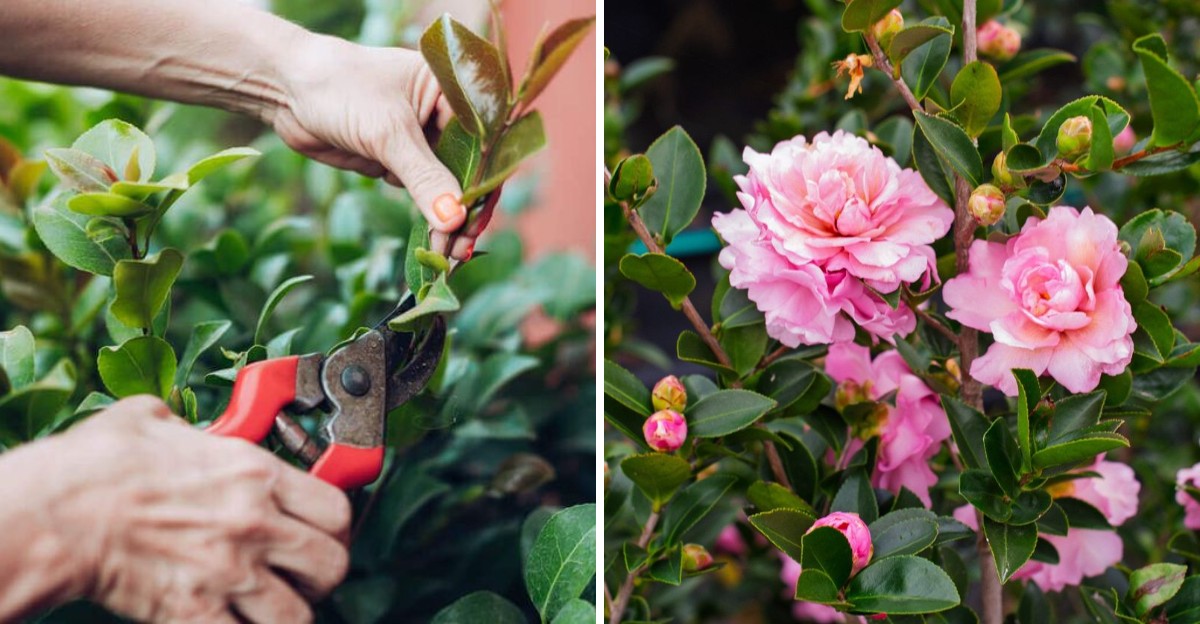
A camellia that has grown tall and leggy can look like it needs a good trim before the weather turns cold.
Look closer, though, and you will likely see small, round buds packed along the branches. Those are next season’s flowers, and many of them formed months ago.
Cutting back now removes those buds right along with the extra growth you wanted gone.
Some camellias are already opening their first blooms, while others wait until winter or early spring. Either way, the flowers depend on stems that are already in place.
A fall trim can leave an otherwise healthy shrub with surprisingly few flowers for exactly that reason.
If yours is crowding a walkway in your Georgia yard, hold off on shaping it until the last of its blooms fade.
1. Swelling Buds Hold Flowers For The Months Ahead
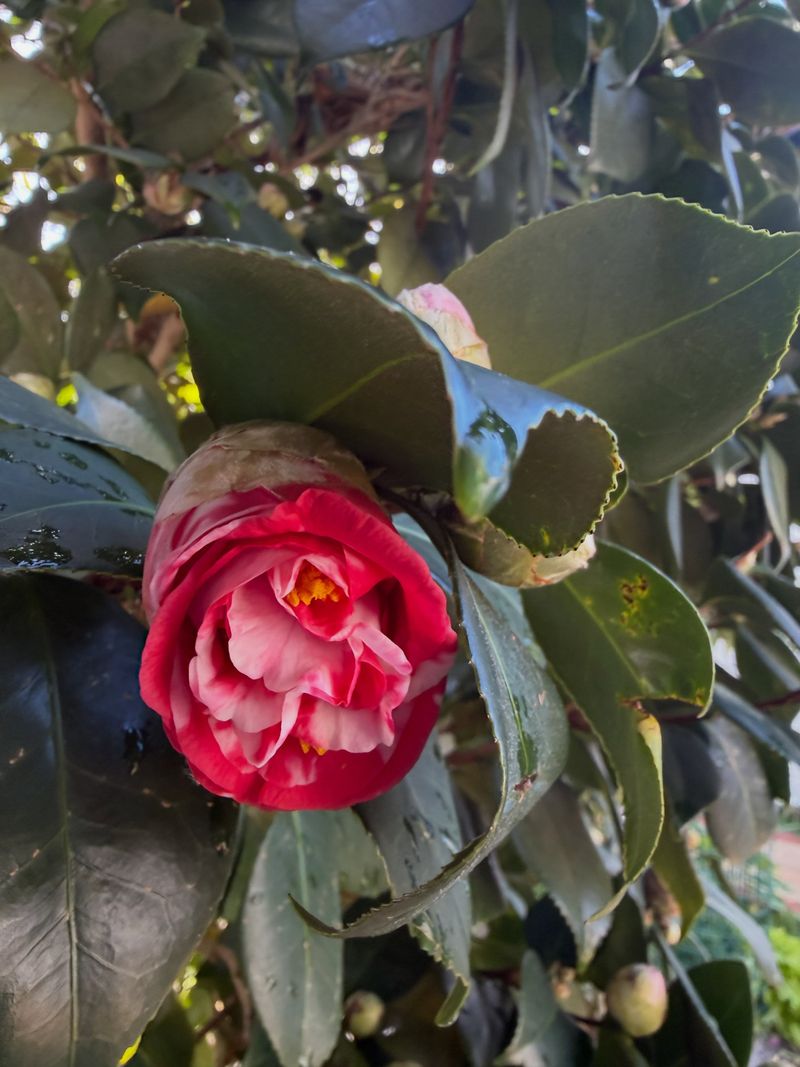
Look closely at a camellia in October and you may spot next season’s flowers already waiting. Those small, firm knobs at the branch tips are buds that formed over the summer months.
Camellias usually set buds after their spring growth flush, often in mid to late summer.
By fall, those buds are swelling slowly as the shrub gets ready for its bloom season. Cutting the branch tips now removes them, and the plant will not replace them until the following year.
Gardeners in Georgia often notice this the hard way.
A neighbor once trimmed her hedge of camellias into a neat box shape in September. Come February, she had a tidy green wall with barely a flower in sight.
Bud numbers can still vary from year to year based on summer heat, rainfall, and how healthy the plant is. A dry August, for example, may lead to fewer buds or buds that drop early.
Watering deeply during long dry spells in late summer and fall may help the plant hold onto its buds.
Mulch also helps keep roots cool and moist. A two to three inch layer of pine straw works well and is easy to find around the region.
Give those swelling buds time, and they can reward you with color during the gray weeks of winter.
2. Sasanquas And Japonicas Flower On Different Schedules
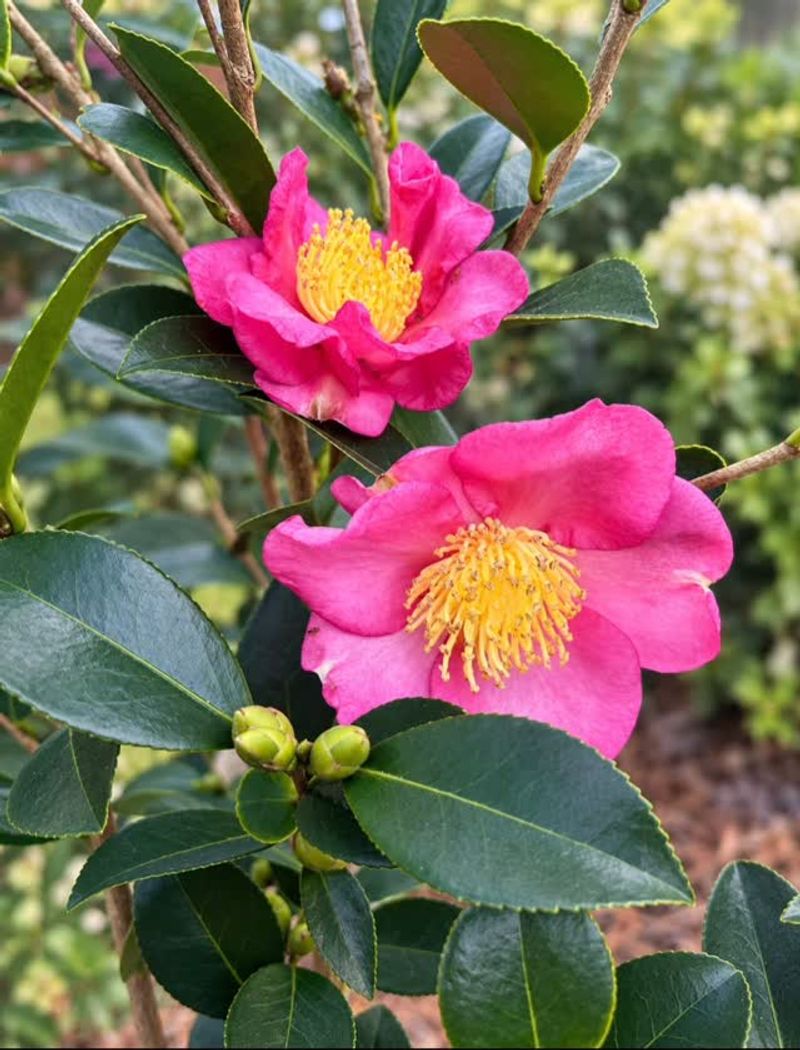
Two camellias can sit side by side and act like they live in different seasons. Sasanquas and japonicas are both popular in the South, but they bloom at very different times.
Sasanquas usually open their flowers from about October through December in most of Georgia.
Their blooms tend to be smaller and often have a light scent. Petals scatter across the ground like confetti as each flower finishes.
Japonicas typically follow later, with many varieties blooming from around December into March or April.
Their flowers are often larger and more formal looking. Some varieties bloom early in the season, while others wait until spring, so timing depends on the cultivar you planted.
Why does this matter for pruning? A sasanqua may be covered in flowers right now, while a japonica is still holding its buds closed.
Your Georgia Garden Changes Every Week. Your Plan Should Too.
Gardening in Georgia changes quickly throughout the season. Every Friday you’ll receive a simple weekly plan showing exactly what to plant, prune, fertilize, harvest, and protect so you never miss the right timing.
Neither plant benefits from a fall haircut, but for slightly different reasons.
If you are unsure which type you have, check the leaves. Sasanqua leaves are usually smaller and narrower, while japonica leaves tend to be larger, thicker, and glossier.
Plant tags, nursery records, or a quick visit to your local extension office can also help you sort it out.
3. Flower Buds Look Rounder And Fatter Than Leaf Buds
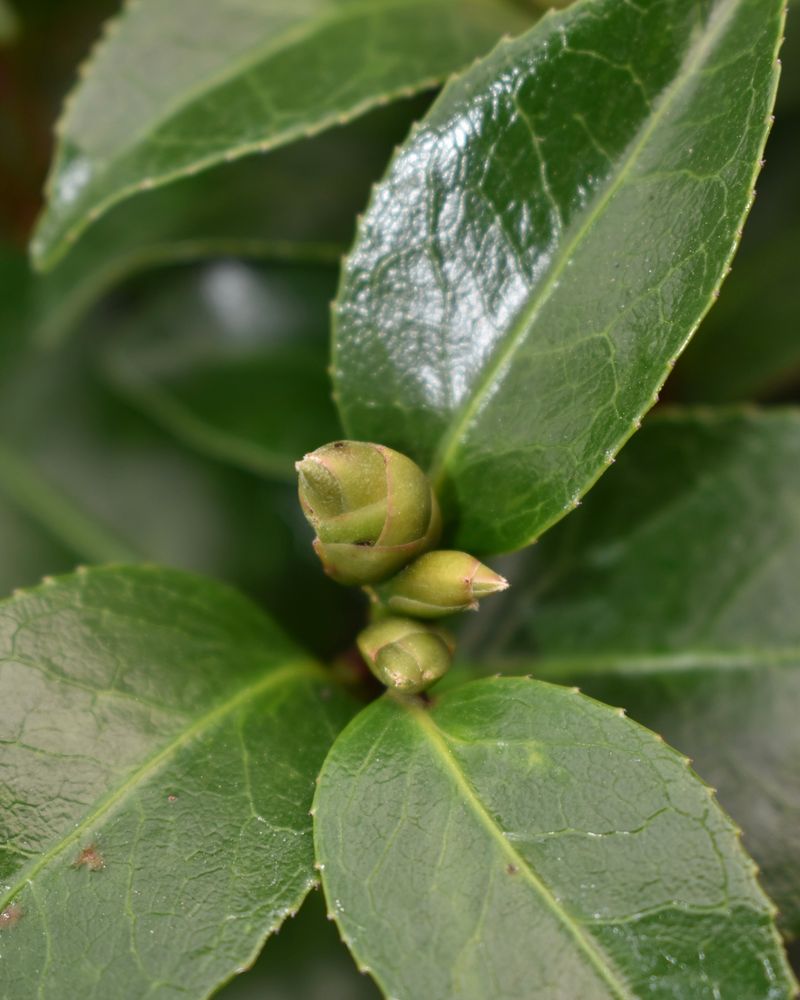
Round means flower, and skinny means leaf. That simple rule helps most gardeners read a camellia branch in seconds.
Flower buds are plump and almost ball shaped, often sitting right at the tip of a stem.
Leaf buds look quite different up close. They are slim and pointed, a bit like a tiny spear tucked against the stem.
Take a few minutes on a calm afternoon to walk around your shrub and compare them.
You may find flower buds in small clusters of two or three. On some branches you might see a hint of petal color peeking through as bloom time gets closer.
Knowing the difference is useful well beyond fall cleanup.
It shows you where the flowers will appear, which helps you avoid cutting those stems by accident. It also gives you a rough idea of how full the bloom season might be.
Gardeners around Georgia sometimes mistake large buds for pest damage or galls, so look carefully before removing anything.
A healthy flower bud feels firm when gently pressed. If a bud feels soft, looks brown, or falls off at a touch, it may have been damaged by drought, cold, or another stress, and it likely will not open.
4. Pruning Time Depends On When Your Camellia Flowers
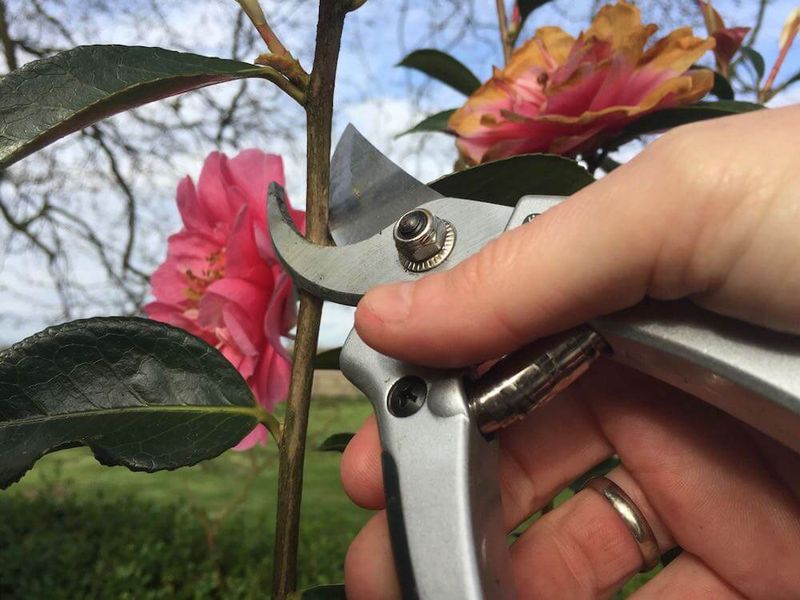
Prune right after the flowers fade. That one habit protects more blooms than any other pruning tip.
Camellias begin forming next year’s buds a few months after flowering, so the window for cutting is fairly short.
For sasanquas, that often means late winter, once the last blooms drop. Japonicas are usually pruned in spring, after their flowers finish.
Waiting until summer or fall can remove buds that have already formed.
Most camellias need very little pruning anyway. A light shaping to remove crossing branches or open up the center for better airflow is often enough.
Clean, sharp hand pruners make neat cuts that heal more easily.
Cut just above a leaf or a side branch rather than leaving a stub. Stubs can attract pests and tend to look untidy as the plant grows.
Large, overgrown shrubs can be cut back harder in spring if needed.
Expect fewer flowers the next season after heavy pruning, since the plant will focus on new growth. Results vary with the shrub’s age and health, but older camellias in Georgia often bounce back well over a couple of years.
If you missed the window this year, simply wait until after the next bloom.
5. Diseased Or Broken Branches Shouldn’t Wait For Spring
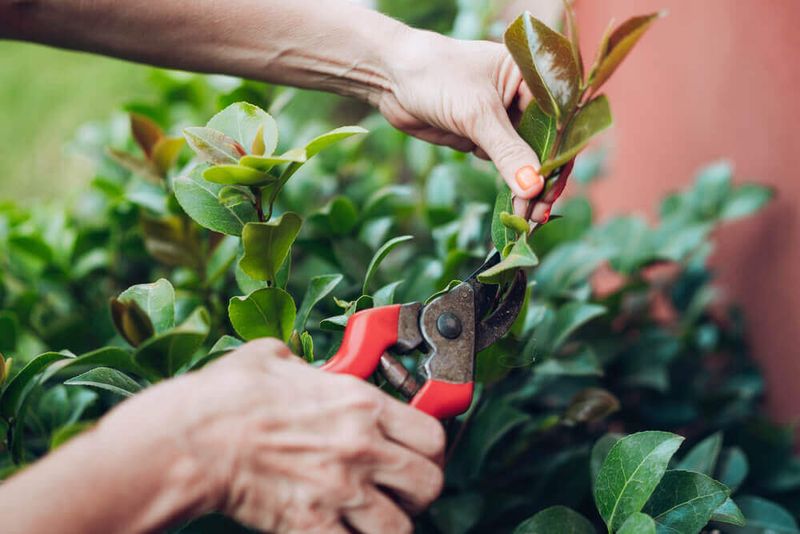
Some cuts simply can’t wait. A cracked limb after a fall storm is one of them.
Broken or diseased branches can be removed at any time of year, including autumn.
A torn branch can let in decay, and it may also rub against healthy wood. Cutting it cleanly below the break helps the plant seal the wound.
Branch decline is another reason to act sooner rather than later.
Camellia branch decline, often linked to a fungus, can cause leaves to wilt and turn brown on a single branch. Cut several inches below the browned area into healthy green wood.
Wipe your pruners with a household disinfectant between cuts so you don’t spread the problem to other stems.
Bag up the removed wood instead of tossing it into a compost pile. Some fungal problems can linger in plant debris.
Humid weather in Georgia can make fungal issues more common, so it helps to check your shrubs after long rainy stretches.
Losing a few buds along with a damaged branch is usually worth it. The rest of the shrub stays healthier, and that tends to mean better flowering over time.
If a large part of the plant shows decline, contact your county extension office for help identifying the cause.
6. Removing A Few Extra Buds Is A Different Practice Altogether
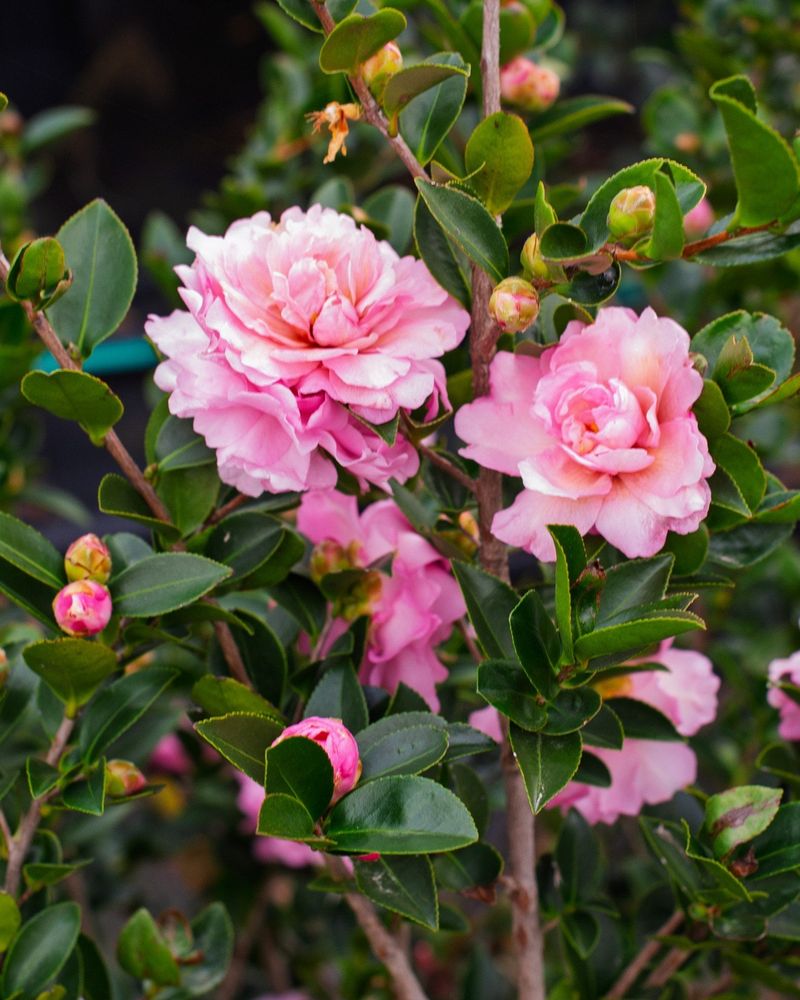
Pinching buds is not the same as pruning. It’s a small, careful task that some camellia growers enjoy every fall.
Disbudding means removing a few buds from a crowded cluster so the remaining one has more room to grow.
Show growers often do this to get larger flowers. Many home gardeners skip it, and their shrubs still bloom just fine.
If you want to try it, look for spots where two or three flower buds sit tightly together.
Gently twist off the extras with your fingers, leaving the plumpest bud in place. Avoid tearing the stem or the nearby leaf bud.
Fall is a common time for disbudding since the buds are large enough to see clearly.
Bigger flowers are possible, though results depend on the variety, weather, and plant health. Some cultivars respond more noticeably than others.
Camellia societies in Georgia hold flower shows, and members are often happy to share tips on this practice.
Keep the goal modest if you are just starting out. Try it on one branch first, then compare those blooms with an untouched branch nearby.
Either way, you keep the stems intact, which is the real difference from trimming.
7. Check Leaf Undersides For Scale Instead Of Reaching For Pruners
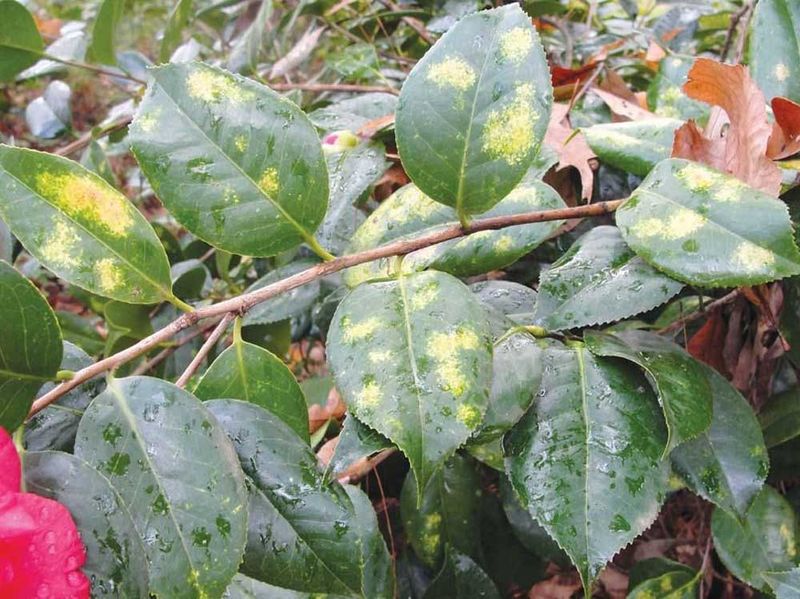
Yellow blotches on top of a leaf often point to trouble hiding underneath. Flip a few leaves over before you assume a branch needs cutting.
Tea scale is a common camellia pest across the Southeast, including Georgia.
It shows up as fuzzy white or brownish specks clustered on leaf undersides. Heavy infestations can weaken the shrub and lead to fewer flowers.
Pruning out every yellow leaf rarely solves the problem and can remove healthy buds in the process.
A better first step is a closer look. Check a handful of leaves from different parts of the plant to see how widespread the pests are.
Horticultural oil is a common treatment for scale on camellias.
Read the label carefully, since timing and temperature matter. Many oils should not be applied during very hot weather or when a freeze is expected, and some products need repeat applications.
Picking off badly infested leaves by hand can help with light outbreaks.
Good airflow through the shrub may reduce future problems, which is another reason to thin crowded growth after blooming. Results vary, so keep checking your plants every few weeks.
Your local extension office can confirm the pest and suggest treatments that fit your area and season.