Florida Trees With Roots Less Likely To Lift Pavers In Small Yards
Pavers don’t crack on their own. Something underneath shoves them upward, and it started years ago the day you picked a tree.
Plenty of Florida yards learn this the expensive way. A patio ripples like a wave a few seasons after planting.
Small lots make it worse, since roots have nowhere to go but sideways and up.
A few trees behave far better than the rest. Their roots stay fine and modest instead of thickening into pavement-lifting cables, which keeps your hardscape flat and your repair budget intact.
Nurseries rarely mention it on the tag.
Choose your tree before you choose your paver layout. The right match saves you a jackhammer bill down the road.
1. Yaupon Holly Stays Between 15 And 25 Feet
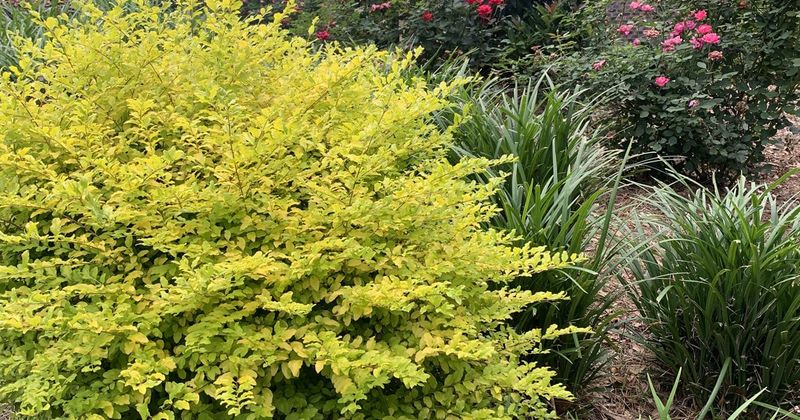
Early Floridians brewed a caffeinated tea from yaupon leaves, and some folks still do today. That little history lesson comes with a tough, tidy tree that suits cramped spaces.
Yaupon holly usually grows 15 to 25 feet tall with a similar spread. Its roots tend to stay fairly shallow and fine, so they rarely muscle up pavers near a walkway.
There is one quirk to watch for, though. Yaupon likes to sprout new shoots from its roots, especially when soil under the canopy gets dug up or tilled.
Snip those sprouts at ground level a few times a year and the tree stays neat. Avoid heavy digging near the trunk, since that disturbance often triggers more suckers.
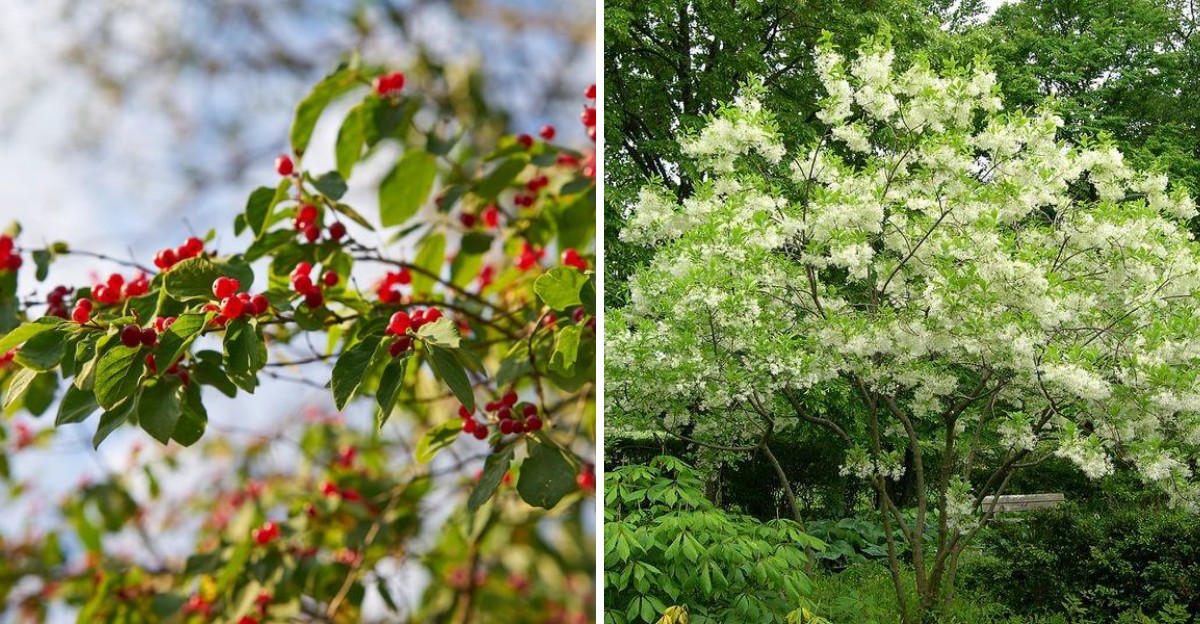
Female plants put on a bright show of red berries in fall and winter. Birds like cedar waxwings and mockingbirds will happily clean them up for you.
Short on room? Dwarf types such as ‘Schilling’s’ or ‘Nana’ stay under 10 feet and work nicely beside steps or narrow front beds.
Yaupon handles sun or partial shade, sandy or clay soil, and even some salty coastal air. Plant it about 5 to 6 feet from pavers to give roots breathing room.
Once established, it shrugs off drought with little fuss. That makes it a smart pick for busy homeowners.
2. Simpson’s Stopper Can Shade A Patio
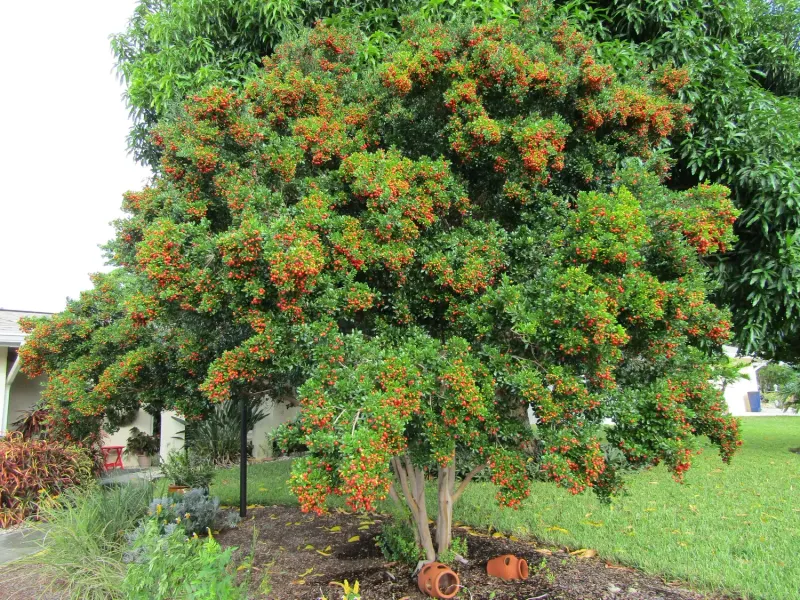
Brush past a Simpson’s stopper in spring and you might catch a whiff of something sweet, almost like nutmeg. The tiny white flowers look like little fireworks, and bees adore them.
This native can be a shrub or a small tree, usually reaching 5 to 20 feet. Grown with a single trunk or a few, it makes a lovely umbrella over a patio table.
Its root system is wide and helps hold sandy soil in place during heavy rain. Even so, the roots are fine and well behaved, so they seldom heave up sidewalks or patio stones.
Growth is slow to moderate, which is good news for anyone who hates constant pruning. You can shape the lower branches up over time to create a cozy, shaded seating area.
Orange to red berries follow the blooms, and songbirds will visit to snack. The peeling, cinnamon-colored bark adds interest even when nothing is blooming.
Your Florida Garden Changes Every Week. Your Plan Should Too.
Gardening in Florida changes quickly throughout the season. Every Friday you’ll receive a simple weekly plan showing exactly what to plant, prune, fertilize, harvest, and protect so you never miss the right timing.
Simpson’s stopper grows best in Central and South Florida, roughly zones 9 through 11. It tolerates sun or part shade and handles some salt spray.
Here’s a fun fact: the name stopper comes from old folk use of the plant to settle upset stomachs. Please stick to enjoying it in the garden instead of the medicine cabinet!
3. Fringetree Tops Out At 20 Feet
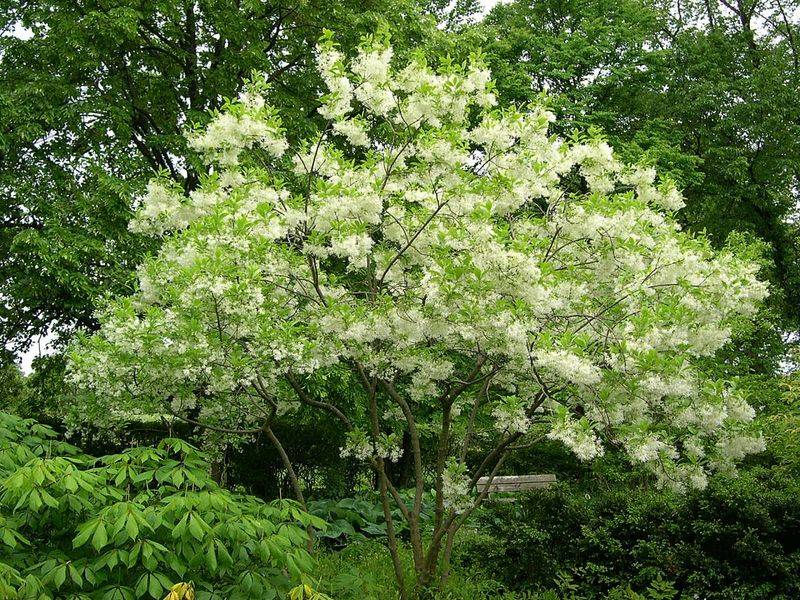
Picture a small tree wrapped in what looks like fluffy white party streamers each spring. Southern grandmothers nicknamed it Grancy Greybeard, and once you see it bloom, the name makes perfect sense.
Fringetree reaches about 20 feet tall and up to 15 feet wide at maturity. It grows slowly, adding only 6 to 10 inches a year, so it will not crowd you out anytime soon.
Slow growth above ground usually means calm roots below. Fringetree is often listed as a good fit for urban spots, small yards, and areas close to patios.
Its branches are naturally strong, and it rarely needs pruning to look tidy. It also handles city pollution and a range of soil types, from sandy to loamy.
There is one weak spot to remember. Fringetree does not like salt, so coastal homeowners should plant it well away from beach spray.
This tree drops its leaves in winter, which actually works in your favor. You get summer shade over the patio and warm winter sun when you want it most.
Female trees produce dark blue fruits in late summer that birds gobble up. Grow it in North and Central Florida for the best results, since it enjoys a bit of winter chill.
4. Walter’s Viburnum Works As A Small Tree
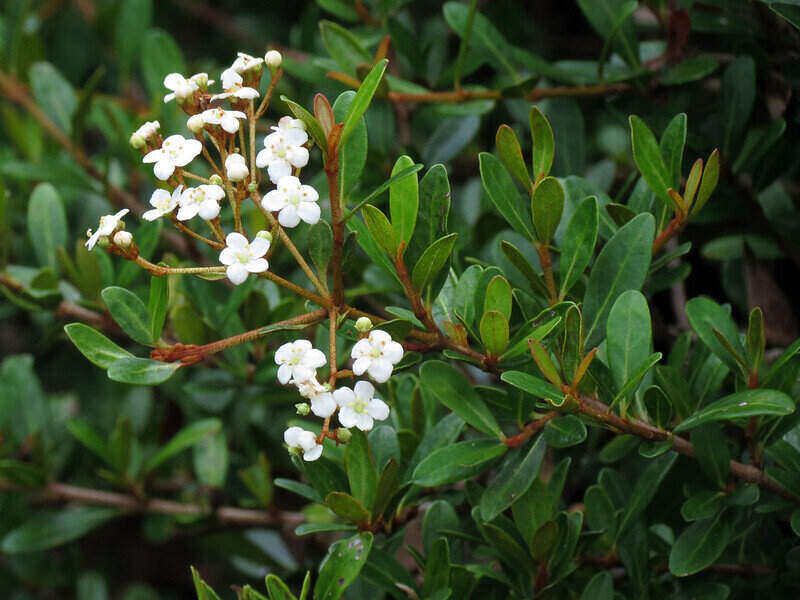
Most people think of Walter’s viburnum as a hedge plant, but it has a secret talent. With a little guidance, it can grow into a charming small tree perfect for a petite yard.
It can reach 30 feet in the wild, though it usually stays between 6 and 15 feet in home landscapes. That modest size keeps its roots from wandering far under pavers.
To train it as a tree, pick one to three strong stems and remove the rest. Then slowly trim the lower side branches as the plant matures.
Root suckers are the main chore with this plant. Clip them as soon as they pop up, or you may end up with a thicket instead of a tidy patio tree.
In early spring, clusters of small white flowers cover the branches. Butterflies flock to them, and the berries that follow turn red and then black for hungry birds.
Walter’s viburnum is a true native that grows across most of the state. It handles full sun to partial shade and adapts to wet or dry soil.
Cultivars like ‘Densa’ and ‘Mrs. Schiller’s Delight’ stay extra compact. Those are handy picks for courtyard corners or spots next to a pool deck, where every square foot counts.
5. Tensaw Dahoon Holly Stays Under 15 Feet
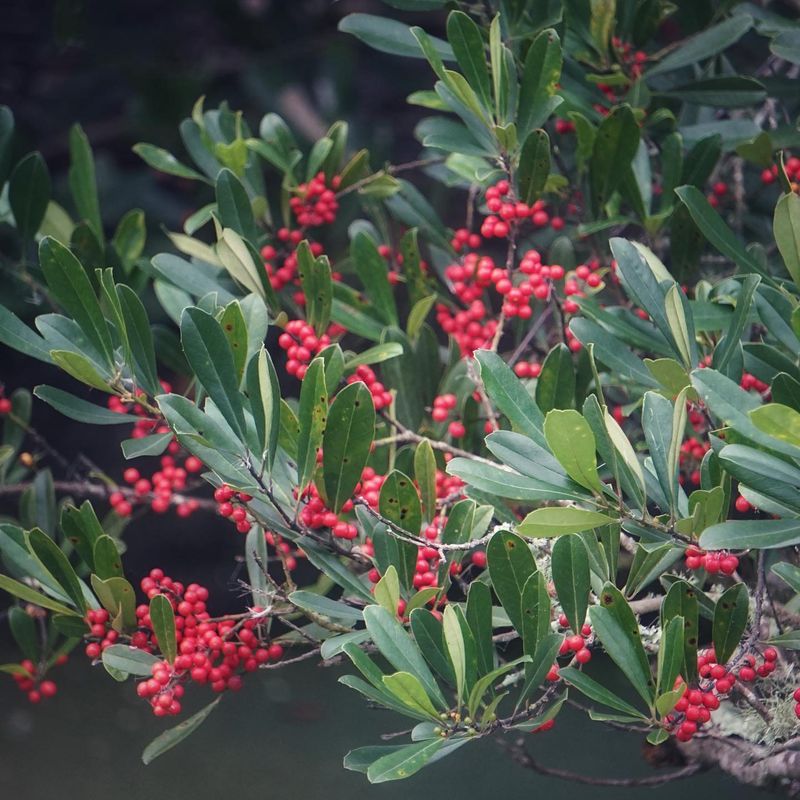
Dahoon holly grows wild in Florida swamps, yet it looks right at home in a neat suburban yard. The Tensaw selection takes that charm and packs it into a smaller frame.
Regular dahoon can climb toward 30 feet, but Tensaw dahoon typically stays under 15 feet. Its narrow leaves give it a fine texture that looks great near a front door.
Roots on dahoon holly are generally not a worry for hardscapes. Extension experts often suggest it for tight urban spots where paver borders and driveways sit close by.
You can grow it with several trunks for a bushy look or train it to a single trunk. A single trunk creates a lollipop shape that leaves room for pots and chairs underneath.
Female plants carry loads of red berries through winter, adding a pop of holiday color. Make sure a male holly grows somewhere nearby so the berries form.
Tensaw dahoon is happy in full sun or partial shade and tolerates a wide range of soils. It handles soggy ground well, which helps in yards that puddle after summer storms.
Give it a light trim in late winter if you want to keep the shape crisp. Otherwise, this easygoing holly mostly takes care of itself once it settles in.
6. Myrtle-Leaved Holly Handles Wetter Spots
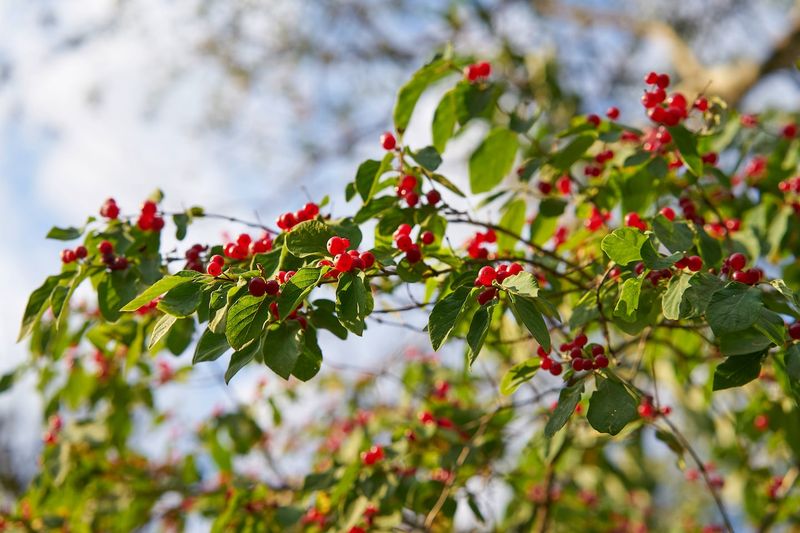
Got a low spot in the yard that turns into a mini pond every August? Myrtle-leaved holly might be the answer you have been searching for.
This Southern native grows naturally in moist woods and swamps from North Carolina to Texas. Wet feet do not bother it one bit, and it handles shade better than many trees.
The leaves are tiny, narrow, and dark green, giving the plant a soft, almost feathery look. Most specimens stay shrub sized or form a small tree, a nice match for little lots.
Here is the key tip: myrtle-leaved holly dislikes having its roots disturbed. Choose its spot carefully the first time, because moving it later can set it back badly.
That sensitivity also means you should skip digging or trenching right next to it. Lay your pavers first, then plant the holly a few feet away so the roots can settle in peace.
In fall and winter, you may see red or even yellow berries on female plants. Birds rely on them during cooler months when food runs low.
It is moderately salt tolerant, so it can work in some coastal yards. Pair it with ferns or native irises for a lush rain garden that drinks up runoff from your patio.
7. Spanish Stopper Fits Tight South Florida Yards
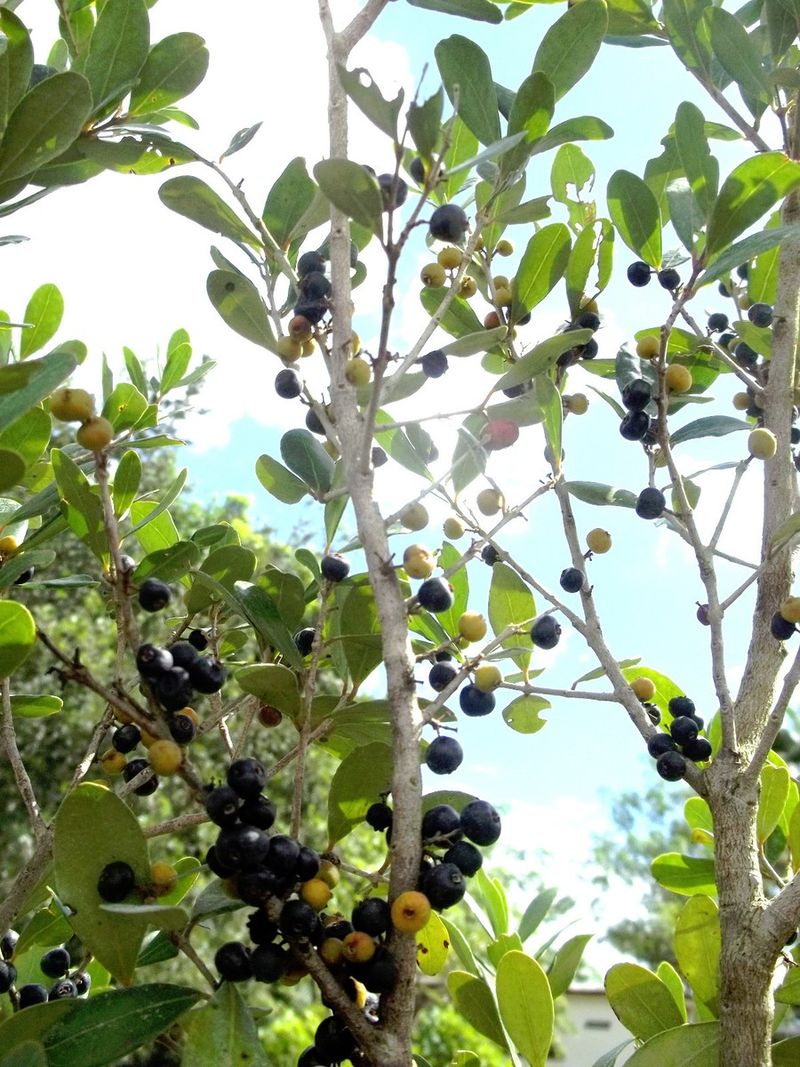
Skinny side yards are tricky, and Spanish stopper seems built just for them. Its upright shape grows tall instead of wide, sliding neatly into spaces where other trees would bully the fence.
This coastal native usually reaches 12 to 20 feet, though some sources say it can stretch toward 30. Growth is slow, so you will have plenty of time to plan around it.
Its roots are fibrous and lack a deep tap root. That fine root mass tends to stay polite near walkways, though it does make the young plant a bit fussy at first.
Water new plantings regularly for the first several months while those roots get going. After that, Spanish stopper handles drought and sandy soil with ease.
Small white flowers appear along the stems, followed by little berries that ripen from orange to black. Birds and butterflies both stop by for a visit.
The leaves are small, glossy, and packed tightly together. That dense look works well as a privacy screen between close neighbors.
Spanish stopper fits best in South Florida and the Keys, since cold snaps can damage it. Plant it in sun or light shade, and enjoy a native tree that asks for very little in return.
8. White Stopper Brings Native Greenery To Small Lots
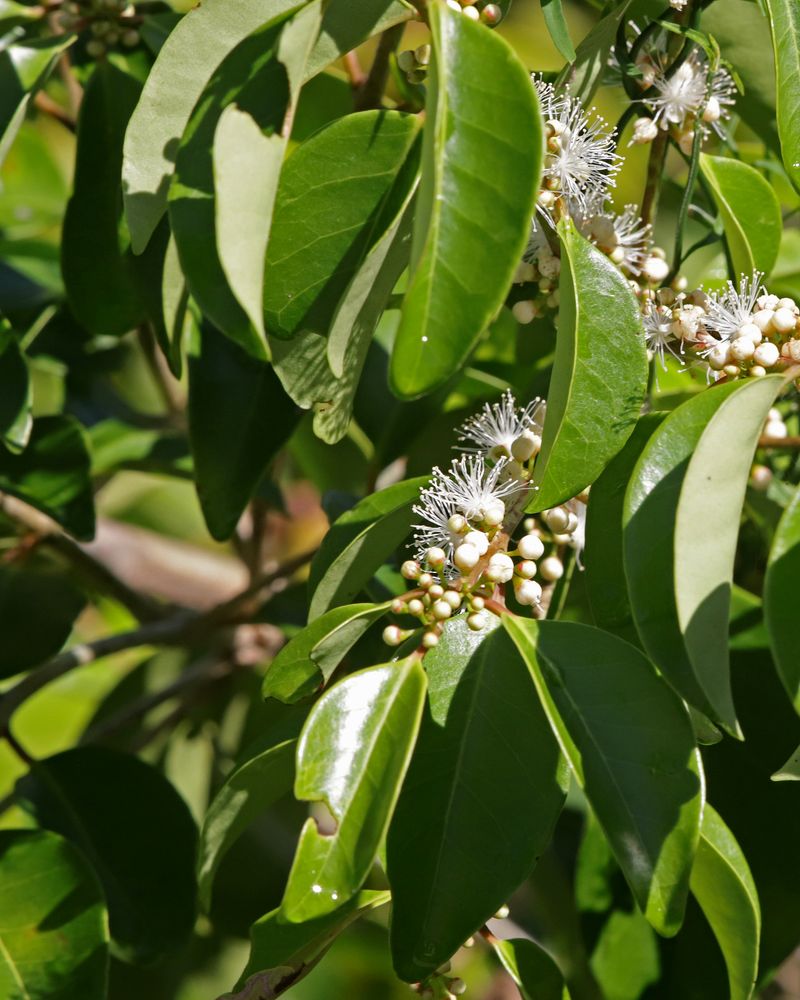
Walk through a coastal hammock after a rain and you might notice a skunky smell drifting through the air. Believe it or not, that funky scent often comes from white stopper leaves.
Do not let the odor scare you off, because it fades and is rarely noticed in a yard. What you get is a tough native tree with glossy leaves and a tidy, narrow form.
Most white stoppers stay around 12 feet tall, though old ones in the wild can reach 30. Regular trimming keeps them small, making them easy to fit beside a patio or path.
Roots stay modest, and the tree grows slowly, so pavers have little reason to worry. Plant it a few feet back from hardscape edges for extra peace of mind.
Once settled, white stopper handles drought very well. It can also take salty air if other plants shield it from direct ocean wind.
The small white flowers draw bees, and the black berries feed birds like catbirds and warblers. You might even spot butterflies resting in its shady branches.
Use it as an accent tree, a hedge, or a backdrop for colorful perennials. It thrives in Central and South Florida, bringing a slice of wild Florida to the tiniest lot.
9. Olive Trees Work Well In Smaller Yards
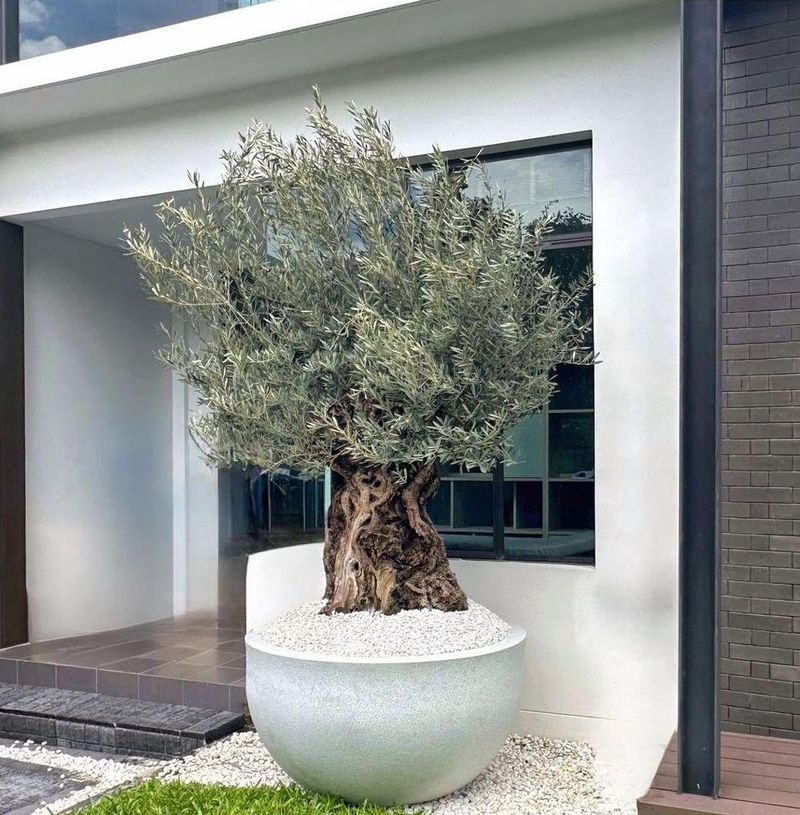
Silvery leaves shimmering in the breeze can make a patio feel like a Mediterranean villa. Olive trees bring that relaxed, old-world charm without the heavy look of big shade trees.
Their narrow leaves and open branches let light filter through instead of blocking it. That airy style makes small yards feel larger and brighter.
Olives want full sun and soil that drains quickly. Florida’s heavy summer rain can be tough on them, so raised beds or sandy spots work best.
Here is the catch for paver lovers. When planted straight into the ground right next to hardscape, olive roots can sometimes spread and cause trouble.
The easy fix is a large planter. A container of 25 gallons or more keeps the root zone contained and helps control the overall size of the tree.
Choose a pot with good drainage holes, and use a gritty mix made for cactus or citrus. Feed lightly in spring and summer, and let the soil dry a bit between waterings.
Varieties like ‘Arbequina’ handle Florida conditions better than many others and stay compact. Skip dreams of a huge harvest in our humid climate, since fruit set can be spotty.
Still, the beauty alone is worth it. Set a potted olive at the corner of your patio and enjoy a little taste of the Mediterranean.