8 Signs Arizona Carpenter Bees Are Nesting in Your Patio Wood
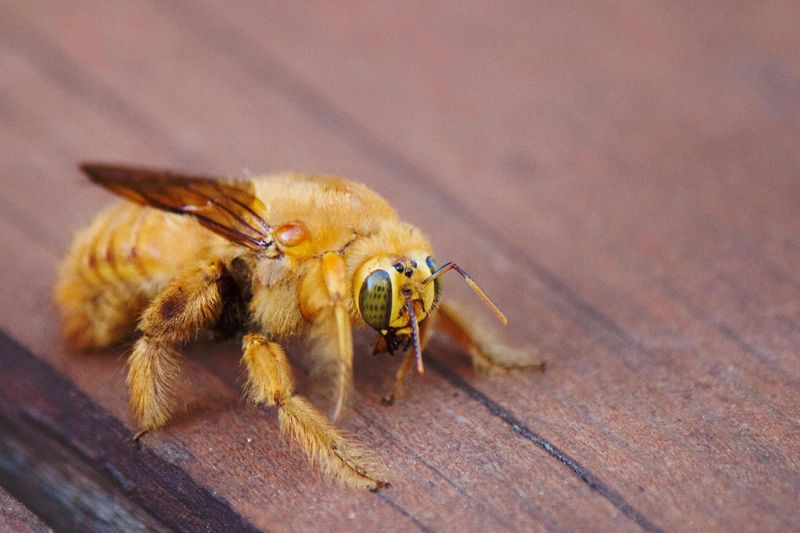
That big, shiny bee buzzing around your pergola might be doing more than just visiting. Arizona carpenter bees love to drill into patio wood to raise their young, and the damage can grow quietly over a few seasons.
The good news is that these bees leave plenty of clues if you know what to look for. Spotting them early can help you protect your shade structures while still giving these helpful pollinators a better place to live.
1. Perfectly Round Entry Holes
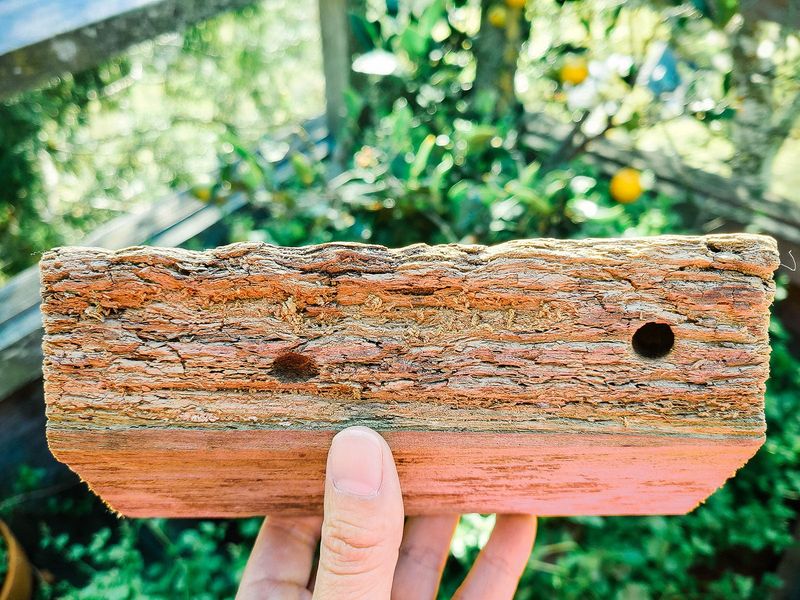
Picture a hole so neat it looks like someone used a power drill and a ruler. That smooth, circular opening on your patio beam is often the first calling card of a female carpenter bee.
Most entry holes measure about half an inch across, just wide enough for the bee to squeeze in and out. You will usually find them on the underside of pergola rafters, fascia boards, railings, or shade ramada beams, where the wood stays a little more protected from the harsh Arizona sun.
Here is a fun twist. After drilling straight in for about an inch, the bee typically makes a sharp turn and tunnels along the grain.
So the tiny hole you see may hide a much longer gallery inside.
Grab a flashlight and check the shady sides of your wood structures, especially in spring when nesting activity picks up in the low desert. Unpainted or weathered cedar, redwood, and pine tend to be favorites.
Fresh holes have clean, pale edges, while older ones look darker and more worn.
If you count more than one or two, it may be time to plan a fix before the colony returns next season.
2. Sawdust Piles Below the Wood
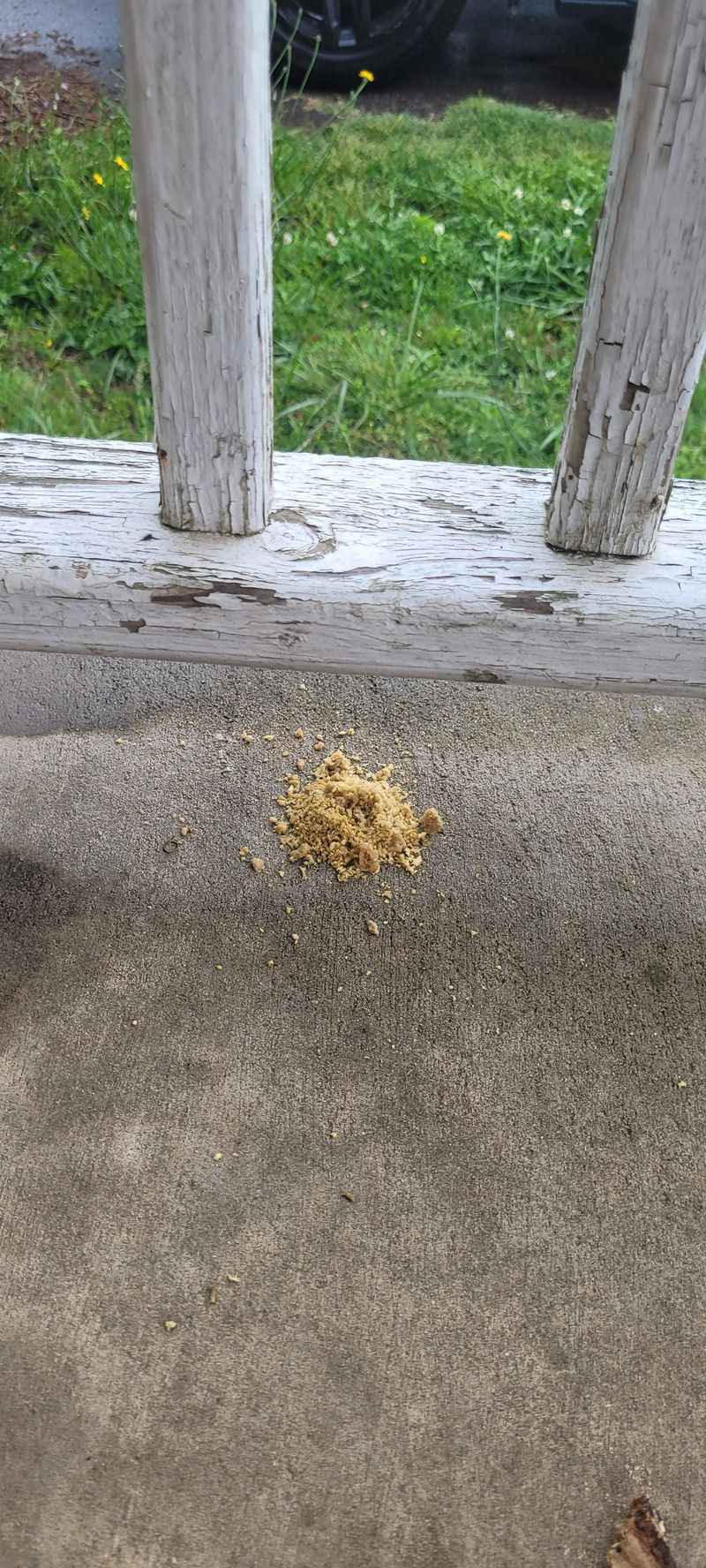
Ever sweep your patio on Saturday and find a fresh little mound of sawdust by Monday? Nobody has been doing woodworking, yet there it is, piled neatly under the same beam.
That coarse material is called frass. As a carpenter bee chews out her tunnel, she pushes the shavings out of the entrance, and gravity does the rest.
Unlike termites, these bees do not eat the wood. They simply clear it away to make room for their nursery.
In Arizona, light breezes and monsoon gusts can scatter frass quickly, so you may only catch it in calm weather. Look on patio pavers, outdoor furniture cushions, gravel beds, and even the tops of your potted agaves or penstemons sitting below a pergola.
A simple trick works well here. Sweep the area clean, then check again in a day or two.
If a new pile shows up in the same spot, you likely have an active excavator overhead.
Fresh frass tends to look bright and fluffy, almost like coarse oatmeal. Older dust looks gray and flattened by the sun.
3. Yellowish or Brownish Stains
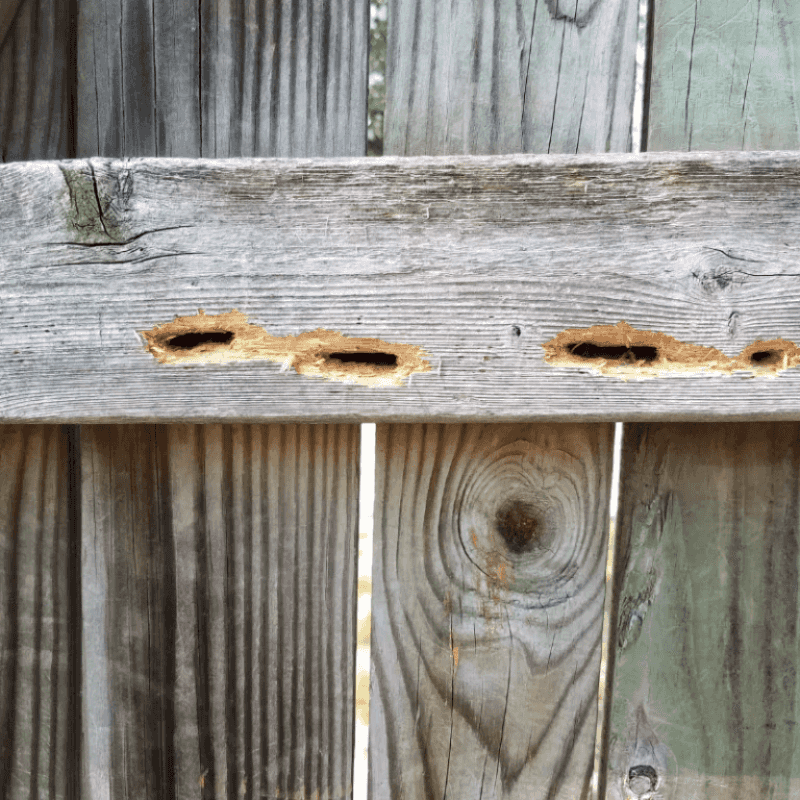
Not every clue is pretty. Some homeowners first notice carpenter bees because of mysterious yellow or brown streaks dripping down their nice stained cedar posts.
Those marks come from bee excrement, along with a bit of pollen residue. Bees often relieve themselves just outside the nest entrance, so the stains usually run downward from the hole like little drips of mustard or weak coffee.
Your Arizona Garden Changes Every Week. Your Plan Should Too.
Gardening in Arizona changes quickly throughout the season. Every Friday you’ll receive a simple weekly plan showing exactly what to plant, prune, fertilize, harvest, and protect so you never miss the right timing.
On light-colored wood or freshly painted trim, these streaks stand out right away. On darker or heavily weathered boards, they can blend in, so look closely at the area just under any suspicious hole.
Arizona sun has a way of baking stains into the grain, making them harder to scrub off over time. A mild soap and a soft brush can help on newer marks.
Deep stains may need light sanding and a fresh coat of sealant.
Stains also tell a story about timing. Lots of fresh streaks suggest the nest is busy right now, while faded marks might point to a previous season.
Either way, they are a strong hint that something has moved into your wood and made itself at home.
4. Large Shiny Bees Hovering Nearby
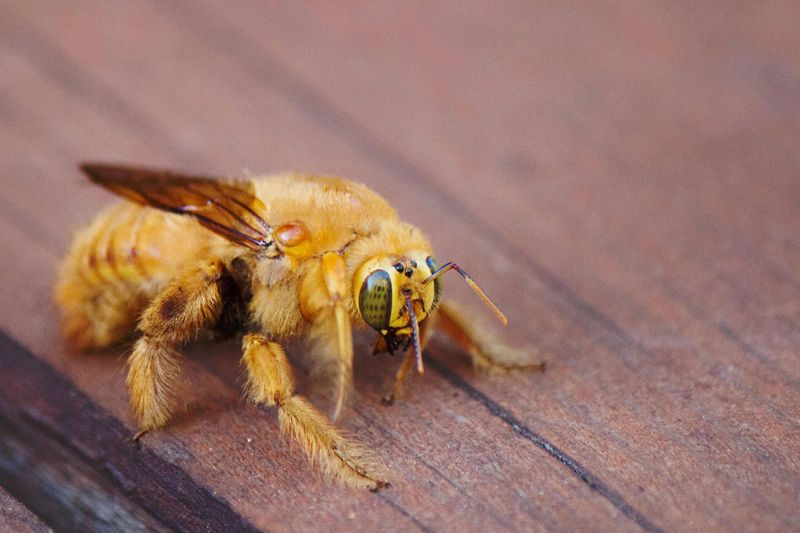
Some bees mind their own business. Male carpenter bees, on the other hand, act like tiny security guards, zipping right up to your face as you step onto the patio.
Spotting large bees hovering around eaves, railings, or pergola beams is one of the easiest signs to notice. In the low desert, activity often ramps up in spring as palo verde, desert willow, and other natives bloom.
How do you tell them apart from bumblebees? Check the rear end.
Carpenter bees usually have a shiny, mostly hairless black abdomen, while bumblebees look fuzzy all over. Arizona is also home to the valley carpenter bee, where females are glossy black and males are a striking golden tan, sometimes nicknamed teddy bear bees.
The good news is that those bold, hovering males cannot sting. Females can, but they rarely do unless handled or trapped.
Watch for bees that keep returning to the same spot on your wood. Pollinators passing through drift from flower to flower.
Nesting bees fly with purpose, landing at a hole and disappearing inside. That repeat visit pattern is your clearest hint.
5. Buzzing or Scratching Sounds
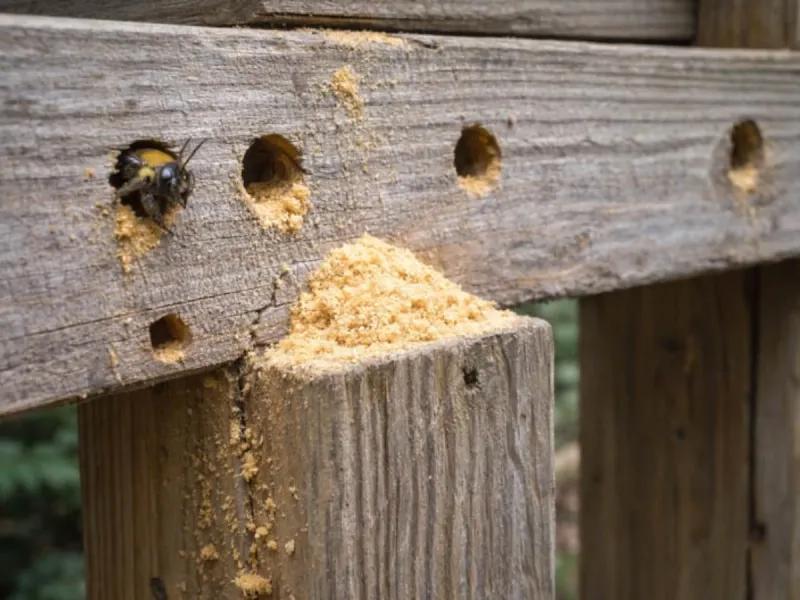
Try this on a quiet morning. Press your ear gently against a suspicious patio beam and listen.
You might hear a faint buzzing, rasping, or soft chewing noise coming from inside.
That sound usually means a female bee is hard at work, scraping out her tunnel one tiny bite at a time. She uses strong jaws to carve the gallery, and the vibration travels surprisingly well through dry desert wood.
Mornings tend to be the best time to listen in Arizona. Once summer temperatures climb past 100 degrees, bees often slow down during the hottest part of the day, so early hours give you a better shot at catching them in action.
Kids usually love this part of the hunt. It feels a little like being a detective with a stethoscope.
Just keep faces a safe distance from the entry hole itself, since a startled bee may pop out.
Hearing nothing does not always mean the wood is empty. Bees could be out gathering pollen, or the nest might be in a quiet stage.
Pair this sound check with other clues, like fresh frass, to get a clearer picture.
6. Fan-Shaped Marks Around Holes
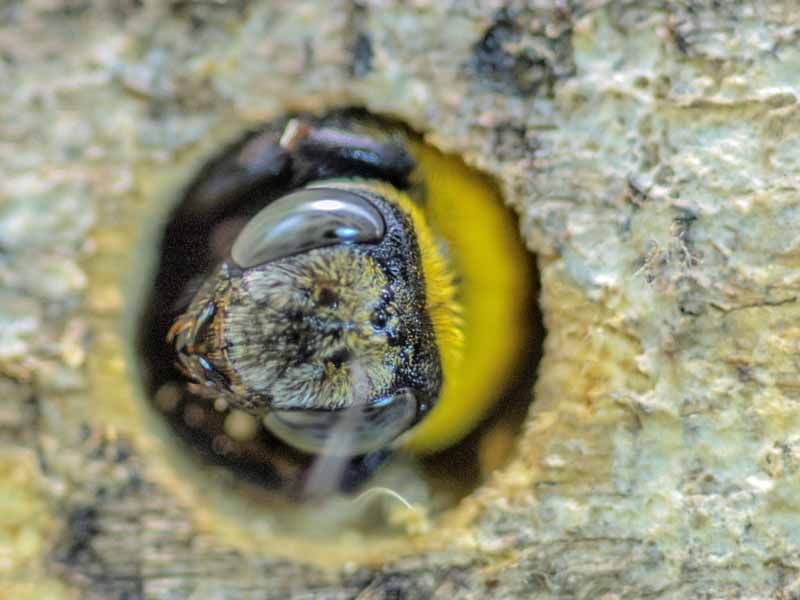
Look closely around some entry holes and you may spot a curious pattern. Little semicircular scrapes spread out like a tiny paper fan from the opening.
These marks come from the bee’s boring work. As she starts a new hole, she rotates and chews in a sweeping motion, leaving faint grooves in the surface.
On softer woods, the fan shape can be easy to see. On harder boards, it might look more like light scratches.
Why does this matter when you already see a hole? Fan marks help you separate carpenter bee activity from other damage.
Woodpeckers leave rough, ragged gouges. Nail holes are tiny and straight.
Bee work looks tidy, round, and surrounded by those smooth sweeping lines.
Fan patterns are especially handy for catching brand new nests early. A shallow starter hole with fresh scrapes may mean a bee just began digging, giving you a chance to step in before she finishes.
Run a fingertip lightly across the area. Fresh marks feel slightly raw and fuzzy, while older ones feel smoother and sun-bleached.
That small detail can reveal how recent the visit was.
7. Weakened or Sagging Wood
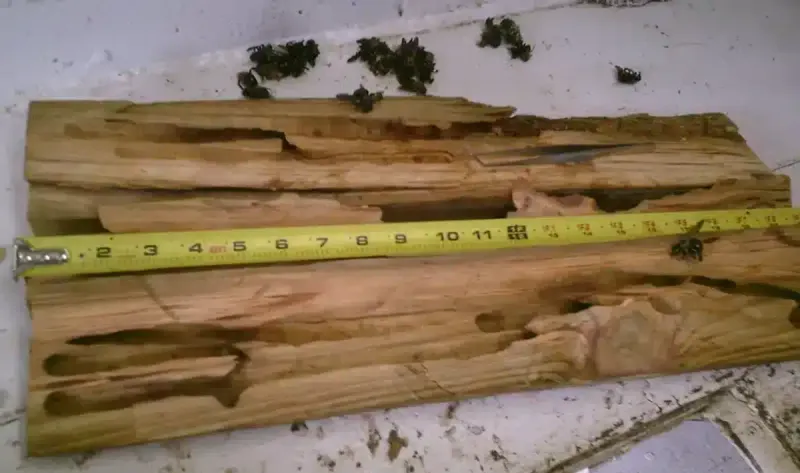
One season of bees rarely brings down a porch. Several seasons, though, can turn a sturdy railing into something that wobbles when you lean on it.
Inside the wood, each female carves a gallery with small chambers for her young. Over time, those tunnels branch and stretch, and a beam that looks solid outside can become hollow in spots.
Railings, steps, fascia boards, and pergola rafters are common trouble zones.
Watch for warning signs like sagging boards, new cracks running along the grain, soft spots when you press with a screwdriver, or pieces that sound hollow when tapped. Arizona heat already dries and shrinks wood, so tunneling can make splitting even more likely.
Another sneaky issue shows up later. Larvae inside the wood may attract woodpeckers, which tear open the surface to reach a snack.
That extra damage can speed up decay.
If a structural piece feels weak, it is wise to have it checked and possibly replaced. Filling holes, sanding, and sealing or painting exposed wood can make your patio much less inviting to future nesters.
Safety comes first, especially for railings and steps people use every day.
8. Bees Returning Year After Year
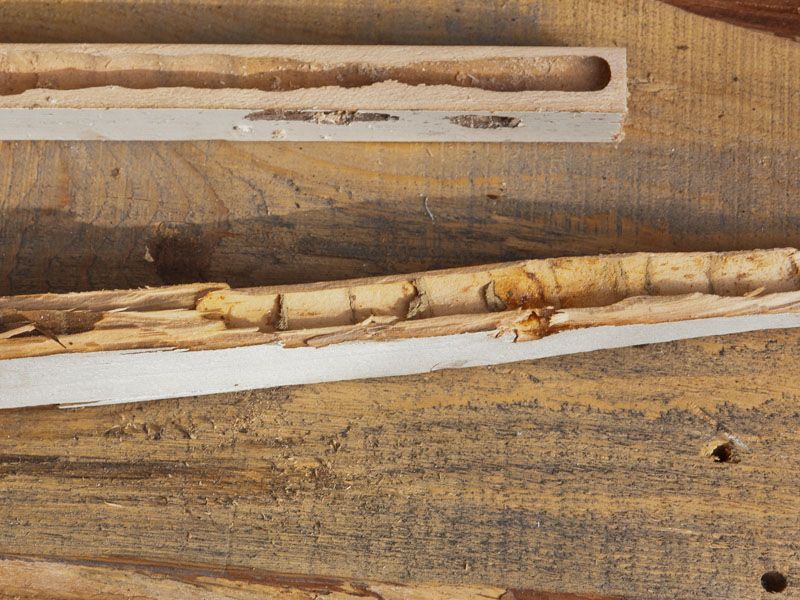
Carpenter bees are loyal, almost sentimental, about their favorite wood. If your patio hosted a nest last spring, odds are good you will see visitors again this year.
New generations often reuse old tunnels or drill fresh ones right next door. Over several seasons, a single beam can end up with a cluster of holes and a growing maze inside.
That repeated activity is what turns a minor nuisance into real damage.
Keep a simple note on your phone with photos of each hole and the date you found it. Next spring, compare.
More holes in the same area is a clear sign the bees have claimed that spot.
Here is a gentler approach many Arizona homeowners like. Seal and paint the wood they keep targeting, then offer a different home nearby.
A dedicated bee block or untreated wood post set away from the house, near native bloomers like desert willow, penstemon, or globe mallow, may help steer them elsewhere.
These bees are valuable pollinators for desert gardens. Giving them an alternative can protect your patio while keeping a hardworking helper in your yard.