How To Choose The Right Mulch Depth For California Trees And Shrubs
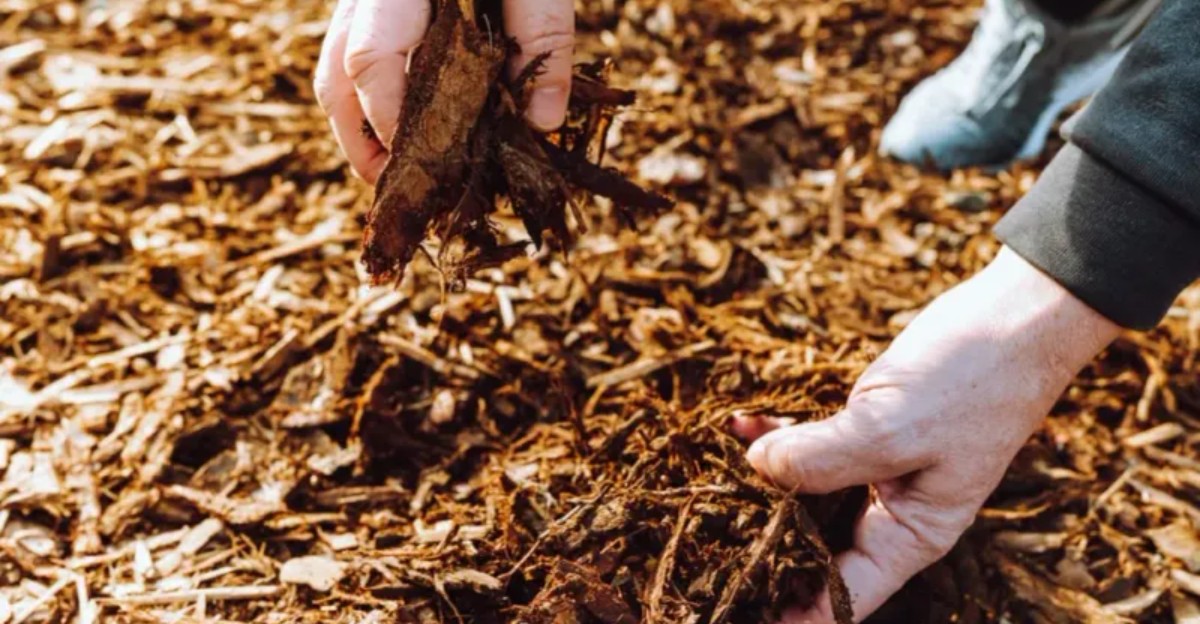
Mulch ranks among the most useful tools in a California garden. It saves water, blocks weeds, and protects roots through long, dry summers.
Depth, though, makes all the difference. Too little leaves soil exposed, while too much can quietly harm the very trees and shrubs it’s meant to protect.
Towering cones of bark piled against trunks are a common sight in yards and parking lots across the state.
They look generous, yet that extra material often causes more problems than it solves.
A few simple guidelines about thickness, material type, and trunk clearance help mulch do its job well. Those small adjustments can lead to healthier roots and stronger plants for years.
Two To Four Inches Is The Standard Target
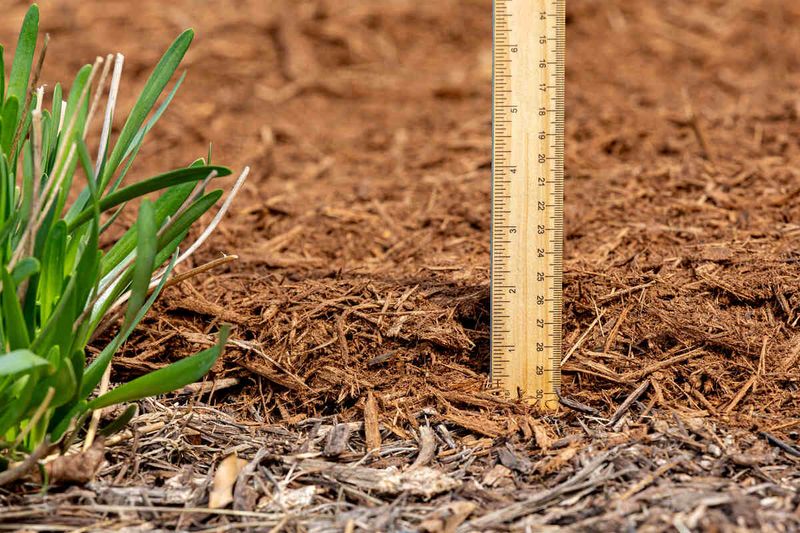
A ruler pushed into the soil beside a favorite oak tells a lot. Mulch reaching somewhere between the 2-inch and 4-inch marks hits the sweet spot University of California experts recommend for most trees and shrubs.
That range isn’t random. A layer this thick blocks enough sunlight to keep many weed seeds from sprouting and slows the evaporation that dries out soil during hot California summers.
It also keeps soil temperatures steadier. Roots near the surface stay more comfortable when afternoon heat bakes the ground in July and August.
Guessing by eye is where trouble often begins. A pile that looks modest from standing height can easily measure six or seven inches deep.
A ruler or a paint stirrer marked in inches makes checking easy. For many adults, the span from the first knuckle to the fingertip is also roughly an inch.
Spreading wide rather than tall works best. Ideally, the layer covers the area under the canopy, or at least a circle several feet across for young trees. Most feeding roots grow outward rather than straight down.
A quick check after raking catches uneven spots. Mulch tends to clump where it was dumped, leaving some areas too deep and others bare.
Measuring in three or four places takes less than a minute. That small effort can save plants from plenty of stress later in the season.
Thicker Layers Can Block Air To Roots
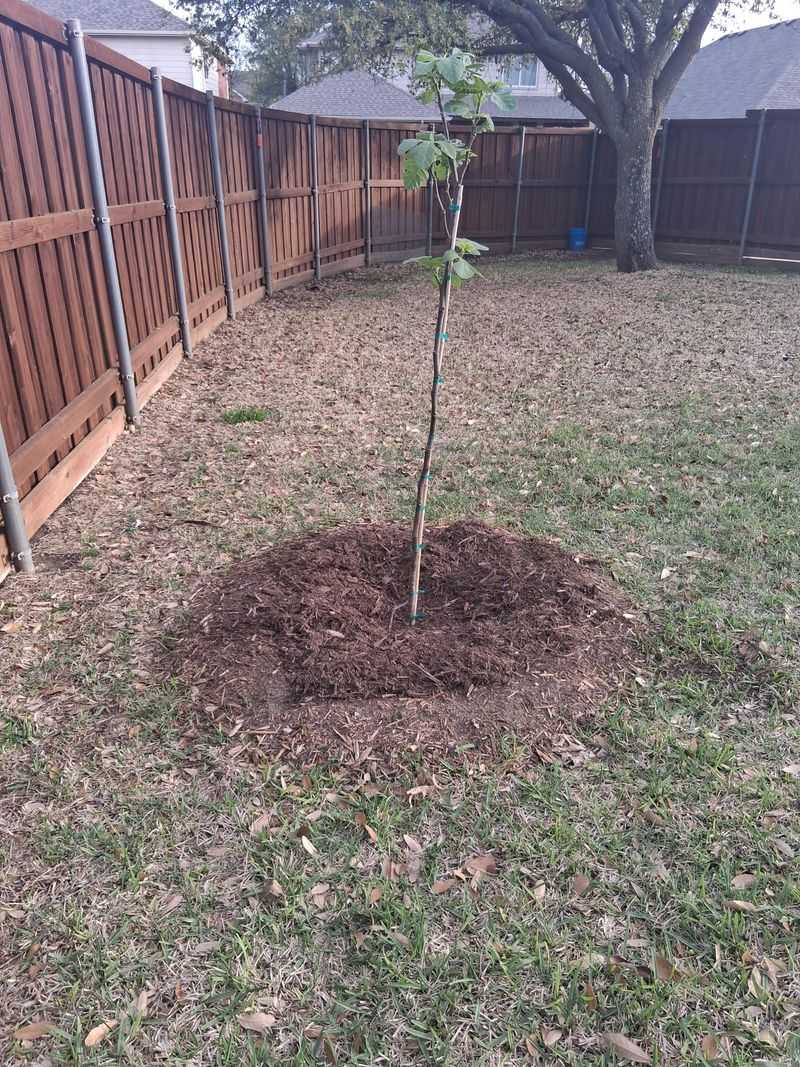
Roots breathe, even though few people think about it. Underground cells need oxygen to turn sugars into energy, and that oxygen moves through tiny air pockets between soil particles.
Mulch piled beyond about 4 inches, especially fine material, can act like a heavy blanket. Air struggles to pass through, and the soil underneath may stay soggy after watering or winter rains.
Roots sitting in wet, airless soil can weaken over time. They also become easier targets for rot-causing organisms.
Water faces its own problem with a deep layer. A light sprinkle or short drip cycle may soak into the mulch without ever reaching the soil.
During a dry California summer, that can mean faithful watering while the roots below stay thirsty. The plant looks underwatered even though the hose has been busy.
Roots sometimes grow up into a thick mulch layer in search of air and moisture. Those shallow roots dry out quickly and break easily, leaving the plant less stable and more sensitive to heat waves.
Your California Garden Changes Every Week. Your Plan Should Too.
Gardening in California changes quickly throughout the season. Every Friday you’ll receive a simple weekly plan showing exactly what to plant, prune, fertilize, harvest, and protect so you never miss the right timing.
Yellowing leaves, thin growth, or a sour smell from the mulch can all point to too much depth. Raking the layer back to the 2-to-4-inch range and letting soil dry slightly between waterings usually helps.
The fix is simple and inexpensive. Extra mulch pulled away can be spread over bare spots elsewhere in the yard, where it does some good instead of harm.
Keep Mulch Away From The Trunk Itself
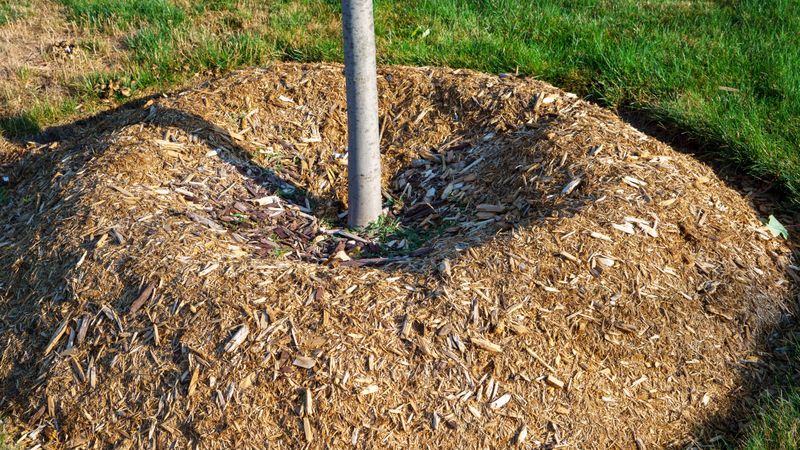
Almost any California shopping center parking lot offers an example: a tree rising out of a tall cone of bark, like a tiny volcano. Arborists even call this habit volcano mulching, and UC ANR experts warn against it.
Trunks aren’t built to stay wet. Bark protects living tissue just underneath, and damp mulch pressed against it day after day can soften it and lead to decay.
That opens the door to fungal diseases, crown rot, and insects that favor moist, hidden spaces. Problems can develop for months before anyone notices.
Rodents add another concern. Voles and mice may tunnel into a mulch mound and chew on bark out of sight. In some cases, the damage circles the trunk and cuts off the flow of water and nutrients.
The solution is easy to remember. A ring of bare soil around the base, several inches wide for shrubs and young trees and wider for mature ones, keeps the trunk dry.
Many UC sources suggest keeping mulch roughly 6 inches or more from the trunk. Exact distances vary a bit by publication.
The ideal shape looks more like a donut than a volcano. Mulch should lie flat and even across the root zone, with a clear center where the trunk meets the soil.
The root flare, where the trunk widens as it enters the ground, should stay visible. A hidden flare can be uncovered by gently brushing away mulch and soil by hand.
Coarser Mulch Needs A Slightly Deeper Layer
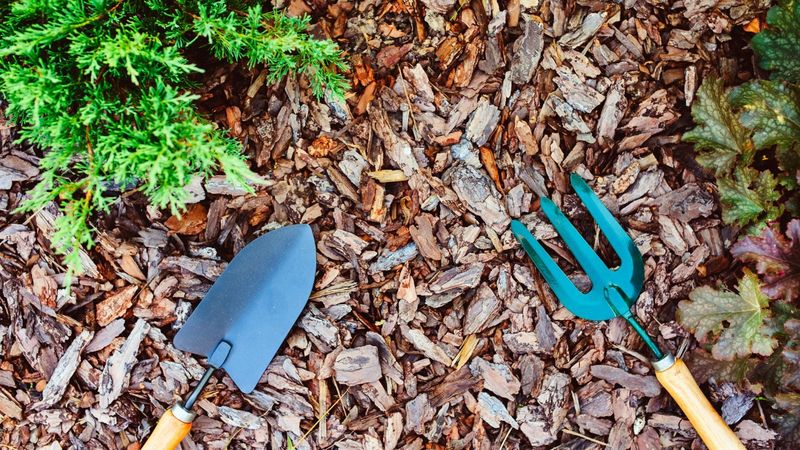
A simple jar experiment shows the difference. A cup of wood chunks has big open gaps between pieces, while a cup of fine compost packs together tightly.
Those gaps explain why coarse mulch, such as arborist wood chips, shredded bark, or bark nuggets, can go on a little thicker. Air and water slip through the large spaces easily.
A layer near the top of the range, around 3 to 4 inches, usually stays loose and breathable. UC ANR guidance often points to coarse wood chips as a great choice for trees and shrubs for this reason.
Bigger pieces also break down more slowly. A thicker layer of chips can protect soil longer before a top-off is needed.
Coarse mulch resists Santa Ana winds better than lightweight shredded leaves, too. That makes it a smart pick for exposed slopes and open yards.
Slightly deeper doesn’t mean unlimited, though. Even chunky material piled 6 or 8 inches deep can trap moisture near the soil surface and slow water from reaching roots. Around 4 inches makes a sensible upper limit.
Free arborist chips are often available from local tree services, and many California cities offer mulch giveaways. As the chips slowly break down, they feed helpful fungi and earthworms.
Trunk clearance still applies with coarse material. Chunky bark against the trunk causes the same moisture problems as any other mulch.
Fine Mulch Works Well At A Shallower Depth
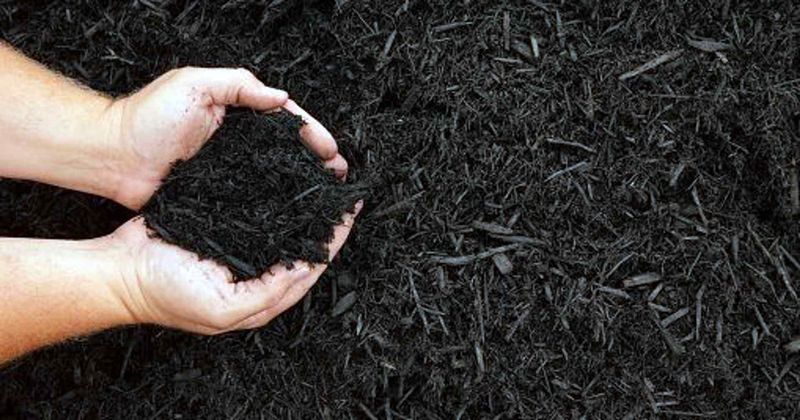
Compost, shredded leaves, sawdust, grass clippings, and finely ground bark all behave a bit like flour. Their tiny particles settle and press together after a few waterings.
Because those particles fit so snugly, a thick layer can form a crust that sheds water instead of soaking it up. Underneath, oxygen has a harder time reaching roots.
That’s why finer materials do best toward the shallow end of the range, roughly 2 inches. Some gardeners go even thinner with compost.
Fine mulch still brings real strengths. It breaks down quickly, adding organic matter and nutrients to the soil. Shrubs in sandy Southern California soil or heavy Central Valley clay both benefit as it works its way down.
Fresh grass clippings deserve a special warning. A thick pile can turn slimy and smelly, heat up, and mat into a waterproof layer.
Thin spreading, a few days of drying first, or mixing with coarser material keeps clippings in check. They work best as a supporting ingredient rather than the main event.
Layering offers a handy compromise. A thin coat of compost topped with coarser wood chips gives roots nutrients while keeping the surface loose. The combined thickness should still stay within 2 to 4 inches.
Fine material also blows around easily, so it suits sheltered beds better than windy slopes. An occasional raking breaks up any crust and helps water and air move freely again.
Reapply As The Layer Breaks Down
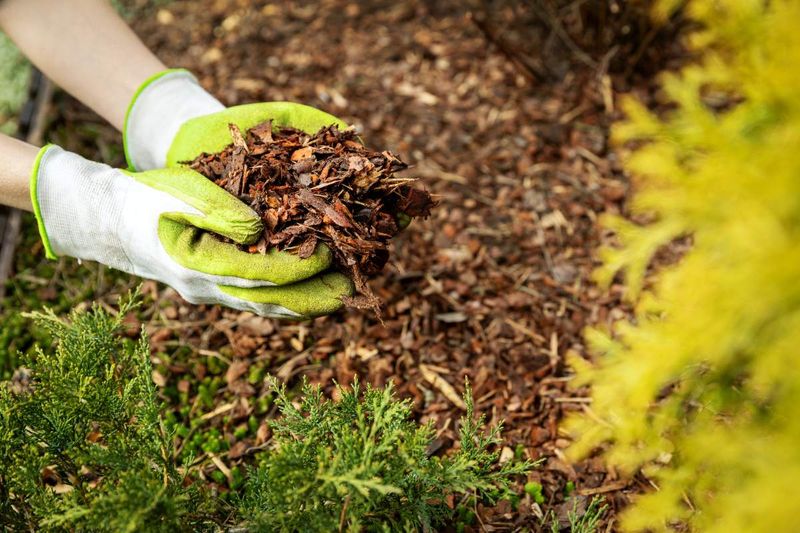
Every mulch layer is slowly disappearing. Soil insects, worms, fungi, and bacteria feed on it daily, while California sun and wind help wear it down too.
A layer that measured 4 inches last spring might be closer to 2 inches by fall. That breakdown is actually a gift, since decomposing mulch feeds the soil and improves its structure.
A thin, patchy layer stops blocking weeds and holding moisture as well, though. That’s the signal to add more.
Timing depends on the material. Fine mulches like compost or shredded leaves may vanish within a year, while coarse wood chips can last two years or longer.
Rather than following a calendar, a quick measurement once or twice a year works best. It shows exactly how much material remains.
An old layer still sitting at 3 inches doesn’t need another 3 on top. Adding only enough to bring the total back into the 2-to-4-inch range prevents overloading.
A quick fluffing with a rake helps before fresh material goes down. Compacted, matted layers can block water, and loosening them gives new mulch a better base. Crusty or moldy mats are best partly removed first.
Many California gardeners refresh mulch in late fall or early spring. Fall applications help hold winter rain in the soil, while spring top-offs prepare plants for summer heat.
Each round is also a good moment to recheck trunk clearance.
Correct Depth Beats Simply Adding More
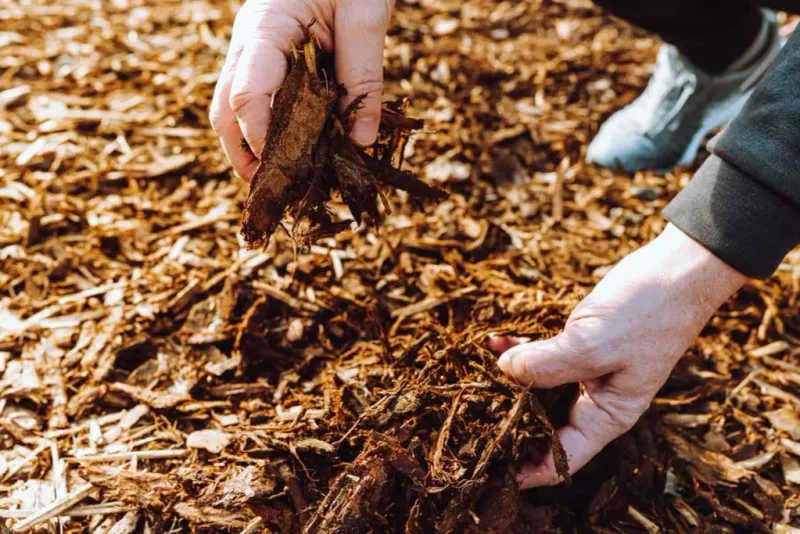
An old gardening saying claims that a little is good, so a lot must be better. With mulch, that idea causes more trouble than almost any other mistake.
Towering cones of bark usually start with good intentions. The extra material, however, keeps bark damp, cuts off air to roots, and stops water from reaching the soil.
A flat, 3-inch ring of wood chips with a clear space around the trunk tells a different story. That tree tends to stay healthier, and its owner spends less money along the way.
Getting depth right mostly comes down to a few quick checks. Measuring the layer, matching depth to the material, keeping the trunk clear, and topping off only when the layer thins cover nearly everything.
Coarse chips can sit near 4 inches. Fine compost belongs closer to 2, and layered combinations should stay within the full range.
Correct depth saves cash and labor, too. Bags of mulch add up fast, and spreading less material means fewer trips to the garden center and less hauling.
A sore back is one garden souvenir nobody needs. Using the right amount keeps both plants and gardeners happier.
A ruler makes a great companion before the next bag gets opened. One minute of measuring shows whether trees need more mulch or simply a little less, and that small habit pays off for years.