Why Your White Pine Is Turning Yellow From The Inside Out This Fall
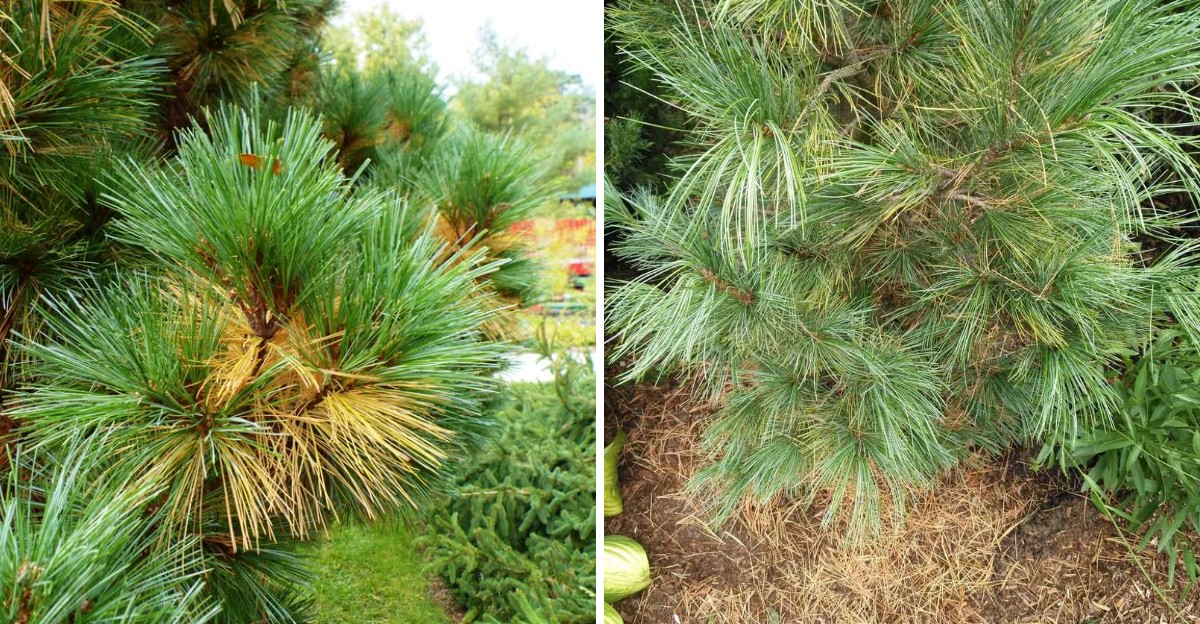
Yellow needles creeping in from the trunk out, and your first instinct is probably panic. Ease up, this one’s often nothing.
Ohio white pines drop their oldest needles every autumn, and that shedding starts closest to the trunk before working outward. New growth stays green the whole time.
Mistake that normal cycle for disease, and you’ll find yourself grabbing shears over something the tree was always going to do anyway.
A real problem looks different though, showing up in a pattern or timing that doesn’t match the usual seasonal drop.
Study which needles are turning before jumping to conclusions. Your tree’s probably just doing its yearly housekeeping, nothing more.
1. Shedding Inner Needles Each Fall Is Normal
Think of it as your pine doing a bit of fall cleaning. Every autumn, white pines let go of their oldest needles, much like an oak drops its leaves.
Shorter days and cooler nights send a signal to the tree. It pulls useful nutrients out of the older needles, and then those needles turn yellow and fall.
The tree saves energy by not keeping worn-out parts around through winter.
Plenty of Ohio homeowners panic the first time they see it. A tree that stayed green all summer suddenly looks patchy and gold inside, which feels alarming.
The truth is that this change usually shows up between September and November, right on schedule.
Many conifers follow this same yearly rhythm. Some years you barely notice it, while other years it looks like a full makeover.
Either way, the process is part of a healthy life cycle.
So what should you do? Mostly, enjoy the show and let the needles fall.
Those soft brown needles make a fine natural mulch under the tree or around acid-loving shrubs.
Resist the urge to fertilize or prune in a hurry. Extra feeding in fall can push tender growth that winter cold may damage.
A calm watch is the best plan for now.
2. Only Last Year’s Needles Turn Yellow
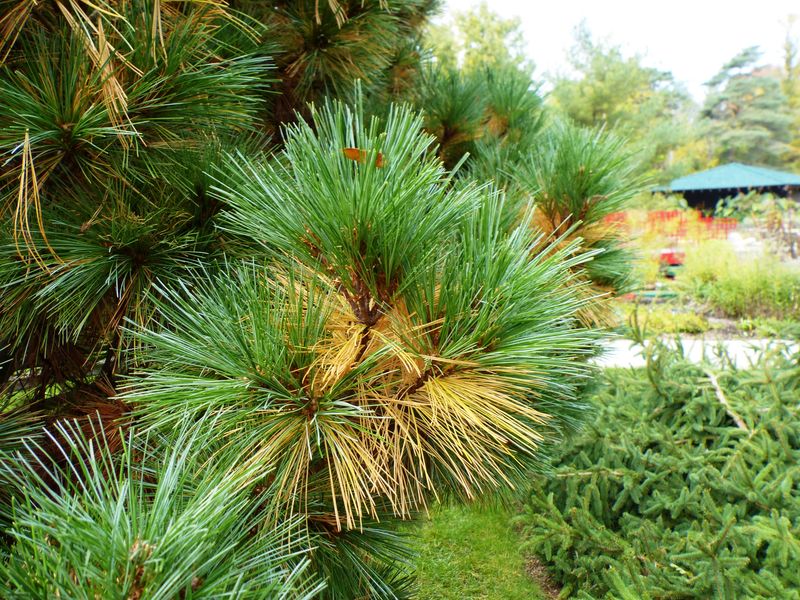
Here is a fun detective trick you can try in your own yard. Grab a low branch and follow it from the tip back toward the trunk.
Near the end, you should see soft, bright green needles in bundles of five. Those grew this year and plan to stick around.
Farther back, the needles are older, and those are the ones wearing yellow.
White pines usually hold onto their needles for about two to three years. After that, the oldest set gets retired.
Because new growth happens at the tips, the oldest needles sit deep inside the tree, close to the trunk.
Did you know? Eastern white pine is the only native pine in Ohio with needles grouped in fives.
Some people remember it by counting the five letters in the word white.
This age pattern is the biggest clue that things are fine. If the yellow stays on the inside and the tips look fresh, your tree is following its normal timeline.
Your Ohio Garden Changes Every Week. Your Plan Should Too.
Gardening in Ohio changes quickly throughout the season. Every Friday you’ll receive a simple weekly plan showing exactly what to plant, prune, fertilize, harvest, and protect so you never miss the right timing.
Take a quick photo of a few branches each fall. Comparing pictures from year to year helps you spot what is normal for your own tree.
You will feel a lot more confident the next time autumn rolls around and the gold appears.
3. The Whole Tree Yellows Evenly, Top To Bottom
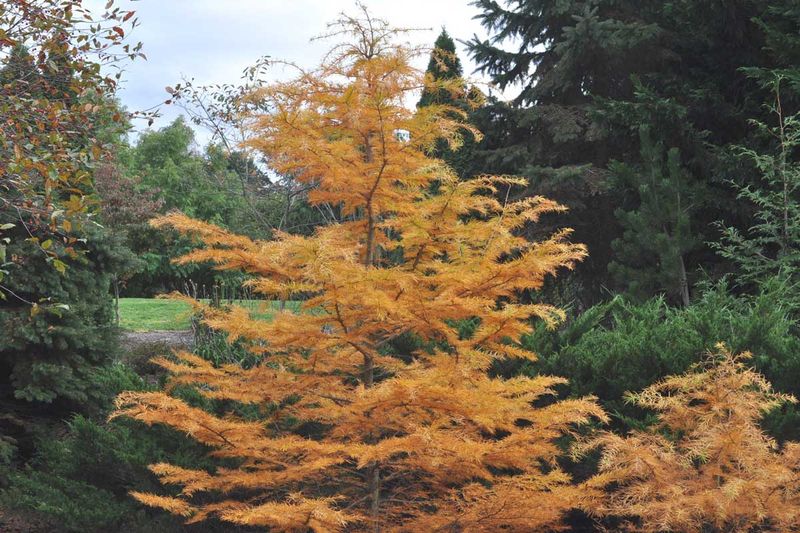
Step back about twenty paces and look at the entire tree at once. Seeing the big picture tells you more than staring at one branch.
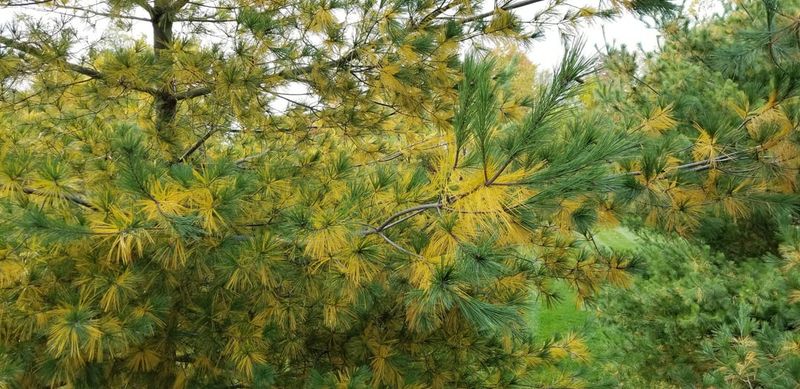
With normal fall shedding, the yellow shows up evenly all over. The top, middle, and bottom of the tree look about the same.
The inner needles may turn yellow, tan, or even a reddish brown, but the pattern stays balanced on every side.
Meanwhile, the outer tips keep their green coat. From a distance, the tree can look like it has a golden lining tucked under a green jacket.
That steady, even look is a sign of a tree that is simply aging its foliage on time.
Uneven color tells a different story. If only one side, one branch, or just the top is yellow, something else may be going on.
Roots, soil, or a pest might be bothering that spot.
A simple walk around the tree takes just a minute or two. Check it from the north, south, east, and west so you do not miss anything.
Morning light works well because it shows true colors without harsh glare.
If everything looks the same from every angle, give yourself a pat on the back. Your pine is right where it should be this season.
4. Drought Can Make The Show More Dramatic
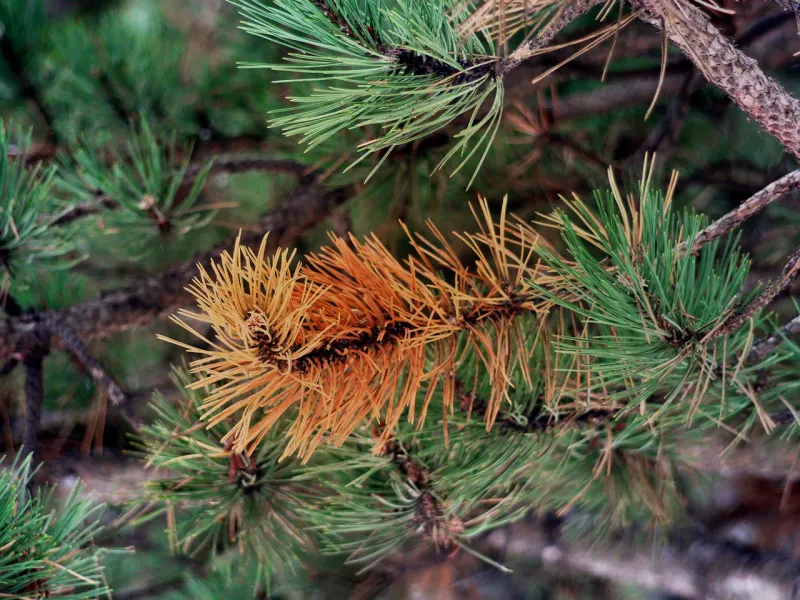
Remember those long, hot weeks when the lawn turned crunchy and the rain gauge sat empty? Your pine remembers too.
When the soil dries out, white pines feel the stress. One way they cope is by dropping more of their older needles.
Fewer needles means less water lost through the foliage, which helps the tree get by on a tight budget.
The result is a bolder fall display than usual. Instead of a light sprinkle of gold, you might see heavy yellowing that makes the tree look thin.
It can be startling, but it is often the same normal process, just turned up louder.
White pines prefer moist, well-drained soil, so dry Ohio summers can be tough on them. Trees planted near hot driveways or in compacted yards tend to struggle the most.
You can help by watering deeply during dry spells, even into fall. A slow soak once a week near the outer edge of the branches works far better than a quick daily sprinkle.
Keep watering until the ground freezes if rain stays scarce.
A layer of mulch two to three inches deep also helps hold moisture. Keep it a few inches away from the trunk.
Your pine will thank you with a fuller look next year.
5. A Big Growth Year Means More Needles To Drop
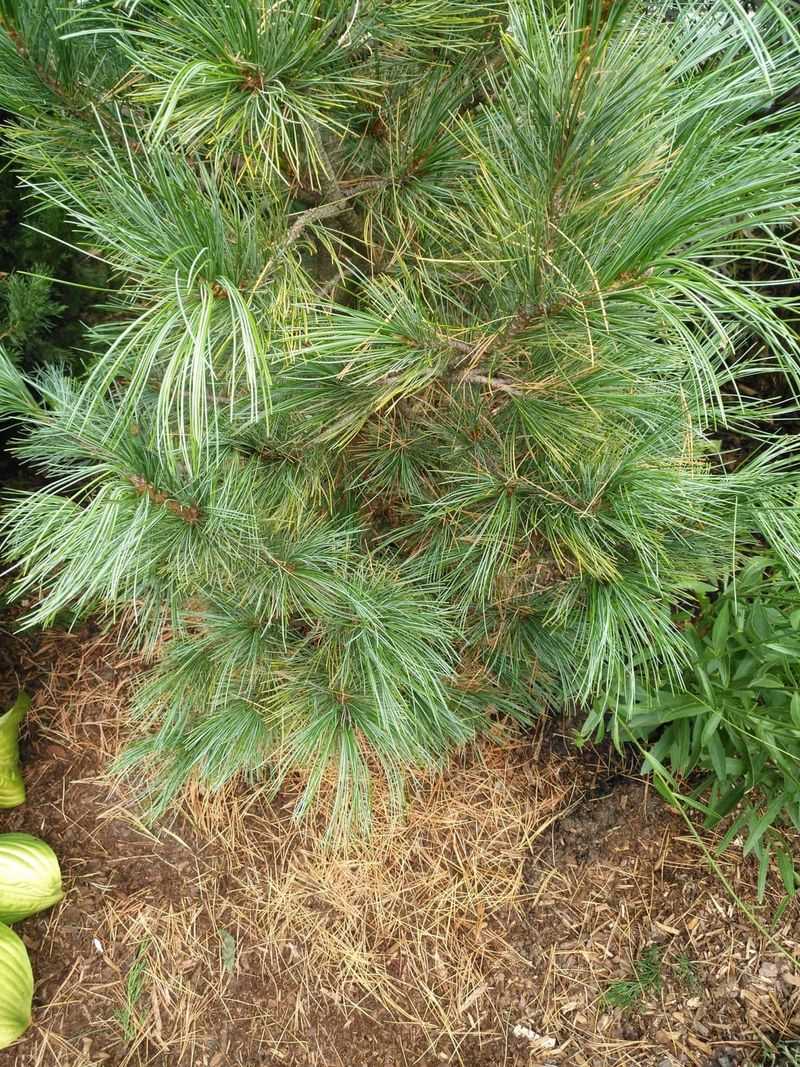
Picture a closet packed with clothes from a big shopping spree. Eventually, some of those clothes have to go, and trees work much the same way.
When a white pine has a great growing season, with plenty of rain and sunshine, it puts out lots of new needles. A couple of years later, all those needles reach retirement age together.
That means a larger pile of yellow needles when fall arrives.
On the flip side, a slow growth year produces fewer needles. When those age out, the fall show is quieter.
So the amount of yellow you see often depends on the weather from two or three years ago.
This is why your neighbor’s pine might look bright gold while yours looks only lightly touched. Each tree has its own history of good years and lean years.
Fun fact: White pines can grow two feet or more in a single year when conditions are right. That kind of speed creates a lot of foliage to eventually shed.
So if this fall looks extra heavy, think back. Was there a wet, mild spring a couple of years ago?
If so, your tree may simply be clearing out the closet from that busy season.
6. One Strong Wind Can Strip The Yellow Needles
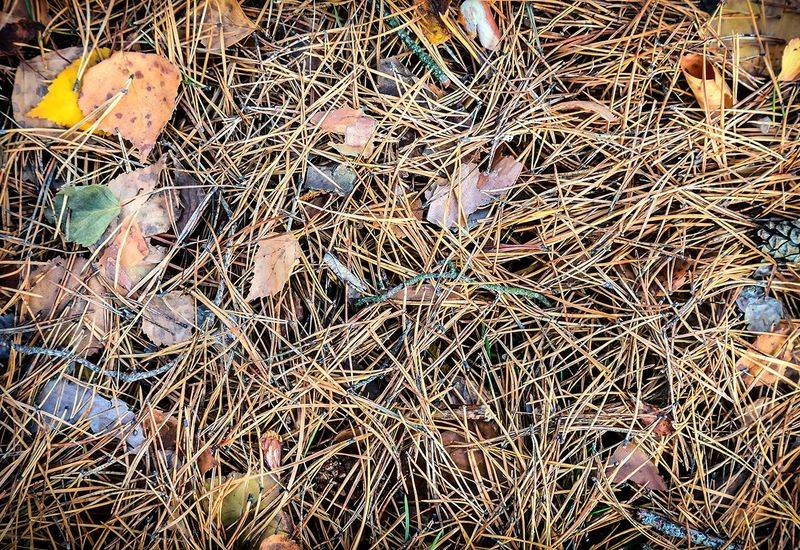
Monday the tree looks golden inside. Tuesday a storm rolls through, and by Wednesday your lawn is buried in a tan carpet.
Once older needles turn yellow, they loosen their grip on the branches. They are just hanging on, waiting for a nudge.
A strong gust of wind gives them that push, and they rain down all at once.
That sudden drop can make it seem like something bad happened overnight. In reality, the wind just sped up what the tree had already planned.
The needles were ready to go anyway.
After the storm, take a peek at the branches. The inside may look a bit bare, but the tips should still hold their healthy green bundles.
That is exactly what you want to see.
Now for the fun part, what to do with all those needles. Pine needles make excellent mulch for garden beds, paths, and plants like azaleas and blueberries.
Some folks call this pine straw, and garden centers actually sell it.
You can rake them into beds or leave a layer under the tree. They break down slowly and help hold moisture in the soil.
Just keep thick piles off your lawn so the grass can still breathe and soak up sun.
7. Yellow Tips Or Random Patches Signal Trouble
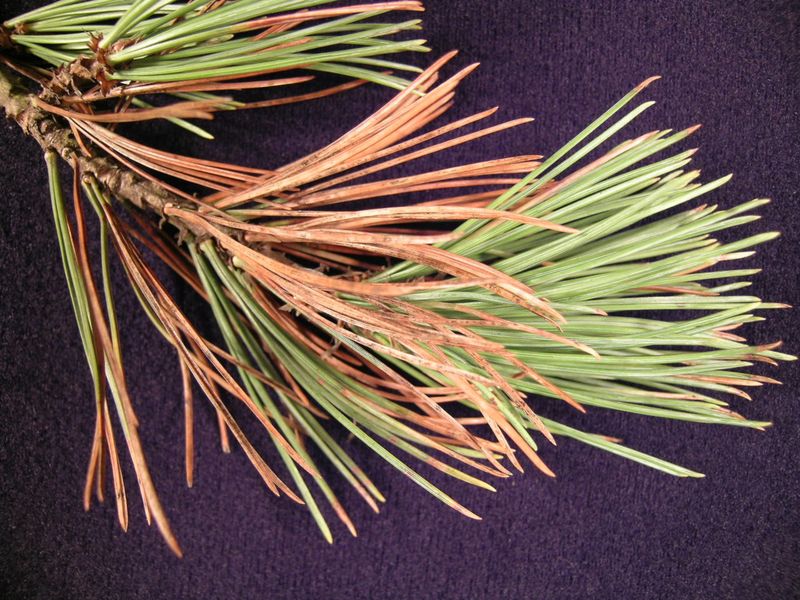
Now let’s switch gears and talk about the warning signs. Not every yellow pine is just taking care of business.
If the yellow shows up at the branch tips, on this year’s needles, pay attention. Random patches, one dull side, or whole branches going brown are also red flags.
Normal shedding sticks to the inside, so these patterns point to a real problem.
Many things can cause this kind of trouble. Poor drainage, packed soil, high soil pH, or root damage from digging can all stress the tree.
Road salt spray along driveways and streets is another common culprit in Ohio winters.
Pests and diseases join the list too. White pine needle disease, white pine blister rust, pine needle scale, and spider mites can each leave odd yellow marks.
Tiny white specks on needles may mean scale insects.
Look closely with a magnifying glass if you can. Check for bumps on the bark, oozing sap, specks on needles, or fine webbing.
Snap a few clear photos to share with an expert.
Your local OSU Extension office is a great free resource. A certified arborist can also visit and test the soil or inspect the tree.
Catching problems early gives your pine its best shot at bouncing back.
8. Yellowing In July Points To Something Else
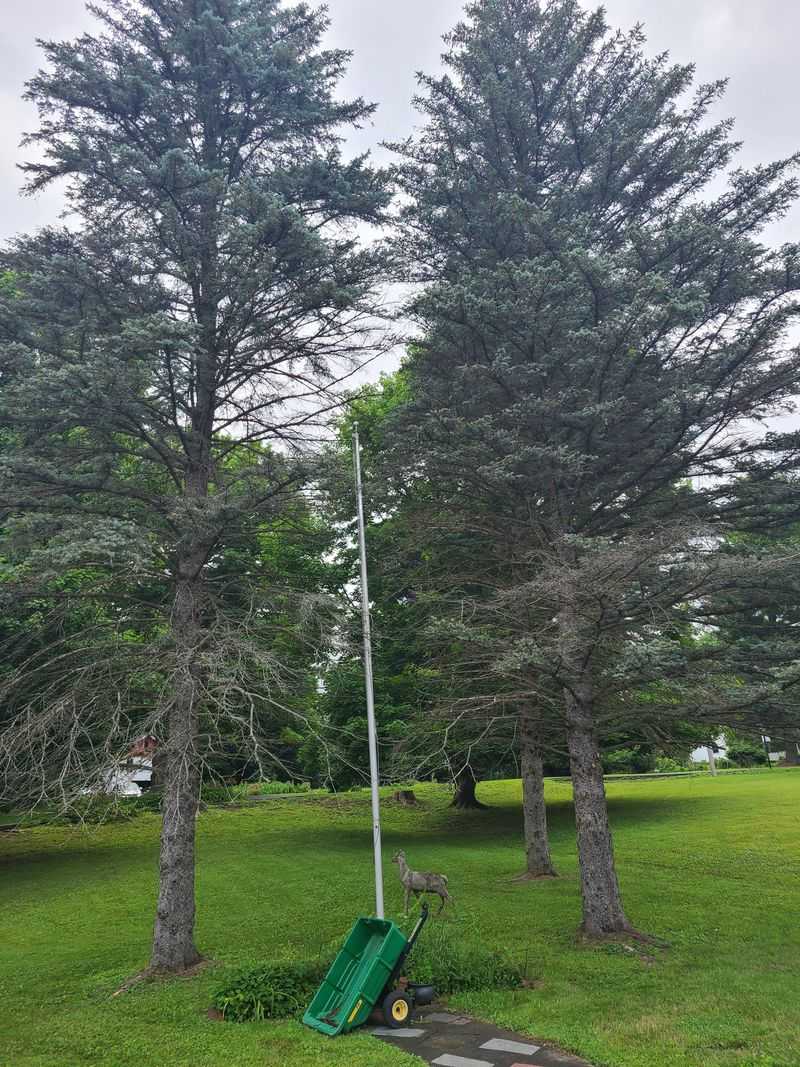
Timing matters a lot here. Fall gold is expected, but summer gold is a whole different conversation.
If your white pine starts turning yellow and dropping needles in June or July, it is not the usual seasonal routine. The tree should be lush and green in midsummer.
Early color often hints at a health issue hiding underneath.
One common cause is white pine needle disease. It comes from a group of fungi that infect needles during wet spring weather.
By early summer, the infected needles yellow, turn brown, and fall well ahead of schedule.
This disease has spread across the Northeast and Great Lakes region in recent years. Rainy springs give the fungi just what they need to grow and spread.
To help a tree struggling with summer yellowing, start with good care. Water during dry spells, mulch the root zone, and rake up fallen needles to cut down on fungal spores.
Better airflow by thinning crowded plants nearby can help too.
Write down when you first notice the color change. That simple note helps experts figure out what is happening.
Reach out to an arborist or your county Extension office for a proper diagnosis. Early action makes a real difference with summer problems.
9. Arborvitae And Hemlock Shed Needles Too
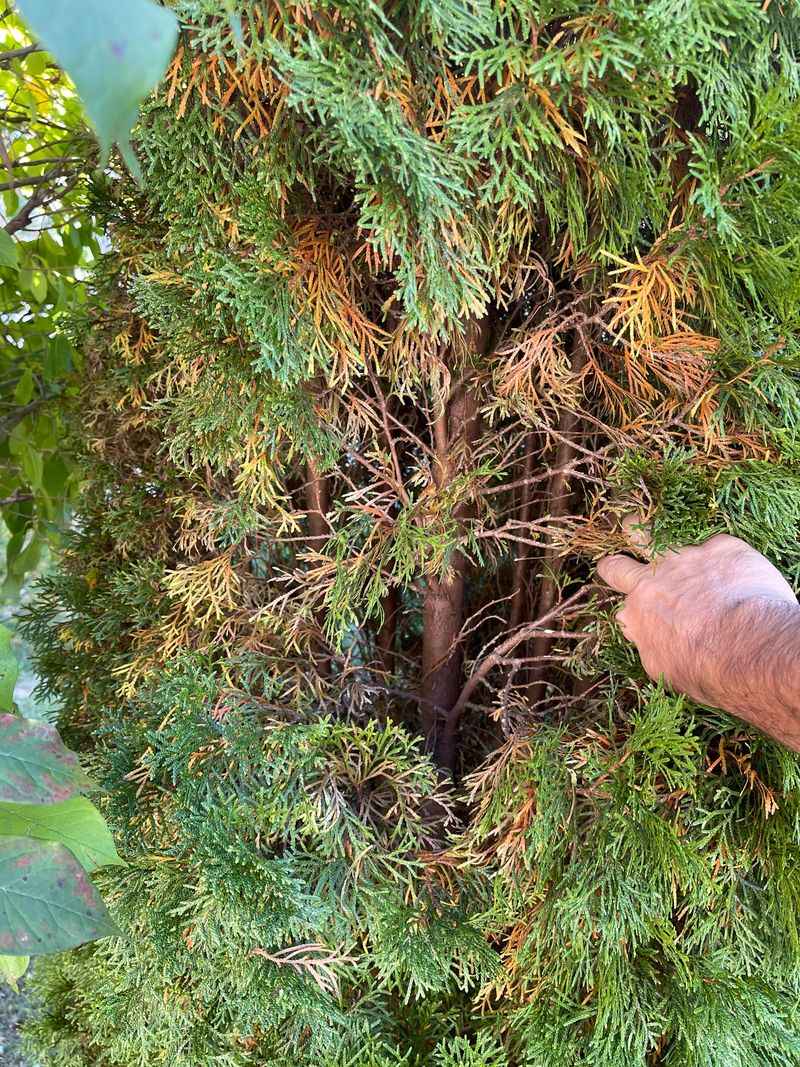
Your pine is not alone in this autumn ritual. Look around the neighborhood, and you might spot other evergreens doing the same thing.
Arborvitae, those tall green shrubs often used as privacy screens, shed old foliage every fall. Their inner branchlets usually turn brown rather than yellow.
Many people think their hedge is in trouble, but it is simply clearing out older growth.
Hemlocks join the party too. Their older interior needles turn yellow and then brown before dropping.
The fresh needles near the branch tips stay soft and green.
The same rules apply to these trees as to your pine. Inside shedding in fall is fine.
Browning at the tips, in summer, or in odd patches deserves a closer look.
A quick bonus tip for hemlock owners in Ohio: check the undersides of branches for tiny white woolly tufts. Those can be hemlock woolly adelgid, a pest worth reporting to experts quickly.
Knowing that many evergreens share this habit can bring real peace of mind. You can stroll your yard each fall without a worried feeling.
Instead, you can appreciate how these hardy plants refresh themselves, ready to stand green and proud through the snowy months ahead.