That Bright Red Vine Climbing Your Georgia Trees This Fall Could Be Poison Ivy
Bright red leaves winding through a tree can look like ordinary fall color until you notice they belong to a climbing vine.
Poison ivy does not stay green all year. Its leaves can turn vivid red, orange, or yellow as temperatures cool.
That seasonal color can make the vine easier to notice, but identifying it correctly still matters.
In Georgia, poison ivy may climb tree trunks using small aerial rootlets that give older vines a hairy appearance. Check the leaves and vine carefully before touching anything.
Do not pull an unfamiliar red vine with bare hands just because the foliage looks attractive.
Poison ivy can still cause a skin reaction after its leaves change color. Recognizing the vine before handling it can save you from an unpleasant surprise.
1. Fall Color Can Make This Climbing Vine Suddenly Stand Out
All summer long, poison ivy blends into the green backdrop of a Georgia yard. Once October and November arrive, its leaves can flash bright red, orange, or yellow almost overnight.
That sudden color is often the first time people notice a vine they walked past for months.
Poison ivy is the common name for Toxicodendron radicans, a native plant found across most of the eastern United States. Its sap contains an oily compound called urushiol, which causes an itchy rash in most people who come in contact with it.
Fall color varies from plant to plant, so not every vine turns the same shade at the same time.
Sun exposure, weather, and the health of the plant can affect how bright the leaves get. A vine in full sun on a fence might turn scarlet, while one in deep shade may fade to a dull yellow.
Bright color can tempt kids to pick a pretty leaf for a school project or a fall wreath.
Take a few minutes this season to walk your property and look up at your tree trunks. Mark any colorful climbing vines with a bit of flagging tape so you remember where they are later.
Spotting it now gives you time to plan removal before winter hides the leaves.
2. Three Leaflets Offer The Most Familiar Identification Clue
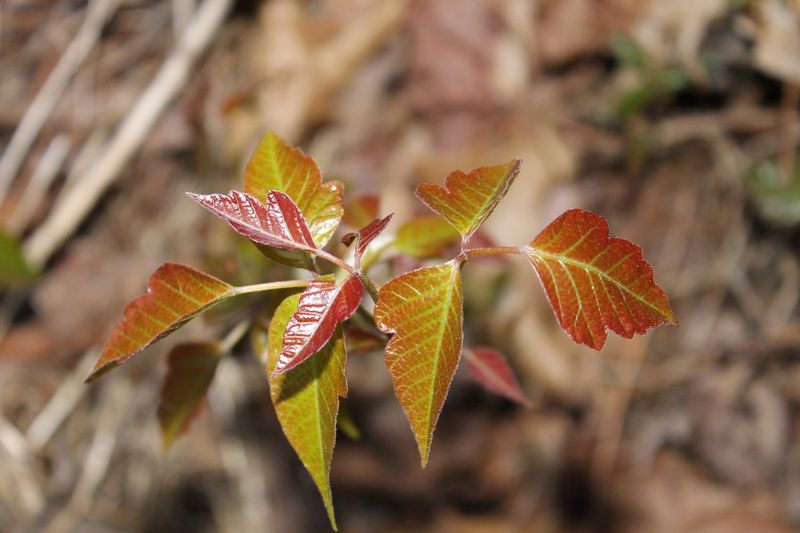
Leaves of three, let it be. That old saying has stuck around because it works well as a first clue.
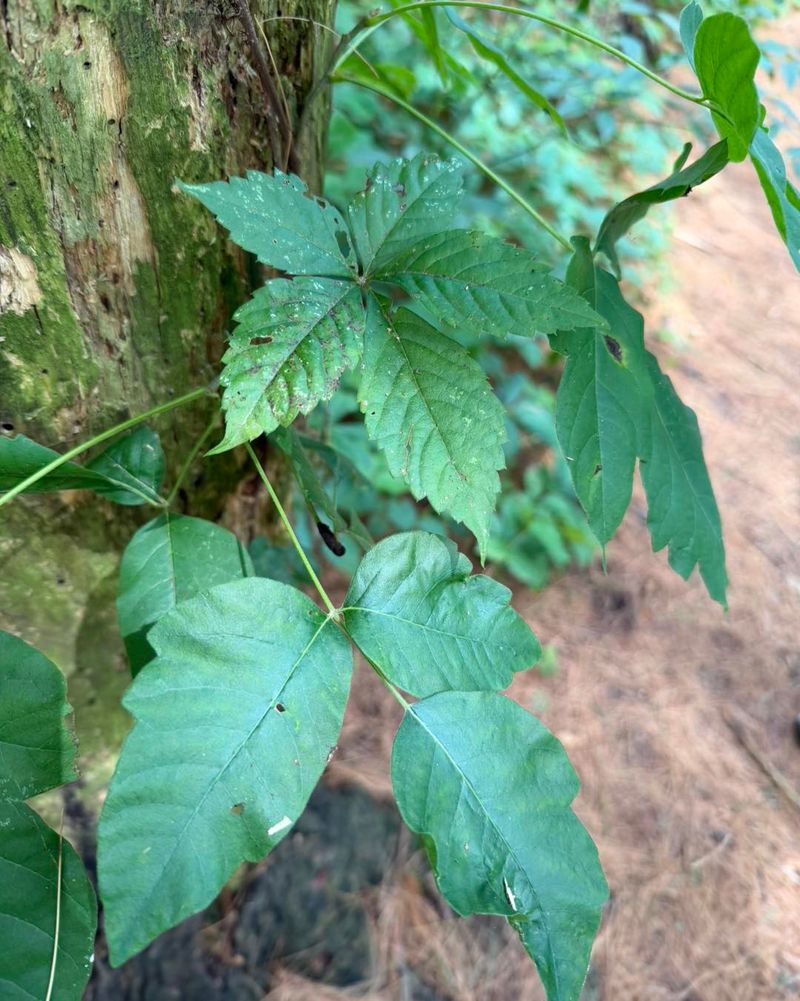
Each poison ivy leaf is made of three smaller leaflets attached to one stem.
Look closely at the middle leaflet, and you will usually see that its little stalk is longer than the stalks of the two side leaflets. Gardeners often find this detail more helpful than counting alone.
Edges can be smooth, slightly toothed, or a bit lobed, sometimes on the same vine.
Shape changes can confuse people, especially across different parts of Georgia where growing conditions vary. Some leaflets look shiny, while others look dull, so gloss is not a dependable test.
Hold off on calling every three-part leaf poison ivy, though.
Boxelder seedlings, young blackberry canes, and hog peanut also show three leaflets. Blackberry has prickly stems, which poison ivy lacks, so checking the stem can help sort them out.
Your Georgia Garden Changes Every Week. Your Plan Should Too.
Gardening in Georgia changes quickly throughout the season. Every Friday you’ll receive a simple weekly plan showing exactly what to plant, prune, fertilize, harvest, and protect so you never miss the right timing.
Leaflets on poison ivy grow in an alternating pattern along the vine rather than directly across from each other.
If you are still unsure, snap a clear photo and compare it with a guide from your county Extension office. Local agents see these questions often and can help confirm what is growing in your yard.
3. Hairy-Looking Rootlets Help Older Vines Cling To Tree Trunks
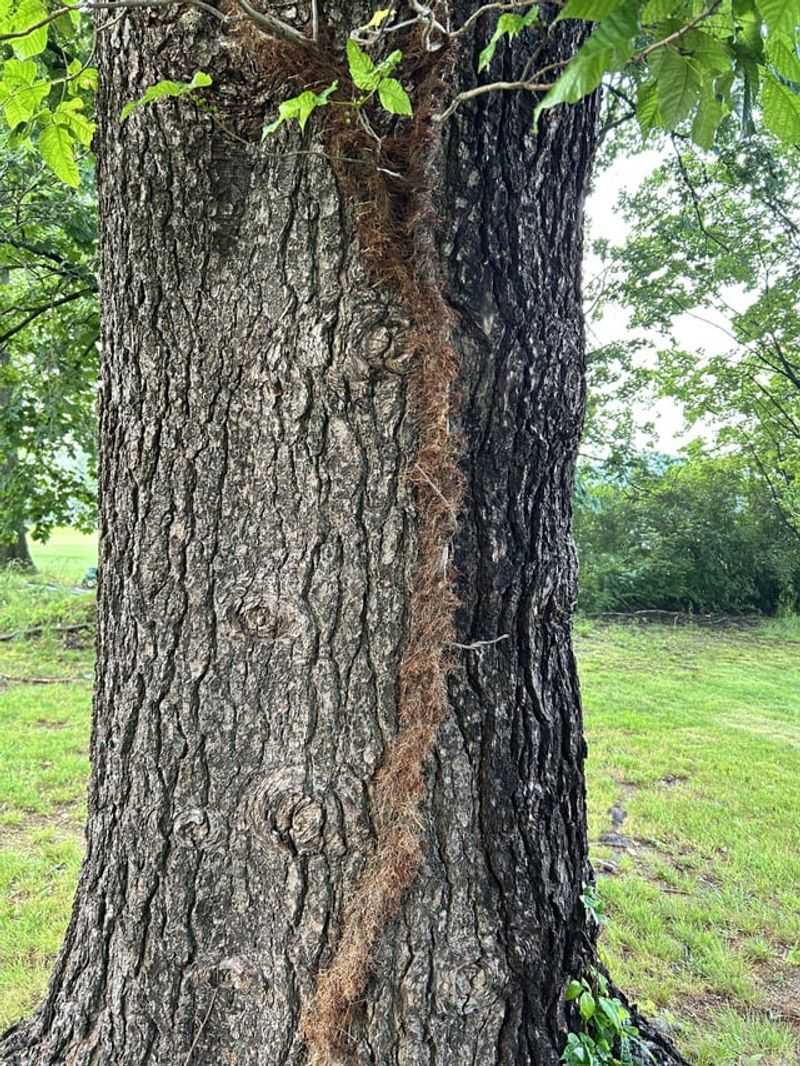
Picture a rope covered in brown fur wrapped around a pine. Mature poison ivy vines often look exactly like that.
Those fuzzy fibers are aerial rootlets, and they help the vine grip bark as it climbs.
Young vines may only show a few thin rootlets, so the hairy look tends to build over several years. Older stems can grow as thick as your wrist or even larger in some cases.
Gardeners sometimes call these big vines hairy ropes, and the nickname fits.
Plenty of old trees in Georgia carry vines that have been climbing quietly for a long time. Because the stems reach high into the canopy, the leaves may sit far above your head where you rarely notice them.
Rootlets contain urushiol too, so touching the fuzzy stem can cause a rash just like touching a leaf.
Watch for these vines when you lean a ladder against a tree or stack firewood beside one. Firewood with clinging vine pieces should be left out of your fireplace pile.
Burning poison ivy can release irritating particles into the smoke, which can be harmful to breathe.
A quick look at the trunk before you work nearby can prevent an unpleasant surprise. Check the bark low and high, since some vines start several feet away from the base.
4. Virginia Creeper Is An Easy Lookalike To Rule Out
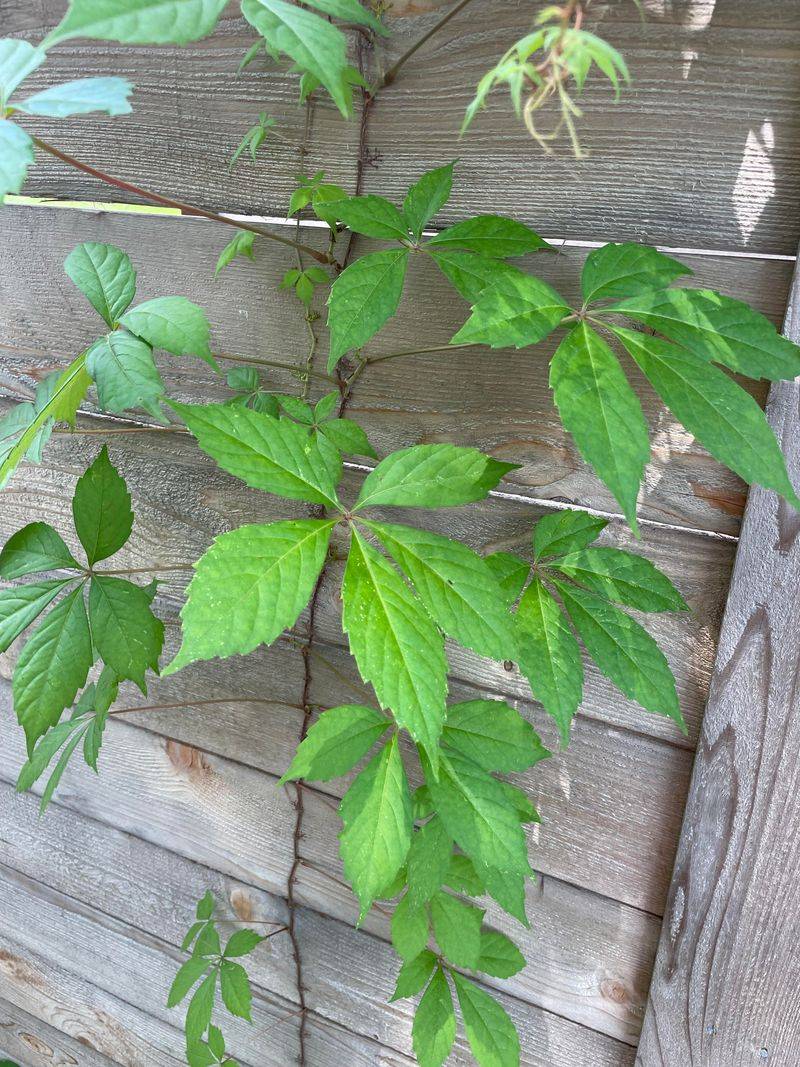
Count to five, and you might relax a little. Virginia creeper usually has five leaflets spreading out from a single point, like fingers on a hand.
Poison ivy, by contrast, sticks with three leaflets per leaf.
Both vines turn a gorgeous red in fall, which explains why so many people mix them up. They also climb the same kinds of trees and fences across Georgia, sometimes side by side on one trunk.
Virginia creeper grips with small tendrils that end in tiny sticky pads rather than fuzzy rootlets.
Young Virginia creeper leaves sometimes show only three leaflets, so look at several leaves before deciding. Most of the vine will show the five-part pattern once you check more than one spot.
Berries can help too, as Virginia creeper produces dark blue fruit while poison ivy berries are whitish or tan.
Some people do get mild skin irritation from Virginia creeper sap, so gloves still make sense. It does not contain urushiol, though, so reactions tend to be far less common and less severe.
Leaving a healthy Virginia creeper in place is a reasonable choice if it is not damaging anything.
Birds eat its berries, and its fall color adds real beauty to a backyard. Just double-check that no poison ivy is tangled in among it.
5. Bare Vines Can Still Cause Trouble After The Leaves Drop
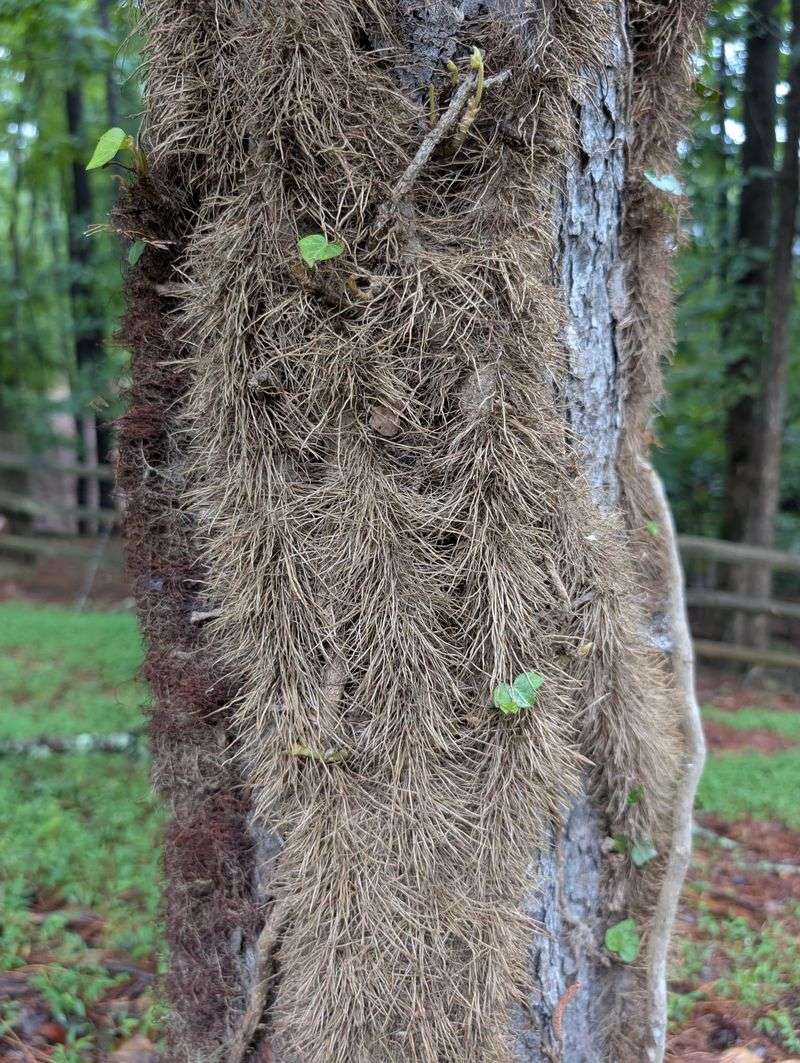
Winter does not make poison ivy safe. Leaves may be gone, yet the stems, roots, and berries still hold urushiol.
Lots of rashes happen in cold months because people let their guard down.
Bare vines are harder to identify, so look for the fuzzy rootlets and clusters of pale, waxy berries. Those berries often hang on into winter, and birds eat them and spread the seeds around.
Gardeners in Georgia tend to do big cleanup jobs during mild winter days, which raises the risk.
Pulling vines off a fence, clearing brush, or gathering sticks for kindling can all bring your hands into contact with the oil. Pets can carry it too, picking it up on their fur and passing it to you during a cuddle.
Urushiol can stay active on tools, gloves, and clothing for a long time if they are not cleaned.
Wash anything that touches the vine with soap and water, and keep those items apart from other laundry. Poison ivy cleaning wipes can help remove plant oil from tools.
Wash your skin with soap and cool water soon after possible contact.
Quick washing may lower the chance of a rash, though results vary from person to person. If a rash spreads widely or affects your face or breathing, contact a doctor.
6. Cutting Established Vines At The Base Stops The Climb
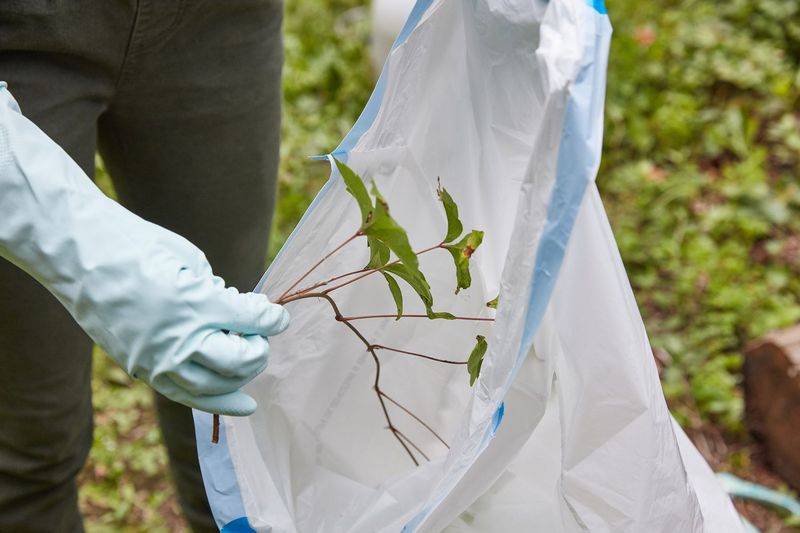
Pulling a huge vine down from a tree sounds satisfying, but it rarely goes well. Ripping it off can tear bark and shower you with broken pieces.
A smarter approach starts at ground level.
Cut the main stem near the base of the tree using loppers or a small pruning saw. Many gardeners cut out a section several inches long so the two ends cannot easily grow back together.
Once separated from its roots, the upper vine usually withers over the following weeks.
Leaving the brown vine in place for a while is often safer than yanking it down right away. It will loosen over time, though it still carries urushiol and needs careful handling later.
Roots below the cut tend to send up new shoots, sometimes for a season or more.
You can dig out the root crown, pull sprouts as they appear, or treat the fresh stump with a herbicide labeled for poison ivy. Read and follow the label closely, especially near trees, gardens, and water.
Fall can be a practical time for this job across much of Georgia since the vine is easy to spot.
Expect to check the spot a few times next spring and summer. Persistence matters more than any single cut.
7. Protective Gloves Matter When Removing Vines And Roots
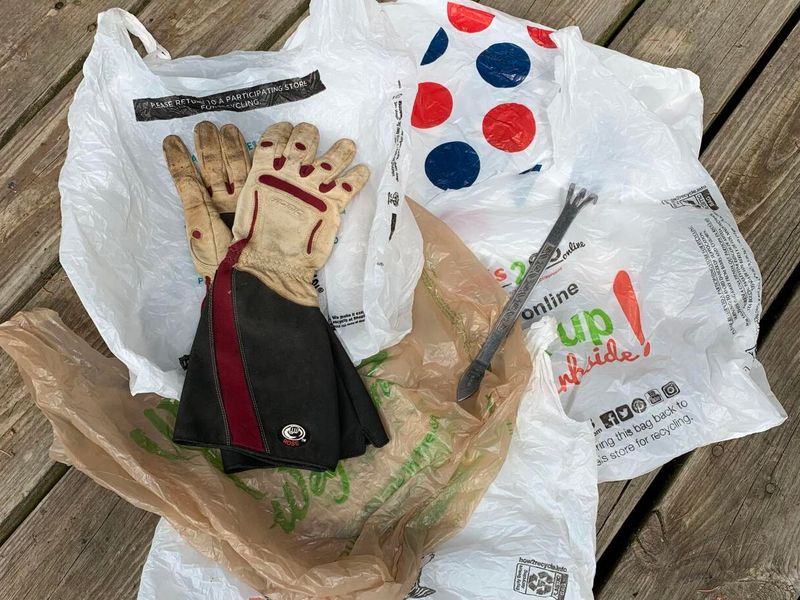
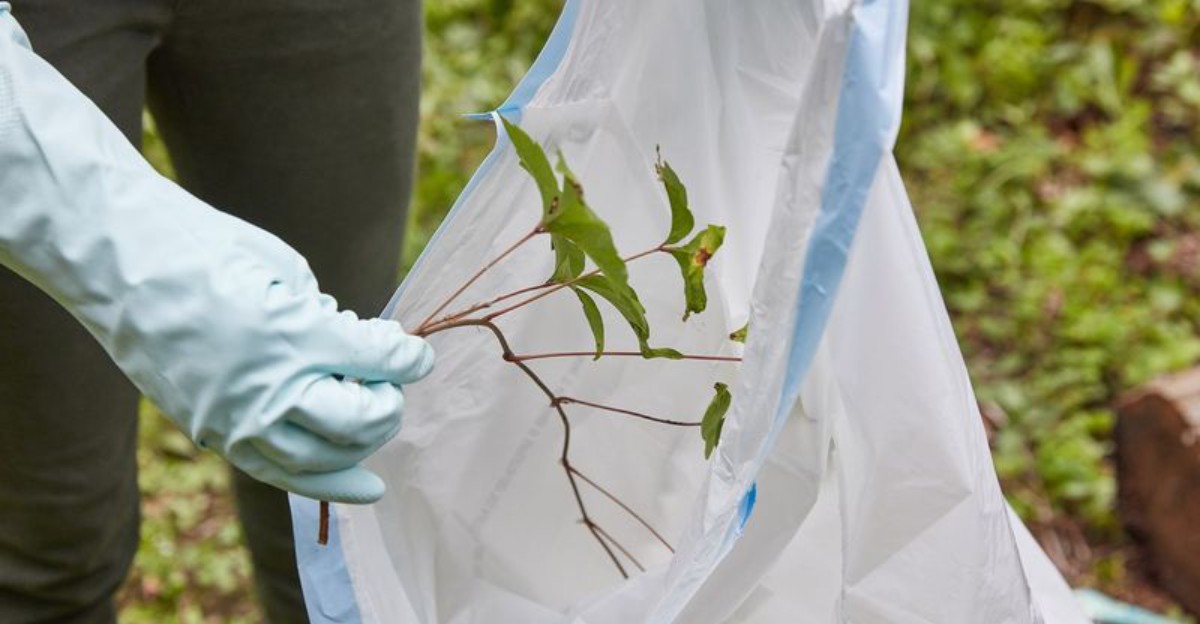
Thin cotton gloves feel fine until the sap soaks right through them. Urushiol can pass through cloth, so material really matters here.
Choose heavy vinyl, nitrile, or rubber-coated gloves for poison ivy work.
Some gardeners wear disposable nitrile gloves under a pair of thicker work gloves for extra protection. When the job is done, they peel off the outer layer carefully and throw away the inner pair.
Long sleeves, long pants, and closed shoes help cover the rest of your skin.
Tuck your pant legs into your socks if you are working on the ground near roots. Taking off gear slowly helps too, because touching the outside of a dirty glove with bare skin defeats the purpose.
Bag removed vines and roots instead of composting them, and check local Georgia rules for yard waste disposal.
Wash reusable gloves with soap and water before storing them. Clean the handles of your loppers, saw, and shovel at the same time, since oil can linger there quietly.
Hiring a professional is a fair option if you are very sensitive or the vine is huge.
Landscapers who handle poison ivy regularly often have the right gear and disposal plan. Either way, a little preparation keeps fall yard work from turning into an itchy few weeks.