Spiky Balls Hanging From Southern Indiana Trees Will Soon Be Dropping Onto Lawns
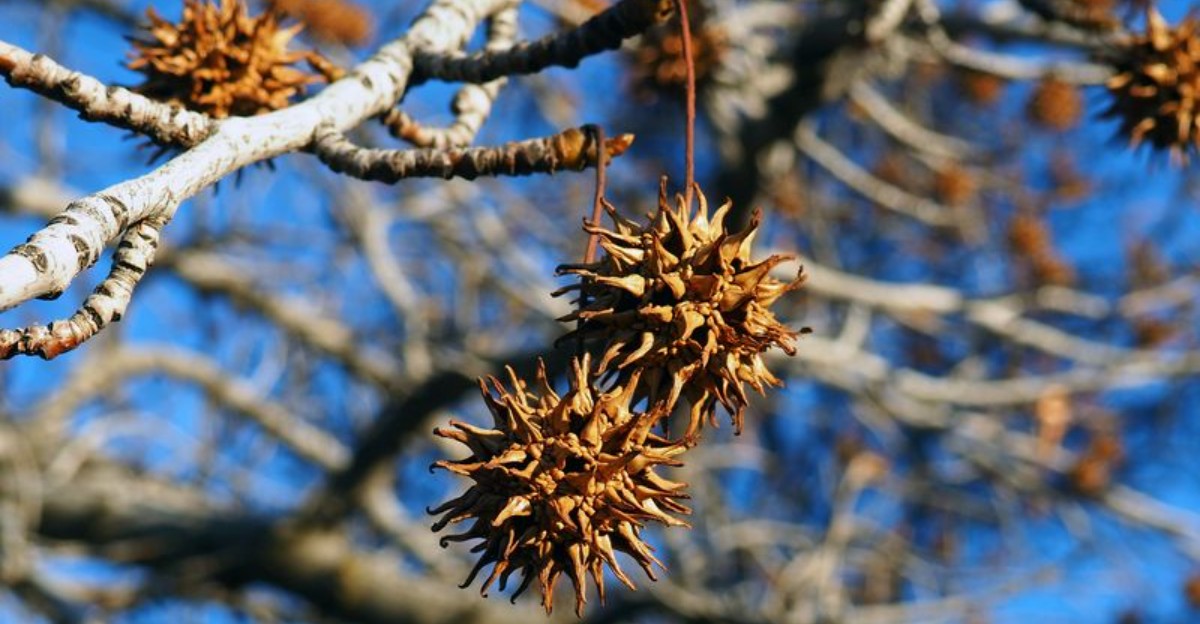
Something strange is dangling from the branches of tall yard trees, and it looks like a bunch of tiny spiky pom-poms. Walk under the right tree in early October, and you might hear soft thuds landing on the grass nearby.
Those brown, prickly globes crunch under sneakers and roll like marbles when you least expect them to move. Bare feet learn the lesson fast, usually with a yelp loud enough to startle the neighbor’s dog.
For a few weeks each fall, they hang quietly like ornaments that nobody remembers putting up last year. Then the wind picks up, and suddenly whole yards look sprinkled with spiky brown candy from the sky.
Homeowners have plenty of opinions about them, and not many of those opinions are especially polite. Kids, however, often treat them as free toys for tossing, stacking, and building tiny backyard sculptures.
Love them or grumble at them, the spiky crop is ready overhead right now. Your lawn is about to get much crunchier, and the trees seem quite pleased with themselves.
The Native Tree Behind The Prickly Lawn Litter
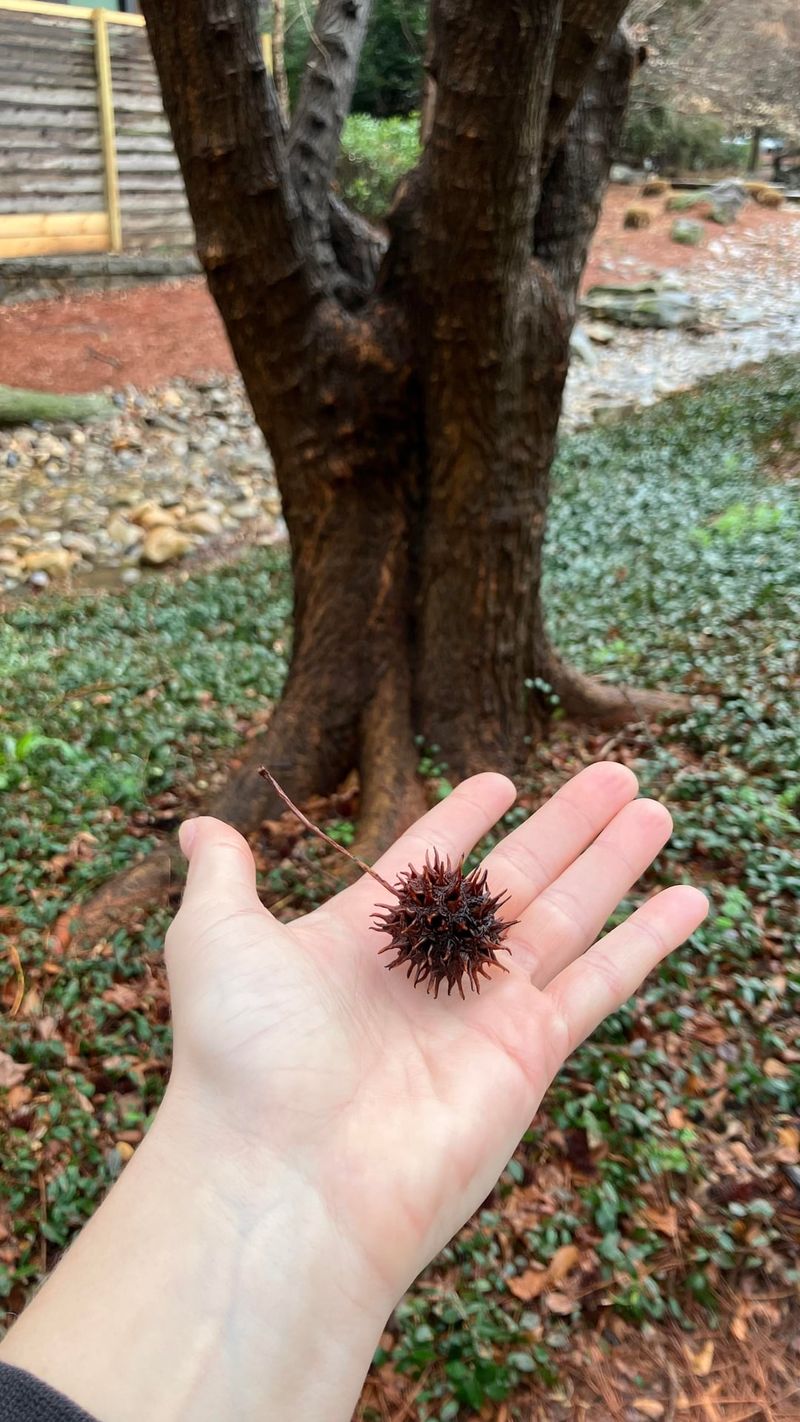
Those spiky balls come from the American sweetgum, a tall native tree common across much of the eastern United States. Folks call the pods gumballs, monkey balls, or sweetgum burrs, depending on which grandparent taught them the name.
Each ball is actually a cluster of many tiny capsules packed tightly together into one round shape. Every little capsule ends in a pointed tip, which explains why the whole thing feels so prickly.
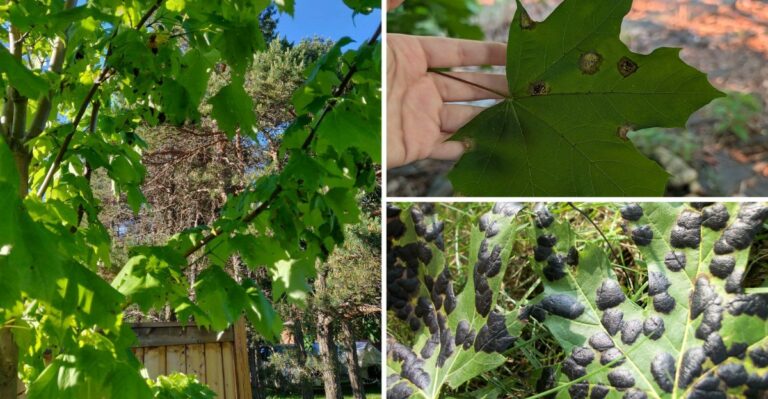
In summer the pods stay green and soft, hidden among star-shaped leaves that smell sweet when crushed. By early fall they turn brown, dry out, and open tiny holes to release their winged seeds.
Many of the seeds float away on the breeze before the shell finally drops to earth. So the ball landing on your lawn is often a hollow, woody case with sharp edges.
Sweetgums grow fast and handle many soil types, so builders and cities planted them widely for shade. A single mature tree can produce thousands of gumballs in one good year, which adds up quickly.
Fun fact: early settlers chewed the hardened sap from these trees like a natural kind of chewing gum. That sticky habit is where the sweetgum got its name, long before anyone complained about yard cleanup.
So when you spot those dangling spiky ornaments, you are looking at a tree going through its normal seasonal cycle. The mess is annoying, but it usually is not a sign of a pest or disease problem.
The Big October Drop Across Southern Indiana
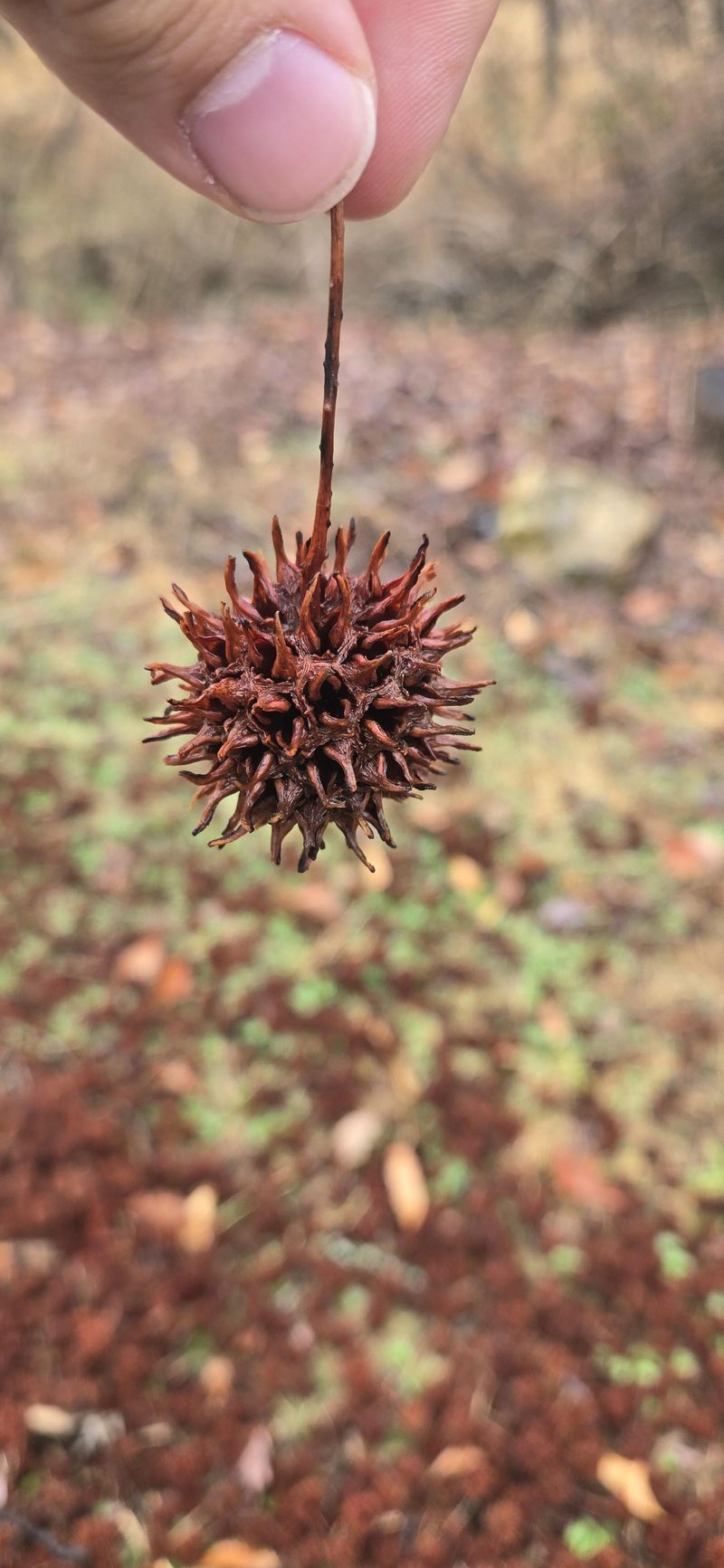
Think of it as a slow-motion hailstorm that lasts for weeks instead of a few noisy minutes. Sweetgum pods usually begin falling in early October and keep coming well into winter.
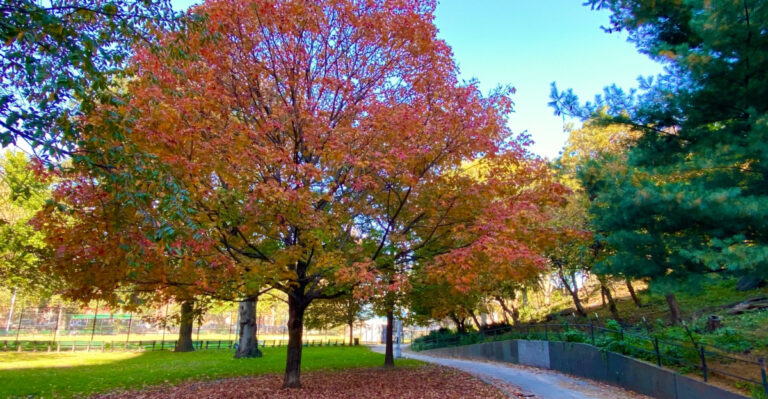
The first wave is mostly light, with a few early pods tumbling down after windy afternoons or storms. As nights get colder and leaves change to purple, red, and gold, the drop speeds up noticeably.
Your Indiana Garden Changes Every Week. Your Plan Should Too.
Gardening in Indiana changes quickly throughout the season. Every Friday you’ll receive a simple weekly plan showing exactly what to plant, prune, fertilize, harvest, and protect so you never miss the right timing.
Many pods hang on stubbornly through November, swinging on long stems like tiny spiky Christmas ornaments. Some trees keep a handful of gumballs until late winter, then release them during a gusty February day.
Weather plays a big role, so a calm fall can mean a slower trickle of pods onto lawns. Strong winds or an early ice storm can bring down a huge batch all at once overnight.
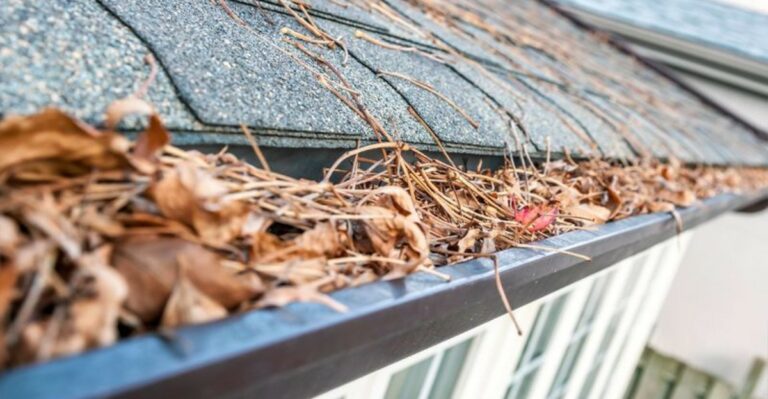
Leaves usually fall around the same time, which means gumballs often hide underneath piles of colorful foliage. That sneaky combination surprises people raking barefoot or kids jumping into leaf piles without checking first.
Planning ahead helps, so look up now and notice how many brown balls still cling to branches. A heavy crop overhead means you should expect several cleanup sessions spread across the next few months.
Mark your calendar for a quick yard check every week or two through the end of fall. Small, regular pickups feel much easier than facing a crunchy carpet of thousands all at once in late November.
The Mower Mistake Many Homeowners Make
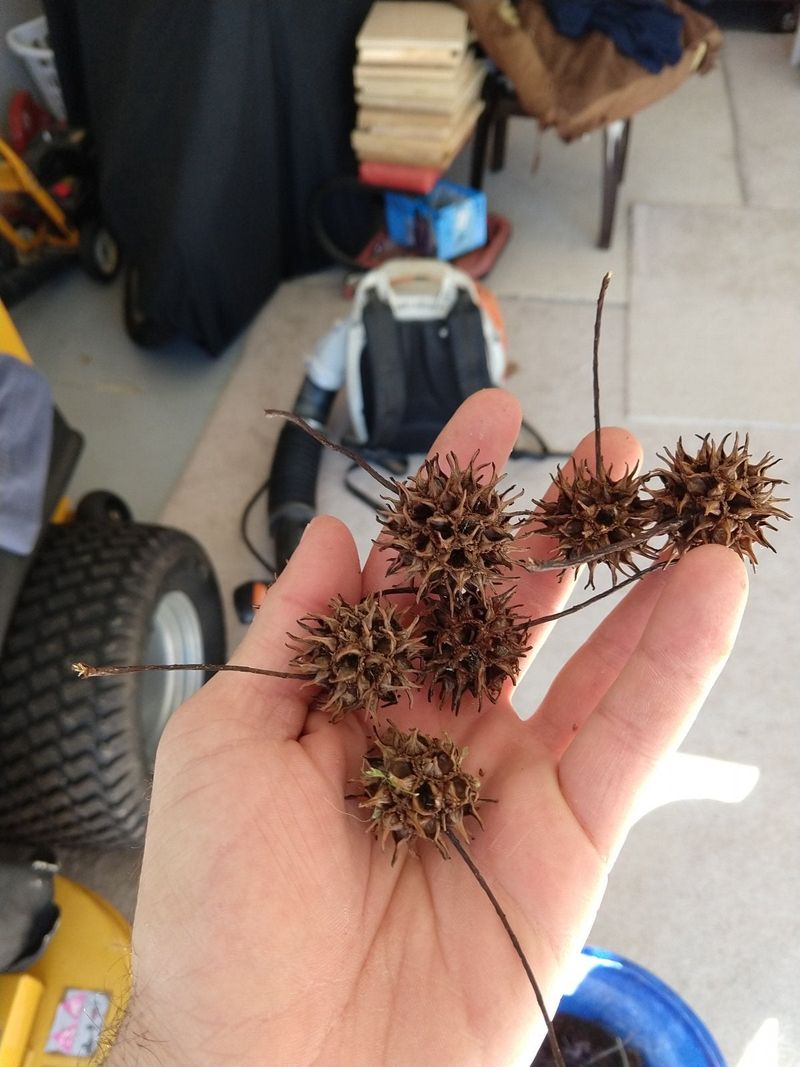
Picture this: you fire up the mower, roll over the yard, and hear a sound like popcorn popping. Running over gumballs seems like a fast shortcut, but it often creates bigger problems than it solves.
Those woody pods are surprisingly hard, and mower blades can fling them out at very high speeds. A flying gumball can sting anyone standing nearby or ping off a parked car.
Blades also wear down faster, because chopping hundreds of tough pods dulls the edge more quickly than grass does. A dull blade tears grass instead of cutting it cleanly, leaving brown, ragged tips across your lawn.
Mulching mowers struggle too, since the pods rarely break into tiny pieces the way leaves usually do. Instead, you end up with sharp chunks scattered through the turf, which still hurt bare feet later.
Another common slip is waiting until spring to clean up, hoping the pods will simply break down. Gumballs can take a year or more to rot, so they mostly stick around much longer than expected.
Thick layers left all winter can smother patches of grass and create bumpy, uneven spots by spring. They also make a slippery surface on sidewalks, a bit like walking on a tray of loose marbles.
Safety glasses and long pants help if you must mow near a few stray pods this October. Still, the smarter move is clearing the heaviest piles first, then mowing once the ground looks mostly clear.
Smart Cleanup Tools For Gumball Season
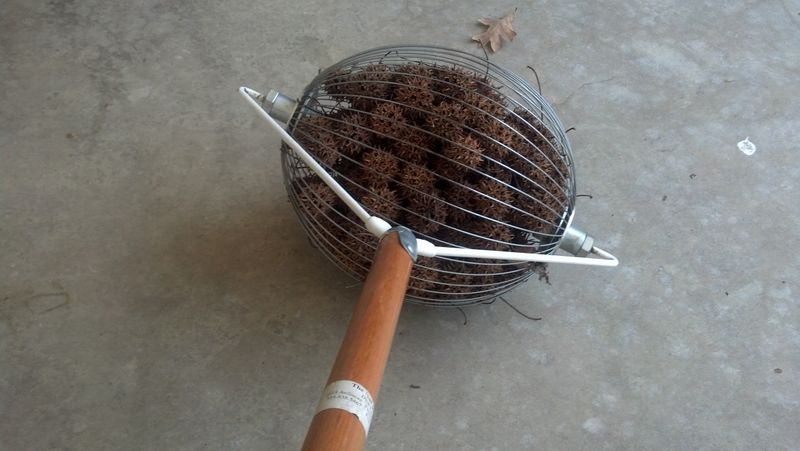
Ever tried picking up gumballs by hand, one prickly ball at a time, while your back complains loudly? Luckily, a few simple tools turn that chore into something closer to a relaxing fall afternoon outside.
Rolling nut gatherers are the star here, with a wire cage that scoops up pods as you push. The springy wires spread open, trap each gumball inside, and let you dump the whole load into a bucket.
Choose a model sized for sweetgum pods, since gatherers built for large walnuts may let smaller gumballs slip through. Many hardware stores in southern Indiana stock them each fall right next to rakes and leaf bags.
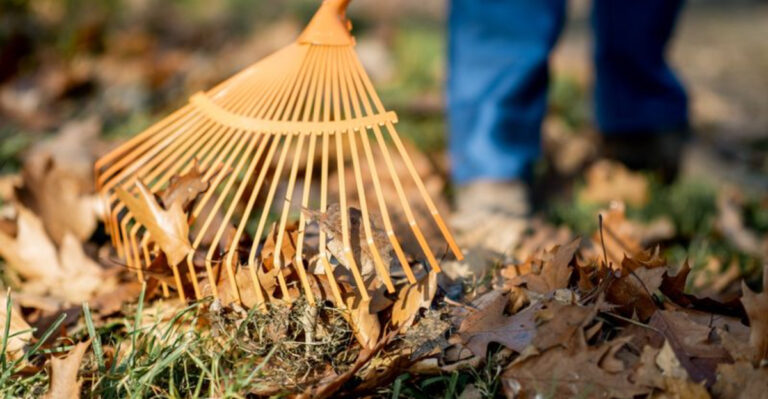
A sturdy metal rake with stiff tines works well for gathering pods into piles on firm ground. Plastic leaf rakes often skip right over gumballs, so save those for lighter leaf duty this October.
Some people use a lawn sweeper, which has spinning brushes that toss pods into a hopper behind it. Sweepers work best on short, dry grass, so try them after a few sunny days in a row.
Thick work gloves are a smart addition, because even a quick grab can leave tiny scratches across your palms. Leather or rubber-coated gloves hold up best against those pointy capsule tips poking through thin fabric.
Timing matters too, since dry pods roll easily while wet ones clump together with soggy leaves. Pick a crisp, sunny afternoon, grab your gear, and a small yard can look tidy in about an hour.
A Surprising Second Life For Spiky Seed Balls
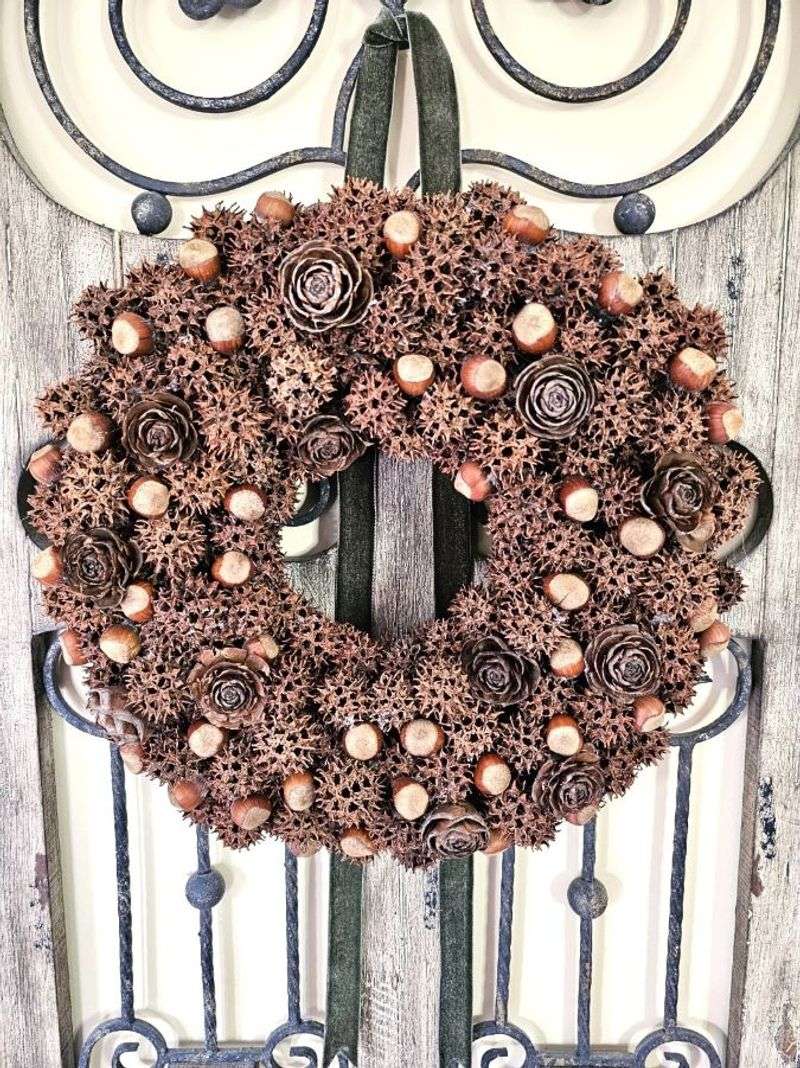
One person’s yard nuisance can become another person’s favorite craft supply, and gumballs prove it nicely. Once collected, those spiky pods have more uses than most people ever imagine while grumbling over a rake.
Gardeners often scatter gumballs around tender plants, hoping the prickly surface will discourage digging squirrels and curious cats. Results vary, but many people say it helps reduce unwanted visitors in flower beds and vegetable patches.
Some folks crush them and use the pieces as rough mulch along paths or around trees. Because the pods break down slowly, they can last a long time before needing any kind of replacement.
Crafters love them too, painting gumballs silver or gold and turning them into ornaments for the holidays. Glued onto a foam wreath form, they create a bumpy, textured look that feels perfect for autumn doors.
Kids can turn gumballs into tiny critters with googly eyes, pipe cleaner legs, and plenty of imagination. Teachers sometimes collect bags of them for fall science lessons about seeds, trees, and how plants spread.
Dried pods also make handy fire starters when tucked under kindling in a backyard fire pit. Keep them stored in a dry bin, because damp gumballs smolder and smoke instead of catching flame quickly.
If you have extras, post them online, since some crafters across Indiana look for clean, unbroken pods. Your backyard chore might even turn into a fun family project this fall.
Long-Term Options For Fewer Gumballs Next Fall
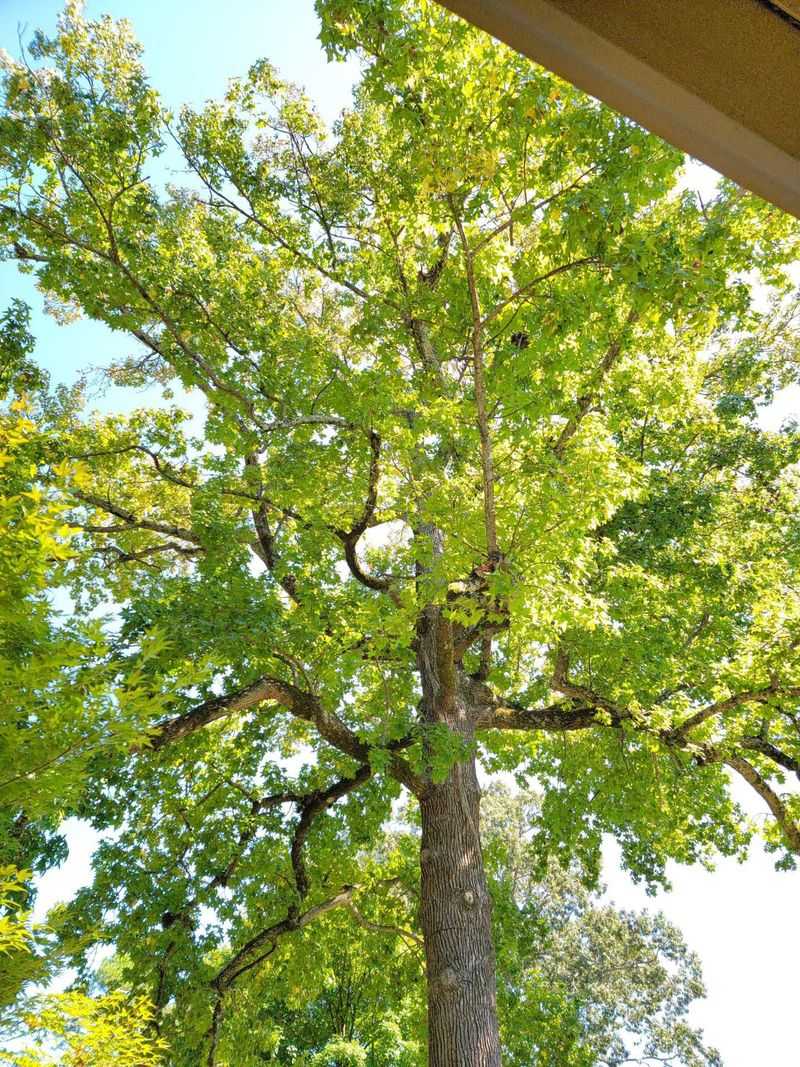
Sweetgums can live for over a century, so a pod-heavy tree may keep sharing its crop for decades. If yearly cleanup feels like too much, a few longer-term choices can shrink the mess over time.
Growth regulator sprays applied in spring can reduce how many pods form, though timing must be precise. Many homeowners hire a licensed arborist for this job, since tall trees need special equipment to reach.
Fall is a great time to call and book that spring appointment before local tree services fill up. Ask about cost, too, because treatments usually need repeating every year to keep working well on large trees.
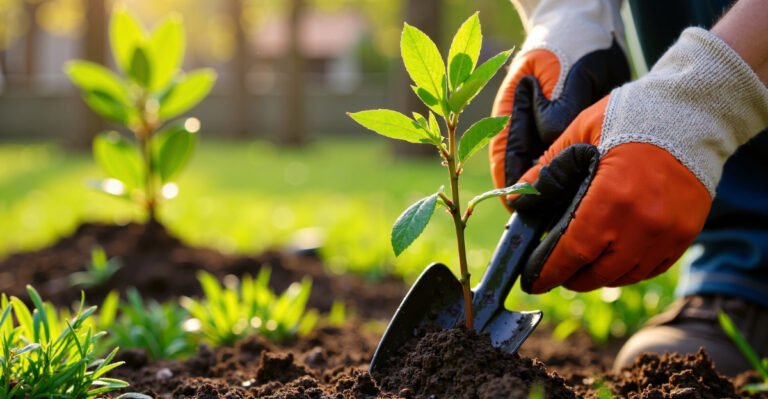
Anyone planting new shade trees can choose fruitless sweetgum types like Rotundiloba, which grow few or no pods. These trees still offer gorgeous fall color, with leaves turning deep red, orange, and purple each October.
Some owners remove a sweetgum altogether, especially when it towers over a patio, pool, or busy driveway. Removal is a big step, so weigh the shade, wildlife value, and cost before calling a tree service.
Birds like goldfinches and chickadees feed on sweetgum seeds through winter, so these trees support local wildlife. A simpler fix might be planting a groundcover bed beneath the tree where pods can rest unnoticed.
Mulch rings under the canopy hide fallen gumballs nicely and save you from mowing over them later. With a little planning now, next autumn can feel a lot less prickly underfoot.