The Spectacular California Bird You May Not See Again Until Spring
Some of California’s most colorful visitors stay only briefly. They arrive with little warning, linger for a few days, and slip away before many people notice.
One of them flashes shades that look almost tropical against fall leaves. Its visits follow a seasonal rhythm that most backyard watchers only half understand.
After the fall rush ends, sightings in most lowland neighborhoods become rare. The next good chance often waits until the following spring.
That short window makes each appearance feel special. It also raises a few interesting questions about where these travelers go and how they change.
Insights from the Cornell Lab of Ornithology and Audubon help explain the journey, along with simple ways to welcome a passing visitor.
Western Tanagers Pass Through In Fall
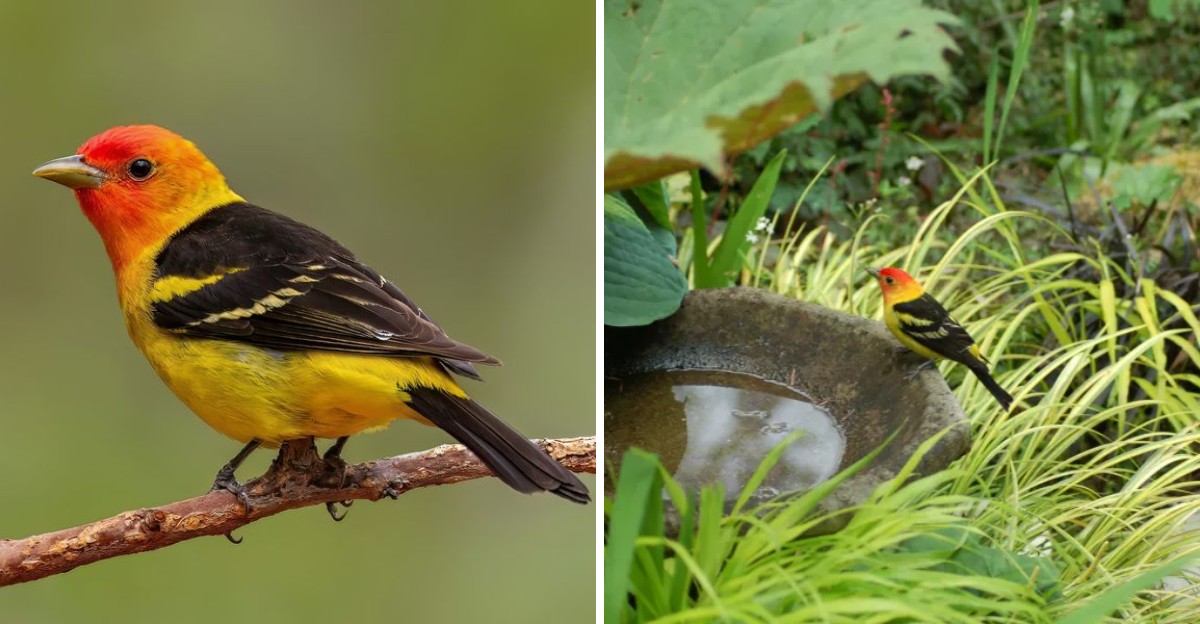
Every fall, songbirds stream south across the West like traffic on an invisible sky highway. The western tanager ranks among the flashiest travelers in that crowd, and many California yards sit right along its route.
Most of these birds aren’t staying. They spend summer in forests farther north and higher up, then head south as the season changes.
A backyard works more like a quick rest stop than a permanent home. Fall migration can also start earlier than many people expect.
According to the Cornell Lab of Ornithology, some tanagers begin moving south in late summer. Exact timing shifts from year to year and place to place, so several weeks of watching beat circling one date.
Migrating tanagers often appear in lowland spots they skip during summer. City parks, creek corridors, orchards, and tall shade trees near patios all make likely stops.
They tend to move through the middle and upper branches, so looking up pays off. Listening helps, too.
Their call is a short, rising “pit-er-ick” that sounds a little like a question. Once learned, that call often gives a tanager away before it comes into view.
Binoculars kept near a window facing the trees make a smart habit. Migrants can drop in for an hour and leave just as quickly.
Being ready means catching the show firsthand rather than hearing about it later from a neighbor.
They Winter In Mexico And Central America
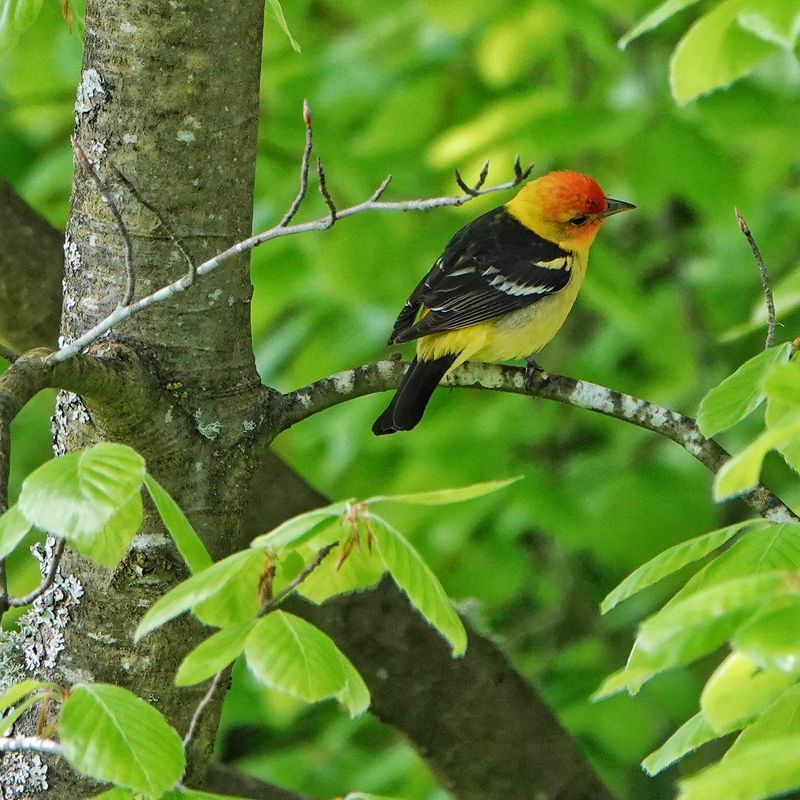
Trading sweaters for sunshine sums up this bird’s winter plan nicely. After leaving the western United States and Canada, most tanagers travel south into Mexico and Central America.
Cornell and Audubon both describe a winter range stretching from Mexico down through Central America. Some birds reach as far as Costa Rica.
That makes quite a trip for a bird weighing about as much as a few quarters. A long road trip suddenly seems a lot less impressive by comparison.
Down south, tanagers find a steady supply of insects and fruit. Cold northern forests can’t offer that kind of menu in winter.
Warmer places keep meals plentiful when food back home would run thin. That simple math drives much of the journey.
In their winter homes, western tanagers often join mixed flocks of other birds. Traveling in groups may help them find food and watch for predators, a bit like a neighborhood watch with feathers.
Your California Garden Changes Every Week. Your Plan Should Too.
Gardening in California changes quickly throughout the season. Every Friday you’ll receive a simple weekly plan showing exactly what to plant, prune, fertilize, harvest, and protect so you never miss the right timing.
Not every bird makes the full trip, though. A small number spend winter in coastal Southern California, especially where mild weather and flowering or fruiting trees offer support.
Birders sometimes spot these lingering birds in parks during the cooler months. Those sightings remain the exception rather than the rule.
Local tanagers that vanish in fall aren’t lost. They’re busy living a second life in the tropics, which makes their spring return feel like a welcome-home party.
Males Lose Their Brightest Colors In Fall
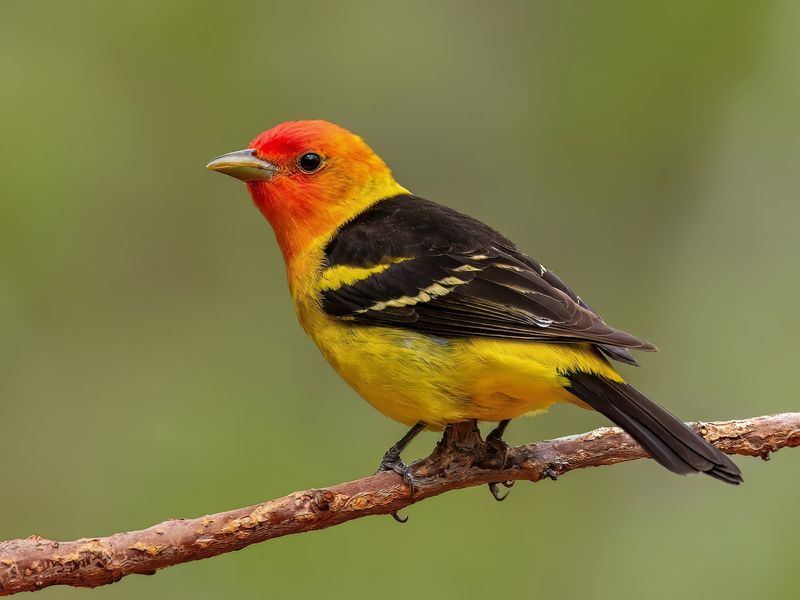
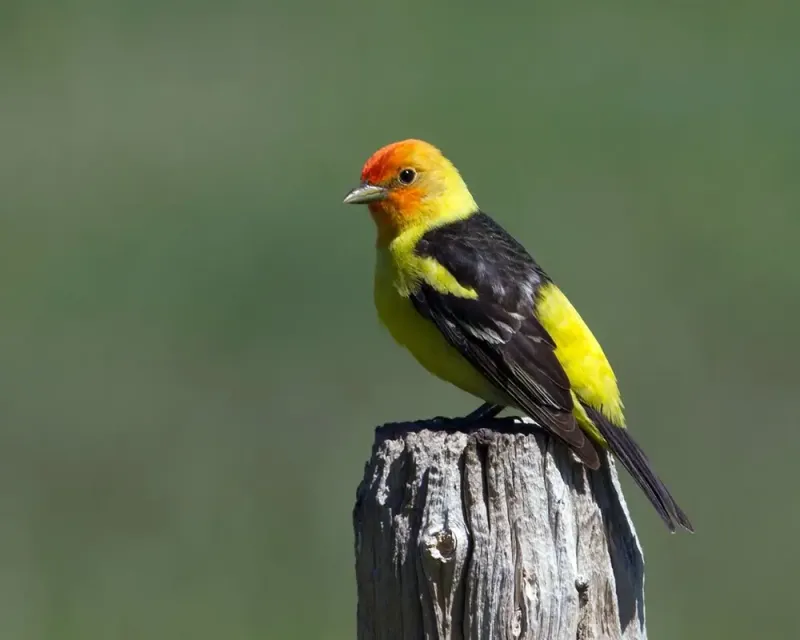
A yellow bird with dark wings in September trips up plenty of new birders. Without the famous red head, it hardly looks like a western tanager at all.
The red mostly fades for fall. Adult males molt after the breeding season, and their new feathers come in noticeably duller.
That glowing red face shrinks to a faint orange or reddish wash. Some males look almost plain yellow, with soft olive tones on the head and back.
Females and young birds look even more low-key. Their mostly yellowish-green bodies and grayish wings can resemble orioles or warblers at first glance.
The wings offer the best clue. Western tanagers carry two wing bars, with the upper one usually yellow and the lower one white or pale.
The bill helps, too. It’s thick and pale, unlike the thin, pointed bill of a warbler, and it stands out even in shade.
Body shape adds another hint. Tanagers are chunky, medium-sized songbirds that sit still longer than jumpy little warblers, often perching quietly before moving slowly through leaves.
The Cornell Lab shares a fascinating detail about that red coloring. It comes from a pigment called rhodoxanthin, which scientists believe the birds obtain from the insects they eat.
Most red birds get their color from other pigments. That makes the tanager a bit of an odd duck, or rather, an odd songbird.
Late Season Fruit And Insects Fuel The Trip
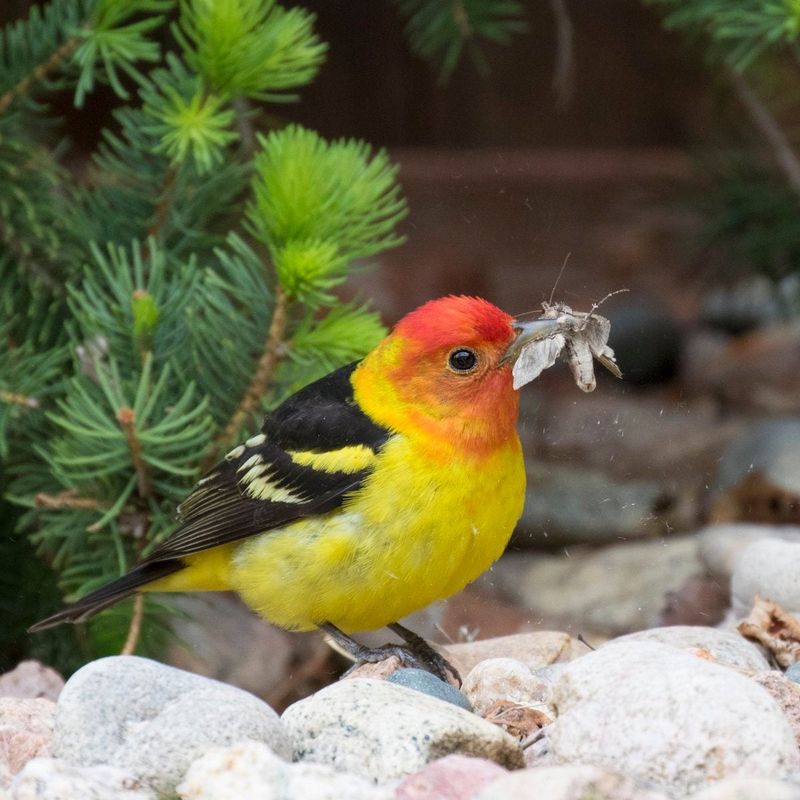
A flight of hundreds or even thousands of miles takes serious fuel. Western tanagers spend their stopovers eating as much as they can, since every snack matters on a trip this long.
Insects make up a big part of their meals. The Cornell Lab notes that they eat bees, wasps, ants, beetles, grasshoppers, cicadas, and caterpillars.
Many flying bugs get caught in midair. A tanager darts out from a branch, grabs its prize, and returns like a tiny outfielder.
Fruit grows more important in late summer and fall. Elderberries, mulberries, cherries, and other ripe treats all find their way onto the menu.
Some tanagers even visit orchards, which doesn’t always make farmers smile. The mix of bugs and fruit serves a clear purpose.
Insects provide protein for feathers and muscles. Fruit delivers quick sugar and energy for long flights, so together they form a balanced travel menu.
Supporting that menu doesn’t require fancy feeders. Skipping broad pesticide sprays protects the insects tanagers depend on, turning a healthy garden into a migrant buffet.
Bread, sugary baked goods, and moldy fruit are best kept out of the yard. These can cause health problems for birds and attract unwanted pests.
A few fresh orange halves or clean berries on a platform can work, as long as they’re replaced daily. Natural plants remain the best and safest choice for a passing tanager.
Water And Berries Draw Them To Yards
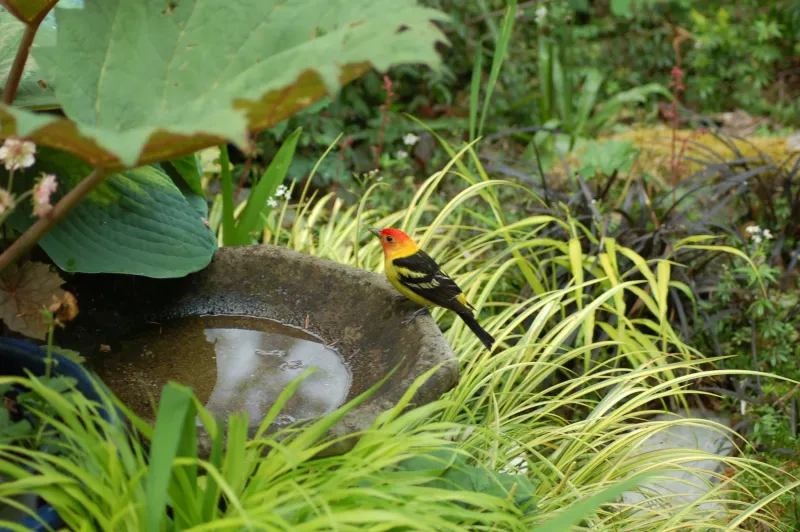
A tired traveler looks for three things at a rest stop: food, water, and cover. Tanagers follow much the same logic when choosing where to pull over.
Water may be the biggest magnet of all. A clean, shallow birdbath can attract migrants that ignore feeders completely.
Moving water works even better. The sound and sparkle catch a bird’s attention from high in the treetops.
A bath about one to two inches deep, with a rough surface for grip, suits songbirds well. A scrub every few days and fresh water keep it safe, since dirty water can spread disease.
Plants make the next big helpers. Fruiting shrubs and trees offer tanagers a natural snack bar.
In California, native plants like blue elderberry, toyon, coffeeberry, and California wild grape provide fruit while attracting insects, too. Natives also tend to host more caterpillars and other bugs than many imported ornamentals.
More bugs means more food for hungry birds. The garden essentially becomes a two-course meal.
Cover matters as well. Tall trees and leafy shrubs give tanagers a safe spot to rest and hide from hawks.
A birdbath placed near some cover, though not so close that cats can sneak up easily, strikes the right balance.
Keeping cats indoors ranks among the kindest steps for migrating songbirds. With a little patience and a clear window view, the yard may soon host a brilliant visitor.
Spring Brings Brilliant Males Back
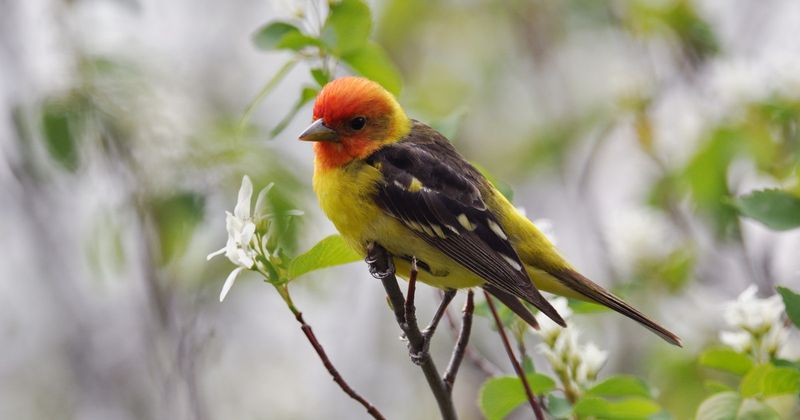
Spring holds a colorful surprise for patient watchers. After a winter down south, western tanagers head north again, and this time the males arrive dressed to impress.
Spring males are the version that gets photographed and framed. They show a blazing red-orange head, a lemon-yellow body, and jet-black wings and tail.
One spotted among fresh green leaves can draw a gasp. The transformation from fall’s muted look is remarkable.
Adult males molt on their wintering grounds before heading north. Their new feathers wear in just right, revealing bold breeding colors in time for spring.
In California, spring migration usually brings tanagers through lowland parks and yards for a few weeks. Timing varies by year, weather, and region.
Coastal areas and inland valleys may see them on slightly different schedules. Staying alert through April and May improves the odds.
Spring visitors often travel in small groups. One tanager in view may mean others are nearby, so a full scan of the tree pays off before reaching for the camera.
Winter offers a good window to prepare. A clean birdbath, a newly planted native fruiting shrub, and a comfortable viewing spot all help the yard welcome its brightest guests.
A simple notebook of sighting dates reveals local patterns over a few years. That kind of record turns any backyard watcher into part detective and part bird fan.