One Fall Task Can Help Georgia Blueberry Bushes Produce More Fruit Next Summer
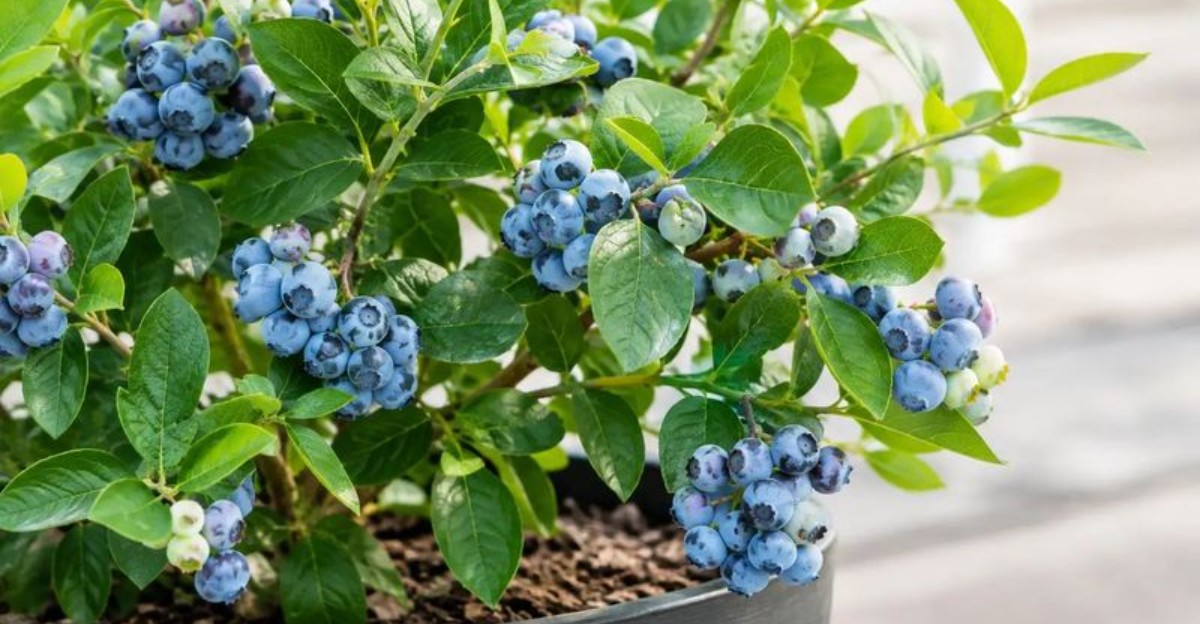
Blueberry bushes that gave you only a handful of berries this summer can leave you wondering what went wrong.
Much of next year’s crop depends on what happens to the plant long before spring arrives.
By now, many bushes have already set the buds that will become next season’s flowers. How well those buds hold up through winter depends partly on the care the plant gets this fall.
One simple task often gets skipped because the bushes look fine once the harvest is over.
Blueberries have shallow roots and specific soil needs, which makes them more sensitive than many shrubs. That sensitivity can show up quickly in the heat and clay common to Georgia.
Take a closer look at the ground around your bushes the next time you walk by.
1. Healthy-Looking Bushes Can Still Fall Short On Berries
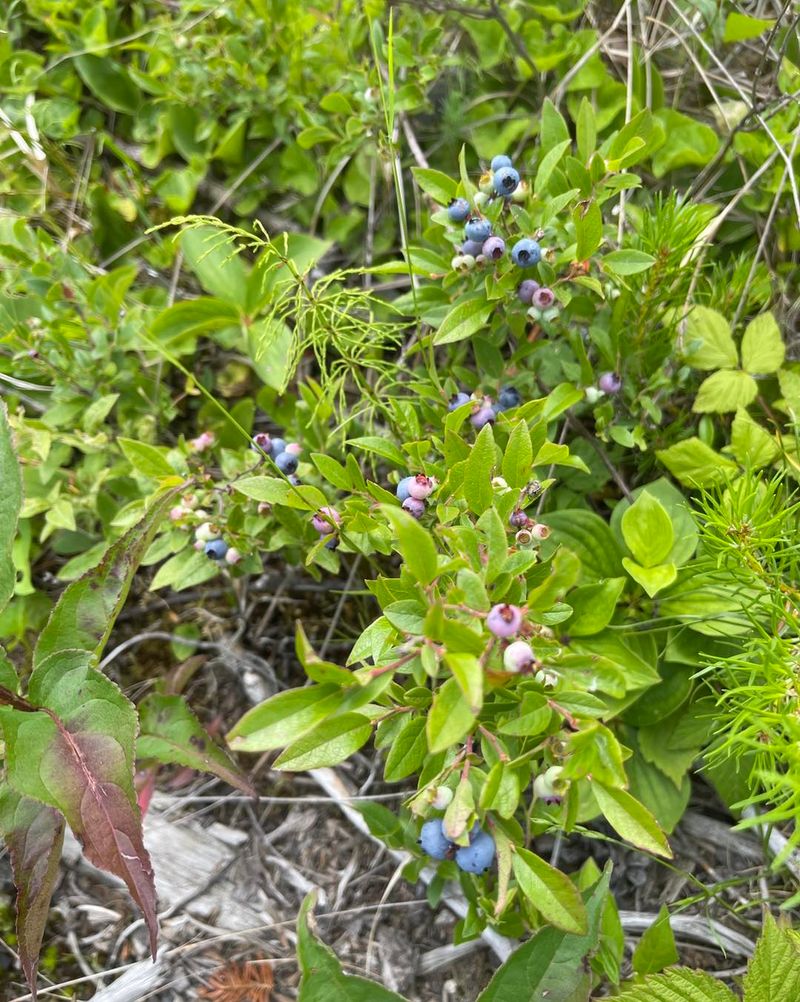
Green leaves can fool you. A blueberry bush may look full and lively while quietly struggling to produce a good crop.
Plenty of backyard growers in Georgia notice this pattern after a few seasons of small harvests.
Often, the problem is not water, sunlight, or pruning. It can come down to soil chemistry, which you cannot see just by looking at the plant.
Here is the fall task that can help. Test your soil, and if the pH is too high, lower it with elemental sulfur applied during the cooler months.
Sulfur works slowly, so autumn gives it a head start before spring bloom.
Soil microbes convert the sulfur into a form that gradually makes the ground more acidic. That process needs time, moisture, and mild temperatures to move along.
Of course, soil pH is not the only factor behind a weak crop. Late freezes, poor pollination, young plants, or heavy pruning can all reduce berry numbers too.
Still, checking pH is one of the easiest problems to rule out first.
A bush growing in the right soil range is better able to use the nutrients already around its roots. Better nutrition can support stronger buds, though weather and care will still shape how much fruit you actually pick.
Think of this step as fixing the foundation before worrying about the trim.
2. Blueberries Need Far More Acidic Soil Than Typical Garden Beds
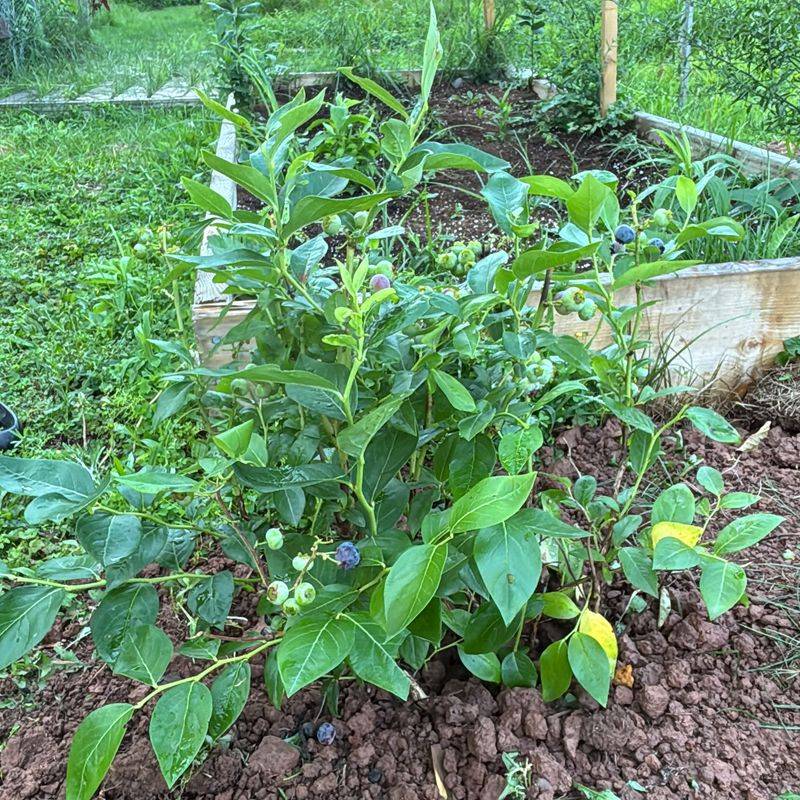
Tomatoes and blueberries want very different ground. Most vegetables grow happily in soil with a pH near 6.0 to 7.0, which is close to neutral.
Blueberries prefer something much lower, usually around 4.5 to 5.5.
That gap may look small on paper, but pH works on a scale where each whole number is a big change. Soil at 6.5 is roughly ten times less acidic than soil at 5.5.
Gardeners who plant blueberries in an old vegetable bed often run into trouble here.
Years of adding lime for other crops can push the pH upward. Some amended beds and soils near concrete foundations may also lean less acidic than you would expect.
Across Georgia, many native soils are naturally somewhat acidic, which helps. Even so, readings vary widely from one yard to the next, so guessing is risky.
Your Georgia Garden Changes Every Week. Your Plan Should Too.
Gardening in Georgia changes quickly throughout the season. Every Friday you’ll receive a simple weekly plan showing exactly what to plant, prune, fertilize, harvest, and protect so you never miss the right timing.
Blueberry roots are also shallow and fine, without the root hairs many other plants use to gather food.
Because of that, they rely heavily on soil conditions being just right near the surface. Pine bark mulch can help keep that top layer cool and moist, though it does not replace proper pH adjustment.
If your bushes share space with plants that like sweeter soil, consider giving the blueberries a separate area where you can manage acidity without affecting neighbors.
3. Soil That Isn’t Acidic Enough Can Leave Plants Underfed
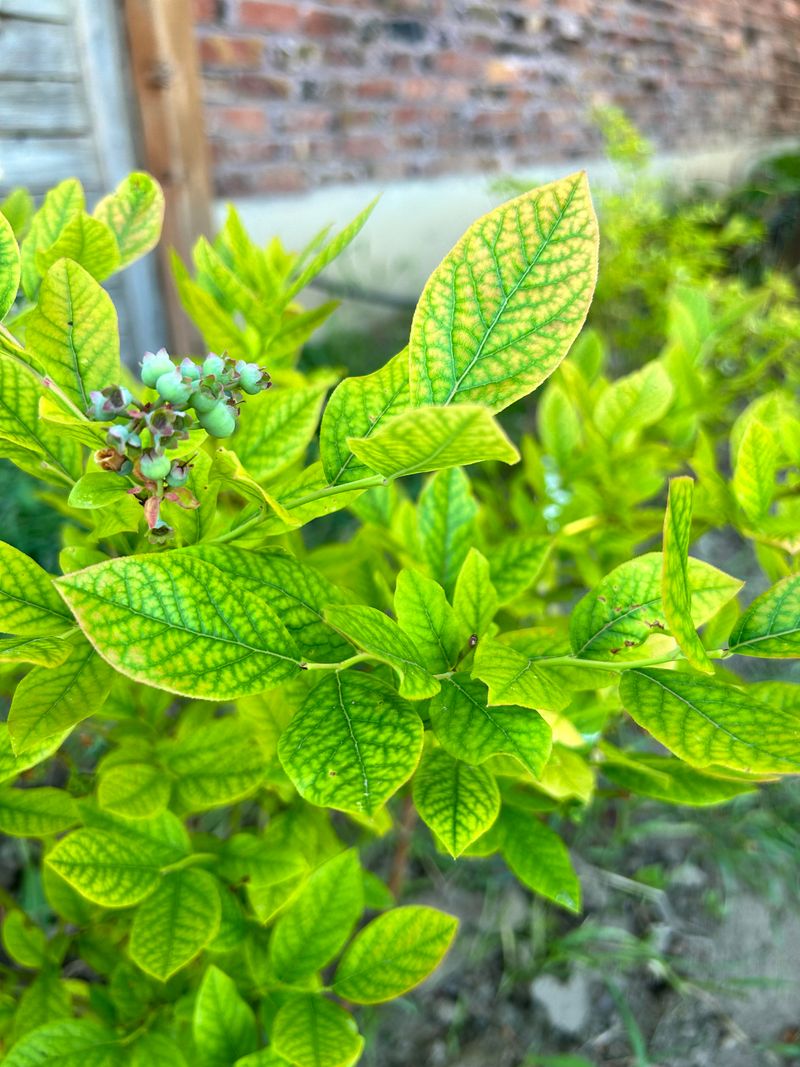
Yellow leaves with green veins tell a story. When blueberry foliage looks like that, the plant may be short on iron, even if iron is sitting right there in the soil.
High pH can lock up certain nutrients so roots struggle to absorb them.
Iron and manganese are two common examples. As the soil becomes less acidic, those nutrients shift into forms blueberries have a harder time using.
So adding more fertilizer may not solve anything.
In fact, piling on extra feed can sometimes create new problems, like salt buildup or burned roots. Fixing the pH often does more good than simply pouring on more product.
Underfed bushes may grow slowly, show weak new shoots, or set fewer flower buds for the next year.
Leaf color can also turn reddish or pale outside of the normal fall change. Keep in mind that drought stress, root damage, and certain diseases can cause similar symptoms, so symptoms alone are not proof.
Gardeners in Georgia sometimes see these signs show up during hot, dry stretches in late summer.
A soil test is the clearest way to separate a pH issue from other causes. Once you know the number, you can choose a fix that actually matches the problem instead of guessing at it.
4. A Simple Soil Test Shows Whether Any Change Is Needed
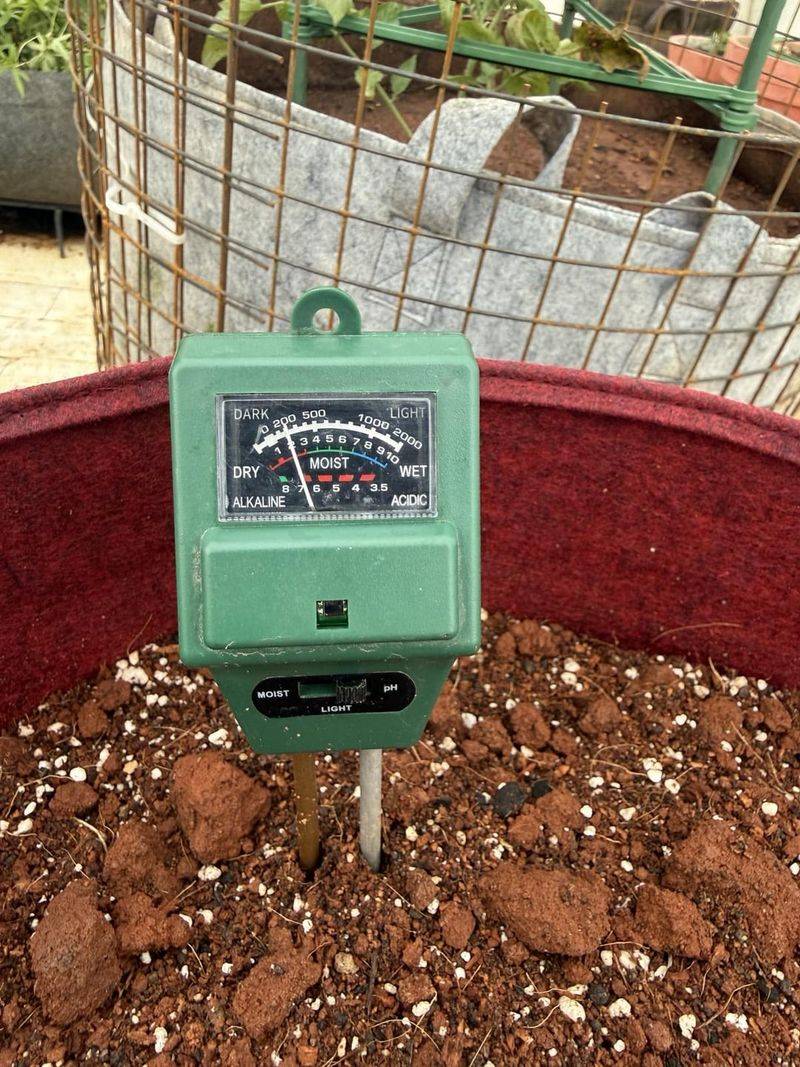
Skip the guesswork. A soil test costs little and tells you whether your blueberries actually need sulfur at all.
In Georgia, the UGA Cooperative Extension offers soil testing through county offices, usually for a modest fee.
Results typically include pH along with nutrient levels and lime or sulfur suggestions. Be sure to mention that you are growing blueberries so any recommendations fit the crop.
Collecting a good sample matters as much as the lab work.
Use a clean trowel or soil probe and dig about four to six inches deep near the drip line of several bushes. Mix those small samples together in a clean plastic bucket to get one combined sample.
Avoid spots where you recently spread fertilizer, mulch, or ash, since those can skew the reading.
Home test kits and meters are handy for a quick check. However, their accuracy can vary, so a lab test is a more reliable starting point before adding sulfur.
Fall works well for testing because labs are often less busy than in spring.
You also gain time to read the results and plan your next step calmly. If the pH already sits in the right range, you can skip sulfur entirely and put your energy into mulching, watering, or pruning instead.
5. Elemental Sulfur Takes Time To Change The Soil
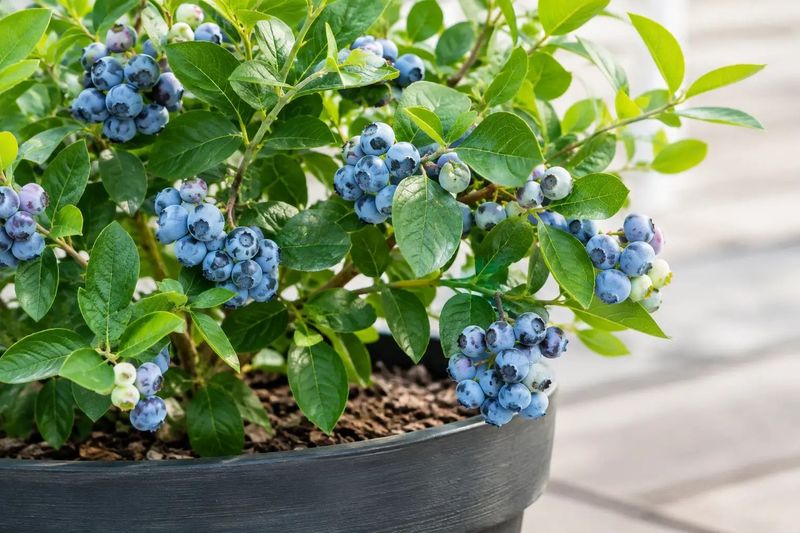
Patience is part of the recipe. Elemental sulfur does not lower pH the moment it touches the ground.
Soil bacteria have to break it down first, turning it into acid over a period of weeks to months.
Warmth and moisture speed that process up, while cold or dry conditions slow it down. That is why an early to mid fall application makes sense in much of Georgia, where soils often stay mild well into autumn.
Spreading sulfur in fall gives it a long runway before bushes wake up in late winter and spring.
Scatter the granules or pellets evenly over the root zone, staying a few inches away from the main stems. Lightly water them in or let rain do the job, then cover with your usual mulch.
Products sold as soil acidifiers vary, so read the label closely.
Elemental sulfur is different from aluminum sulfate, which acts faster but can harm plants when overused. Many extension experts lean toward elemental sulfur because it works more gradually and steadily.
Heavier clay soils usually need more sulfur and more time than sandy ones to show a change.
Expect to wait several months before measuring results. Even then, the shift may be partial, depending on your starting pH, soil texture, and rainfall.
6. Applying Too Much Sulfur At Once Can Injure Roots
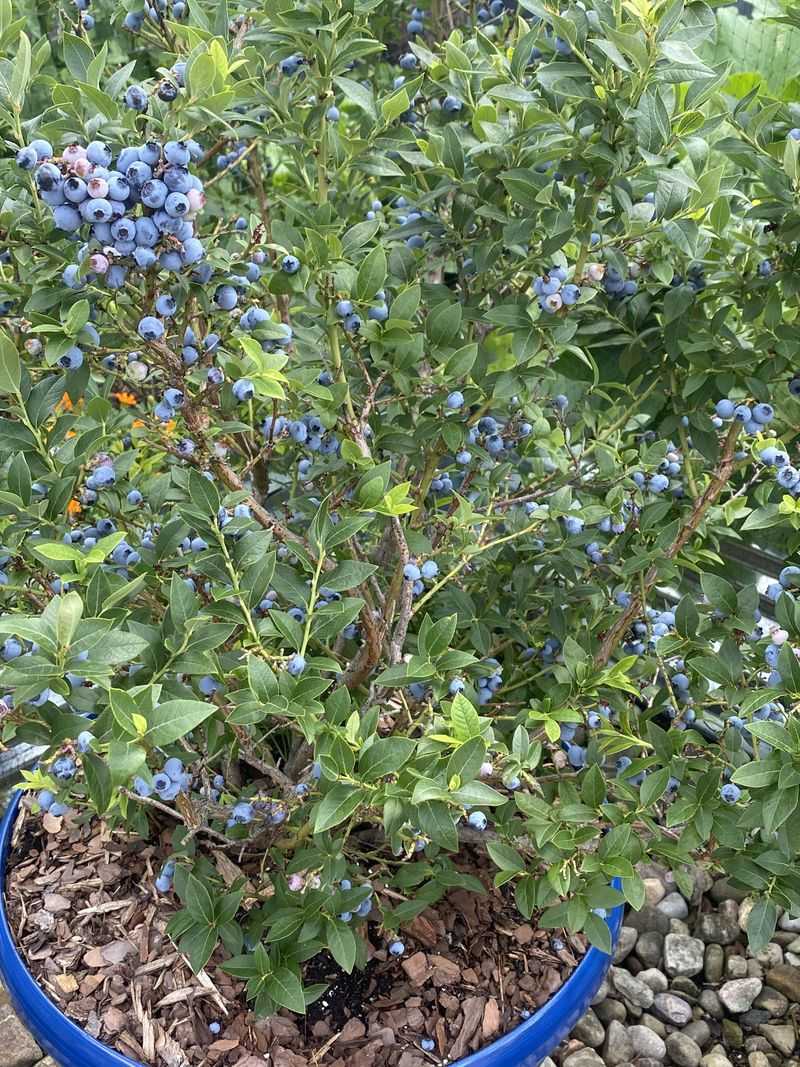
More is not better here. Dumping a heavy load of sulfur around a bush can push the soil too acidic too quickly.
Shallow blueberry roots are sensitive, and sudden swings can damage them.
Injured roots take up water and nutrients poorly, which may cause leaf scorch, stunted growth, or a smaller crop. Recovery can take a while, especially if summer heat arrives soon after.
Follow the rate your soil test recommends rather than eyeballing it.
When the needed change is large, extension guidance often suggests splitting sulfur into smaller doses. You might apply part this fall and the rest later, after checking how the soil has responded.
Measuring tools help a lot. A kitchen scale or marked scoop keeps each application consistent from bush to bush.
Spread the product widely instead of piling it near the trunk.
Roots extend out past the canopy, so an even layer across that whole area works better. Concentrated piles can create hot spots of acidity that stress nearby roots.
Gardeners in Georgia with sandy soil should be especially careful, since sandy ground changes faster than clay. A modest dose can go further than you might expect.
When in doubt, err on the lighter side and test again later.
7. Checking The Soil Again Shows Whether More Adjustment Is Needed
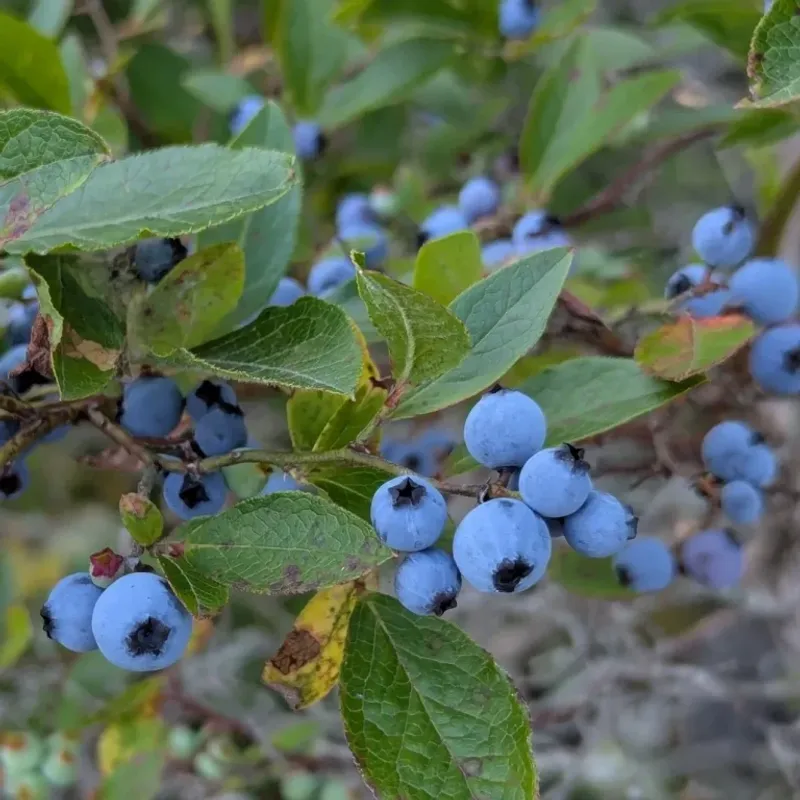
One test is a snapshot, not the full movie. Soil keeps changing after sulfur goes down, so a follow-up check shows whether your effort is paying off.
Plan to retest several months after application, often the following spring or fall.
Compare the new pH with your original reading. If it has dropped into the target range, you may only need light maintenance going forward.
Should the number still sit high, another moderate dose may help.
Some yards drift back upward over time, especially when irrigation water is alkaline or when soil sits near concrete. Testing every year or two helps you catch those changes before bushes start to suffer.
Keep a simple notebook with dates, readings, and how much sulfur you used.
Notes like these make patterns easier to spot across seasons. You might discover that one corner of your Georgia yard needs more attention than another.
Watch the plants as well as the numbers.
Greener leaves and stronger new growth can be encouraging signs, although weather and pollination still play big roles in the final harvest. Better soil sets the stage, yet it cannot control a late frost.
Over a few seasons, steady checking and careful adjustments can give your bushes a fair shot at heavier summer crops.