The Invasive Bug Laying Eggs On Pennsylvania Trees Right Now
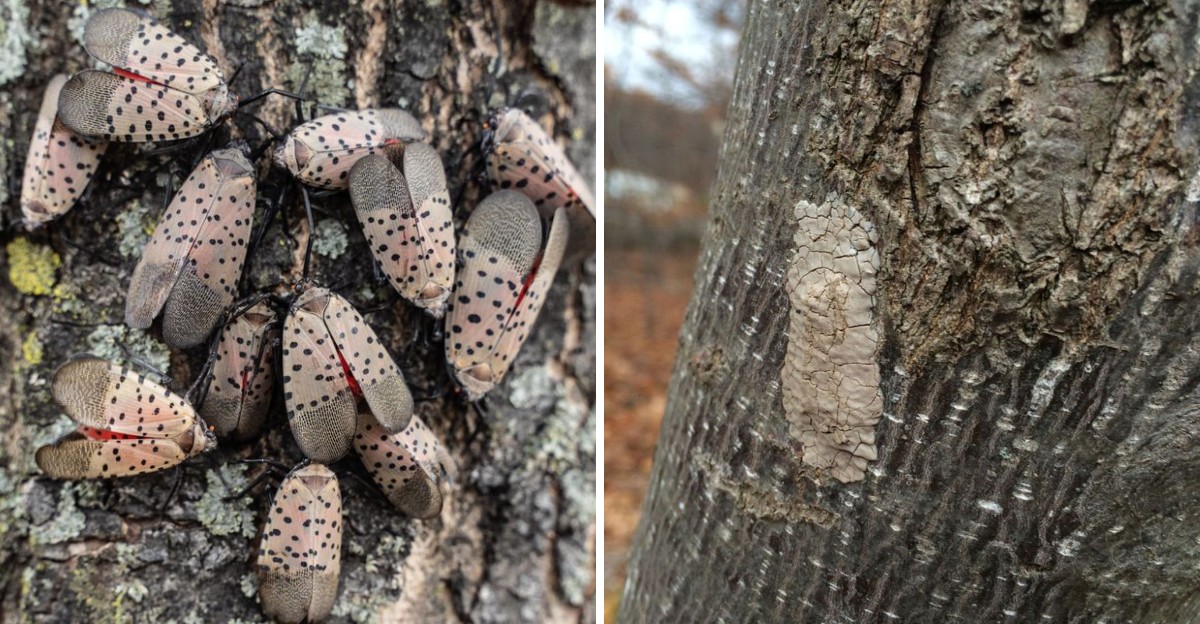
At first glance, it looks like a smear of dried mud on the bark of a tree. Most people walk right past it without a second thought. That’s exactly what this invasive insect is counting on.
Right now, across Pennsylvania, females are busy laying egg masses on trees, fences, rocks, patio furniture, and even cars.
Each gray, putty-like patch can hold 30 to 50 eggs, all set to hatch next spring. Because these egg masses stick to almost anything, they often hitch rides to new places without anyone noticing.
Scraping away just one egg mass this fall could stop dozens of new bugs from showing up in your yard next year.
The Pennsylvania’s Best-Known Invader
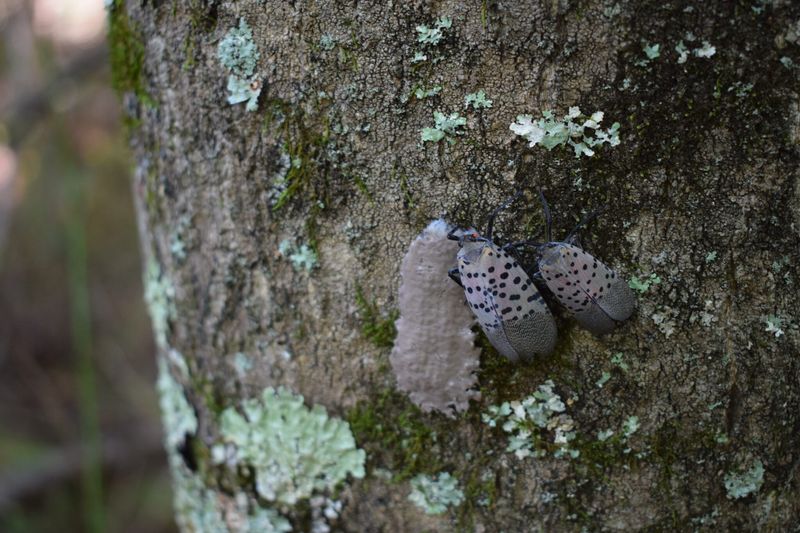
Back in 2014, workers in Berks County, Pennsylvania, noticed a strange bug with polka-dot wings.
Nobody in the United States had seen it in the wild before. That bug was the spotted lanternfly, and it was about to become famous for all the wrong reasons.
Spotted lanternflies come from parts of Asia, including China and Vietnam. Experts think the first ones arrived by hiding on a shipment of stone.
Once they landed in Pennsylvania, they found plenty of food and no natural enemies to slow them down.
Adults are about one inch long. Their front wings are tan with black spots, but when they jump or fly, you can see bright red back wings.
Young ones, called nymphs, are black with white dots at first, then turn red with white spots before becoming adults.
Despite the name, the lanternfly is not actually a fly. It is a planthopper, which means it is related to cicadas and leafhoppers. It sucks sap from plants using a mouth shaped like a tiny straw.
Since that first sighting, lanternflies have spread across most of Pennsylvania. They have also shown up in New Jersey, New York, Ohio, Maryland, Virginia, and many other states.
Their favorite food is a tree called tree of heaven, but they also feed on grapevines, maples, walnuts, and fruit trees.
All that feeding weakens plants and hurts farms, especially vineyards. The bugs also drip a sugary liquid called honeydew. It coats everything below them and grows sooty black mold.
Knowing what this bug looks like is your first defense. If you see one, report it so experts can track where it is spreading.
Why Fall Is Egg-Laying Season
Summer is basically one long buffet for lanternflies. From July through August, the adults spend their days sucking sap and growing stronger. By late summer, they turn their attention to finding mates.
Once September rolls around, the females get busy. They start laying eggs in early fall and keep going for weeks. Some keep laying eggs well into November or even early December if the weather stays mild.
Each female can lay one or two egg masses. Every mass holds around 30 to 50 eggs. When you think about how many lanternflies live in Pennsylvania, that adds up to millions of eggs every single year.
Your Pennsylvania Garden Changes Every Week. Your Plan Should Too.
Gardening in Pennsylvania changes quickly throughout the season. Every Friday you’ll receive a simple weekly plan showing exactly what to plant, prune, fertilize, harvest, and protect so you never miss the right timing.
The adults cannot handle cold weather. When the first hard freeze hits, the grown-up lanternflies are finished for the season. Their eggs are a different story, though.
Eggs are built tough. They sit quietly on trees, rocks, and other surfaces through snow, ice, and freezing winds.
Then, around late April to early June, they hatch into tiny black nymphs ready to start the cycle again.
So why does this matter to you? Fall and winter give you a huge window to make a difference. Every egg mass you remove means up to 50 fewer bugs next spring.
Winter is actually one of the easiest times to search. Trees have dropped their leaves, so egg masses are easier to see on bare bark. You also do not have to worry about adults jumping at you.
Try making it a family habit. Grab a warm coat, walk your yard once a week, and see how many you can find before spring.
How To Recognize The Egg Masses
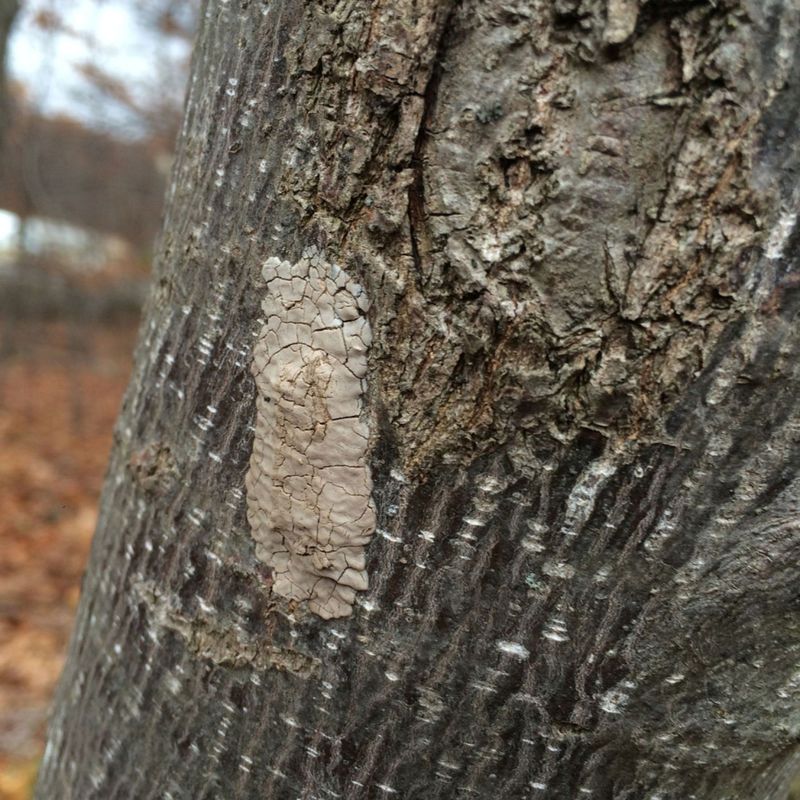
Honestly, most people walk right past these egg masses without a second glance. They are sneaky. At first, they look like someone flicked a bit of mud onto a tree.
Size is a good clue. A typical egg mass is about 1 to 1.5 inches long, roughly the length of your thumb. It is usually shaped like a rough rectangle or oval.
When the eggs are fresh, a female covers them with a gray, putty-like coating. It looks smooth and a little shiny, almost like wet cement. This coating protects the eggs from cold weather and hungry animals.
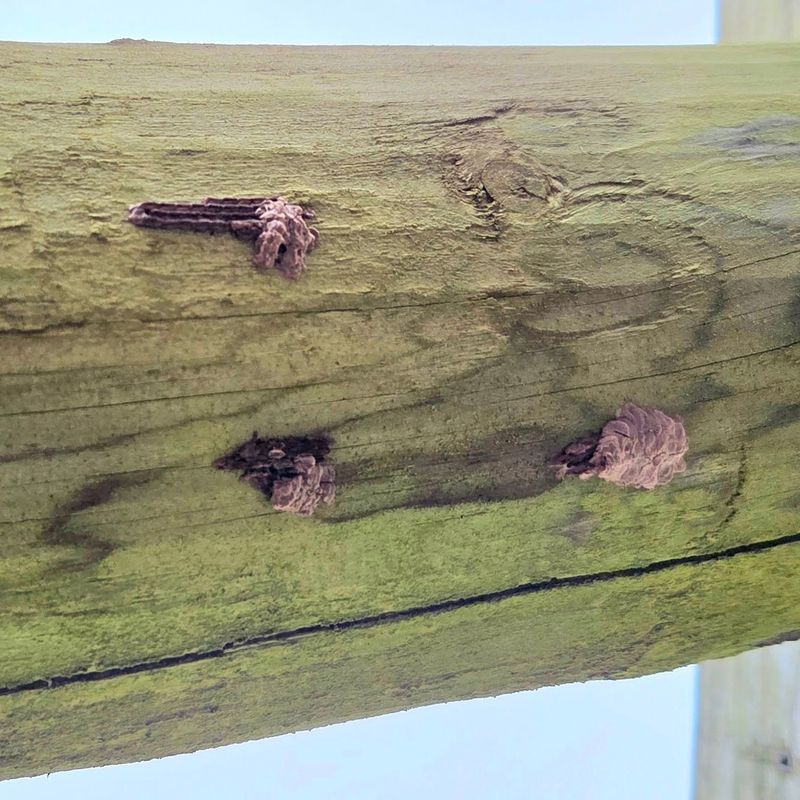
Over time, the coating dries out and changes. It turns a duller gray or tan and starts to crack. Through those cracks, you can see neat rows of small, brown, seed-like eggs lined up side by side.
Some egg masses have no coating at all. In that case, you will just see the rows of eggs, which look a bit like tiny grains of rice stuck together. These are just as important to remove.
Here is a fun fact. Scientists think the coating may also help the eggs blend into bark and stone. It works so well that trained inspectors sometimes miss them too.
Old egg masses that already hatched look different. You will see small round holes or empty, flat cases where nymphs crawled out. Those do not need to be scraped, though removing them helps you keep track of new ones.
A good tip is to run your fingers gently along bark. Egg masses often feel slightly raised. A small flashlight can also help on cloudy days.
Where To Look
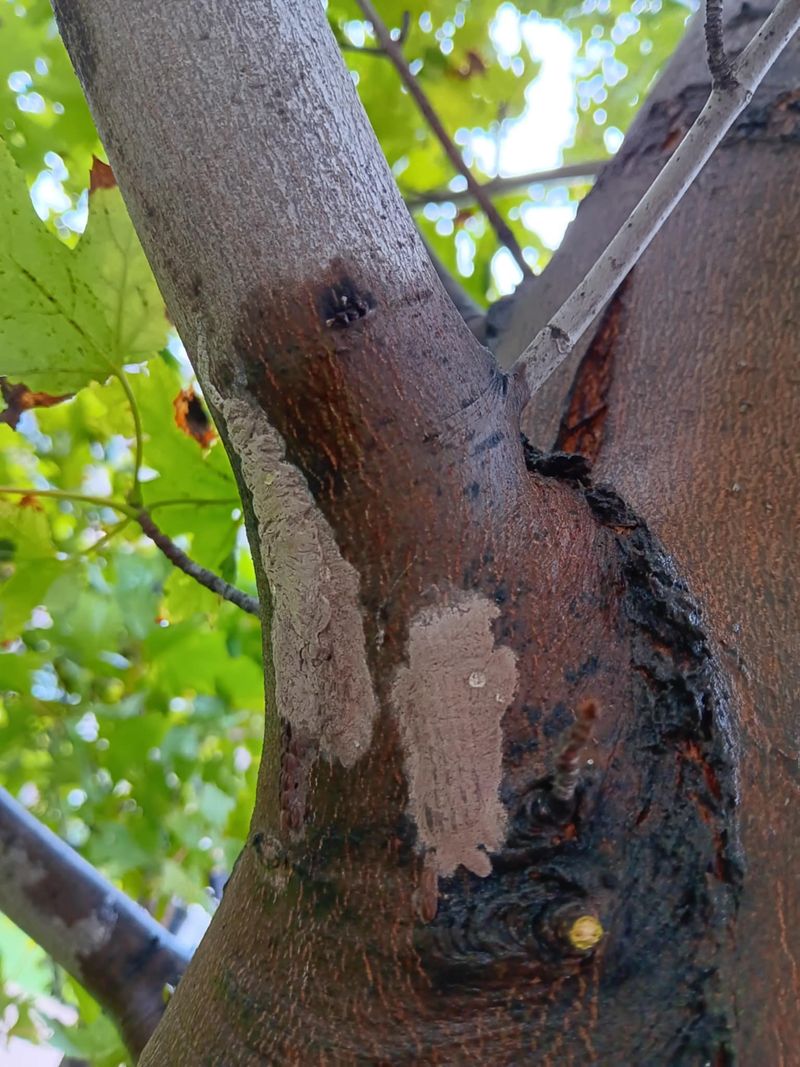
Lanternflies are not picky about where they leave their eggs. Almost any flat, hard surface will do. That makes finding them feel a little like a treasure hunt.
Trees are the most common spot. Tree of heaven is a favorite, but maples, black walnut, willows, and birch trees also get plenty of eggs. Check the trunk from the ground up to as high as you can safely see.
Look closely at the underside of branches too. Females like spots that are sheltered from rain and wind. The bottom side of a limb is a perfect hiding place.
Now step away from the trees. Lanternflies often lay eggs on outdoor furniture, fences, rocks, and garden decorations. Grills, birdbaths, and playsets are fair game as well.
Firewood is a big one. Egg masses tucked into a woodpile can easily travel to new places when people move the wood. Always check logs before bringing them inside or taking them camping.
Vehicles deserve special attention. Lanternflies lay eggs on cars, trucks, trailers, and boats, especially ones parked near trees for a long time. Check wheel wells, bumpers, and the underside of trailers.
Do not forget items stored outside. Old tires, pallets, flower pots, and tarps can all hide egg masses. Even the side of your house or shed is worth a quick scan.
Here is a smart plan. Start with any tree of heaven near your home, since lanternflies gather there most. Then work outward in a circle, checking everything along the way.
Shady, protected corners are top suspects. The more hidden the spot, the more likely you will find something.
How To Destroy The Eggs
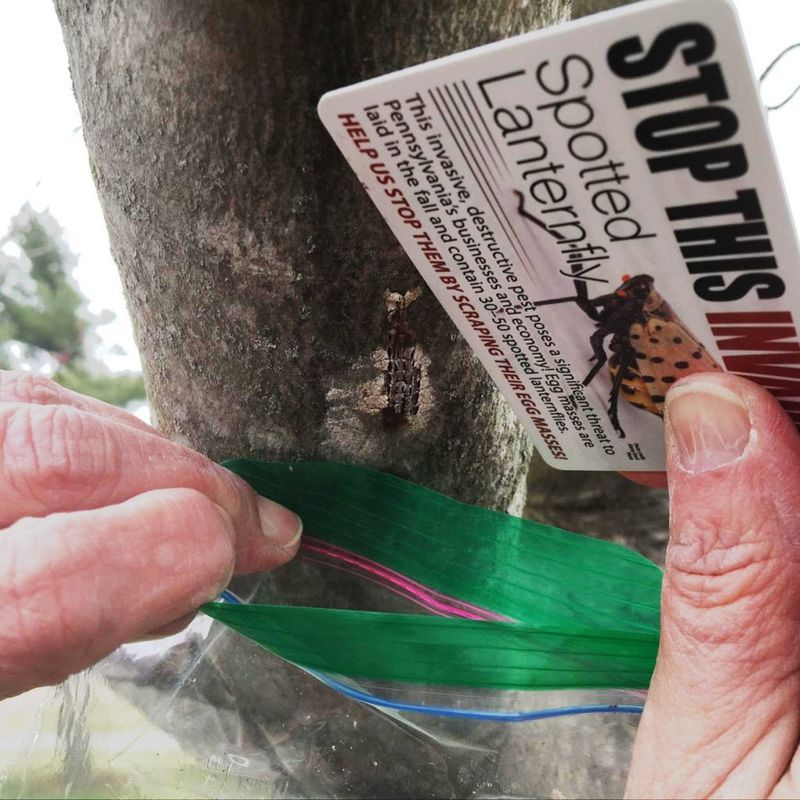
Grab an old gift card or library card, because it is about to become your best tool. Scraping off egg masses is simple, quick, and surprisingly satisfying. Anyone from kids to grandparents can help.
First, get your supplies ready. You will need a plastic card or putty knife and a zip-top bag or small jar. Fill the bag or jar with rubbing alcohol or hand sanitizer.
Next, hold the open bag right under the egg mass. Press the card firmly against the surface and scrape downward. The eggs should pop off and fall straight into the liquid.
Once the eggs are soaked, seal the bag tightly. Toss it in the trash. The alcohol makes sure none of those eggs will ever hatch.
Here is a common mistake to avoid. Many people just knock the eggs onto the ground and walk away. Sadly, lots of those eggs can still hatch in the spring, so the job is not done.
Squishing works too, but you have to be thorough. Press hard enough to hear the eggs pop. If you hear a crunch, that is a good sign.
For egg masses high up in trees, do not climb or use shaky ladders. Some people use a scraper attached to a long pole. If a tree is badly covered, contacting a tree care professional is a safe choice.
Wear gloves if you like, since the coating can be a little sticky. Wash your hands afterward.
Every mass you remove is a small win. Keep count and challenge your family or neighbors to see who scrapes the most this season.
Help Stop The Spread
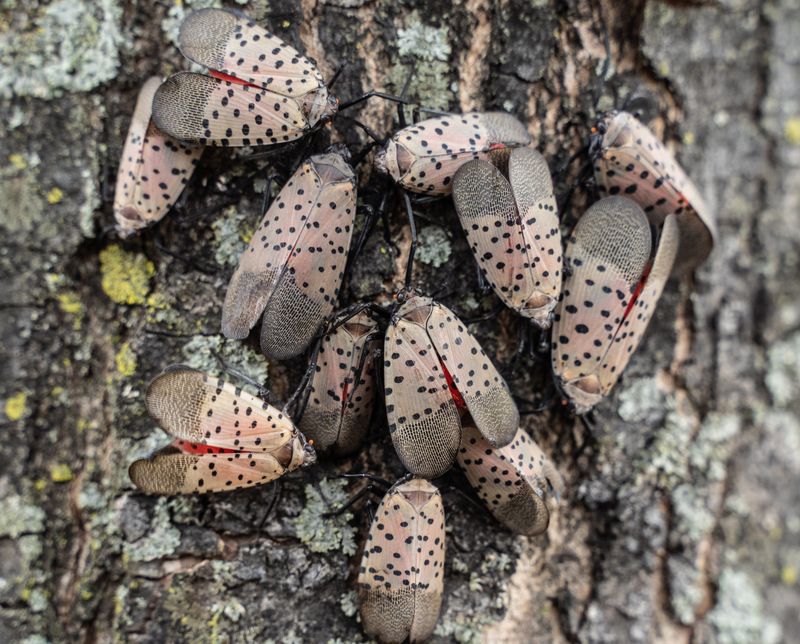
“Look before you leave” is a motto Pennsylvania officials want everyone to remember. Lanternflies are terrible long-distance fliers. They mostly spread by hitching rides with people.
Cars, trucks, campers, and trailers are their favorite taxis. Adults sneak inside open windows, and females lay eggs on the outside of vehicles. Then those eggs ride along for miles before hatching somewhere brand new.
That is exactly how lanternflies reached so many other states. A single egg mass on a trailer can start a whole new population hundreds of miles away.
Pennsylvania has a quarantine zone that covers many counties. If you live or work in one, there are rules about moving certain items.
Firewood, outdoor furniture, landscaping supplies, and vehicles all need a careful check before leaving.
Businesses that move goods in and out of these areas may even need a special permit. The Pennsylvania Department of Agriculture has updated maps and guidance on its website. Check it to see if your county is included.
Before any road trip, take five minutes to walk around your vehicle. Look at bumpers, wheel wells, roof racks, and trailer hitches. Keep windows closed when parked near infested trees.
Going camping? Buy firewood near your campsite instead of bringing it from home. That one small choice protects forests in other areas.
Reporting matters too. If you spot lanternflies or egg masses in a new area, report them online through the state’s reporting tool. Your sighting helps scientists see where the bugs are heading.
Every careful check adds up. When neighbors work together, they can slow this pest down and protect the trees, farms, and parks everyone loves.