Native Ground Covers To Plant Instead Of Invasive Periwinkle In Georgia Shade
Periwinkle can cover a shady patch quickly, but that easy growth comes with a problem once the vines start moving beyond the bed.
This familiar ground cover can spread into nearby natural areas and form dense mats. Replacing it gives you room to choose plants better suited to local landscapes.
Native options can handle shade while bringing different textures, flowers, and growth habits beneath trees.
Look at the moisture and light in your planting spot before choosing a replacement. Green and gold, foamflower, and wild ginger each perform best under slightly different conditions.
Shady Georgia yards have more native choices than periwinkle might make you think.
Start with plants that match the site rather than choosing only for fast coverage. That approach can create an attractive ground layer without depending on an invasive vine.
1. Allegheny Spurge Fills In Like Pachysandra Without The Invasive Streak
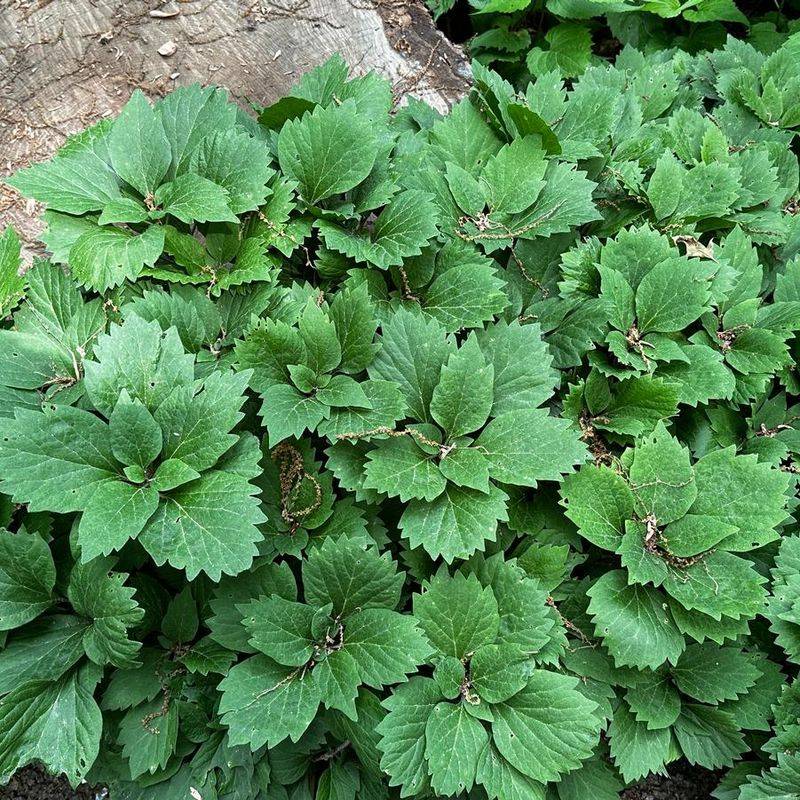
Japanese pachysandra gets planted everywhere, yet its native cousin is quietly the better neighbor. Allegheny spurge grows wild in parts of the Southeast, including some rich woods in Georgia.
Its leaves sit in loose whorls atop short stems, usually reaching about six to twelve inches tall.
Look closely in early spring and you may spot fuzzy white flower spikes rising near the ground. They often appear before new leaves fully open, and some gardeners say they carry a light, sweet scent.
Leaves can show soft silvery mottling as the season goes on, which adds texture to dim corners.
Moist, well-drained soil with plenty of organic matter suits it best. Heavy clay that stays soggy can lead to weak growth, so mixing in leaf compost before planting usually helps.
Spread happens slowly through underground rhizomes, so expect a patch to take several years to fill in.
Planting small plugs about a foot apart can speed things up a bit. Keep them watered during their first summer, especially through hot, dry weeks.
In colder areas the foliage can stay semi-evergreen, though winter looks vary with temperature and exposure. Older leaves may brown by late winter, and trimming them back in early spring makes room for fresh growth.
2. Green-And-Gold Dots Shady Ground With Starry Yellow Flowers
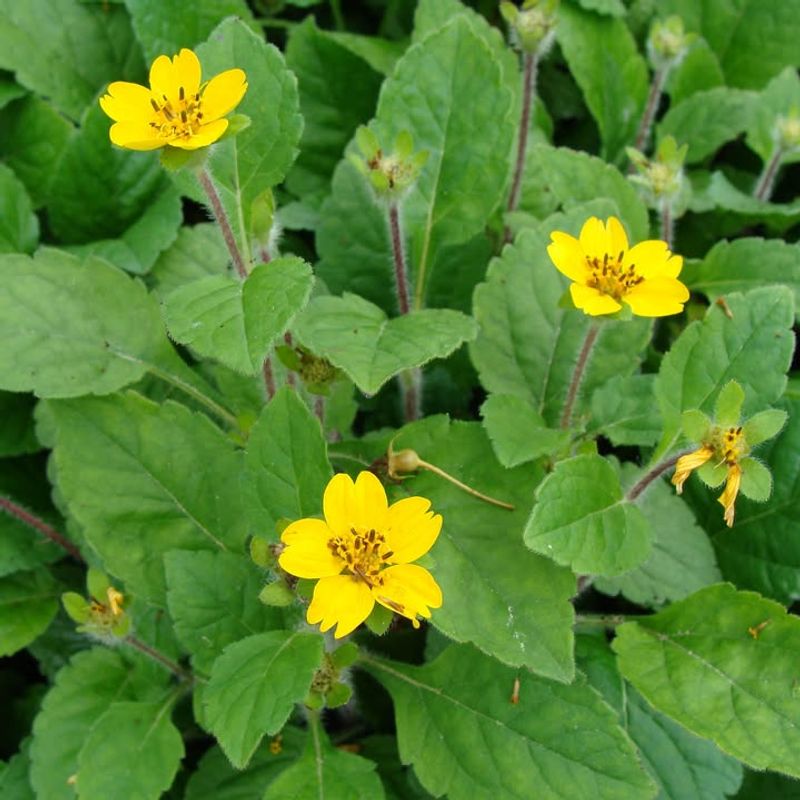
Bright yellow in deep shade sounds unlikely, until green-and-gold blooms in spring. Its cheerful five-petaled flowers look like little stars sprinkled across low, fuzzy leaves.
Gardeners across Georgia often grow it along paths, at the front of borders, or under deciduous trees.
Most plants stay around four to eight inches tall and spread by runners or slowly widening clumps. How fast it fills in depends on the selection you buy, since some types creep more than others.
Spring brings the heaviest flush of flowers, though scattered blooms may return in cooler weather later in the year.
Partial shade usually gives the best results. Dense, all-day shade can mean fewer flowers, while hot afternoon sun may scorch the leaves in summer.
Soil should drain well and hold some moisture, which is why a layer of shredded leaves works nicely around new plants.
Your Georgia Garden Changes Every Week. Your Plan Should Too.
Gardening in Georgia changes quickly throughout the season. Every Friday you’ll receive a simple weekly plan showing exactly what to plant, prune, fertilize, harvest, and protect so you never miss the right timing.
Watch for crown rot if water sits around the base for long stretches. Planting slightly high on a gentle slope or in a raised spot can reduce that risk in heavy clay.
Foliage tends to stay green through mild winters, giving bare ground a little life in January.
Dividing crowded clumps in early spring or fall is an easy way to get more plants for free.
3. Tiny Red Berries Brighten Partridgeberry’s Evergreen Mat Through Winter
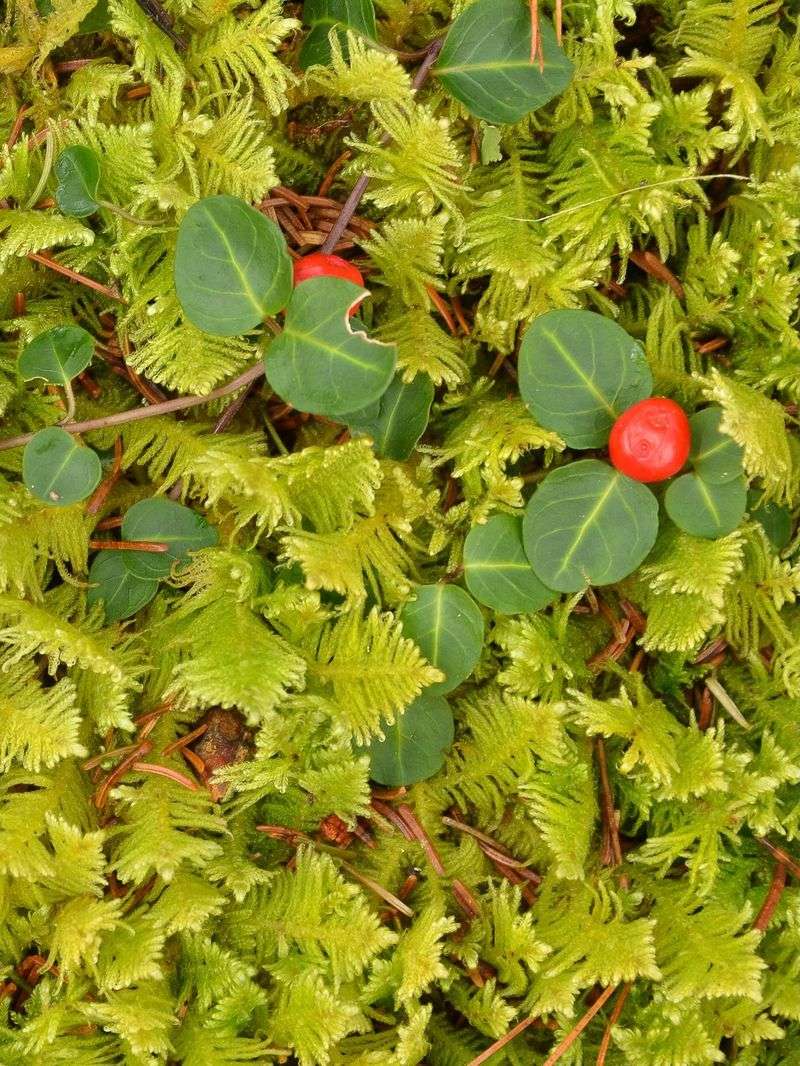
Small but tough, partridgeberry hugs the forest floor like a living green lace. Its stems creep flat along the ground, rooting as they go and rarely rising more than an inch or two.
Round, shiny leaves often carry a pale stripe down the middle, and they stay green all year.
Paired white flowers open in late spring or early summer, usually with a faint fragrance. Each pair of blossoms joins to form a single red berry, which may hang on well into winter if wildlife leaves it alone.
Birds and small mammals sometimes eat the berries, so the show can vary from year to year.
Acidic, humus-rich soil that stays slightly moist is what this plant prefers. It often grows wild in shady Georgia woodlands near moss, ferns, and decaying leaves.
Growth is slow, so it works best in small spaces rather than big bare slopes.
Try tucking it between stepping stones, along a shady walkway, or around the base of a tree. Keep heavy mulch from burying the thin stems, since a light leafy layer is plenty.
Foot traffic should stay light, because the delicate vines can be crushed easily.
Buy nursery-grown plants rather than digging them from the wild, which helps protect native populations.
4. Woodland Phlox Brings Soft Spring Color To Shady Ground
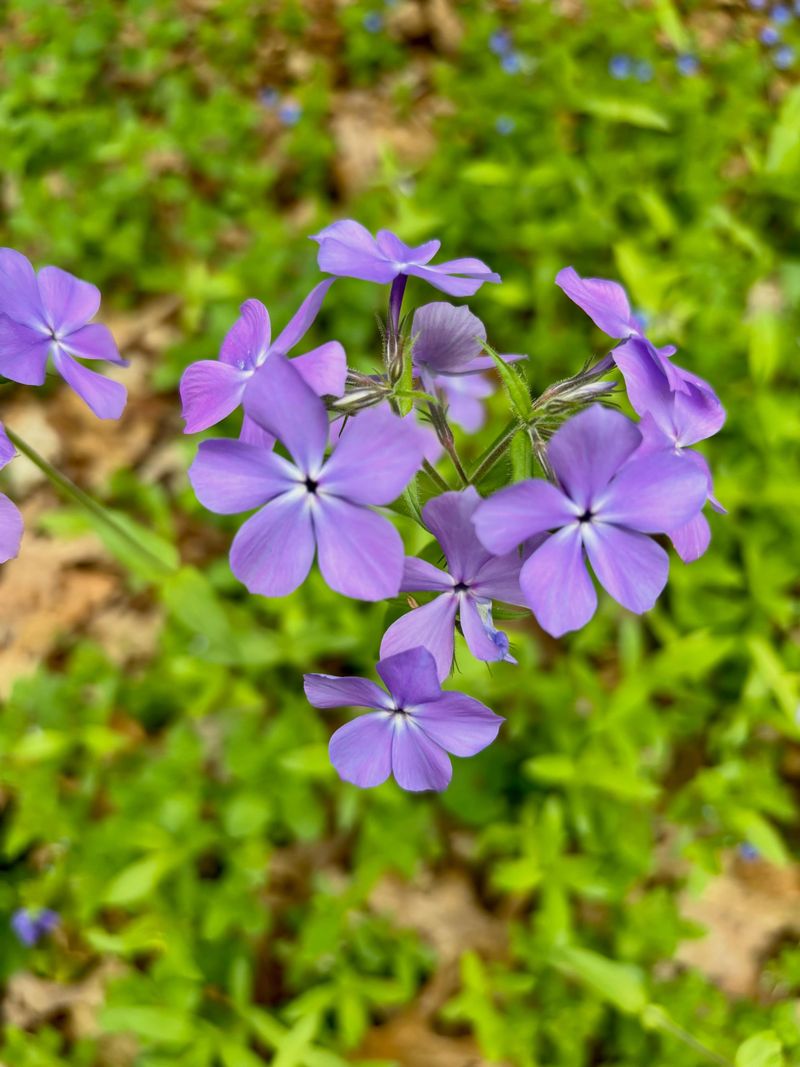
April under the oaks can look magical once woodland phlox opens its lavender clouds. Its loose clusters of flowers range from pale blue to soft purple, and white forms exist too.
Bloom stems typically reach about ten to fifteen inches, then the plant settles into a low leafy mat.
Swallowtails and other butterflies may visit the flowers, along with some long-tongued bees. Pollinator activity depends on your area and the season, but a sizable patch improves your chances.
Light to medium shade with rich, moist soil keeps it happiest through the season.
Planting under deciduous trees works well because spring sun reaches the plants before the canopy leafs out. Summer shade then protects them from the harsh heat that Georgia afternoons can bring.
Powdery mildew sometimes shows up in humid weather, especially when air moves poorly.
Spacing plants about a foot apart and avoiding overhead watering in the evening can help. After flowering, you can trim back spent stems so the plant looks tidier for summer.
Spreading happens through creeping stems that root where they touch soil, so patches widen over a few years.
Pair it with ferns or heartleaf ginger, and the bed stays interesting once the flowers fade.
5. Spreading Types Of Foamflower Gradually Form Wide Patches
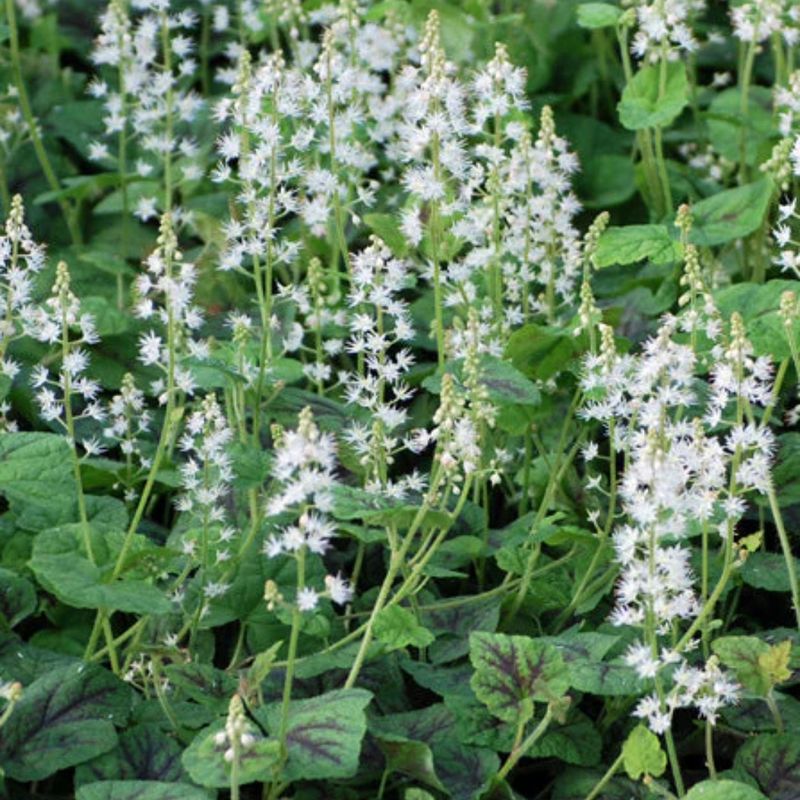
Picture frothy white spikes floating above a low carpet of leaves, and you have foamflower in spring. Bloom time usually falls around April, though weather can shift it a week or two either way.
Not every foamflower spreads, so check the plant tag before you buy.
Clumping kinds stay put in tidy mounds. Running types send out stolons, which are slender above-ground stems that root and form new plants nearby.
If ground coverage is your goal, look for selections described as spreading or stoloniferous.
Leaves are often lobed and somewhat maple-shaped, and many cultivars show dark markings along the veins. In mild winters across much of Georgia, the foliage can stay mostly green, sometimes picking up bronze or reddish tones.
Moist, rich soil in partial to full shade gives the best results.
Dry summers can cause leaf edges to crisp, so deep watering during long droughts helps. A thin layer of shredded leaves keeps the roots cooler and holds moisture in the soil.
Small bees and other pollinators may visit the blooms on warm spring days.
Once a patch fills in, you can lift rooted runners and move them to bare spots elsewhere in the bed.
6. Golden Ragwort Handles Damp Shade And Blooms Early
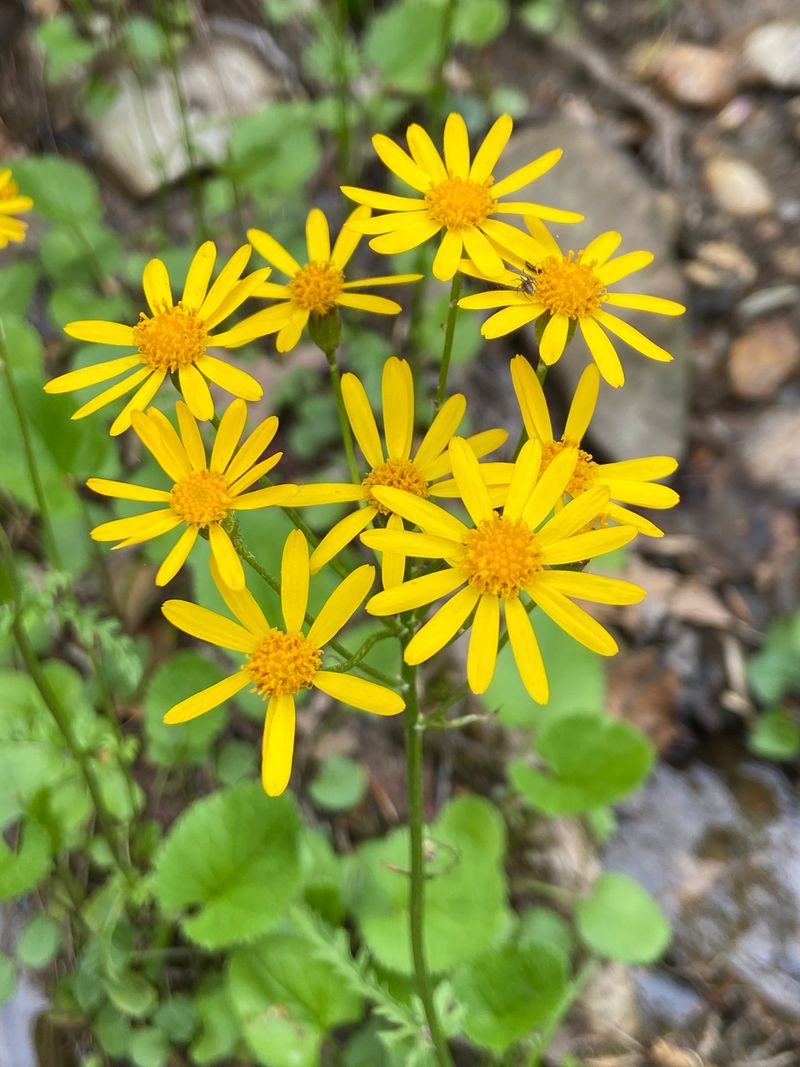
Soggy spots near downspouts give plenty of plants trouble, yet golden ragwort seems right at home there. It grows naturally along stream banks and in moist woods, including many areas of Georgia.
Bright yellow, daisy-like flowers rise on stalks in early spring, often around March or April.
Those blooms can reach one to two feet tall, while the rounded leaves stay low near the ground. Early flowers may offer food for pollinators at a time when few other plants are blooming.
Spread comes from both underground runners and seed, so a patch can widen fairly fast in good conditions.
Some gardeners love that energy, while others find it a bit too eager in small beds. Cutting off flower heads before they set seed can help slow its expansion if needed.
Moist soil gives the thickest growth, though established plants often handle short dry spells.
Basal leaves frequently stay green through mild winters, giving some color when other plants have faded. In harsh cold snaps the foliage may turn purplish, which is normal and usually temporary.
All parts of the plant contain compounds that can be toxic if eaten, so keep that in mind around pets or livestock.
Deer tend to leave it alone, which is a nice bonus in suburban yards.
7. Wild Stonecrop Creeps Over Shaded Rocks With Succulent Leaves
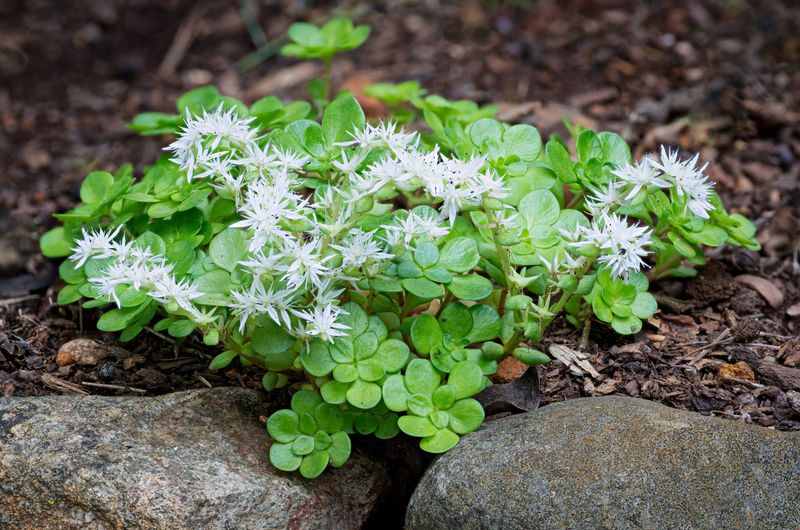
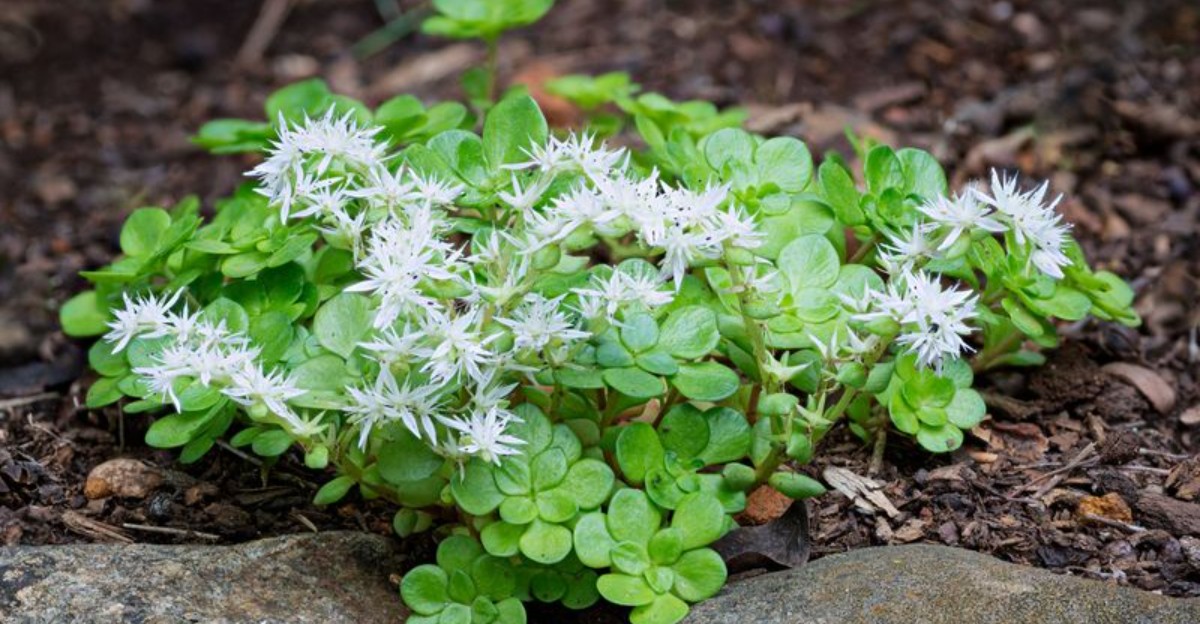
Succulents usually make people think of deserts, not shady woods. Wild stonecrop breaks that idea, growing naturally on rocky slopes and moist ledges in parts of the eastern United States.
Its fleshy little leaves form low rosettes, rarely topping a few inches in height.
White, star-shaped flowers cluster on short stems in spring, giving the mat a light, airy look. Small bees and flies may stop by, though how busy the blooms get can vary.
Rocks, stone walls, and thin soil are where it really shines.
Tuck small pieces into cracks or along the edge of a rock garden, and they may root and slowly spread. Gardeners in north Georgia, where rocky ground is common, sometimes find it fits right into natural outcrops.
Good drainage matters more than rich soil, since roots can rot in heavy, waterlogged clay.
Light to partial shade suits it best, along with some moisture during long dry spells. In deep shade the plants may grow loose and thin, so a little dappled light usually helps.
Leaves often stay green through winter, though cold weather can tint them reddish.
Propagation is simple, because broken stem pieces frequently root when pressed into damp soil.
8. Heartleaf Ginger’s Mottled Evergreen Leaves Hide Little Jug-Shaped Flowers
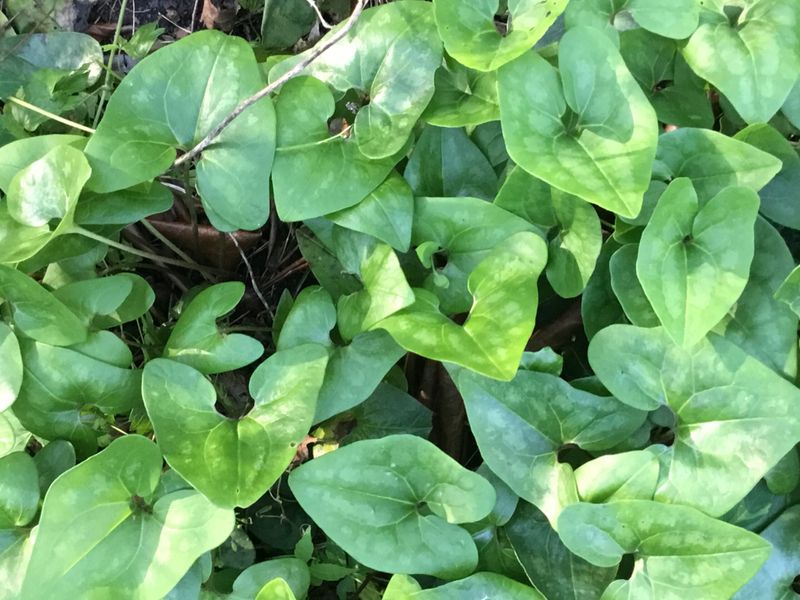
Lift a few leaves on heartleaf ginger in spring, and you might find a surprise near the soil. Small, brownish, jug-shaped flowers sit close to the ground, often half buried in leaf litter.
Its glossy, heart-shaped leaves carry the real show, usually patterned with silvery mottling.
Despite the name, it is not the ginger used in cooking. It belongs to a group often called wild gingers, and several kinds grow naturally in Georgia and nearby states.
Leaves generally stay evergreen, which makes it useful for winter interest in shady beds.
Clumps grow slowly, so patience pays off with this one. A plant may widen just a few inches each year, depending on soil, moisture, and shade.
Acidic, well-drained soil rich in organic matter suits it well.
Consider planting several clumps close together if you want faster coverage. Spacing them around eight to twelve inches apart can help them merge into a patch sooner.
Watering during the first summer helps roots settle in before hot, dry stretches arrive.
Edges of paths, shady slopes, and spots beneath rhododendrons or mountain laurel all make fine homes. Once settled, it usually needs little care beyond clearing heavy leaf piles that might smother the plants.
9. Pennsylvania Sedge Can Stand In For Grass Under Dry Shade
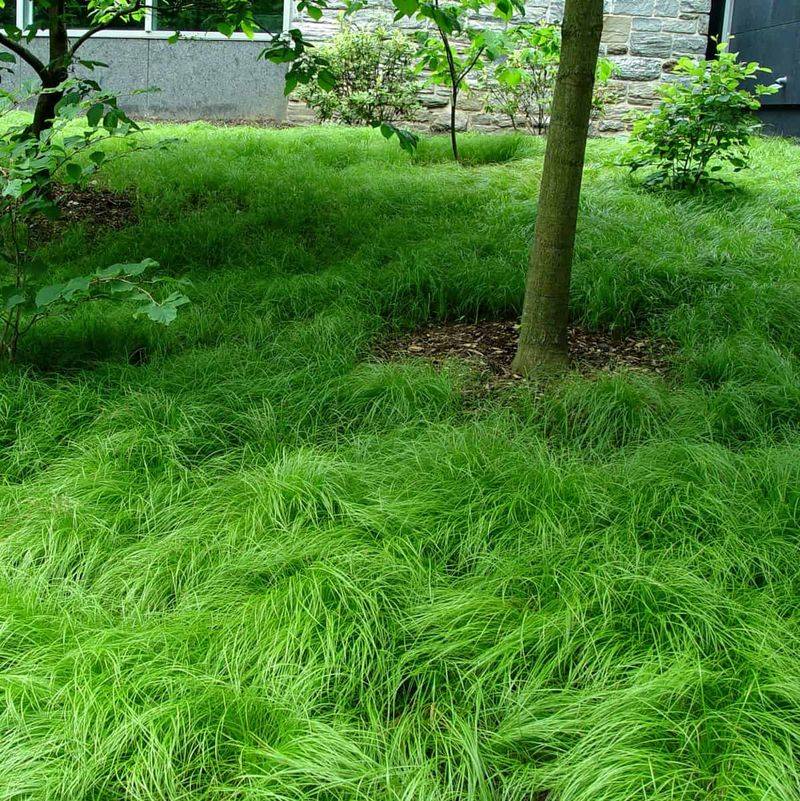
Turf grass under big shade trees often ends up thin, patchy, and frustrating. Pennsylvania sedge offers a softer option, forming low, fine-textured tufts that can look like a loose, flowing lawn.
Most plants stay around six to ten inches tall, with narrow leaves that arch gently.
Dry shade is where it earns its reputation. Root-filled ground beneath oaks and other trees can be tough, yet this sedge often handles those conditions once established.
Mowing is optional, and many people leave it alone for a natural meadow look.
If you prefer a tidier appearance, trimming it once or twice a year with the mower set high usually works. It does not tolerate heavy foot traffic like typical lawn grass, so plan stepping stones for busy paths.
Spread happens through rhizomes, but growth is slow at first.
Plugs spaced around eight to twelve inches apart can fill in over a couple of seasons, depending on soil and rainfall. Regular watering during the first year is helpful, especially through hot summers in the South.
Foliage may stay green in mild winters or turn tan in colder spells.
Nurseries focused on native plants are usually the best source, since availability can be spotty at big box stores.