Arizona Yellow Bells: A Candidate Shrub for a Hot, Sunny West Wall
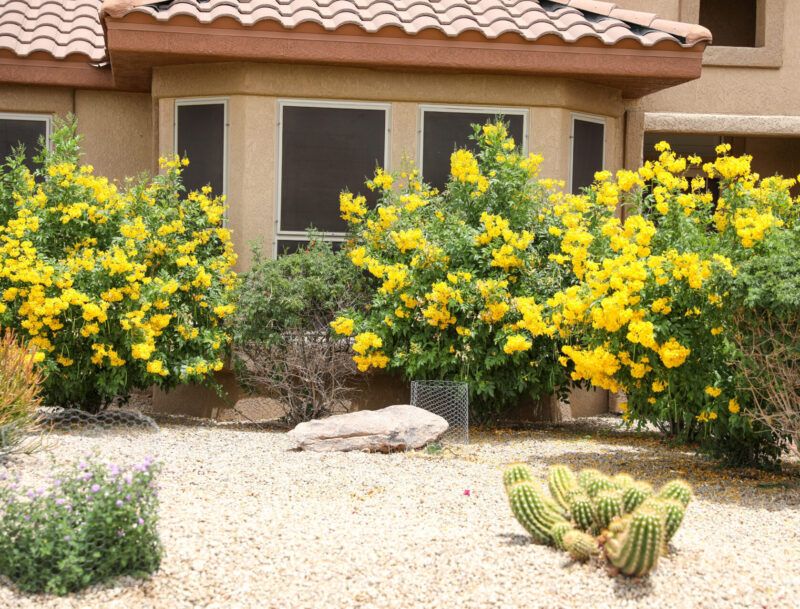
The hot wall on the west side of a house is the spot where many gardeners give up. Arizona yellow bells is a desert shrub with bright yellow trumpet flowers that is worth a look for that space.
It is not a magic fix, though, and the wall itself matters as much as the plant. Here is what to know before you dig a hole.
Arizona Yellow Bells Is a Candidate, Not a Proven Wall-Side Winner
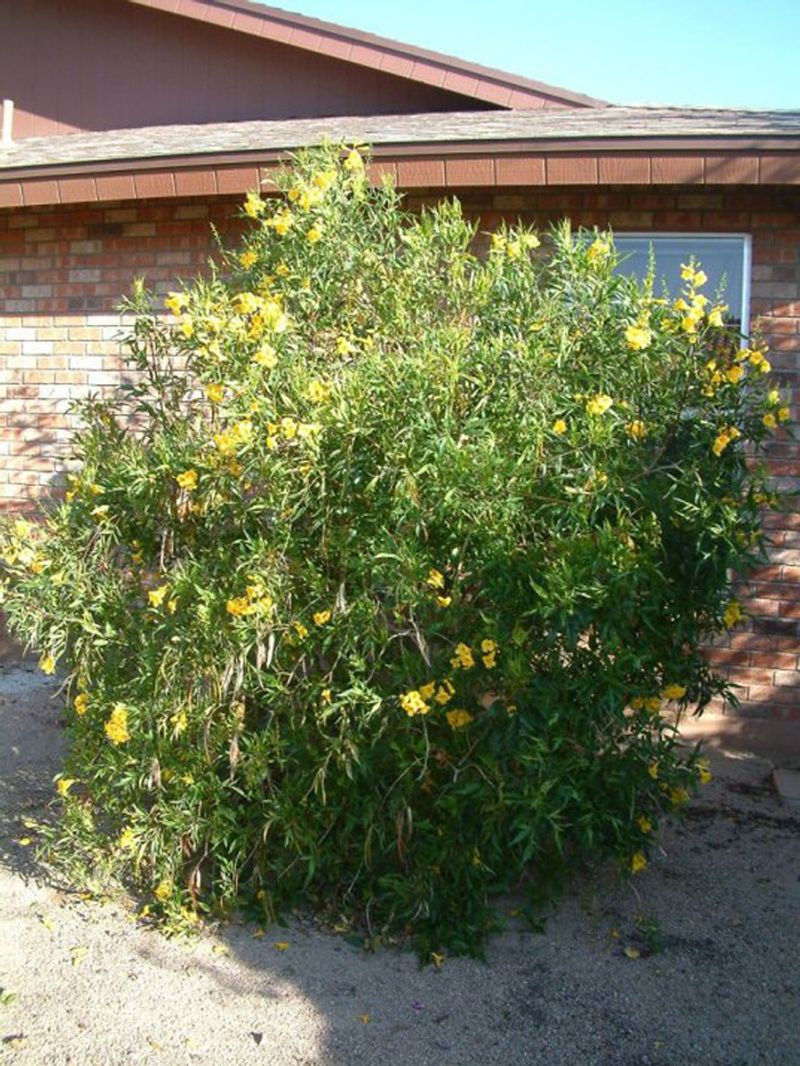
Arizona yellow bells, Tecoma stans, is a strong candidate for a sunny, hot yard. The form to look for is the narrow-leaf Arizona type, Tecoma stans var. angustata.
The Arizona Native Plant Society plant list describes it as native to southern Arizona and lists it for full sun.
That is a good reason to consider it. It is not proof that this shrub blooms hardest against a west-facing wall, or that it beats other shrubs there.
Nobody has run a side-by-side comparison for that exact spot.
Plant labels matter too. Nurseries sell several plants under the name yellow bells, and the local narrow-leaf form is described as hardier in cold than the more tropical types.
Check the tag, and ask the nursery which form you are buying.
A West Wall Adds More Than Afternoon Sun
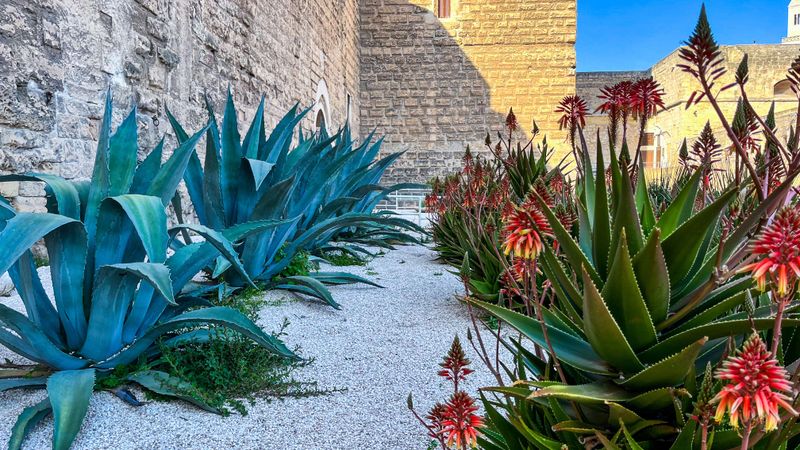
Stand at the base of your west wall at 4 p.m. in July and you will feel the difference. Direct afternoon sun is only part of it, because the wall soaks up heat and sends it back.
University of Arizona Extension guidance notes that west and south sides run hotter, and that some plants handle full sun but not reflected heat.
Not every wall behaves the same. Wall color, nearby paving or gravel, air movement, and the health of the plant all change how harsh the spot gets.
Before planting, look at your own site. Is there a light-colored wall or a concrete patio bouncing heat?
Does a breeze move through? A full-sun listing is a starting point, not a promise for every wall.
Expect Seasonal Flowers From Late Spring Into Fall
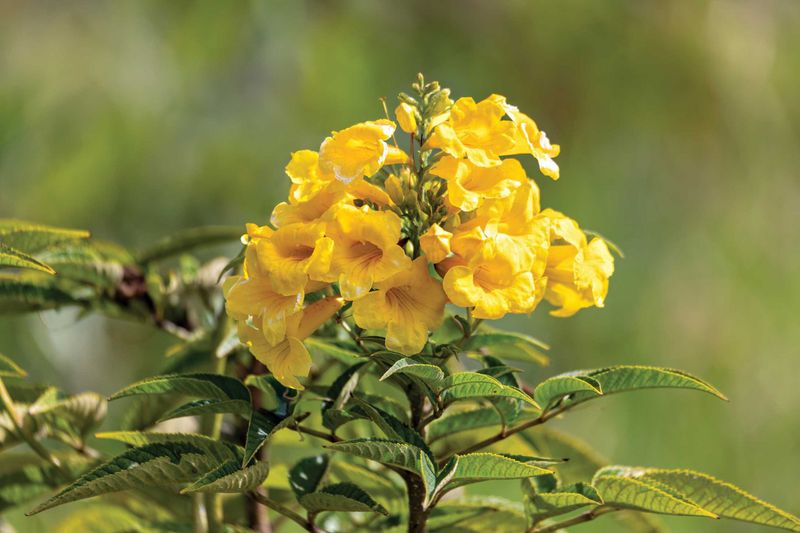
Local references place the flowering season from late spring into early fall, roughly May through October, according to the Arizona Native Plant Society. Do not expect flowers all year.
Timing and how heavy the show is can shift with the site and the season.
Arizona’s low-water-use plant list also includes Arizona yellow bells, with spring-to-fall bloom.
Low water use does not mean no water. A shrub that is thirsty, stressed, or still settling in may flower lightly.
Think of a good bloom as something the site helps earn, not something every yard gets.
Plan for a Full-Sized Shrub and a Suitable Arizona Climate
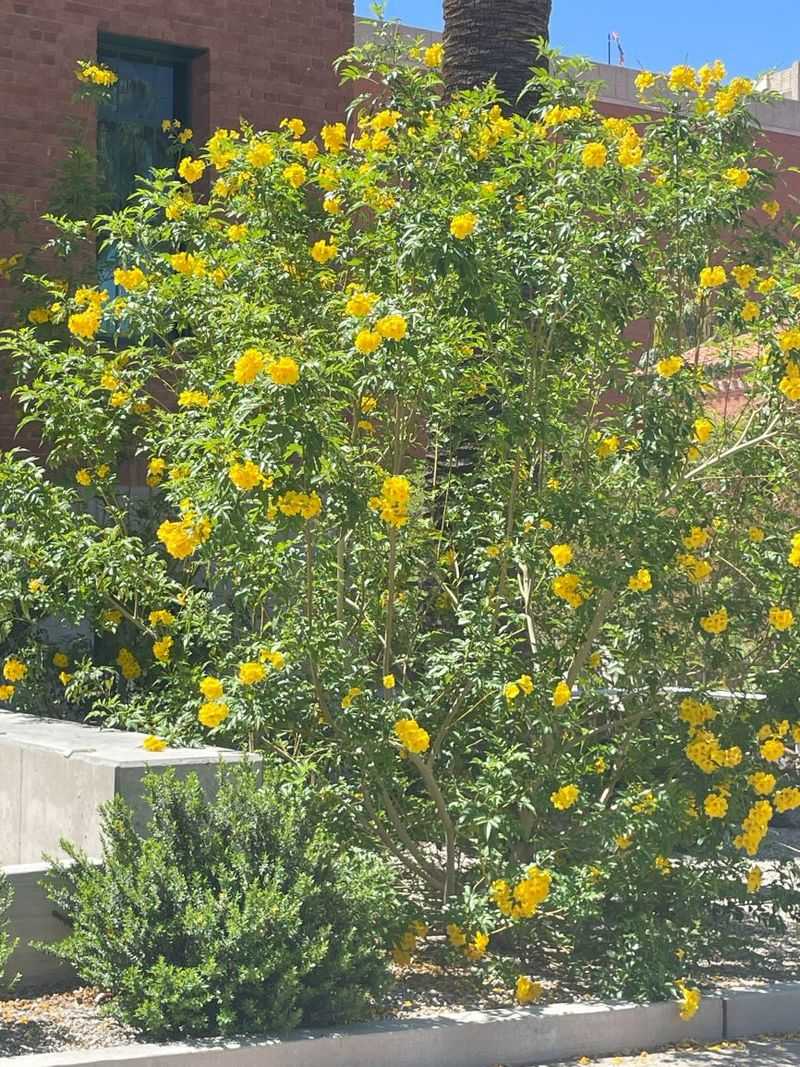
This is not a slim, wall-hugging plant. References give roughly 3 to 8 feet in height and 4 to 8 feet in width, and the University of Arizona Arboretum lists about 6 to 8 feet tall and wide.
Your Arizona Garden Changes Every Week. Your Plan Should Too.
Gardening in Arizona changes quickly throughout the season. Every Friday you’ll receive a simple weekly plan showing exactly what to plant, prune, fertilize, harvest, and protect so you never miss the right timing.
Leave real room from the wall, walkways, and neighbors.
Climate matters as well. The shrub is native to southern Arizona, and listed minimum temperatures sit around 25 to 28°F.
Cold pockets and higher elevations may be a poor fit, so the advice here suits the low desert better than the whole state.
Fall is a good planting window. Pima County Extension’s November guide suggests planting nursery-grown shrubs that month, before frost.
It is not the only time that can work.
Water According to Establishment and Root-Zone Conditions
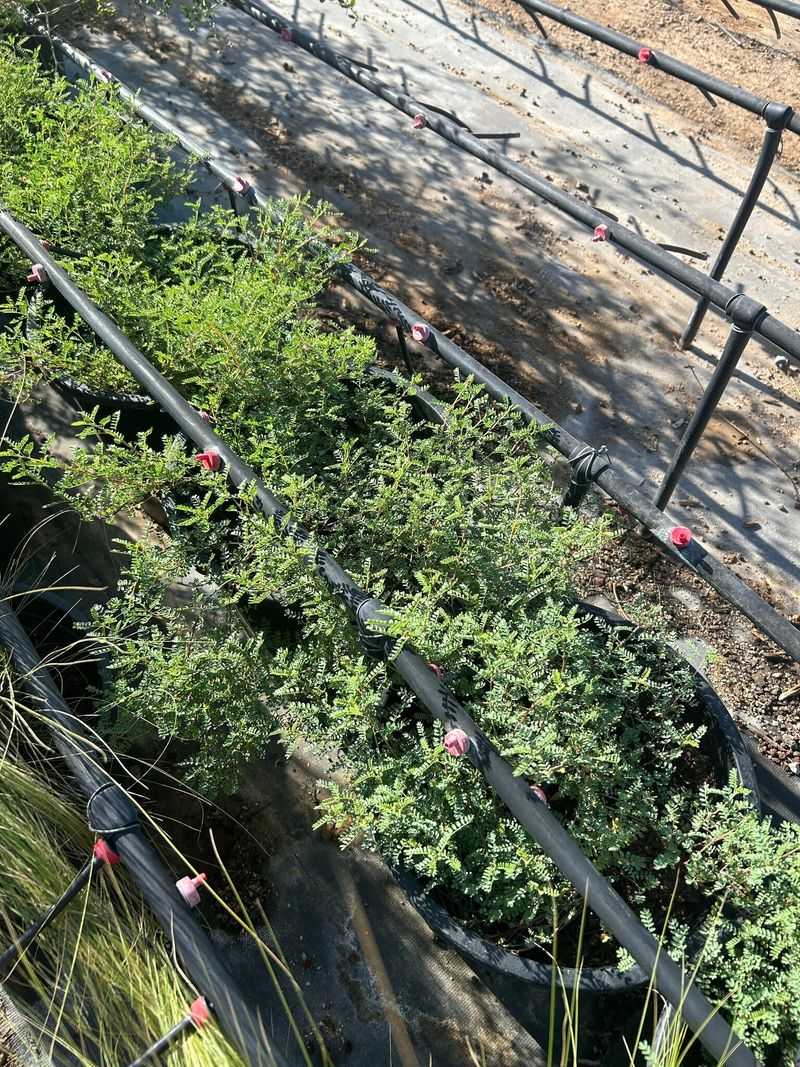
A new shrub and an established one need different care. While roots are getting settled, a newly planted desert-adapted shrub needs more frequent irrigation.
Later, the usual advice is deep, infrequent watering, as covered in the Extension guide to watering trees and shrubs.
There is no single schedule that fits every yard. Soil type, weather, how your drip line delivers water, and the moisture in the root zone all change what the plant needs.
Check that water actually reaches the roots, not just the surface.
A simple habit helps: dig a few inches down near the root ball and feel the soil before you water. Low-water-use plants, such as those on lists like the Sierra Vista recommendations, still need water, especially in the first seasons and during long extreme heat.
Choose It for Potential Seasonal Color, Not a Guarantee
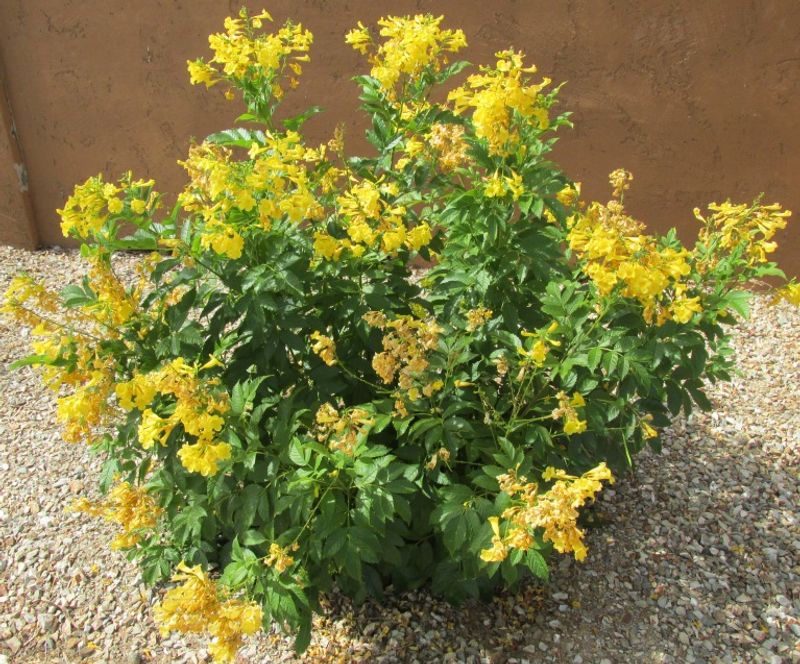
Here is a simple rule. Arizona yellow bells is worth considering if your low-desert yard has room for a large shrub, a sunny spot, and conditions that let it establish.
A west wall still calls for your own judgment, since reflected heat can be tougher than plain sun.
Wildlife may be a bonus. Bumblebees, carpenter bees, and hummingbirds are listed as visitors to the flowers, but a given yard may or may not see them.
Do not count on it as pest control either.
Try it on the hot side, give it space and careful watering, and watch how it responds through its first summer. The yard, not the compass direction, decides the outcome.