Honey-Colored Mushrooms Near Georgia Trees May Reveal A Hidden Problem
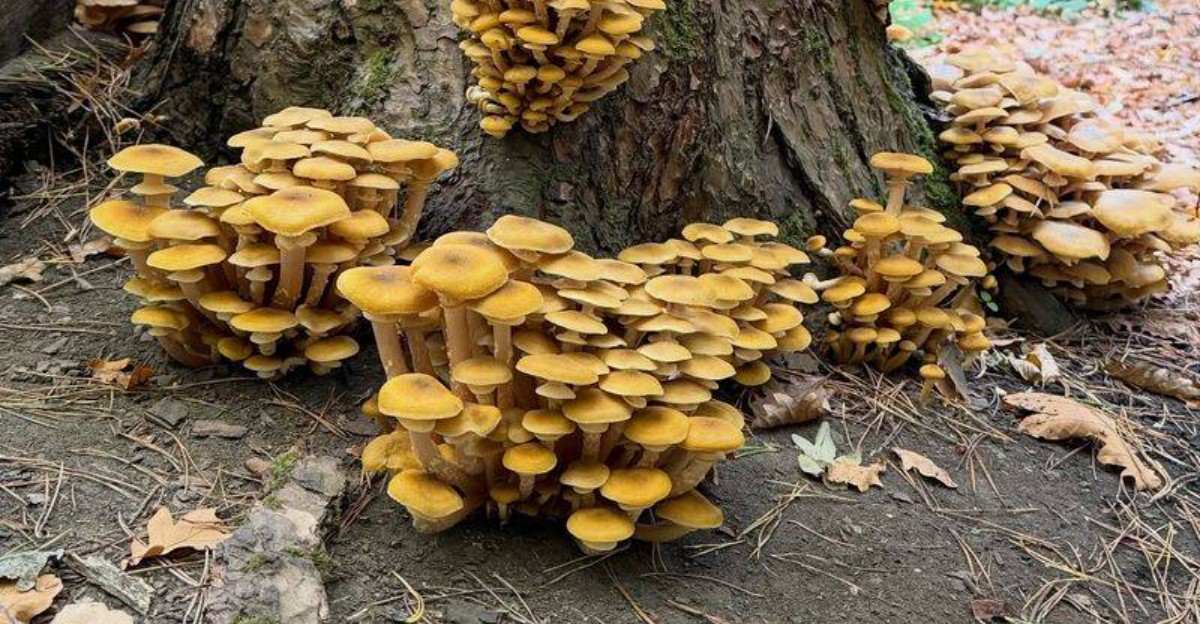
Honey-colored mushrooms clustered around a tree trunk can be easy to dismiss, but their location may tell you something important about the tree.
Some mushrooms associated with Armillaria root rot appear in groups near trunks, roots, or buried wood. Their presence deserves a closer look rather than immediate removal.
Check the tree itself for other signs of stress before assuming mushrooms are the only issue.
Armillaria can affect trees and shrubs in Georgia, particularly when plants are already under stress. Mushrooms alone are not enough to confirm the problem.
Look around the root flare and lower trunk without cutting into healthy bark unnecessarily.
If the tree also appears unhealthy, consider having the problem properly identified before deciding what to do next. Correct identification matters because several harmless mushrooms can look surprisingly similar.
1. Golden Clusters Around A Trunk Hint At What’s Happening Underground
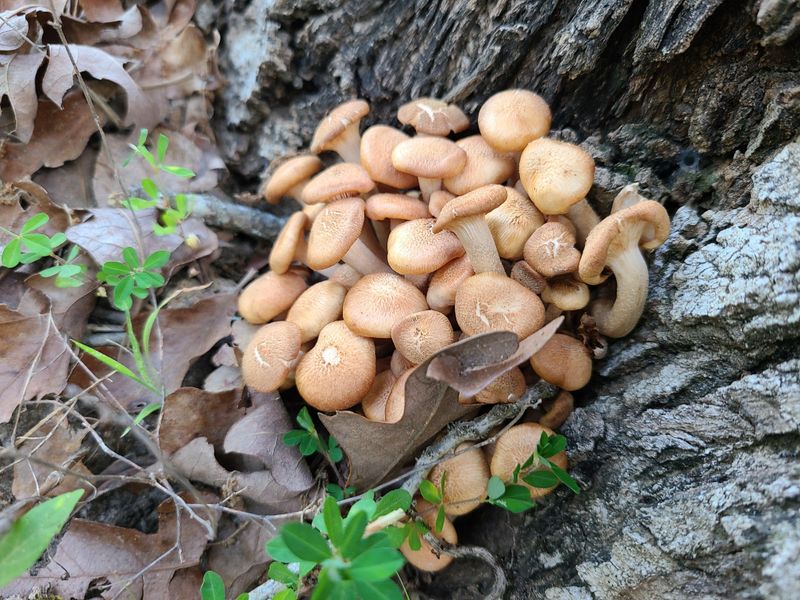
Pretty mushrooms can carry a not-so-pretty message. When tan or honey-gold caps crowd tightly around the base of a tree, Armillaria root rot is a common suspect.
Armillaria is a fungal disease that attacks tree roots and the lower trunk, and honey mushrooms are its fruiting bodies.
Look for caps that range from yellowish to light brown, often with tiny dark scales near the center. Many types also have a ring on the stem, though the ringless honey mushroom common in the Southeast lacks one.
In Georgia, these clusters tend to show up from late summer into fall, usually a few days after soaking rains.
Location matters when you are sizing things up. Mushrooms growing right against the trunk or along surface roots deserve more attention than ones scattered across the lawn.
Snap a few clear photos from different angles, including a close look at the gills and stem.
Those pictures help a county Extension agent or arborist confirm what you are seeing. Plenty of harmless mushrooms look similar, so a positive ID is worth the small effort.
Please skip tasting them, even if a neighbor swears they are edible, since several toxic look-alikes grow in the same spots.
2. The Mushrooms Are Just The Visible Part Of A Larger Fungus
Think of an iceberg. What pokes above the surface is only a small slice of something much bigger hiding below.
Honey mushrooms work the same way, since they pop up mainly to release spores while the real fungus lives in the soil and roots.
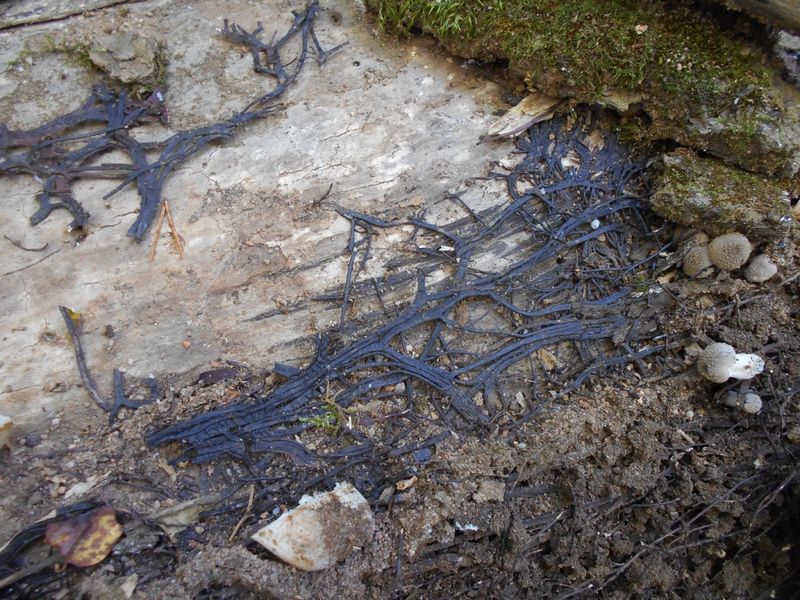
Underground, Armillaria spreads using dark, stringy strands called rhizomorphs. Gardeners often call them shoestrings because they look a lot like thin black bootlaces.
Those strands can creep through soil from an infected stump or root to nearby healthy roots.
Digging gently near a suspect tree sometimes reveals them clinging to roots or wrapped under bark. You might also spot them on old stumps left behind after a tree was removed.
Here in the red clay of Georgia, buried stumps and large root pieces can keep feeding the fungus for years.
Grinding out old stumps as deeply as practical may help limit nearby sources, though it will not remove every bit of fungus from the soil.
Your Georgia Garden Changes Every Week. Your Plan Should Too.
Gardening in Georgia changes quickly throughout the season. Every Friday you’ll receive a simple weekly plan showing exactly what to plant, prune, fertilize, harvest, and protect so you never miss the right timing.
Keep in mind that mushrooms may not appear every year, even when the fungus is active. Dry falls can mean few or no caps, so a missing crop does not prove the problem is gone.
3. Drought-Stressed Or Injured Trees Face Greater Risk
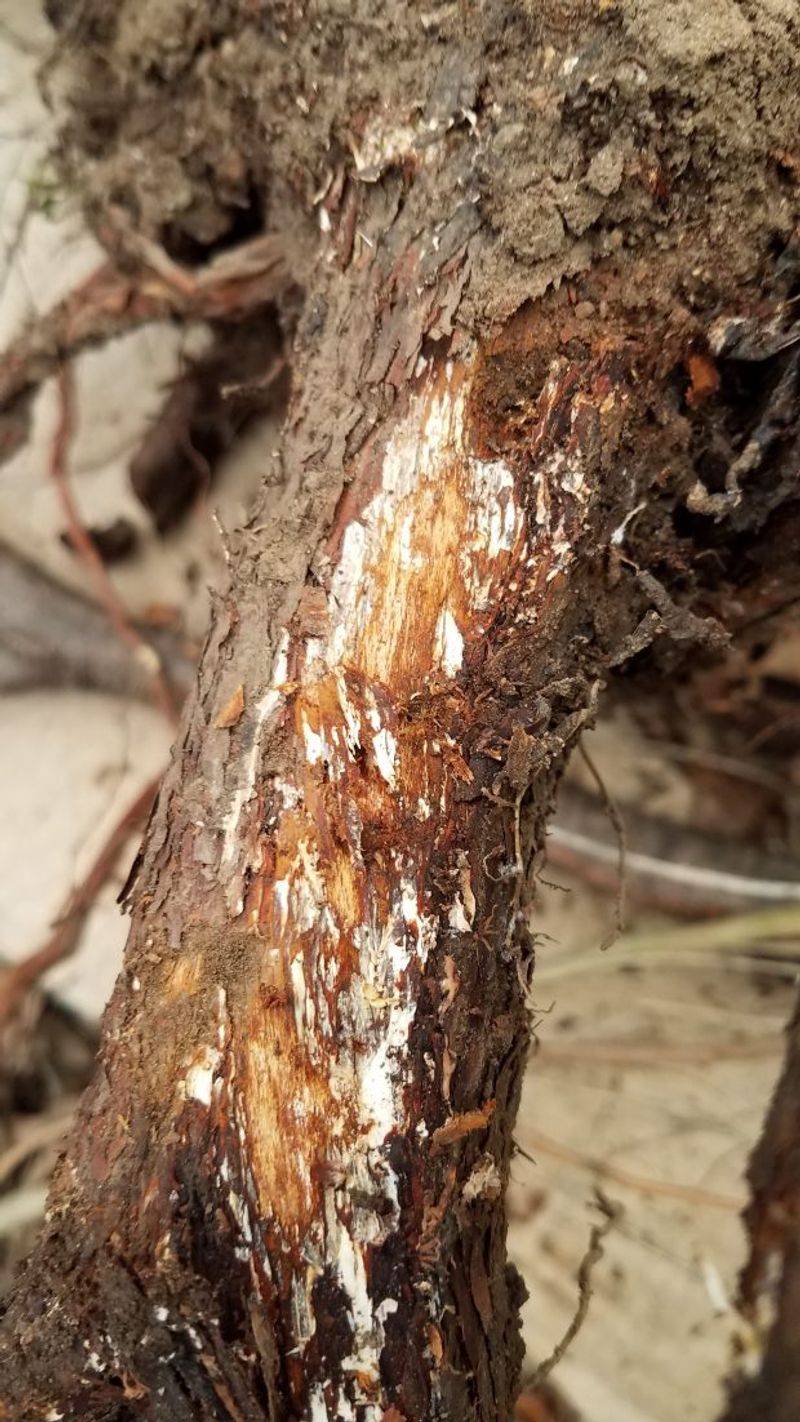
Healthy trees put up a good fight. Armillaria tends to cause the most damage when a tree is already worn down by other troubles.
Drought sits near the top of that list, and Georgia summers can bring long dry spells with intense heat.
Construction damage is another big one. Trenching for pipes, piling soil over roots, or driving heavy trucks across the root zone can stress a tree for years.
Small wounds add up too, like mower scars, string trimmer nicks, and roots cut during landscaping.
So what can you actually do? Deep, slow watering every week or two during long dry stretches helps established trees, though needs vary with soil type and tree size.
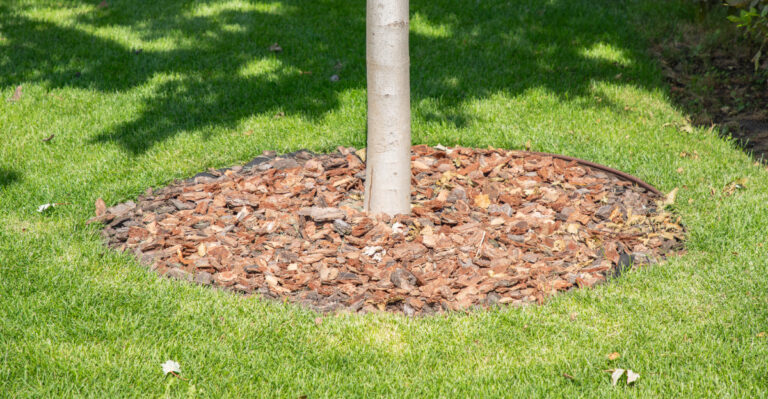
Spread mulch two to three inches deep, but pull it a few inches back from the trunk so bark stays dry.
Try to keep heavy equipment and new soil away from the area under the canopy whenever possible. Even a temporary fence during a home project can protect a lot of roots.
Water-oaks, laurel oaks, and older peach orchards are often mentioned as vulnerable, but stress level usually matters more than species alone.
4. White, Fan-Shaped Growth Under Loose Bark Is A Telltale Sign
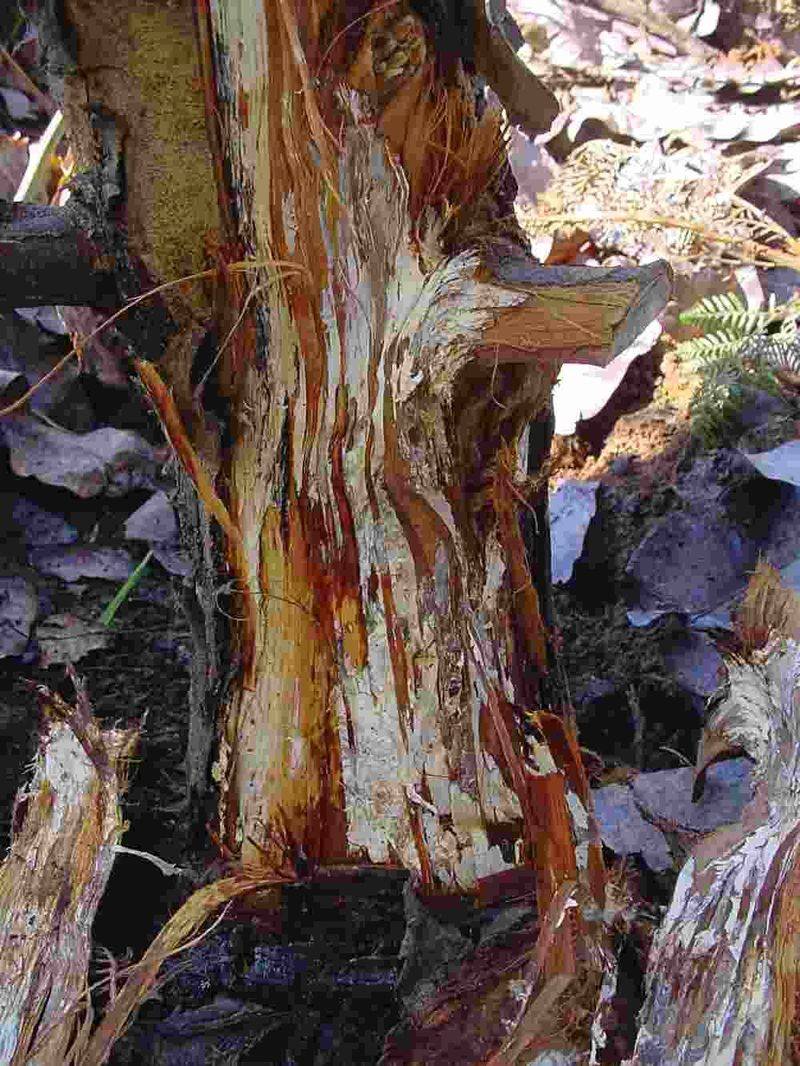
Peel back a loose flap of bark near the soil line, and the answer might be staring right at you.
Armillaria often forms creamy white sheets called mycelial fans between the bark and the wood. They spread out in a fan or feather pattern and can feel a bit like thin, damp leather.
Many arborists consider these fans one of the more reliable field signs of the disease.
Some people also notice a mushroom-like smell when the bark is lifted. The wood underneath may look stained, soft, or stringy in places where decay has started.
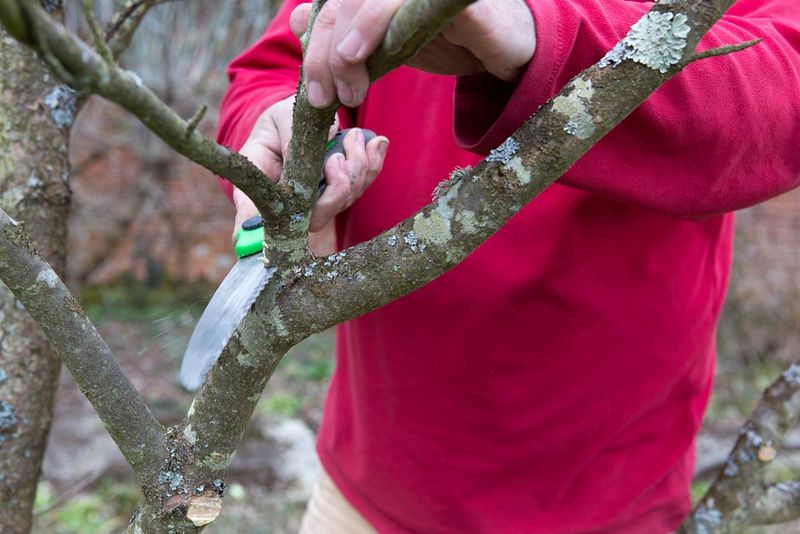
Go easy here, though. Use a small knife to lift only bark that is already loose, since cutting healthy bark creates new wounds.
Check spots just above and below the soil line, and pull back mulch first so you can see the root flare.
Finding fans on one side of a large tree in Georgia does not always mean the whole tree is lost. Still, it means the fungus has moved past the surface and deserves a professional look soon.
Wash your knife afterward before you use it on other plants.
5. Thinning Canopies And Early Leaf Drop Can Follow
Sometimes the first clue is up high, not down by the roots. A tree with a struggling root system often shows it through the leaves.
Watch for smaller leaves than usual, pale or yellow color, and branches that leaf out late in spring.
Early fall color is another hint. If one tree turns and drops leaves weeks before its neighbors, something may be off below ground.
Damage at the tips of upper branches can show up over several seasons.
Here is the tricky part. Drought, heat, insects, and other root diseases cause the same symptoms, especially during a hot Georgia August.
Leaf trouble alone cannot confirm Armillaria, so it helps to pair it with other signs like mushrooms or bark fans.
Keep a simple record by taking a photo of the canopy from the same spot each spring and late summer. Comparing pictures year to year makes slow changes much easier to spot.
Pines may react differently, sometimes oozing resin near the base as the fungus spreads. Sudden browning of a whole tree can also happen once roots are badly damaged.
6. Picking The Mushrooms Won’t Stop The Infection
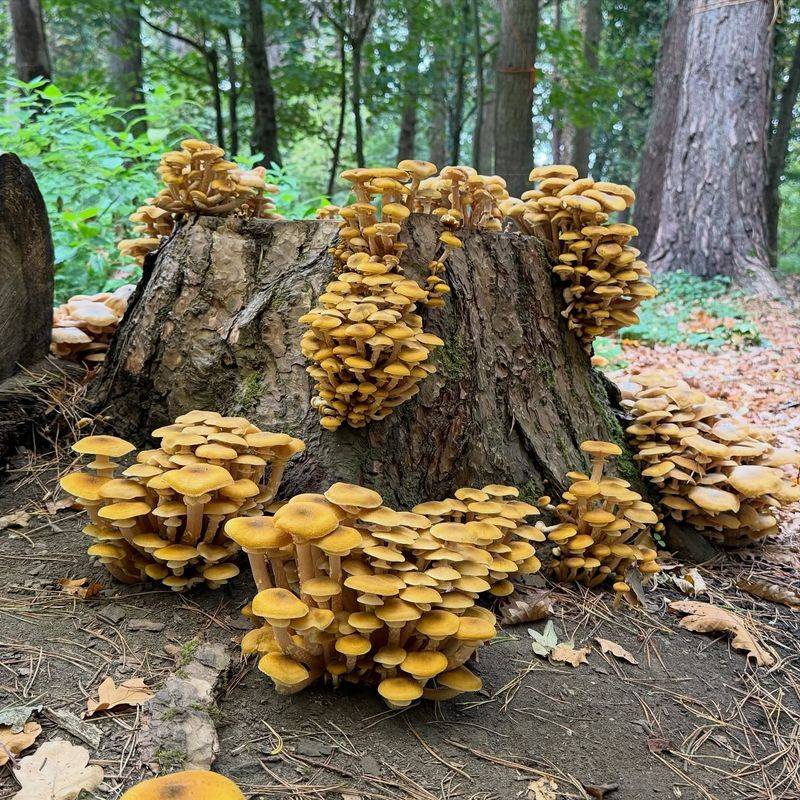
Yanking them out feels satisfying. Sadly, it does very little to the fungus living in the roots.
Removing the caps is a bit like picking apples while leaving the tree standing, since the main organism stays put underground.
Clearing them can still be a smart move if you have curious kids or pets. Wear gloves, bag the mushrooms, and toss them in the trash rather than the compost pile.
Backyard sprays and fungicides sold at garden centers generally are not effective against established Armillaria in trees.
What helps more is improving growing conditions. Better drainage, steady watering during drought, and avoiding root injuries give the tree its best chance.
Some arborists carefully dig soil away from the root collar to let it dry out, which may slow decay in certain cases.
That technique is called root collar excavation, and it takes care to avoid damaging roots. Results vary, so it is best handled by a trained professional.
If a tree is removed, consider planting something less susceptible in that spot, since the fungus can linger. Your local University of Georgia Extension office can suggest options suited to your area.
7. Weakened Roots Can Make A Tree Unstable, So Get It Inspected
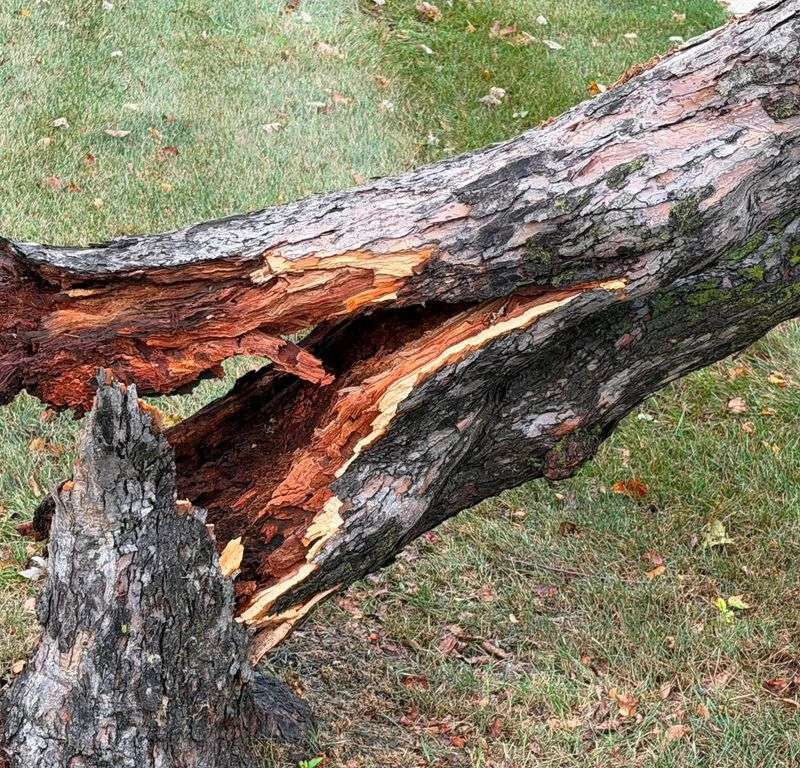
A tree can look fine and still be in trouble. Root decay often happens out of sight, while the trunk and crown seem mostly normal.
Once enough roots break down, a large tree may lean or fall, sometimes during storms but occasionally on calm days.
Georgia gets plenty of thunderstorms and the occasional tropical system, so weakened trees near homes, driveways, or play areas deserve extra caution.
Warning signs include a new lean, cracked soil on one side, or mushrooms paired with leaf decline. Fungus at the root flare plus loose bark is another combination worth taking seriously.
A certified arborist can check root health using tools like a mallet, probe, or specialized decay testing equipment.
Look for someone certified by the International Society of Arboriculture, and ask for a written assessment. Getting a second opinion on removal of a big tree is perfectly reasonable.
Costs differ widely depending on tree size and testing methods, so request quotes before work begins.
Acting early may let you plan removal on your own schedule instead of after a storm. It also gives you time to replant and keep shade in your yard for years to come.