This Is What Georgia Roses Need Before The Heat Gets Brutal
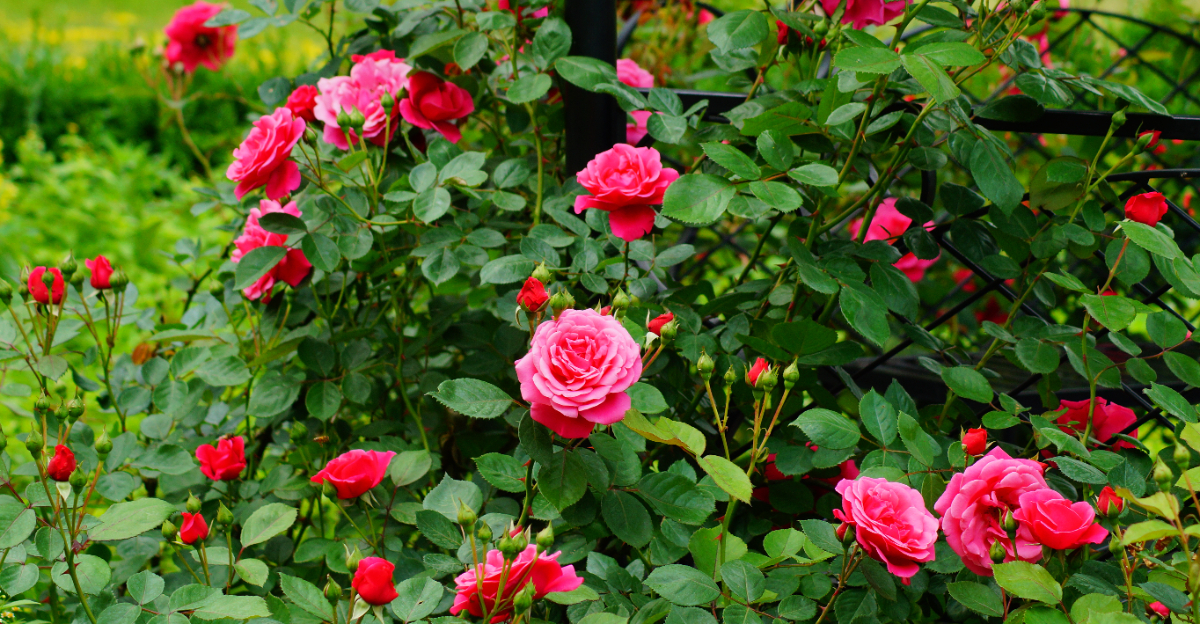
Rose bushes can look perfectly healthy in late spring, then suddenly struggle once intense summer heat settles in.
Leaves start stressing, blooms fade faster, and plants that looked full a few weeks earlier can quickly lose their strong appearance.
Hot weather puts roses under pressure fast, especially when high humidity and strong afternoon sun start hitting at the same time. Small problems become much harder to fix once temperatures stay high day after day.
That is why early summer care matters so much.
A few simple steps before the worst heat arrives can help roses hold onto stronger growth, healthier foliage, and better blooming through the toughest part of the season.
Georgia gardens often show the difference clearly by midsummer. Roses that got the right preparation usually handle the heat far better once brutal temperatures finally arrive.
1. Deep Watering Prepares Roses For Intense Summer Heat
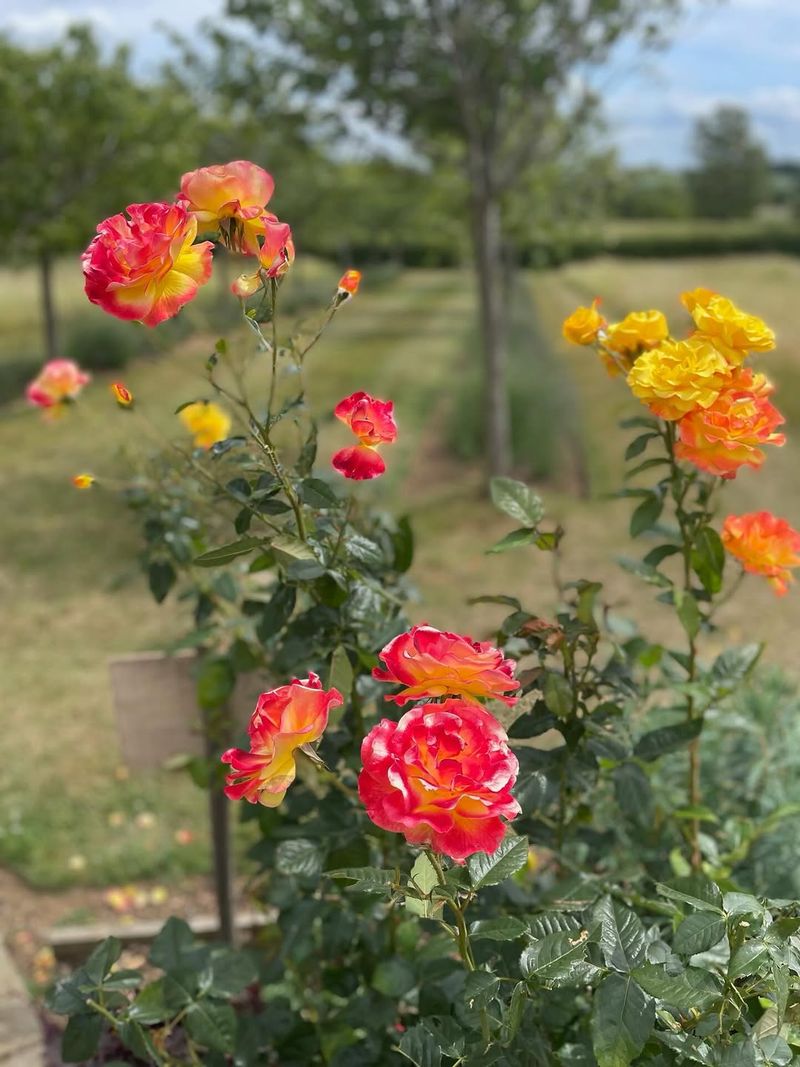
Shallow watering is one of the sneakiest ways to weaken a rose before summer even starts. Roots that stay close to the soil surface have almost no protection once the ground heats up.
Deep watering trains roots to grow downward. When roots reach deeper soil layers, they find cooler, more stable moisture.
That moisture stays available longer, even during dry stretches.
Aim for water to reach at least 12 to 18 inches below the surface. A slow soak with a drip hose or soaker hose works far better than a quick spray from above.
Water in the early morning whenever possible. Watering at night leaves foliage wet for too long, which invites fungal problems.
Morning watering gives leaves time to dry before temperatures climb.
During hot weeks, roses typically need about an inch to two inches of water per week. Sandy soils drain faster and may need more frequent watering.
Clay soils hold moisture longer but can become waterlogged without proper drainage.
Check the soil before watering rather than following a strict schedule. Push a finger two inches into the ground near the base.
If it feels dry, water deeply. If it still feels moist, wait another day.
2. Fresh Mulch Keeps Root Zones Cooler During Hot Weather
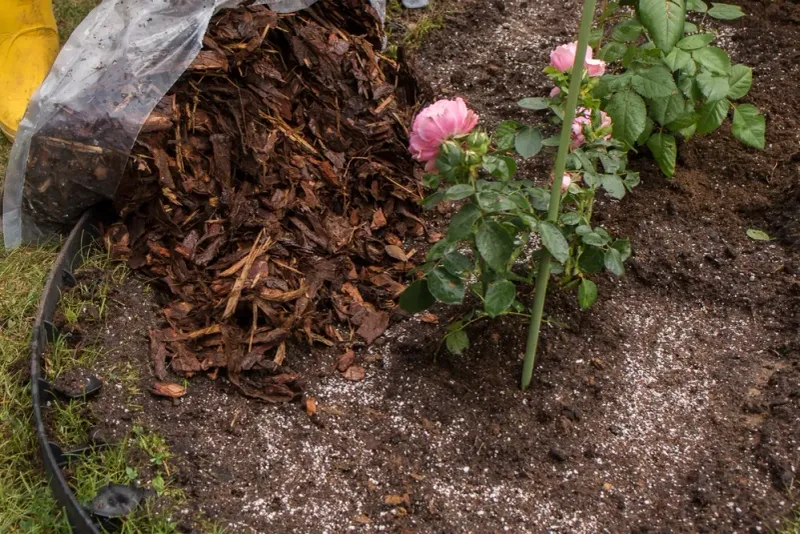
Bare soil bakes fast under a Southern summer sun. Soil temperatures without mulch can climb well above air temperature, putting serious pressure on shallow feeder roots.
A fresh layer of mulch acts like insulation. It slows moisture evaporation and keeps the root zone several degrees cooler than exposed ground.
Both of those factors matter enormously once July arrives.
Apply mulch about three inches deep around each rose. Keep it pulled back a few inches from the main cane at the base.
Mulch piled directly against canes traps moisture and encourages rot near the crown.
Wood chips, shredded bark, and pine straw all work well. Each breaks down at a different rate and adds organic matter back into the soil over time.
Pine straw works especially well in humid climates because it allows better airflow at ground level.
Avoid dyed or synthetic mulches near roses. Some dyed products contain compounds that are not ideal around edible gardens or sensitive ornamentals.
Your Georgia Garden Changes Every Week. Your Plan Should Too.
Gardening in Georgia changes quickly throughout the season. Every Friday you’ll receive a simple weekly plan showing exactly what to plant, prune, fertilize, harvest, and protect so you never miss the right timing.
Natural, untreated mulch is always a safer choice.
Refresh mulch before the hottest weeks arrive. Older mulch that has broken down to a thin layer offers little protection.
A fresh application in late spring sets up roses for a much easier summer.
3. Spent Blooms Drain Energy Once Temperatures Start Climbing
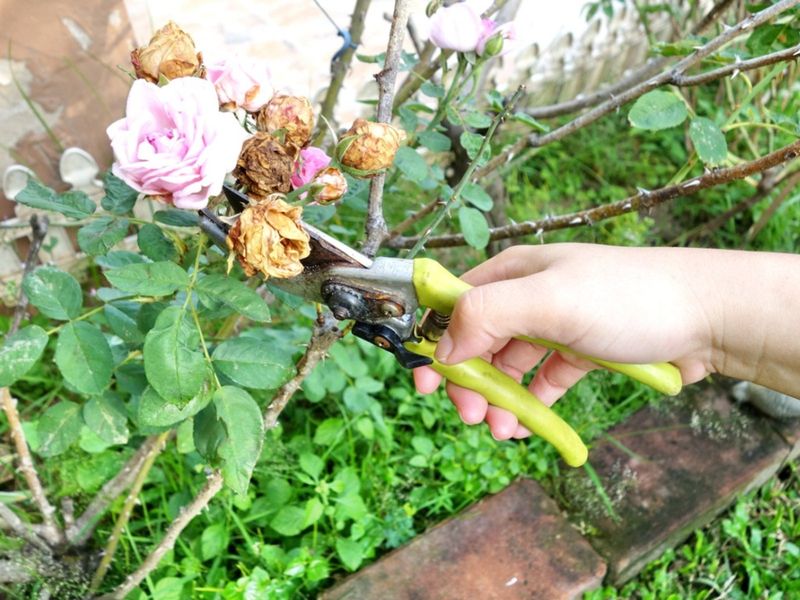
Spent blooms look harmless, but they keep pulling energy from the plant long after the flower has faded. Roses redirect resources toward forming rose hips when old blooms are left in place.
Hip formation takes significant energy. During cooler months, that process is manageable.
Once summer heat arrives, the plant is already under stress from heat and humidity. Adding hip production on top of that compounds the strain.
Deadheading redirects that energy back into root development and new growth. Roses that are deadheaded regularly tend to rebloom faster and maintain stronger foliage through summer.
Cut just above the first set of five leaflets below the spent bloom. Cutting too low removes potential new growth.
Cutting too high leaves a stub that can harbor disease. A clean cut at the right point encourages the fastest recovery.
Use clean, sharp pruners every time. Dull blades crush stem tissue rather than cutting cleanly.
Crushed tissue heals more slowly and creates an easier entry point for pathogens.
Wipe blades clean between plants if any disease is present.
Skipping this step spreads fungal spores from one plant to another with every cut. It takes less than ten seconds and prevents a lot of problems.
4. Harsh Afternoon Sun Creates More Stress In Humid Conditions
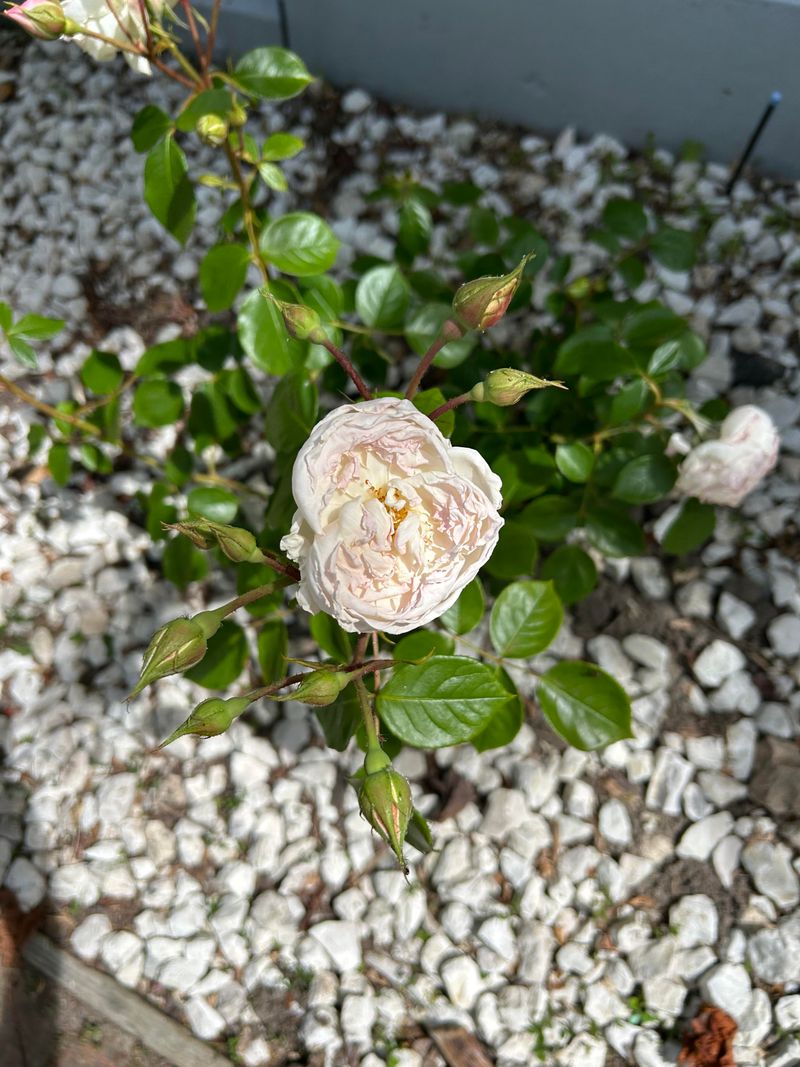
Afternoon sun in a humid Southern summer is a different animal than the same sun hitting a drier climate. Heat and humidity together push roses into stress much faster than either factor alone.
Roses generally prefer morning sun and some protection from the most intense afternoon rays. Six hours of direct sun is typically ideal.
Too much unfiltered afternoon exposure causes foliage to scorch and blooms to fade quickly.
If your roses are already planted in a spot that gets full western sun, you cannot easily move them. Focus instead on keeping roots cool, moisture levels consistent, and foliage as healthy as possible going into the hot season.
Shade cloth is an option for container roses or newly planted specimens that need protection. A 30 to 40 percent shade cloth placed on the western side of the plant during the hottest weeks can reduce leaf scorch noticeably.
Established roses in the ground typically adapt better than young plants. First-year roses planted in spring are at the highest risk during their first summer.
Extra attention to watering and mulching helps them push through.
Watch for signs of heat stress like curled leaves, crispy brown edges, or rapid bloom drop. Those signals tell you the plant is struggling before more serious damage sets in.
5. Crowded Canes Trap Moisture Around Sensitive Foliage
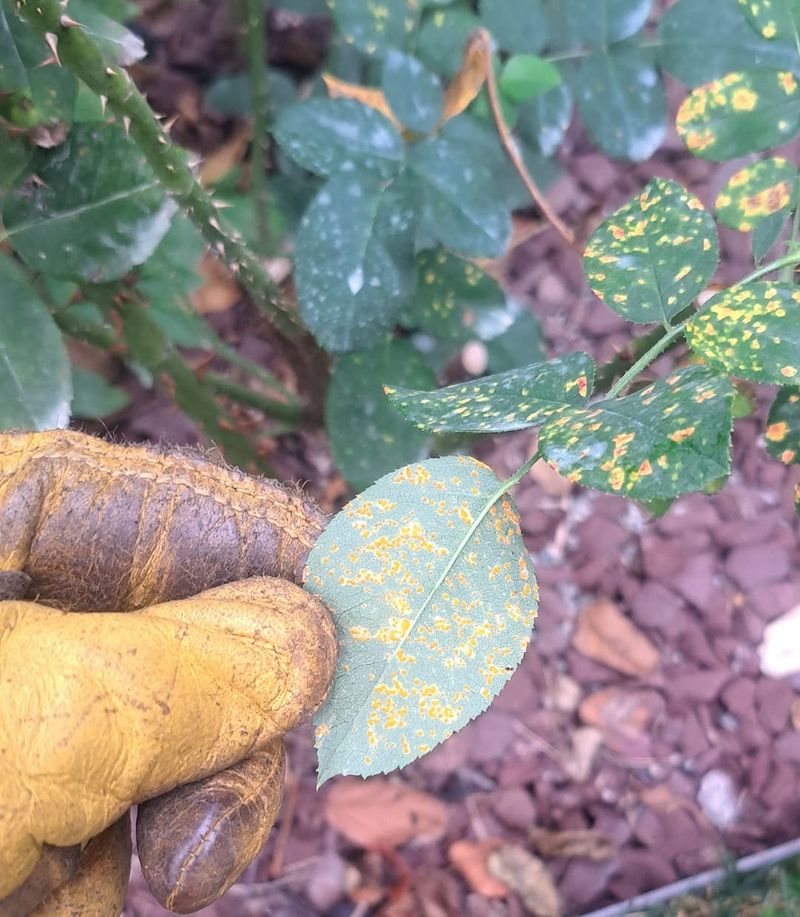
Roses growing in tight, crowded conditions hold humidity close to their leaves. Warm, wet air sitting against foliage for hours at a time creates the perfect environment for fungal problems to take hold.
Thinning crowded canes before summer improves airflow dramatically. When air can move freely through the plant, moisture on leaves dries faster.
Faster drying means shorter windows for fungal spores to germinate.
Remove canes that cross through the center of the plant first. Center-crossing canes block airflow at the core where humidity tends to concentrate most.
Removing them opens up the interior without reducing the overall size of the plant significantly.
Also remove any canes that rub against each other. Friction wounds create open tissue that fungal spores and bacteria can enter easily.
A clean open structure protects the plant without requiring heavy pruning.
Aim for an open, vase-shaped structure if your variety allows it. Hybrid teas and grandifloras respond especially well to this shape.
Shrub roses and climbers need different approaches based on their natural growth habit.
After thinning, step back and look at the plant from several angles. Check for spots where leaves still press closely together.
A few additional targeted cuts can open those areas up without stressing the plant.
6. Late Fertilizing Often Triggers Weak Tender Growth
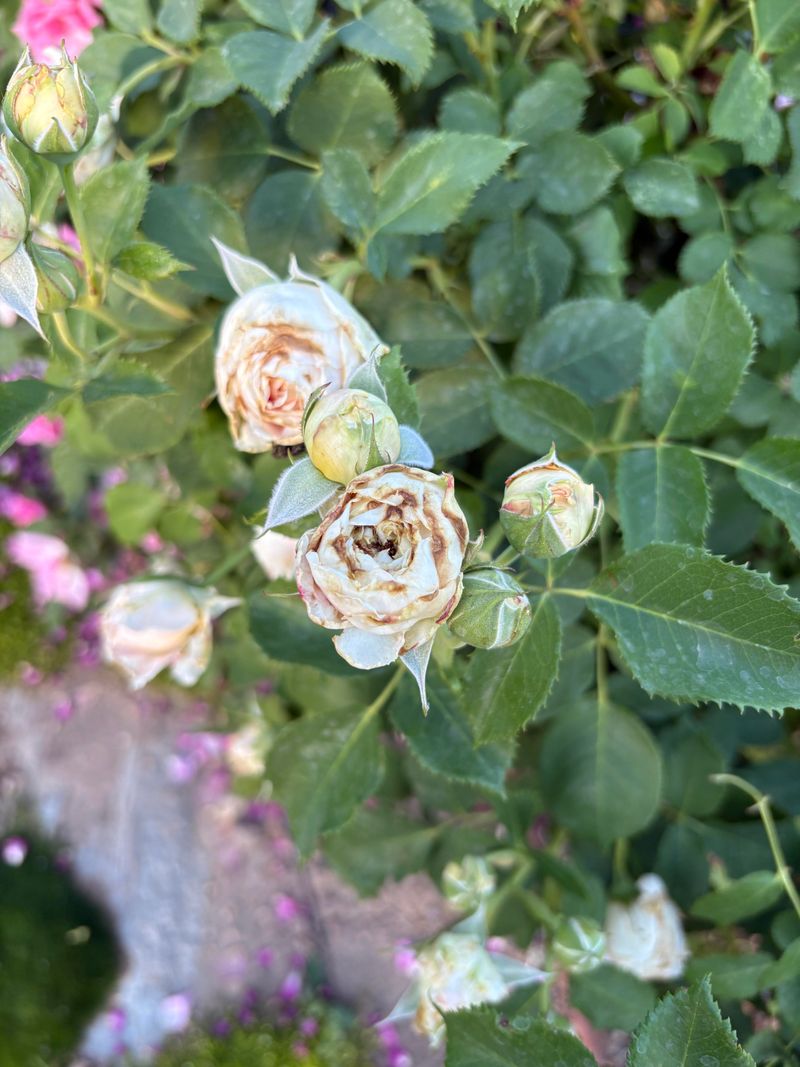
Fertilizing roses too late in the season pushes out a flush of soft, tender new growth at exactly the wrong time. Fresh growth that emerges during peak summer heat scorches fast and recovers slowly.
New growth also attracts aphids and other soft-bodied insects. Those pests move in quickly when tender shoots appear.
Adding pest pressure on top of heat stress makes an already difficult situation harder for the plant to manage.
A well-timed fertilizing schedule ends by mid-summer in hot Southern climates. Giving roses their last balanced feeding before the hottest stretch allows the plant to use nutrients for hardening off existing growth rather than pushing new flushes.
Slow-release granular fertilizers are generally safer than liquid fertilizers during warm months. Liquid fertilizers deliver nutrients quickly, which can trigger rapid growth surges.
Slow-release products feed gradually over several weeks, reducing the risk of sudden tender growth.
Roses also need phosphorus and potassium in addition to nitrogen. Too much nitrogen alone is one of the main causes of excessive soft growth.
A balanced rose fertilizer or one slightly lower in nitrogen is a better choice as summer approaches.
7. Black Spot Expands Quickly During Rainy Heat Waves
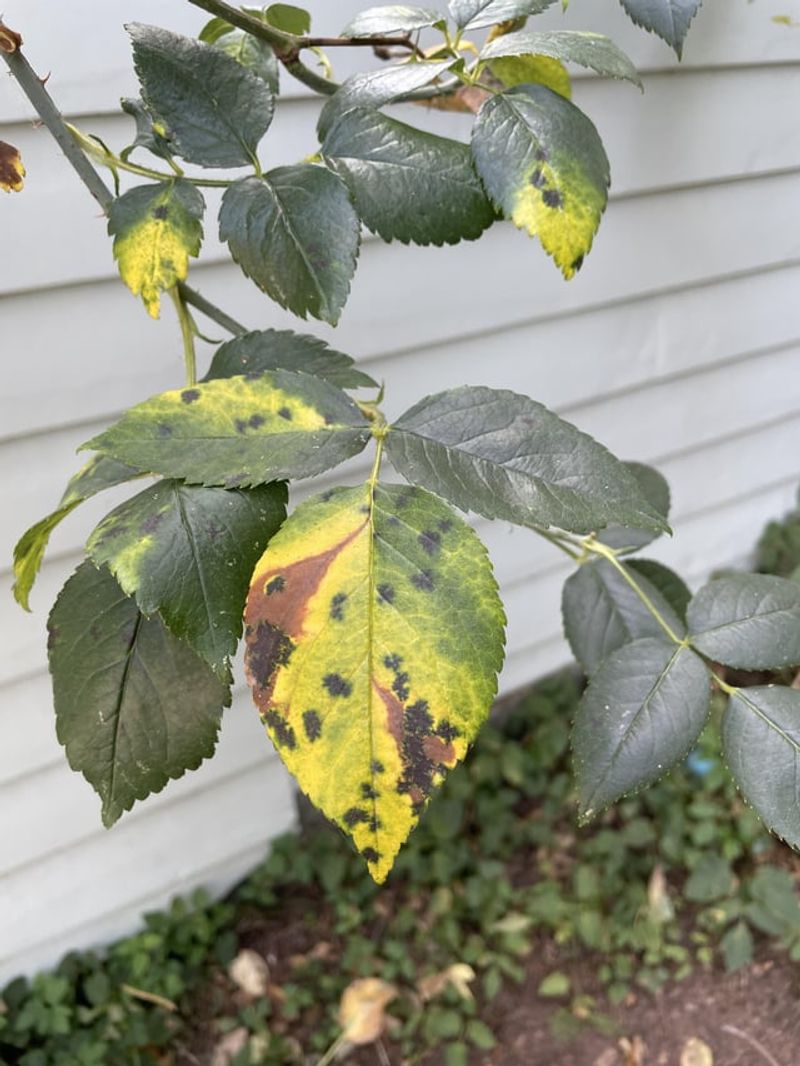
Black spot is one of the most persistent fungal diseases affecting roses in warm, humid regions. Rainy stretches combined with heat create conditions where it spreads at a rate that surprises even experienced gardeners.
Spores spread through water splash. Rain hitting infected leaves sends spores onto nearby healthy foliage.
One infected plant left untreated can spread disease across an entire bed within a few weeks during a wet summer.
Prevention works far better than treatment after an outbreak takes hold. Apply a fungicide labeled for black spot before symptoms appear if your area typically sees rainy summers.
Starting early keeps spore populations low before conditions turn ideal for rapid spread.
Neem oil, copper-based fungicides, and sulfur-based products are commonly used options. Each works differently and has different temperature limitations.
Sulfur-based products, for example, can cause leaf burn when applied during very high temperatures. Always read label directions carefully before applying any product.
Remove and bag any leaves showing black spot symptoms immediately. Do not compost infected material.
Composting infected leaves keeps spores active and risks spreading disease when you use that compost later.