This Georgia Native Shrub Waits Until Fall To Start Blooming
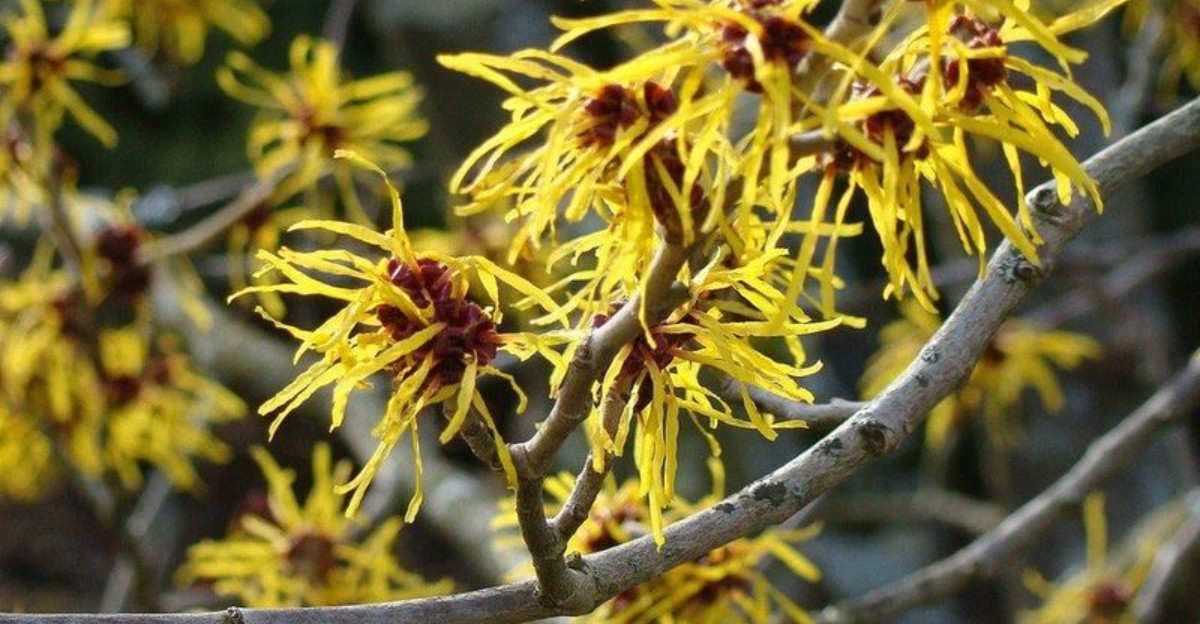
Just when much of the garden begins winding down, one native shrub decides it is finally time to flower. Witch hazel saves its unusual display for fall.
That late timing gives it a completely different role from shrubs chosen mainly for spring color.
Thin yellow petals begin appearing along the branches while the landscape around them is changing. In Georgia, native witch hazel can bring fresh interest to woodland style gardens during this quieter season.
Its flowers are only part of what makes the shrub worth knowing.
Before adding one, consider the space it will eventually need and the conditions that suit its natural growth. A thoughtful location lets its shape develop properly.
Give witch hazel room to mature, and fall becomes the season when this native finally steals attention.
1. Most Flowers Are Fading When This Shrub Starts Its Show
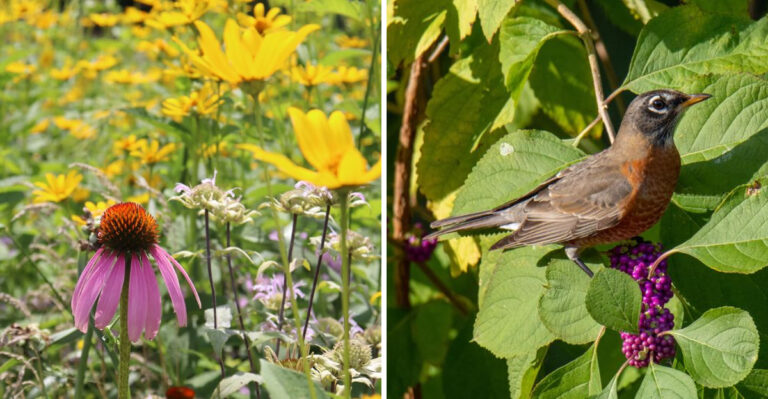
October usually means cleanup, not flowers. Coneflowers have gone to seed, hydrangea blooms have turned papery, and the garden looks tired.
That is exactly when witch hazel gets going. While gardeners are hauling off spent stems, this shrub quietly starts pushing out small yellow blooms along its branches.
The contrast catches people off guard the first time they see it.
Bloom timing varies by site and weather, but late October through November is common in much of Georgia. Cooler nights seem to nudge it along, though the exact start date shifts year to year.
Nothing about the display is loud.
Flowers are small and scattered rather than clustered into big showy heads. You notice them because everything around them has already faded, not because they shout for attention.
Some gardeners plant it specifically to fill that awkward gap between fall color and winter bare branches. It works well near a walkway or door where you pass close enough to see the detail.
Placement matters more than most people expect.
Set it far out in a back corner and the flowers will go unnoticed. Keep it within twenty feet of a path and the late bloom actually registers.
Fragrance is another part of the appeal, though it tends to be faint and easier to catch on mild, still afternoons than on cold windy ones.
2. Witch Hazel Opens Its Yellow Flowers During Fall
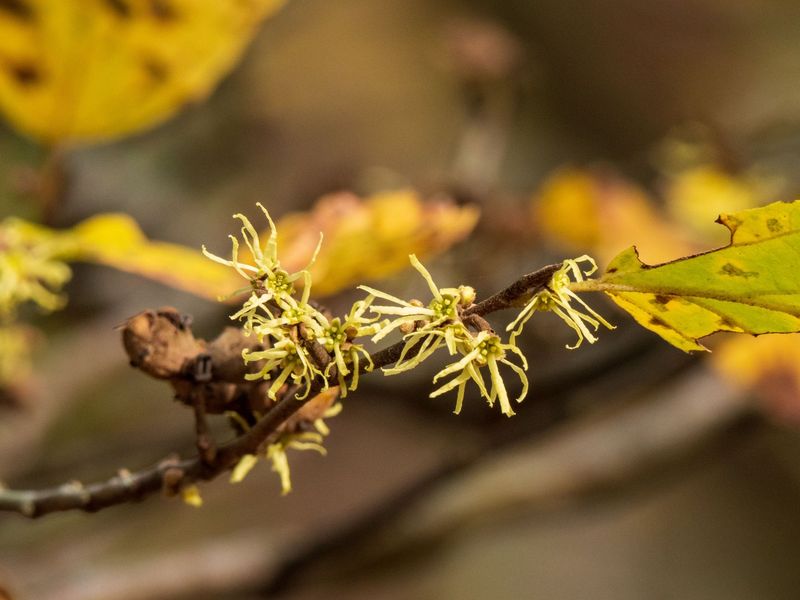
Yellow is the color to expect, not red or orange. Common witch hazel, the species native across the Southeast, blooms in shades ranging from pale butter to a clearer golden tone.
Hybrid witch hazels sold at garden centers often bloom in copper or red, but those flower in winter and are not native here.
Knowing the difference saves confusion at the nursery.
If a tag reads Hamamelis virginiana, you are looking at the fall bloomer. Tags reading Hamamelis x intermedia point to the winter-blooming hybrids instead.
Flower size stays modest. Each bloom measures under an inch across, and they appear in small clusters rather than long showy sprays.
Older, well-established plants generally flower more heavily than young ones just getting settled.
Light plays a role too. Shrubs in deep shade often bloom more sparsely than those getting a few hours of filtered sun, though this varies with soil and age.
Your Georgia Garden Changes Every Week. Your Plan Should Too.
Gardening in Georgia changes quickly throughout the season. Every Friday you’ll receive a simple weekly plan showing exactly what to plant, prune, fertilize, harvest, and protect so you never miss the right timing.
Georgia gardeners sometimes report uneven bloom from one year to the next, which is normal for a plant that responds to weather.
Do not expect an even carpet of color across the whole shrub.
Blooms tend to concentrate along stems from the previous season, so heavy pruning right before fall can reduce the show. Wait until after flowering if you need to shape it.
3. Thin Twisted Petals Give The Blooms Their Unusual Look
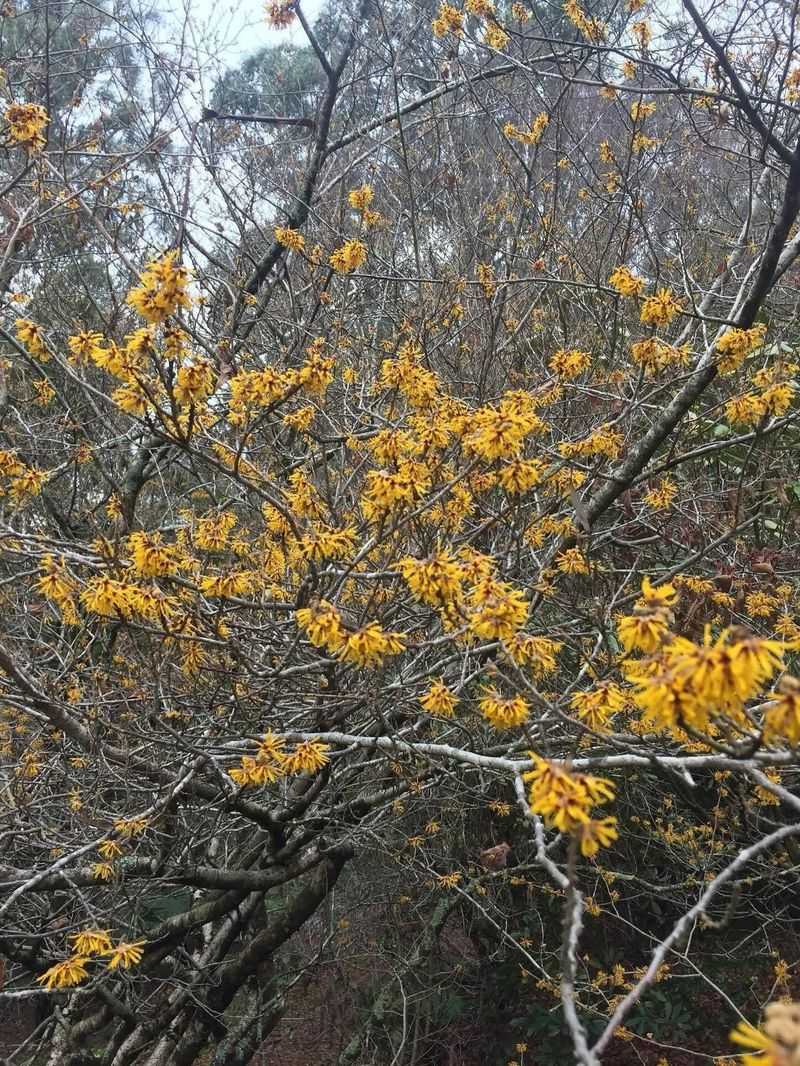
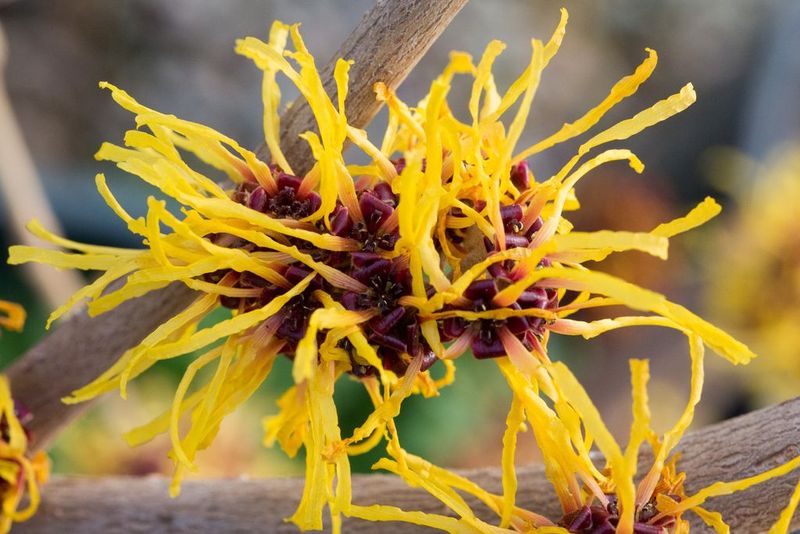
Ribbons, not petals. Each witch hazel flower carries four narrow straps that curl and twist outward, looking more like torn crepe paper than a typical bloom.
Nobody notices this detail from a distance. Step within arm’s reach and the structure becomes obvious.
Four straps radiate from a small cup-shaped base, usually brownish or reddish in color.
The twisting is not damage or drought stress. It is simply how the petals are shaped, and it gives the flower a spidery outline that stands out against bare wood.
Cold weather affects them in an interesting way. During hard freezes the straps can curl inward, then relax and unfurl again once temperatures rise.
That flexibility helps the blooms hang on through early cold snaps.
Gardeners in north Georgia often see this curling behavior more than those farther south, simply because freezes arrive earlier and hit harder in the mountains.
Photographers love the shape. Backlit by low afternoon sun, the thin petals glow in a way broader flowers never manage.
Cut stems can be brought indoors, though they do not last long in a vase and the fragrance fades quickly.
Worth mentioning: witch hazel also produces small woody seed capsules that split open and fling seeds a surprising distance. Old capsules often sit on the branches while new flowers open nearby.
4. Flowers Can Appear While Leaves Are Still On The Branches
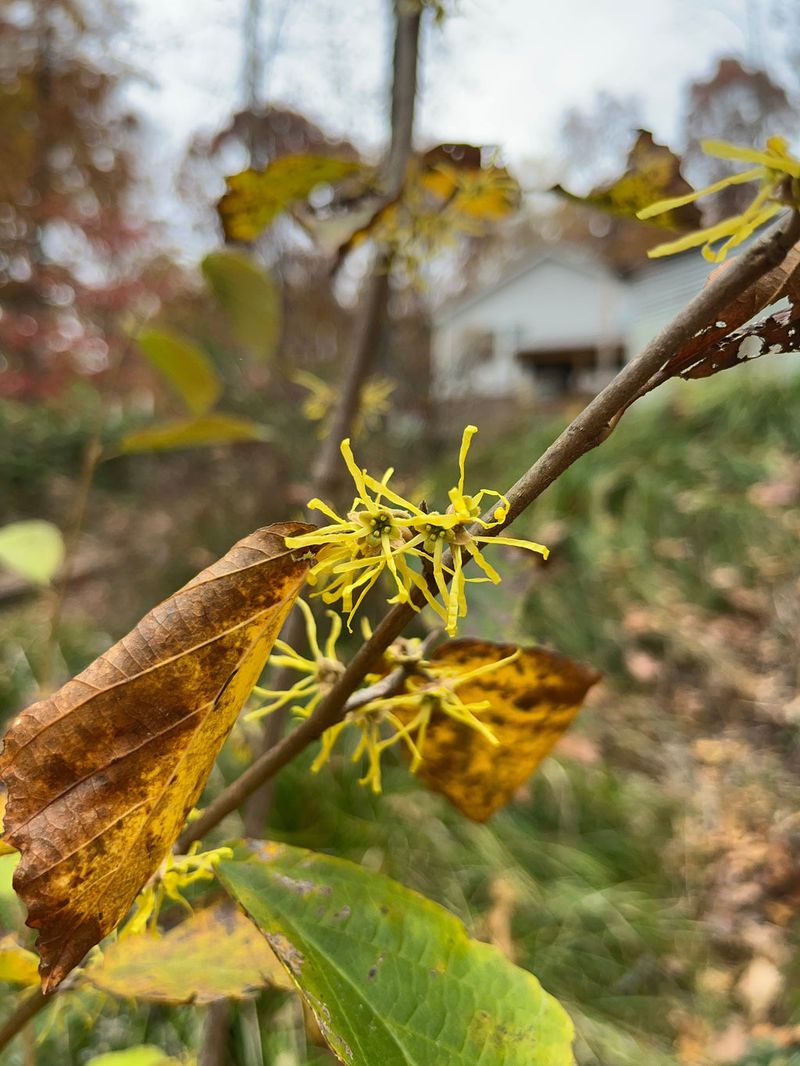
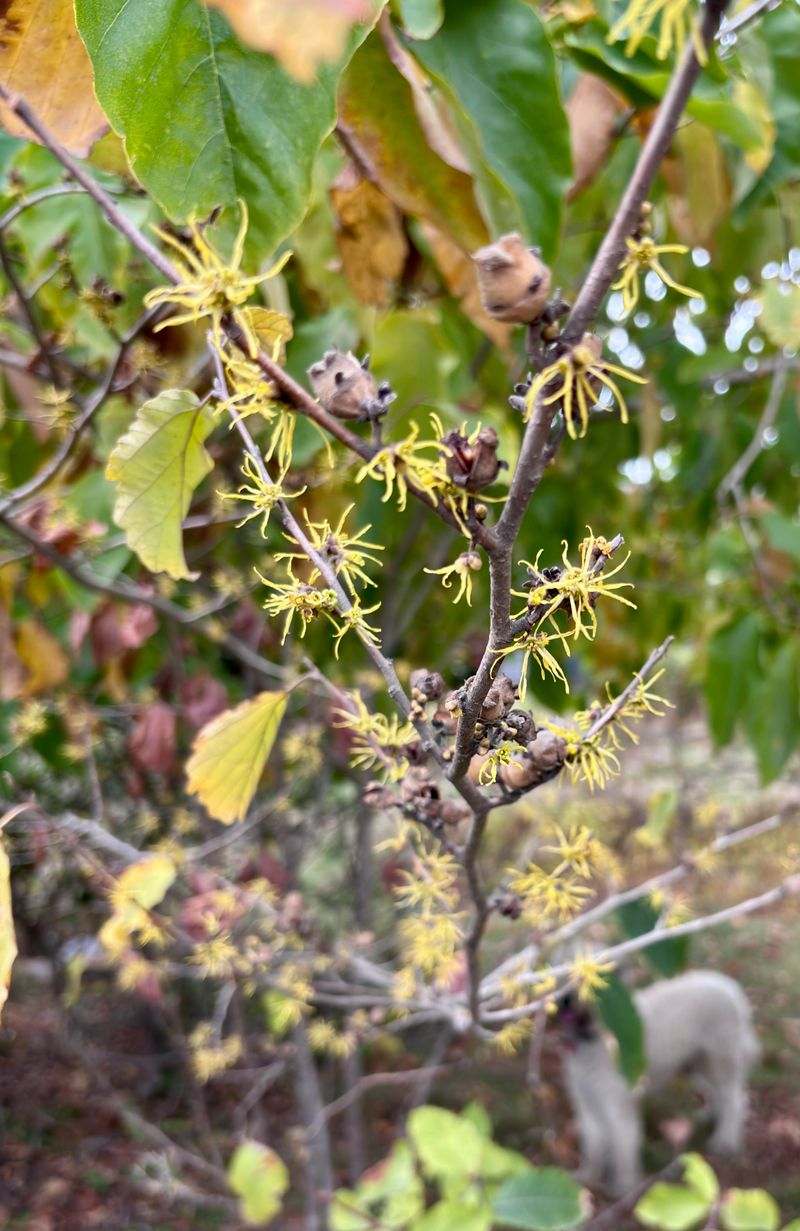
Here is the quirk that trips people up. Witch hazel sometimes starts blooming before it drops its leaves, so the flowers hide among yellowing foliage.
Leaf color and flower color are close enough that the blooms disappear into the background. You have to look carefully to spot them.
Cooler falls tend to push leaf drop along faster, which puts the flowers on clearer display.
Warm autumns work against the show. Leaves hang on longer, and the display gets muddled right when it should be peaking.
Georgia weather swings enough from year to year that both scenarios are common.
Some gardeners hand-strip a few leaves once flowering begins, mostly on smaller plants where it is easy to reach. It is optional and purely cosmetic.
Leaves themselves are worth a look before they fall. Broad and slightly lopsided at the base, they turn soft yellow to golden in autumn.
Fall foliage quality depends on the season, so do not count on brilliant color every year.
One practical note about overlap: because flowers and leaves share the same branches, raking too aggressively under the shrub can knock blooms loose. Go easy with the rake during bloom time.
Leaving fallen leaves in place as a light mulch also suits this plant, since it grows naturally in leaf-covered woodland soil.
5. Woodland Conditions Suit This Native Shrub Naturally
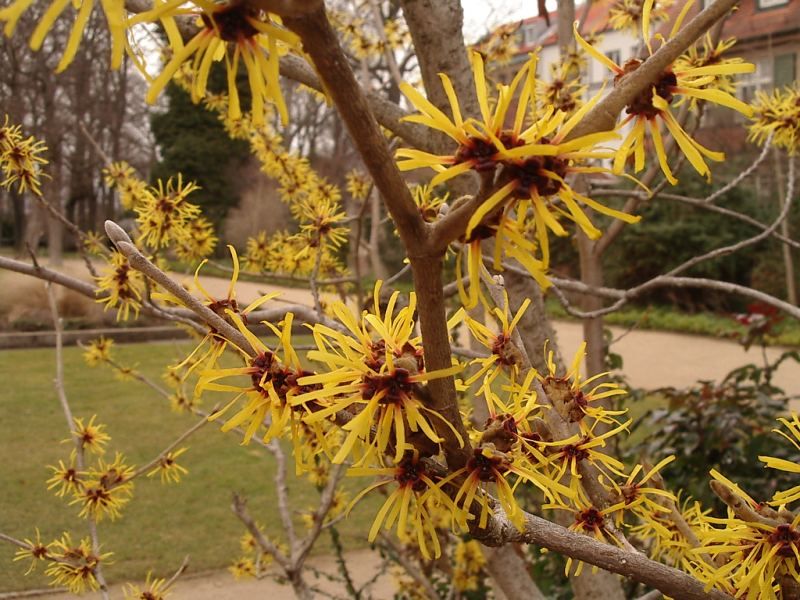
Forest edges are its home turf. Common witch hazel grows wild in the understory of hardwood woods, along shaded stream banks, and on cool north-facing slopes.
Copy those conditions and the plant mostly takes care of itself.
Part shade suits it well, particularly afternoon shade in areas with hot summers. Full sun works if soil stays consistently moist, but dry sunny spots are a struggle.
Soil preference leans toward slightly acidic and rich in organic matter. Most wooded lots in Georgia already fit that description without amendments.
Heavy clay is manageable if drainage is reasonable.
Watering matters most in the first two or three years. After the roots spread out, established plants handle normal dry spells better, though extended drought still calls for a soaking.
Skip the heavy fertilizer routine. A couple inches of leaf mulch each fall does more good than granular feed.
Deer browsing varies by area. Some gardeners report light damage while others see none, so local pressure is the real factor.
Space it generously. Mature shrubs can reach fifteen to twenty feet tall and nearly as wide, and crowding leads to constant pruning.
Best planting windows are fall and early spring, when cooler soil helps roots settle before summer heat sets in.
6. Its Branching Form Adds Structure Beyond The Blooming Season
Strip away the flowers and there is still something to look at. Witch hazel grows with multiple stems that spread outward in a loose, layered pattern.
Branches zigzag slightly rather than shooting straight up. That habit reads as graceful in winter, when bare wood is all you get.
Vase-shaped is how nurseries usually describe the overall outline.
Left alone, it develops into a broad shrub or small multi-stemmed tree. Some gardeners limb up the lower branches to show off the trunks and open a view underneath.
Pruning should stay light. Remove crossing stems or damaged wood, and do it after flowering finishes so you keep next season’s blooms.
Hard shearing ruins the natural shape and takes years to grow out of.
Used as a screen, a row of them creates a soft informal edge rather than a tight hedge. Plan on wide spacing if that is your goal.
The structure also gives shelter for birds, and songbirds move through the branches regularly in cooler months.
Suckers occasionally appear at the base. Cut them off if you want a cleaner look, or let them fill in for a thicker shrub.
Across Georgia gardens, witch hazel often works best as a background plant that quietly holds a bed together year round.
7. Cooler Weather Turns Witch Hazel Into An Unexpected Fall Feature
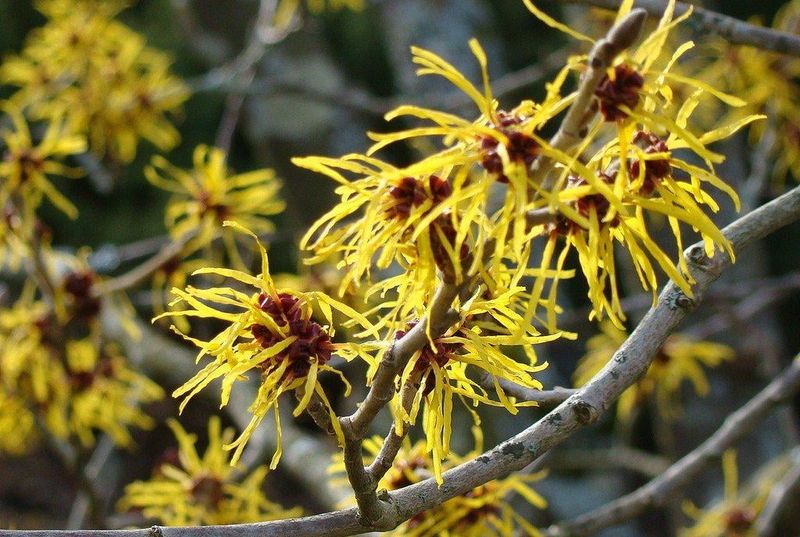
Cold does not shut this shrub down. Falling temperatures actually line up with its bloom period, which is the reverse of how most flowering plants behave.
Frost rarely ruins the flowers outright. Petals may curl during a freeze, then open again when the air warms.
That resilience stretches the display over several weeks rather than a few days.
Placement near a window pays off here. Blooming happens when nobody wants to wander the yard, so a view from indoors gets more use.
Pair it with evergreens for contrast. Dark foliage behind the yellow flowers makes them easier to see on gray days.
Bloom length depends on the season. Mild stretches tend to extend it, while an early hard freeze can cut things short.
Pollinators still show up occasionally on warmer afternoons, though insect activity in late fall is naturally limited.
Anyone building a four-season planting in Georgia will find this shrub covers a stretch of the calendar that is usually empty.
Do not expect it to compete with azaleas for sheer volume of color. The appeal is timing and detail, not mass.
Give it a few years to mature, keep the soil covered with leaf litter, and the fall show generally improves as the plant settles in.