This Georgia Plant Becomes A Magnet For Yellow-Rumped Warblers Each Fall
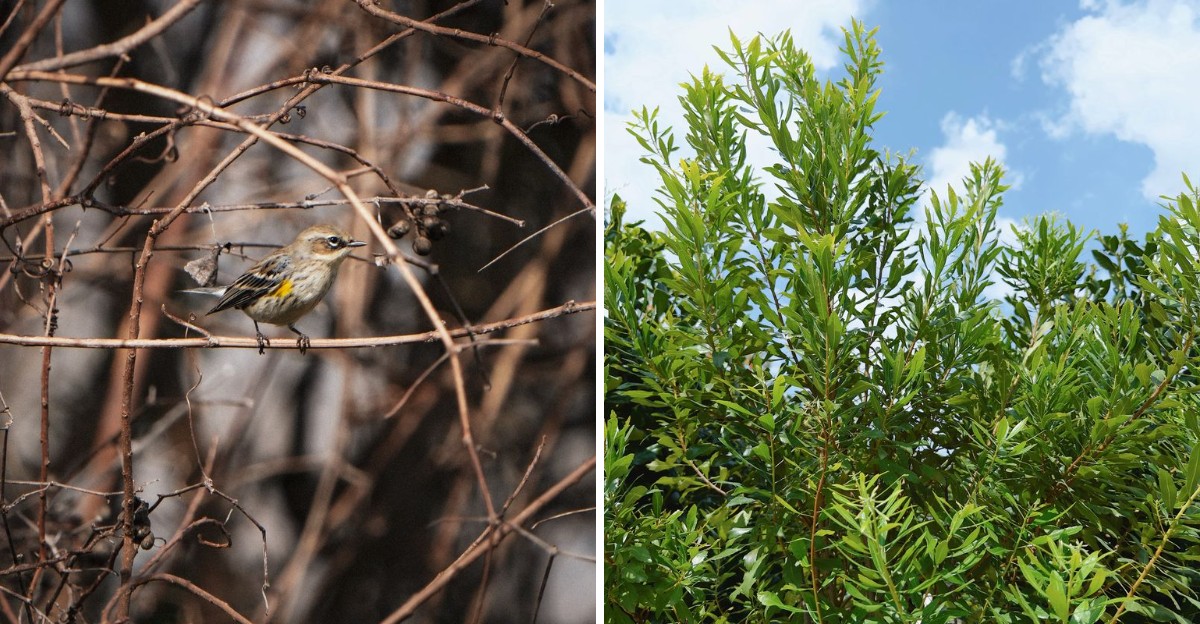
Yellow-rumped warblers arriving in fall are often searching for reliable food, and one native plant can make your yard especially useful to them.
Wax myrtle produces clusters of small berries that can remain available as insect activity slows. These warblers readily eat the waxy fruit during the cooler months.
Planting one also gives visiting birds dense branches where they can pause between feeding trips.
If your yard has enough room, consider adding wax myrtle where it can develop naturally. Give it suitable light and space rather than squeezing it into a tight corner.
This evergreen native grows well in many Georgia landscapes and supports more than seasonal color.
Watch the branches when fall migration begins and you may notice birds stopping to feed. Providing natural food can make your yard useful long after summer insects become scarce.
1. Flocks Of Small Yellow-Patched Birds Arrive With The Cooler Weather
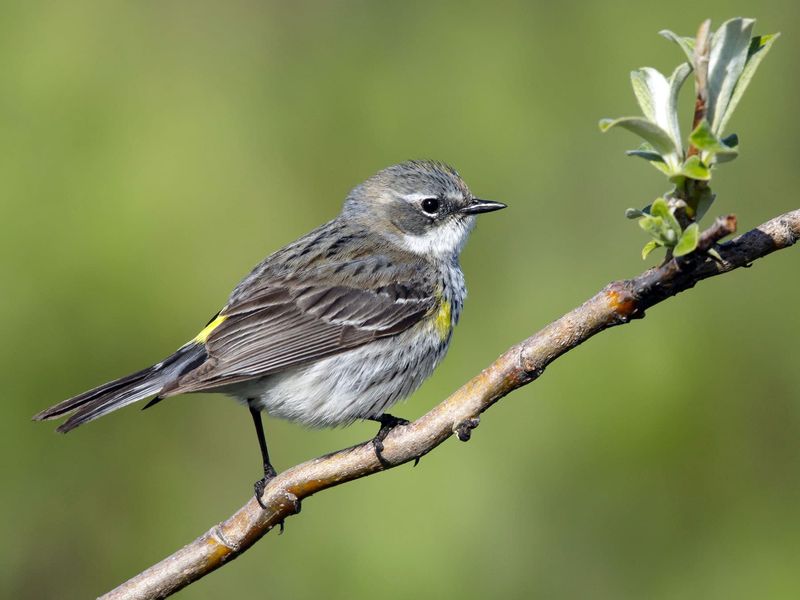
October usually brings the first wave. You hear soft chip notes from the hedge, and then you spot small brownish birds with a bright yellow patch near the tail.
Those are yellow-rumped warblers, and they spend the colder months across much of the South.
In Georgia, most birders start noticing them in good numbers by mid to late October. Timing can shift a bit from year to year depending on weather up north and how cold fronts move through.
Fall birds look plainer than the spring ones you might see in field guides.
Look for streaky gray-brown backs, a small yellow side patch, and that telltale yellow rump when they fly. Some birds also show a little yellow on the throat, which helps separate the two main forms.
Groups can be large, sometimes a dozen or more moving through one yard together.
They tend to flit, hover, and grab insects in midair, then drop into shrubs to feed on fruit. Watching them for a few minutes shows how restless and alert they are.
A plant they return to again and again is wax myrtle, known to botanists as Morella cerifera.
If you want to see them up close, keep a pair of binoculars near a window that faces your shrubs. Early morning tends to be the most active time, though they often feed throughout the day.
2. Waxy Blue-Gray Berries Are The Main Attraction
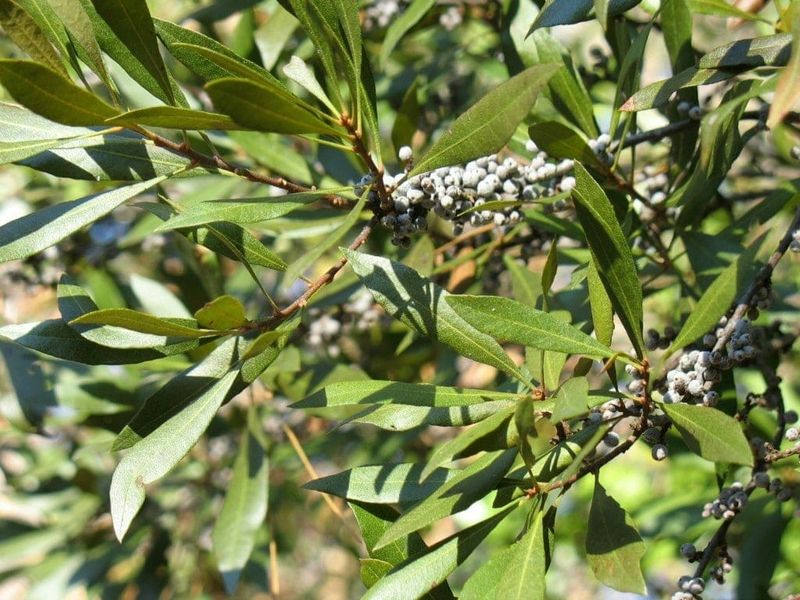
Small and plain, the fruit hardly looks like a prize. Each berry is about the size of a peppercorn and coated in a pale, powdery wax.
Those berries cluster tightly along the stems, often right where the leaves meet the branch.
Rub one between your fingers and you will feel a slightly greasy coating. That wax is packed with fat, which gives birds a useful energy source when insects get scarce.
Colonial settlers once boiled the berries to skim off the wax for candles, which is how the plant picked up the name bayberry in some places.
Ripening usually happens in late summer into fall, so the fruit is ready right when warblers show up. Good crops depend on sun, plant age, and growing conditions, so some years look heavier than others.
Your Georgia Garden Changes Every Week. Your Plan Should Too.
Gardening in Georgia changes quickly throughout the season. Every Friday you’ll receive a simple weekly plan showing exactly what to plant, prune, fertilize, harvest, and protect so you never miss the right timing.
Across Georgia, you can find wax myrtle growing wild along pond edges, coastal dunes, and roadside ditches.
If you plant one, give it at least a few hours of direct sun each day. Shrubs in deep shade often grow leggy and set far less fruit.
Young plants may take a few seasons before they bear well, so patience helps.
Skip heavy pruning in late summer and fall. Cutting back branches at that time can remove the very berries you hoped the birds would find.
3. These Warblers Can Digest Wax That Many Birds Can’t
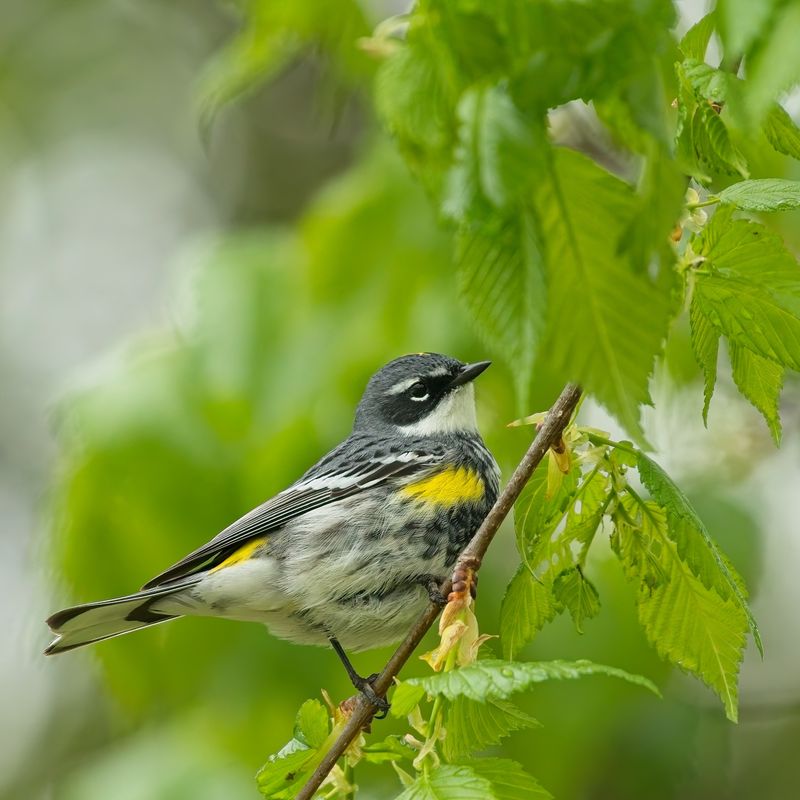
Wax is tough food. Most songbirds pass those coated berries through without getting much benefit, if they eat them at all.
Yellow-rumped warblers handle it differently, and that small skill shapes where they spend the winter.
Their digestive system can break down the waxy fats found on bayberry fruit. Birds that study this pairing point to how bile and slow movement of food through the gut help them absorb those fats well.
That ability gives them a backup food when bugs vanish during cold snaps.
Other warblers mostly head to the tropics because they rely on insects. Yellow-rumps can stay put in places like coastal Georgia, where wax myrtle grows thick.
Not every bird is shut out completely. Tree swallows also feed on the berries, and bluebirds and some other birds will sample them now and then.
Still, yellow-rumped warblers are among the most dependable visitors you will see working these shrubs.
So what does that mean for your yard? Planting wax myrtle offers food that suits a specific bird during a lean season.
You can support them further by leaving some leaf litter and avoiding insect sprays near the shrubs. That keeps a mix of bugs and berries available, which helps on milder winter days when insects come back out.
4. An Old Nickname, Myrtle Warbler, Comes From This Connection
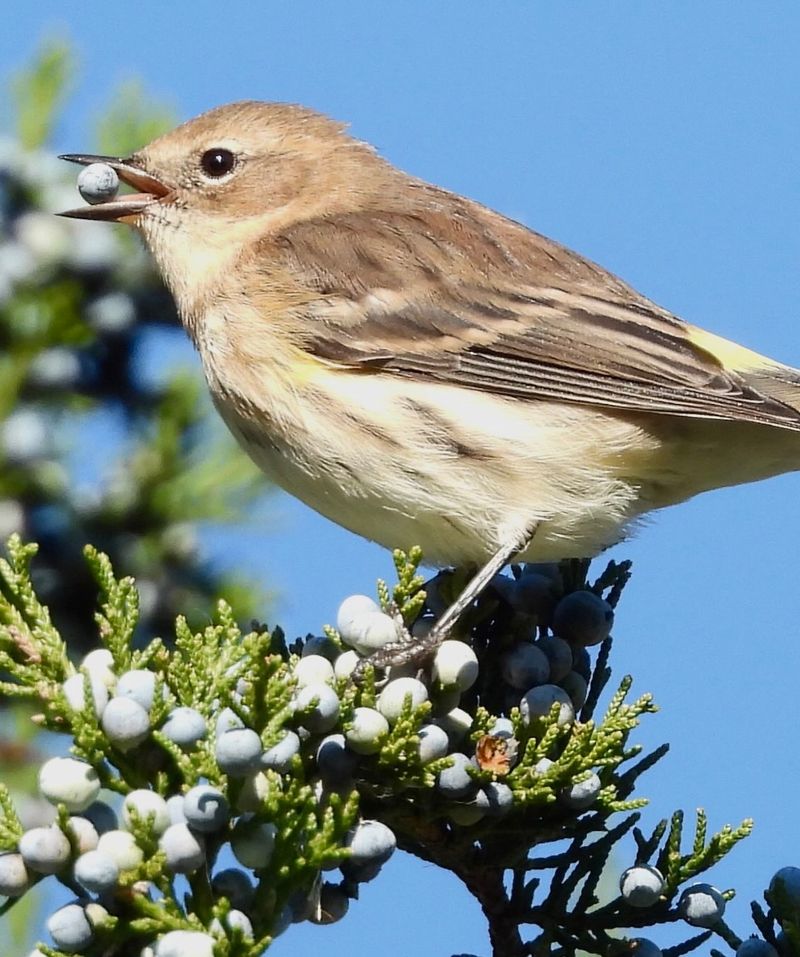
Older birders still call it the myrtle warbler, and the name is no accident.
Early naturalists noticed how often these birds fed on wax myrtle and bayberry shrubs in winter. The nickname stuck for generations and showed up in plenty of older field guides.
Over time, scientists grouped the eastern myrtle form with a western form called Audubon’s warbler. Together they became the species known as the yellow-rumped warbler.
You may still hear the eastern birds called myrtles in casual talk among birders.
Here in Georgia, nearly all the yellow-rumps you see are the myrtle type. Look for a white throat and a thin white line above the eye to confirm it.
Western Audubon’s birds have yellow throats and are rarely found this far east.
Bird names that reflect real behavior help new watchers remember what to look for. Myrtle warbler is a good example, because the plant and the bird truly go together.
Some birding groups have discussed splitting the two forms back into separate species again. Official naming can change, so keep an eye on updates from groups like the American Ornithological Society.
Whatever the label, a shrub full of berries is a solid place to start looking each fall and winter.
5. Female Shrubs Bear The Berries When A Male Grows Nearby
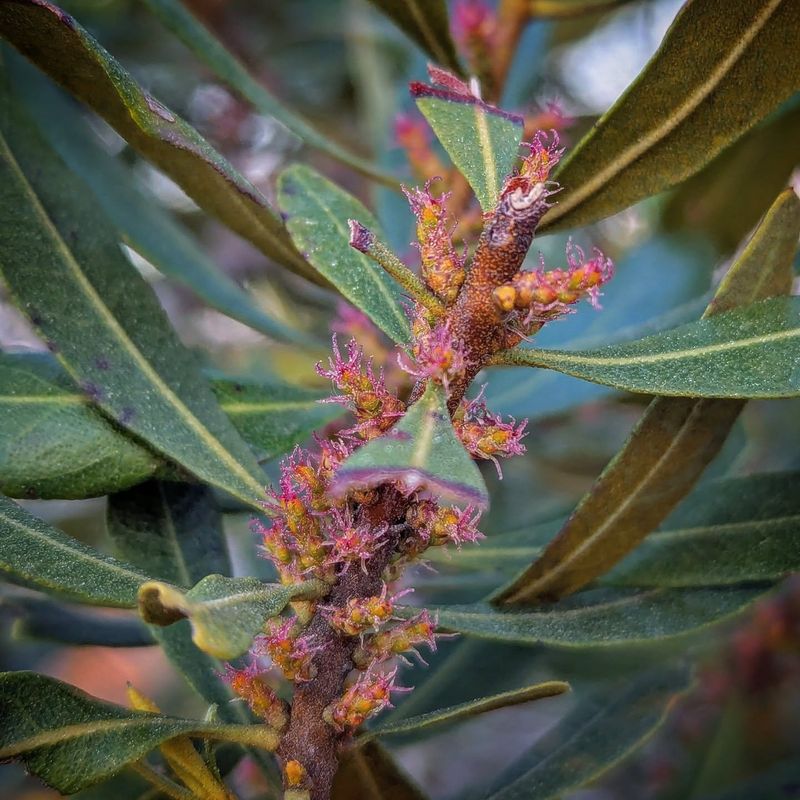
Plant only one wax myrtle and you might wait years for berries that never come. Here is why that happens.
Wax myrtle is dioecious, meaning individual plants are usually male or female.
Only female shrubs produce the waxy fruit. Male plants make tiny pollen-bearing catkins in late winter or early spring, and the wind carries that pollen to the females.
Without a male close enough, a female plant often sets little or no fruit.
Nurseries rarely label wax myrtle by sex, since young plants look alike. Buying three to five shrubs raises your odds of getting both.
A wild male nearby can do the job too. Wax myrtle is common in much of Georgia, so a neighbor’s hedge or a nearby woodland edge may already supply pollen.
Watch your plants in spring to sort them out.
Males show small, elongated catkins along the stems. Females have tiny, less showy flowers, and those are the shrubs that bear berries later in the year.
Group plantings also make a fuller screen, which birds appreciate. Space shrubs a few feet apart so they can blend into a natural hedge as they grow.
Some cultivars sold for compact size may be one sex, so ask the nursery before you buy.
6. Fruit Often Hangs On Through Much Of Winter
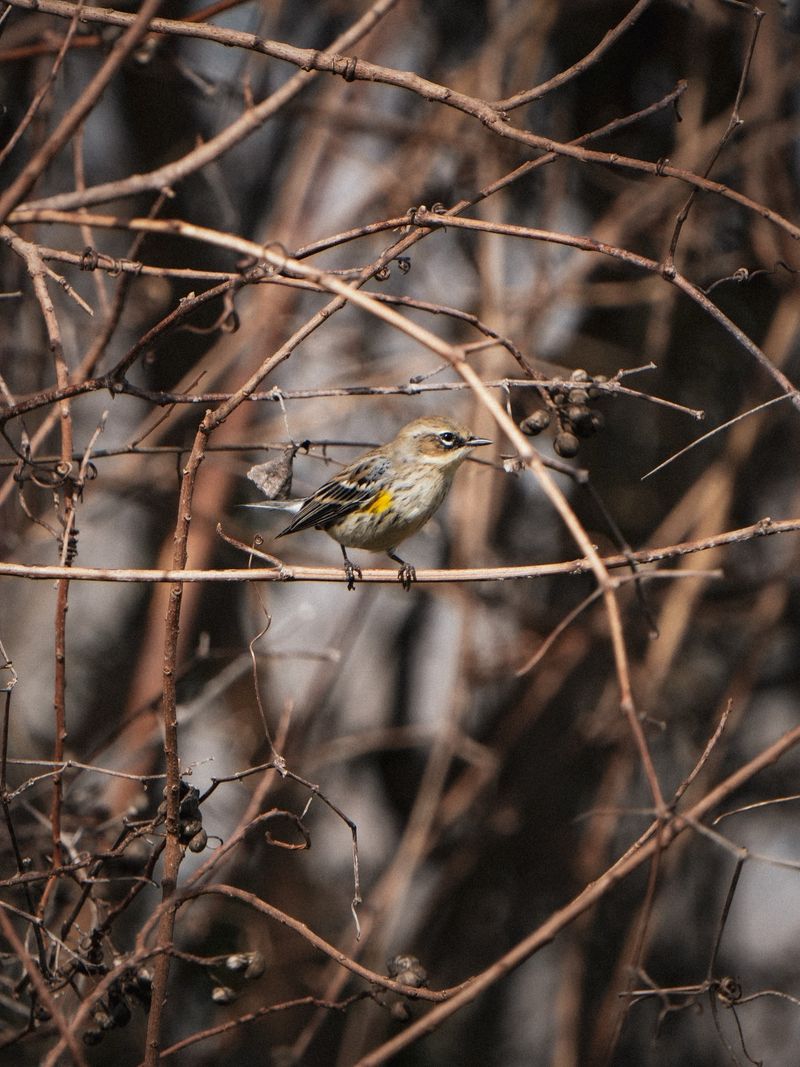
January can look bare in most yards, yet wax myrtle often still holds fruit.
Unlike juicy berries that birds strip quickly, these waxy ones tend to linger on the branch. Their tough coating seems to slow spoilage, so they stay usable for weeks.
How long the crop lasts depends on how many birds are feeding and how heavy the fruit set was.
In a busy year, a flock of warblers can clean off a shrub by midwinter. Other years, berries remain into February or even early spring.
That long window matters during cold snaps in north Georgia, when insects become hard to find.
Birds lean on stored foods like these to get through chilly nights. A shrub that still has fruit after the holidays can become a regular stop for the same small group.
Want to stretch the season in your yard? Pair wax myrtle with other native plants that hold fruit, such as yaupon holly, American holly, and possumhaw.
Different plants ripen and get eaten on different schedules, which spreads food out over more weeks.
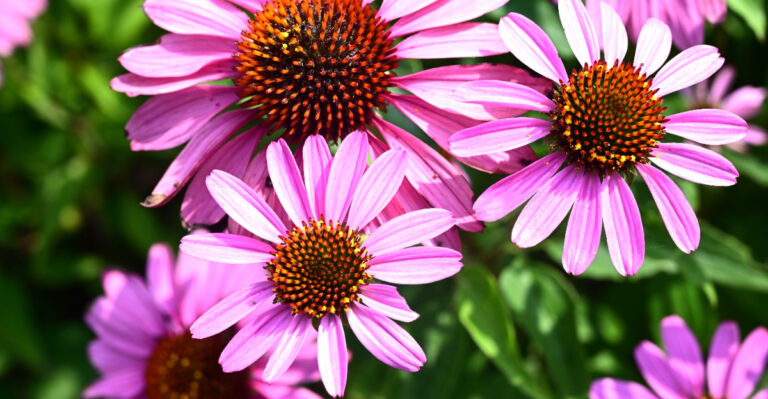
Leave old seed heads standing too. Coneflowers and native grasses can feed other birds while the warblers work the shrubs, giving your winter garden steady activity.
7. Evergreen Leaves Add Shelter As Well As Food
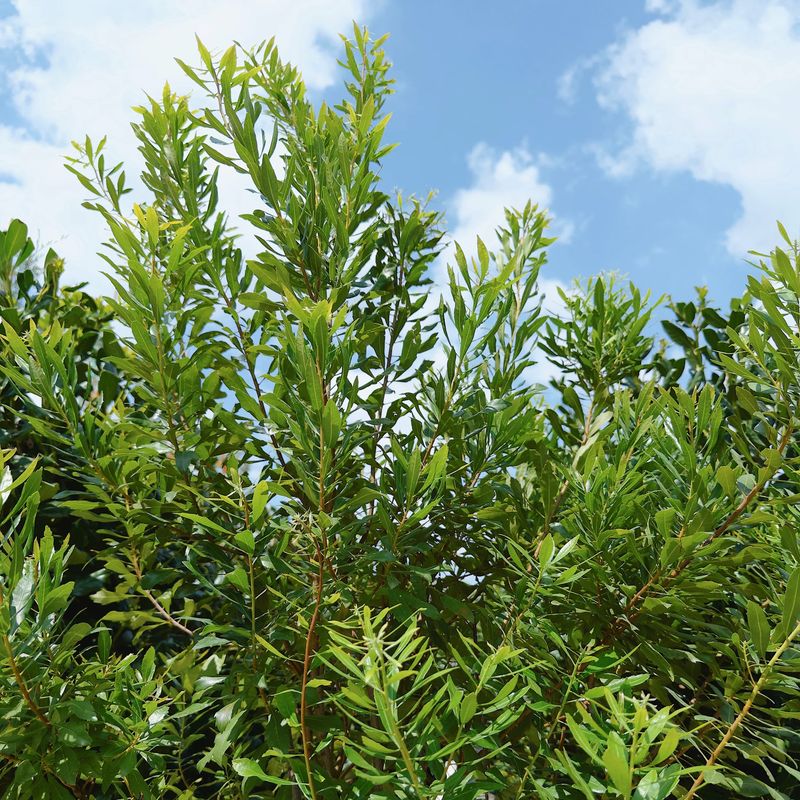
Shelter counts as much as a meal. Wax myrtle keeps its narrow, aromatic leaves through winter, so it stays thick when most shrubs go bare.
That dense cover gives small birds a place to hide from hawks and wind.
Yellow-rumped warblers often feed, rest, and then duck back into the foliage between trips. Cardinals, wrens, and sparrows use the same cover on cold, blustery days.
Shrubs can grow fast, often adding a couple of feet a year once settled.
Left alone, many reach 10 to 20 feet tall and spread wide. You can shape them into a screen or let them form a loose thicket along a back fence.
Wax myrtle handles sandy soil, wet spots, and some salt spray, which makes it popular along the Georgia coast. Very harsh cold snaps in the far north of the state can brown the leaves, though plants usually recover.
Crushed leaves give off a spicy scent that many gardeners enjoy.
Give it room near a window, and you get a front-row seat to winter bird life. Light shaping in late winter or early spring keeps it tidy without cutting off much fruit.
Food plus cover is a simple recipe, and this one shrub offers both.