Your Missouri Orchid Is Probably Planning Something Right Now
Something quiet may be happening on your windowsill right now. Your favorite houseplant looks calm, green, and glossy, yet underneath, a small project could be taking shape.
Early October in Missouri brings crisp mornings, crunchy leaves, and the scent of fallen leaves in the air. Your plant picks up on those changes, even while you hunt for a cozy sweater.
Cooler nights act like a coded message, and your leafy roommate seems to read it. The clues are tiny, pale, and easy to confuse with roots.
Catch those hints early, and you could enjoy colorful blooms during the gray stretch of winter. Miss them, and you may simply notice the flowers later than you could have.
A Hidden Plan Taking Shape Near The Base
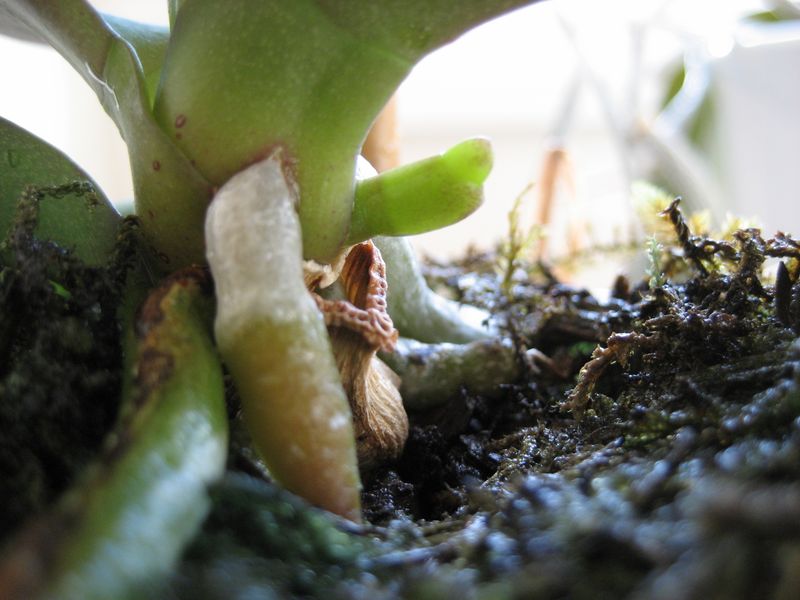
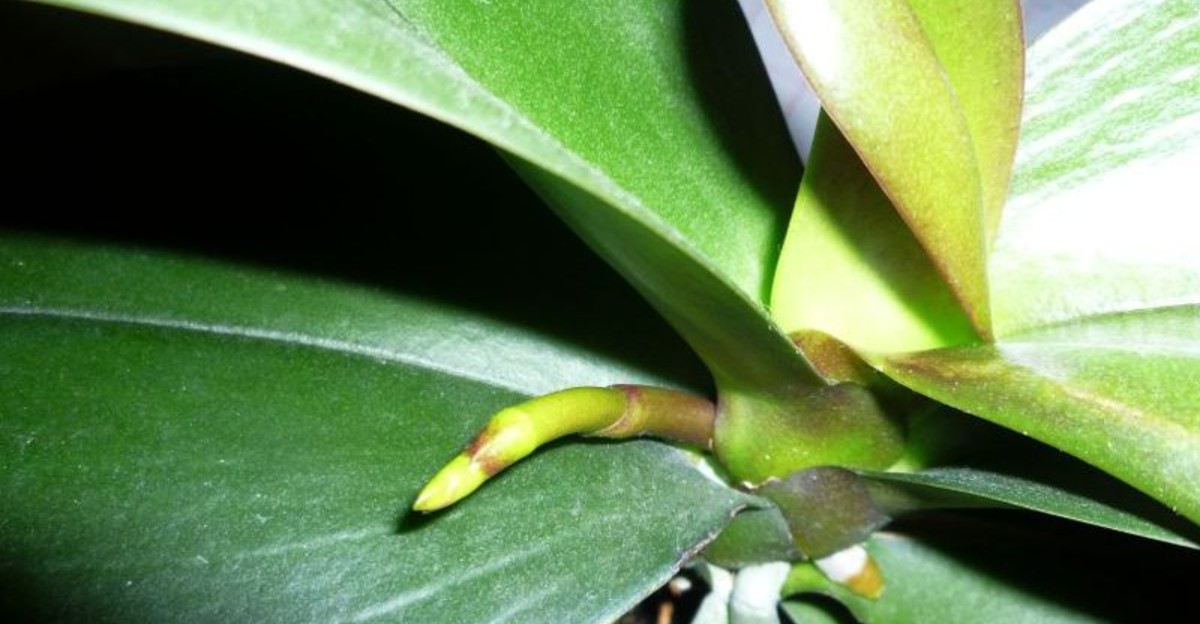
Picture a tiny green mitten poking out from between two leaves, pointing sideways like it has somewhere to be. That little mitten is often the very first sign of a flower spike on a moth orchid.
Moth orchids, also called Phalaenopsis, are the most common orchids sold in Missouri grocery stores and garden centers. Many of them spend the warm months growing leaves and roots, then switch gears once fall arrives.
The new spike usually appears from the stem between the lower leaves, pushing out from a leaf base. Roots, on the other hand, tend to come out rounder, with a green or reddish tip.
Fun fact: a healthy moth orchid can hold its blooms for two or three months once they open. That long show is why spotting the spike early in October feels like finding a hidden treasure map.
Growth often starts slowly during the first few weeks of fall. Later, the stalk speeds up, stretching toward the light as buds begin forming along its upper end.
Try not to move the pot around too much while the spike is still short and tender. Sudden changes in direction can make the stalk bend or twist, which can lead to crooked stems and awkward flower displays.
Keep a gentle eye on that base each time you water, and jot down any new bumps you see. A simple notebook or phone photo helps you track the plan as it slowly takes shape.
The Night Temperature Drop That Flips The Switch
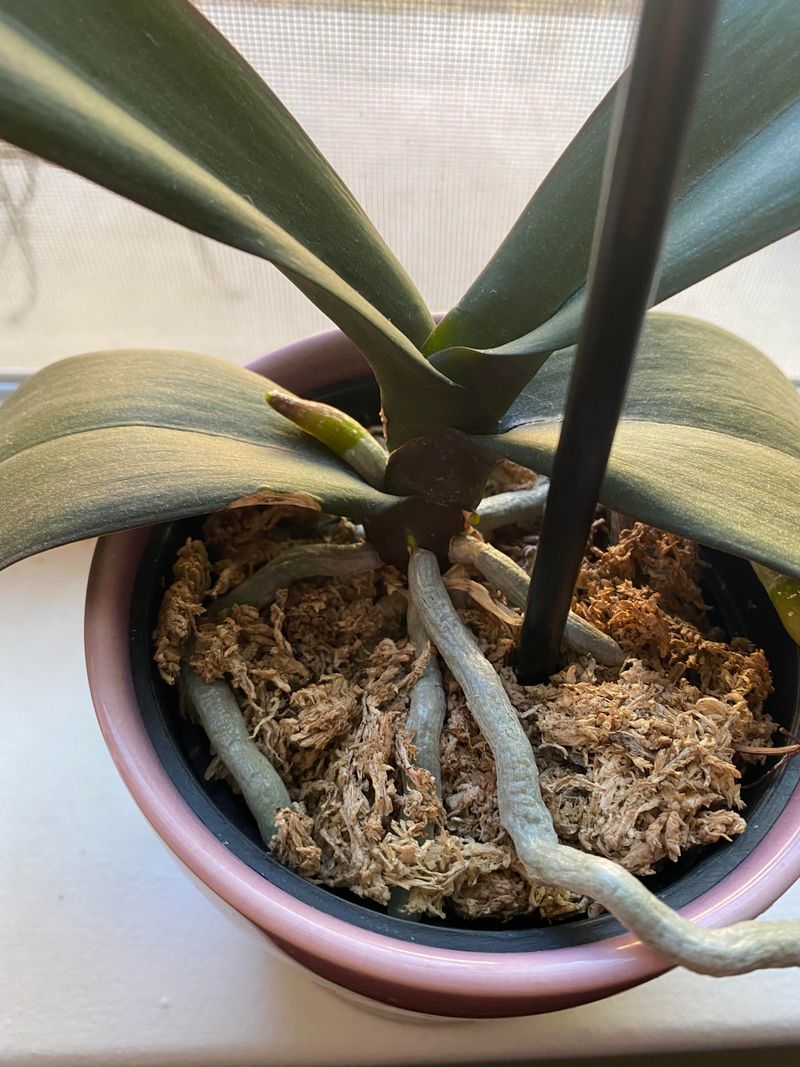
Orchid growers have a funny little trick, and it mostly involves letting the house get a bit chilly at night. Moth orchids often need a nighttime drop of about ten to fifteen degrees to start building a spike.
In nature, these plants grow in tropical forests where nights are noticeably cooler than the warm, steamy days. Your plant still responds to that rhythm, even after years of living on a Missouri bookshelf or table.
Early October is a sweet spot because outdoor nights in Missouri often slip into the fifties. Daytime highs may still reach the seventies, giving your plant that warm-then-cool pattern it quietly craves.
Aim for daytime temperatures around seventy-five degrees and nighttime readings closer to sixty or sixty-two degrees. A cheap digital thermometer near the pot takes the guesswork out and shows you real numbers each morning.
Your Missouri Garden Changes Every Week. Your Plan Should Too.
Gardening in Missouri changes quickly throughout the season. Every Friday you’ll receive a simple weekly plan showing exactly what to plant, prune, fertilize, harvest, and protect so you never miss the right timing.
If your furnace kicks on early, try turning the thermostat down a few degrees after dinner. Another option is moving the plant to a cooler spare room or a bright spot beside a chilly window.
Be careful, though, because temperatures below fifty degrees can stress the leaves and slow down root growth. Leaves touching cold glass may develop soft, dark patches, so leave a few inches of space between them.
Think of the cooler nights as a gentle nudge rather than a shock to your plant’s system. About three to four weeks of this pattern can wake up a hidden spike near the base.
Autumn Daylight Changes That Missouri Orchids Notice
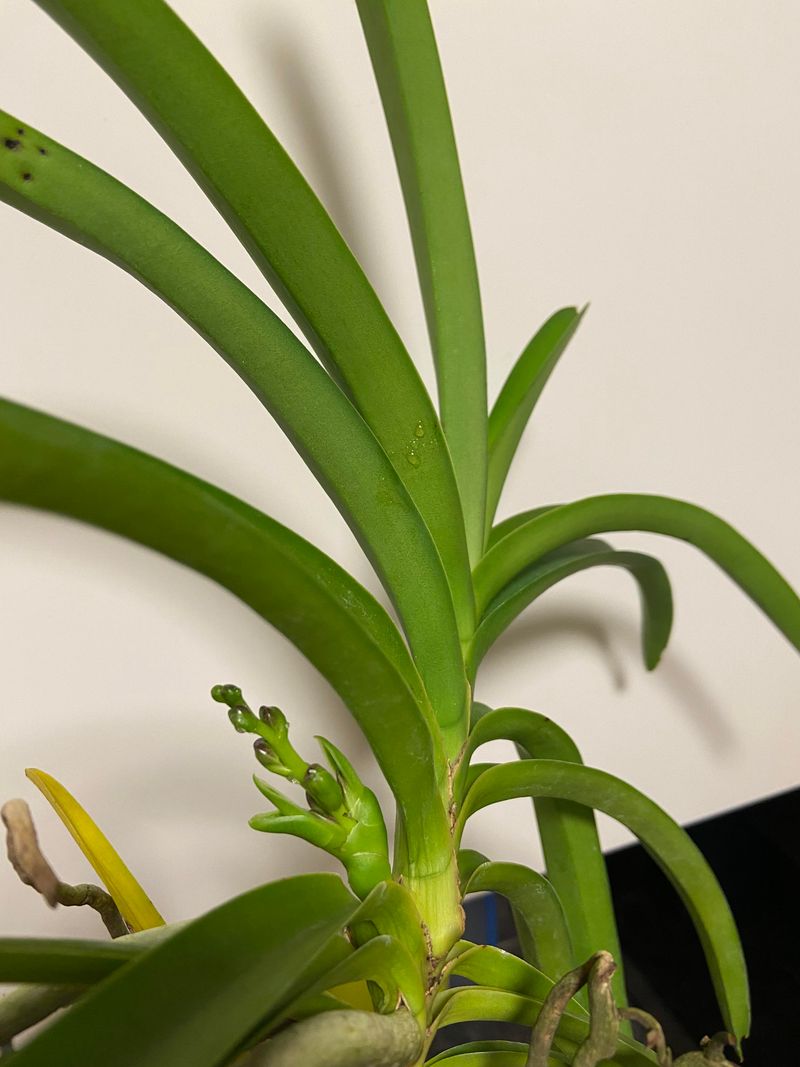
Nobody hands your orchid a paper calendar, yet it still responds to the changing season each fall. Daylight shifts quickly in October, and Missouri loses roughly two minutes of light each day this time of year.
By early October, St. Louis and Kansas City get only about eleven and a half hours of daylight. Back in late June, those same cities soaked up nearly fifteen hours of bright sun every day.
Orchids sense light through their leaves, but cooler nights are the main signal that starts a spike. Shorter days simply arrive at the same time, so the two often get mentioned together.
Lamps can still interfere, especially when a bright reading light stays on beside the pot until midnight. Extra hours of artificial light can also keep the area around the pot warmer at night, which works against the cooler nights the plant needs.
Try to give your orchid a natural rhythm, with darkness arriving around sunset and lasting through the night. Moving it away from TV screens and porch lights shining through the window can help.
Grow lights are still useful, especially on cloudy Missouri afternoons when the sky looks like wet cotton. Just set a simple timer so the lights shut off at the same hour each evening.
Your plant does well with routine, a bit like a cat that expects breakfast at the same minute every morning. Keep that schedule steady now, and the cooler nights can do the rest of the work toward a winter flower show.
Early Signs Worth Checking At The Leaf Base
Ever squinted at a plant so long that your eyes started inventing things that were not really there? Spotting a new spike can feel that way at first, but a few clear clues make it easier.
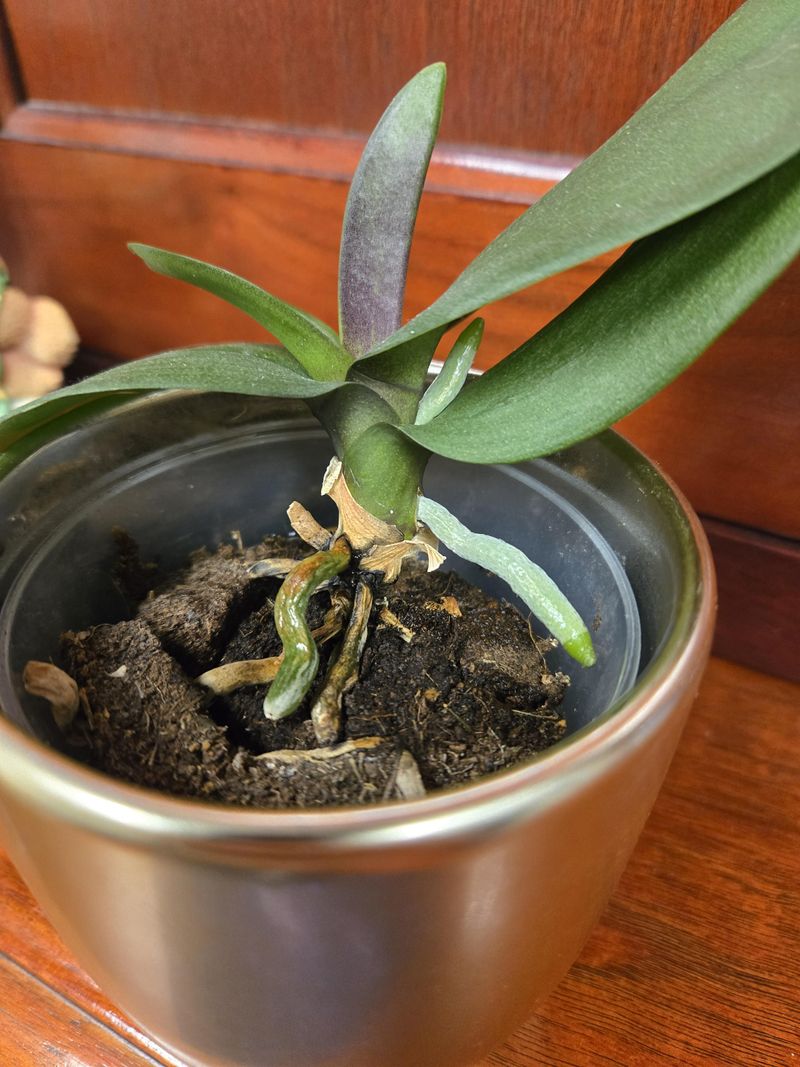
Start by looking at the spot where each leaf joins the main stem, close to the potting mix. New spikes usually push out from the stem between the lower leaves, breaking through a thin papery sheath.
Shape is the biggest giveaway, since a spike looks flat at the tip, almost like a duck bill. Roots look round and smooth, with a shiny green or reddish tip that resembles a pencil eraser.
Direction matters too, because spikes mostly grow upward or sideways, while roots often wander downward toward the pot. Give the mystery bump a week, and its path usually reveals what it truly wants to become.
Color offers another clue, as young spikes are often green, sometimes with a faint purple blush. Roots tend to have that silvery coating called velamen, which turns green when it soaks up water.
Check your plant once or twice a week in October, ideally in bright morning light near a window. A small flashlight helps when leaves overlap and hide the base in shadow, especially on gloomy afternoons.
Once you confirm a spike, mark the pot with a sticky note so nobody turns it around. Family members mean well, but a quick spin can make that young stalk twist in a new direction.
Window Spots Around The House That Suit Missouri Autumns
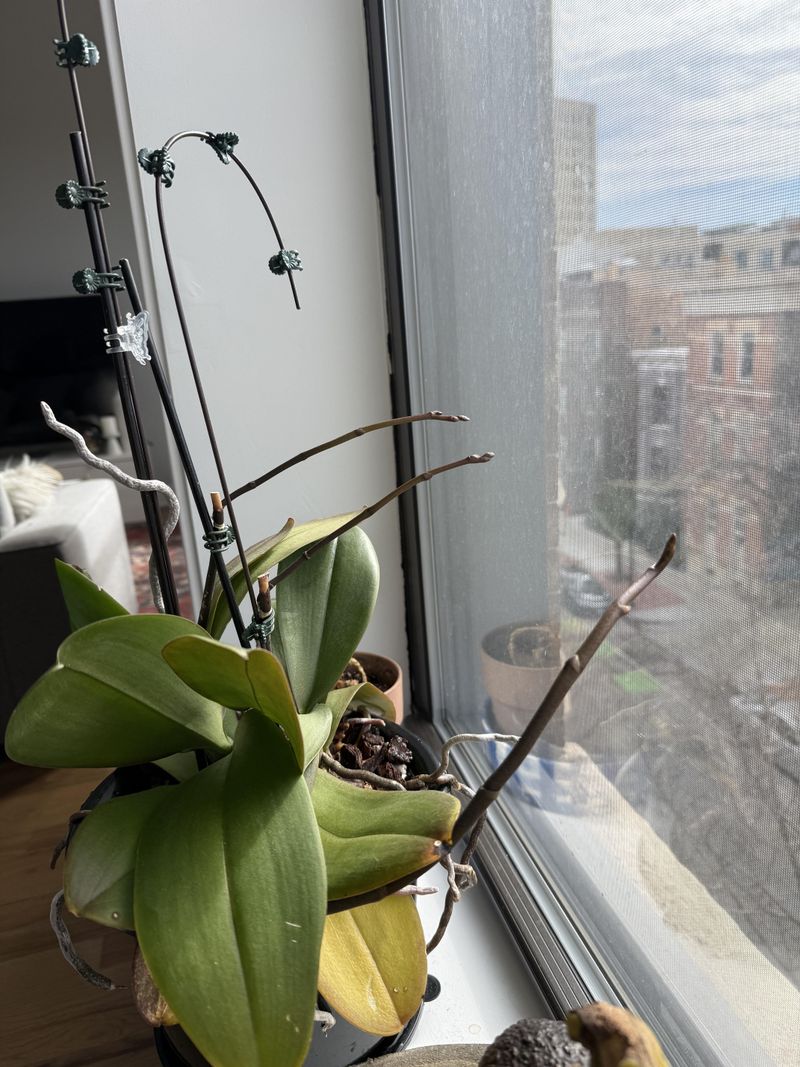
Walk through your house with a cup of tea, and you will notice each window has its own personality. Some glow softly all day, while others blast harsh light or barely let in a gray glimmer.
East-facing windows are often the top pick for orchids during Missouri autumns, thanks to gentle morning sun. That light warms the leaves without scorching them, and the room cools nicely as evening settles in.
South-facing windows work well too, especially as the sun sits lower in the sky each October afternoon. A sheer curtain softens the brightest rays, keeping leaves from turning yellow or developing pale, crispy patches.
West windows can get surprisingly hot, so place the pot a few feet back from the glass. North windows usually feel too dim, though they may help as a backup spot with a grow light.
Kitchens and bathrooms with bright windows offer a bonus, since cooking and showers add helpful moisture to the air. Orchids enjoy humidity between fifty and seventy percent, which can drop fast once Missouri furnaces start running in mid-fall.
Watch out for heating vents, radiators, and space heaters, because their dry blasts can dry out buds. Drafty doors that swing open to chilly porches can also shock a plant sitting in their path.
A simple hand test helps, so hold your palm where the leaves sit at noon on a sunny day. Seeing a soft, fuzzy shadow means the light is just right, while a crisp shadow suggests moving back slightly.
Small Care Habits That Protect The Budding Stalk
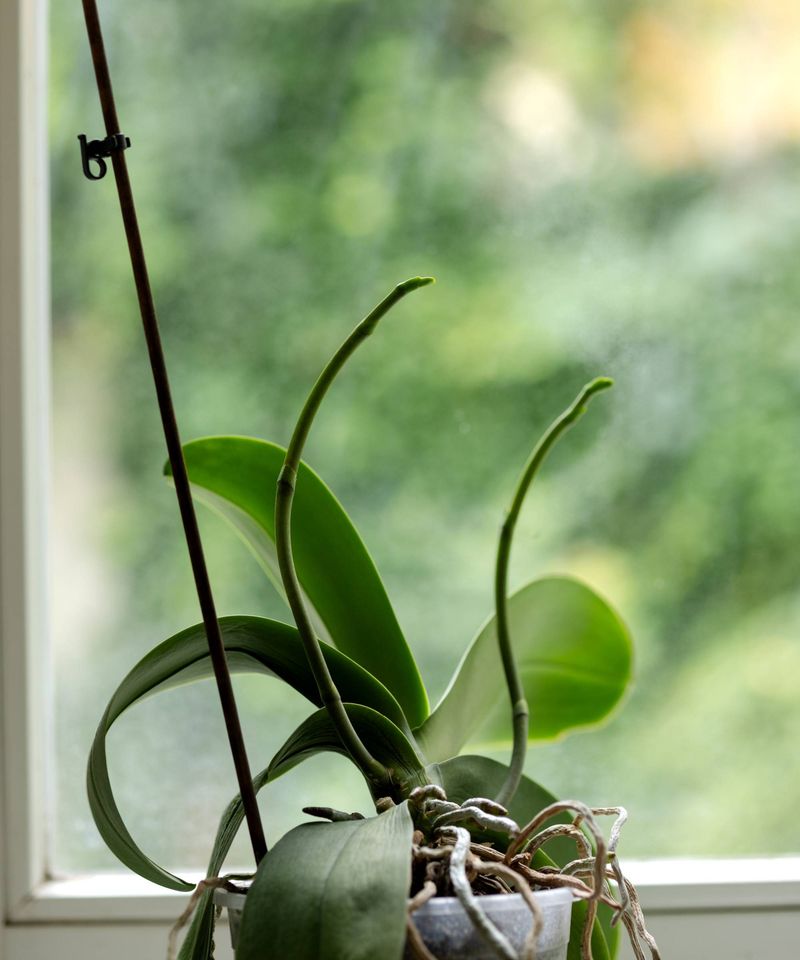
Grandma’s favorite orchid trick was simple: she treated a budding stalk like a sleeping baby and tiptoed around it. Small, steady habits matter more than fancy products once a spike starts climbing in early fall.
Water about once a week, or when the potting bark feels dry an inch below the surface. Soggy roots can rot in cooler weather, so let extra water drain fully from the pot.
Morning watering works best, because leaves and crowns have plenty of time to dry before chilly nights. Water sitting in the center of the plant overnight can cause crown rot, which is hard to reverse.
Feed lightly with a balanced orchid fertilizer mixed at half strength, about every other week this season. Some growers switch to a bloom booster formula, which has a bit more phosphorus to support flower buds.
Once the stalk reaches five or six inches, slide a thin bamboo stake into the bark beside it. Attach the stalk loosely with soft clips every few inches, adding new ones as it grows taller.
Keep ripening fruit like apples and bananas away from your orchid, since they release a gas called ethylene. That invisible gas can cause developing buds to turn yellow and drop before opening.
Patience is the final habit, because spikes often take eight to twelve weeks to produce open flowers. Stick with these steps through October, and your plant may reward you with blooms around the holidays.