That Leafy Ball In Your Oak Tree Isn’t A Bird’s Nest, And Its Builder May Be Watching You
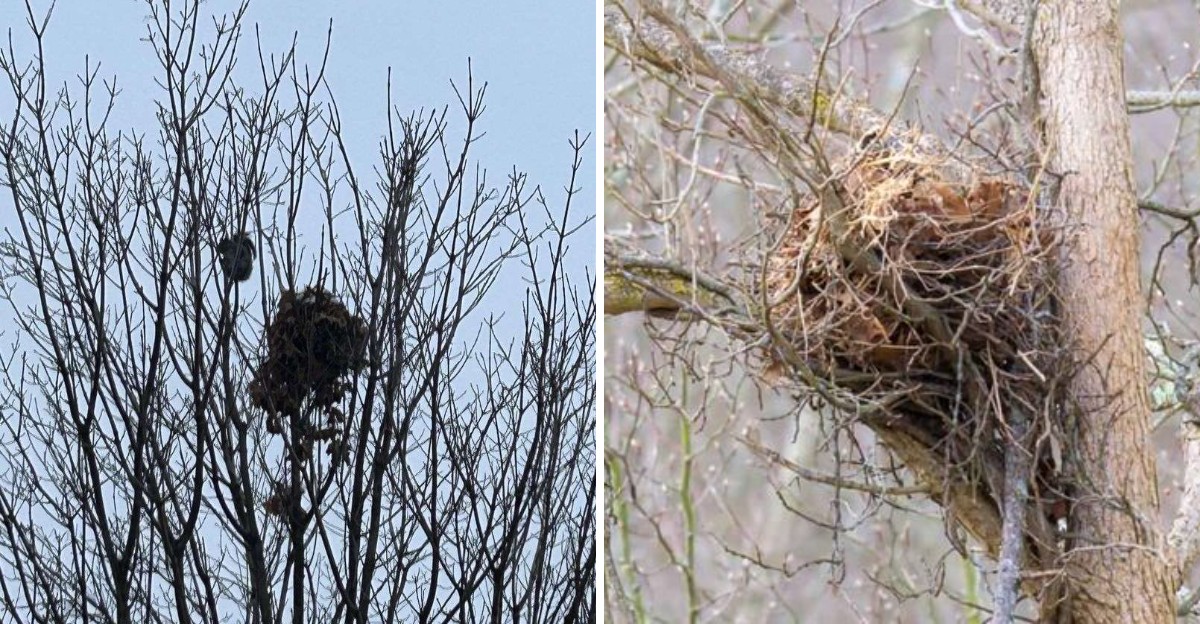
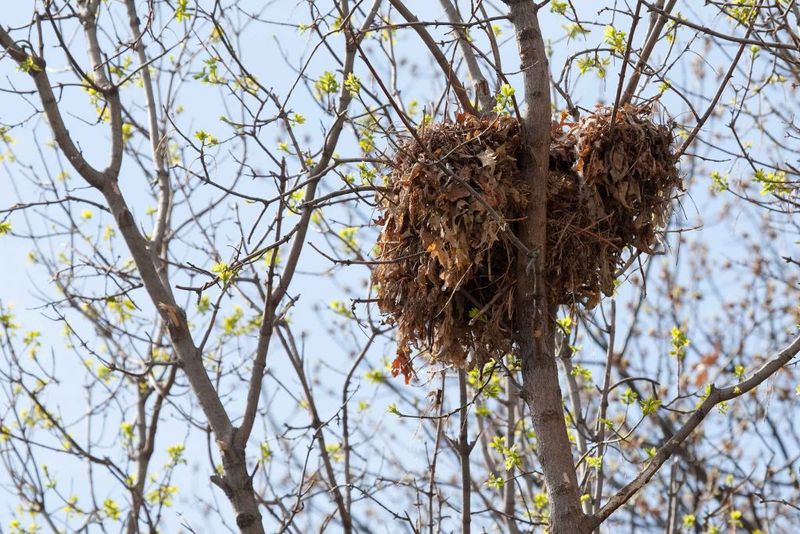
Look up on a crisp fall morning, and you might spot a messy brown ball wedged high in your oak. It looks like a bird got lazy and stuffed a pile of dry leaves into the branches.
No bird built it. The real architect has a bushy tail, a twitchy nose, and a habit of staring at you from the fence.
Across Virginia, these leafy bundles, called dreys, pop up in backyards and parks every year. They rustle in the wind, survive winter storms, and hide a surprisingly cozy secret inside.
Once you know what to look for, you’ll start spotting them everywhere. Fall is prime building season, so right now is the best time to look.
The guide below explains how they’re built, why they matter, and when one is worth worrying about. Your neighborhood’s sneakiest builder is about to be introduced.
A Squirrel Drey Is The Answer
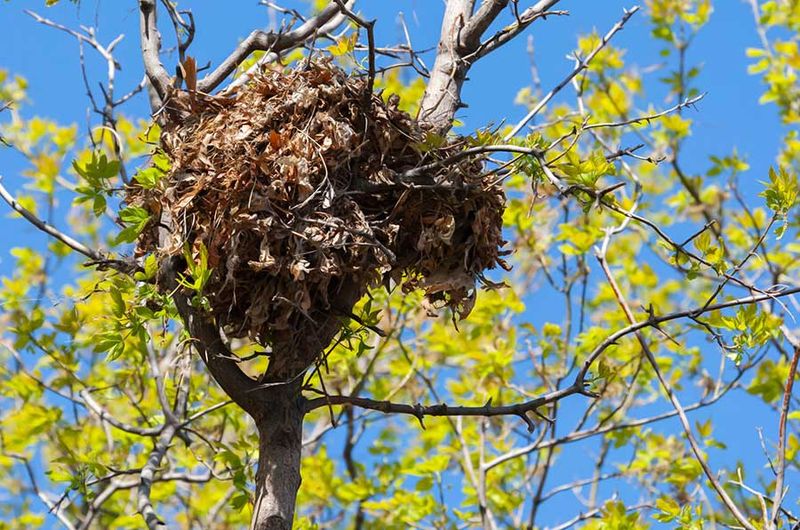
Mystery solved, detective. That bundle of leaves high in your oak is called a drey, and a squirrel built it.
Most folks have never heard the word before. It sounds old because it is, with roots going back hundreds of years in English.
Picture a drey as a squirrel’s treehouse. It works like a bedroom, a storm shelter, and sometimes a nursery all rolled into one.
From the ground, a drey looks like a sloppy clump about the size of a basketball. Up close, it is a carefully woven home with real walls and a roof.
Squirrels in North America rely on two main kinds of homes. Some move into hollow tree holes, while many others build dreys out in the open branches.
Tree holes are warmer, but good ones are hard to find. Dreys solve that housing shortage because a squirrel can build one almost anywhere it likes.
Want a fun test the next time you spot one? Watch it quietly for a few minutes around sunrise or late afternoon.
Squirrels are most active at those times. You may see a furry head pop out, look around, and scamper down the trunk for breakfast.
Bring binoculars if you have them. A closer look lets you see the woven twigs and leaves without disturbing anyone living inside.
Gray And Fox Squirrels Both Build Them
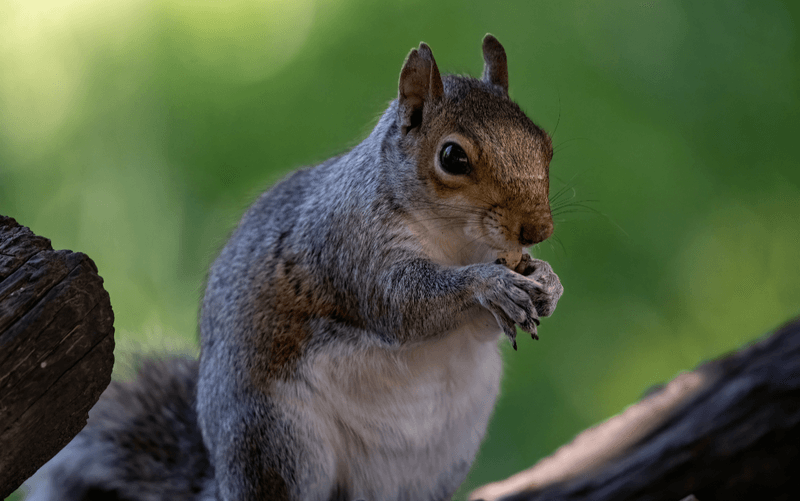
Two furry contractors share the credit here. Eastern gray squirrels and fox squirrels are the most common drey builders across much of the United States.
Telling them apart is easier than you might think. Gray squirrels are slimmer, with silvery gray fur and a white belly.
Fox squirrels are the heavyweights. They can weigh nearly twice as much, and their fur often glows a rusty orange color.
In Virginia, gray squirrels are by far the more common sight. Fox squirrels turn up mostly in open woods and farm country.
Their schedules differ a little too. Gray squirrels love dense woods, while fox squirrels like room to roam.
Fox squirrels also tend to sleep in a bit. You may spot them out foraging later in the morning than their gray cousins.
Your Virginia Garden Changes Every Week. Your Plan Should Too.
Gardening in Virginia changes quickly throughout the season. Every Friday you’ll receive a simple weekly plan showing exactly what to plant, prune, fertilize, harvest, and protect so you never miss the right timing.
Both species adore oaks. Acorns are a top food, so building a home right above the pantry makes perfect sense.
Here is a quirky fact for your next dinner conversation. Some gray squirrels are actually black, thanks to a color variation common in northern areas.
Red squirrels and flying squirrels build nests too. In Virginia, red squirrels stick mostly to the mountains, while flying squirrels usually pick cozy tree cavities instead of open dreys.
Curious which species lives near you? Snap a photo of the squirrel on your feeder or fence and compare its fur color and size.
Free apps like iNaturalist can help confirm your guess. You might even add a useful sighting for local scientists to study.
Dry Oak Leaves Make The Sturdy Outer Shell
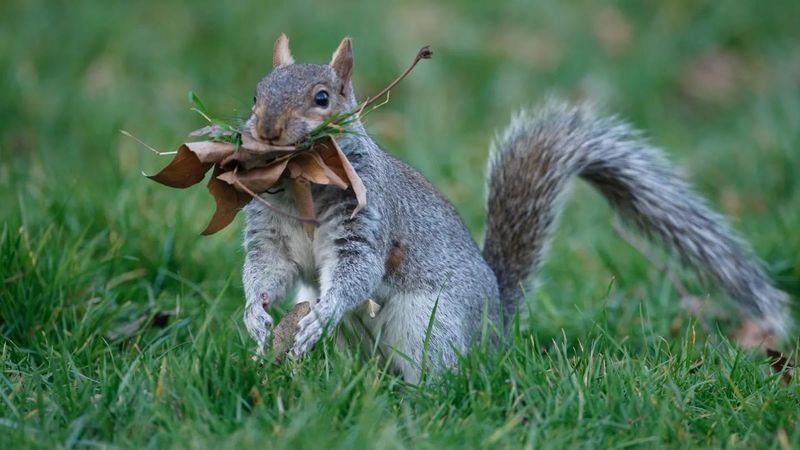
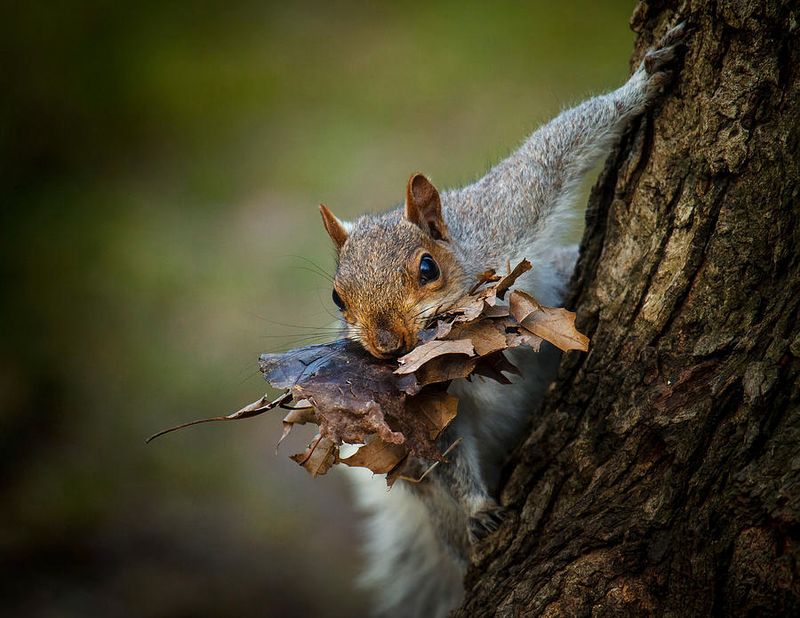
Crunch, crunch, crunch. Every fall, squirrels gather those noisy oak leaves you rake up and turn them into a weatherproof roof.
Construction usually begins with a base. A squirrel weaves green twigs into a rough platform wedged firmly against the branch.
Next comes the shell. Leaves still attached to small twigs get layered around the frame, almost like shingles on a house.
Why oak leaves in particular? They are tough, waxy, and slow to break down, which helps them shed rain and snow.
Squirrels often snip fresh leafy twigs right off the tree. As those leaves dry, they curl and lock together even more tightly.
Some dreys hold up for years with a bit of repair work. Others fall apart after one season if they were built in a hurry.
Here is a neat backyard clue. If you find lots of small twigs with clean, angled cuts under your oak, a builder is probably nearby.
Squirrels bite twigs at a slant, a lot like garden pruners. Wind-broken twigs usually look ragged and splintered instead.
Gardeners can use this knowledge too. Leaving a small pile of leaves in a corner of your yard gives wildlife extra building material and shelter.
Shredded Bark And Grass Line The Cozy Interior
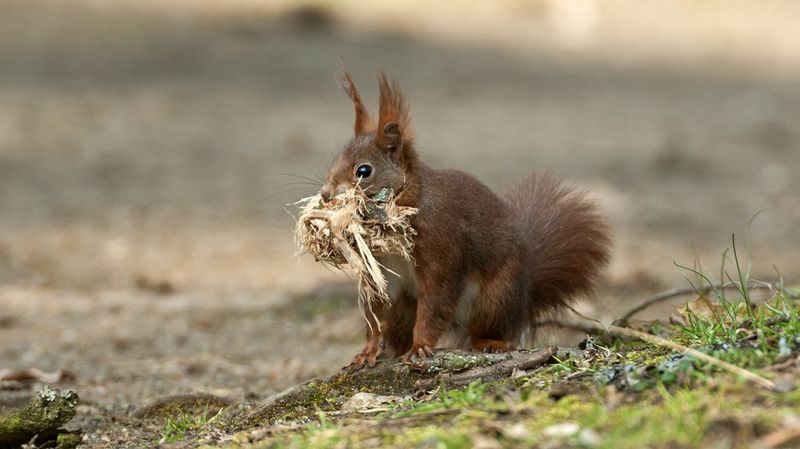
Imagine sliding into a sleeping bag stuffed with soft, fluffy padding. That is pretty much what the inside of a drey feels like.
Behind the crunchy leaf walls sits a hollow chamber about six to eight inches wide. Squirrels pack it with the softest stuff they can find.
Shredded bark is a favorite filling. Squirrels peel strips from trees like cedar or grapevine, then chew them into fluffy fibers.
Dry grass, moss, pine needles, and feathers join the mix. Some city squirrels even grab bits of paper, string, or insulation.
All that padding traps body heat. On a frosty night, the inside of a drey can stay many degrees warmer than the outside air.
Squirrels also curl their bushy tails around themselves like a blanket. Sometimes several squirrels share one drey in winter to stay extra toasty.
Spot a squirrel with a mouthful of grass dangling like a mustache? You just caught a homeowner doing some interior decorating.
You can lend a gentle hand. Skip spraying chemicals on lawn clippings, since squirrels may carry them back to the nest.
Leaving a few natural materials around, like dry grass or untreated wood shavings, can make the building job easier. Just avoid dryer lint, which turns soggy and cold when wet.
Dreys Sit In Forks Well Above The Ground
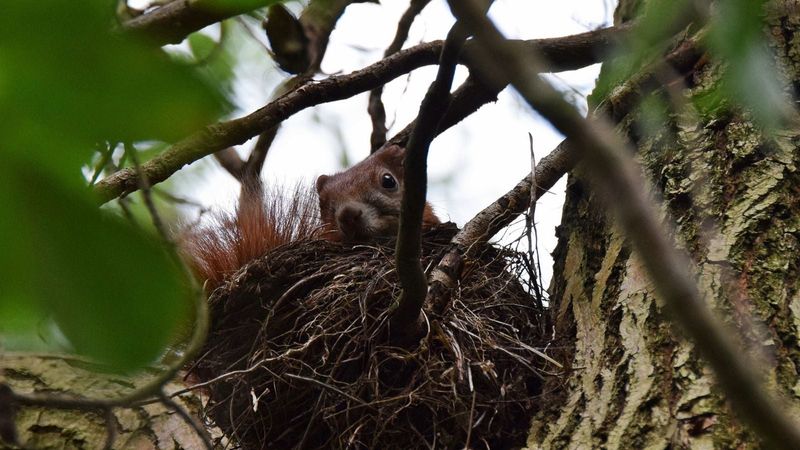
Location, location, location. Squirrels take real estate seriously, and their favorite spot is a sturdy fork high up in a tree.
Most dreys sit at least 20 feet above the ground. Some perch 60 feet or higher in tall, mature oaks.
Height offers serious perks. Cats, dogs, and foxes have a hard time reaching that far, so families stay safer.
Forks matter just as much. Where a branch splits, the drey gets support from several sides and is less likely to blow away.
Squirrels often build close to the trunk. That spot is calmer in wind, and it gives them a quick escape route down the tree.
Hawks and owls are the main threat from above. A drey tucked among leafy branches is harder for those sharp eyes to spot.
Here is a fun winter project for kids and adults. After the leaves fall, walk around your neighborhood and count how many dreys you can find.
Bare branches make them easy to see from the Blue Ridge to Tidewater. You may be surprised at how many squirrels live on one block.
Jot down which trees hold the most nests. Oaks often win, though maples, elms, and hickories make strong showings too.
Birds Build Open Cups, Not Closed Spheres
Quick quiz. Can you see inside it from above, or is it wrapped up like a leafy burrito?
That simple question solves most nest mysteries. Many songbirds build open cups, while squirrels build closed, roofed spheres.
Robin nests are a great example. They are neat bowls of mud and grass, usually about the size of your palm.
Cardinal and blue jay nests are cup-shaped too. You could peek over the rim and spot eggs if you climbed up close.
Dreys feel totally different. They are bigger, rounder, and covered on top, with a small side entrance hidden in the leaves.
Size gives another hint. A typical drey measures 12 to 24 inches across, much larger than most songbird nests.
Timing helps as well. Bird nests usually appear in spring and summer, while dreys stand out most in fall and winter.
Hawk and crow nests can be large, though. The difference is material, since those birds use thick sticks with few leaves.
Fun fact for bird fans: some birds, like wrens, build domed nests with side doors. Wren nests are tiny, though, usually tucked inside cavities or birdhouses rather than out in open branches.
Squirrels Build Several, Not Just One
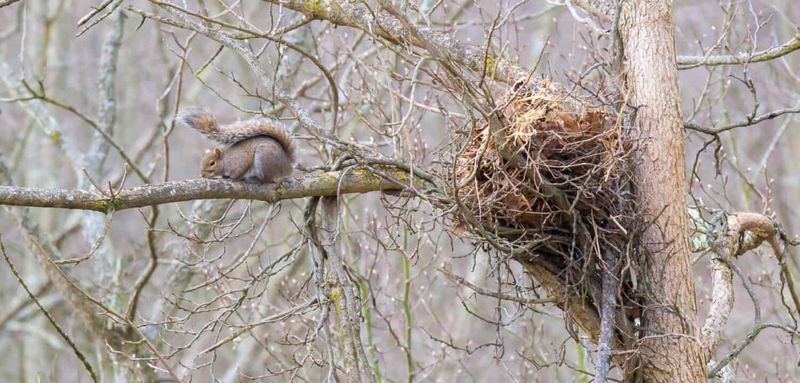
Plenty of people own a vacation house. Squirrels go a step further and often keep two or three homes at once.
Having backups is smart. If fleas, mites, or mold take over one drey, a squirrel simply moves next door.
Bad weather plays a role too. A drey damaged by wind can be swapped for a sturdier one nearby.
Mother squirrels are especially careful. If she senses danger, she may carry her babies one by one to a different nest.
Some extra dreys are rough summer shelters. Researchers call them platform or day nests, and they are often flatter and thinner.
Winter dreys look chunkier and better built. Squirrels put extra effort into them because they need serious protection from the cold.
Spotting three dreys in one tree does not mean three squirrels live there. One busy squirrel may own every single one.
Neighbors also share sometimes. Gray squirrels are fairly social and may bunk together to stay warm in harsh weather.
Curious how your backyard squirrels split their time? Watch on different days and note which drey gets visitors.
A simple notebook log can reveal patterns. It makes a fun science project for kids during winter break.
Fall Is Peak Building Season
Autumn turns squirrels into tiny construction crews. Between burying acorns and building homes, they barely seem to sit still.
Shorter days and cooler nights send a clear signal. Winter is coming, and a weak shelter could mean a rough few months.
Most serious drey building happens from late summer through fall. Leaves are plentiful, and twigs are still flexible enough to weave.
A second wave often comes in late winter. Squirrels prepare nursery dreys before babies arrive in early spring.
Many squirrels raise two litters a year. The second batch of babies usually shows up in late summer, so nests stay busy.
You can spot builders in action pretty easily. Look for squirrels sprinting up trunks with leafy twigs clamped in their mouths.
Here is a cool detail worth sharing. A squirrel can finish a basic drey in just a day or two of steady work.
Fall is also when people notice dreys the most. Once leaves drop across Virginia, those hidden homes suddenly appear like magic.
Want to help? Hold off on heavy tree trimming in spring and late summer, when babies are most likely inside.
Late fall or early winter usually works better, after young squirrels can get around on their own.
Leave It Alone Unless It Crowds Your Roof
Good news for busy homeowners. In most cases, the best thing to do about a drey is nothing at all.
Dreys rarely harm healthy trees. Squirrels snip a few twigs, but oaks handle that light pruning without much trouble.
Removing a drey can backfire too. Babies may be inside, and many states have rules about disturbing wildlife homes.
Squirrels also give back to your yard. Forgotten acorns sprout into new oaks, helping forests and neighborhoods grow over time.
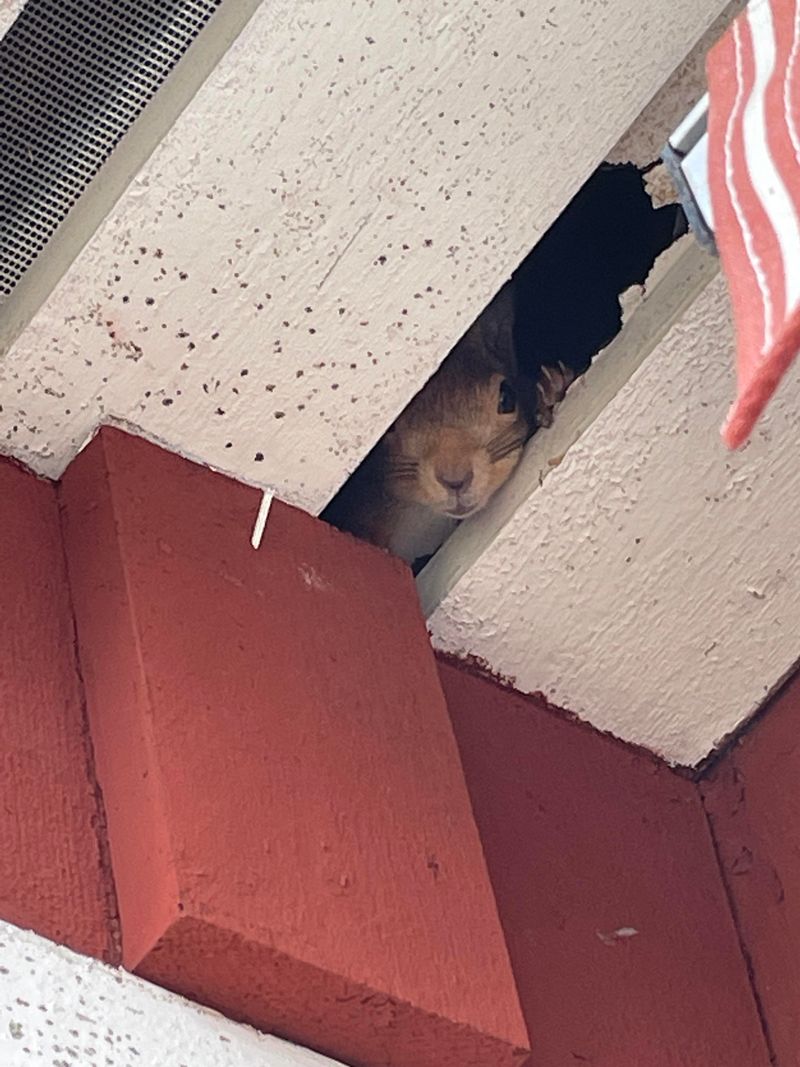
Things change when a drey sits right against your roof. A nest that close gives squirrels an easy path to shingles, vents, and gutters.
Watch for warning signs. Chewed fascia boards, scratching sounds overhead, or bits of insulation outside are clues worth checking.
Spotting trouble early saves money. Squirrel damage to wiring and attic insulation can get expensive to repair.
If a drey must go, timing matters. Wait until fall or winter, when young squirrels are no longer helpless.
Call a licensed wildlife professional for high or tricky nests. They know local laws and can work safely without hurting the animals.
Climbing a ladder near a roof edge is risky. Leave that job to someone with proper gear and training.
Trim Branches Near The House To Block Attic Access
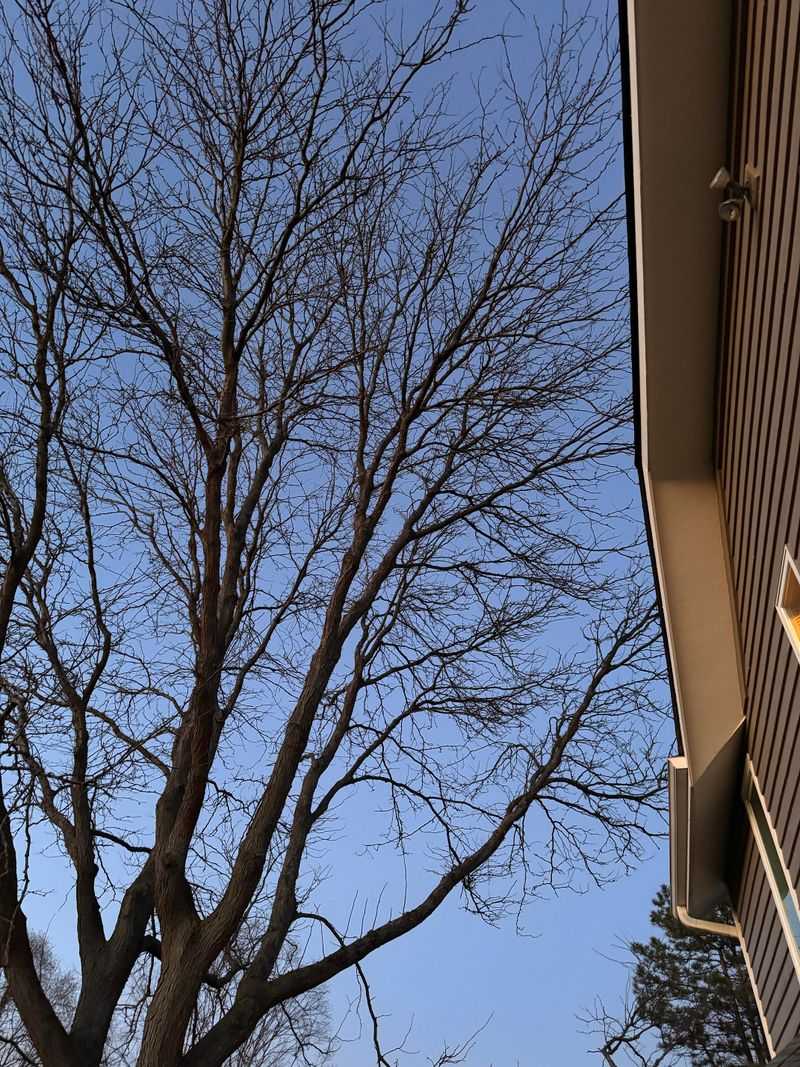
Squirrels are fearless long jumpers. Some can leap eight to ten feet between branches, roofs, and fences.
That talent is impressive to watch from the patio. It is less charming when the landing spot is your attic vent.
Trimming is the simplest fix. Aim to keep branches at least eight to ten feet away from your roofline.
Cut back limbs that hang directly over the house too. Squirrels can drop down from above just as easily as they jump sideways.
Hiring a certified arborist is a wise move for big branches. Pros cut in ways that keep oaks healthy and lower disease risk.
Timing matters for oaks in particular. Oak wilt has been found in parts of Virginia, so many experts suggest trimming oaks in winter to help prevent it.
After trimming, take a slow walk around your house. Look for gaps, loose vents, or chewed spots where a squirrel could squeeze through.
Sturdy metal mesh over vents works well. Squirrels can chew through plastic and thin screen surprisingly fast.
Here is the happy ending. With a little trimming and sealing, you can enjoy watching your leafy neighbors without sharing your attic.
Your oak keeps its furry tenants, and your home stays snug. Everyone wins, even the squirrel staring at you from that branch.