The One Herb Virginia Gardeners Swear Repels Stink Bugs
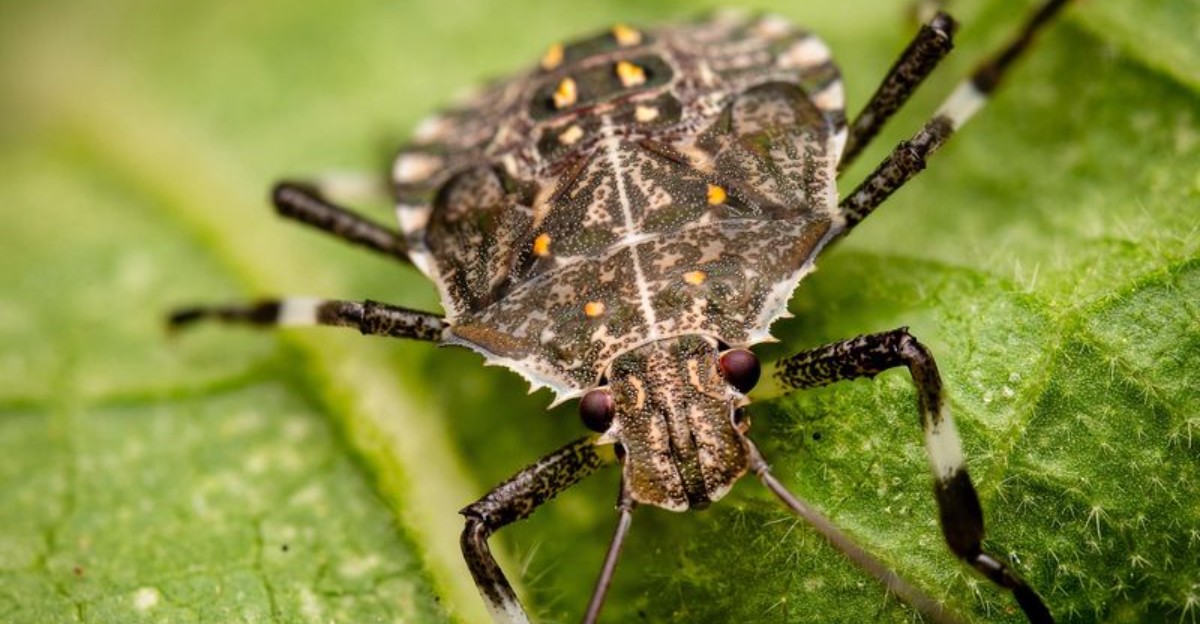
Few things ruin a fall afternoon like a stink bug crawling across your coffee mug. These shield-shaped pests smell like burnt cilantro when bothered, and tend to show up in droves.
Across Virginia, gardeners trade tips over fences about keeping them away. One leafy herb keeps popping up in those chats, praised like a backyard secret weapon.
It smells sharp and minty, grows with little effort, and makes cats act a little silly. Whether it truly sends stink bugs packing is another question entirely.
The real answer is more interesting than a simple yes or no. Science has some clues, but the full story might surprise you.
Catnip Is The Herb Getting All The Buzz
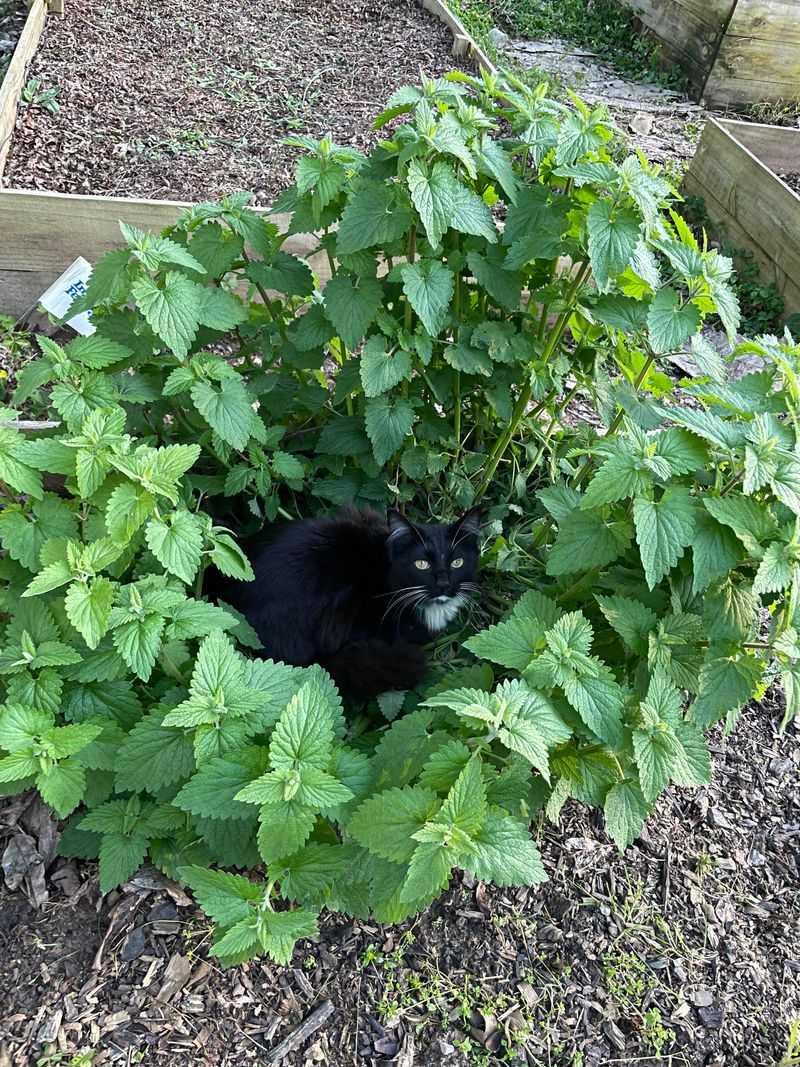
Ask around a Virginia garden club, and someone will mention catnip before you finish your question. The scruffy little herb has earned a loyal fan base among folks battling stink bugs.
Catnip goes by the scientific name Nepeta cataria, and it belongs to the mint family. Rub a leaf between your fingers, and you get a sharp, minty, slightly skunky scent.
That bold smell comes from a natural compound called nepetalactone. Gardeners believe the aroma confuses pests and nudges them toward friendlier neighborhoods.
Stink bugs became a real headache here after the brown marmorated species spread through the Mid-Atlantic. Homeowners started trying almost anything that promised relief without harsh sprays.
Catnip fits that wish nicely, since it is cheap, easy to find, and pleasant to grow. You can pick up starter plants at most garden centers each spring.
Many people tuck it near vegetable beds, porches, and doorways where stink bugs like to gather. Others dry the leaves and scatter them along windowsills in early fall.
Is the hype deserved? The honest answer is a little complicated, and the sections below unpack it piece by piece.
Even so, the herb brings real perks to a yard, from pollinator-friendly blooms to happy pets. Think of it as a helpful teammate rather than a single magic fix.
Keep a notebook, too, and jot down where bugs gather before and after planting. Your own records will tell you more than any rumor at the hardware store.
Its Oils Repel Some Insects In Studies
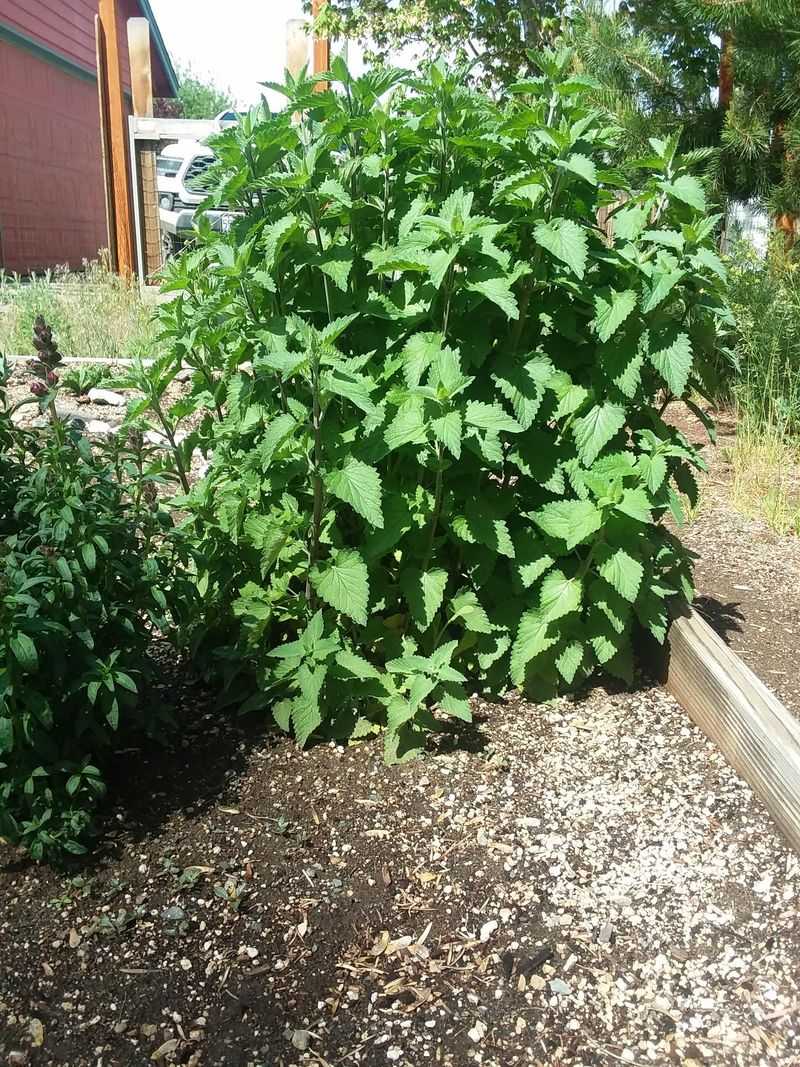
Scientists got curious about catnip long before stink bugs made headlines. Back in 2001, researchers at Iowa State reported that catnip oil drove mosquitoes away surprisingly well.
In some lab tests, nepetalactone performed about as well as DEET, the active ingredient in many bug sprays. That finding grabbed attention from gardeners and scientists alike.
Later work helped explain why the herb bothers bugs so much. Nepetalactone switches on an irritant receptor in insects, a bit like how wasabi stings your nose.
Researchers at Northwestern and elsewhere found this same receptor in many different insect species. Bugs basically feel discomfort and want to get away from the source.
Mosquitoes are not the only pests that seem to dislike catnip. Lab trials also showed strong repellency against stable flies and common houseflies.
So the oil clearly has some muscle behind it. The tricky part is that a concentrated oil in a lab differs from a leafy plant outdoors.
Your Virginia Garden Changes Every Week. Your Plan Should Too.
Gardening in Virginia changes quickly throughout the season. Every Friday you’ll receive a simple weekly plan showing exactly what to plant, prune, fertilize, harvest, and protect so you never miss the right timing.
A living catnip plant releases only small amounts of scent into the air. Wind, rain, and heat can scatter those oils quickly in a Virginia summer.
If you want stronger results, crush a few fresh leaves near the spot you are protecting. Bruising releases more nepetalactone, giving a short burst of scent.
Some gardeners also brew a cooled catnip tea and mist it on porch screens. Test a small area first so you do not stain fabric or paint.
Science supports the idea that catnip annoys many insects. Whether stink bugs share that dislike is another question entirely, and it deserves a closer look.
Evidence Against Stink Bugs Is Still Thin
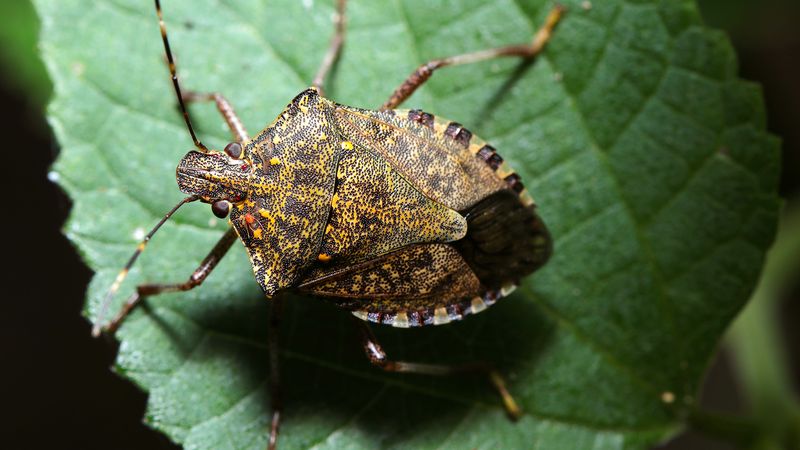
Here comes the part nobody loves hearing. Plenty of gardening websites list catnip as a stink bug repellent, but solid studies are hard to find.
Most catnip research focuses on mosquitoes, flies, and cockroaches. Brown marmorated stink bugs simply have not received the same careful testing with this herb.
Even the mosquito results come with a catch. One study found catnip oil worked well in a dish but fell short of DEET on human skin.
Lab success does not guarantee real-world success, in other words. A garden is messy, breezy, and full of competing smells that can weaken any scent barrier.
Stink bugs are also stubborn travelers with strong instincts. In fall they seek warm shelter, and a whiff of mint may not change their plans.
Why do so many people swear by it, then? Part of the answer may be timing, since bug numbers rise and fall naturally from year to year.
A gardener plants catnip during a light stink bug season and gives the herb credit. Next year, a heavy wave might arrive regardless of what grows nearby.
None of that makes catnip useless. It simply means you should pair it with proven methods instead of relying on it alone.
Extension experts at Virginia Tech and other universities stress exclusion and physical removal first. Plants like catnip can be a fun bonus layered on top.
Try your own small experiment by planting catnip near one door and not another. Count the bugs at each spot for a few weeks and compare.
It Grows Easily In Sunny, Dry Spots
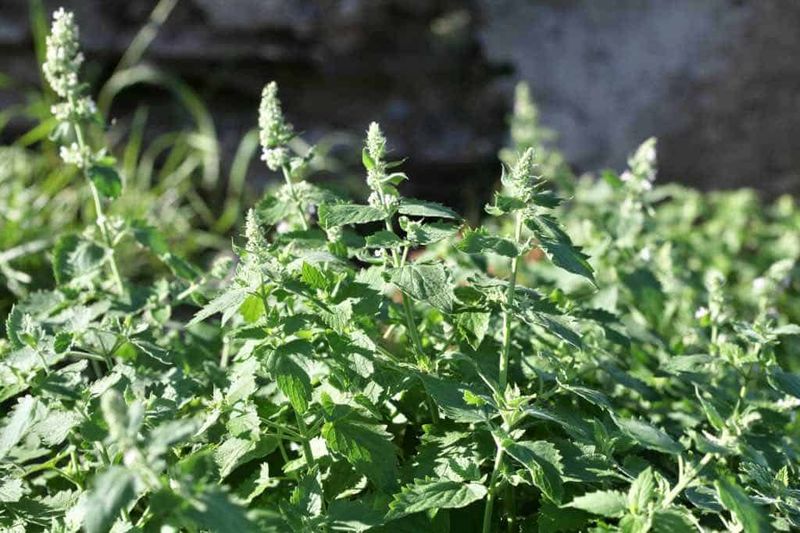
Good news for busy gardeners: catnip practically raises itself. Give it sunshine and decent drainage, and it will happily take care of the rest.
Full sun suits it best, though partial shade works fine during hot afternoons. Aim for at least six hours of light for bushy, fragrant growth.
Soil matters more than fertilizer here. Catnip prefers loose, well-draining ground and can sulk in soggy clay that holds water after storms.
Much of Virginia has heavy red clay, so a little prep helps. Mix in compost or plant in a raised bed to keep roots from sitting wet.
Once established, catnip handles dry spells like a champ. It also tolerates the sticky summer humidity that troubles many other herbs.
Plant seeds or starter plants in spring after the last frost passes. Space them about eighteen inches apart, since mature plants can reach three feet tall.
Fair warning, though, catnip loves to spread. It reseeds freely and can pop up in places you did not invite it.
Snipping off faded flowers before they set seed keeps things tidy. Growing it in a large pot near your porch is another smart way to contain it.
Pots also let you move the plant toward doorways during fall bug season. Just water containers a bit more often, because they dry out faster than garden beds.
Trim the stems back by about half in midsummer for fresh growth. You will get a fuller plant and a second round of fragrant leaves.
Cats Will Love It Even If Bugs Don’t
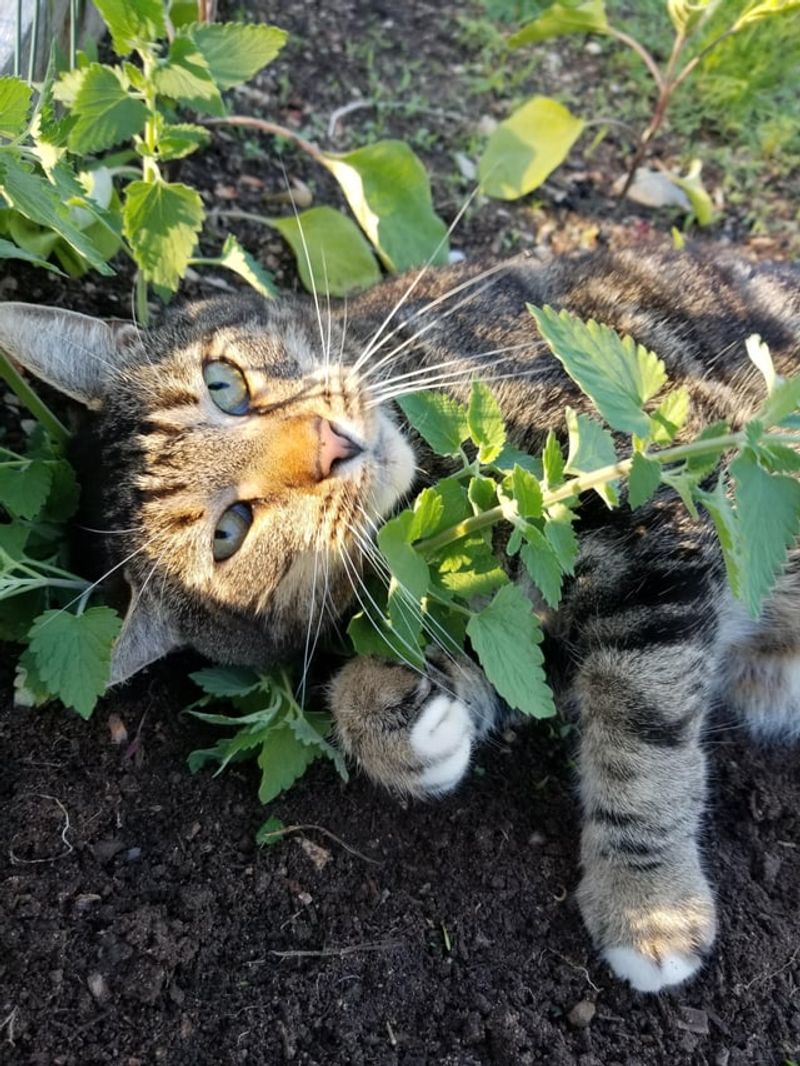
Picture your tabby sprawled in the herb bed, rolling around like it won the lottery. If you own a cat, expect that scene the moment catnip goes in the ground.
Roughly 60 percent of cats react strongly to nepetalactone. The rest may sniff politely and wander off, since the response is inherited.
Sniffing usually sparks playful behavior like rubbing, rolling, chirping, and zoomies. Eating the leaves tends to have the opposite effect, leaving many cats calm and sleepy.
The excitement does not last long, typically under thirty minutes. Afterward, most cats lose interest for a while before the herb works on them again.
Catnip is generally safe for felines in modest amounts. Too much nibbling, though, can upset their stomachs and cause vomiting or diarrhea.
Neighborhood cats may visit your yard too, which surprises some new growers. A wire cage or chicken wire collar protects young plants from enthusiastic visitors.
Here is a bright side worth celebrating. Dried leaves make wonderful homemade cat toys, and you can stuff them into old socks or small fabric pouches.
To dry them, hang bundles upside down in a shady, airy spot for about a week. Store the crumbled leaves in a sealed jar to keep the scent strong.
Bees and butterflies also adore the small lavender-white blooms in summer. Even if stink bugs ignore your catnip, plenty of other creatures will thank you.
Fun fact: the herb is native to Europe and Asia, not North America. Settlers brought it over for teas, and it soon escaped into fields and roadsides.
Sealing Cracks Stops Indoor Invasions
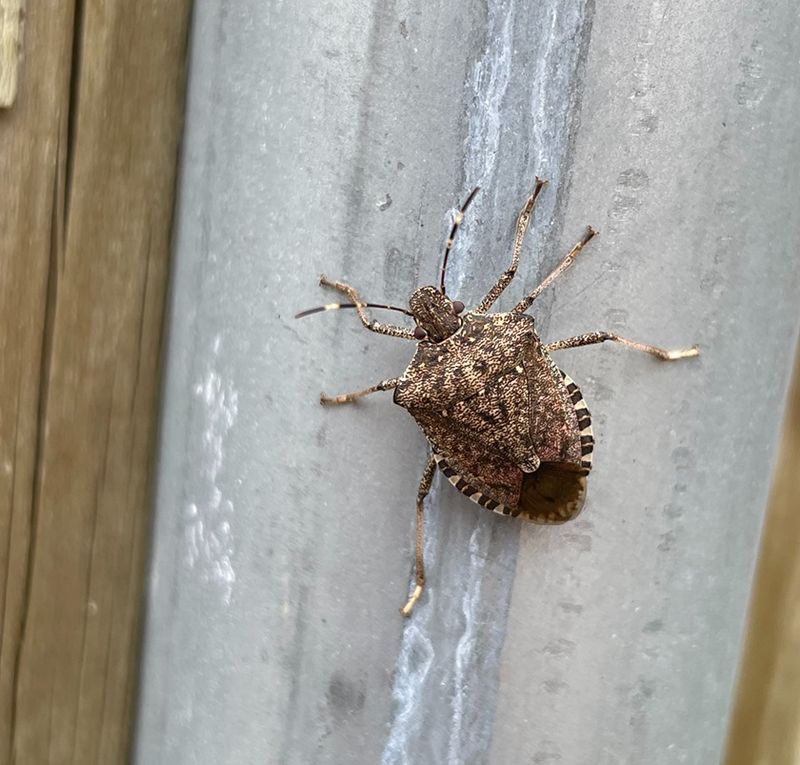
If you only tackle one stink bug chore this year, make it this one. Experts agree that keeping bugs out beats chasing them around later.
Stink bugs are flat and sneaky, slipping through gaps you might barely notice. A crack the size of a pencil eraser can work like an open door.
Guidelines suggest sealing slits under three millimeters and holes under seven millimeters. Grab a flashlight and inspect slowly, especially on sunny southern and western walls.
Check around window frames, door edges, siding seams, and attic vents first. Utility pipes, dryer vents, and cable lines are other popular entry points.
Silicone or silicone-latex caulk works well for small gaps. Expanding foam can fill larger openings around pipes and wires.
Worn door sweeps and torn window screens deserve attention as well. Replacing them costs little and blocks a surprising number of hitchhikers.
Timing makes a huge difference with this project. In Virginia, finish sealing by late summer or early fall, before bugs hunt for winter shelter.
Once cooler nights arrive, thousands may cluster on warm siding looking for a way inside. By then, any missed gap becomes an easy invitation.
Covering vents with fine mesh screening adds another layer of defense. Make sure the mesh does not block airflow for dryers or furnaces.
Catnip by the door might help a little, but caulk does the heavy lifting. Think of sealing as locking the house before worrying about the yard.
A Bucket Of Soapy Water Handles Stragglers
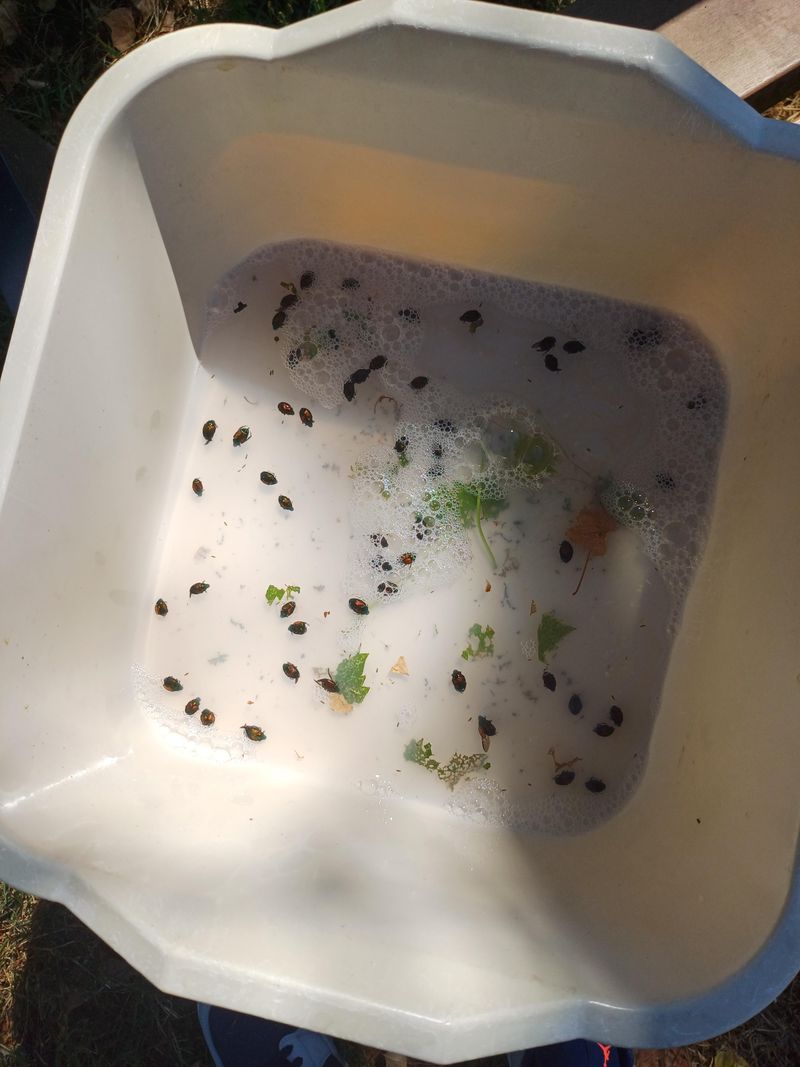
Every gardener eventually meets a stink bug that slipped past every defense. For those stubborn stragglers, an ordinary bucket might be your best friend.
Fill a container about halfway with water and add a generous squirt of dish soap. Stir gently so the soap spreads without creating mountains of bubbles.
Soap matters because it breaks the surface tension of water. Without it, bugs can float on top and eventually crawl back out.
Stink bugs have a funny habit when disturbed. They tend to drop straight down rather than fly away, which works in your favor.
Hold the bucket under a bug on a leaf or wall and give it a gentle tap. Most will tumble right in, and you skip touching them altogether.
Best of all, the bugs usually sink without releasing much of their notorious smell. Such a tidy result makes the method popular with squeamish helpers and kids.
A spray bottle offers a handy alternative for bugs in tricky spots. Mix water with a tablespoon or so of dish soap and spritz them directly.
Morning is a smart time for bucket patrols in the vegetable garden. Bugs move slower when temperatures are cool, so they are easier to catch.
Check tomatoes, peppers, beans, and fruit trees, which are favorite targets. Look on the undersides of leaves too, where they like to hide.
Many Virginia gardeners keep a bucket parked by the back door all season. When a bug lands on the screen, cleanup takes only seconds.
Empty the bucket every few days and refresh the soap mix. Dump the old water away from plants you care about most.
A Simple Light Trap Catches Them Indoors
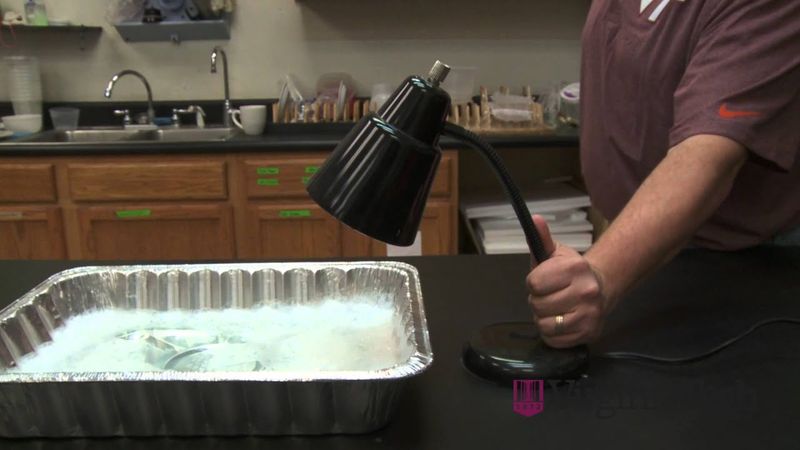
Stink bugs share a weakness with moths: they cannot resist a glowing light. Smart homeowners use that attraction to set up a clever indoor trap.
Researchers at Virginia Tech tested a homemade version and found it worked surprisingly well. Better yet, you probably have every piece of it at home already.
Start with a shallow aluminum roasting pan or baking dish. Fill it with water and stir in a few drops of dish soap.
Next, place a desk lamp or work light right over the pan. The beam should shine down onto the water’s surface.
Set everything up in a dark room, like an attic, basement, or spare bedroom. Turn off other lights so the lamp becomes the brightest spot around.
Bugs fly toward the glow, bump into the light, and tumble into the soapy water. By morning, you may find a surprising collection floating in the pan.
Spring is when this trap really shines. Bugs that spent winter inside your walls start waking up and wandering toward light.
Keep electrical safety in mind with any water project. Place the lamp on a stable surface and keep cords well away from spills.
Some folks add a strip of reflective foil around the pan for extra brightness. Others use an LED bulb, which stays cooler and costs less to run.
Store-bought light traps exist too, and they work on the same basic idea. They cost more but look tidier sitting in a living room corner.
Empty and refill the pan every couple of days for best results. Fresh soapy water keeps the trap working at full strength.
Squishing Them Releases The Stink
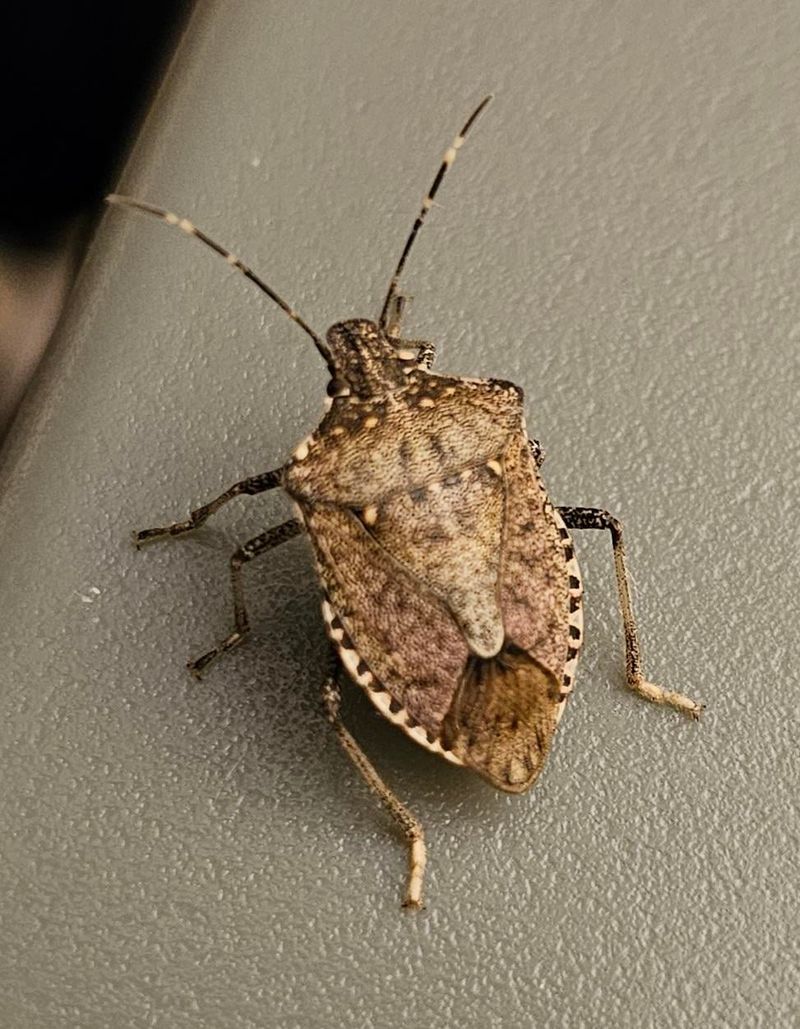
Every rookie makes this mistake exactly once. You grab a tissue, pinch the bug, and suddenly your kitchen smells like a skunk ate cilantro.
Stink bugs earned their name honestly. They store powerful chemicals in special glands and release them whenever they feel threatened.
Scientists have identified compounds like trans-2-decenal and trans-2-octenal behind that famous funk. The smell works as a defense, warning birds and other predators to back off.
Handling a bug gently might trigger a small whiff. Crushing it, however, bursts the glands and dumps the entire supply at once.
People describe the odor in all sorts of colorful ways. Burnt rubber, dirty socks, and spoiled herbs show up often in those descriptions.
Worse, the scent clings to porous materials for hours or even days. Curtains, couch cushions, carpet, and clothing can hold onto it stubbornly.
If a bug gets squashed on fabric, act quickly. Blot with a mix of dish soap and water, then let the item air out in sunshine.
Some people also report that stink bug odor can cause mild skin irritation. Washing your hands promptly with soap helps if you touch one by accident.
So skip the shoe, the tissue, and the swatter. Reach for the soapy bucket, the light trap, or the vacuum stocking instead.
Across Virginia, gardeners who combine catnip, sealed cracks, and smart removal tend to enjoy calmer seasons. A little patience plus a few clever tools goes a long way.
Plant your herb, caulk those gaps, and keep that bucket handy. Your nose, your cat, and your tomatoes will all appreciate the effort.