What Does a Fall Gambel’s Quail Covey in Your Arizona Yard Mean?
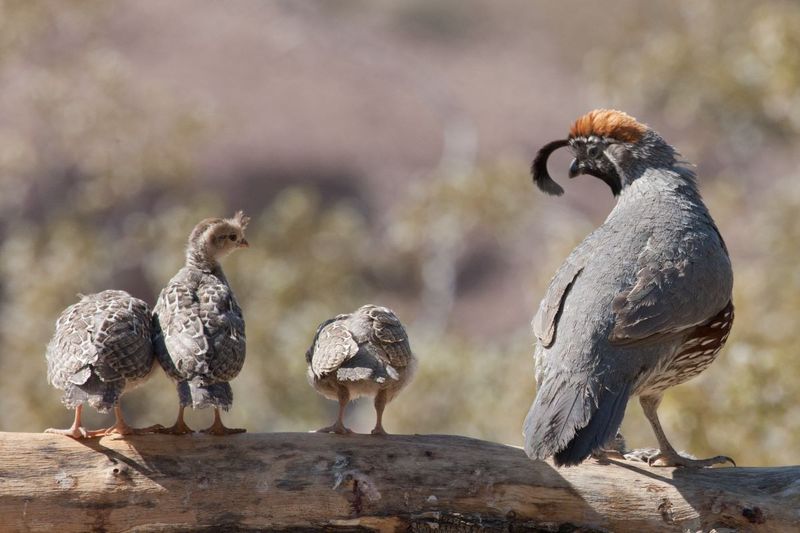
A line of round little birds with bobbing head plumes hurries across your gravel and vanishes under a shrub. If you live in Arizona, that scene may feel more common as fall rolls in.
Gambel’s quail follow seasonal habits that can explain a lot about why you see them. Here is what a covey can and cannot tell you about your yard.
A fall covey fits normal seasonal behavior
Gambel’s quail are social birds, and seeing a bunch of them together in autumn is part of their usual yearly pattern. Family groups tend to stay together as the young birds grow up, and life history accounts describe those groups sticking together into fall.
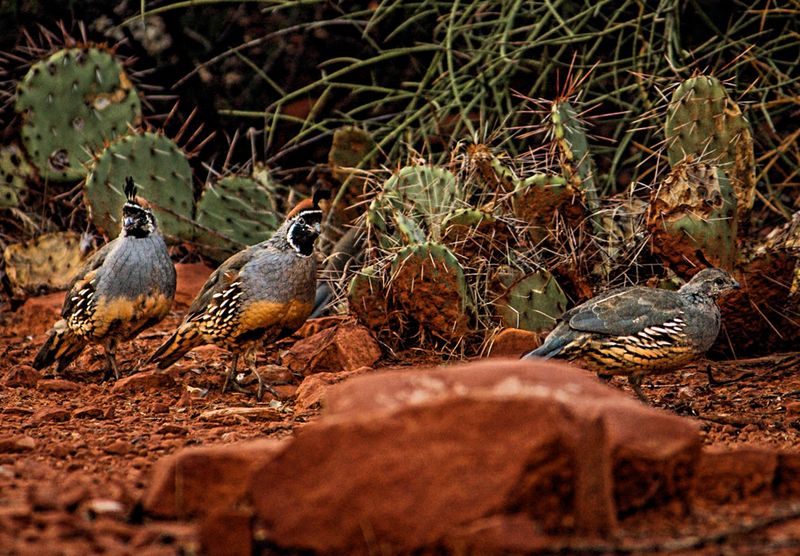
By the cooler months, small family units often merge into bigger flocks. Arizona Game and Fish notes that Gambel’s quail form coveys in fall and winter, so a crowd of a dozen or more is not unusual.
That matters because a group of quail does not mean they just showed up from somewhere far away. Fall grouping is a seasonal behavior, not a migration.
The birds you notice may have been in the neighborhood all along, and they are simply easier to spot when they travel as a pack.
The birds may use a broader local range
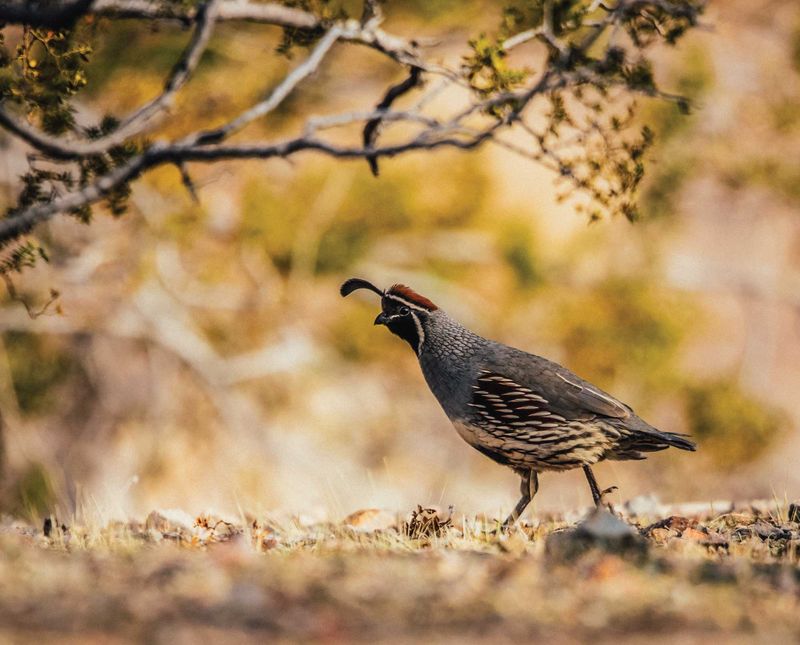
Coveys usually do not treat one yard as their whole world. Fall and winter coveys often remain near the area where they were raised, which means they cover a stretch of ground that may include several yards, a wash, a vacant lot, and nearby desert.
Your property may be one stop on a regular route. Think of the covey as walking a loop, with your yard as one possible link in it.
That is a helpful way to read the sighting. A yard with brushy cover and natural food could be useful to birds moving through their local range, yet the visit alone cannot show that your yard caused it.
Neighbors may see the same group on a different day, and that fits the same picture.
A simple clue is timing. If the birds pass through at about the same hour each day, they may be following a habit that has little to do with anything you changed.
Brushy cover provides places to use
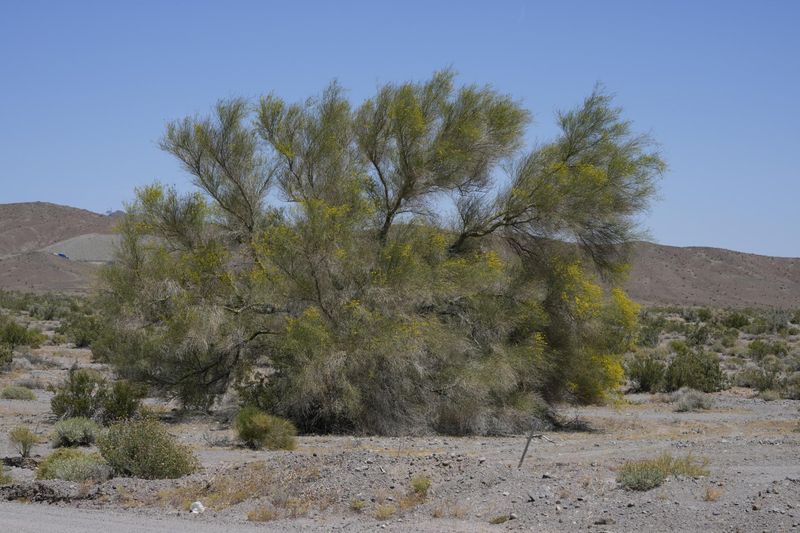
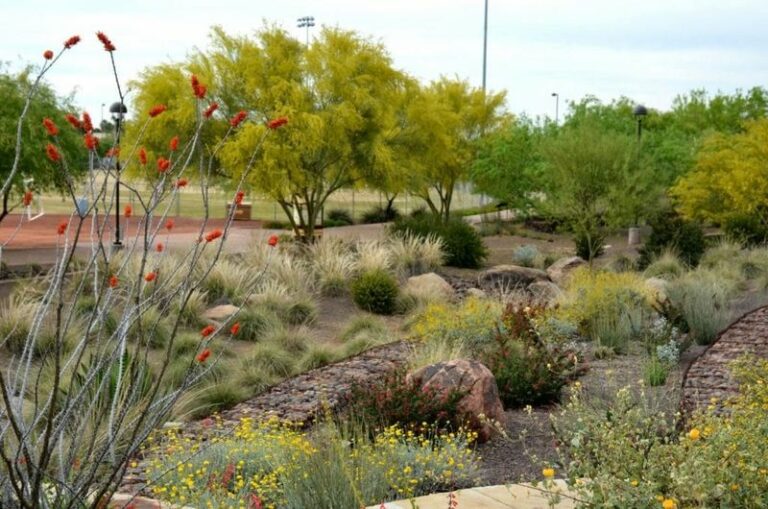
Quail spend most of their time on the ground, so low, thick, and thorny growth gives them a place to slip out of sight. Habitat descriptions link Gambel’s quail with brushy desert cover, which is why you often see them dash under a shrub when startled.
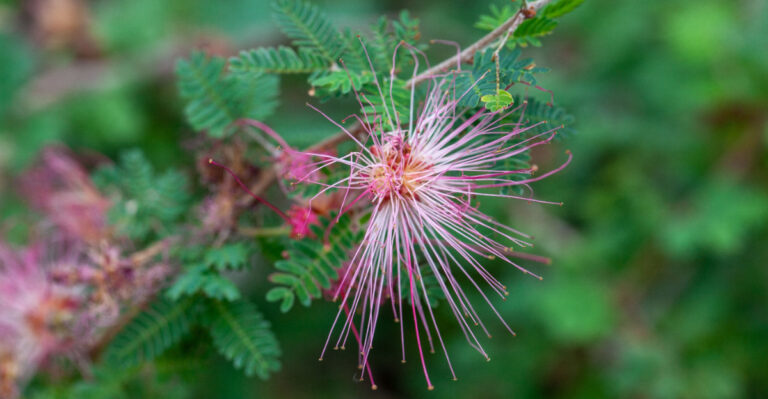
Several Arizona natives fit that picture. Mesquite, desert hackberry, and catclaw acacia all offer dense or thorny structure.
Audubon Arizona points to mesquite as a source of both food and roosting or nesting habitat for birds, including Gambel’s quail.
Skipping a hard prune on a tangled shrub, or leaving the skirt of a mature mesquite alone, may make a yard more useful to ground-loving birds. Native plants also suit our heat and low water supply, which is a bonus for you.
Your Arizona Garden Changes Every Week. Your Plan Should Too.
Gardening in Arizona changes quickly throughout the season. Every Friday you’ll receive a simple weekly plan showing exactly what to plant, prune, fertilize, harvest, and protect so you never miss the right timing.
None of this guarantees quail will appear. Cover is one piece of habitat, and a sighting can have many causes.
Natural foods are part of the diet; feeders are optional
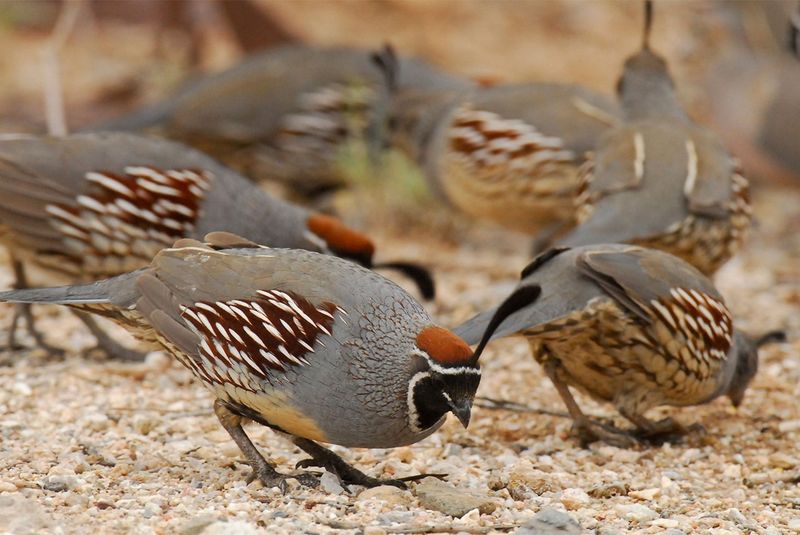
Gambel’s quail are ground foragers with a varied menu. Overview notes describe them scratching and pecking for seeds, leaves, and other plant material, plus insects.
Seasons shift what is available. From summer into fall, cactus fruits and berries become important foods, according to life history details.
A diet study on the Santa Rita Experimental Range also looked at what these birds eat in southern Arizona desert habitat.
For a yard, that points to a simple habit: let natural seed and fruit sources do their job. Leave fallen mesquite pods, allow native grasses and wildflowers to set seed, and let cactus fruit ripen.
A feeder is an optional extra, not a requirement. Skipping one is a perfectly reasonable choice, and nothing about a covey visit means you need to add one.
A birdbath is not needed to explain a visit
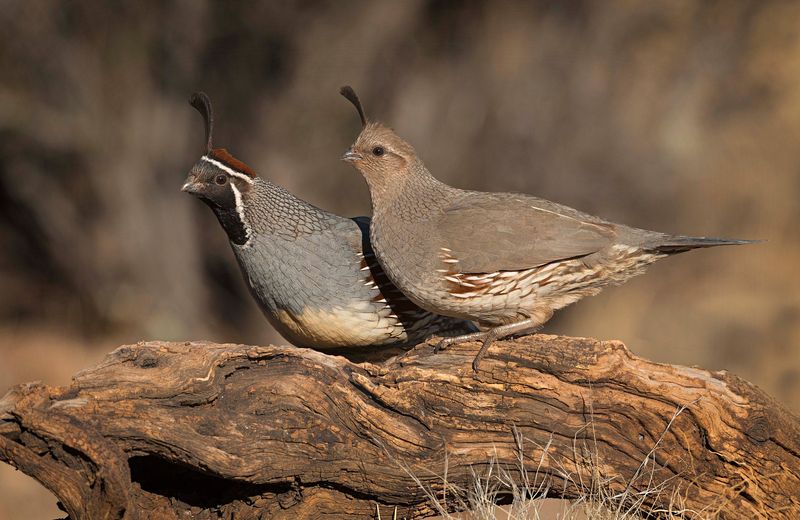
Water matters to wildlife, but it is not a simple yes-or-no draw. Gambel’s quail use surface water when it is around, especially in dry or hot weather.
Species accounts also say they can get much of their water from food and may live far from free water.
The Forest Service diet study is a reminder that what quail eat shapes their moisture intake. So a covey in your yard does not prove they were hunting for a drink or that a bath drew them in.
If you already keep a birdbath, treat it with care. University of Arizona Extension advises replacing the water often and cleaning and drying the bath at least twice a week.
In Arizona heat, dirty water can turn bad fast. A bath is a choice that comes with chores, not a guaranteed explanation.
Support habitat without making feeding essential
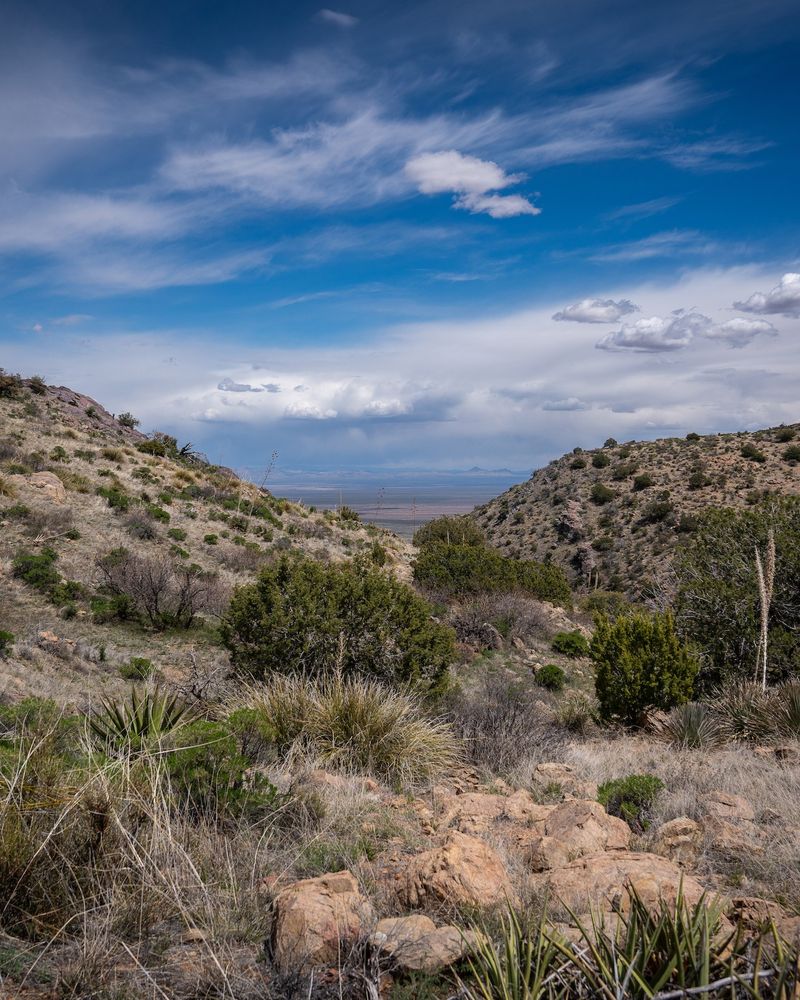
If you want a yard that works for wildlife, start with the plants. Keep mature native shrubs and trees that give food and shelter, and add desert-adapted natives in the fall planting window of October and November, when roots settle in more easily.
Brushy cover can also make a yard less bare and harsher in summer heat.
Let some seed and fruit stay on the plants and ground instead of raking everything clean. Pair that with low water use, and the yard stays practical for you too.
Feeding is optional. Overview notes say these quail may visit ground-level seed and water, yet Extension guidance warns that feeders can bring disease, predators, and window collisions.
Clean feeders and baths regularly and remove old seed and hulls.
Planting and tending a yard may support birds, but it cannot promise a visit.
One covey is a clue, not a verdict
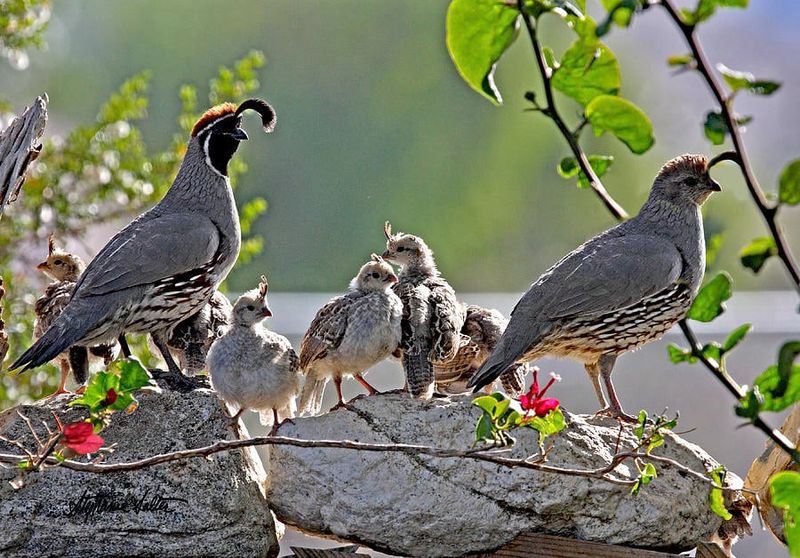
A covey in your yard fits normal seasonal behavior, and your property may be part of the route these birds use. It does not prove your plants caused the visit or that your yard meets every need they have.
Numbers also swing from year to year. Arizona Game and Fish ties quail abundance to rainfall and breeding conditions, so a big group or a small one is not a reliable grade for your yard or a lasting trend.
What you can do is keep suitable brushy cover and natural food in place. Enjoy the parade when it comes, and let the desert decide the rest.