Orange Leaves Falling From Georgia Loropetalum Shrubs Are Not Always A Warning Sign
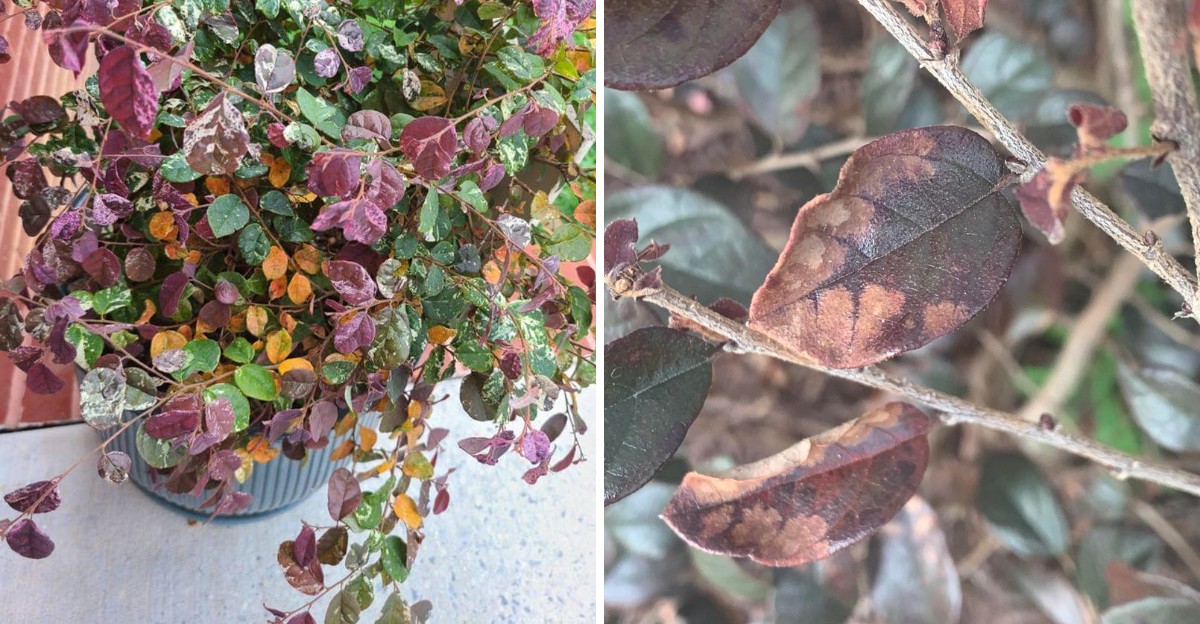
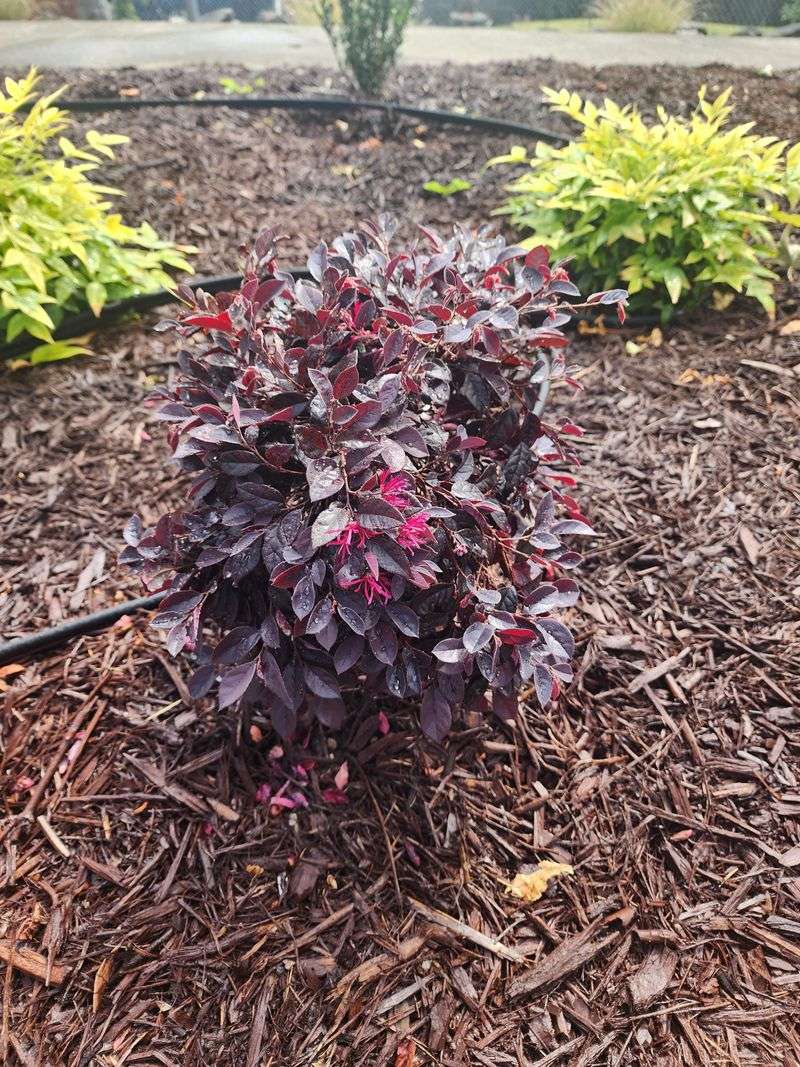
Orange and red leaves scattered under a loropetalum can make it look like the whole shrub is in trouble.
Many homeowners notice this in fall and assume something has gone wrong with the plant.
Often, those leaves are older ones from deeper inside the shrub, and dropping them is part of a normal growth cycle.
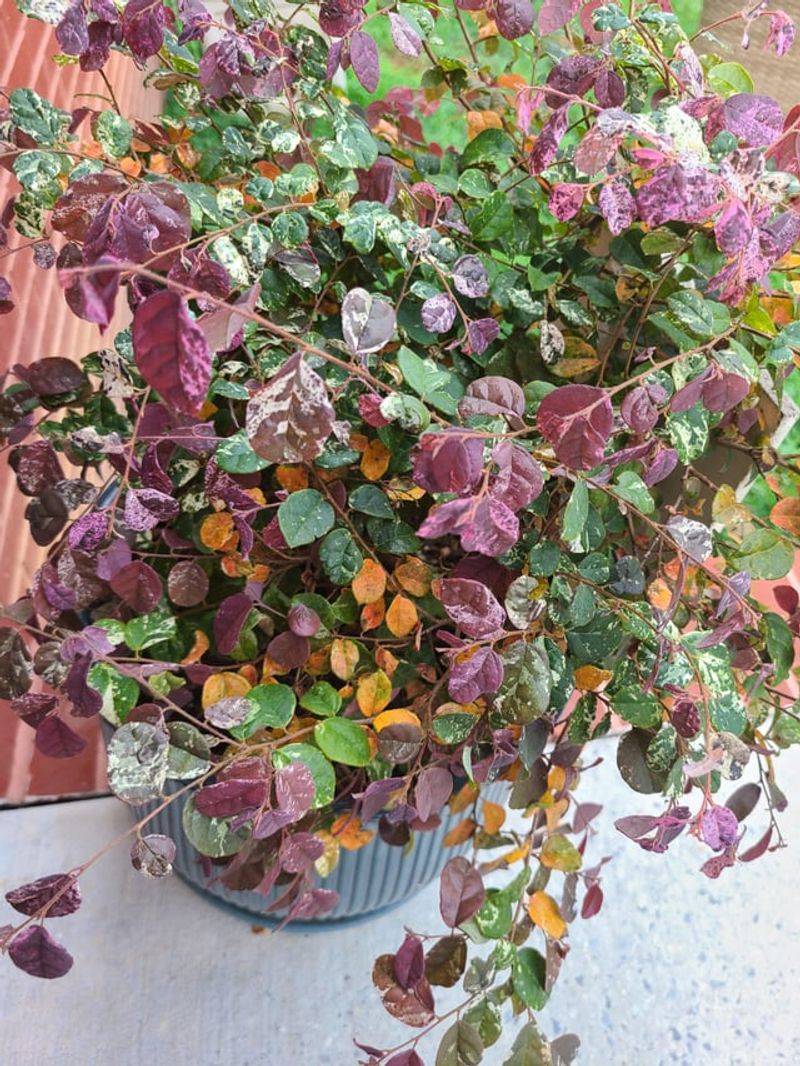
Loropetalum holds onto its foliage year round, but it still replaces older leaves over time. Some of them change color before they fall, which adds to the alarm.
Stress from summer heat and dry spells in Georgia can make that shedding more noticeable in early fall.
Still, a few patterns of leaf loss are worth a closer look. Where the falling leaves come from on the plant says a lot about which situation you have.
1. A Little Orange Under The Shrub Can Be Perfectly Normal
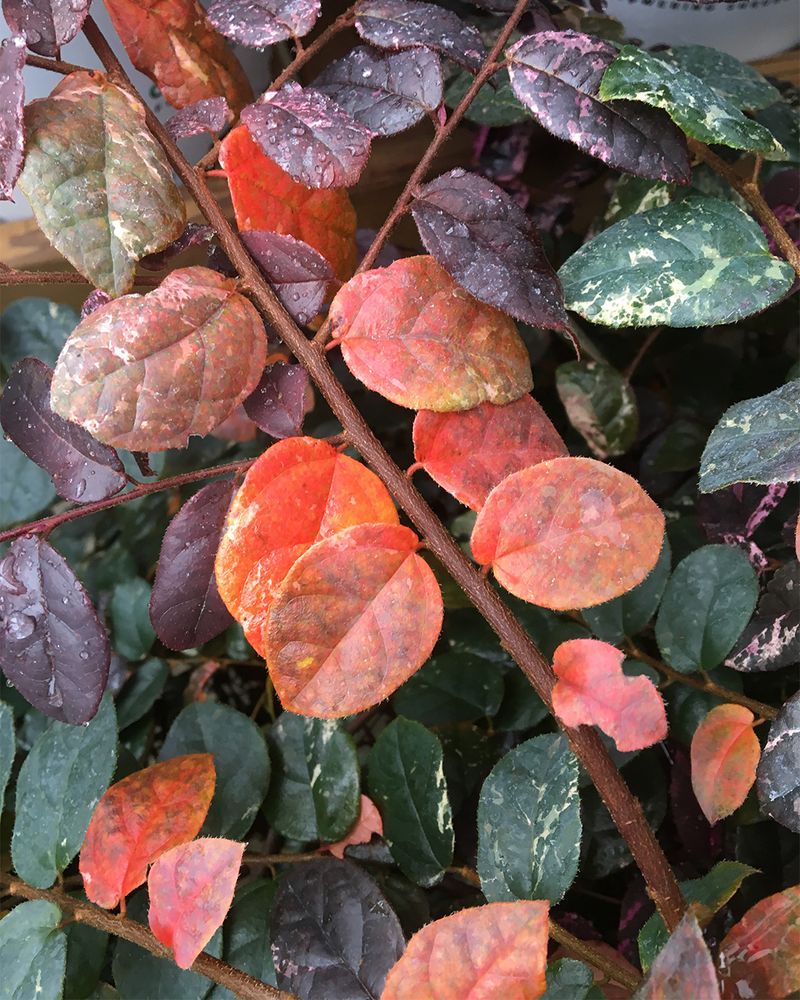
Orange leaves on the mulch can look alarming, but a handful of them often means very little. Loropetalum sheds a few older leaves on a regular basis, and that small drop is part of normal growth.
Look at the shrub itself before you look at the ground.
If the branches are still full and the newer leaves look rich purple or green, the plant is likely doing fine. A healthy shrub can lose a small number of leaves while still putting out fresh growth at the tips.
Gardeners in Georgia often notice this most after a hot stretch or a quick change in weather.
Counting leaves is not a perfect science, so think in rough terms instead. A light sprinkle under the canopy is usually less concerning than a thick layer that keeps building up week after week.
Color matters too, since bright orange or red leaves are typical of aging foliage on many loropetalum types.
Brown, crispy, or blotchy leaves can tell a different story, so pay attention to texture as well as color. Leaves that look spotted or mushy may hint at disease or root stress rather than simple aging.
Snap a quick photo of the shrub every couple of weeks if you feel unsure. Comparing pictures over time makes it much easier to see whether the plant is thinning or holding steady.
2. Evergreen Shrubs Still Shed Their Oldest Leaves
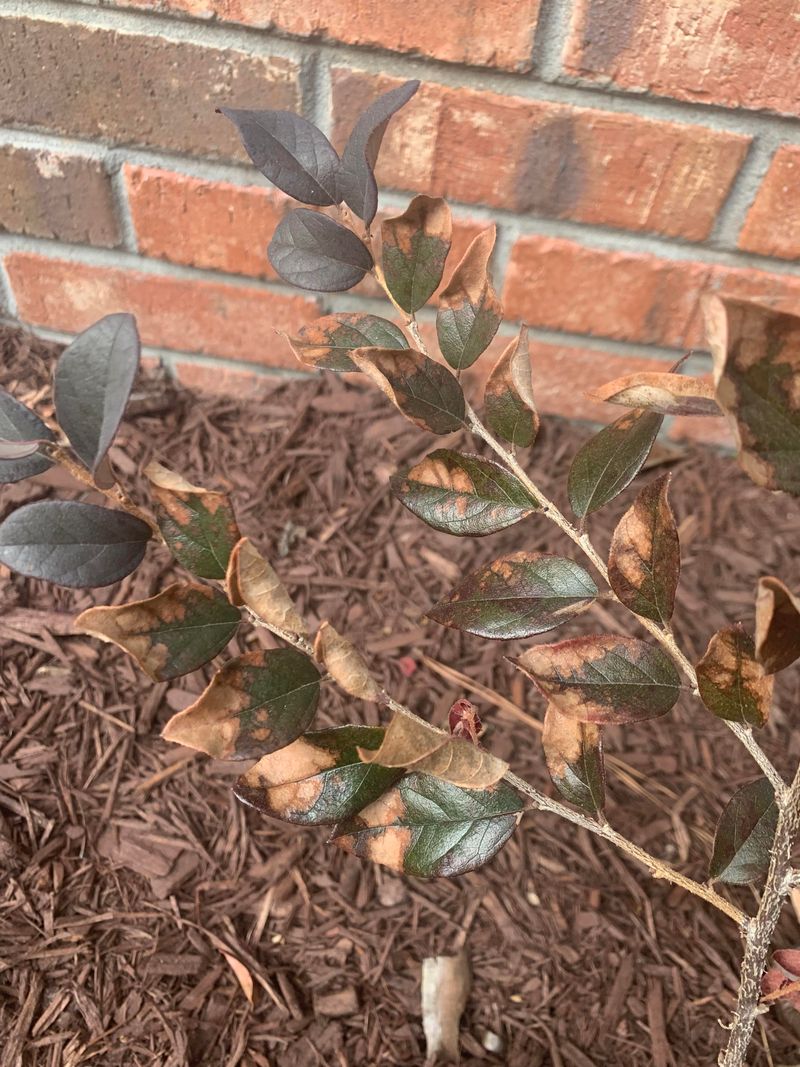
Evergreen does not mean a leaf stays on forever. It simply means the plant keeps foliage through the year instead of dropping everything at once like a maple.
Each loropetalum leaf has a lifespan, and older ones eventually wear out and fall.
Think of it like a slow, steady swap. As new leaves form near the branch tips, the shrub gradually releases some of the oldest ones farther back on the stems.
Hollies, azaleas, and magnolias often do something similar, so loropetalum is far from unusual.
Homeowners in Georgia sometimes expect evergreen shrubs to look perfect in every season. That expectation can make a normal process feel like a problem when it really is not.
Before the old leaves fall, the plant often pulls some nutrients back from them, which can bring out orange and red tones.
Your Georgia Garden Changes Every Week. Your Plan Should Too.
Gardening in Georgia changes quickly throughout the season. Every Friday you’ll receive a simple weekly plan showing exactly what to plant, prune, fertilize, harvest, and protect so you never miss the right timing.
You do not need to rush out with fertilizer when you see a few aging leaves drop. Feeding a shrub that is not hungry may push soft growth without fixing anything.
Raking up fallen leaves is optional in most cases. Leaving a thin layer under the shrub can blend into the mulch, though you may want to clear them if you suspect leaf spot or fungal trouble.
3. Color Change Shows Up First On The Inside Of The Plant
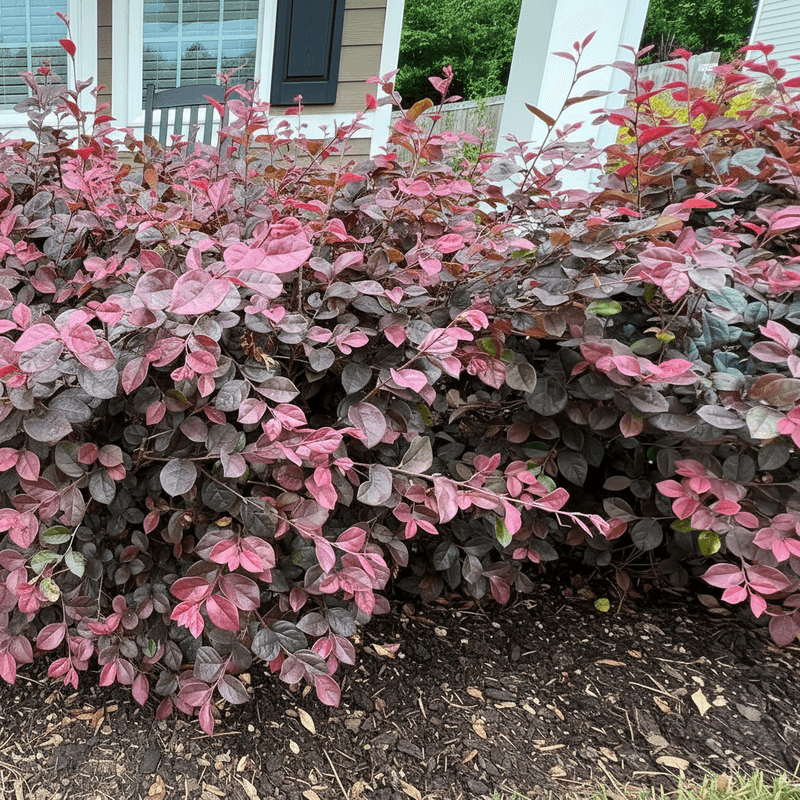
Peek inside the shrub and you may find the answer right away. Normal aging usually shows up on the inner, older parts of the branches first.
Leaves near the center get less sunlight as outer growth thickens, so they tend to age and color up sooner.
Gently push aside the outer foliage with your hands. If the orange leaves sit mostly deep inside while the outer edges look healthy, that pattern points toward routine shedding.
Shade inside a dense shrub plays a big part here.
In many Georgia landscapes, loropetalum gets sheared into tight balls or boxes. Heavy shearing can make the outer shell very thick, which shades the interior even more and may lead to extra inner leaf drop.
Light selective pruning can help more sunlight reach the center, though results vary with the plant and the site.
Compare that to a shrub where the color change hits the outer tips first. Problems on the newest growth are more likely to be linked to stress, pests, or root trouble.
Bring a flashlight if your shrub is especially dense. Seeing the inside clearly helps you judge whether the plant is simply cleaning house or showing a deeper issue.
4. Fall And Spring Are Common Times For This Turnover
Timing tells you a lot. Leaf turnover on loropetalum often lines up with seasonal shifts, especially in fall and in spring.
Cooler fall nights can bring out orange and red tones in older leaves before they drop.
Spring is the other big window. When new growth pushes out after bloom, some shrubs let go of older leaves to make room, so you may see color on the ground right as the plant looks busiest.
Gardeners sometimes panic in April because flowers and falling leaves show up at the same time.
Weather in Georgia can shift these patterns a bit from year to year. A warm fall or a late cold snap may move the timing earlier or later, so treat these seasons as general guides rather than fixed dates.
Winter cold can also cause some bronzing or leaf loss, particularly on exposed plants.
Keep a simple garden note on your phone. Jot down when you notice heavier drop each year, and you will start to see what is normal for your own shrub.
Leaf drop outside these seasons is not automatically bad. Still, heavy shedding in midsummer deserves a closer look, since heat and dry soil often play a part then.
5. Bare Branch Tips And Heavy Drop Suggest Something Else
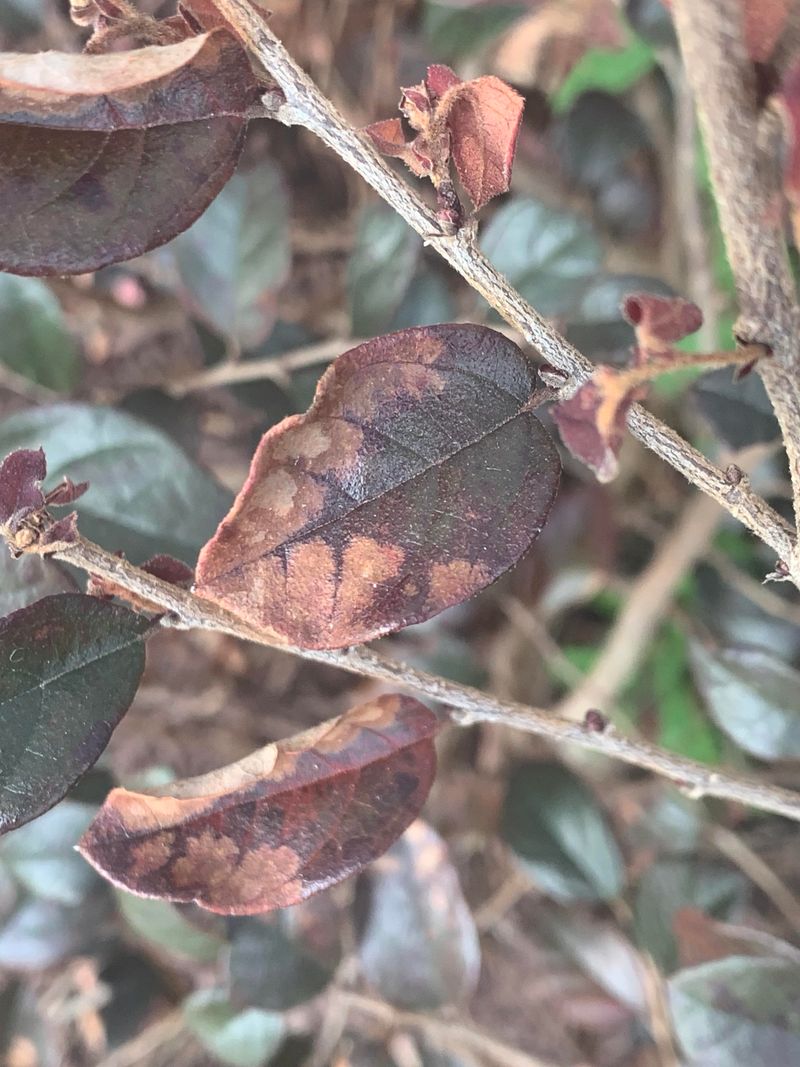
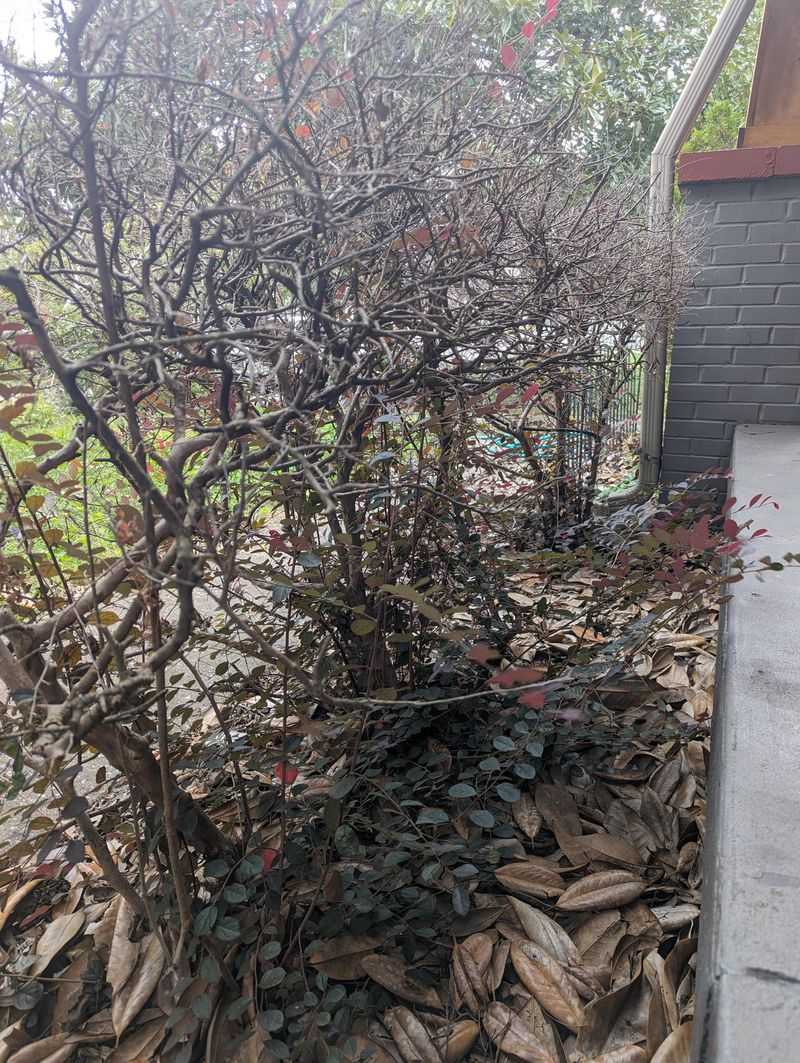
Bare tips are a red flag. When the newest part of a branch loses its leaves, the cause is less likely to be normal aging.
Healthy shedding usually leaves the outer growth full, so thinning at the edges is worth investigating.
Scratch a little bark near the bare tip with your fingernail. Green tissue underneath suggests the branch is still alive, while brown and dry tissue may mean that section has been lost.
Volume matters just as much as location.
A thick carpet of leaves that keeps growing, paired with a shrub you can suddenly see through, points toward real stress. Root problems, drought, cold damage, or disease can all cause this, and sometimes more than one at once.
Check the lower stems near the soil for cracks, cankers, or soft spots.
Pests are worth a look too. Scale insects or other sap feeders can weaken loropetalum, so flip a few leaves over and scan the stems for bumps or sticky residue.
If the cause stays unclear, reach out to your county Extension office. University of Georgia Extension agents can help identify problems and may suggest a soil or plant sample for testing.
6. Dry Spells And Soggy Roots Can Both Cause Excess Shedding
Too little water and too much water can look surprisingly alike. Both can lead to yellow, orange, or browning leaves that fall faster than usual.
During a summer dry spell, a stressed shrub may drop leaves to cut down on water loss.
Soggy soil causes trouble in a different way. Roots need air, and when they sit in waterlogged ground for long periods, they can struggle to work and may develop root rot.
Heavy red clay is common in parts of Georgia, and it often drains slowly after big storms.
Push a finger or a trowel a few inches into the soil near the root zone. Dry and dusty soil points to thirst, while cold, sticky, sour-smelling soil hints at poor drainage.
Watch where water collects after rain, since low spots near downspouts can keep shrubs too wet.
Fixing drainage might mean redirecting a gutter or, in tougher cases, replanting slightly higher in the bed. Results depend on your soil and how serious the problem has become.
Mulch helps both situations when used right. Two to three inches of pine straw or bark can hold moisture in dry weather, but keep it pulled back a little from the main stems.
7. Deep, Occasional Watering Keeps Healthy Plants On Track
Quick daily sprinkles rarely do much good. A slower, deeper soak encourages roots to grow downward, where the soil stays cooler and moister.
Established loropetalum often handles dry stretches better when it gets a thorough drink every so often instead of a little each day.
Newly planted shrubs are different. They usually need more regular watering through their first year or so while roots spread into the surrounding soil.
A soaker hose or drip line works well because it delivers water right at the base without splashing the leaves.
Running it slowly lets water sink in instead of running off, which matters a lot in compacted Georgia clay. How long to run it depends on your soil, the weather, and the size of the shrub.
Morning is a good time to water, since leaves and soil surfaces can dry before evening.
Check the soil a few inches down before watering again. If it still feels moist, wait a day or two, because extra water on already damp ground can add to root stress.
Rain counts too, so adjust after a good storm. A simple rain gauge in the yard can help you decide when your shrubs truly need a drink.