How To Identify Pokeweed Before It Takes Over A California Garden Bed
Some garden weeds announce themselves loudly. Pokeweed prefers a quieter approach, and that’s exactly what makes it so tricky.
It starts as a single seedling with a reddish blush, big smooth leaves, and a growth rate that leaves everything else in the row behind.
Then it turns into a shrub sized plant taller than most fences, loaded with dark berries that birds carry to new spots around the neighborhood.
American pokeweed is native to the eastern United States, yet it now turns up in the Central Valley, along the coast from Mendocino to San Diego, and in the Sierra Nevada foothills below 4,000 feet.
Every part of the plant is toxic, especially the roots, and the sap can bother bare skin.
Catching it early is far easier than battling it later. The clues change from stage to stage, so a quick tour from the hidden root to the purple black berries helps you spot it any time of year.
Start With The Thick Fleshy Taproot
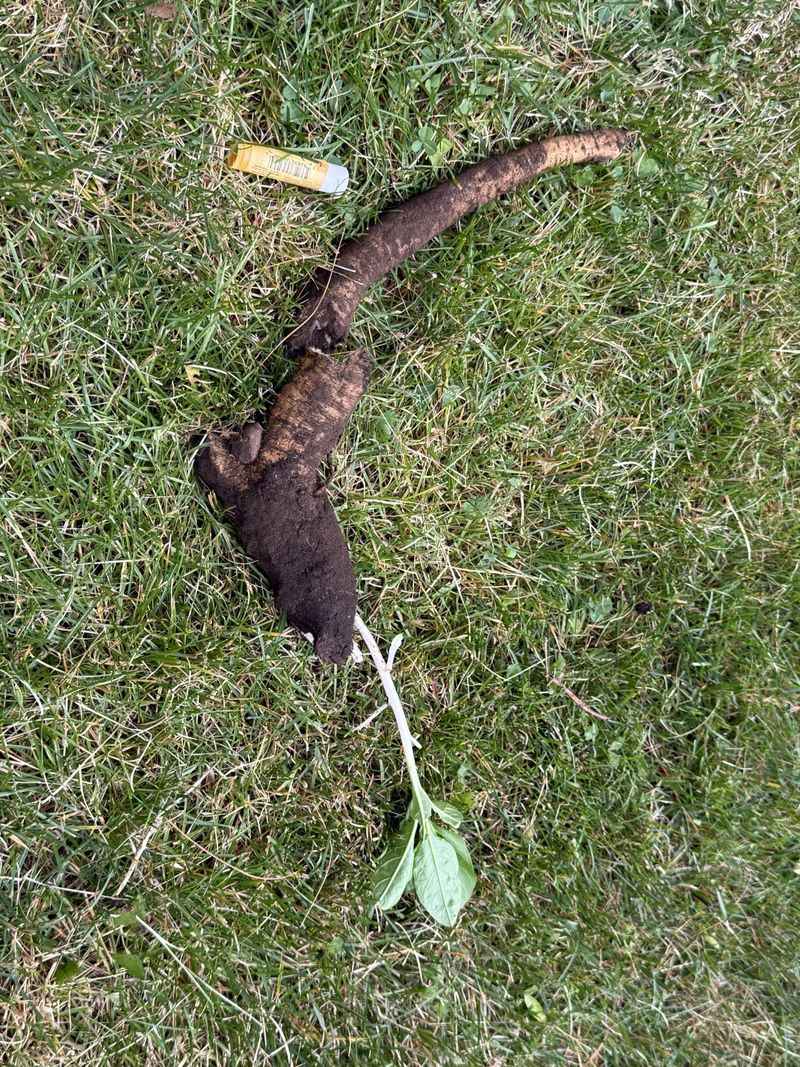
Gently tug a mystery seedling, and the root tells the story fast. Most garden weeds come up with a messy tangle of thin, threadlike roots.
Pokeweed is different, and that difference is your best early clue. Young plants grow a thick, fleshy taproot that looks a bit like a pale carrot or a stubby white radish.
Even on a small plant, the root feels firm and juicy instead of stringy. As the plant ages, that root keeps getting thicker and can grow quite large.
Why does the root matter so much? A big taproot stores energy, so pokeweed comes back year after year as a perennial.
Snapping off the top usually isn’t enough. The plant simply sends up new shoots from the root left behind in the soil.
Treat the root with respect, too. All parts of pokeweed are toxic, and the roots carry the most poison.
Wear gloves before handling it, and never leave pulled roots where kids or pets might chew on them. Bag them up and toss them in the trash.
Here’s a smart habit to try. Water the bed the day before you check for weeds, since moist soil lets the taproot slide out in one piece instead of breaking.
Use a narrow trowel or weeding fork to loosen the soil beside the seedling. Then pull slowly and steadily, and peek into the hole to make sure the whole root came along.
Leftover bits can regrow, so that extra minute of checking pays off. Once you’ve seen that pale, chunky root, you’ll recognize it again, because it works like the plant’s fingerprint, hiding just below the surface.
Young Shoots Have Smooth Reddish Stems
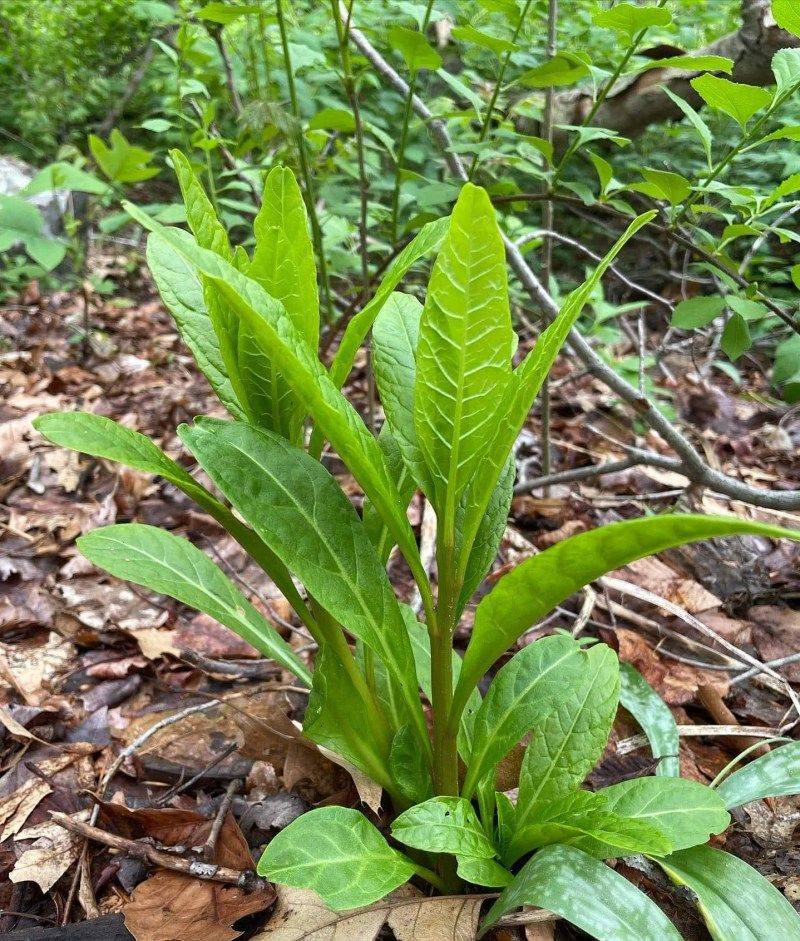
Spring in a California garden brings a flood of green sprouts. Somewhere in that crowd, a pokeweed shoot may be hiding in plain sight.
Look closely at the stems, because they often give it away. Early pokeweed shoots have smooth stems with no fuzz or prickles.
Run a gloved finger along one, and it feels slick, almost like a rubbery straw. Many young shoots also show a reddish or pinkish tint, especially near the base.
Some stay mostly green at first, then blush red as they grow. The shoots are also thick for their size.
Compared with skinny grass blades or delicate flower seedlings, pokeweed looks sturdy and fleshy. Many gardeners mistake it for a beet or chard volunteer at first glance.
A quick comparison helps. Beets and chard grow leaves straight from the base in a rosette, while pokeweed sends up an upright stem with leaves arranged along it.
If the plant is building a central stalk, keep your suspicions high. Remember that the sap inside can irritate skin, so snapping a stem to check its color isn’t a good idea with bare hands.
Slip on gloves and long sleeves before you investigate. If you’re still unsure, snap a photo and compare it with a trusted plant guide or ask your local extension office.
Young shoots are the easiest stage to remove. They have small roots, little energy stored, and no seeds yet.
Spotting that smooth, rosy stem now saves you a much bigger job later in the summer. A weekly stroll through the beds in spring catches most of them in time.
Large Leaves Have Smooth Edges
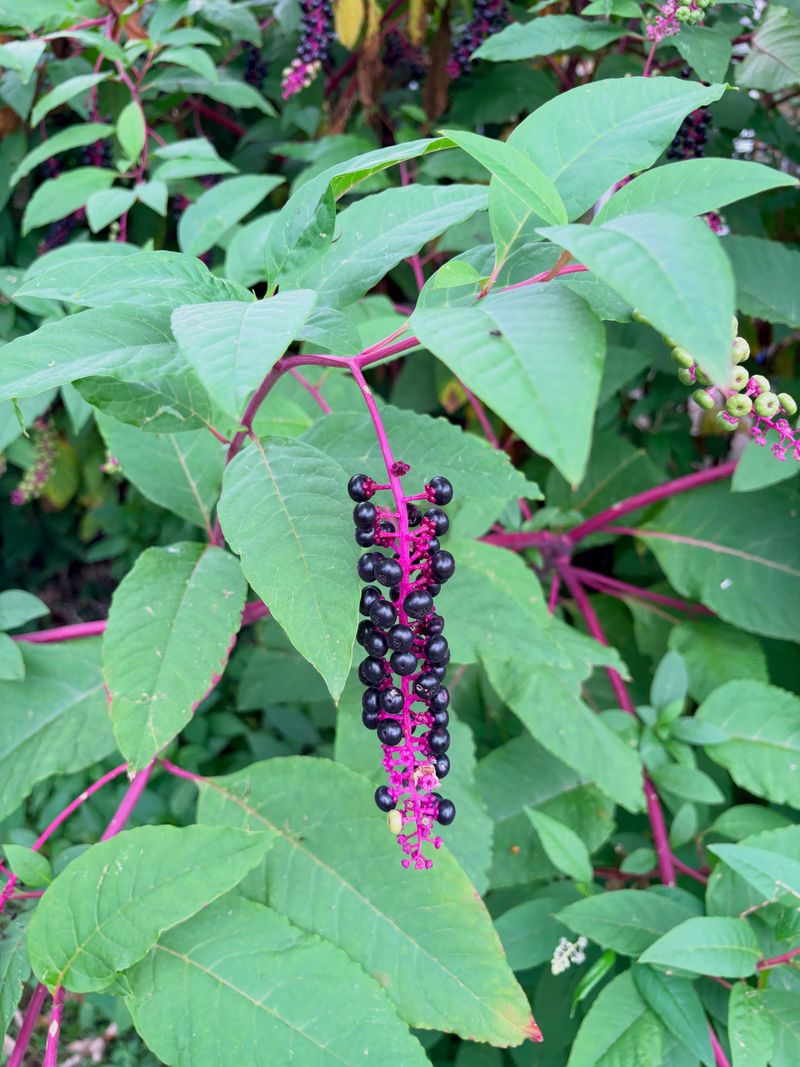
Flip a leaf over and peek underneath. On pokeweed, you may find a streak of red or purple running along the lower veins.
That splash of color, paired with the leaf shape, makes a strong identification clue. Pokeweed leaves are large and simple.
Each one is shaped like a long oval or a pointed egg, and mature leaves can stretch close to a foot long. The edges are smooth, with no teeth, notches, or lobes.
Think of a plain, glossy leaf with a gentle point at the tip. Now check the leaf stalks, the short stems that attach each leaf to the main stem.
On pokeweed, these stalks are often red or purple. The color may continue into the midrib and lower veins, and against bright green leaf tissue, it really pops.
Leaves grow one at a time along the stem, alternating sides instead of sitting in matched pairs. That alternate pattern helps you separate pokeweed from plants with opposite leaves.
Size is another hint. Few weeds in a typical vegetable or flower bed grow leaves this big this quickly.
If a volunteer suddenly towers over your lettuce with broad, smooth leaves, it deserves a closer look. Check the stalk color and the leaf arrangement before deciding.
Avoid crushing the leaves while you inspect them. They’re toxic like the rest of the plant, and the juice can irritate skin.
A gloved hand and a careful eye are all you need. Once you know the look, those leafy giants become hard to miss.
Mature Plants Reach Four To Ten Feet
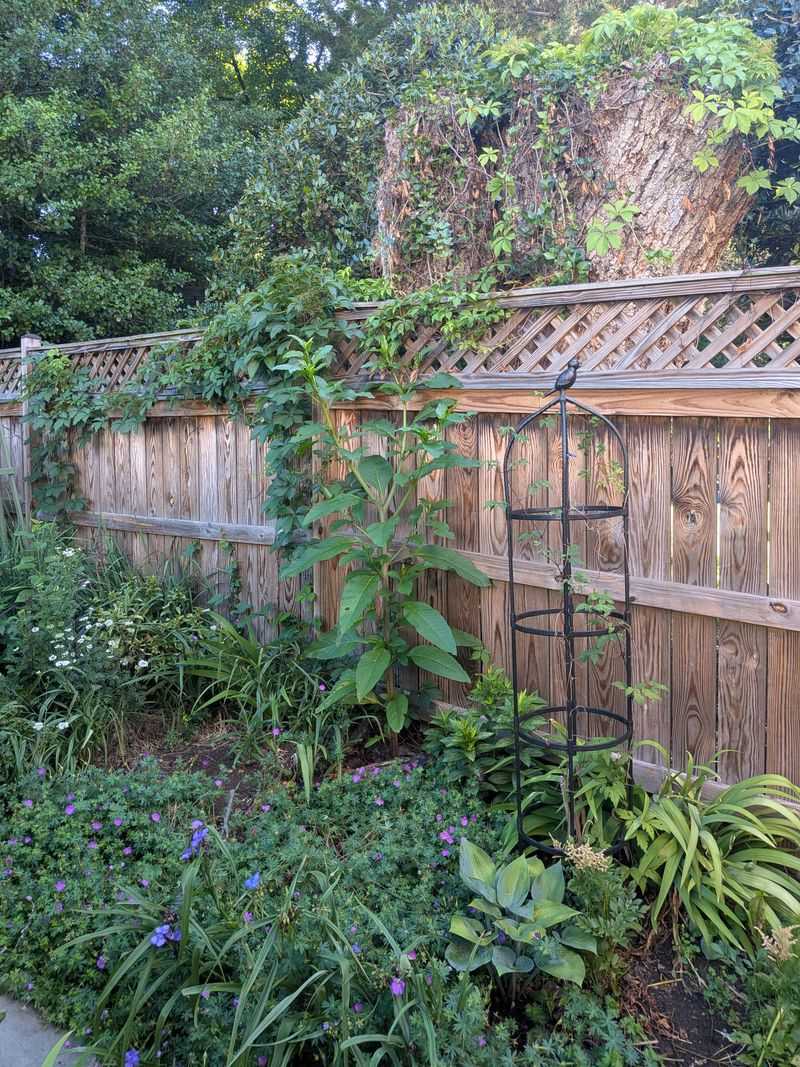
Blink, and the tiny weed you ignored in April is suddenly taller than your fence. Pokeweed grows with startling speed once it settles in.
By mid to late summer, an established plant can look more like a shrub than a weed. Mature pokeweed usually reaches 4 to 10 feet tall.
It also spreads 3 to 5 feet wide, with branches reaching out in every direction. That means one plant can swallow a whole corner of a raised bed.
Your peppers and herbs will be left sitting in deep shade. Even though it looks woody, pokeweed isn’t a true shrub.
The stems are thick and branching, but they stay soft and fleshy. In colder areas, the top growth fades back in winter.
The taproot survives underground and pushes out fresh stems the next spring, often bigger than before. Size brings real problems.
A huge pokeweed competes with your plants for water, sunlight, and nutrients. Bigger plants also produce more berries, which means more seeds for birds to scatter around the neighborhood.
Pulling a full grown plant is tough work. The root is deep and heavy, and the sap is irritating.
Many gardeners need a shovel or digging fork to pry it loose. Wear gloves, long sleeves, and eye protection if you tackle a big one, and ask a friend to help with the lifting.
The lesson is simple. A plant this large started small, and catching it at knee height beats wrestling a giant, every single time.
Stems Turn Red Or Purple With Age
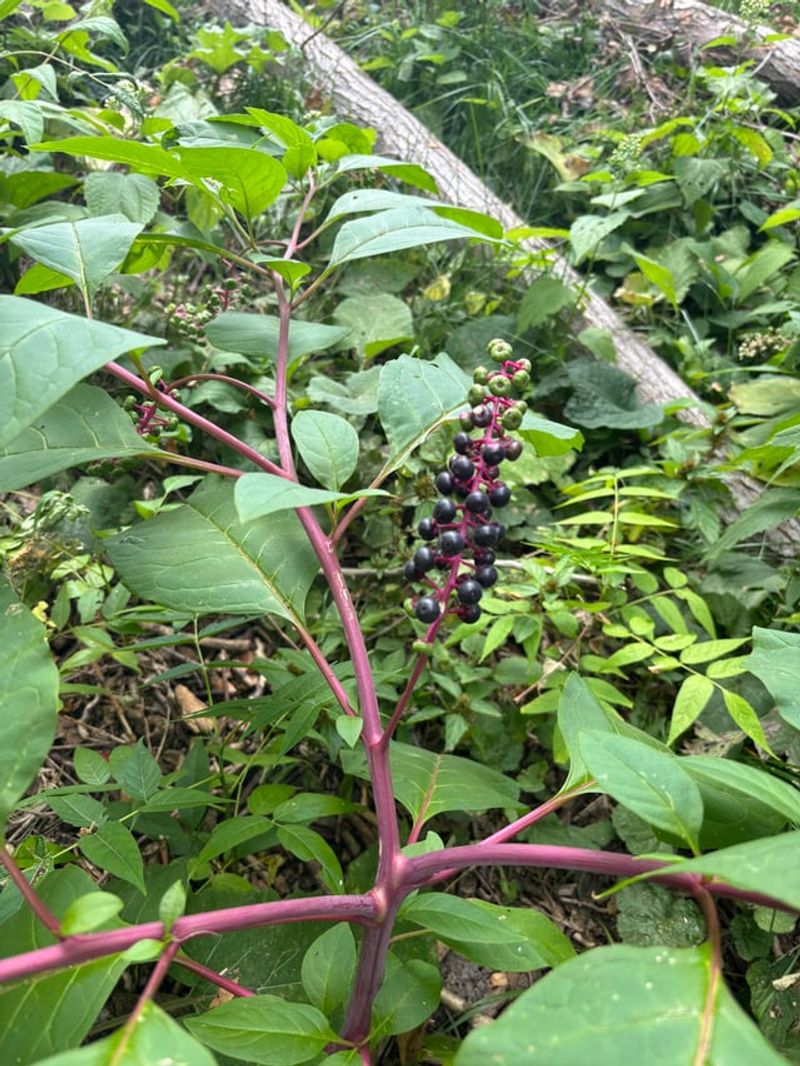
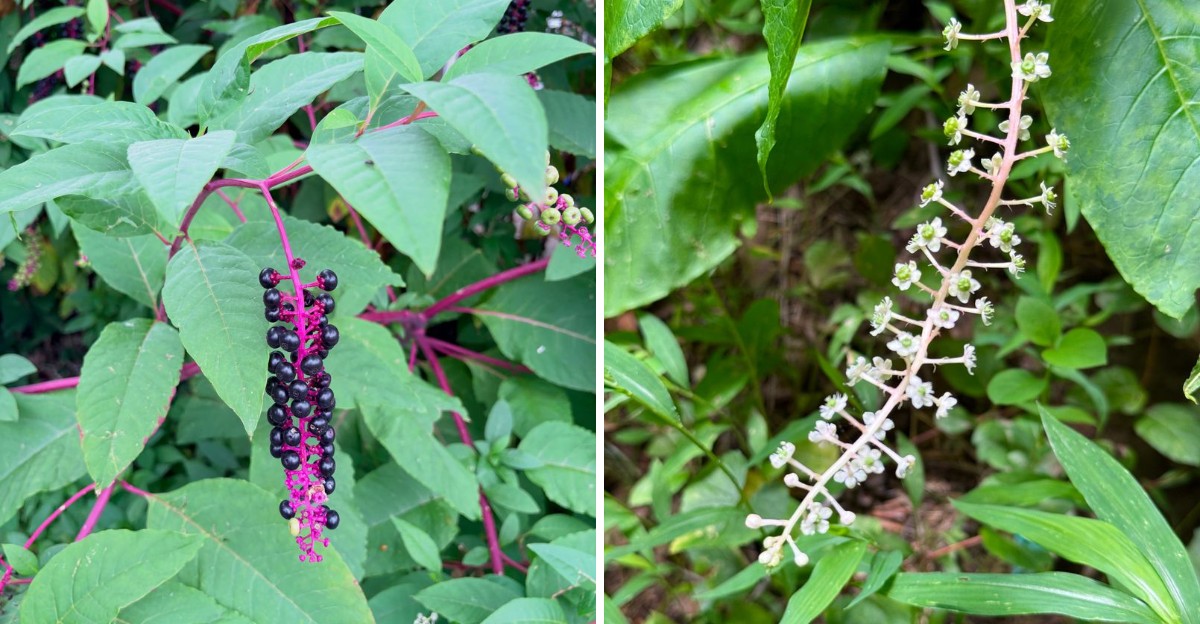
By late summer, pokeweed often looks like it got dressed up for a party. Those once pale stems deepen into bold shades of red, magenta, or purple.
Spotting that color from across the yard is one of the easiest ways to pick it out. Young stems may start green with just a hint of pink.
As the plant matures, the color spreads and grows richer. Older stems can look almost glossy, like they were painted with berry juice.
The main stalk, side branches, and flower stalks may all share that vivid tone. Thickness changes too.
Mature stems become chunky and sturdy, sometimes as wide as a broom handle near the base. Yet they still feel smooth and soft rather than woody or barky.
Few common garden weeds combine that thickness with such bright color. Watch out for a classic mix up, though.
Some gardeners assume a tall, red stemmed plant is an ornamental they bought, like a fancy amaranth or a colorful chard gone wild. Check for smooth edged alternate leaves and drooping berry clusters before you decide it belongs.
The purple stems aren’t just decoration. They signal a plant that has been growing for months and is likely close to flowering or fruiting.
If you’re seeing deep color, check right away for flower spikes or green berries. Don’t cut those colorful stems with bare hands, since the sap can irritate skin and the plant is toxic throughout.
Gloves first, pruners second.
Flower Spikes Appear In Summer
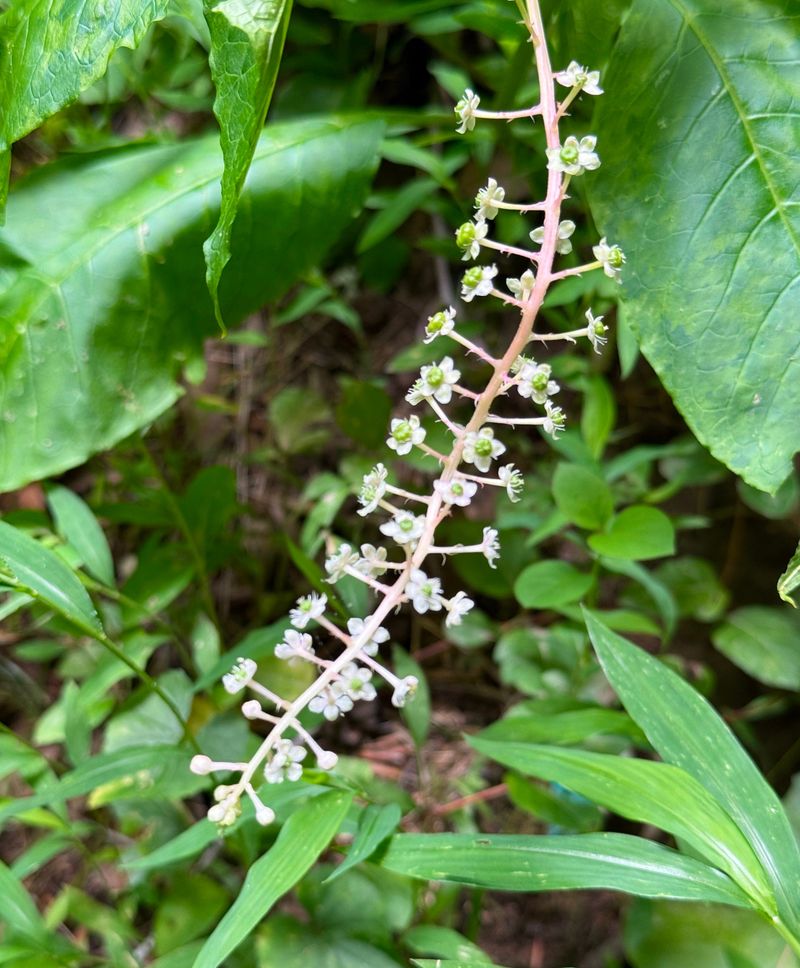
Summer turns pokeweed from leafy to lacy. Long, slender spikes rise from the stems, dotted with tiny blossoms.
They’re easy to overlook at first, which is exactly why they deserve your attention. Each spike holds many small flowers, often just a quarter inch across.
The petals look greenish white, sometimes with a soft pink blush. They’re lined up along a stalk that can be several inches long.
The stalk itself is frequently red or purple, matching the stems. Look closely at one bloom, and you’ll see a little green center.
That center is where the berry will form. In other words, every flower is a future seed package waiting to happen.
Flowers usually appear in summer, and the plant can keep blooming for weeks. You might see buds at the tip of a spike, open flowers in the middle, and young green berries near the base.
That mix of stages on one stalk is a handy clue. Flowering time is your loud alarm bell.
Once spikes appear, berries aren’t far behind. If you missed the seedling stage, this is the moment to act before the plant ripens fruit and birds start snacking.
Snip off flower spikes if you can’t remove the whole plant right away. Drop them into a bag, not your compost pile.
Then come back soon with a shovel, gloves, and long sleeves to dig out the root. A little speed here keeps next year’s seedlings to a minimum.
Berries Ripen From Green To Glossy Purple Black
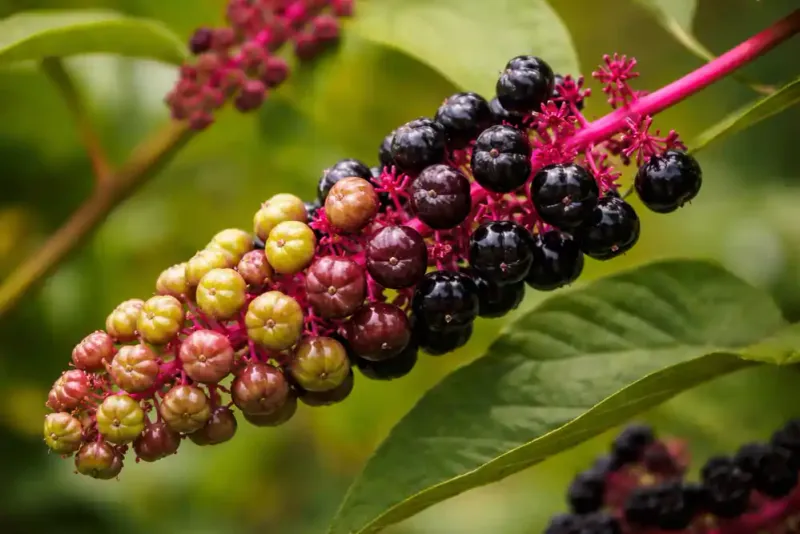
Shiny, dark, and dangling like tiny grapes, pokeweed berries look almost good enough to eat. They aren’t, and those pretty clusters are the plant’s main way of spreading.
Berries start out hard and green, lined up along the old flower spikes. In late summer, they ripen into glossy purple black fruit.
Each berry is round but slightly flattened, a bit like a tiny pumpkin. As they fill out, the heavy clusters droop down from the branches on bright magenta stalks.
Birds love these berries and carry the seeds far and wide. That’s how pokeweed often shows up in a garden bed where nobody planted it.
One bird stop on your fence can start the whole cycle. Keep kids and pets in mind, too.
According to poison control experts, a child who eats one or two berries is unlikely to have symptoms. Eating several can cause stomach pain, nausea, vomiting, and diarrhea.
Teach children that these berries are never a snack. If anyone swallows berries or any other part of the plant, call Poison Help right away.
The line is free and open around the clock. For dogs, cats, or other animals, contact your veterinarian.
The juice also stains hands, clothes, and patio stones a deep purple. Handle clusters with gloves and avoid squishing them.
A ripe berry cluster means the clock is ticking, so remove the plant as soon as you spot it.