Why Birds Peck At Your California Fruit (And How To Protect It Without Netting Everything)
Late summer and fall bring a quiet competition to backyards across California. The prize hangs from branches all over the state, and the rivals usually wake up earlier than anyone else in the household.
Small holes appear overnight, often in exactly the pieces that looked most promising the evening before.
The culprits are rarely acting out of mischief, and their reasons make more sense than most gardeners expect.
Wrapping every tree in mesh sounds like the obvious answer, yet it brings costs and risks of its own.
A handful of simpler strategies can shift the odds without harming a single feather.
With a little planning, the harvest can be shared on far better terms than before.
1. Birds Peck Ripe Fruit For Sugar And Water
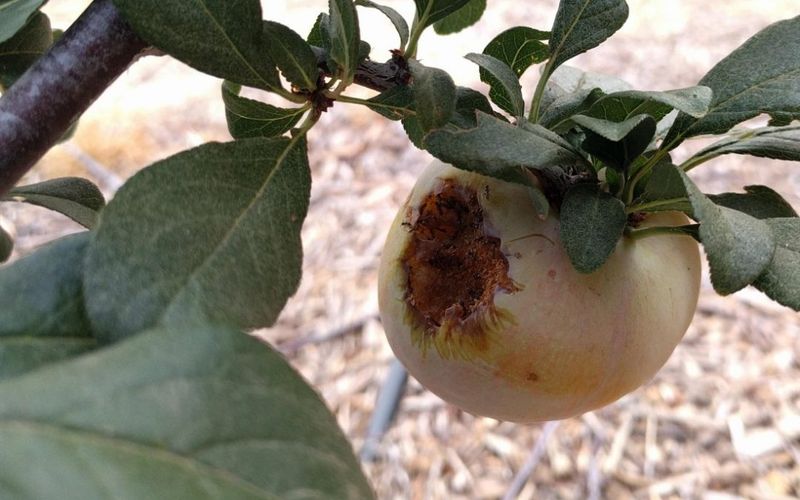
A close look at a damaged peach often reveals a shallow, scooped hole. The culprit wasn’t after the whole fruit, just a quick sip of sweet juice.
Ripe fruit packs plenty of natural sugar and water, which for a small bird works like a sports drink and a snack in one bite. Finches, mockingbirds, scrub jays, crows, and starlings all know where to find it.
California’s long dry season intensifies the problem. Many areas go months without rain, and natural water sources shrink or vanish.
When creeks and puddles disappear, juicy fruit becomes one of the easiest ways for birds to stay hydrated, which explains why gardeners often notice more pecking during heat waves.
Birds also shop selectively. They favor fruit that is soft, fully ripe, and easy to reach, and pieces on the outer edges and tops of trees get hit first because birds can land and leave quickly.
Hard, green fruit usually gets ignored.
Color plays a role too. Many birds spot ripening fruit by its shift from green to red, orange, or purple, which puts figs, cherries, grapes, apricots, and persimmons high on the list.
Once one bird finds a good tree, others tend to follow. Fall persimmons and late figs draw especially heavy traffic in October, when little else in the yard is ripe.
Those habits point toward a smarter plan. Water offered elsewhere, earlier picking, and protection for the easiest spots all work with bird behavior rather than against it.
2. A Birdbath Offers Water Instead
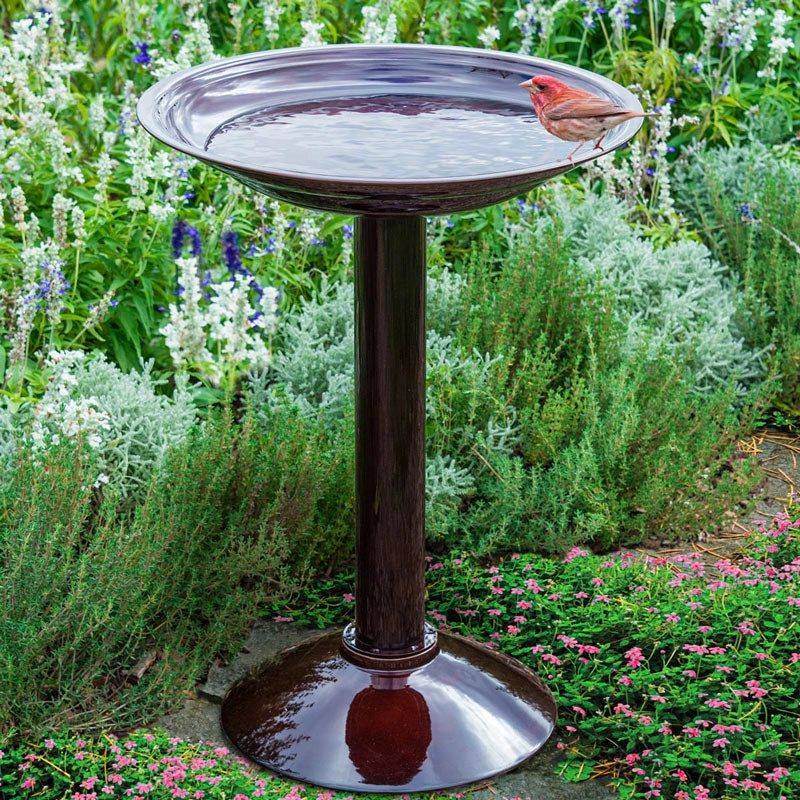
On a 100-degree afternoon, a thirsty bird faces a choice between pecking through fig skin and hopping into a cool, shallow dish of water. Many take the easy drink.
A birdbath gives birds another way to meet their water needs. It won’t stop all fruit damage, since birds still enjoy the sugar, yet it can ease pressure on trees during hot, dry stretches.
Shallow water works best. Birds prefer a depth of about one to two inches with a gentle slope, and a few flat stones give small birds a safe place to stand. A rough surface helps their feet grip.
Placement matters as well. An open spot a little away from fruit trees lets birds spot approaching cats and avoids drawing them straight into the branches.
A shrub or small tree within roughly 10 to 15 feet still offers a quick escape route when a hawk passes overhead.
Clean water keeps the setup healthy. Dumping and refilling every day or two, plus a weekly scrub with a brush, discourages mosquitoes and helps limit the spread of bird diseases.
Stale green water helps nobody.
Many California gardeners keep a bath going through summer and well into fall, since the dry season lasts so long. A small solar fountain or dripper creates moving water that draws even more birds.
The trade is simple: a reliable drink in one spot, and fewer thirsty beaks poking into the peaches.
3. Harvest Fruit As Soon As It Colors
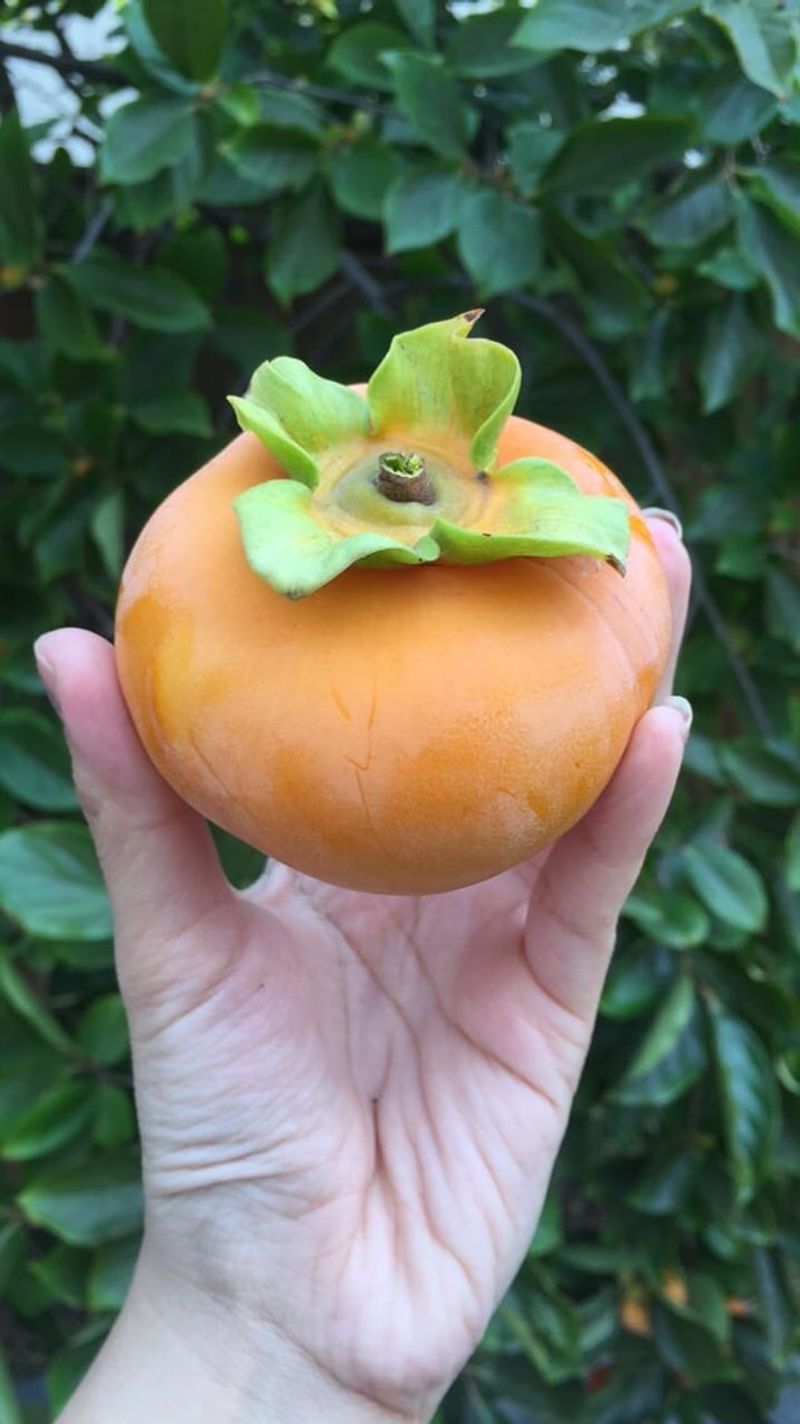
Timing decides much of the race against birds. Waiting for perfectly soft fruit can hand a mockingbird a one-day head start, while picking a little earlier often tips the odds back.
Many fruits keep ripening after harvest. Apricots, peaches, nectarines, plums, and Hachiya persimmons can finish softening on a kitchen counter once they show good color and give slightly when pressed.
European pears do best picked firm and ripened indoors.
Indoor ripening works well in a single layer at room temperature, out of direct sun. A paper bag speeds things up by trapping natural ripening gases, and a daily check matters, since fruit can turn from firm to mushy faster than expected.
Some fruit won’t improve after picking. Cherries, grapes, figs, and citrus stop sweetening once off the tree, and Fuyu persimmons taste best picked fully colored and crisp.
For those, harvest timing lands right as fruit reaches ripeness, and frequent checks through peak season pay off.
Picking up fallen and damaged fruit helps too. Pecked fruit draws insects and rot, and it signals to birds that the yard offers an easy buffet. Rotting drops can also attract rats, according to UC IPM.
Damaged pieces belong in the compost or green waste bin.
Quick harvesting also fits busy schedules. A big batch picked Saturday morning can finish ripening through the week, putting fresh fruit on the table on the gardener’s timeline while giving birds far fewer chances to taste it first.
4. Cover Clusters With Mesh Bags
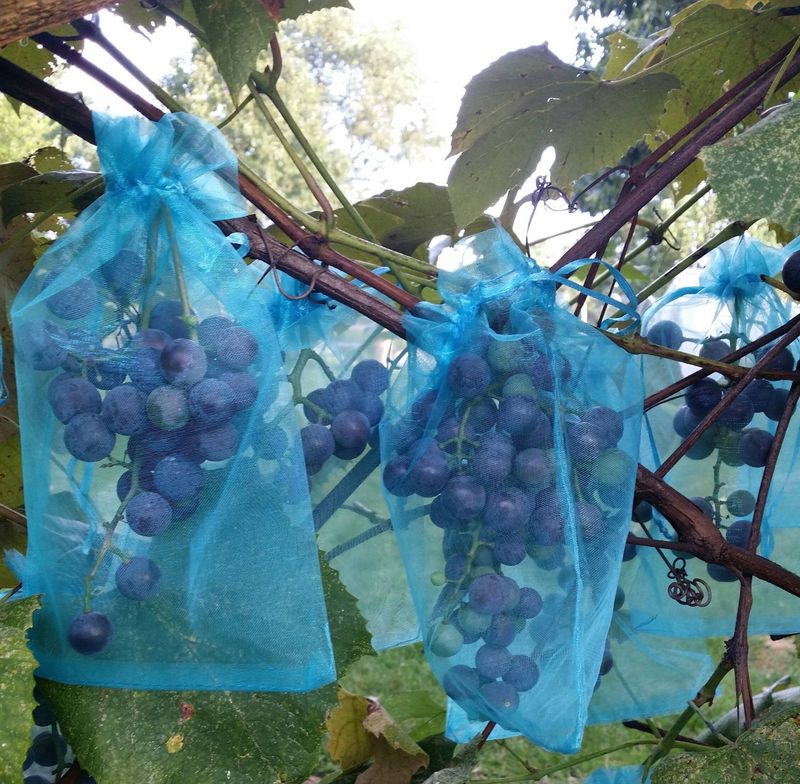
Small drawstring bags can do a surprisingly big job. Slipped over a grape cluster or a prized fig and pulled snug, each one keeps beaks away from the fruit inside.
Bagging works well on trees too large to net, or when only part of a crop matters most. Fine mesh or organza bags let in light and air, while brown paper lunch bags also work for grapes and apples, stapled or tied shut at the top.
Bags go on best before fruit starts to color. Once birds discover ripening fruit, they return again and again, so early protection matters.
A tight closure around the stem leaves no gaps for a curious beak.
Mesh bags bring bonus benefits. They block many insects, including fruit flies and wasps, and they catch fruit that drops early.
Reusable bags last several seasons when washed and dried after harvest. Paper bags cost less, though rain can turn them soggy.
A peek under the bags every few days catches mold, pests, or fruit rubbing against the fabric. Grapes in paper bags may stay slightly paler, yet the flavor still develops nicely.
Bagging takes time, so focusing on favorites makes sense. A dozen bags on the best grape clusters or a few choice persimmons can protect the fruit that matters most.
The method stays tidy and wildlife-safe, with little risk of tangling birds or lizards, and harvest day often arrives with every bagged cluster intact.
5. Net Only The Trees That Matter Most
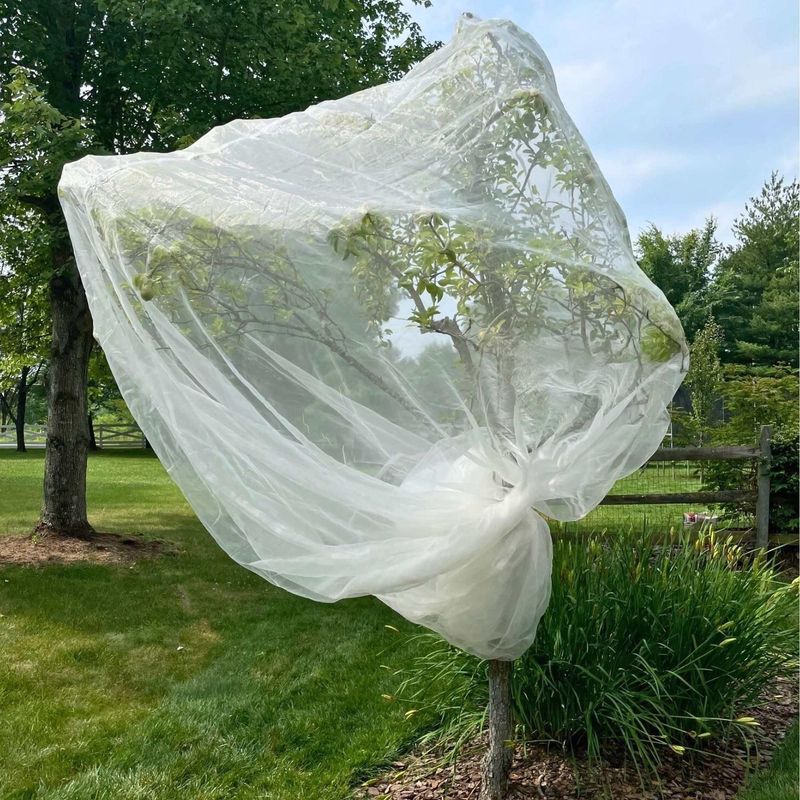
UC IPM calls netting the most reliable way to stop bird damage, yet an entire yard rarely needs wrapping. One or two trees that matter most, protected well, often deliver the biggest payoff.
A young cherry, a favorite fig, or a dwarf peach covers easily and usually loses the most fruit. Smaller trees make netting simple, which is one reason many gardeners prune to keep trees short.
Net type matters a great deal. Wide, floppy netting can tangle birds, snakes, lizards, and other wildlife, and wildlife groups warn that loose or poorly placed netting causes real harm.
Fine mesh, roughly a quarter inch or smaller, tangles far fewer animals. A handy test: a fingertip shouldn’t fit through the holes.
The net goes on best just before fruit starts to color. Gathering it tightly and securing it around the trunk or to the ground with clips, ties, or stakes keeps clever birds from slipping in through gaps at the bottom.
A simple frame of PVC pipe or wood can hold the net away from branches, keeping beaks from reaching fruit through the mesh and making harvest easier, since one side lifts for picking and closes again.
Daily checks matter. A caught animal needs careful release, or a call to a local wildlife rescue for help. Gloves and small scissors make the job easier.
After harvest, removing and storing the net helps, since nets left up year-round wear out and create needless hazards.
6. Hang Reflective Tape That Flashes And Moves
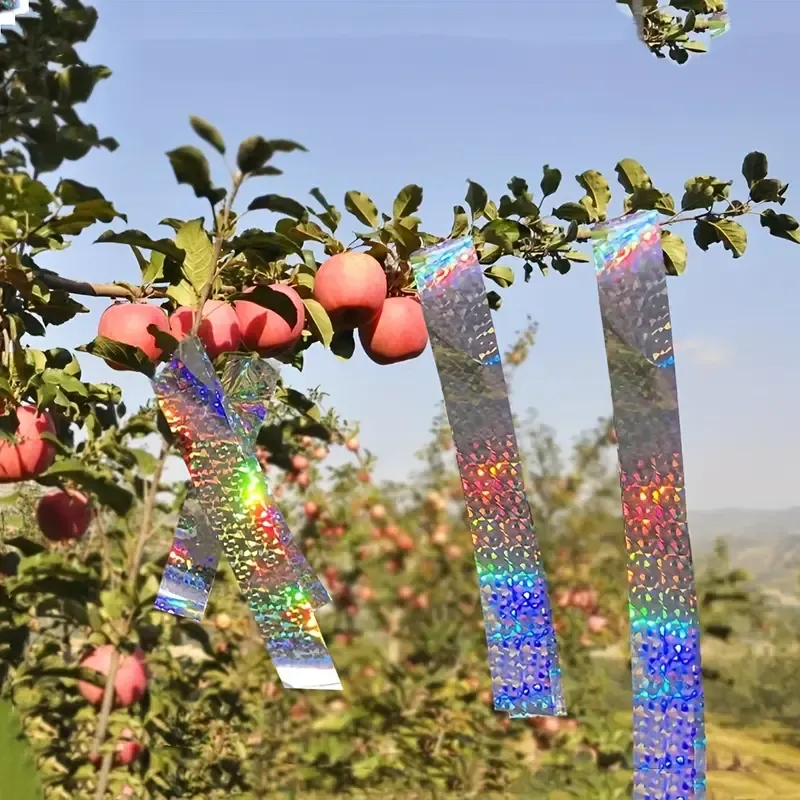
Sunlight catching a strip of shiny ribbon can send flashes of silver and red bouncing across the branches. That sudden glint is often enough to make a landing finch change its mind.
Reflective tape works by surprise. The strips twist in the breeze, flashing light and making a soft rustling sound, and birds read that unpredictable movement as a possible threat.
Timing matters here. Tape goes up best before fruit ripens, in pieces about two to three feet long tied to branches all around the tree, especially near the top and outer edges.
Strips need to hang freely so the wind can move them, since tape that can’t twist does very little.
Sunny, breezy spots give the best results, which suits much of California nicely. Calm or cloudy days weaken the effect. Fall breezes keep strips dancing, though strong gusts can tear them loose.
Old CDs or small aluminum pie pans hung on string can add extra sparkle and noise.
Realistic expectations help. UC IPM notes that visual scare devices tend to work only for a short time, since birds learn quickly and many stop worrying once they realize the tape poses no danger.
Tape works best as part of a team. Paired with early harvest, bags, or a birdbath, it adds another layer of protection.
Taking it down after harvest and rehanging it next season keeps the sight fresh, so birds have less chance to grow comfortable with the shine.
7. Move Decoys And Deterrents Often
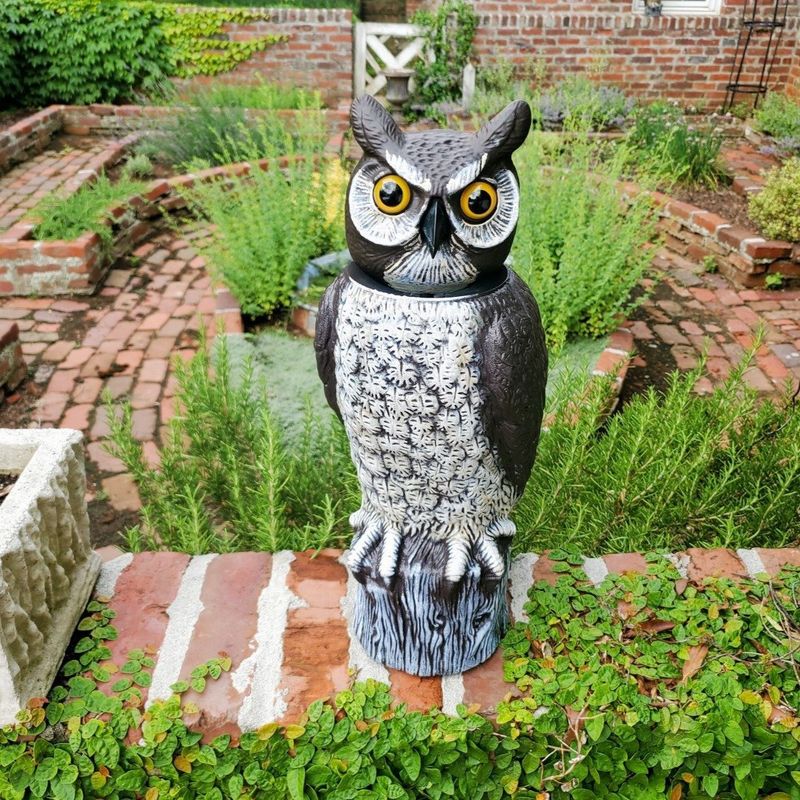
A plastic owl on the fence often works beautifully for about three days. By day ten, a sparrow may be perched on its head.
Birds are far sharper than they get credit for. Scare devices include owl or hawk decoys, inflatable balloons with big eye designs, pinwheels, and wind chimes, and at first, birds treat them as danger.
Over time, they notice the fake owl never moves and never hunts. Scientists call this process habituation.
Change offers the fix. Moving decoys to a new spot every two or three days, turning them to face a different direction, and swapping one device for another all help.
Trading the owl for scare-eye balloons for a week, for instance, resets the surprise.
Timing matters too. Scare devices placed right before fruit begins to ripen, rather than months earlier, give birds less time to study them, and they stay convincing longer. Removing everything right after harvest helps the next season start fresh.
Mixing methods adds strength. A decoy plus reflective tape plus a little noise confuses birds more than one trick alone, and some gardeners add motion-activated sprinklers for a harmless surprise splash.
Humane and legal methods matter. Most native birds are protected under federal and state law, so traps, sticky gels, poisons, and anything else that could harm them are best avoided.
Scaring stays fine, while harming crosses the line. A bit of regular shuffling keeps decoys from becoming just another perch.
8. Plant A Sacrificial Berry Bush
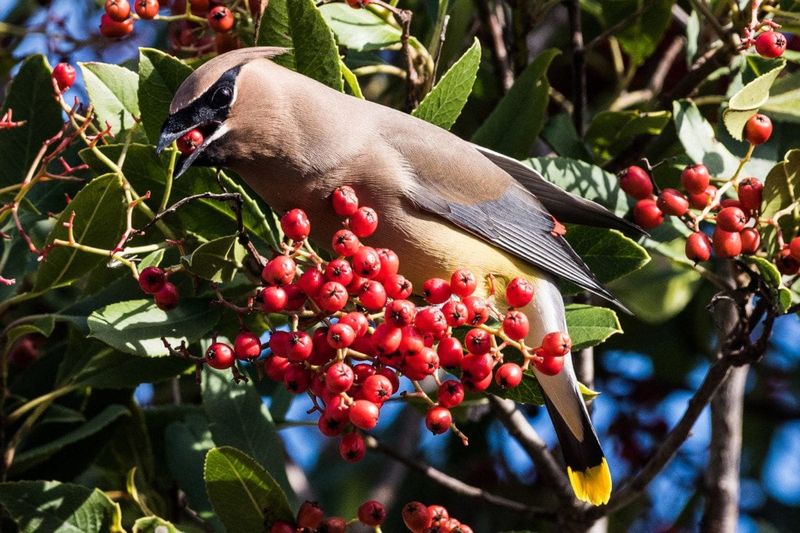
Sharing on purpose can sometimes work better than defending every branch. A berry bush planted just for the birds may draw them away from the cherries and figs. It may sound counterintuitive, yet many gardeners swear by it.
A sacrificial plant offers a food source nobody minds losing. Placed at the edge of the yard, away from main fruit trees, it gives birds an easy, generous stop they often visit first.
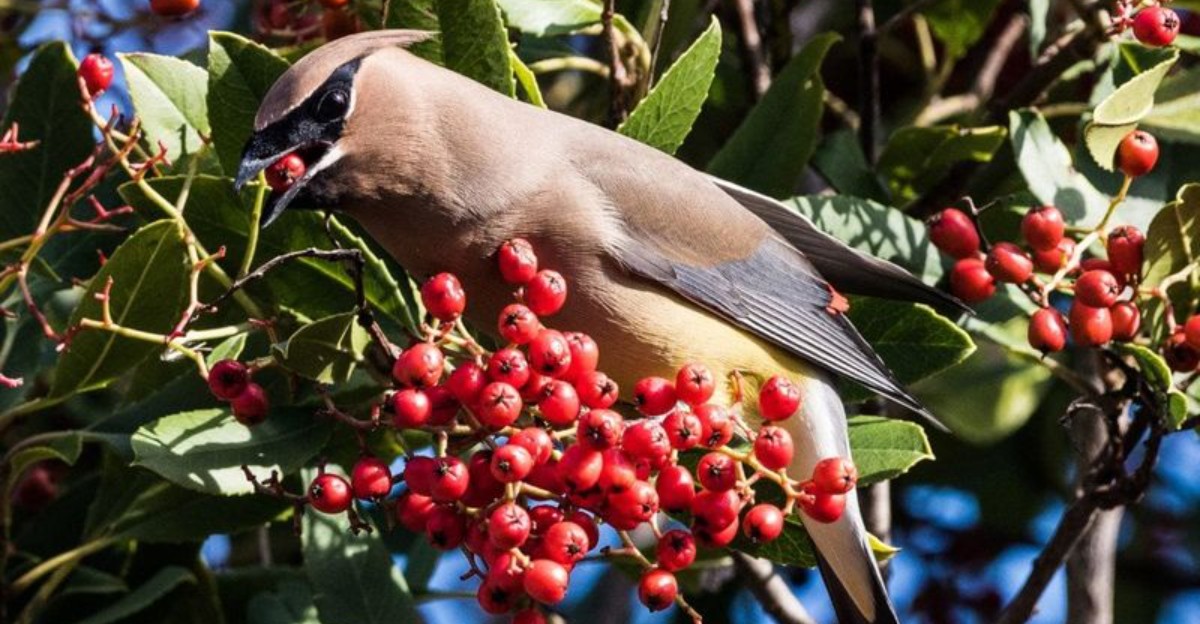
California native shrubs make wonderful choices. Toyon produces bright red berries in winter that robins and cedar waxwings adore, while coffeeberry, blue elderberry, and native currants feed birds at other points in the year.
Elderberries are best left to the birds, since raw berries can upset human stomachs.
Native plants bring extra perks. Once established, they usually need less water, handle dry summers with ease, and support local insects that birds feed to their chicks.
The yard becomes a small habitat rather than a battleground.
Timing deserves thought when choosing plants. A shrub that fruits at the same time as the peaches makes the best distraction, and a local nursery can suggest shrubs that ripen during a given fruit season.
Fall happens to be an ideal planting time for natives. In fire-prone areas, woody shrubs belong beyond the first five feet of the house under Zone 0 rules.
A berry bush won’t solve every problem alone. Paired with a birdbath, quick harvests, and targeted netting, it helps people and birds each claim a fair share.