The Real Reason Your New York Geranium Leaves Turn Yellow
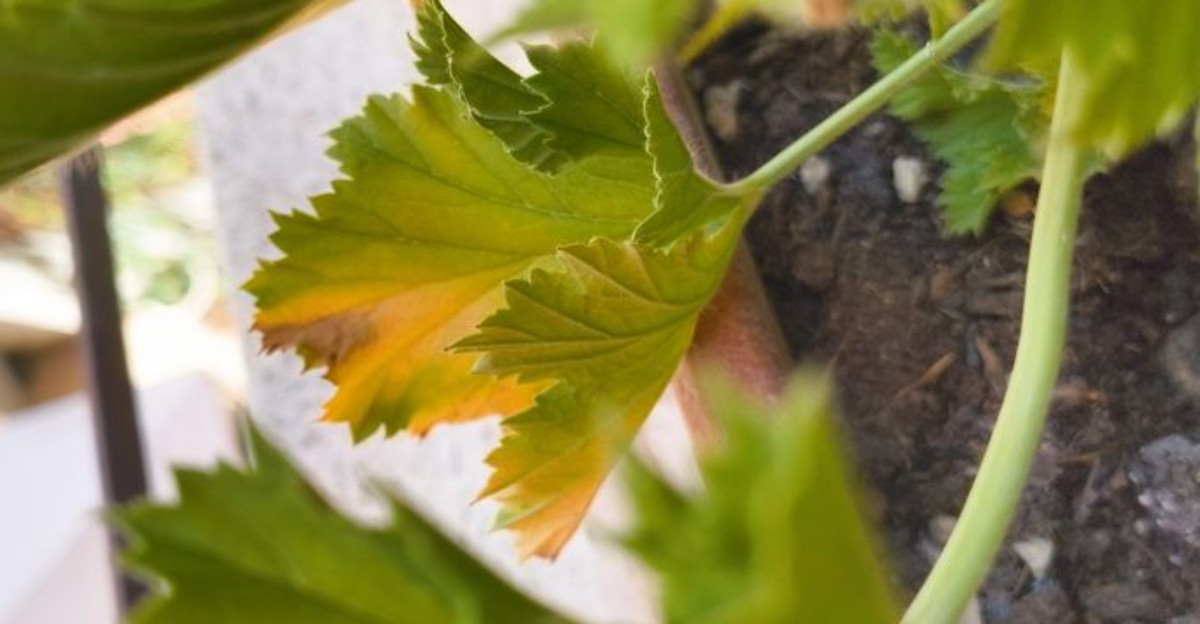
Nothing ruins a sunny porch faster than a geranium wearing sad, lemon-colored leaves. You water it, you praise it, and still it pouts like a teenager.
Across New York, gardeners face this puzzle every single season. Some yellow leaves are harmless, while others are a quiet cry for help.
The tricky part is telling them apart before the whole plant fades. Is it the watering can, the chilly autumn air, or something tiny hiding under the leaves?
Maybe the pot itself is the sneaky troublemaker. The good news is that geraniums give clear clues if you know where to look.
With a little detective work, you can read those golden leaves like a note from your plant.
1. Overwatering Is The Top Culprit
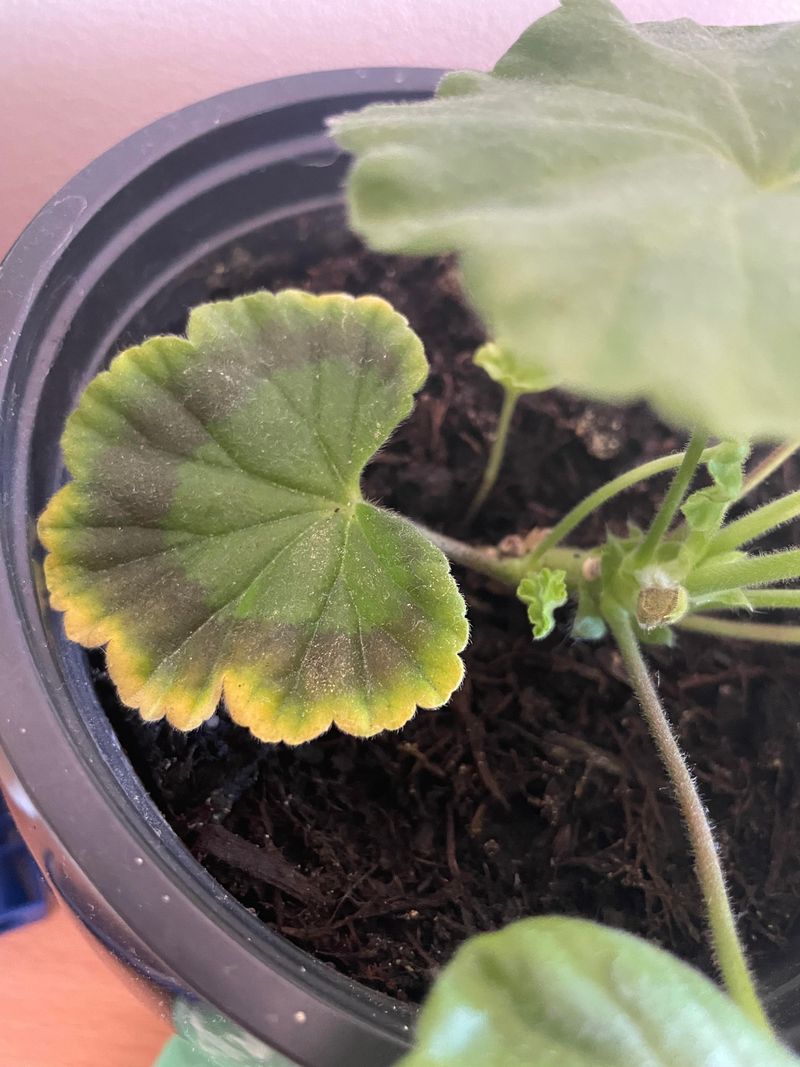
Picture a gardener who waters every morning out of pure love. Sadly, that kind devotion is the most common reason geranium leaves turn yellow.
Geraniums come from dry parts of South Africa. Their roots prefer a drink, followed by a nice break to dry out.
Extra water fills the tiny air spaces in the soil. Roots then struggle, and the plant starts sending warning signs through its leaves.
Look closely at where the yellow shows up first. Overwatering usually begins at the bottom of the plant and slowly creeps upward.
The leaves may also feel soft or limp rather than crisp. Dry, crunchy yellow leaves often point to a different problem entirely.
Here is a simple test you can try today. Push your finger about one inch into the soil before you water.
Feel moisture down there? Put the watering can back and check again tomorrow.
In a humid summer, soil dries slower than you might expect. Rainy weeks can mean skipping your usual schedule for several days.
Potted geraniums on a shady stoop need even less water. Sunny spots dry faster, so adjust based on where your plant actually lives.
A wooden chopstick works as a handy moisture checker too. Slide it in, pull it out, and see if damp soil clings.
Once you cut back, new growth should come in green again. The old yellow leaves will not recover, so pinch them off gently.
Patience pays off here. Within a few weeks, most geraniums bounce back with fresh, healthy foliage.
2. Soggy Soil Suffocates The Roots
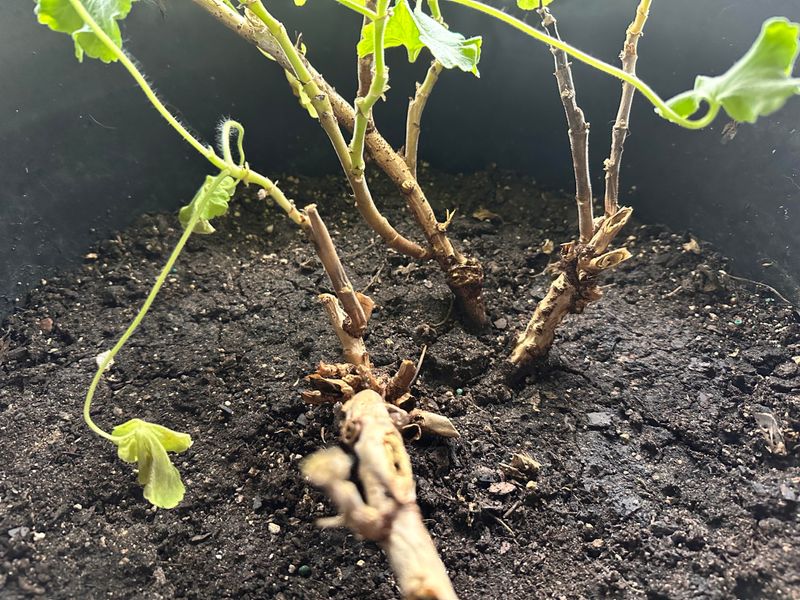
Roots breathe, even though they live underground. Most people are surprised to learn that soil needs air just as much as water.
Healthy soil has tiny pockets between each grain. Those pockets hold oxygen that roots use to stay strong and active.
When soil stays wet for days, water pushes all that air out. The roots begin to suffocate, a bit like holding your breath underwater.
Struggling roots cannot pull up water or nutrients well. Ironically, the plant may wilt and yellow even though it sits in wet soil.
Curious about what is happening below? Gently slide the plant out of its pot and take a peek.
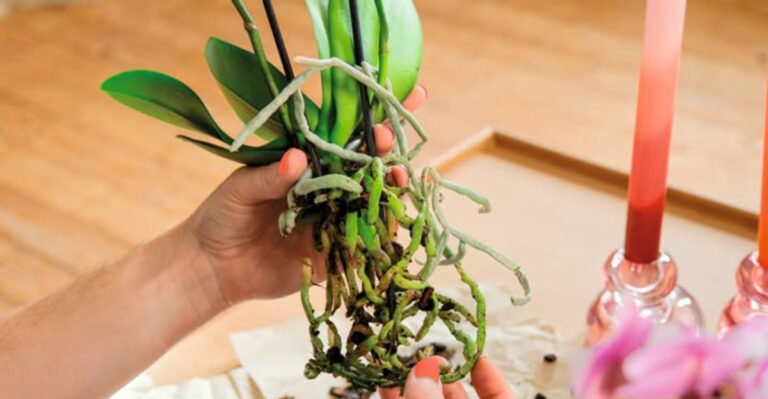
Healthy roots look white or light tan and feel firm. Rotting roots turn brown or black and feel mushy between your fingers.
Your New York Garden Changes Every Week. Your Plan Should Too.
Gardening in New York changes quickly throughout the season. Every Friday you’ll receive a simple weekly plan showing exactly what to plant, prune, fertilize, harvest, and protect so you never miss the right timing.
Give the soil a sniff while you are at it. A sour, swampy smell is a strong clue that rot has moved in.
Heavy garden soil and packed potting mix make things worse. Clay-rich yards found around parts of New York can hold water for ages.
For garden beds, mix in compost to loosen the ground. Raised beds also help extra rain drain away quickly.
For pots, trim off any mushy roots with clean scissors. Replant in fresh, airy potting mix blended with a handful of perlite.
Water lightly afterward and let the soil dry before the next drink. Fresh roots usually return within a few weeks of care.
3. Cold Fall Nights Stress The Plant
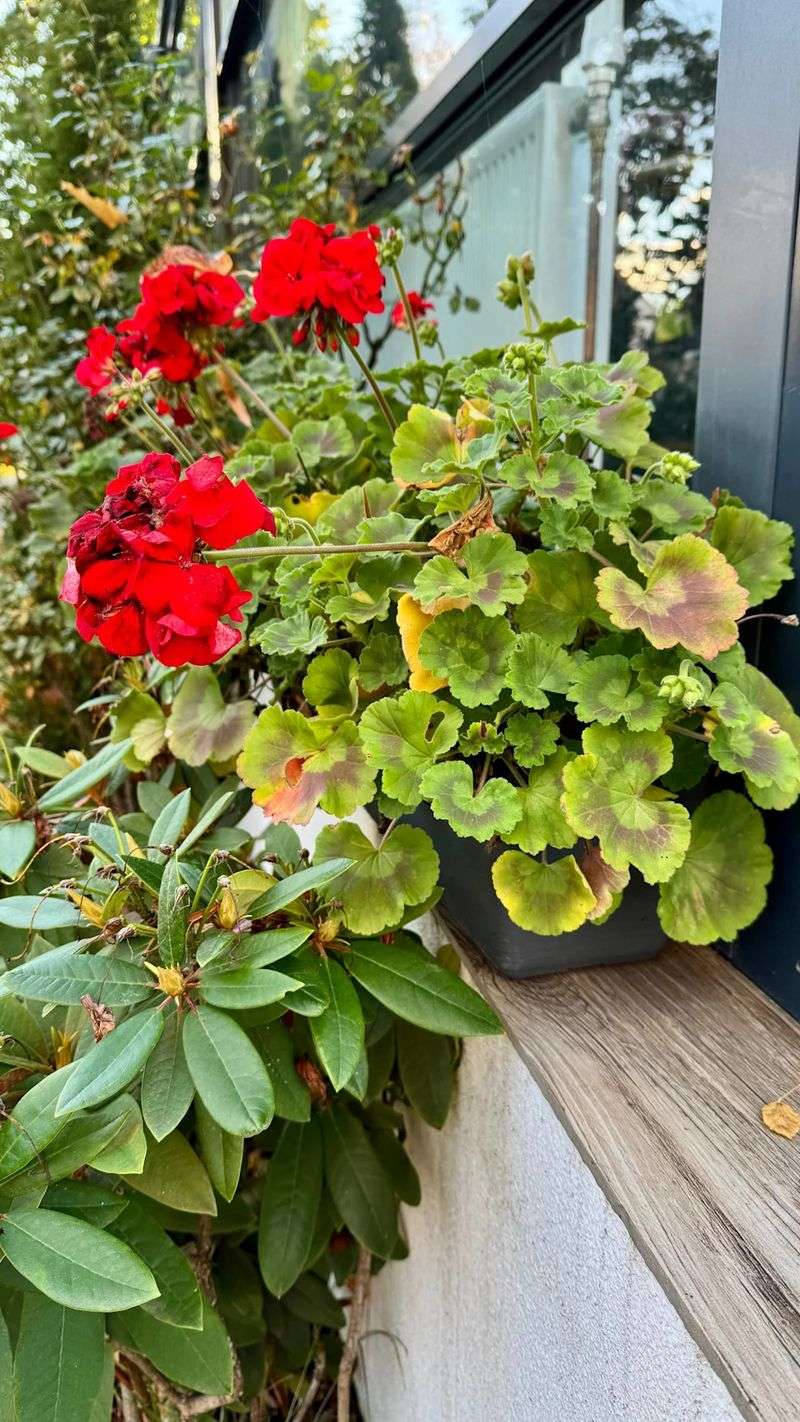
One crisp October morning, your geranium looks like it caught a chill overnight. That guess is closer to the truth than you might think.
Common garden geraniums are tender plants from warm climates. They grow best when nights stay between 55 and 65 degrees Fahrenheit.
Fall brings cool evenings that sneak up fast. Once nights dip below 55 degrees, the plant starts to feel stressed.
Things get serious around 50 degrees. More than 12 hours at that chill can cause yellowing, wilting, and slow growth.
Frost is the real danger, and even a light one around 32 degrees can damage leaves. A hard freeze below 28 can do harm the plant cannot repair.
Spring cold snaps can do the same thing. A surprise chilly night in May may leave leaves blotchy and pale for a while.
Hardy geraniums are a different story, by the way. Those perennial types yellow on purpose in autumn as they head into rest.
Watch the weather app as September winds down. When forecasts hint at 50 degrees, it is time to make a plan.
Potted plants can simply come inside for the night. Set them by a sunny window and let them settle in.
Garden geraniums can wear a light frost cloth after sunset. Remove it in the morning so the plant gets sunshine and fresh air.
Many New Yorkers overwinter geraniums indoors and replant them in spring. It saves money and keeps favorite colors going year after year.
4. Old Lower Leaves Yellow Naturally
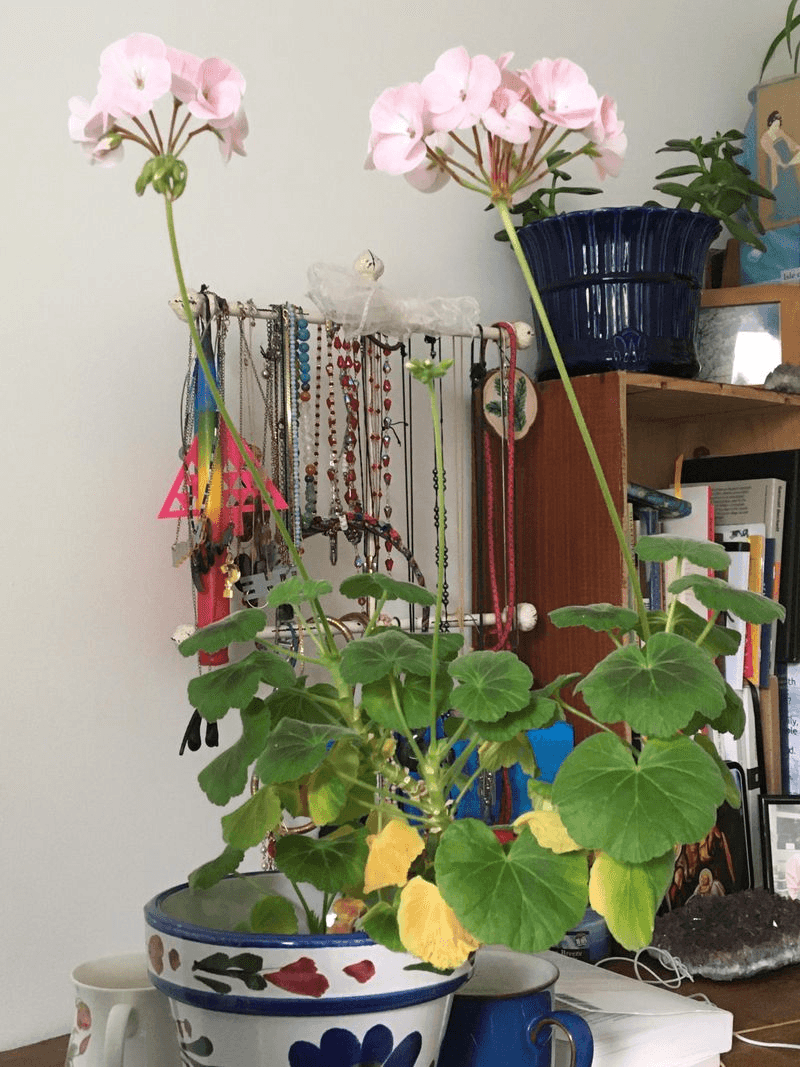
Relax for a moment, because not every yellow leaf is bad news. Sometimes your geranium is just doing a little spring cleaning.
Plants age their leaves the same way trees drop them in autumn. Scientists call this natural process senescence, a fancy word for growing old.
Older leaves near the bottom stop pulling their weight over time. The plant then moves useful nutrients out of them and into fresh growth.
Those borrowed nutrients help feed new leaves and colorful blooms. In a way, the old leaves are passing the torch to the next generation.
So how can you tell this is normal? Look at the rest of the plant carefully.
A few yellow leaves at the base are usually fine. If the top is green, bushy, and blooming, your plant is likely healthy.
Shade speeds up this process too. Lower leaves blocked by upper growth often yellow sooner because they barely see the sun.
You may also notice more yellowing after moving plants indoors. Geraniums adjust to dimmer rooms by letting go of some older foliage.
Simply pinch or snip these leaves off at the stem. Removing them keeps the plant tidy and lowers the chance of mold.
Fun fact: tidying geraniums this way is often called trimming when done with flowers. With leaves, think of it as a quick haircut.
Only worry if yellowing spreads fast or climbs up the stems. Then it is time to check the other causes on this list.
5. A Hungry Plant Needs Feeding
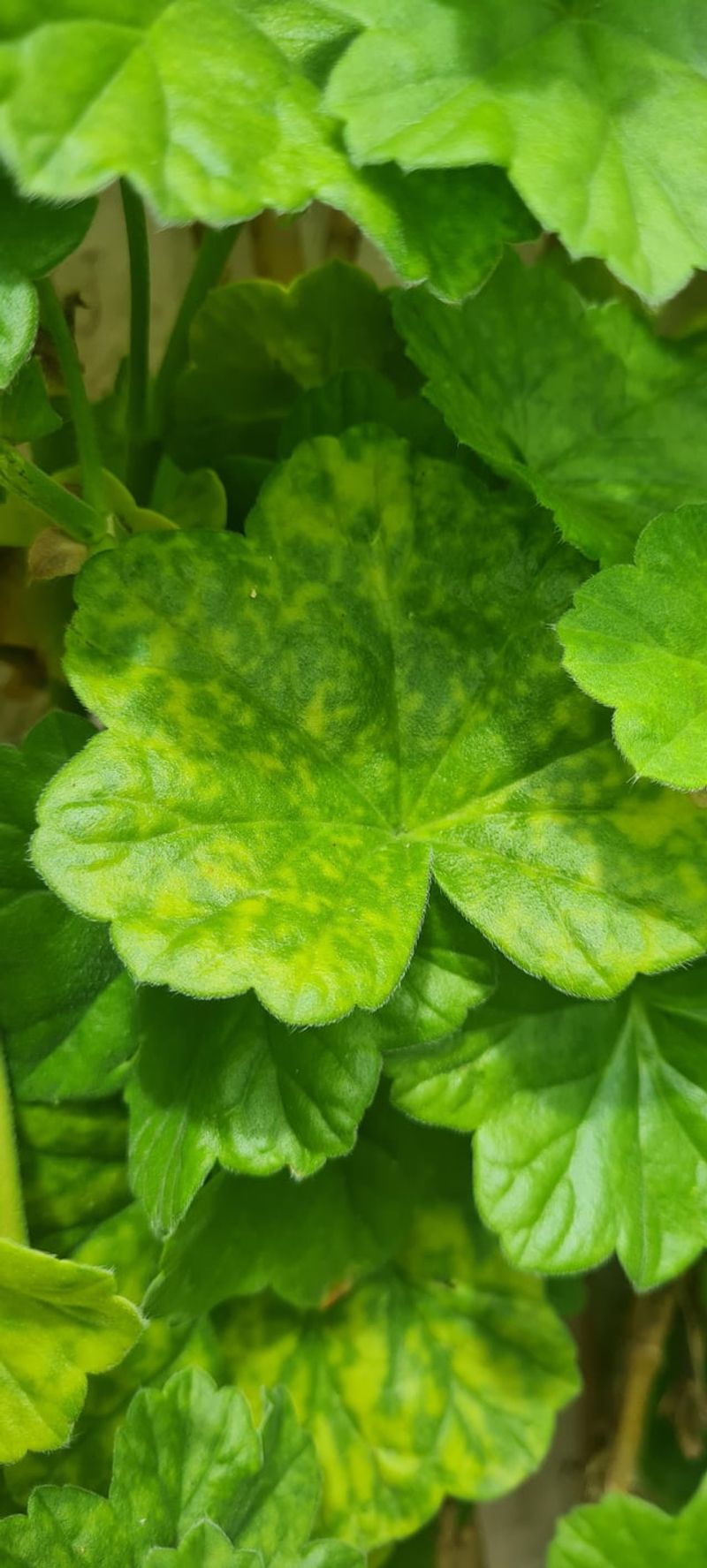
Geraniums eat like growing kids at a summer picnic. Leave them without food, and their leaves start turning pale and yellow.
Gardeners call geraniums heavy feeders, especially in pots. Every watering washes some nutrients out of the soil, leaving less behind.
Nitrogen shortage is the most common problem. Older, lower leaves fade to an even yellow, and growth may slow down.
Magnesium shortage looks different and a bit striped. The leaf turns yellow between the veins, while the veins stay green.
A teaspoon of Epsom salt per gallon of water can help there. Epsom salt is magnesium sulfate, which gives the plant a quick boost.
Iron shortage also causes striped leaves. The difference is that it shows up first on the newest leaves at the top.
For regular meals, choose a balanced liquid fertilizer like 10-10-10 or 20-20-20. Want more flowers?
Try a bloom formula such as 15-30-15.
Feed potted plants every two to four weeks in spring and summer. Garden geraniums usually need food every four to six weeks.
Water your plant before adding fertilizer. Feeding dry soil can burn tender roots and cause even more trouble.
Ease off feeding as fall arrives in New York. Plants slow down in cooler months and need much less food.
Still unsure what is missing? A garden center soil kit can give you a rough idea of what’s missing.
For exact numbers, send a sample to a lab through your local Cornell Cooperative Extension office.
6. Too Little Light Indoors Triggers Yellowing
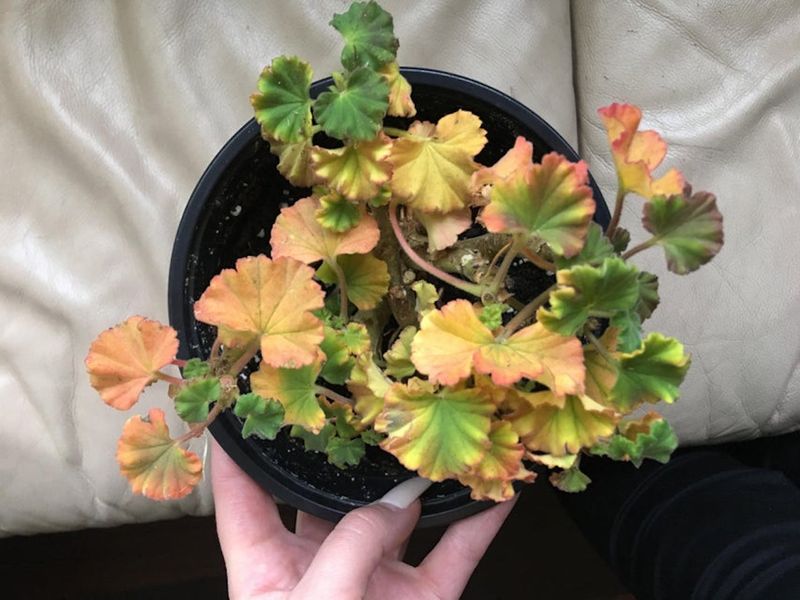
Think of geraniums as tiny sunbathers who never want to leave the beach. Take away their sunshine, and their green color quickly fades.
Leaves need light to make chlorophyll, the stuff that keeps them green. Less light means less chlorophyll, so foliage turns pale and yellow.
Most geraniums want at least six hours of direct sun daily. Some can manage with five, but more is usually better.
Indoor plants often show a stretched, leggy look. Long stems with big gaps between leaves mean the plant is reaching for light.
Even a bright windowsill gives far less light than a sunny yard. Your eyes adjust easily, but plants notice the difference right away.
Winter makes things even harder. Short days and gray skies leave many apartment geraniums hungry for sunshine.
Try moving your plant to a south-facing window first. East-facing windows work well too, thanks to gentle morning sun.
Grow lights are a game changer for dark homes. Place an LED light a few inches above the plant for about 12 to 14 hours daily.
Turning the pot every week helps all sides get light. Otherwise, the plant may lean toward the window like a sunflower.
Leggy stems can be trimmed back to restore a bushy shape. Just remember that pruning alone will not fix a lack of light.
Once spring arrives, ease your plant back outside slowly. A week of gradual sun exposure helps prevent sunburned leaves.
7. Whiteflies And Spider Mites Drain The Leaves
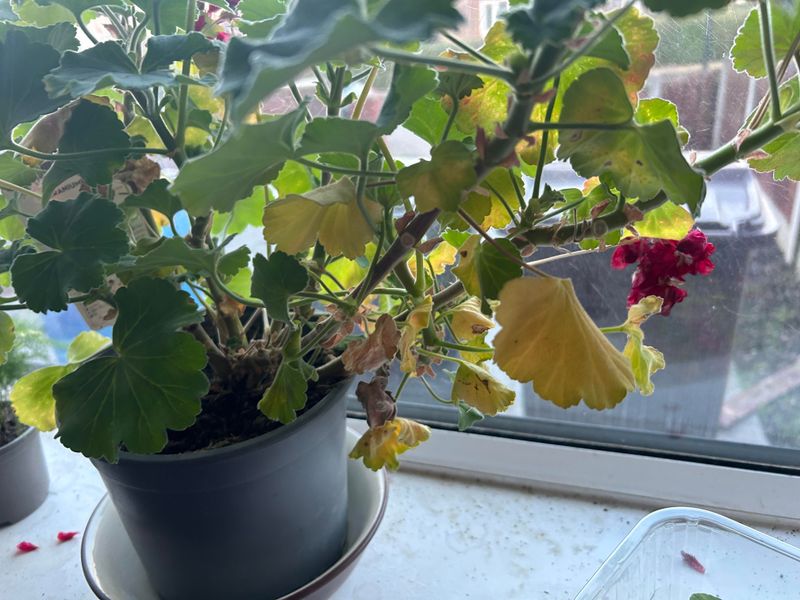
Tiny vampires might be hiding under your geranium leaves right now. Whiteflies and spider mites both suck sap and leave yellow damage behind.
Whiteflies are small white insects with wings. Brush the plant gently, and they flutter up like a little cloud of snow.
They leave behind a sticky substance called honeydew. Black sooty mold can then grow on that sugary mess.
Spider mites are much harder to spot. These tiny relatives of spiders are often too small to see without a magnifying glass.
Their damage looks like tiny yellow or white dots across the leaf. Gardeners call this speckled pattern stippling.
Fine webbing under leaves means the mites have been busy. Heavily damaged leaves may turn bronze, curl, and drop early.
Hot, dry weather brings mites out in big numbers. Sticky heat waves and dry indoor heating both invite them.
Start with a strong spray of water on leaf undersides. Wiping leaves with a damp cloth also removes many pests.
Insecticidal soap or neem oil works well for bigger problems. Coat every leaf thoroughly, especially the hidden bottom sides.
Yellow sticky traps catch adult whiteflies and show how many are around. Hang one near your plants as an early warning system.
Keep new plants apart for a week or two before grouping them. Quick weekly leaf checks can stop an outbreak before it spreads.
8. A Pot Without Drainage Holds Too Much Water
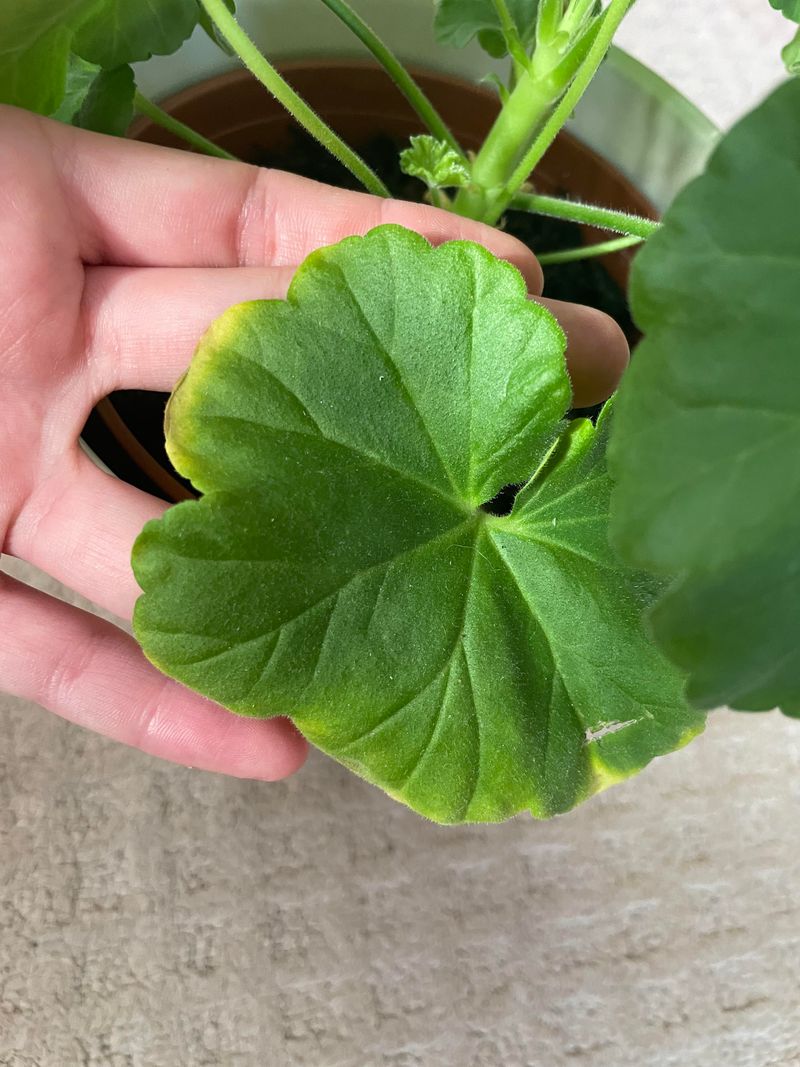
That adorable ceramic pot from the home store might be quietly causing trouble. Without a drainage hole, water has nowhere to escape.
Extra water pools at the bottom of the container. The soil stays soaked, and roots slowly start to rot in the puddle.
Rotting roots cannot carry water or food up to the leaves. Yellow foliage, wilting, and stunted growth soon follow.
Geraniums really dislike wet feet. Their ancestors grew in sunny, well-drained ground, far from muddy puddles.
Flip your pot over and check the bottom today. No hole means it is time for a quick change.
Even pots with holes can cause trouble sometimes. Soil, roots, or a full saucer can block water from draining away.
Empty saucers about 30 minutes after watering. Many fire escape and windowsill gardeners forget this easy step.
Love your decorative pot too much to give it up? Use it as an outer shell and set a plastic nursery pot inside.
Clay pots are a smart pick for geraniums. Terracotta breathes, letting extra moisture escape through its sides.
Fill containers with a light, fast-draining potting mix. Adding perlite or coarse grit helps water move through easily.
Skip the old trick of putting gravel at the pot bottom. Studies show it actually raises the wet zone closer to the roots.
9. Root-Bound Plants Struggle To Take Up Water
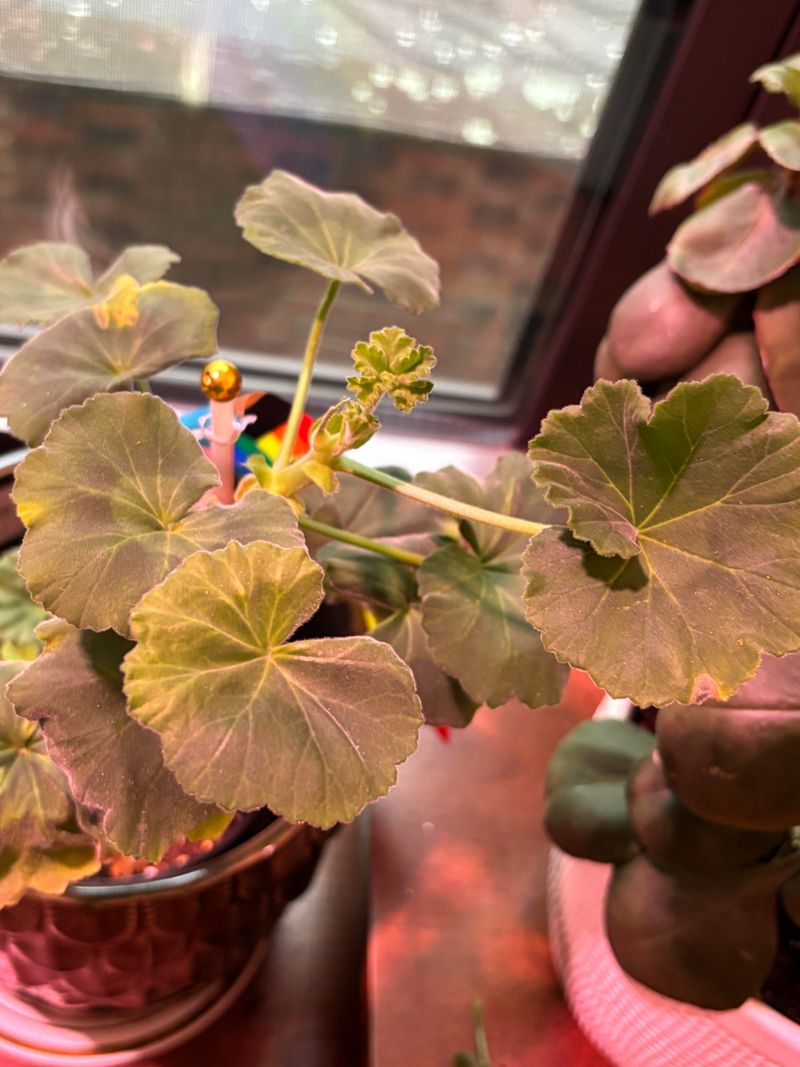
Imagine wearing shoes two sizes too small all summer long. A root-bound geranium feels something like that inside its cramped pot.
Roots keep growing even when space runs out. Eventually they form a tight, tangled ball that circles the inside of the container.
Very little soil remains to hold water and nutrients. The plant may wilt soon after watering, which confuses many gardeners.
Water might also rush straight out the bottom. Lower leaves then turn yellow or brown, and new leaves grow smaller.
Look for roots poking out of drainage holes. Roots on the soil surface or a plant lifting upward are clear signs too.
Repotting fixes the problem nicely. Early spring is the best time, right when fresh growth begins.
Choose a pot just one size larger, about one to two inches wider. A huge pot holds too much wet soil and invites rot.
Ease the plant out and gently loosen circling roots with your fingers. Very tight root balls can lose up to one third of their roots.
Settle the plant into fresh, well-draining potting mix. Water thoroughly so the soil fills in around every root.
Keep it in light shade for a few days afterward. Wait a couple of weeks before adding any fertilizer.
Many New York gardeners repot geraniums each spring before moving them outdoors. It is a simple habit with big rewards.
10. Rust Or Bacterial Disease Shows Up As Spots
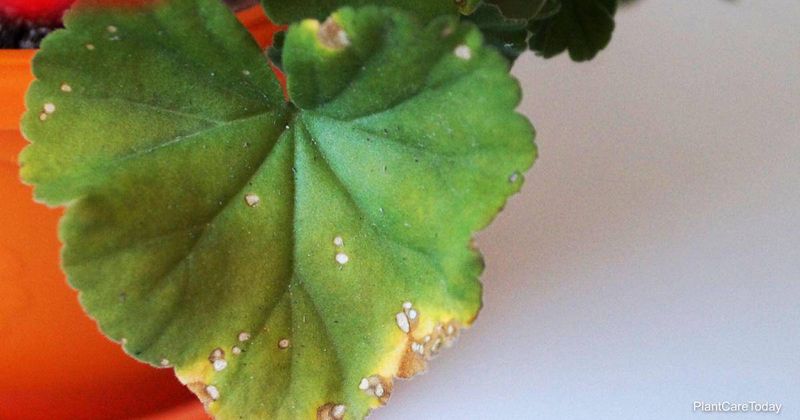
Spots tell a story that plain yellow leaves cannot. When yellow comes with rings, wedges, or blisters, disease may be the cause.
Geranium rust starts as small pale yellow dots on the top of leaves. Flip the leaf over to look for the real giveaway.
Underneath, you will find raised, cinnamon-brown bumps arranged in rings. They feel rough, almost like sandpaper, when you touch them.
Rust loves cool, damp weather between 55 and 75 degrees. Rainy late spring days can create perfect conditions.
Bacterial blight is a more serious threat. It begins as tiny water-soaked spots that later turn tan or brown.
Watch for V-shaped yellow wedges along leaf edges. That unusual shape is a classic clue of bacterial blight.
Sadly, no spray cures bacterial blight once it appears. Remove sick plants quickly and toss them in the trash, not the compost.
For rust, pick off spotted leaves as soon as you notice them. Fungicides can help when the infection becomes widespread.
Water at the soil level instead of over the leaves. Wet foliage helps both rust and bacteria spread fast.
Give plants room so air can move between them. Crowded containers stay damp and spread trouble from leaf to leaf.
Wipe pruners with rubbing alcohol between plants. Buying healthy, disease-free plants is the best protection of all.