Found A Cone-Like Fruit With Red Seeds In Your Arizona Yard? It Could Be Magnolia
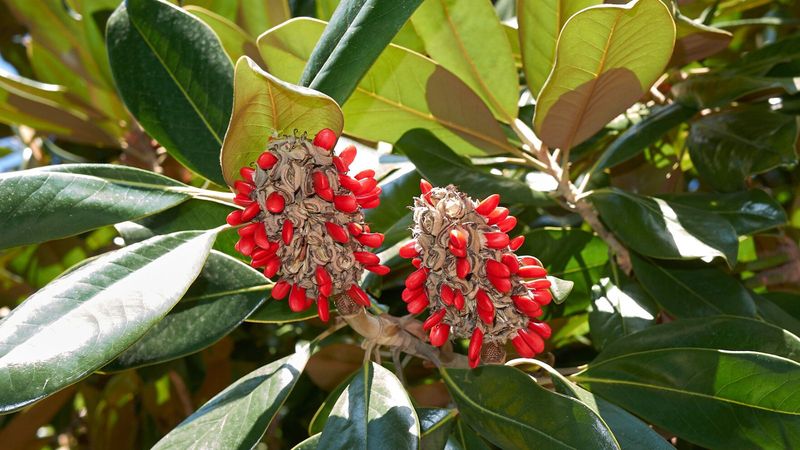
Something rough and lumpy dropped under a tree in your yard, and now it has bright red seeds poking out. It looks odd enough to make anyone stop and stare.
Several Arizona plants can leave behind red-seeded surprises, and a few of them need careful handling. Here is how to make a smart first guess without taking risks.
A cone-like fruit with red seeds may be magnolia
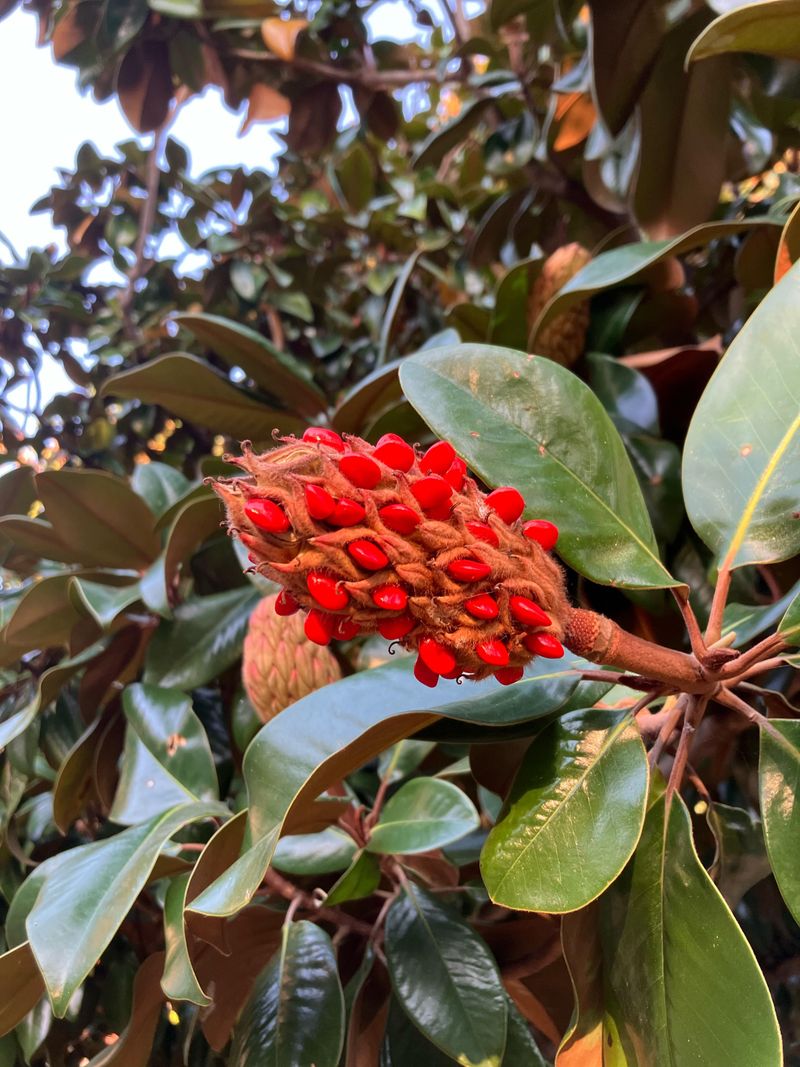
Picture a bumpy, cone-shaped fruit that has split open to show bright red seeds. That combination points first to Southern magnolia, especially if the tree overhead has big, glossy evergreen leaves.
Magnolia may seem like a Florida plant, but it shows up in Arizona landscapes too. The University of Arizona Campus Arboretum lists Southern magnolia among its trees, so it is a believable planted tree in a Tucson or Phoenix yard with shade and regular watering.
Still, a fallen fruit is only a clue. It does not prove which plant dropped it, and not every Arizona yard has a magnolia.
Wind, birds, and neighbors’ trees can all move odd objects around.
Think of magnolia as the leading possibility, not the final answer. The next sections show how to check the fruit, the leaves, and the plant itself, plus two look-alikes to rule out.
As North Carolina Extension plant notes describe, the red-coated seeds are a typical sight when a magnolia fruit opens.
Magnolia fruit is a cluster of follicles, not a true pod
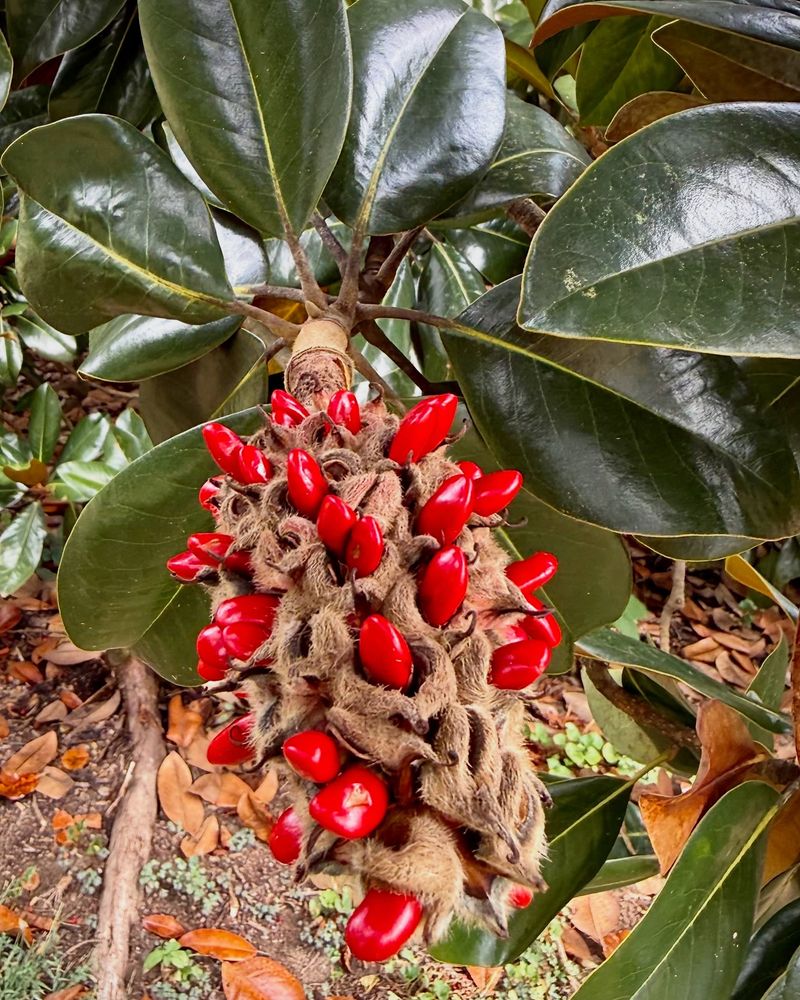
Botanists call the magnolia fruit an aggregate of follicles. In plain words, it is a cluster of many small sections packed together into a cone-like shape.
Each section splits open when ripe.
Inside, the seeds wear a rose-red coating, and some dangle on slender threads like tiny ornaments. That detail is a handy clue, and the plant profile for Southern magnolia describes this same pattern.
The structure is not a true cone like a pine cone. It is also not a bean pod, and the red parts are coated seeds rather than berries.
That is why the label spiky pod falls short. A magnolia fruit looks knobby or rough, but it is not a single pod with spikes.
If your find is one hard case with seeds lined up inside, or a tiny sharp burr, you may be looking at a different plant altogether.
Check the leaves and flowers before naming the tree
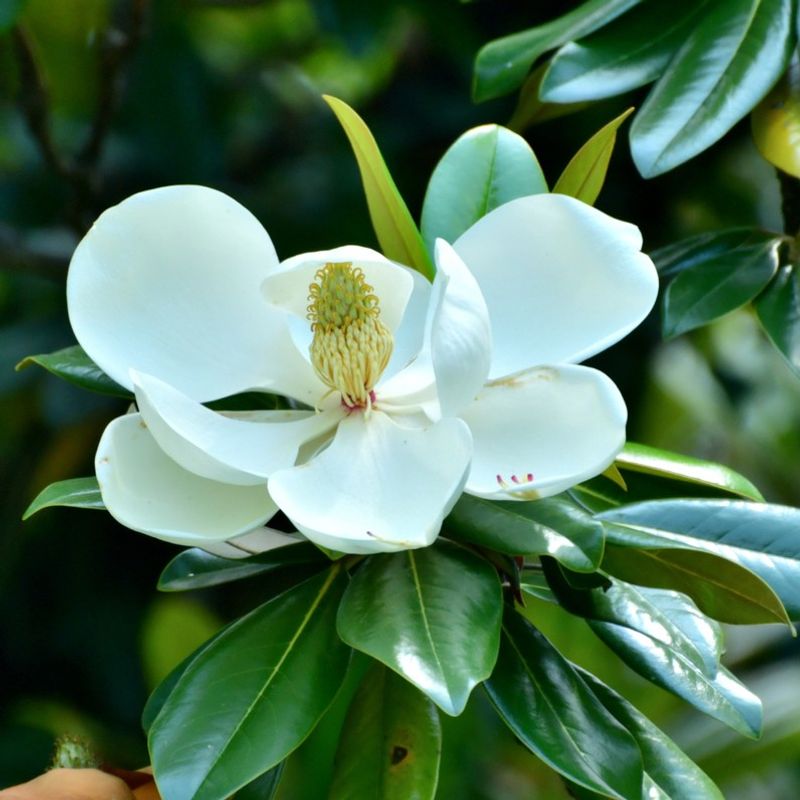
Look up. The tree above the fallen fruit tells you far more than the fruit does.
Southern magnolia carries large, leathery, glossy evergreen leaves, usually around 5 to 10 inches long, according to the Southern magnolia plant profile.
If the tree is blooming, or has bloomed recently, watch for fragrant, creamy-white flowers. Those big blossoms are another strong supporting clue, though they appear only for part of the year.
Leaves stay on the tree year-round, so they are your most dependable check. Press one between your fingers.
A thick, waxy feel fits magnolia far better than a small, thin leaf.
Take photos before you decide anything. Capture the whole tree, one leaf, where the leaf joins the branch, and the fruit itself.
Your Arizona Garden Changes Every Week. Your Plan Should Too.
Gardening in Arizona changes quickly throughout the season. Every Friday you’ll receive a simple weekly plan showing exactly what to plant, prune, fertilize, harvest, and protect so you never miss the right timing.
A local nursery or county Master Gardener program can use those pictures to help confirm what you have, and several features together make a stronger case than one.
Hard red seeds in a brown pod may indicate Texas mountain laurel
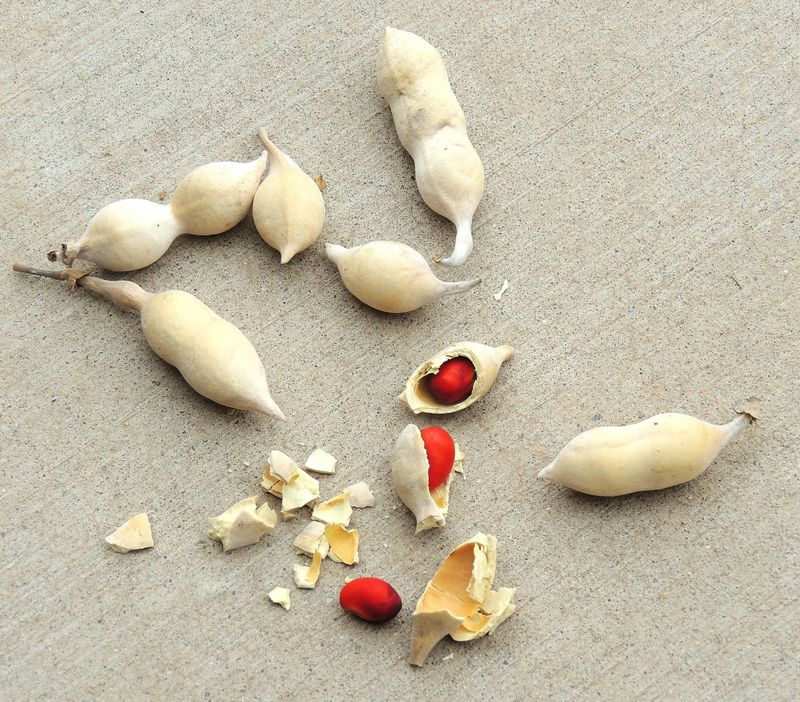
Here is a different picture. If the red items are hard, shiny seeds sitting inside a brownish-gray pod, Texas mountain laurel moves up the list.
This shrub or small tree is popular in desert yards.
Its botanical name is Dermatophyllum secundiflorum, and some people call it mescal bean. It is not a true mountain laurel, despite the name.
Compare the two fruits. Magnolia makes a cone-like cluster that opens to red-coated seeds, while this plant makes a hard, segmented pod with clustered seeds inside.
The foliage helps too, since the shrub has glossy leaves and purple, fragrant spring flowers.
Safety matters here. Arizona Cooperative Extension notes that the shrub and its seeds are poisonous.
That warning belongs to Texas mountain laurel only and should not be carried over to magnolia. Keep any hard red seeds well out of reach of kids and pets.
A small, sharp burr may be goathead instead
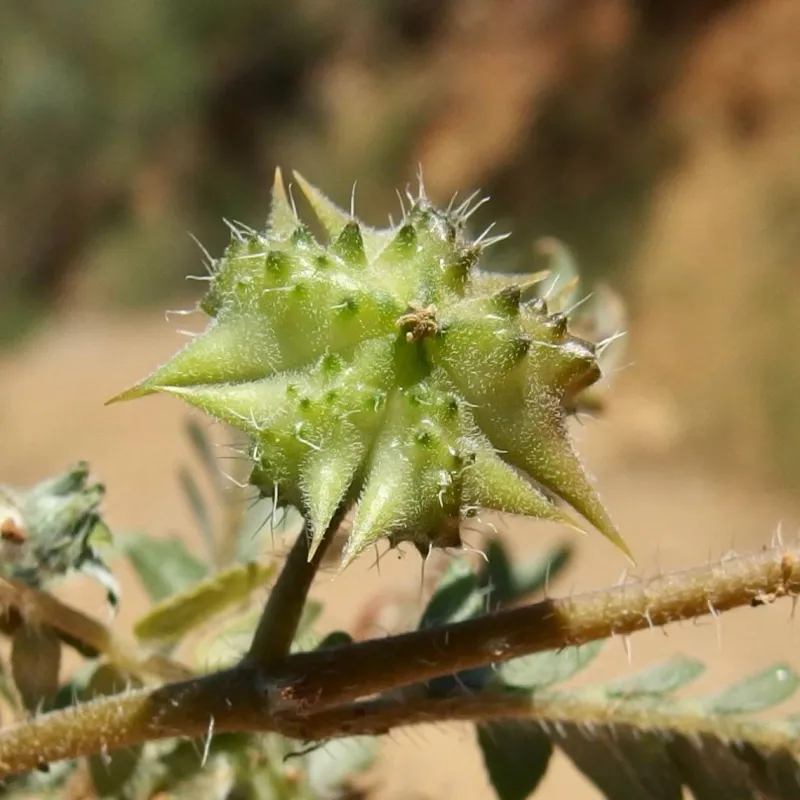
Sometimes spiky means exactly that. If what you found is a small, hard burr no bigger than a fingertip, goathead is a better fit than any tree fruit.
Goathead grows as a low, mat-forming plant that hugs the ground, often along driveways, gravel, and bare soil. Its fruit breaks apart into flat, sharp burrs, as the Arizona invasive plant profile explains, and bike tires and bare feet know them well.
Notice what is missing: red-coated seeds. Goathead burrs do not open to show red anything, and the plant is not a tree or shrub.
So use plant shape as your tiebreaker. A large, lumpy fruit beneath a leafy tree points toward magnolia.
Hard red seeds in a brown pod on a shrub point toward Texas mountain laurel. A tiny sharp burr from a sprawling ground plant points to goathead.
Wear thick gloves when you pick burrs up.
Keep unknown seeds away from children and pets
Until you know what you have, treat the seeds as off limits. Do not taste them, and keep unknown plant parts away from children and pets.
Gloves and a quick scoop into a bag or bin make cleanup easy.
If someone may have eaten part of an unknown plant, call Poison Control at 1-800-222-1222 or use webPOISONCONTROL. The Poison Control plant guidance is a good place to start, and it helps to have a photo of the plant and any leftover pieces ready to describe.
Avoid guessing about toxicity from a description alone. Magnolia is not the same as Texas mountain laurel, but a lookalike can fool anyone, so let experts weigh in after any possible swallowing.
Before you toss or save anything, compare the fruit, leaves, flowers, and overall plant form. One fallen object rarely settles the question.
A mystery is only solved when the whole plant answers it.