This Common California Shrub Gets Less Attention Than A Rattlesnake, But Is Far More Toxic
Some of California’s most familiar shrubs blend into daily life almost unnoticed. They line busy roads, frame front walks, and bloom cheerfully through the hottest months.
One of them hides a secret far more serious than its pretty flowers suggest.
Snakes rattle before they strike. This plant offers no such warning, which makes it easy to overlook.
Panic isn’t the answer, and neither is tearing out every bush overnight. Respect, awareness, and a few simple habits go a long way.
Families, pets, and livestock benefit from knowing what to watch for and how to stay safe. A few safer alternatives exist for anyone ready for a change.
Sometimes the quietest thing in the yard deserves the closest look.
Oleander Is The Common Shrub To Respect
A rattle on a dusty trail makes any hiker freeze. Everyone knows that sound calls for caution, yet few people feel the same jolt walking past a flowering hedge, even though they should.
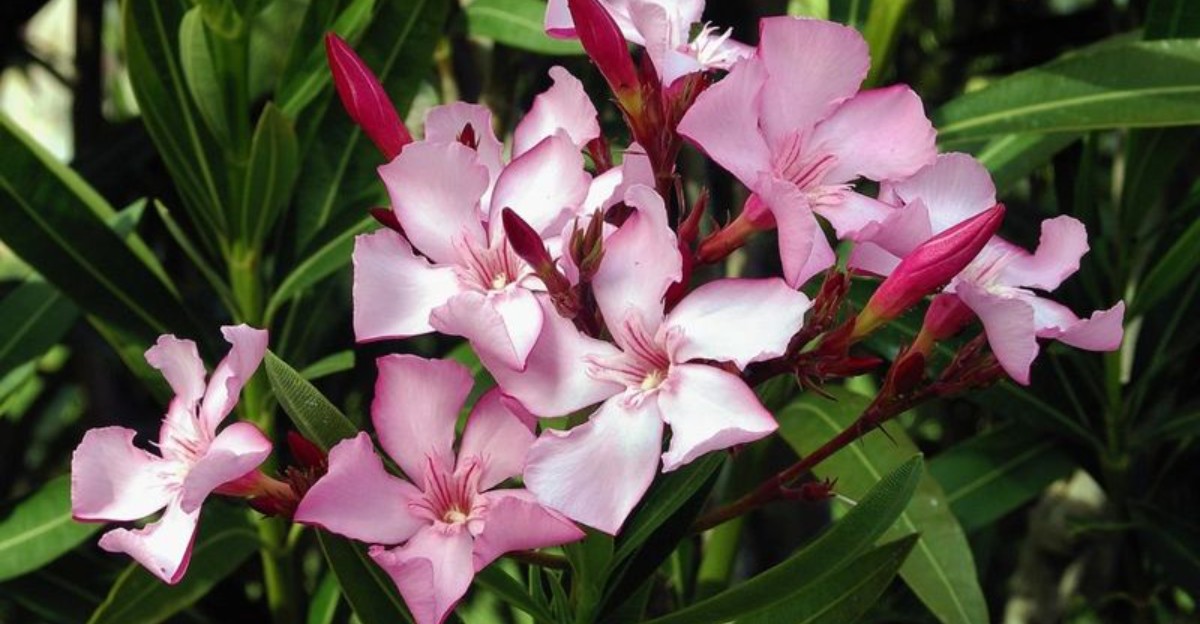
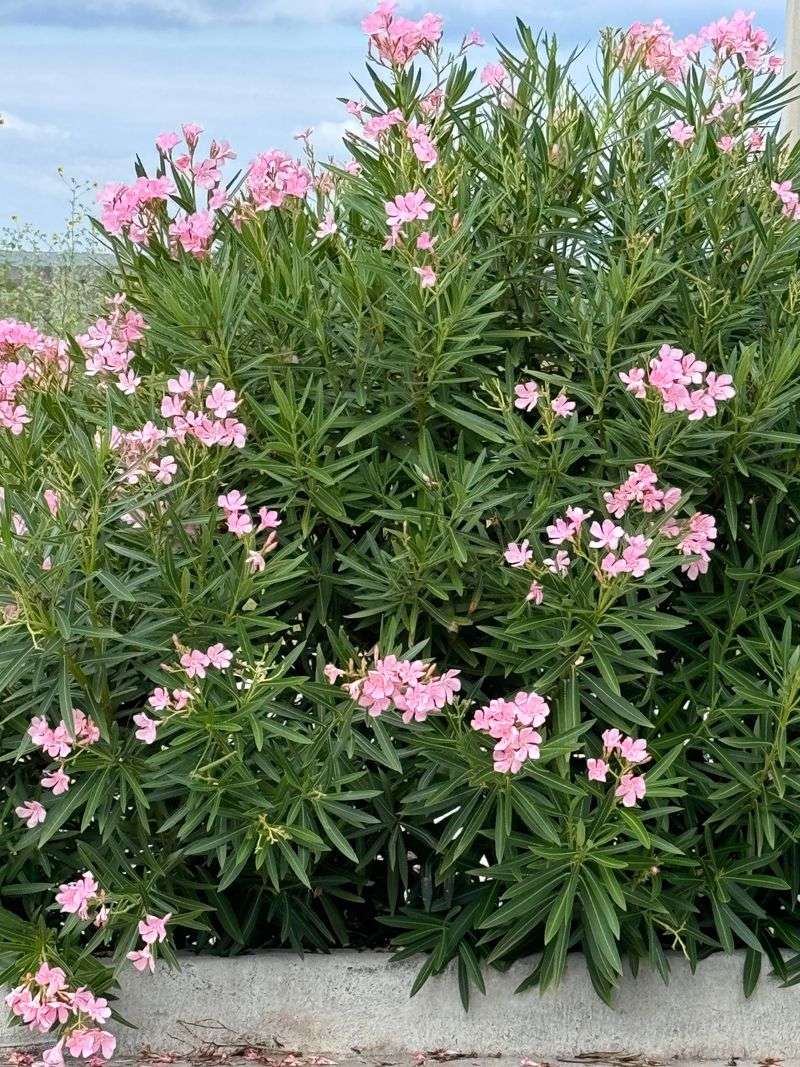
Oleander, known botanically as Nerium oleander, is an evergreen shrub with long, leathery leaves. Clusters of pink, red, white, or salmon flowers cover it through much of the warm season.
It handles heat, drought, and poor soil with ease. That toughness made it a landscaping favorite for generations.
Behind those pretty petals, though, sits a serious poison. The whole plant contains natural compounds that can harm the heart in people and animals.
Unlike a snake, it doesn’t move, hiss, or warn anyone away. Its danger stays quiet, which makes it easy to forget.
Respect differs from fear. Plenty of families live alongside oleander for decades without a problem, simply because they know the rules.
Young children stay away from the leaves, pets stay away from clippings, and the plant gets handled with care. Those habits make all the difference.
Admiring the blooms from the sidewalk all summer long poses no trouble. Touching it carelessly, eating any part, or burning it is where problems start.
A little knowledge goes a long way. Once the plant becomes recognizable, it starts showing up everywhere, along with a clear sense of how to stay safe around it.
It Lines Freeways And Front Yards
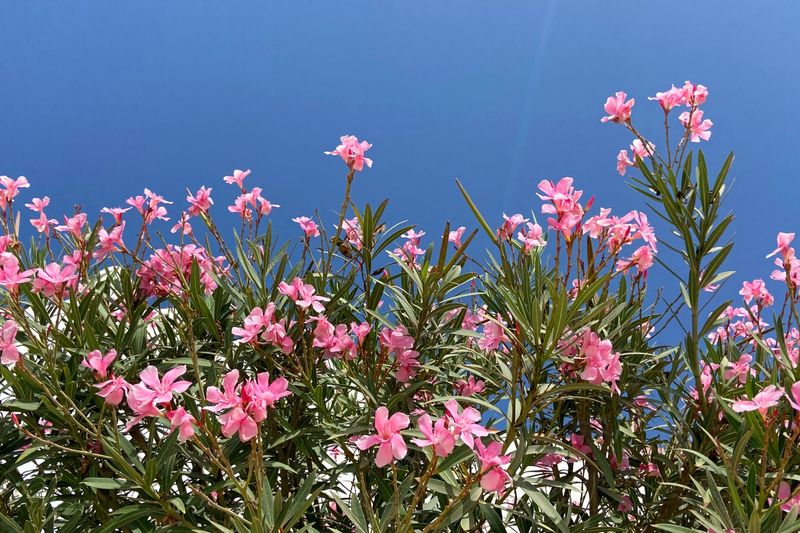
Almost any California highway in June offers miles of pink and white flowers rolling past the window. Many of those blooms belong to oleander, which Caltrans planted heavily along freeway medians for decades.
The reasons were practical. Oleander needs little water once settled, shrugs off car exhaust, and grows thick enough to block headlight glare from oncoming traffic.
Crews also found it hard to damage and slow to need replacing. Few plants fit highway conditions so well.
Homeowners took notice, too. The shrub shows up as hedges, privacy screens, and small trees in yards from San Diego to Sacramento.
It appears around schools, parks, apartment complexes, and shopping center parking lots. Many nurseries still sell it today.
All that familiarity breeds a kind of blindness. When something appears everywhere, people stop asking questions about it entirely.
Your California Garden Changes Every Week. Your Plan Should Too.
Gardening in California changes quickly throughout the season. Every Friday you’ll receive a simple weekly plan showing exactly what to plant, prune, fertilize, harvest, and protect so you never miss the right timing.
A parent might not think twice about a child picking a flower from a neighbor’s hedge. A dog walker might let a pup sniff and nibble along a row of bushes.
Recognizing the plant offers the first line of defense. Narrow leaves about four to ten inches long, usually growing in groups of three around the stem, make a reliable clue.
Flowers form clusters at the branch tips, often with a sweet scent. Long, thin seed pods may hang on the branches later in the season, adding another identifying feature.
Every Part Of The Plant Is Toxic
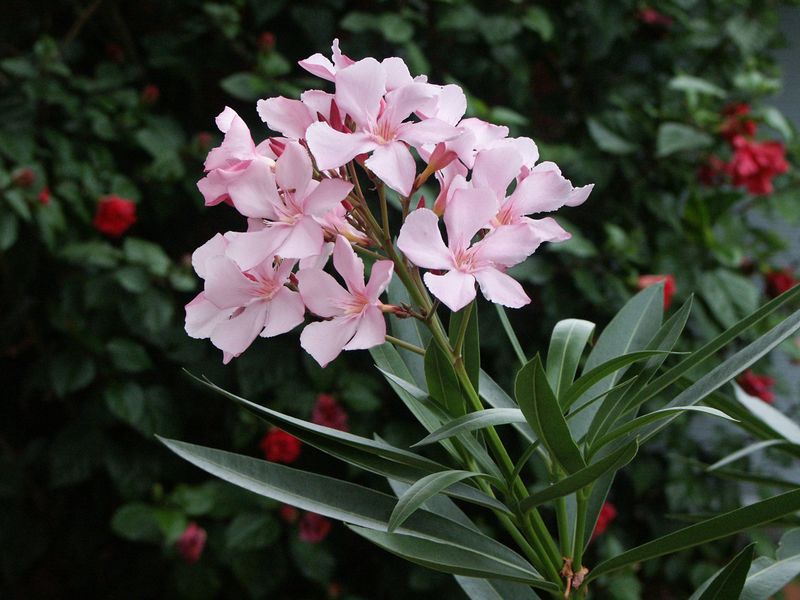
No safe piece exists on this plant. That short sentence sums up oleander better than any long explanation.
Leaves, flowers, stems, roots, seeds, and milky sap all contain toxins. Many people assume the delicate flowers might be harmless, while others figure a single leaf hardly matters.
Both assumptions miss the mark. UC Agriculture and Natural Resources lists oleander among the highly toxic plants found in California gardens, and a small amount can cause serious illness.
Drying the plant doesn’t help, either. Fallen leaves that crunch underfoot still hold their poison, sometimes for months.
Old clippings left in a pile for weeks remain just as risky as fresh ones. Even water from a vase that held cut oleander flowers deserves caution, best poured down a drain rather than onto soil.
Several habits keep households safe. Leaves and flowers are best kept out of food, tea, and children’s crafts entirely.
Branches make poor play swords or toy sticks for kids. Trimmings belong far from anywhere pets or livestock graze.
Kids also do best learning early that the plant stays look-only.
The plant’s reputation stretches back centuries. Oleander originally comes from the Mediterranean region and parts of Asia, where people recognized its poison long ago.
Ancient writers warned about it well before California freeways existed. The lesson remains simple: every part, fresh or dried, stays off-limits for eating and deserves careful handling.
Cardiac Glycosides Target The Heart
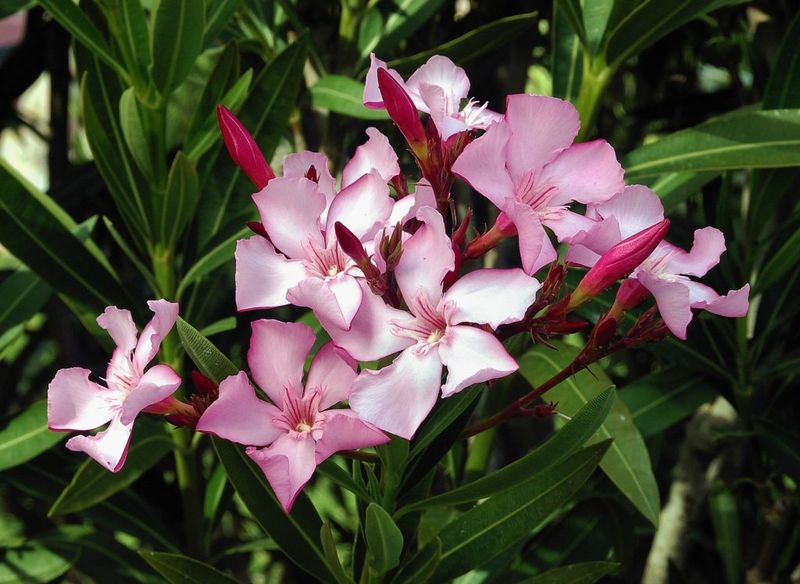
Every heartbeat depends on tiny electrical signals. Oleander’s toxins disrupt that rhythm, and scientists call them cardiac glycosides, with oleandrin and neriine among the best known compounds in the plant.
These compounds change how heart cells move minerals like sodium and potassium. Once that balance shifts, the heart can beat too slowly, too fast, or in an uneven pattern.
An irregular heartbeat counts as a serious medical problem requiring fast care. Few symptoms deserve more attention.
Signs often start in the stomach. Someone who swallows part of the plant may feel nauseated, vomit, have stomach pain, or develop diarrhea.
Dizziness, weakness, and confusion can follow. Changes in heart rate are the most worrying sign and can become life-threatening.
Timing matters. Signs may appear within a few hours, but waiting for symptoms before seeking help is a risky mistake, since early care makes a real difference.
Doctors can monitor the heart, check blood levels, and give treatment. Some hospitals even stock special medicines that bind to these heart toxins.
Certain heart medicines, such as digoxin, come from foxglove and work in a chemically similar way. In a hospital, doctors measure those doses with great precision.
A backyard shrub offers no such control, so the amount in a few leaves stays unpredictable.
Because the poison targets the body’s most important muscle, any swallowing deserves treatment as an emergency.
Pets And Livestock Face The Highest Risk
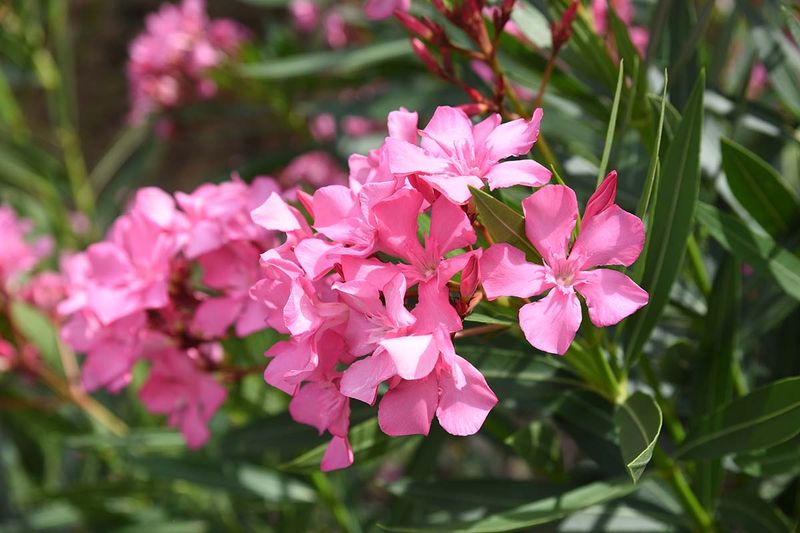
A bored puppy finds a fallen branch and starts chewing. A horse leans over a fence for a mouthful of green leaves, and scenes like these worry veterinarians more than any snake sighting.
The ASPCA lists oleander as toxic to dogs, cats, and horses. Animals have no way of knowing the plant is dangerous, and some munch on clippings out of boredom.
Dogs that love chewing sticks face particular risk. A single branch can cause serious trouble.
Horses, cattle, sheep, and goats face serious danger, too. Colorado State University’s guide to poisonous plants notes that a small amount of leaves can seriously sicken large animals.
Dried leaves mixed into hay or tossed over a fence create a common problem. Trimmings are best kept far from pastures and feed areas.
Warning signs in animals include drooling, vomiting, or diarrhea.
Weakness, shaking, stumbling, and a heartbeat that seems too slow, too fast, or irregular can follow, while large animals may show cold legs or sudden collapse.
Prevention works far better than treatment. Oleander kept out of dog runs and away from horse paddocks removes much of the risk.
Frequent raking of fallen leaves helps, and clippings stored in sealed bins until pickup day stay out of reach.
Suspected nibbling warrants an immediate call to a veterinarian or the ASPCA Animal Poison Control Center. Bringing a piece of the plant helps the vet know exactly what they’re dealing with.
Sap And Smoke Cause Trouble Too
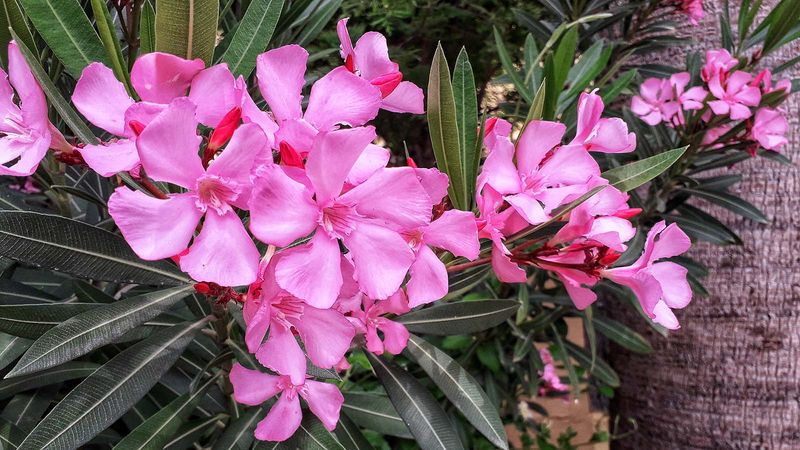
A snipped branch beads with sticky, milky sap along the cut. Most gardeners wipe it on their jeans without a thought, a habit that can backfire with this plant.
The sap can irritate skin, causing redness, itching, or a rash in some people. Folks with sensitive skin tend to react more strongly.
Rubbing the eyes after touching sap makes things worse, since it can sting and inflame them. Washing exposed skin with soap and water as soon as possible helps.
Smoke poses a hidden hazard many people overlook. Burning oleander releases toxic compounds into the air.
Breathing that smoke can irritate the lungs and eyes and may cause illness. UC ANR resources warn that leaves and branches remain dangerous when burned.
Campers sometimes make another mistake. A long, straight oleander branch looks like the perfect roasting stick for marshmallows or hot dogs.
Using it that way can transfer toxins straight into food. Experts specifically warn against cooking with oleander wood in any form.
Fireplaces, fire pits, and backyard burn piles are all best kept free of this plant. Even a small handful of dried leaves tossed into a campfire makes a poor bet.
Keeping its wood and leaves far from the grill keeps summer cookouts safe and smoke-free. Fall cleanup season makes this reminder especially timely, since dry clippings tend to pile up after autumn pruning.
Wear Gloves And Never Burn Clippings
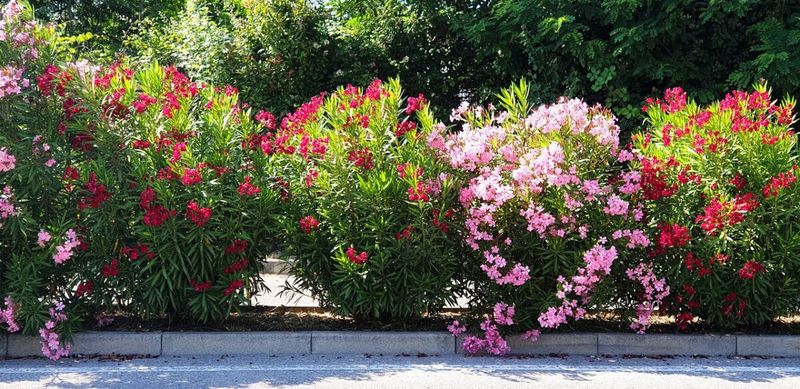
Pruning day starts at the closet rather than the shrub. A long-sleeved shirt, long pants, and sturdy gardening gloves come first, with safety glasses as a smart extra to keep sap away from the eyes.
Slow, steady work with hands kept away from the face makes sense. Breaks to wash up before eating, drinking, or touching a phone help, too.
After the job, gloves and tools deserve a good wash. Clothes belong straight in the laundry.
Disposal matters just as much as cutting. Trimmings go into bags or a city green waste bin, following local rules.
Burning them is best avoided, and so is adding them to a home compost pile that feeds a vegetable garden. Large composting facilities handle green waste differently than a backyard bin.
Children and pets do best indoors during pruning. Every fallen leaf and stray twig is best raked up before anyone heads back outside.
Branches make poor garden stakes, skewers, or play sticks. Clearing them away entirely removes temptation.
Timing helps, too. Many gardeners prune in late winter or after the main bloom, and smaller, more frequent trims mean fewer clippings to manage at once.
Landscapers deserve a heads-up that the shrub is oleander. Asking the crew to haul clippings away, rather than chipping them into mulch near play areas, saves worry later and keeps everyone on the same page.