When to Overseed Your Arizona Lawn With Winter Ryegrass
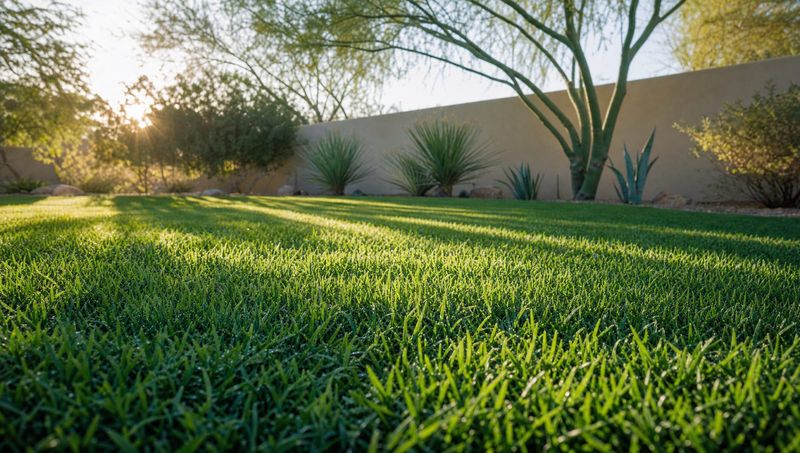
Come late fall, many Arizona bermudagrass lawns fade to a straw-colored brown. Some homeowners are fine with that, and others want a green yard all winter.
Winter ryegrass can do the job, but timing matters and the choice comes with tradeoffs. Here is how to decide if it fits your yard and when to act.
Ryegrass gives dormant bermudagrass winter color
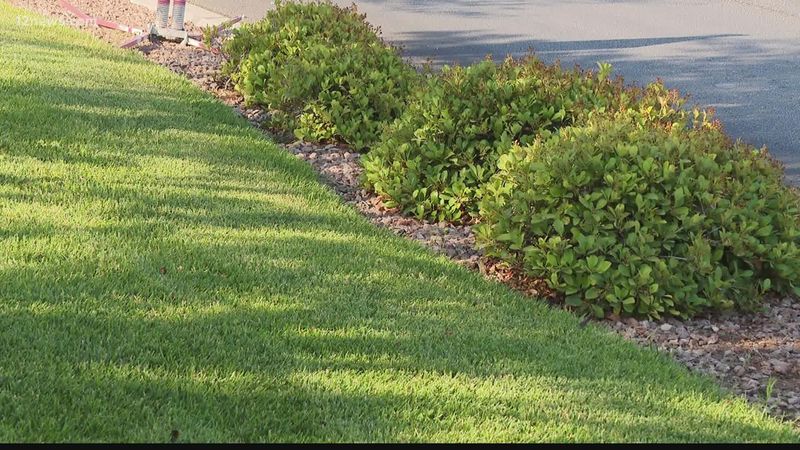
Bermudagrass is the standard lawn grass in low-desert Arizona, and it turns tan when cool weather arrives. Planting ryegrass over it, called overseeding, covers that dormant turf with a temporary green layer.
University of Arizona guidance describes it mainly as a way to keep a lawn green and usable through winter.
It is a choice, not a requirement. Bermudagrass does not need ryegrass to wake up and grow again in spring.
A dormant lawn is still a healthy lawn that is simply resting.
One more limit to keep in mind: this advice is for bermudagrass. St. Augustinegrass and zoysiagrass generally are not suited to this practice, so owners of those lawns should skip it.
The rest of this article walks through timing, watering, seed types, and spring concerns so you can decide whether winter green is worth the effort at your house.
Tucson and Phoenix have different overseeding windows
Arizona does not share one overseeding date. The University of Arizona turfgrass maintenance guide lists September 25 to October 5 for higher-elevation Tucson.
For Phoenix, Casa Grande, and Yuma, it lists October 10 to November 10.
The gap exists because elevation and local climate change how fast fall cools off. Tucson sits higher, so its soil and air cool earlier than the hotter valley floors to the west.
Treat these dates as general guidance. They are not a forecast, and they are not a hard cutoff that makes a day later a failure.
A hot October or an early cold snap can shift the best week for your own yard.
If a neighbor in another city tells you to seed on a certain day, check that it matches your area. Applying one statewide October date to every lawn is how seed ends up going down too early or too late.
Use cooling temperatures to refine the calendar
Dates get you close, and the weather helps you finish the job. The general cue is daytime highs around 80 to 85°F with nighttime lows near 55°F, according to University of Arizona overseeding guidance.
Seed too early, while it is still warm, and bermudagrass may outcompete the young ryegrass seedlings. Seed too late and the tender new grass is more exposed to frost.
These numbers are rules of thumb, not universal thresholds. Every year runs a little different, and a lawn in a warm, sheltered spot may behave differently than one in an open, cold-prone yard.
A simple habit is to watch the forecast in the weeks around your regional window. If highs are still stuck in the 90s, waiting a few days is reasonable.
When the afternoons ease and nights feel crisp, you are in the zone.
Your Arizona Garden Changes Every Week. Your Plan Should Too.
Gardening in Arizona changes quickly throughout the season. Every Friday you’ll receive a simple weekly plan showing exactly what to plant, prune, fertilize, harvest, and protect so you never miss the right timing.
Keep seed moist through germination, then taper
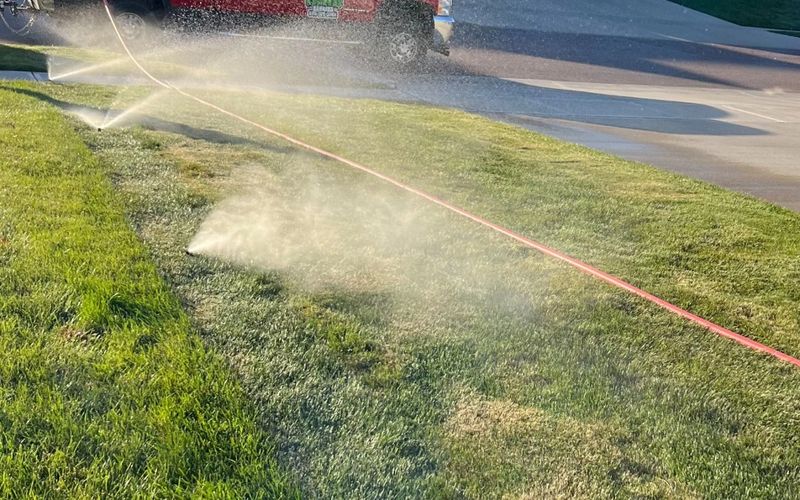
Ryegrass seed sprouts only if it never dries out. University of Arizona guidance calls for irrigating 3 to 4 times daily for the first 7 to 10 days.
Short, light cycles keep the surface damp without flooding it.
That schedule belongs to germination only. Once the seedlings are up and rooted, you gradually cut back the frequency and water more deeply and less often.
Do not carry the establishment routine into the rest of winter. After that first stretch, how much water the lawn needs depends on weather, soil, rainfall, and how the turf looks.
The low-elevation turfgrass maintenance guide points readers to AZMET weather-based watering information for that ongoing care.
A practical tip: check your sprinkler timer before seeding day so you can program the short cycles, then set a reminder to start tapering on day ten.
Annual and perennial ryegrass serve different priorities
Picking a seed comes down to budget, looks, and how much mowing you want. Annual ryegrass costs less and grows fast, but the blades are coarser and the lawn needs frequent mowing.
Perennial ryegrass has a finer texture and is generally higher quality. It also costs more, according to University of Arizona overseeding guidance.
There is a catch for the perennial type. It can hang on longer into spring and compete with bermudagrass as it starts to green up.
That makes the seed choice part of your spring plan, not just your winter look.
If you want a quick, budget-friendly green and do not mind extra mowing, annual rye may suit you. If a polished, softer lawn matters more and you can handle a slower spring handoff, perennial rye is worth a look.
Protect bermudagrass during spring transition
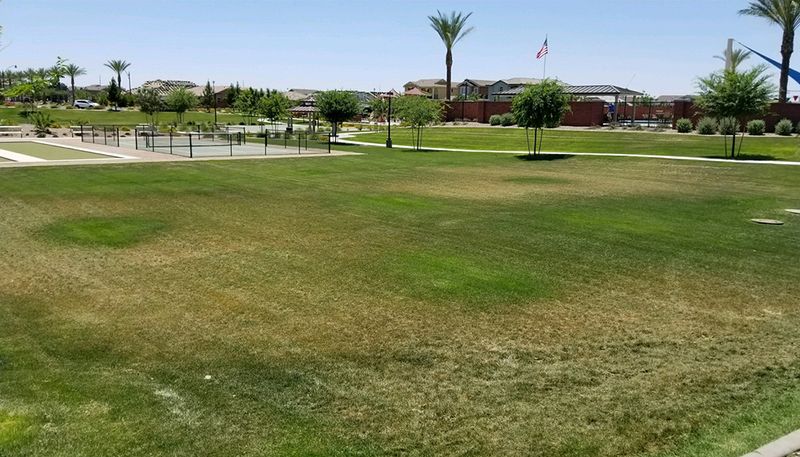
Spring is when overseeding shows its extra work. As warm weather returns, ryegrass is supposed to fade while bermudagrass takes over, but it does not follow a calendar.
Perennial ryegrass in particular may persist and compete with greening bermudagrass.
So avoid counting on a set date when the ryegrass vanishes. Watch your own lawn, and note how quickly the bermudagrass fills in where the ryegrass thins.
Preparation matters too. The University of Arizona maintenance guide warns that excessive dethatching or aerifying can damage the bermudagrass crowns and rhizomes your lawn relies on to recover in spring.
That does not make every lawn a candidate for a heavy prep routine. Gentle handling is the safer mindset, because the healthy bermudagrass underneath is what you are protecting.
Weigh winter color against added water and work
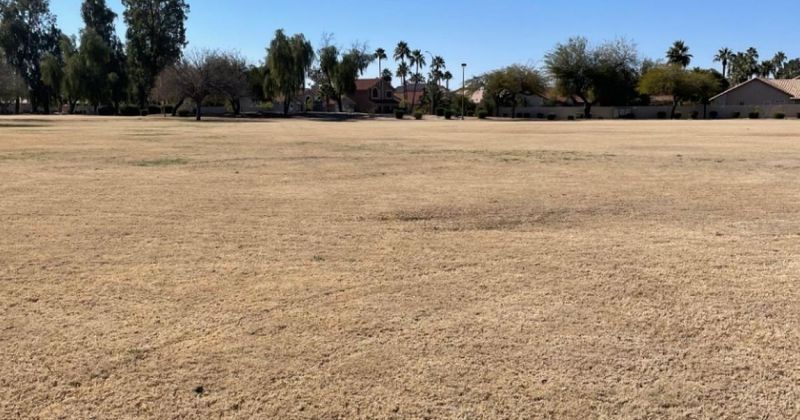
Overseeding buys you winter color and a lawn that feels good underfoot for parties, pets, and kids. The costs are seed, extra establishment watering, and some spring transition work.
Water is the easiest cost to measure. The Phoenix lawn watering FAQ estimates that a 15-by-15-foot overseeded lawn uses about 1,238 more gallons per season than dormant bermudagrass.
That figure applies to that lawn size and location only, so do not scale it to your yard.
Leaving bermudagrass dormant is a valid choice, not a failed lawn. As a University of Arizona newsletter on overseeding frames it, overseeding is optional, and skipping it avoids the seed cost and establishment watering.
Ask how much you will actually use the lawn between December and March. A tan winter yard can be perfectly fine when the green is only for looks.