Why Your Low-Desert Arizona Bermudagrass Lawn Stays Patchy Even After Overseeding
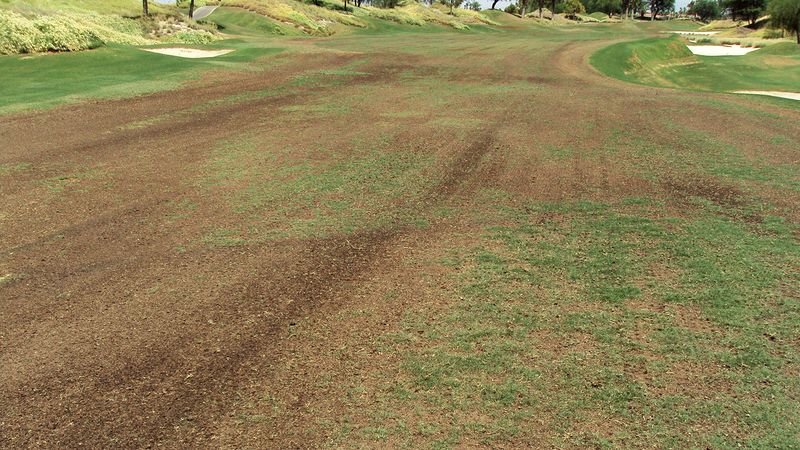
You spread the ryegrass seed, watered it, and waited, yet the lawn still looks thin in places. Overseeding can make a Bermuda lawn green in winter, but it does not always fix why the grass was weak to begin with.
This guide is for lawns in the low desert, like the Phoenix and Tucson areas. A few simple checks can show you what is really going on before you spend more on seed and water.
Winter color and lawn repair are different jobs
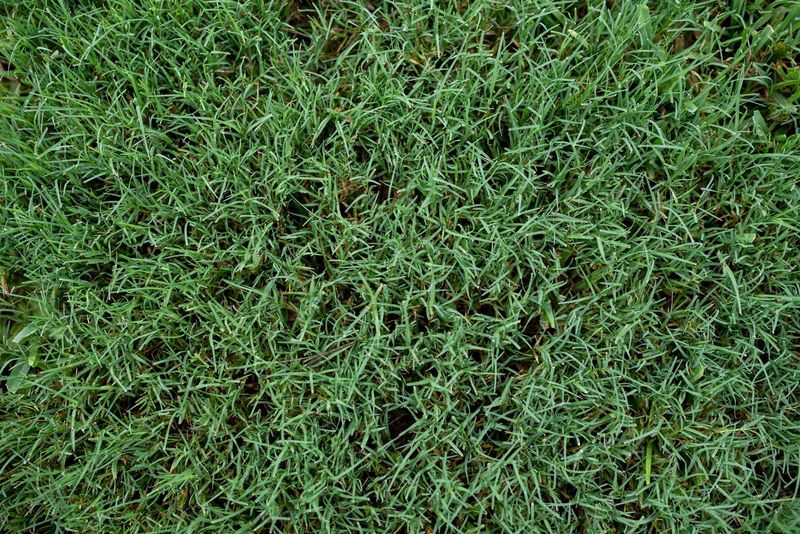
Ryegrass is a cool-season grass, and its main job is to give you winter turf over bermudagrass. It adds color while the Bermuda underneath rests.
It was never meant to rebuild a lawn that was thin to begin with.
Bermuda is a warm-season grass. It grows hard in summer and, as low-desert lawn guidance explains, it typically turns dormant or off-color in winter.
A tan, uneven lawn in January might be normal rest, not a failure.
That makes winter appearance a poor judge by itself. Three situations can look alike: sleeping Bermuda, ryegrass that never took hold, and bare spots that return every growing season.
The steps below help you tell them apart before you add anything to the lawn.
First, identify the grass and your elevation
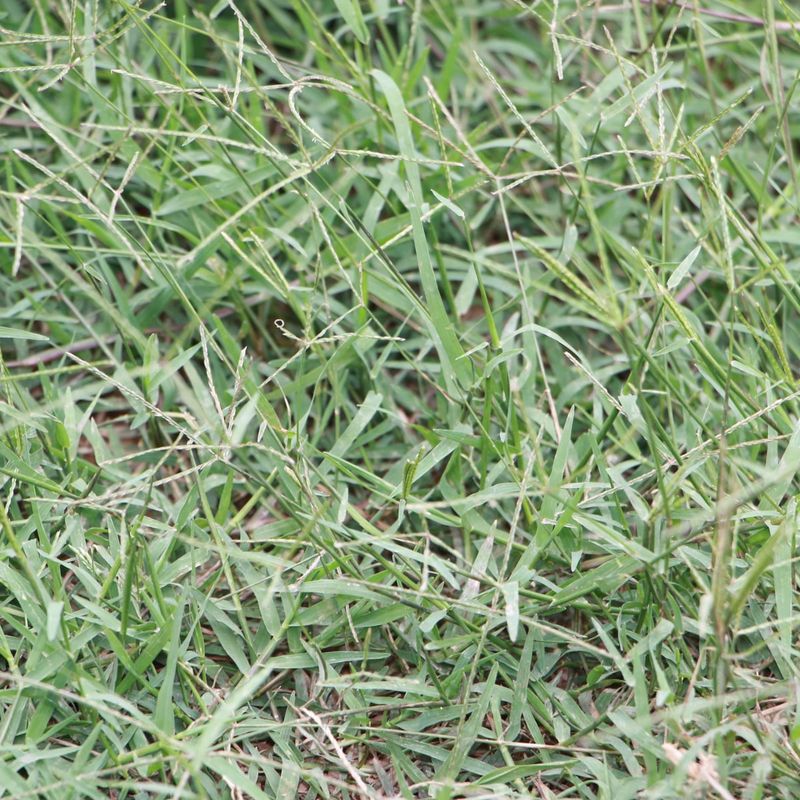
Before changing anything, confirm what is actually growing. Bermudagrass is the best-adapted common lawn grass for the low desert, which covers areas such as Phoenix, Tucson, Casa Grande, and Yuma.
If your lawn is something else, the advice here may not fit.
Many lawns are hybrid Bermuda, and that matters. According to University of Arizona turf guidance, hybrid bermudagrass cannot be established from seed.
So scattering Bermuda seed on a hybrid lawn is not a repair. A vegetative method, such as sprigs or sod, is the appropriate route, and a local nursery or extension office can help you choose.
Elevation matters too. Higher-elevation lawns, like those covered in Yavapai County grass recommendations, may need different grasses and timing.
Arizona is not one growing zone.
Did the seed get the right start?
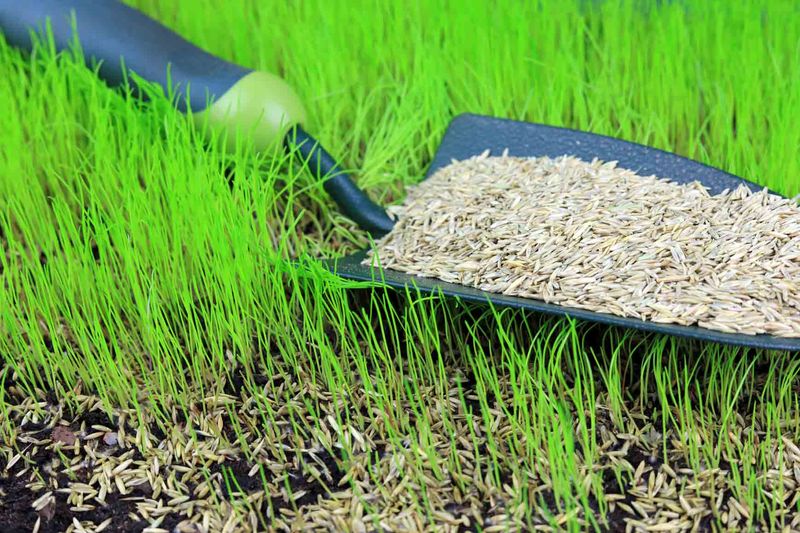
Think back to when and how you overseeded. October is the usual low-desert window, though University of Arizona overseeding guidance notes that temperatures influence the best timing.
One calendar date does not suit every yard or every year.
Seeding too early can backfire. Warm conditions favor the Bermuda over the winter grass, and that can make it harder for ryegrass to establish.
A lawn that looked bare in November might have started under the wrong conditions.
Seed also needs contact with soil. The guidance calls for lightly raking or dragging seed into the turf so it does not sit on top of thatch or leaves.
If seed was only tossed across the surface, weak germination in spots makes sense.
Treat these as establishment questions, not a reason to automatically seed again.
Water germinating seed carefully
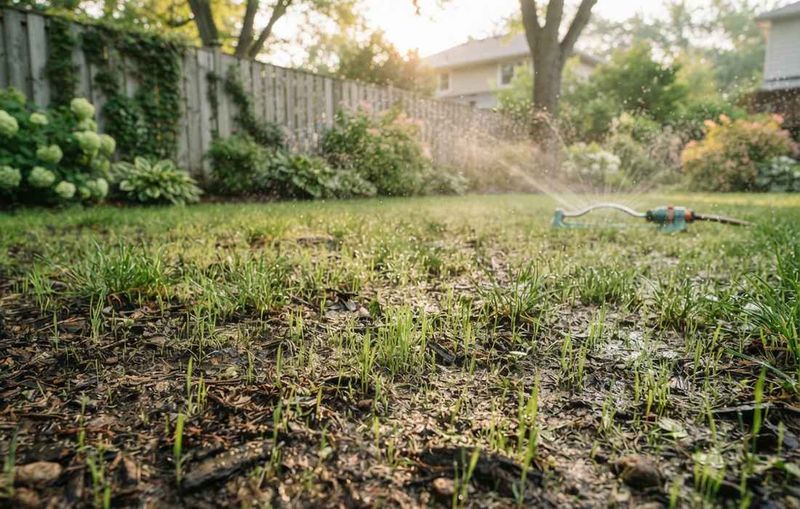
Seed that is trying to sprout dries out fast in the desert. Overseeding guidance calls for frequent, light irrigation during germination, then less frequent watering as seedlings establish.
Your Arizona Garden Changes Every Week. Your Plan Should Too.
Gardening in Arizona changes quickly throughout the season. Every Friday you’ll receive a simple weekly plan showing exactly what to plant, prune, fertilize, harvest, and protect so you never miss the right timing.
One University of Arizona handout gives an example of three to four short waterings a day for the first seven to ten days.
That example is for overseeding only. It is not a year-round schedule, and it is not right for every yard.
Soil, temperature, rain, and sprinkler performance all change what your lawn needs.
Too much at once causes trouble as well. Overseeding instructions point toward light applications because pooling water can carry seed into low spots and leave an uneven stand.
Look back at your patches. Were low areas thick while higher areas stayed thin?
That clue points to water movement, not a lack of seed.
Uneven sprinklers can mimic a seed problem
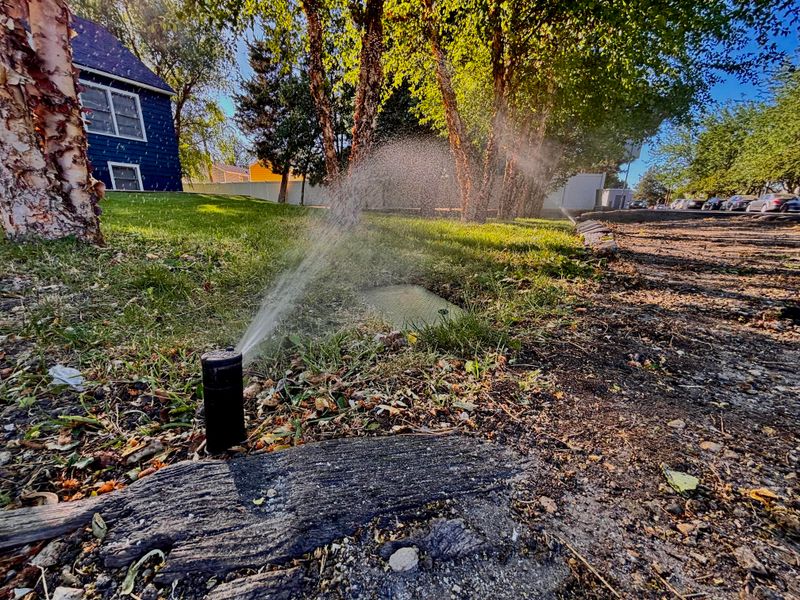
A sprinkler system can look fine and still water unevenly. Clogged nozzles, tilted heads, and mismatched spray patterns leave some areas dry and others soggy.
Seed in either spot struggles, and the result looks like a bad seeding job.
Walk the zones while they run and check each head. Look for blocked spray, heads sunk below the grass, or output that differs from its neighbors.
Irrigation maintenance guidance covers these checks.
A catch-can test shows distribution differences. Set out matching cans across the lawn, run the zone, and compare the water in each one.
Big gaps mean the system needs adjusting.
Fixing distribution is not the same as adding water. If coverage is uneven, running longer may just drown the wet areas while the dry ones still lag.
Adjust the system first, then base watering on what the lawn needs.
What do the bare spots line up with?
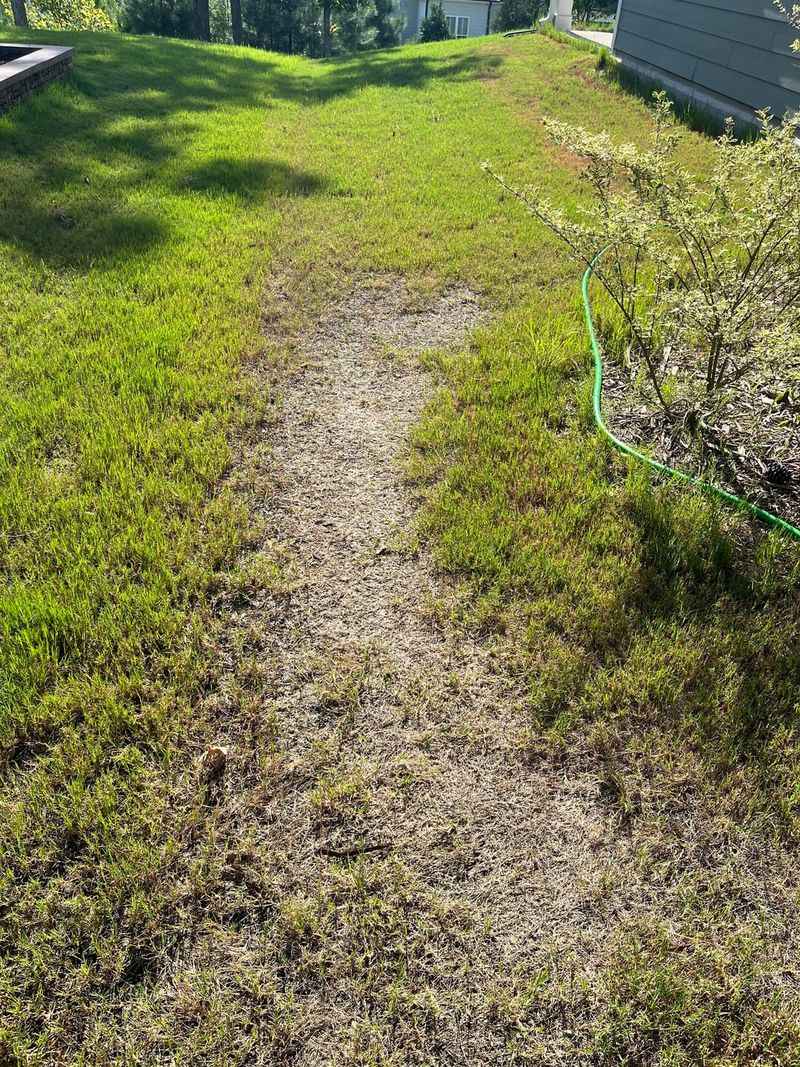
Patterns can offer clues. Compare where the bare spots are with shade, foot traffic, and the ground itself.
A thin strip along a walking path tells a different story than a bare circle under a tree.
Bermudagrass does not tolerate shade well, a point covered in landscape guidance from Arizona Extension. Compaction can restrict water penetration and root growth, according to plant selection advice.
A hard layer of caliche can restrict water and roots too.
Treat these as leads, not proof. A shaded patch may have other issues, and a worn path may not be compacted.
Probing the soil and watching the area through a season gives better answers than appearance alone.
One caution: avoid aggressive dethatching or aerifying right before overseeding. Low-desert turf guidance warns it can harm Bermuda crowns and rhizomes.
Heavier work belongs in active summer growth.
When should you test the soil?
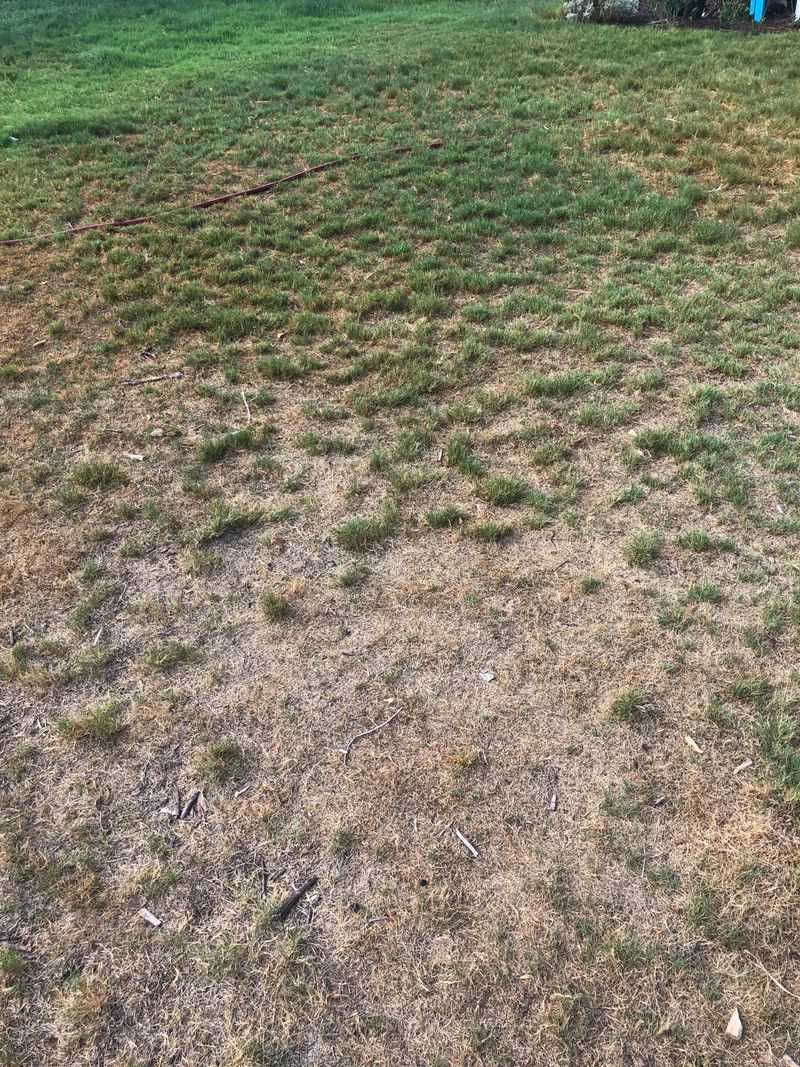
If the clues point toward the ground, a soil test replaces guessing. A lab can assess pH, nutrients, electrical conductivity, which relates to salinity, and sodium-related measures.
The Soil Quick Guide explains how these differ.
Salt injury can look a lot like drought stress, so a lawn that seems thirsty may not need more water at all. Testing helps you avoid a fix that misses the real issue.
It is tempting to blame Arizona’s commonly alkaline soil. That is too broad, since pH, salinity, sodium, and texture are separate conditions.
As Arizona plant guidance reminds us, site conditions vary from yard to yard.
Skip amendments and fertilizer until results justify them. Test when patches persist in the same places despite good seeding and even irrigation.
Repair the cause, not just the color
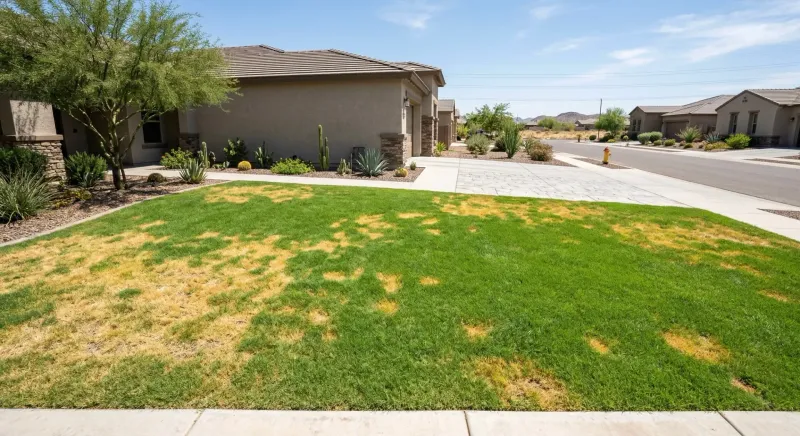
Work through the checks in order. Decide whether you are seeing normal winter dormancy or truly thin turf, confirm your grass type and low-desert location, then review how the seed was sown and watered.
Inspect sprinkler coverage next, and test soil only if the evidence calls for it.
Let what you find guide the repair. Low-desert turf care and overseeding guidance both point toward matching the fix to the problem.
Seed, water, fertilizer, and amendments are not automatic answers. Winter green is easy to buy, but a lawn that holds up all year starts with the cause.