The Old Irrigation Line Buried In Your Arizona Yard Keeps Wasting Water Long After Everyone Forgot It
Somewhere under your Arizona yard, an old piece of irrigation tubing may be sitting quietly. Whether it costs you water depends on one thing: can water still reach it, and is it leaking?
A dry, disconnected tube does nothing, but a connected one with a crack can quietly add to your water bill. Here is how to tell the difference without tearing up the yard.
Can an old line still waste water?
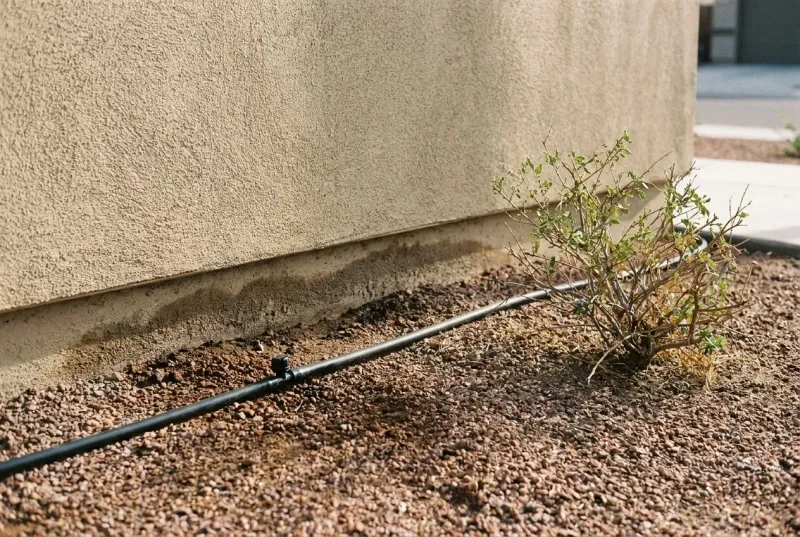
A forgotten line only loses supplied water if water can still get to it and it has a leak. A dry tube that was cut off from the system long ago is just plastic in the ground.
It is not drinking anything.
The tricky part is that old lines come in several forms. One may be a dry, disconnected tube.
Another may still be connected but shut off. A third may be a pressurized supply line.
A fourth may be a zone line downstream of a valve that does not close all the way, so a little water seeps through even when the zone is not scheduled to run.
Do not assume the controller tells the whole story. A timer only opens and closes zone valves, and the physical supply can stay connected even when the controller is set to off, as the Smart Home Water Guide explains.
Phoenix also advises capping, plugging, or disconnecting abandoned parts that are still hooked up, since unused connected outlets can puddle when water has nowhere to go.
Plenty of forgotten tubing never leaks at all, so the goal is to find out, not to panic.
A leak may wet soil, but weeds and roots are not inevitable
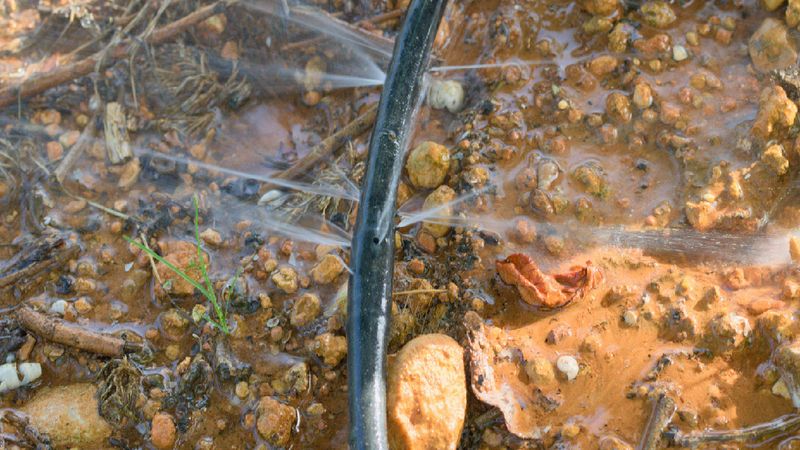
A leaking line can soak ground where nothing is supposed to be watered. Extra moisture in the wrong spot may give weeds a start, but it depends on seeds, season, and soil.
It is a possibility, not a promise.
The reverse is also true. Drip irrigation that is designed well puts water near the plants you want, which can reduce weed growth, according to University of Arizona drip guidance.
A damaged line that wets a wider patch can undo some of that benefit.
Roots are a narrower issue than the title of this article suggests. Roots entering emitters is a known maintenance problem in some subsurface drip systems.
It is not a routine, years-long result of every abandoned yard tube. Roots grow where soil stays moist and gets water now and then, not just because a pipe is buried there.
So if you spot weeds or roots near old tubing, treat them as a clue to check for water, not as proof of anything.
Inspect the system while it runs
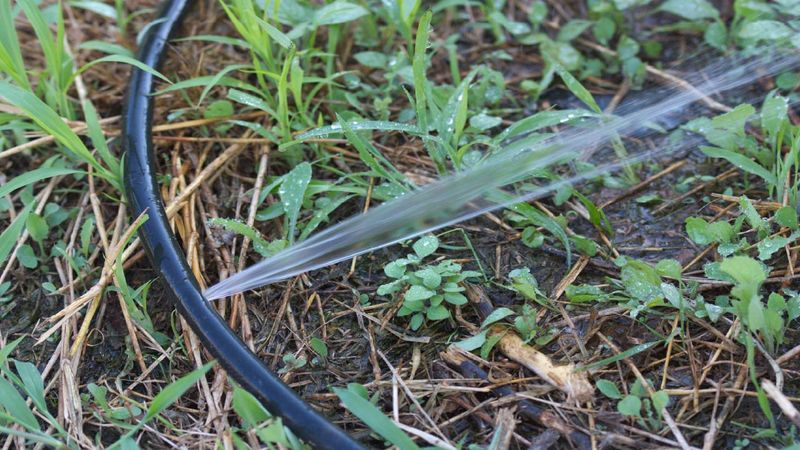
Start with the easiest check. Turn on each zone and walk the yard while the water flows.
Look along the drip lines for cracks, missing emitters, and broken pieces, and watch for wet spots where the ground should be dry.
Soggy soil, puddles, or sinkholes can point to an underground leak, but they do not prove irrigation caused it. Phoenix lists other possible sources too, such as pool equipment and water mains.
Your Arizona Garden Changes Every Week. Your Plan Should Too.
Gardening in Arizona changes quickly throughout the season. Every Friday you’ll receive a simple weekly plan showing exactly what to plant, prune, fertilize, harvest, and protect so you never miss the right timing.
If you have an old plan of the yard, bring it along. Even a rough sketch of lines, valves, and zones helps.
If you do not, make a simple map as you go, marking each valve and which area it waters. That map will save you time on every later check.
Use the meter to narrow down the source
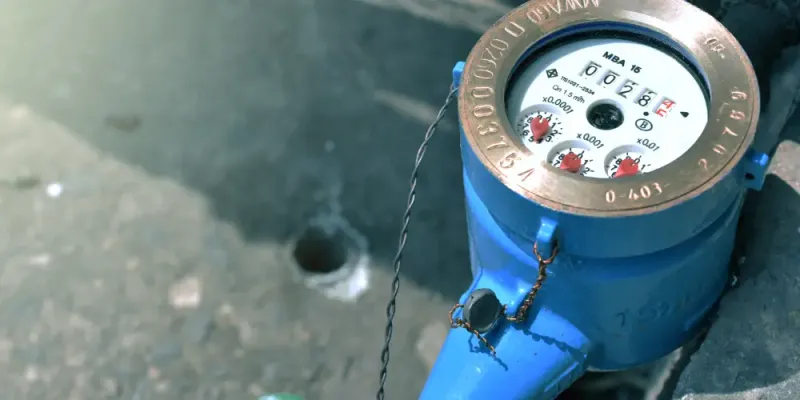
Your water meter can do detective work for you. Turn off everything that uses water inside and out, then look at the low-flow indicator.
If it keeps moving, water is going somewhere. The City of Tempe leak check then has you isolate the irrigation supply.
If the movement stops, the leak is likely in the irrigation system.
Timing gives hints. A leak in the supply line may run all day and night.
A leak in a zone line may show up only when that zone runs, or when its valve does not close fully and lets water creep through.
Treat those patterns as clues, not a final answer.
Before you turn any valve, be sure you know what it controls. Tempe warns that an unfamiliar valve may shut off the water to your whole house rather than just irrigation.
Check your layout against the Smart Home Water Guide if you are unsure how your setup is arranged.
Physically close an unused connection
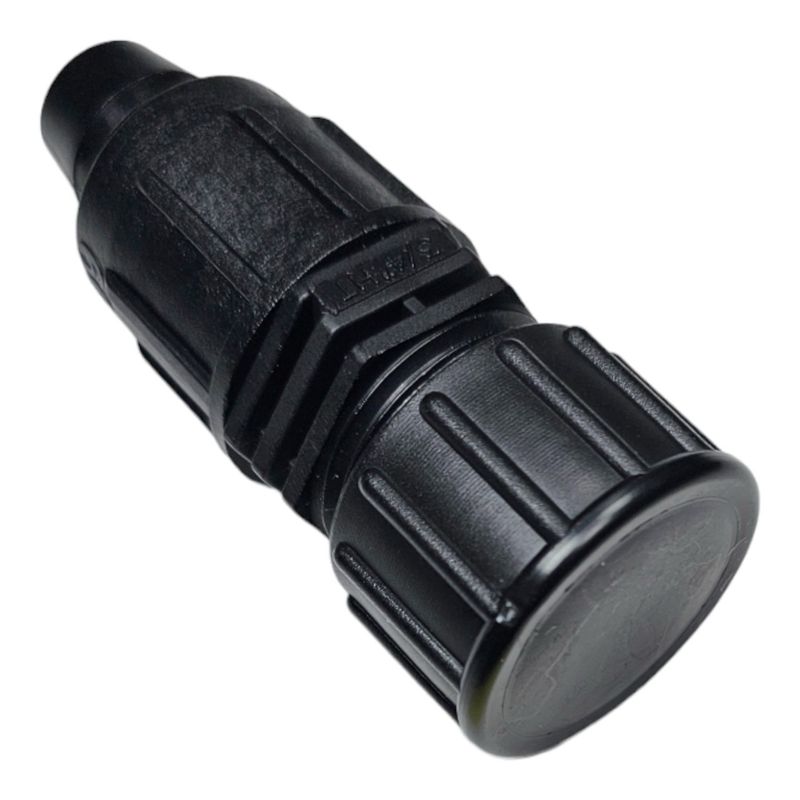
Once you know a line is no longer needed, shut it off at the source of its water. Cap, plug, or disconnect it at a connection you can clearly identify.
A controller set to off is not the same as a closed pipe.
This step stops water from reaching an unused outlet that is still connected. That is the point of it.
It does not mean every buried tube is leaking, and it is not a reason to rip up the yard.
If you cannot tell what a piece of pipe is, leave it alone. Do not cut into unidentified pipe, because it could be a live supply line for something you still use.
Trace it from a valve or fitting you recognize first.
Phoenix recommends capping or plugging abandoned irrigation parts that remain connected. The zone valve and timer basics in the Smart Home Water Guide can help you match each valve to its area.
Contact Arizona 811 before excavation
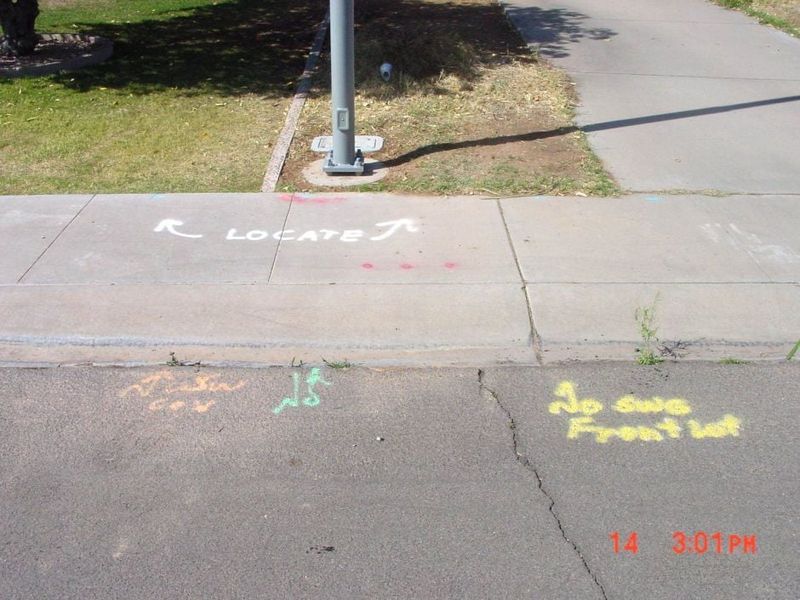
Digging comes last, not first. Before any excavation, contact Arizona 811 and wait for the required utility responses.
It is free to make the request, and it helps you avoid hitting buried gas, electric, or communication lines.
Here is the catch. Per the Arizona 811 excavation guide, homeowner-owned irrigation systems are private facilities, and locators may not mark them.
An all-clear does not map your drip tubing.
To trace private lines, look for original landscape plans, your own sketch of valves and zones, or hire a private locating service if the route is still unclear.
Also keep in mind that irrigation equipment can hold water under pressure. Backflow preventers in particular should be repaired by a qualified professional, not by a homeowner.
Phoenix cautions that water can be under extreme pressure around that equipment.
Confirm the water path is closed
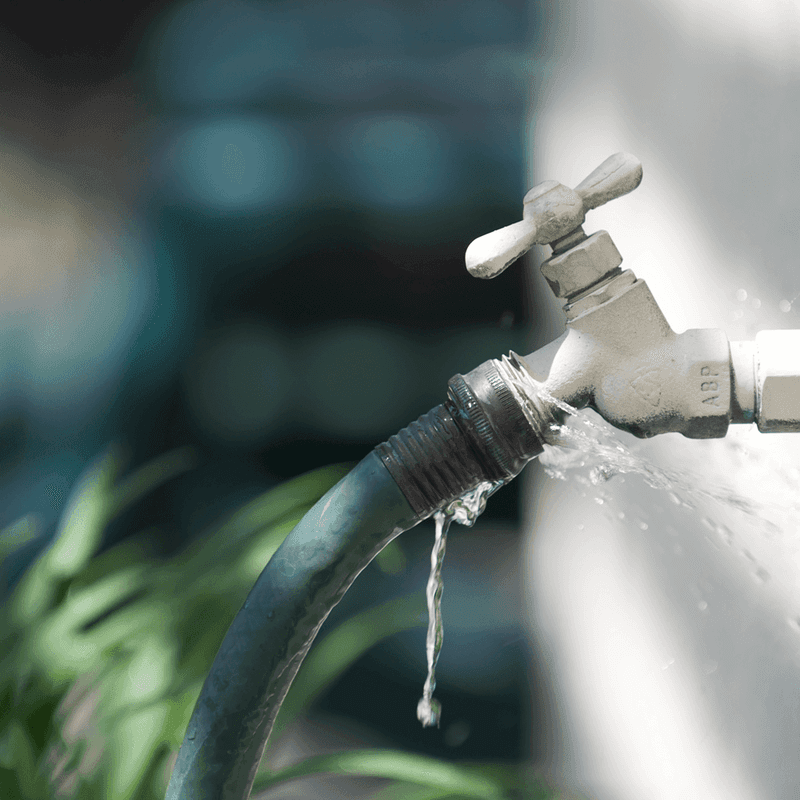
Keep it simple. First, work out whether water can reach the old line at all.
Next, use a running-system walk and a meter check to find out if a leak is active. Then close any unused connection once you know where it is.
The goal is to stop a live water path, not to dig up every old tube or blame it for weeds and roots. Recheck the meter after you cap something, as the Tempe leak check describes, and Phoenix has more on fixing outdoor leaks.
A dry tube is just a tube. Shut the water off at its source and it stays that way.