The Smallest Owl In New Jersey Often Weighs Less Than A Stick Of Butter And Is Slipping Into Evergreens Now
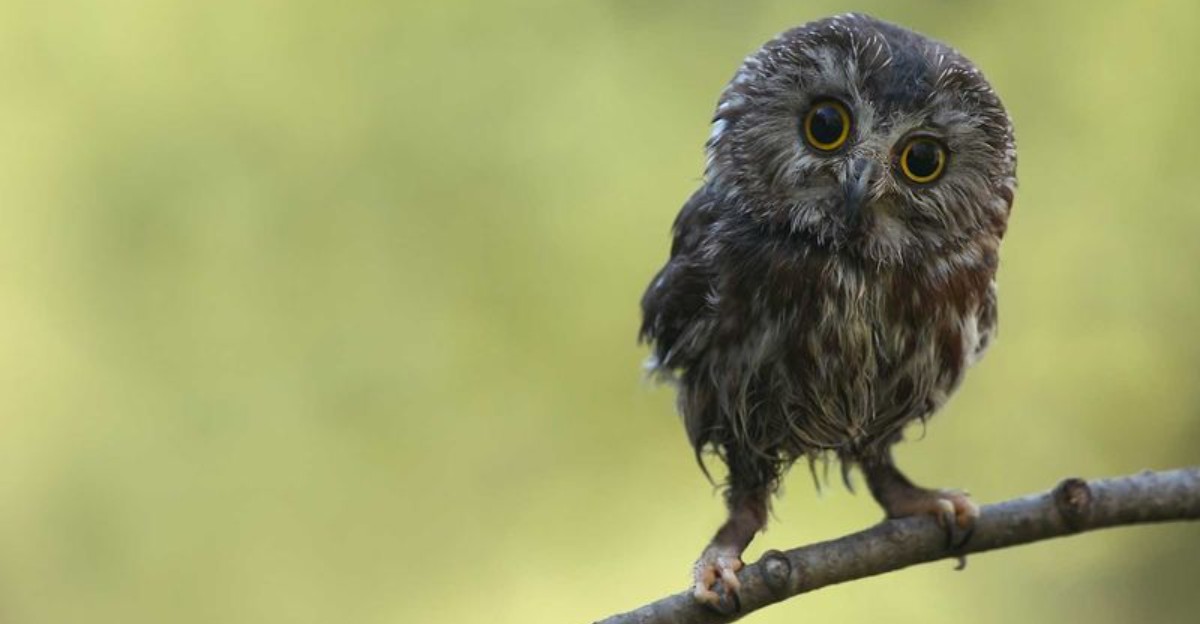
Can you spot a raptor small enough to fit inside a mug? You are standing in New Jersey after midnight, and the air smells of wet leaves.
Woodsmoke drifts past you while a tiny owl glides south through the dark. Golden eyes, wide as buttons, stare straight back at you.
Permitted banders stay up past midnight, and you can watch them at public events. They weigh each owl in a plastic cup.
Close to a robin in weight, it still hunts mice in total darkness. Nearly silent wings carry it across New Jersey ridges toward southern forests.
Your ears miss it because serrated feathers muffle each wingbeat. Stillness hides it as well, pressed into thick, tangled branches.
Inches from a hunter, you simply pass without a clue. Tonight, scan thick cedars from a respectful distance, and leave the flashlight off.
A Pocket-Sized Owl Called The Northern Saw-Whet
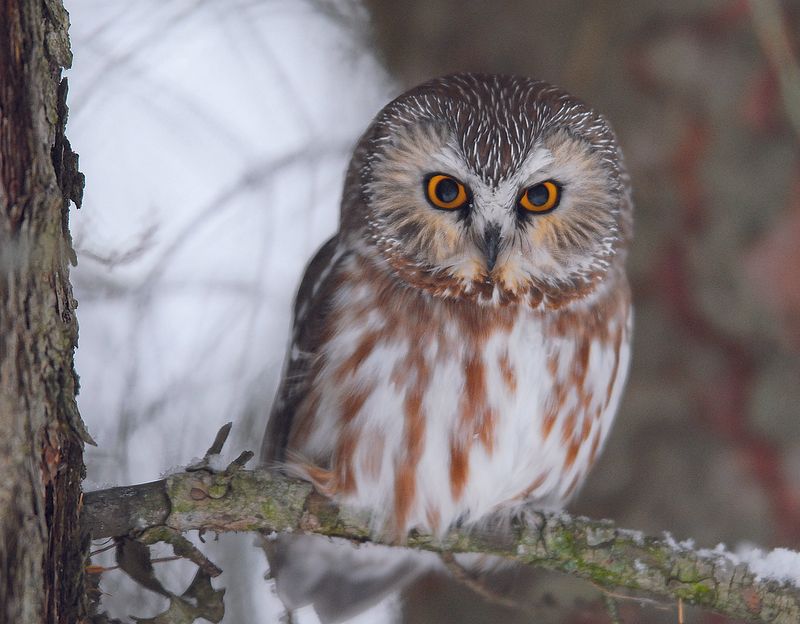
Grab a stick of butter from your fridge and hold it in your palm. A northern saw-whet owl weighs a bit less, usually around three ounces, with females slightly heavier.
Standing around seven or eight inches tall, it is the smallest owl that lives in New Jersey. It weighs about as much as a robin, or slightly more.
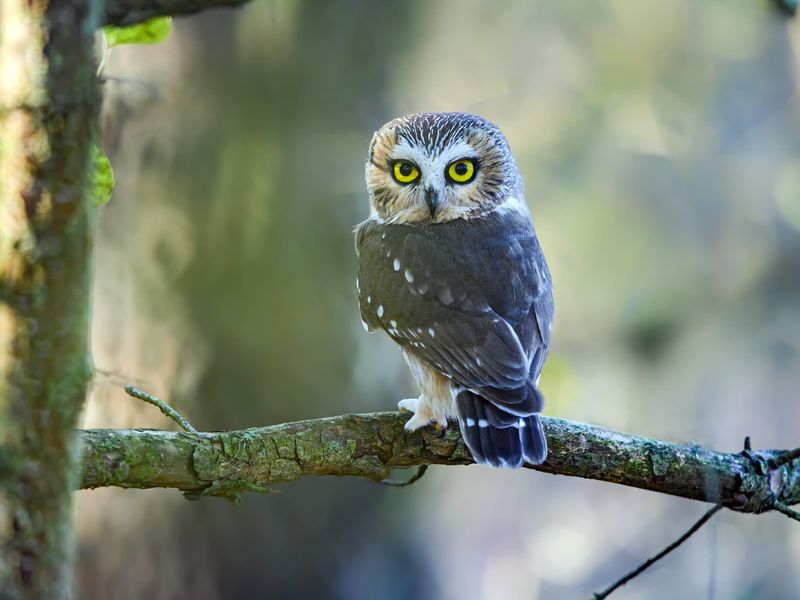
Its round head has no ear tufts, so it looks like a fuzzy ball with a face. Bright yellow eyes sit inside a pale, rounded facial disk.
The back is warm chocolate brown with tiny white spots. Its chest has thick reddish-brown streaks that help it blend with tree bark.
Young saw-whets look different from adults during their first summer. They wear a rich cinnamon belly and a dark brown face with a white V.
The name is often explained by one of its calls, which some say resembles a saw being sharpened on a whetstone.
Its usual song is a steady series of high toots, heard mostly in late winter and spring. It can repeat that same note over and over, sometimes for many minutes straight.
Small size does not mean weak hunting skills. These owls have sharp talons and highly sensitive hearing that lets them find mice in total darkness.
One ear sits a bit higher than the other on its head. That uneven setup helps it pinpoint exactly where a tiny squeak is coming from.
So next time you unwrap butter for cookies, think of this owl. It packs a whole hunter into a package you could hold in one hand.
October Migration Across The Garden State
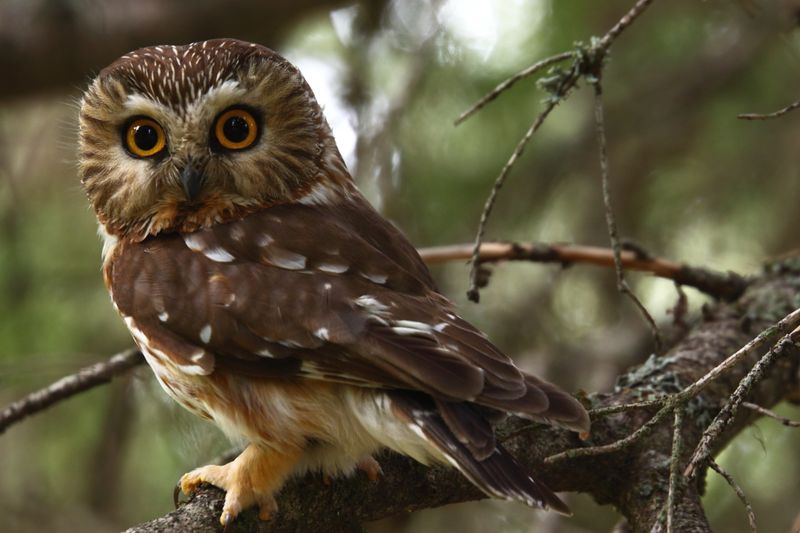
Autumn makes New Jersey a major migration route for these little travelers. Many saw-whets fly south from Canada and northern New England each fall.
Movement starts in late September and peaks from mid-October into early November. Cold fronts with north winds often push big waves of owls through.
They fly at night, often stopping to rest in woods between flights. During the day, they rest quietly to save energy for the next trip.
Cape May is famous for fall bird migration, and saw-whets join the parade. The peninsula funnels birds toward the tip before they cross Delaware Bay.
Some owls spend the whole winter in New Jersey woods. Others keep going farther south, reaching places like Virginia or the Carolinas.
Numbers change a lot from year to year. Scientists think this ties to how many mice and voles lived up north that summer.
A boom year for rodents means more young owls survive. That same fall, those young birds move south in large numbers, and banders get very busy.
Picture a small owl crossing several states with no map or phone. It likely relies on instinct, visual cues, and possibly Earth’s magnetic field to find its way.
You probably will not see one fly past your window. Still, on a chilly October night, there may be one resting in a tree near your street.
That thought makes a quiet autumn evening feel special. Your backyard might be a rest stop on a long journey.
Evergreen Hideouts And Daytime Roosts
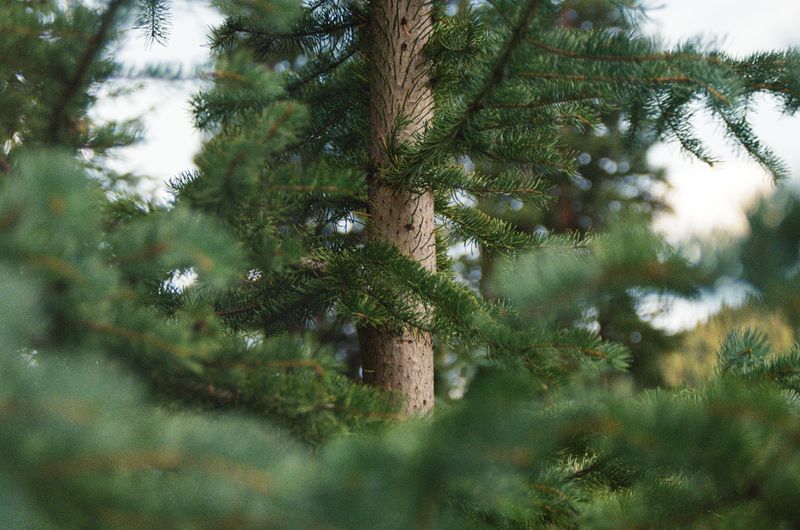
Saw-whets are skilled at staying hidden. During the day, they tuck into thick evergreen trees.
Eastern red cedar, white pine, hemlock, and holly make favorite hiding spots. Dense needles block wind and keep the owl out of sight.
Many roost at about eye level, often closer to the trunk. You could stand right next to one and not notice it at all.
Staying hidden matters for good reasons. Bigger owls, hawks, and even blue jays may chase or bother a small owl caught in the open.
Songbirds sometimes discover a roosting saw-whet and start a noisy scolding party. Chickadees and titmice dive and call to warn the whole neighborhood.
If you hear a sudden racket of small birds in a cedar, pay attention. There might be an owl sitting calmly in the middle of that fuss.
The owl usually stays very still with its eyes half closed. It trusts its brown feathers to blend with shadows and bark.
Some roost in the same spot for days if they feel safe. Whitewash and small pellets under a branch can hint at a regular hangout.
Pellets are little bundles of fur and bones the owl coughs up. They show what it ate the night before, which is often a mouse.
Next time you pass a thick cedar grove, slow down and look closely. That lumpy shadow could be a sleepy owl enjoying its nap.
Common Mistakes Owl Seekers Make
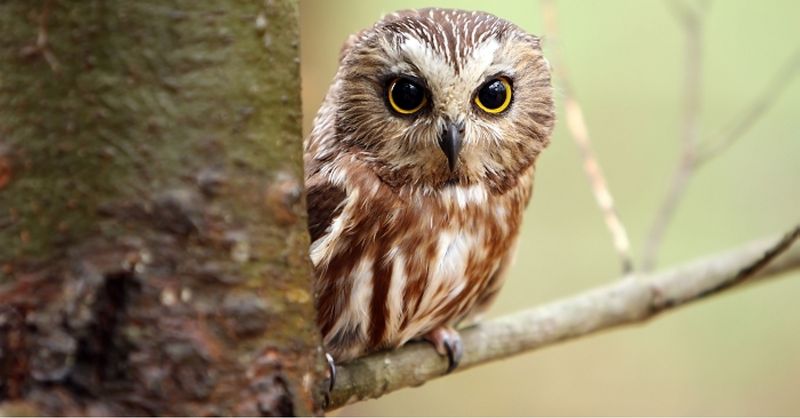
Excitement can turn a nice owl sighting into a stressful moment for the bird. Many beginners make small slips without meaning any harm.
Getting too close is a common problem. If an owl opens its eyes wide and stretches tall, you have crossed its comfort line.
Flushing a roosting saw-whet forces it into daylight. That exposes it to hawks and wastes energy it needs for migration.
Playing recorded owl calls is another misstep for the public. Researchers use them under permits, but repeated playback can pull birds away from hunting and add stress.
Flash photography at night also bothers them. A bright burst can startle the owl and leave its eyes struggling to adjust.
Sharing exact roost locations online seems harmless but can draw crowds. Large groups of visitors can disturb the habitat and the bird.
Shaking branches to get a better look should be avoided. So should tossing pinecones or making noises to wake the owl up.
A sudden disturbance can interrupt an owl’s rest, and an owl has much more to lose than a person does.
A better plan is quiet patience and a pair of binoculars. Watch for a few minutes, then walk away and let the owl rest.
Bird clubs and nature centers often teach owl manners. Joining one is a great way to learn what responsible owl watching looks like.
Banding Stations And Night Research
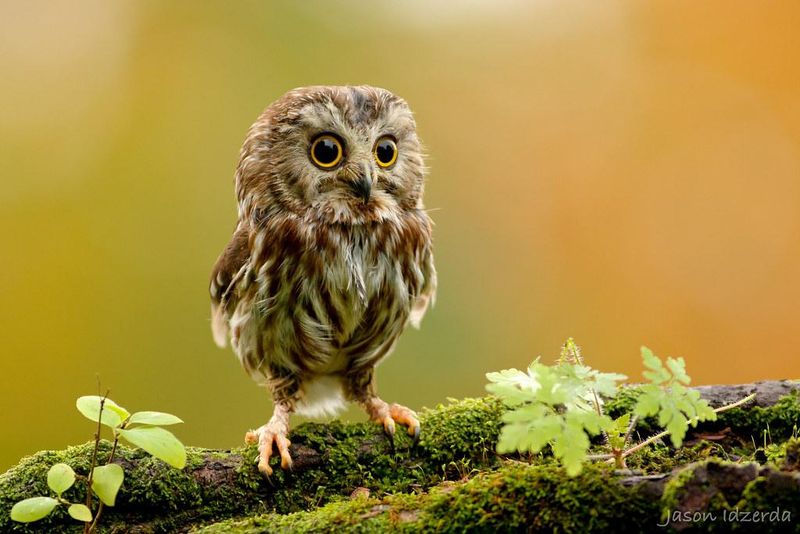
Midnight in the woods, a soft beeping call plays near a fine mesh net. Researchers wait nearby with headlamps, hot cocoa, and notebooks.
Bird banding helps scientists learn where saw-whets travel. Each owl gets a tiny metal leg band with its own number.
Workers check nets often so no owl waits long. They gently carry each bird to a table for a quick checkup.
Owls are weighed headfirst in a small cup or tube. It keeps them calm and gives an accurate reading, often a bit under butter weight.
Researchers measure wings and check fat stored under the skin. Some even use ultraviolet light to see wing feathers glow pink.
That glow comes from a natural pigment in newer feathers. It helps banders figure out whether an owl is young or older.
The whole process takes just a few minutes. Afterward, the owl is released back into the dark to continue its journey.
Sometimes a banded owl turns up in another state. That recapture shows its path and how fast it traveled.
Groups like the New Jersey Audubon have helped with this work for years. Some stations invite visitors on certain nights during October, so check dates and registration with New Jersey Audubon first.
Seeing a saw-whet up close can be a memorable experience. Observers often describe those golden eyes as staring right back.
Backyard Habits That Help Tiny Owls
Your yard could become a cozy rest stop for a traveling owl. Small choices around your home can make a real difference.
Planting native evergreens is a helpful step. Eastern red cedar, American holly, and white pine all offer shelter.
Leaving some leaf litter helps mice and voles thrive. Those rodents feed owls during their long nights of travel.
Avoiding rodent poison helps protect owls. Owls that eat poisoned mice can become sick, so enclosed snap traps are a safer choice than poison or glue traps.
Keeping cats indoors protects birds of many kinds. A roosting owl near the ground can be at risk from curious pets.
Turning off extra outdoor lights also helps. Darker yards make it easier for owls to hunt and move quietly.
Saw-whets nest in tree holes, often old woodpecker cavities. Leaving safe, standing snags in place gives them future housing options.
Some people put up nest boxes. Boxes sized for small owls can help in suitable woodland, so check with New Jersey Audubon or the NJ DEP first.
Telling friends and classmates about these owls spreads care. Many folks have no idea such a small owl lives nearby.
Maybe one late winter night, you will hear that steady tooting nearby. Knowing you helped make that moment possible is rewarding.