Those Strange White Balls Appearing On Georgia Oak Leaves This Fall Aren’t Eggs
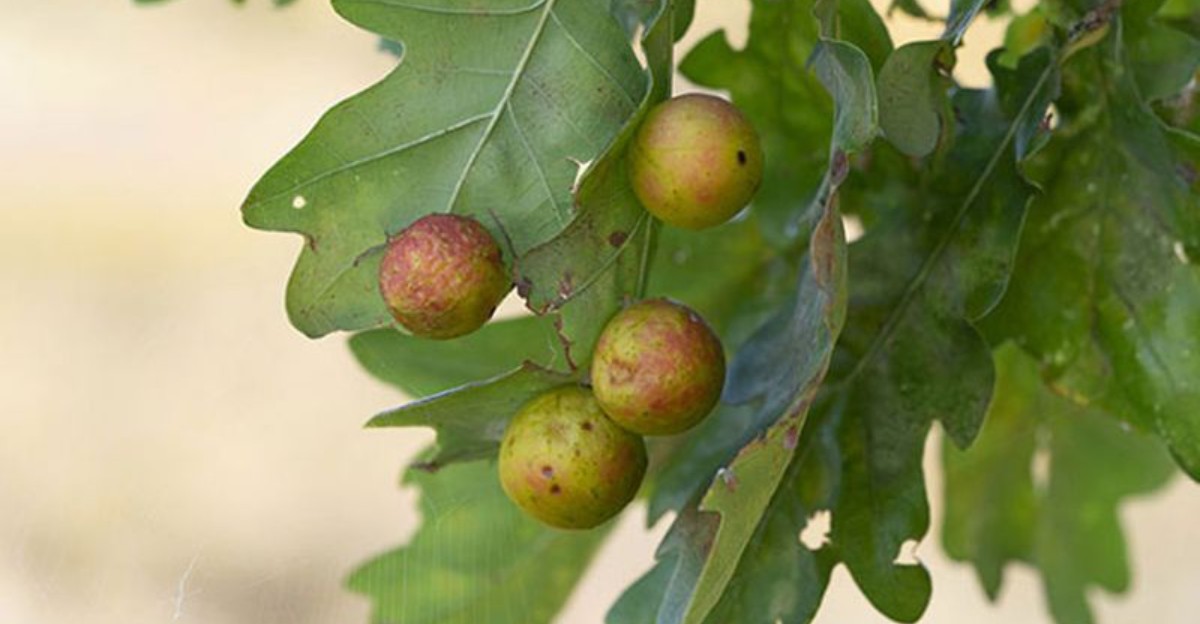
Tiny white balls scattered across oak leaves can look like insect eggs, especially when several appear together on the same branch.
Their appearance can be misleading. Some of these unusual growths are actually galls formed when tiny gall wasps interact with developing leaf tissue.
The oak responds by producing plant tissue around the developing insect, creating shapes that can look surprisingly unfamiliar.
Before removing affected leaves, examine where the white structures are attached and whether they appear to grow from the leaf itself.
Oak galls occur in Georgia, and many cause little lasting harm to otherwise healthy trees. Their presence alone usually does not call for treatment.
Knowing what produced these strange structures can save you unnecessary garden work. The next time you notice them, you may recognize a natural interaction rather than an insect egg cluster.
1. Those White Growths Are Actually Made By The Tree Itself
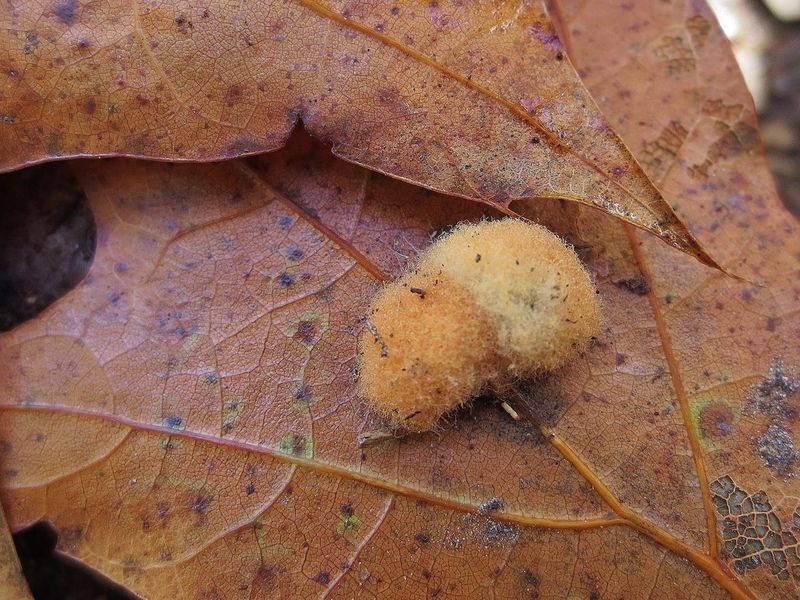
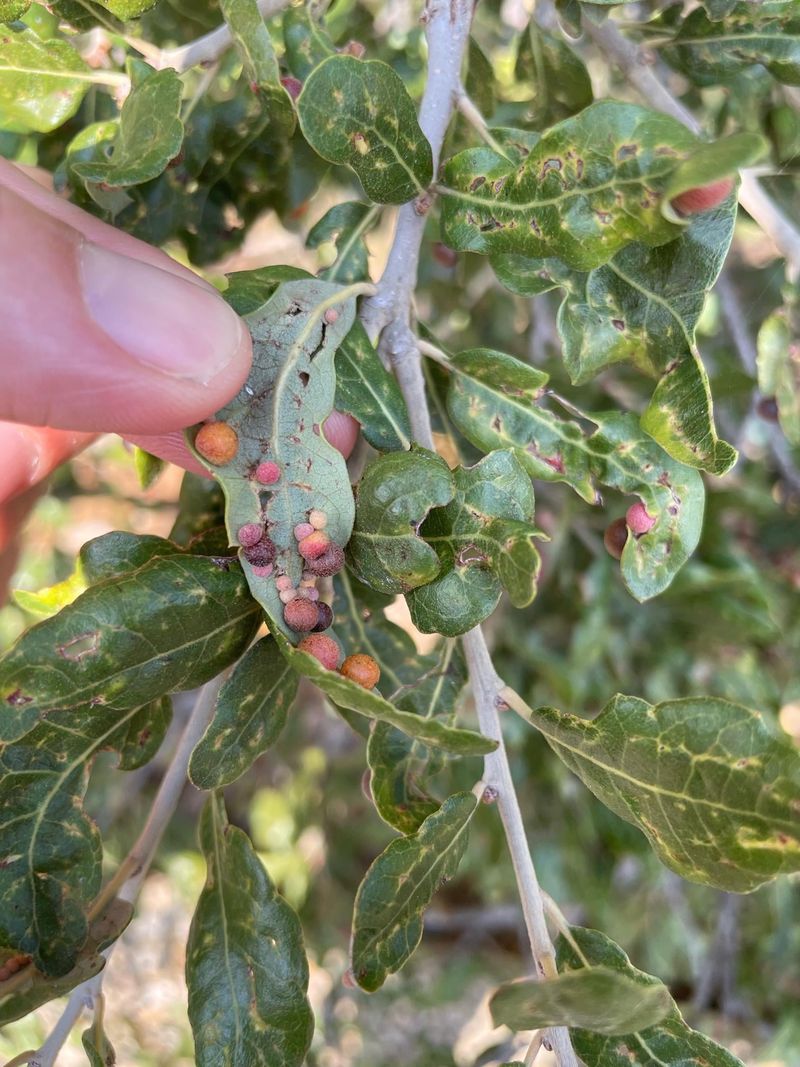
Your oak built those little white balls, not a bug. They are called oak leaf galls, and they are abnormal growths of plant tissue.
A gall begins when a tiny insect, usually a gall wasp, lays an egg in a developing leaf.
Scientists believe chemicals linked to the egg or young larva change how nearby leaf cells grow. Instead of forming normal leaf tissue, the cells swell into a protective structure.
So the ball you see is really part of the leaf, reshaped around a guest.
Gall wasps are very small, and most people have never noticed one. They do not sting people, and they are not the same as the paper wasps building nests under your eaves.
In Georgia, oaks such as white oak, post oak, and water oak are common in yards and woodlots.
Galls can form on leaves, twigs, buds, and even acorns, depending on the insect involved. Leaf galls are the ones homeowners tend to find while raking in fall.
If you pick one up and cut it open, you may see a small chamber in the center.
That chamber is the clue that separates a gall from a cluster of eggs. Insect eggs sit on the surface, while a gall is solid plant tissue grown from the leaf itself.
2. Different Gall Wasps Produce Different Shapes And Textures
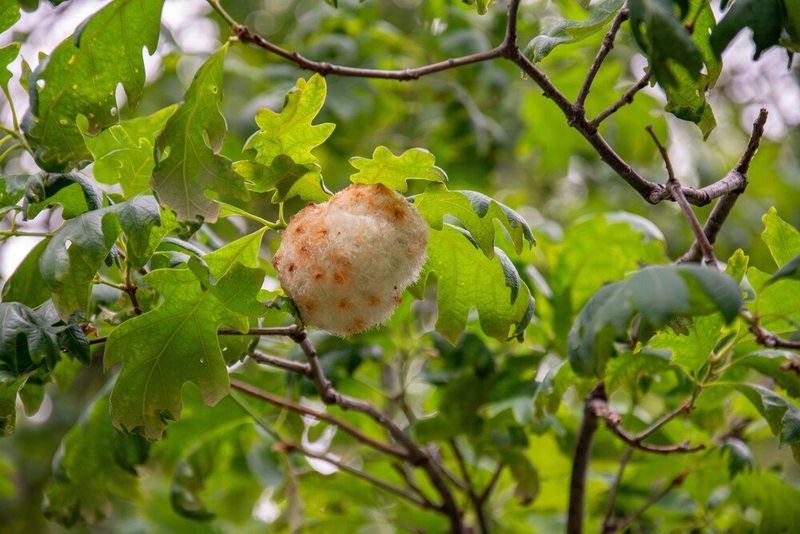
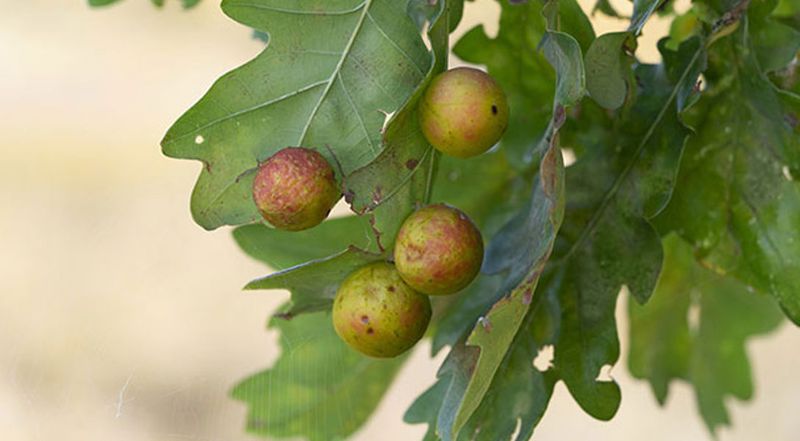
Fuzzy, smooth, spiky, or speckled, oak galls come in a surprising range of looks. Each style is often tied to a particular kind of gall wasp.
Woolly galls look like small tufts of cotton or wool clinging to the leaf.
Some are pure white, while others turn tan or pinkish as they age. People in Georgia sometimes mistake them for mold, spider egg sacs, or scale insects.
Other galls are hard, round, and smooth, almost like tiny marbles.
You may also find flat, disc-shaped galls dotting the underside of a leaf in groups. Certain galls stay tiny, while others grow large enough to notice from a few steps away.
Why so much variety? Each wasp species tends to trigger a gall with its own shape, size, and texture.
Your Georgia Garden Changes Every Week. Your Plan Should Too.
Gardening in Georgia changes quickly throughout the season. Every Friday you’ll receive a simple weekly plan showing exactly what to plant, prune, fertilize, harvest, and protect so you never miss the right timing.
Experts often use those features, along with the oak species and location on the tree, to make an identification.
Exact naming can be tricky, even for trained specialists. If you are curious, a clear photo of the top and bottom of the leaf can help your county Extension office narrow it down.
Keep in mind that a few mites and flies also cause galls on oaks, so not every bump comes from a wasp.
3. One Or More Larvae Develop Inside Each Gall
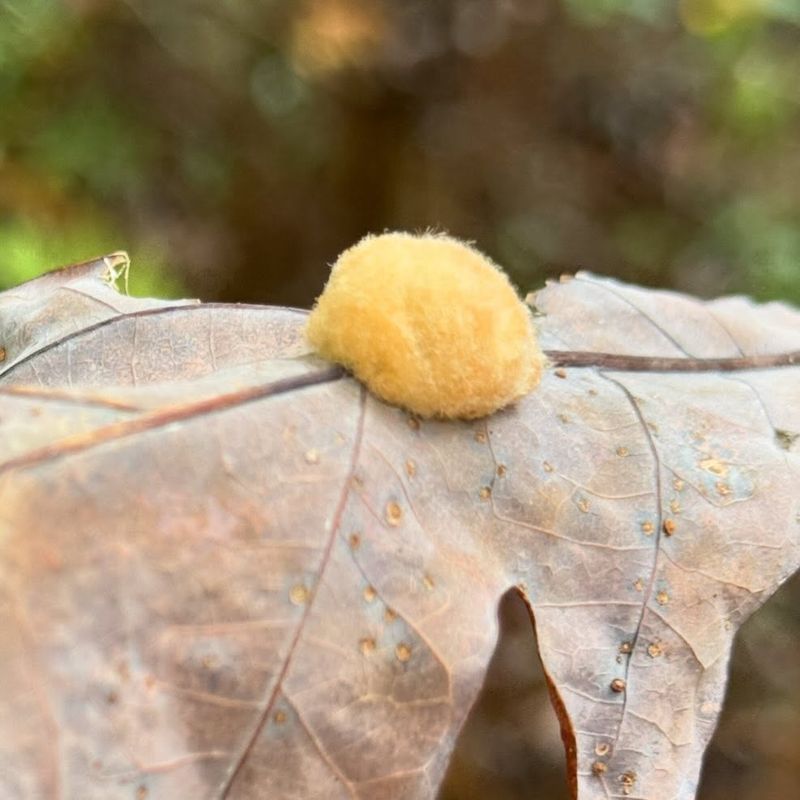
Slice a gall open and you might find a tiny resident. Inside sits a small, pale larva, often smaller than a grain of rice.
Some galls hold just one larva in a single chamber.
Others, like many woolly galls, can contain multiple chambers with a larva in each one. The number depends on the wasp species and how the gall formed.
Life inside a gall is fairly comfortable for the insect. The larva feeds on the nutrient-rich tissue lining its chamber, and the gall walls offer shelter from weather and many predators.
That protection is not perfect, though.
Parasitic insects, birds, and other creatures sometimes reach the larvae. In Georgia, you may even notice tiny exit holes in older galls where an adult insect has chewed its way out.
Timing varies a lot by species. Some gall wasps have complex life cycles that alternate between different generations, sometimes on different parts of the tree.
Because of that, a gall you find in fall may already be empty, or it may still contain a developing insect.
If you have kids, opening a fallen gall can be a fun backyard lesson. Just use a small knife carefully and look closely with a magnifying glass.
4. Oaks Host Hundreds Of Different Gall Forming Species
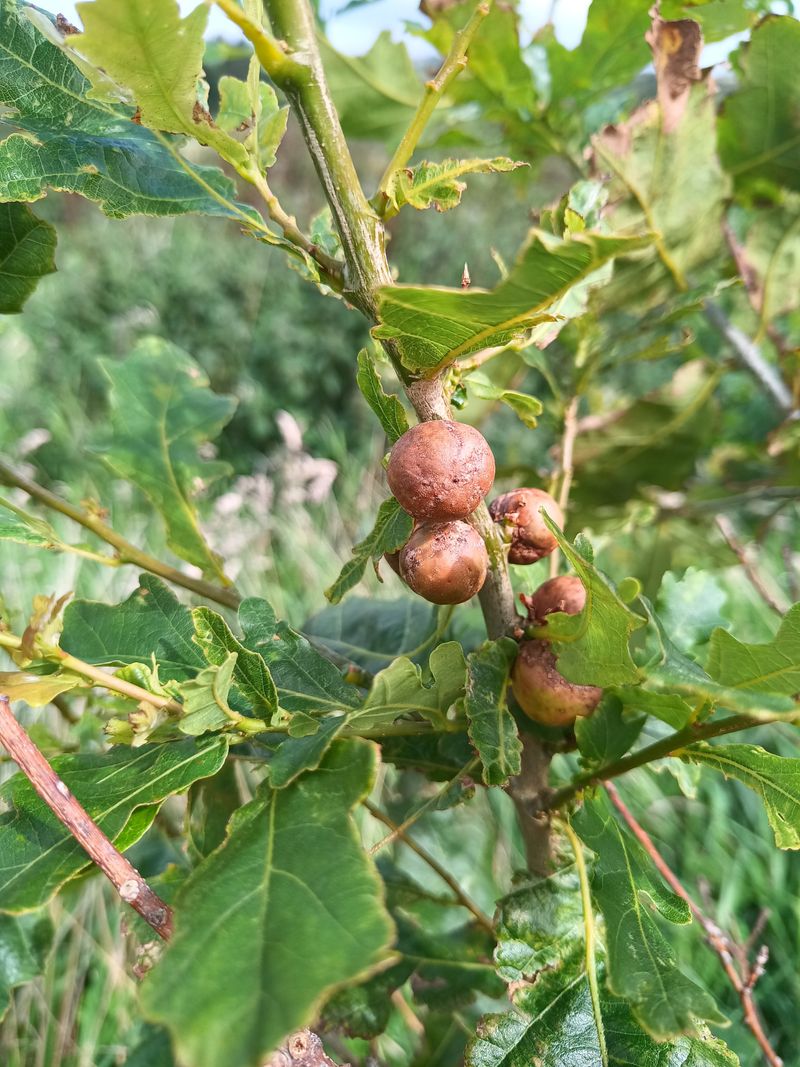
Few trees attract gall makers quite like oaks do. Across North America, hundreds of gall wasp species are linked to oaks, more than to almost any other group of trees.
Why oaks? Experts are still studying that question, and there is no simple answer.
What is clear is that each gall wasp species usually sticks to certain oaks. Some prefer the white oak group, while others favor red oaks like water oak or willow oak.
Georgia has a wide mix of native oaks, from the Blue Ridge down through the Piedmont and Coastal Plain.
That variety of trees gives many gall makers a place to live. Your yard might host one type of gall, while a neighbor down the road sees something totally different.
Not every gall comes from a wasp, either.
Small midges, mites, and a few other insects can also cause galls on oak leaves and twigs. They often look similar at first, which is one reason careful identification matters.
Seeing several kinds on one tree is not unusual. A single large oak can carry galls on leaves, stems, and buds during the same year.
Instead of a warning sign, that mix mostly reflects how many small creatures rely on oaks.
5. Leaf Galls Seldom Affect The Overall Health Of The Tree
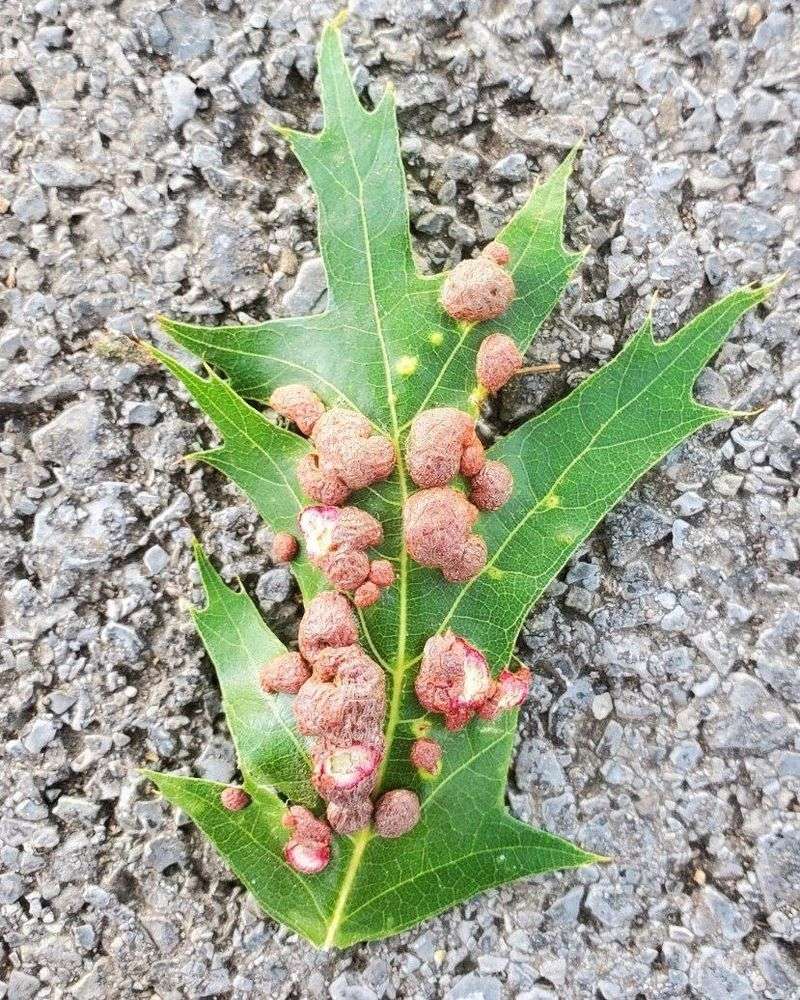
Good news first. Most leaf galls are a cosmetic issue, not a serious threat to an established oak.
A few galls on scattered leaves rarely take much away from a large tree.
Leaves with galls usually still carry out photosynthesis on the rest of their surface. Even heavily dotted leaves tend to drop in fall like the rest of the canopy.
Heavy gall years do happen sometimes.
When numbers are high, leaves may look spotted, curled, or brown earlier than usual. That can look worrying, but Extension specialists generally note that healthy oaks tolerate leaf galls well.
Twig and stem galls are a slightly different story. Certain types, such as some horned or gouty oak galls, can harm small branches when they are numerous.
Leaf galls are generally the milder group.
Here in Georgia, drought, root damage from construction, and soil compaction tend to stress oaks far more than leaf galls do. If your tree shows thinning, large branch loss, or bark problems, look for those other causes.
Young or newly planted trees may be more sensitive than big, mature ones. Watching a small tree over a season or two helps you see whether it is actually struggling.
6. Sprays Rarely Help Since Larvae Are Protected Inside
Reaching for a sprayer might feel like the natural move. With galls, it usually is not.
Once a gall forms, the larva sits sealed inside a wall of plant tissue.
Most sprays simply cannot reach it there. By the time you notice galls in fall, the insect is already well protected or has left.
Timing a spray to catch adult wasps is also very difficult.
Adults are tiny, short-lived, and active at times that vary by species and weather. Even professionals find that timing hard to predict for homeowners.
Large oaks create another problem. Spraying a tall canopy evenly takes special equipment, and drift can affect nearby plants and yards.
Broad insecticides may also harm helpful insects, including the parasites and predators that already keep gall wasps in check.
Most Extension guidance, including advice offered to Georgia homeowners, does not recommend chemical control for leaf galls on shade trees. Spending that money on good tree care is often more useful.
If you suspect a serious twig gall problem, talk with a certified arborist before treating anything. They can confirm what you have and whether any action makes sense for your situation.
7. Leaving Harmless Galls Alone Is Often The Best Approach
Sometimes the smartest yard work is doing less. With most leaf galls, patience is a solid plan.
Healthy oaks can usually handle a season of galls without help.
Gall numbers also rise and fall from year to year. Natural enemies, weather, and other factors seem to play a role, though the exact reasons vary.
You can still tidy up if you like. Raking and bagging fallen leaves may remove some galls, but it probably will not change much on a large tree.
Focus instead on basic oak care that supports long-term health.
Water young trees during long dry spells, especially in Georgia summers. Spread mulch over the root zone, keeping it a few inches away from the trunk.
Try to avoid driving, parking, or piling soil over oak roots.
Construction damage and soil compaction are common sources of oak stress. Protecting roots tends to do more good than any gall treatment.
When should you call for help? Reach out if you see heavy twig galls, large limb loss, or sudden thinning across the canopy.
Your local Extension office or a certified arborist can look at photos or visit. Until then, those little white balls are mostly a curiosity worth a closer look.