Why You Should Grow Passionflower Vine Along Your Fence In California
Some fences fade into the background, while others become the most talked-about feature on the street. The difference often comes down to a single climbing plant.
One fast-growing option brings flowers so intricate they look almost otherworldly, along with visitors many gardeners rarely see.
A few varieties even offer a sweet, tangy reward for the kitchen.
California’s mild climate suits this vine beautifully, though its energy calls for a bit of planning, and choosing the right type matters more than most people expect.
Smart picks and a little yearly care keep it healthy, tidy, and well behaved.
A plain boundary line can turn into a living showpiece with surprising speed, often in a single season.
1. Exotic Blooms Stop Passersby
Neighbors walking their dogs tend to slow down, and someone almost always asks whether the flowers are real. Passionflowers draw that reaction constantly.
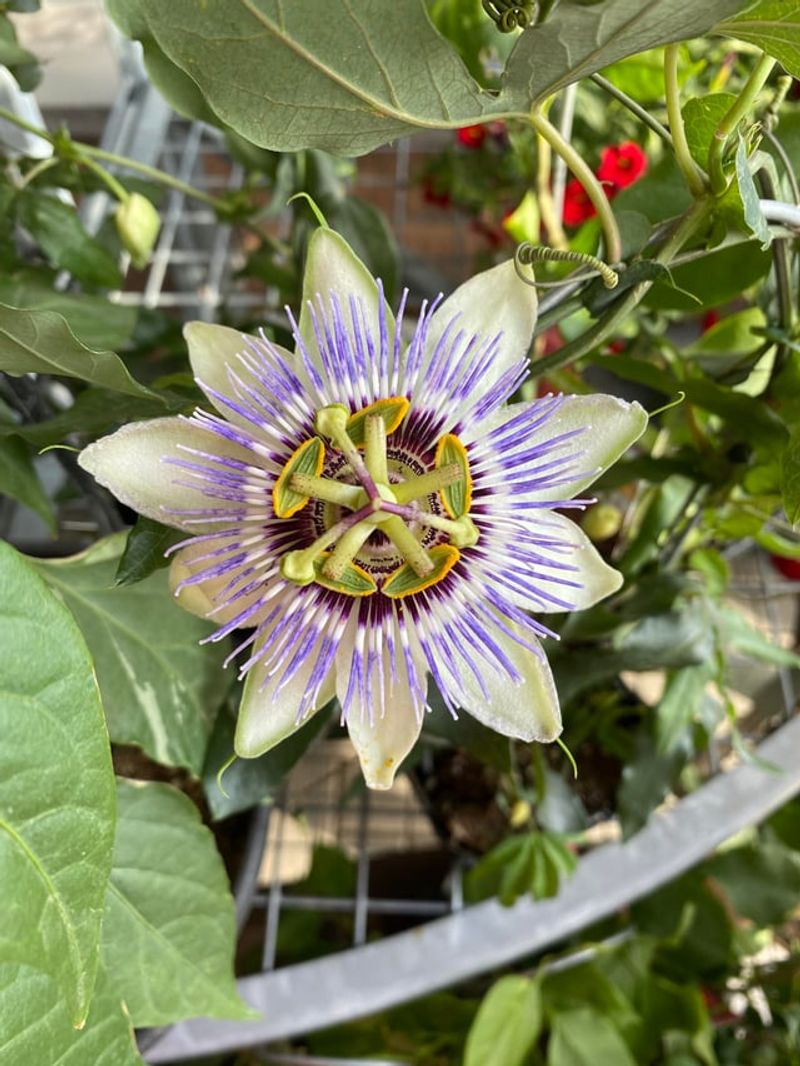
Each bloom looks like a tiny piece of art. Blue passionflower, Passiflora caerulea, carries a ring of white petals topped by a crown of thin threads banded in blue, white, and purple, almost like a target.
In the center sits a green stalk with odd, wide stamens that resemble little hammers.
Purple passionfruit flowers look just as fancy. Their white petals carry a frilly crown that fades from purple at the base to white at the tips, as though built by a watchmaker rather than a plant.
History adds to the charm. Spanish missionaries in South America saw religious symbols in the flower parts, and the threads reminded them of a crown of thorns, giving the plant its name.
Along a fence, these blooms show off best. The vine holds flowers at eye level, right where people can admire them.
A single plant can open fresh flowers through much of the warm season in California. Each flower usually lasts only about a day, yet new buds keep coming, so the show rarely pauses.
A spot near a gate, path, or sidewalk lets the flowers greet guests and give passersby a reason to smile.
Fall often brings a final flush of blooms in mild areas, making October a fine time to admire the show and plan where a new vine might go.
2. Vines Grow Fast And Cover Fences
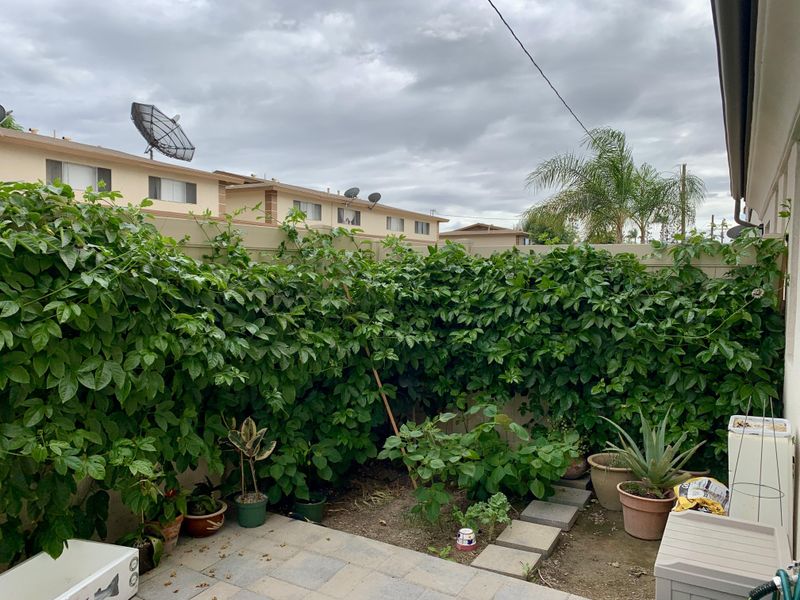
A bare chain-link fence in spring can turn into a thick green screen by late summer. Passionflower vines can pull off that kind of transformation in a single growing season.
In warm California yards, many passionflowers grow quickly once their roots settle in. Blue passionflower and purple passionfruit can both stretch many feet in one year, with long stems shooting sideways and upward to fill gaps fast.
That speed solves real problems. A fresh vine can hide an unattractive fence, screen the trash bins, or add privacy around a patio.
There’s no need to wait years for shrubs to fill in.
A fast start comes easily. Full sun or light afternoon shade suits these vines, along with soil that drains well, since soggy roots can rot.
Deep watering helps while the plant establishes, followed by regular water during hot, dry months.
Your California Garden Changes Every Week. Your Plan Should Too.
Gardening in California changes quickly throughout the season. Every Friday you’ll receive a simple weekly plan showing exactly what to plant, prune, fertilize, harvest, and protect so you never miss the right timing.
A little early guidance pays off. Young stems tucked toward the fence grab on in the right direction, and a couple of plants spaced several feet apart cover a long fence sooner than one.
All that energy carries a fair warning. A vine this fast can wander onto roofs, trees, or a neighbor’s yard.
Regular trimming planned from the start keeps the speed a gift rather than a headache.
Spring planting after frost danger passes gives the strongest start, so fall makes a good season to choose the spot and install supports.
3. Gulf Fritillary Caterpillars Feed On The Leaves
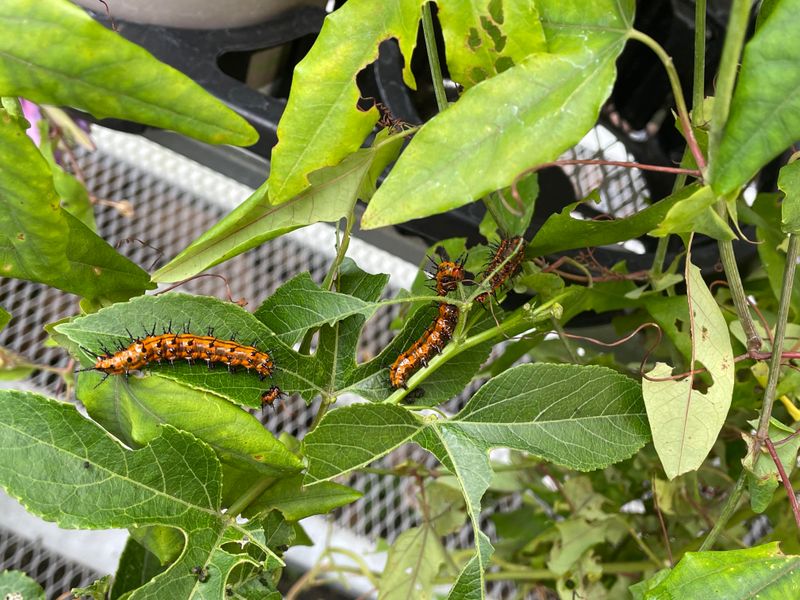
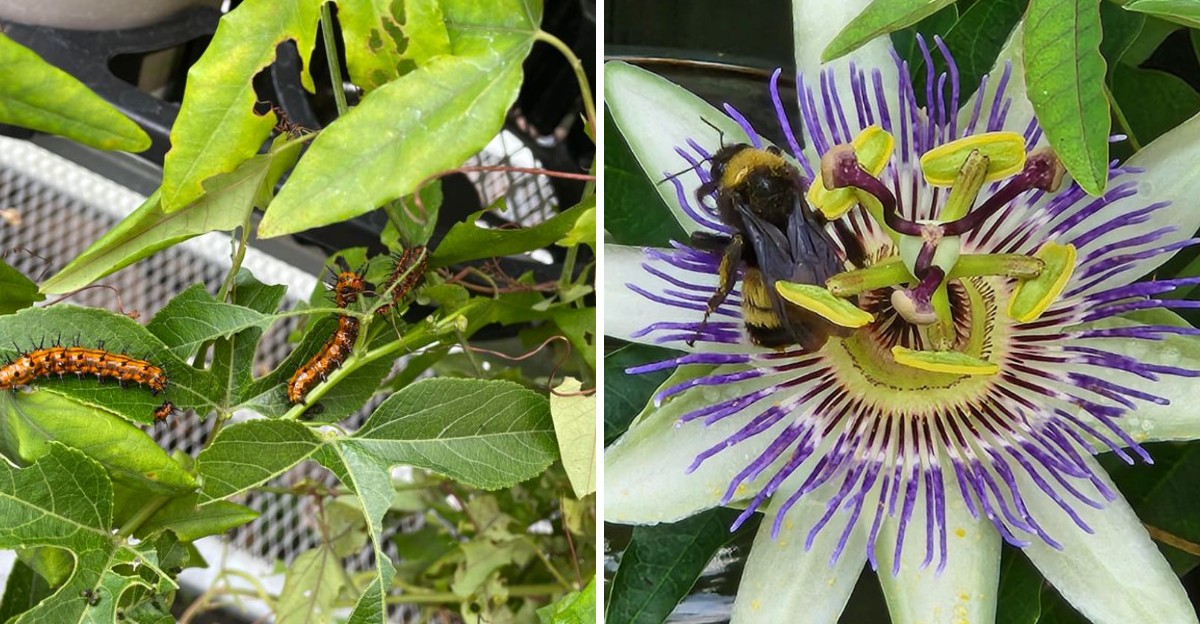
A few chewed leaves and some spiky orange caterpillars often cause alarm, yet they usually signal good news. The fence may have just become a butterfly nursery.
The Gulf fritillary is a bright orange butterfly with silver spots under its wings. UC ANR notes that its caterpillars feed on passionflower vines, which serve as their host plants.
Without passionflower nearby, these butterflies rarely stick around for long.
The life cycle makes for great viewing. Females lay tiny yellow eggs on leaves and tendrils, which hatch into orange caterpillars with black spines.
The caterpillars munch for a couple of weeks, then hang as brown, leaf-like chrysalises. Soon, a fresh orange butterfly crawls out and dries its wings.
In mild parts of California, Gulf fritillaries may appear through much of the year, and October often brings plenty of activity. A fence covered in passionflower can host several rounds.
The caterpillars can strip some leaves, though a healthy, mature vine usually bounces back with new growth.
Insecticides are best avoided, since they would harm the very butterflies the vine supports. Heavy damage on a young plant can ease when a few caterpillars move to an older, sturdier section.
Families often enjoy this show together. A magnifying glass makes counting eggs, tracking caterpillars, and waiting for the big reveal even more fun.
The fence turns into a living science class.
4. Bees And Butterflies Visit The Flowers
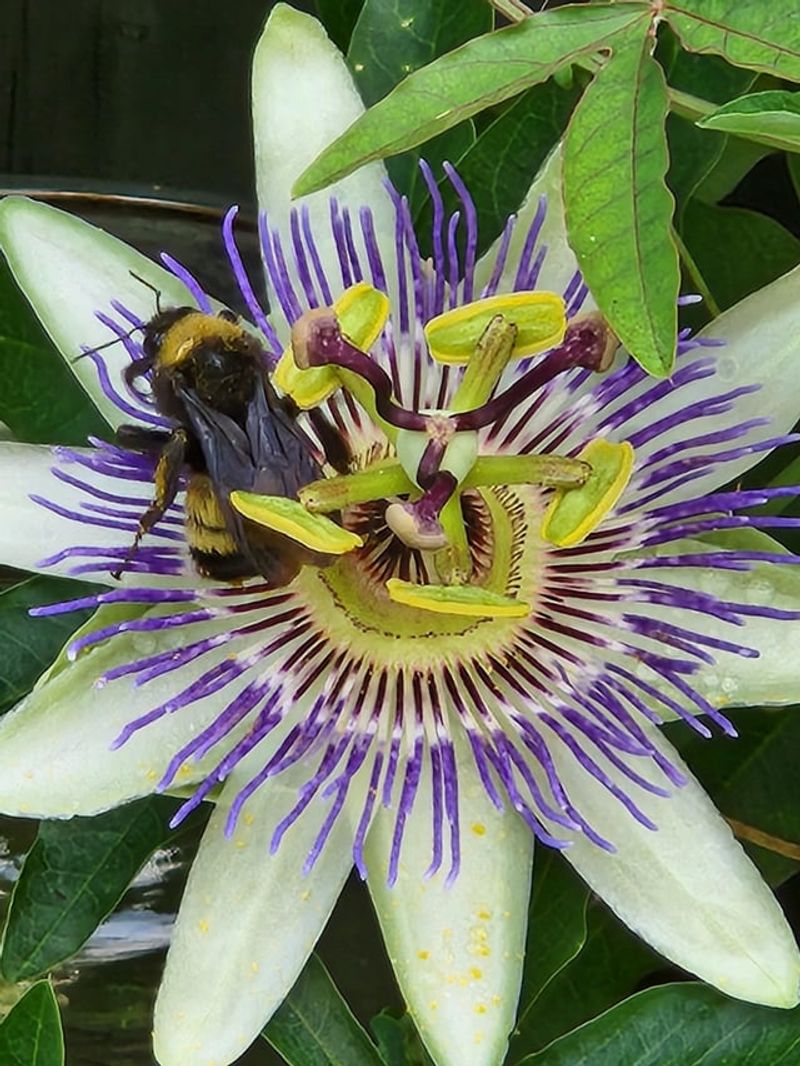
A blooming passionflower on a warm morning often hums with a steady buzz drifting from the fence. That sound signals a busy pollinator stop.
Passionflowers offer nectar and pollen, and pollinators notice. Large carpenter bees make frequent visits, their big, strong bodies fitting the flower’s unusual shape as they brush against the stamens while feeding.
Honeybees and other bees show up, too.
Butterflies stop by for nectar as well. Adult Gulf fritillaries often sip from the same vines their caterpillars eat, and other neighborhood butterflies may drift over for a snack.
That activity benefits the whole yard. Pollinators help many garden plants produce fruit and seeds, so a busy vine can draw bees that later visit tomatoes, squash, and fruit trees.
Purple passionfruit growers have an extra reason to cheer. Fruit forms only after flowers get pollinated, and carpenter bees handle the job especially well.
More bee visits often mean more fruit hanging on the fence.
Nearby flowers that bloom across the seasons keep bees fed, while a shallow dish of water with pebbles offers safe landing spots. Sprays are best kept away from the blooms, since many pesticides harm bees.
A sunny fence lined with passionflower becomes a busy pollinator diner, offering a view for people and a menu for bees. Warm fall afternoons often keep that diner open well into October across much of the state.
5. Some Types Make Edible Passionfruit
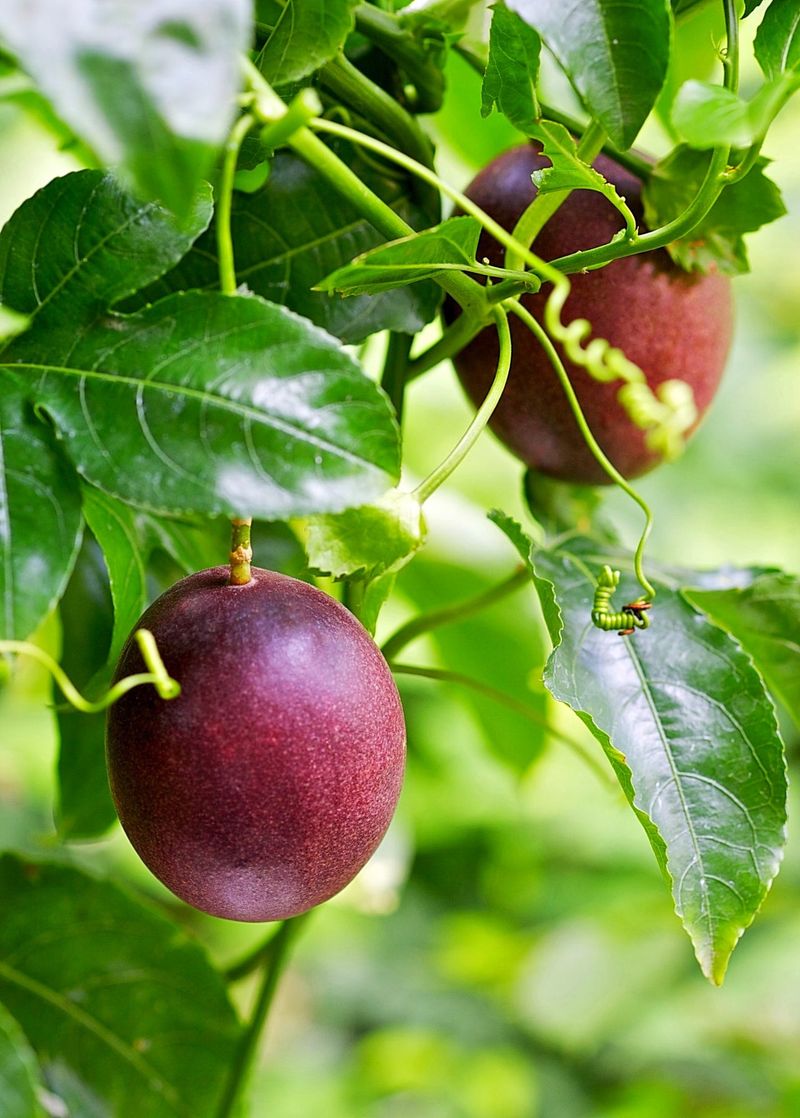
Slicing open a wrinkly purple fruit reveals tangy, golden pulp that makes breakfast yogurt feel downright fancy.
Purple passionfruit, Passiflora edulis, stars for anyone who wants to eat the harvest. UC sources describe it as a fruit crop suited to mild, frost-free parts of California, especially near the coast and in Southern California.
The round fruits turn deep purple when ripe. Inside waits juicy pulp packed with crunchy black seeds.
Harvesting couldn’t be easier. Ripe fruit often drops to the ground on its own, and a few days of wrinkling indoors brings sweeter flavor.
Halved fruit can be eaten straight from the shell with a spoon, stirred into drinks, or spooned over ice cream. Fall often brings a good share of the harvest in mild areas.
Blue passionflower tells a different story. Its orange fruit is grown mostly for looks and differs from the passionfruit sold in stores.
Treated as ornamental, it can stay on the vine for birds and for color.
Safety deserves attention. Eating fruit from a passionflower that can’t be identified for certain is best avoided, since some species and plant parts aren’t meant for snacking. Clearly labeled plants, with tags saved, remove the guesswork.
A few growing tips help fruit form. Purple passionfruit appreciates full sun, steady water, and some fertilizer during the growing season, and strong bee traffic boosts the crop.
Before long, the fence may feed the household along with the butterflies.
6. Tendrils Cling To Wire Or Trellis
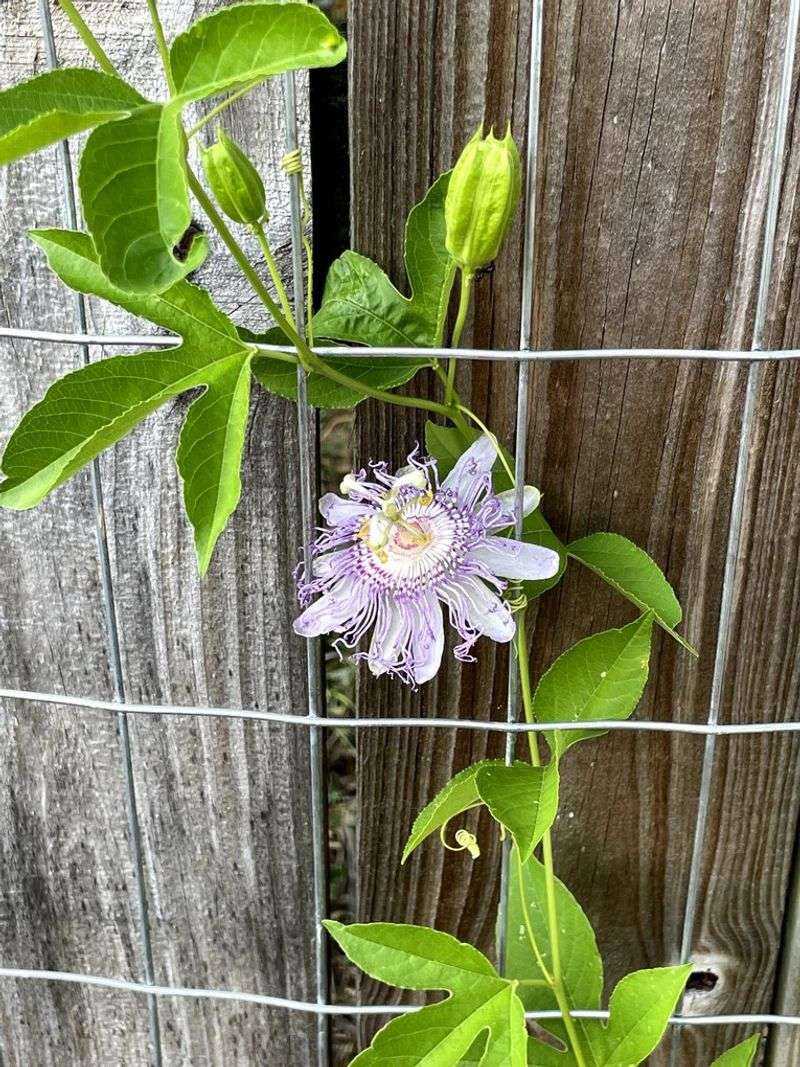
Little green springs line every passionflower stem. Those curly tendrils power the vine’s climb, working like tiny grappling hooks.
A tendril reaches out until it touches something thin, then wraps around and coils tight. Over time, it hardens and holds the stem in place, with no glue, suction pads, or roots digging into wood.
Size makes the difference. Tendrils need slim supports to grab, so a flat, solid wooden fence offers nothing to hold.
Chain-link fences work right away, while wood or vinyl fences need a little help.
Sturdy galvanized wires running across the fence about a foot apart make a simple solution. A wooden or metal trellis mounted a few inches off the fence also works, as does wire mesh or cattle panel for a bigger grip zone.
Strong materials matter. A mature vine grows heavy, especially when wet or loaded with fruit, and flimsy plastic netting can sag or snap.
Supports screwed firmly into fence posts hold up far better than those attached to thin boards.
Young stems benefit from guidance during their first few weeks. Gently woven through the wire, they let the tendrils take over from there.
A gap of a few inches between supports and the fence face improves airflow, keeping leaves healthier and making pruning easier later. Fall offers an ideal window for installing supports before the vine’s next big growth spurt.
7. Mild Climates Keep It Evergreen
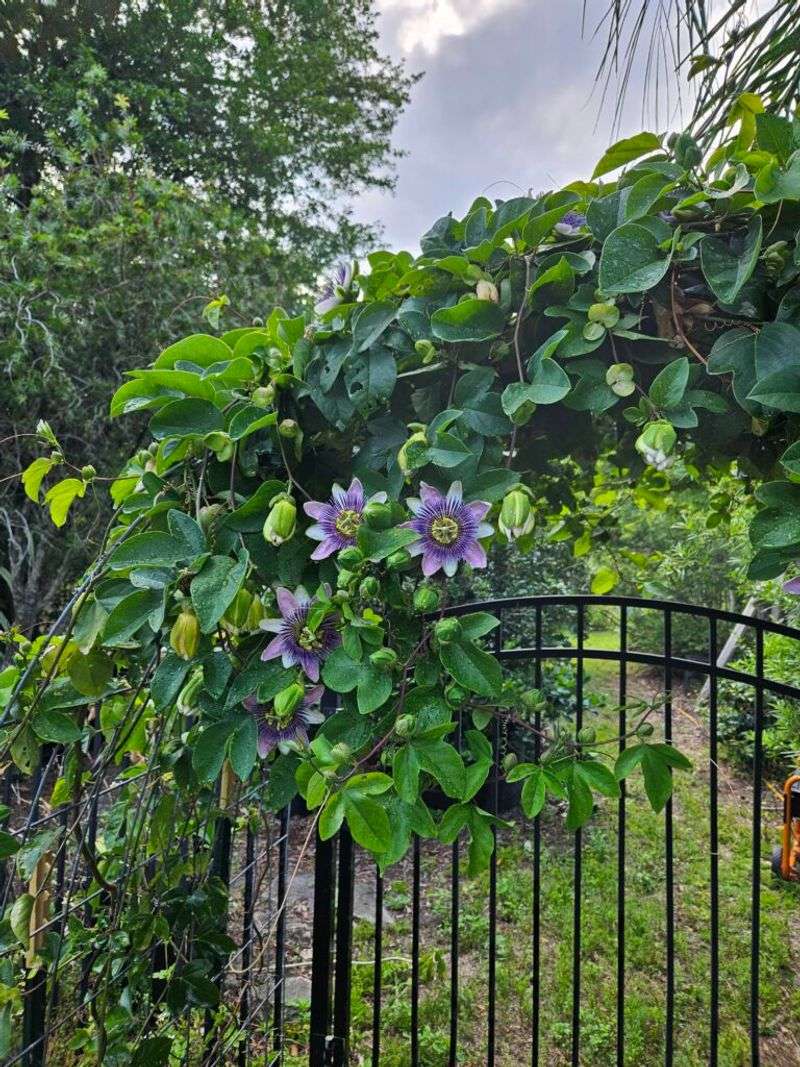
December arrives, and most vines drop their leaves. In a mild coastal California yard, though, a passionflower can stay green right through winter.
Both blue passionflower and purple passionfruit come from warm parts of South America. In frost-free or nearly frost-free areas, they often keep their leaves all year, so the fence stays covered and private while other plants look bare.
Coastal regions and much of Southern California suit them well.
Colder spots tell another story. Passionflowers are frost-tender, and a hard freeze can burn leaves and stems.
Purple passionfruit shows special sensitivity, and UC sources note it performs best where winters stay mild. Inland valleys, foothills, and mountain towns can turn cold enough to cause serious damage.
Blue passionflower holds up a bit better. After a frost, it may lose top growth but often resprouts from the roots in spring, behaving more like a part-time vine in chilly places.
Borderline areas benefit from a few precautions. A south- or west-facing fence soaks up heat, mulch around the base protects roots, and frost cloth on very cold nights, removed each morning, shields the foliage.
Frost-damaged growth is best left in place until the cold season passes, since those brown stems protect healthy wood below.
Knowing local winter lows before planting makes all the difference. Late October and November offer a smart time to gather frost cloth and mulch before the first cold snap arrives.
8. Prune Hard In Late Winter To Control It
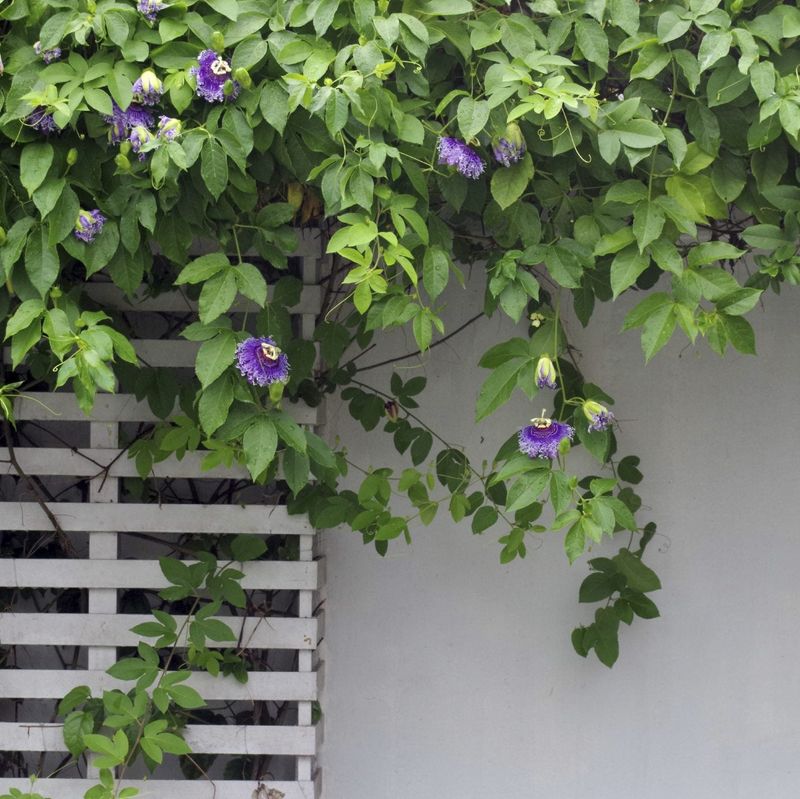
A bold cut in late winter ranks among the best gifts a passionflower vine can receive. Fast growers pile up quickly, and without pruning, old stems tangle into a heavy mat.
The inside turns brown, flowers shift to the top, and the vine creeps onto roofs and trees. A yearly cut keeps it neat, healthy, and blooming at eye level.
Late winter, before new spring growth begins, works best in most of California. Flowers form on new growth, so the summer show stays intact.
Spent, weak, and crossing stems come off first. Remaining growth can then be cut back by about a third or more, and overgrown vines can handle even harder cuts.
During the season, runaway shoots can be snipped as needed.
Species choice matters just as much as pruning. The California Invasive Plant Council lists banana passionfruit, Passiflora tarminiana and related types, as invasive in coastal California.
These vines escape into wild areas and cover native plants heavily, so they’re best avoided, even as a free cutting from a friend.
Blue passionflower and purple passionfruit make safer picks for home gardens. A local nursery, UC ANR resources, or the county Agricultural Commissioner can offer advice for a particular area.
Fallen fruit cleaned up regularly keeps vines from spreading into open land.
In fire hazard areas, vines belong on fence sections well beyond the first five feet around the house, where approved Zone 0 rules limit plants.